

'Armenian Apostolic Church does not serve foreign powers': bishops meet in Austria






Armenian Church bishops meet in Austria
“The Armenian Apostolic Church has never served and does not serve foreign powers or foreign interests. It remains consistently loyal to the Armenian people, their statehood and the preservation of national identity,” bishops said in a statement issued after a gathering in the Austrian city of St Pölten from 17 to 19 February.
The participants were responding to accusations made by Armenia’s Prime Minister Nikol Pashinyan against the Catholicos of All Armenians. He had claimed that the Patriarch “reports daily to lieutenants of a foreign intelligence service”. The allegation was not the only one he made. At the start of what he described as a movement to “reform the church”, the prime minister also said Garegin II had violated his vow of celibacy and had a daughter.
Senior clergy defended the Patriarch and described Pashinyan’s initiative as unacceptable. They also said the Catholicos of All Armenians and the senior clergy were facing “repression”.
Initial reports said Austria would host a Bishops’ Council, meaning not simply a meeting of clergy but a body empowered to take canonical decisions.
The Catholicos himself had been expected to lead the gathering. However, authorities opened a criminal case against Garegin II several days earlier. Prosecutors accuse him and six other clerics of obstructing the enforcement of a court ruling. As part of the case, the Patriarch lost the right to leave the country.
Bishop Gevorg Saroyan, head of the Masiasotn Diocese, who joined Prime Minister Nikol Pashinyan’s movement, was removed from his position as diocesan leader. The cleric challenged the decision in court. The court ordered his reinstatement as head of the diocese pending the final outcome of the case. However, the Supreme Spiritual Council, led by the Catholicos, also defrocked him. The criminal case against Garegin II and six other clerics relates to that decision.
Participants in the meeting condemned what they described as “groundless criminal prosecution”. Their statement said the court’s decision created an “artificial obstacle”. Because of the travel ban, Garegin II took part in the session via video link.
What details did the participants of the Austrian gathering include in their statement, and what other accusations has Pashinyan made against the Catholicos? What risks did the prime minister warn could arise if the Patriarch were allowed to travel abroad?
- ‘Catholicos of All Armenians has no intention of deserting’ – Head of Holy See’s Office
- Pashinyan absent from Etchmiadzin protest calling for removal of Catholicos Karekin II
- ‘Armenian Church Liberation’: Liturgy led by defrocked priest and attended by PM Pashinyan was marked by unrest. Video
Who attended the bishops’ meeting and what they discussed
Twenty-five senior clerics travelled to Austria for the meeting. All of them represent the Catholicosate of All Armenians. Archbishop Hovnan Terteryan, head of the Western Diocese of North America, also attended. He is among those who joined Prime Minister Nikol Pashinyan’s movement to “reform the church”.
Organisers initially invited all 56 members of the senior clergy. The list included those who, together with Pashinyan, have called for the Catholicos to resign. All of them declined to attend except Hovnan Terteryan.
They explained their decision by saying they had still not received answers from the Patriarch to a number of questions. These questions concern, among other issues, controversial incidents involving several senior clerics. They also said the Mother See had not responded to the “serious accusations made against the person occupying the throne of the Catholicos of All Armenians”.
After the meeting, the Mother See of Holy Etchmiadzin said participants held “substantive and constructive” discussions. They focused on the challenges facing the church and ways to overcome them. The participants also discussed relations with the state, the church’s independence and the inadmissibility of political speculation surrounding it.
“Reform under external pressure is unacceptable”
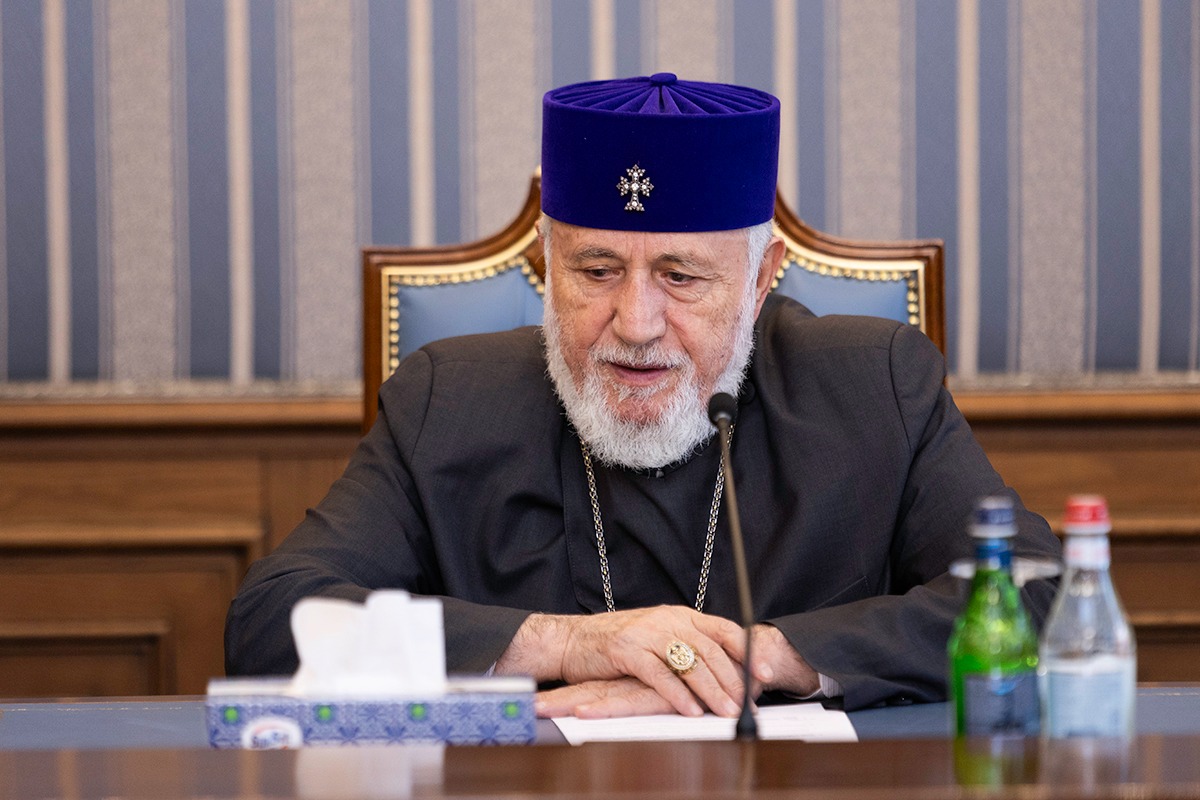
The clergy said the church has “always preserved its original mission” to preach the word of Christ and guide people toward salvation through internal reform. Participants in the bishops’ meeting said any reform imposed from outside is unacceptable:
“We see an urgent need to overcome the challenges facing the Armenian Church and to carry out reform work only within the Bishops’ Council and the church’s highest canonical bodies.”
Appeal to the authorities: “abandon ultimatums”
The bishops described relations with the state as “very dangerous” and called on the Armenian authorities to:
- “end the persecution of the church and respect its centuries-old sovereignty,
- put a stop to repression against the clergy and the Catholicos through fabricated accusations,
- release detained priests and laypeople who defended the church [including businessman Samvel Karapetyan],
- act strictly in accordance with Armenia’s constitution and international law,
- remain faithful to democratic principles that guarantee freedom of conscience and religion, and promote social solidarity instead of division,
- resolve existing problems and disagreements through dialogue, without preconditions, and abandon unproductive ultimatums.”
The bishops also addressed clergy who joined the prime minister’s church reform movement. They urged them:
- “to act with awareness of their oath of loyalty to Holy Etchmiadzin and the Catholicos,
- to resolve issues related to church life only within authorised church bodies,
- and to refrain from anti-canonical actions.”
Pashinyan: ‘The aim is to move the Catholicosate out of Armenia‘
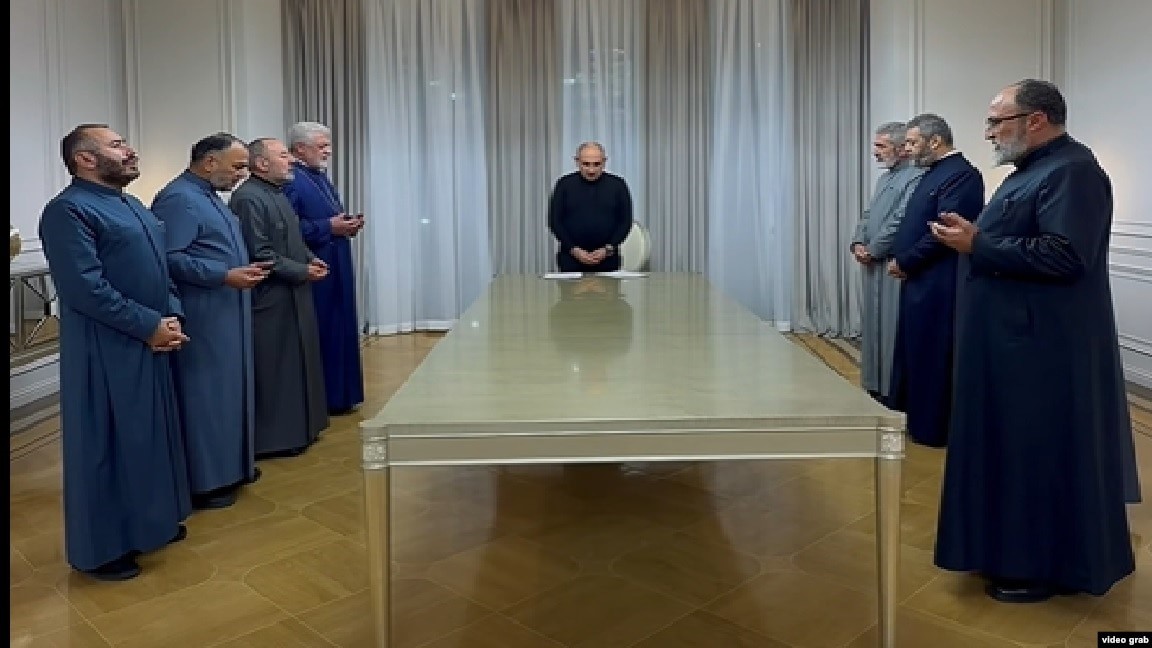
Several days before the planned gathering in Austria — and before the court decision that prevented the Catholicos from leaving the country — Prime Minister Nikol Pashinyan accused Garegin II of attempting to move the Catholicosate to another country. He also claimed that the Patriarch intended to take with him treasures kept at the Mother See of Holy Etchmiadzin.
Pashinyan further accused him of seeking to strengthen a “puppet Catholicosate in the hands of certain forces” and to use it as a tool against Armenia.
“I will not allow this. Armenia will not remain a bystander. The response will be very tough. We will redirect the attention of those who, under the mask of benefactors, have set their sights on the treasures of Etchmiadzin,” the prime minister said.
A day after his statement, authorities announced that prosecutors had opened a criminal case against the Catholicos and imposed a travel ban.
The Mother See of Holy Etchmiadzin described the developments as “unfounded and unlawful” actions against the Catholicos and said they carried a “clearly political character”.
Pashinyan has spent several months calling for the Catholicos to step down. He argues that Garegin II violated his vow of celibacy and has a child. The prime minister also claims that the Patriarch reports daily to the intelligence services of another country. He has not named a specific state, though observers believe he is referring to Russia.
Pashinyan also said the Catholicos’s brother, Archbishop Yezras Nersisyan, head of the Russian and New Nakhichevan Diocese, worked as a KGB agent during the Soviet period. In late 2025, the pro-government website civic.am published a copy of a document which it said showed Nersisyan cooperated with the Soviet State Security Committee under the codename “Karo”.
However, Armenia’s National Security Service has not provided journalists with further details about alleged links between Garegin II, Archbishop Yezras and foreign intelligence agencies. Officials said information obtained through operational intelligence activities constitutes a state secret.
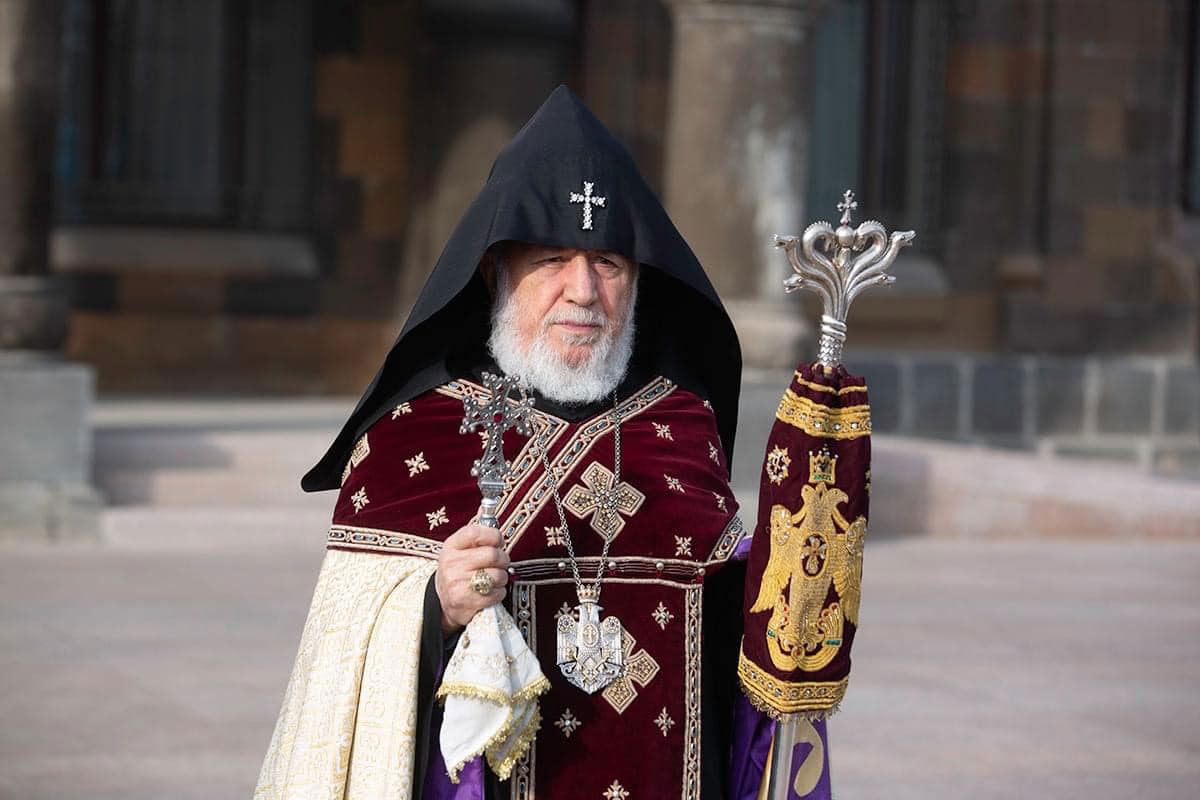
Armenian Church bishops meet in Austria