New owner, old line: What has (and hasn’t) changed at Georgia’s main propaganda channel






Sale of the Imedi TV Channel
At the start of 2026, it emerged that businessman Irakli Rukhadze and his partners had sold the pro-government Georgian television channel Imedi for a “symbolic price” of 1,000 lari (about $370). The new owner is Prime Media Global, a company fully owned by Ilia Mikelaishvili, who is also seen as close to the government. Under the terms of the deal, half of the channel’s shares are to be transferred to Imedi’s management.
Formally, this is a change of ownership. In reality, it is another symbolic episode in the history of a broadcaster that has for years served as a key informational pillar of the ruling Georgian Dream party.
A Symbolic Price, a Real Value
According to official documents, the Imedi television company was sold for 1,000 lari. At the same time, the company had accumulated millions in debt. Data from the state reporting portal show that its losses in 2024 exceeded 454 million lari (about $168m).
For many years, Imedi has functioned as a political project, where economic logic has played a secondary role.
According to a study by Transparency International – Georgia, the broadcaster has been financed by Georgian Dream founder and oligarch Bidzina Ivanishvili, as well as companies linked to him, since at least 2018, including through preferential loans.
New Owner, Same Line
The new owner of the broadcaster, Ilia Mikelaishvili, says he has “big plans” for the channel, but that its “existing editorial policy will be maintained”.
Given that Imedi has for years been regarded as the main mouthpiece of the Georgian Dream party, this may suggest that the changes are linked to internal reshuffles within the ruling camp.
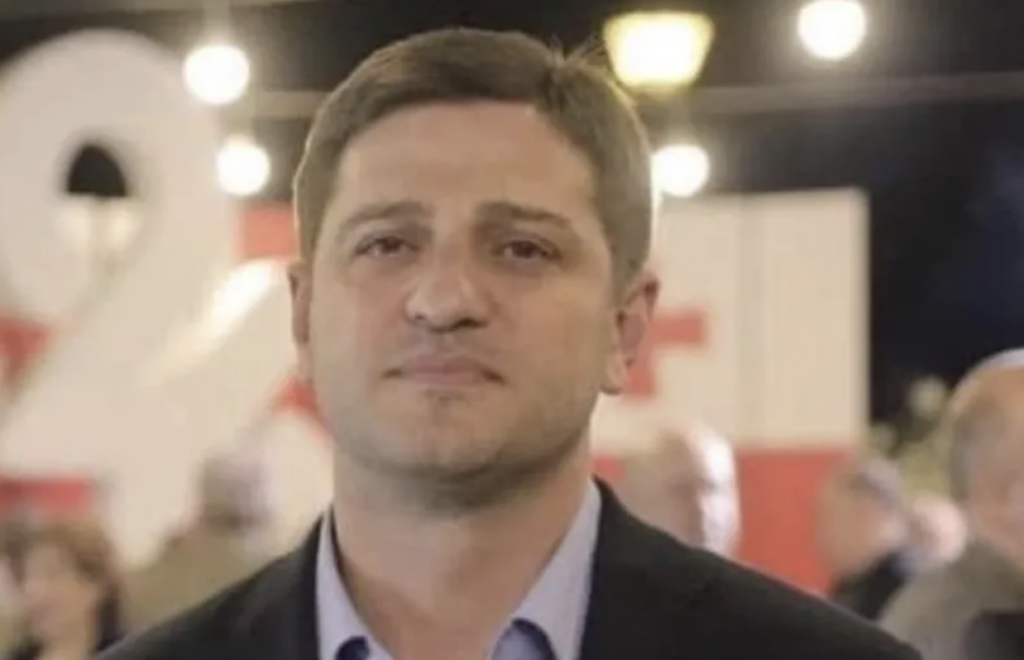
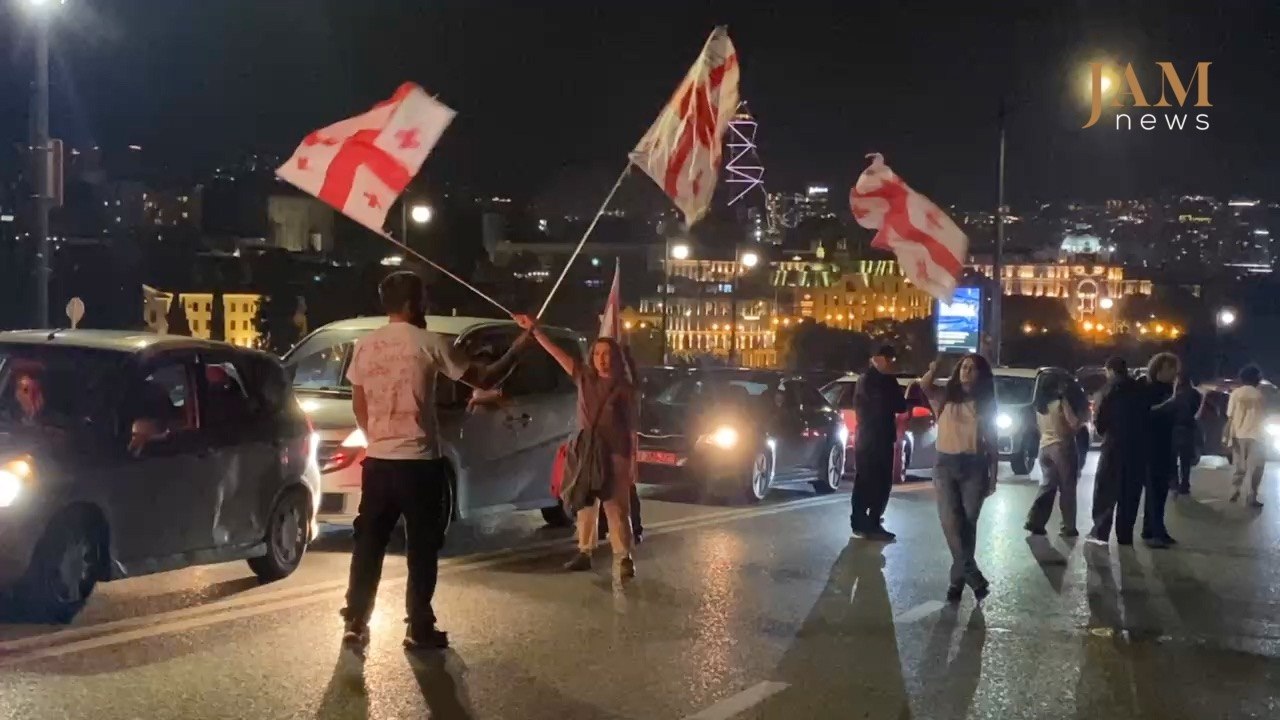
The new owner’s political and public record has also raised questions. In September 2025, Ilia Mikelaishvili was involved in a confrontation outside the campaign office of Tbilisi mayor Kakha Kaladze, where a physical clash broke out between participants in a pro-European demonstration and supporters of the ruling party. Video footage published by several media outlets shows Mikelaishvili rushing toward the protesters and attempting to start a fight as police tried to separate the sides.
The purchase agreement includes another important clause: the channel’s activities must not be used against its former owners or people associated with them.
The Channel’s Political Biography
Imedi was founded in 2003 by Badri Patarkatsishvili, a Georgian businessman living in Russia and a business partner of Russian oligarch Boris Berezovsky.
The channel quickly became one of the most popular and influential broadcasters opposing the then-ruling United National Movement and its leader, Mikheil Saakashvili.
In November 2007, during anti-government protests, police special forces stormed the broadcaster’s headquarters and forced it off the air. The episode remains one of the most dramatic moments in the history of Georgian media.
After Patarkatsishvili’s death in February 2008, the channel’s management changed several times. Its editorial line also shifted, and it became strongly pro-government, coming fully under the control of Saakashvili’s administration.
In 2012, Georgian Dream came to power and almost immediately returned the channel to the Patarkatsishvili family. Later, Imedi came under the control of the business group led by Irakli Rukhadze and for the next 14 years served as a key pillar of the government.
Political analyst Gia Khukhashvili, once an ally of Bidzina Ivanishvili, said in an interview with Radio Palitra that controlling Imedi became a priority from the very first day Ivanishvili came to power.
According to him, Irakli Rukhadze was never the channel’s real owner but merely a nominal figure, while in reality Imedi always answered to Ivanishvili.
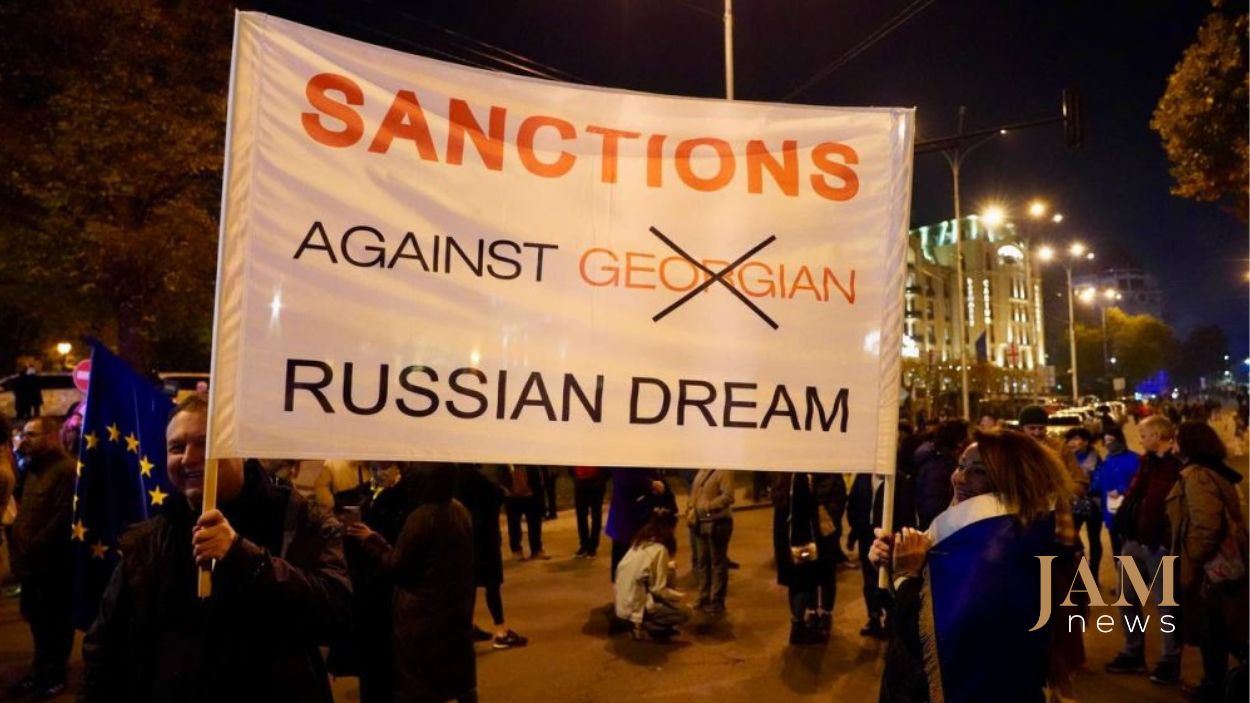
“However, Rukhadze saw significant benefits in this arrangement, as over the years he received the ‘green light’ needed to run his other businesses and used it to the fullest. Maintaining Imedi cost him little, the government regularly covered the debts, yet those debts still grew substantially. And now, when Imedi has effectively turned into a propaganda conglomerate, Rukhadze has rid himself of the liabilities,” the analyst says.
A Tool of Propaganda
According to international assessments, media freedom in Georgia has deteriorated in recent years. Among other concerns, pro-government outlets are said to be contributing to polarization and growing scepticism toward the West. In this context, the story of Imedi—whose name means “Hope” in Georgian—since its founding reflects the country’s political trajectory: from hopes of Western integration to the strengthening of authoritarian tendencies.
In recent years, not only Georgian but also international media outlets have increasingly described Imedi as a government propaganda platform.
Experts consider the channel a central element of the ruling party’s information infrastructure.
“There is no separate Georgian Dream and separate Imedi. All the narratives the government uses to influence society come from this channel,” says philosopher Levan Gambashidze.
A February 2025 article in the British magazine The Economist said that Imedi has been broadcasting an information campaign against the West, one that weakens Georgia’s path toward European integration.
Imedi often portrays the West as a “Global War Party” seeking to drag Georgia into conflict.
These narratives have played a significant role in shaping the country’s political climate, especially at times when the government has paused the process of closer integration with the European Union.
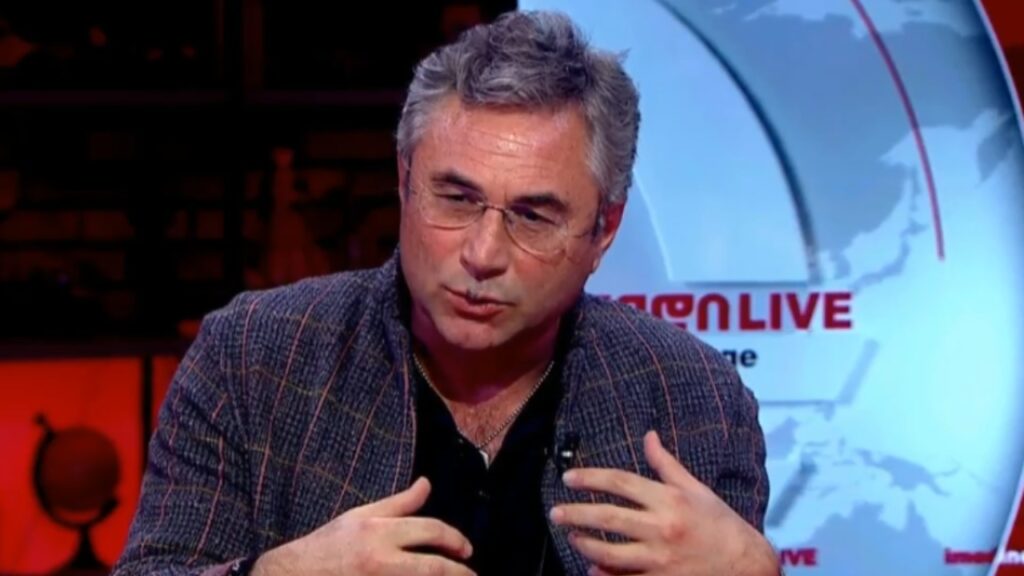
In October 2025, Radio Free Europe/Radio Liberty reported that the European Union was examining evidence of links between Imedi and Kremlin propaganda with a view to imposing sanctions on the channel’s owners and leading propagandists. Brussels accused the broadcaster of spreading Russian narratives. However, several Central European countries were sceptical about such measures, seeing them as restrictions on free speech and an example of double standards. As a result, the issue did not move forward.
In an interview with RFE/RL in January 2025, Irakli Rukhadze said the United States could not impose sanctions on him because he is a US citizen.
“Maybe another country could sanction me, but not the United States,” he said.
Other countries, including Ukraine and Lithuania, have in fact imposed sanctions on him.
In addition, in September 2025, an Imedi film crew was denied entry to Moldova to cover the parliamentary elections.
новости в Грузии