European court of human rights continues to hear case of Georgian journalist Mzia Amaglobeli






Amaglobeli case under review at European court
Lawsuits over the case of Georgian journalist Mzia Amaglobeli remain under consideration at the European Court of Human Rights in Strasbourg.
Amaglobeli is serving a two-year prison sentence after a court convicted her of slapping a police officer. The Georgian Young Lawyers’ Association (GYLA) reported the update.
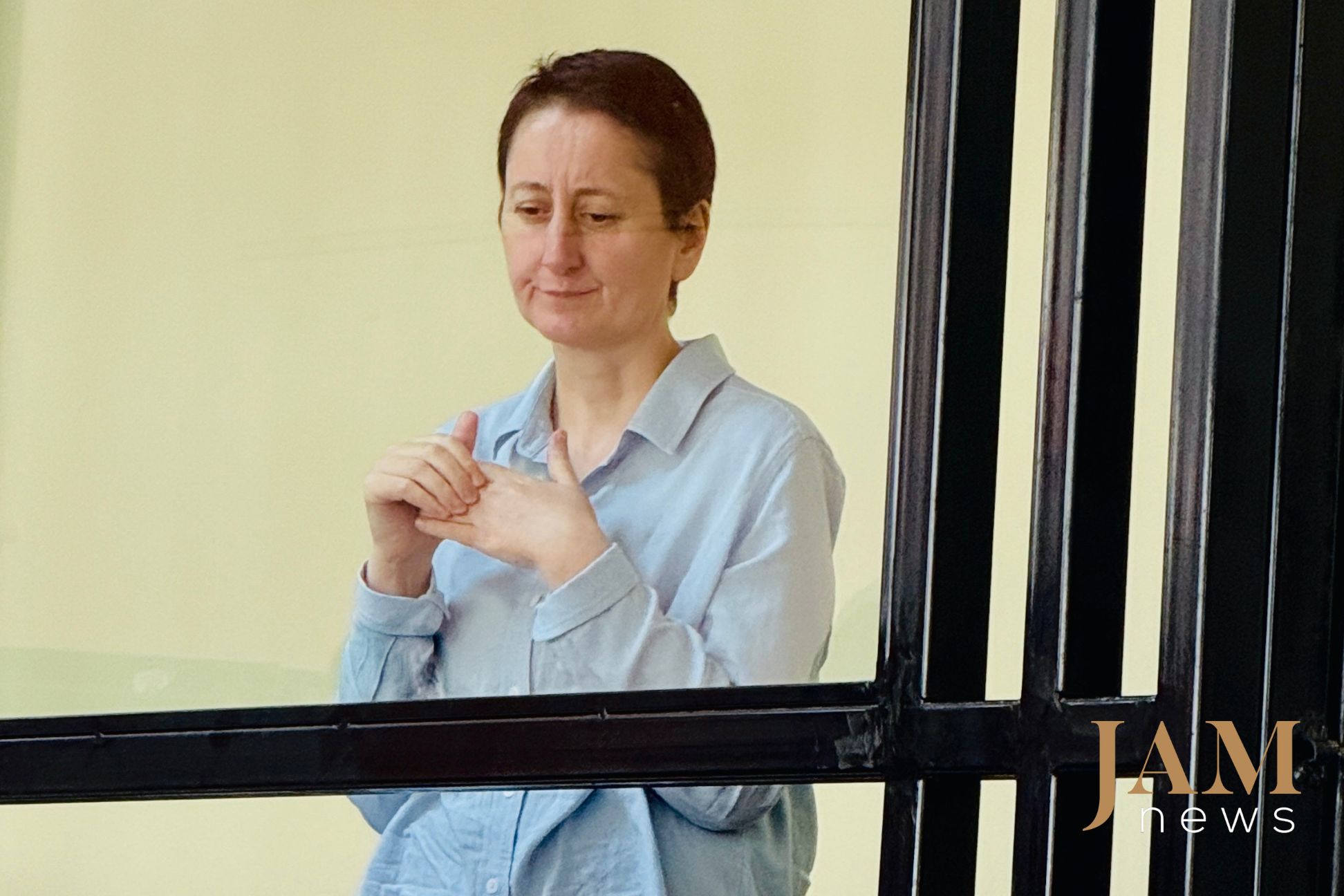
The first application, Amaglobeli v Georgia (No. 13661/25), concerns the arrest and pre-trial detention of Mzia Amaglobeli in January 2025. According to Georgian Young Lawyers’ Association (GYLA), the authorities violated several articles of the European Convention on Human Rights. These include the right to liberty and security, the right to a fair trial, the right to private life, freedom of expression and the right to an effective remedy. Lawyers filed the application with the European Court of Human Rights on 28 April 2025.
On 31 October 2025, the government of Georgia submitted its written observations to the court. It rejected all allegations. The government said both the arrest and the subsequent pre-trial detention complied with Georgia’s obligations under the Convention.
Amaglobeli was arrested during a protest in Batumi in January 2025.
GYLA stresses that the Georgian state has never named the person who carried out the arrest. This applies both at the national level and before the Strasbourg court. The organisation says the government has also failed to provide reasonable grounds for suspecting a crime. It adds that the authorities presented no evidence that would justify detention.
From the defence perspective, the state’s arguments lack consistency. On the one hand, the government itself acknowledges that legal qualification depends not only on the harm caused but also on context and alleged intent. On the other hand, it has produced no neutral evidence to support claims about Amaglobeli’s intent. According to GYLA, the video footage submitted does not allow identification of either the offence itself or the “intent of the perpetrator”.
The use of pre-trial detention as a preventive measure has drawn particular criticism. The state has continued to repeat arguments made at the national level. These include risks of flight, pressure on witnesses and the commission of new offences. At the international level, however, it has provided no evidence to support these claims.
Moreover, the authorities relied on administrative cases to justify detention. At the time, those cases had neither reached final decisions nor completed judicial proceedings.
Georgian Young Lawyers’ Association says the authorities violated the presumption of innocence in these circumstances. According to the organisation, Mzia Amaglobeli effectively had to prove her innocence in parallel cases that were still pending.
Additional materials submitted by the defence in Strasbourg also point to a possible political motive. GYLA refers to public statements by representatives of Georgia’s ruling party. In those statements, they described Amaglobeli as guilty even though no final ruling in her case had been issued at the time.
The case file also includes an expert examination of Amaglobeli’s mobile phone. According to GYLA, the authorities carried it out unlawfully. After almost nine months of investigation, the examination failed to confirm the prosecution’s claim that the attack on the police officer had been planned in advance. Human rights lawyers say the process violated Amaglobeli’s right to privacy and freedom of expression. They also argue that it deprived her of an effective legal remedy.

Amaglobeli case under review at European court