Police detain 106 people in Baku raid targeting LGBTQ+ community






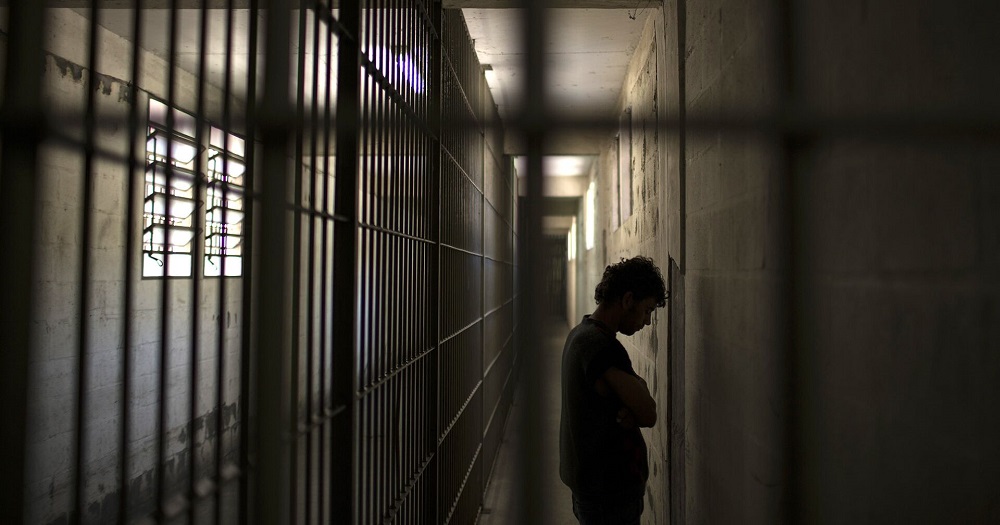
LGBTQ+ people detained in Baku raid
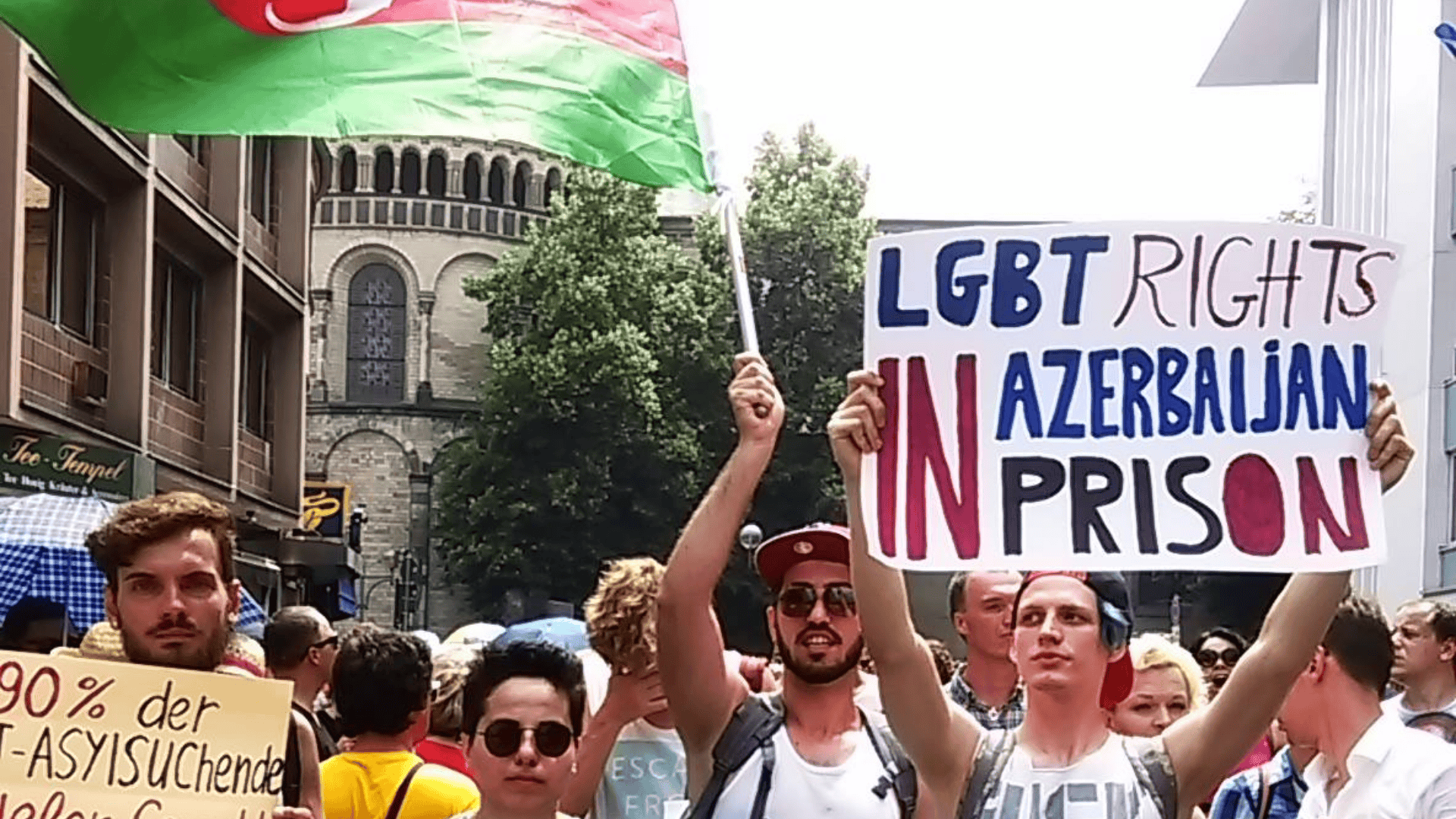
In Baku, police detained 106 people during a raid on the Labyrinth club, a venue frequented by members of the LGBTQ+ community, including lesbians, gay men, bisexual, transgender and other queer people.
According to witnesses and those detained, police used force, subjected them to degrading treatment and issued threats.
Police said the raid was carried out over alleged drug use at the venue. However, no narcotic substances were ultimately found, and those detained were fined under an administrative offence for smoking in an enclosed public space.
Raid and detainees’ accounts
The raid began suddenly at around 1 a.m. Police officers entered the club and forcibly escorted those inside onto the street, before loading them into police vehicles. Witnesses said the detainees were taken to the Nasimi district police department in Baku.
At the station, they were reportedly kept outdoors for about two hours in cold conditions, wearing light clothing and not allowed to sit down. They were then taken one by one into offices, where officers asked what the detainees described as humiliating questions about their private lives and sexual orientation.
Several detainees said they were subjected to severe violence by police. According to their accounts, one person who objected to such questioning was taken into a separate room and later returned with a bloodied face and a split lip. He said police officers had beaten him and subjected him to degrading treatment.
Another detainee said police lined everyone up and ordered them to stand without bending their knees, threatening sexual violence against anyone who moved.
People were reportedly kept in this position for around two hours. During this time, officers allegedly photographed detainees on their phones, confiscated mobile phones, went through messages and photos, and in some cases copied private images.
Detainees also said they were constantly insulted, sworn at and subjected to psychological pressure at the police station, while officers ignored those who began to feel unwell.
After several hours, police told the detainees they had been held on suspicion of drug use. However, as no illegal substances were found, all 106 people were fined under an administrative offence for smoking in an enclosed public space. The fines amounted to 30 manats (about $18), or in some cases 50 manats (about $30).
According to the detainees, they were also told that they would not be released unless the fines were paid.
Activists and rights organisations respond
The incident has raised concern among human rights defenders, independent lawyers and LGBTQ+ activists.
LGBTQ+ activist Ali Melikov told Meydan TV that the raid reflected the Azerbaijani authorities’ broader efforts to exert total control over all independent groups.
According to him, while the government does not openly promote transphobia in society, it uses it as a tool of pressure and regularly carries out similar raids against the queer community.
“What happened is nothing new for us,” Melikov said.
He recalled that earlier this year police officers had used gay dating apps to gather information and allegedly blackmail some users.
Independent lawyers and human rights defenders say one of the main obstacles to preventing such cases is a gap in the law. Azerbaijan does not have specific legislation prohibiting discrimination on the grounds of sexual orientation or gender identity.
The absence of such legal protections leaves LGBTQ+ people particularly vulnerable to rights violations.
“Social and economic problems, as well as political pressure, have intensified to such an extent that there are almost no independent institutions left that can protect us. Police use vulnerable and unprotected people as a means of pressure and a source of illegal extortion,” Melikov said.
Representatives of local independent NGOs, including activists from Minority Azerbaijan and the Nefes LGBT Alliance, have repeatedly condemned raids against the LGBTQ+ community, saying such actions violate human rights.
As information about the raid spread, international organisations also began to respond. ILGA-Europe (the International Lesbian, Gay, Bisexual, Trans and Intersex Association – Europe) issued a statement expressing concern and urging the Azerbaijani authorities to ensure the protection of human rights and dignity for all.
During mass detentions in 2017, UN human rights experts and organisations such as Human Rights Watch strongly criticised violence and the persecution of LGBTQ+ people in Azerbaijan. Local rights defenders say similar raids and arrests continue to create an atmosphere of fear for an already marginalised community.
The 2017 crackdown
The raid against the LGBTQ+ community in Baku is not without precedent. In September 2017, a similar large-scale police operation targeting LGBTQ+ people was carried out in the capital. According to official figures, 83 people were detained at the time.
Those detained in 2017 also reported serious abuse and humiliation. In particular, many transgender women said their hair was forcibly cut, which they described as especially degrading.
Some detainees were given administrative sentences of between 10 and 30 days in detention, while others were fined. As a result, many lost their jobs after employers refused to take them back following their prolonged absence.
After the 2017 events, some of those detained sought to challenge the actions of the authorities through the courts. A group of four independent lawyers represented 33 people and filed complaints.
However, lawyer Samed Rahimli said the courts rejected all the complaints. Appeals by the same 33 people to the prosecutor’s office also produced no results, as prosecutors said they had found no violations of the law.
At the time, Azerbaijani human rights defender Kamala Agazade said that without the adoption of an anti-discrimination law protecting LGBTQ+ people, legal challenges were unlikely to succeed.
“Society needs a law that guarantees the protection of LGBTQ+ rights,” Agazade said.
She argued that such legislation could help Azerbaijan shed its reputation as “the most homophobic country in Europe”, a label that has become associated with the country in recent years.
Following the wave of detentions in 2017, the Council of Europe’s Commissioner for Human Rights, Nils Muižnieks, called on Azerbaijan’s Interior Ministry to investigate allegations of torture against detained LGBTQ+ people. The authorities rejected the claims.
In a response, the then interior minister, Ramil Usubov, said the allegations of rights violations against “sexual minorities” were unfounded, adding that the detentions had been carried out “to ensure public order and security”.
Azerbaijan’s official bodies generally maintain that the rights of all groups in the country are fully protected and that the situation of LGBTQ+ people does not differ from that in most European countries.
LGBTQ+ rights in Azerbaijan
Against the backdrop of the latest events, the broader state of LGBTQ+ rights in Azerbaijan has once again come under scrutiny.
Although same-sex relations were decriminalised in 2000, the country has no specific legislation protecting the LGBTQ+ community from discrimination. As a result, LGBTQ+ people lack legal safeguards in areas such as education, healthcare, employment and other spheres.
This is also reflected in ILGA-Europe’s annual Rainbow Index. Azerbaijan ranks last among 49 European countries and has held the “worst-performing” position for nine consecutive years.
The index measures both legal protections and their practical implementation for LGBTQ+ people across Europe. Azerbaijan has remained at the bottom of the ranking for many years.
Human rights defenders say negative public attitudes towards LGBTQ+ people, combined with gaps in the law, create conditions in which law enforcement agencies can easily target these groups.
LGBTQ+ people detained in Baku raid