Why Georgia's prime minister is talking about 'Russophobia' ahead August war anniversary






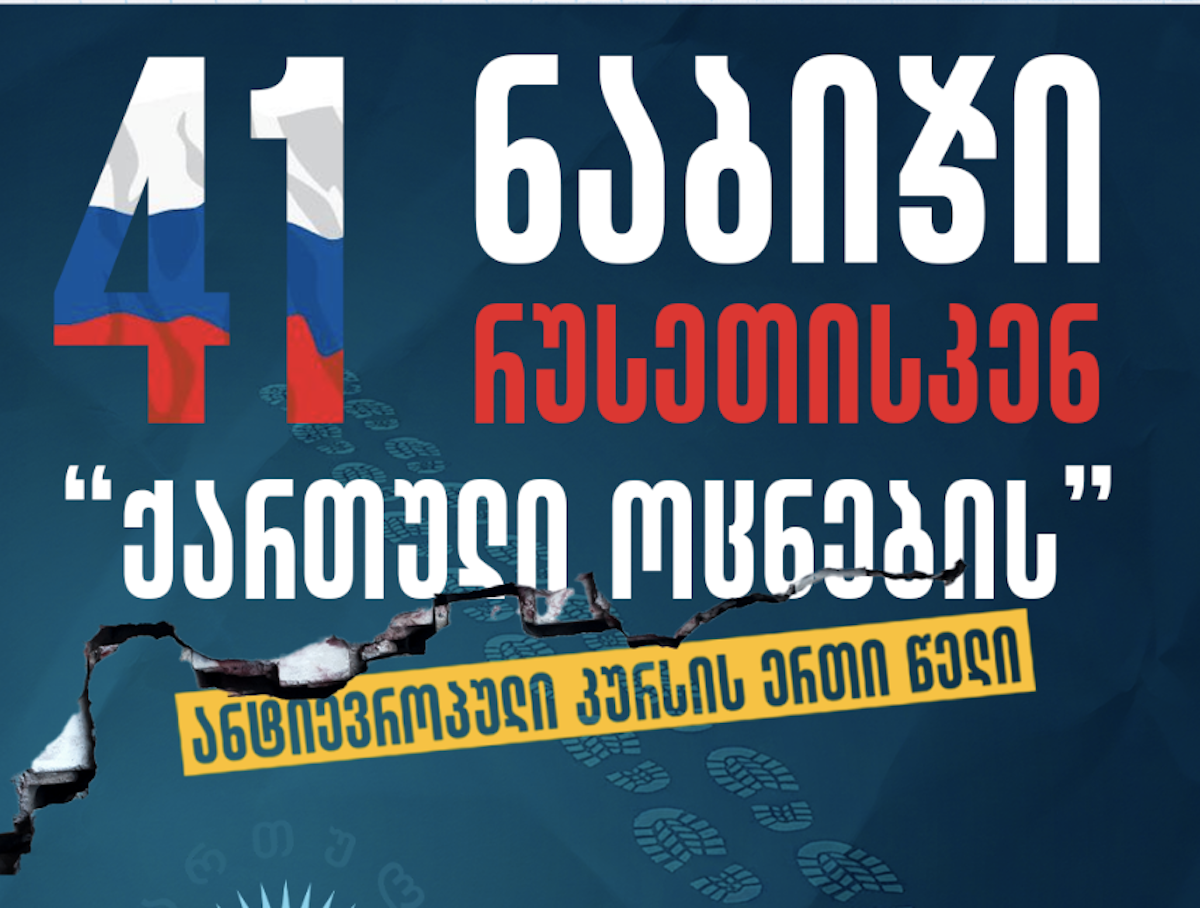
Just days before the anniversary of the August 2008 war, Georgian Prime Minister Irakli Kobakhidze published a lengthy social media statement on what he described as “Russophobia”.
In the statement, Kobakhidze draws connections between Russia’s full-scale invasion of Ukraine, Georgia’s domestic politics and the rhetoric of the Georgian opposition. He argues that the “Global War Party” needed the war in Ukraine to “fuel Russophobia among its agents worldwide, including in Georgia.”
The prime minister accused the opposition and civil society of changing their attitude towards Russia. He described their current hardline stance as “Russophobia”.
The statement has reignited debate over the 2008 war. This time, however, the focus extends beyond how the war began and Russia’s responsibility for it. Instead, the prime minister shifts attention away from Russia’s actions and towards the position of his political opponents in Georgia.
The opposition has questioned not only the substance of Kobakhidze’s remarks, but also the timing of their publication. Why did the prime minister choose to speak about “Russophobia” on the eve of the war’s anniversary? Why does his statement focus on anything other than Russia’s responsibility? And what is the government doing to address the continuing occupation and the possibility of further annexation?
What did Irakli Kobakhidze say?
One of the central arguments in Kobakhidze’s statement is that Georgia’s opposition groups did not adopt a hardline stance towards Russia after the 2008 war. According to the prime minister, their position changed only in 2022, following Russia’s full-scale invasion of Ukraine.
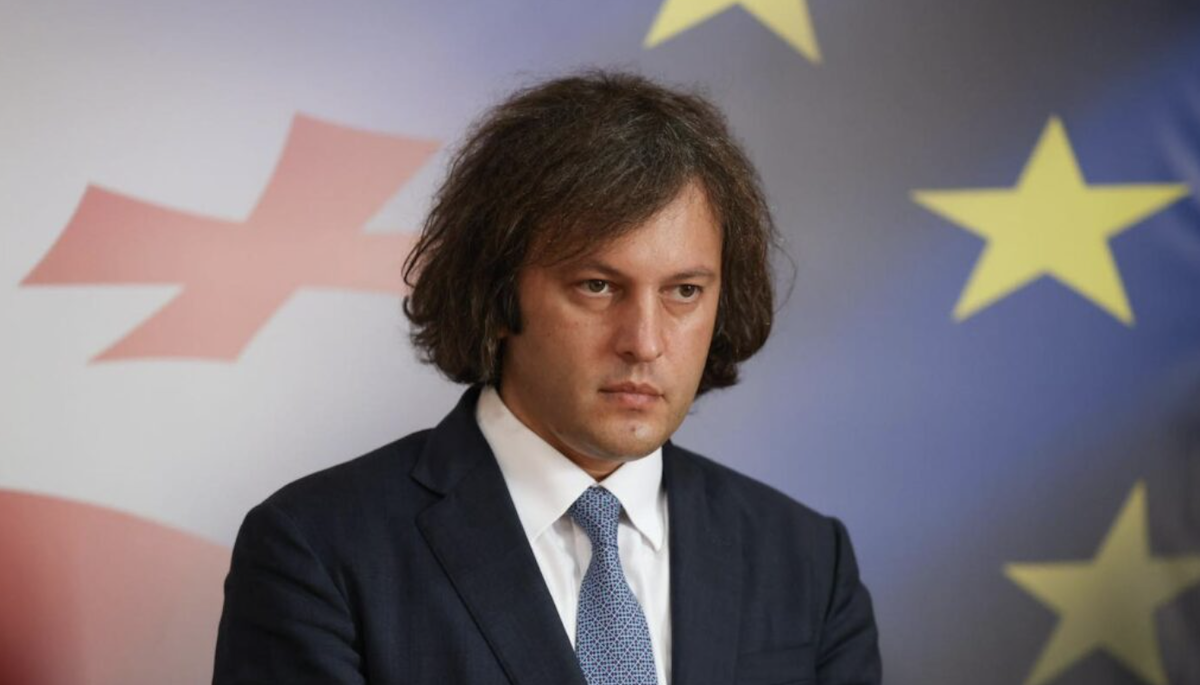
Kobakhidze notes that after the August 2008 war, Mikheil Saakashvili’s government chose to maintain economic, tourism and cultural ties with Russia. He also points out that the government unilaterally abolished visa requirements for Russian citizens.
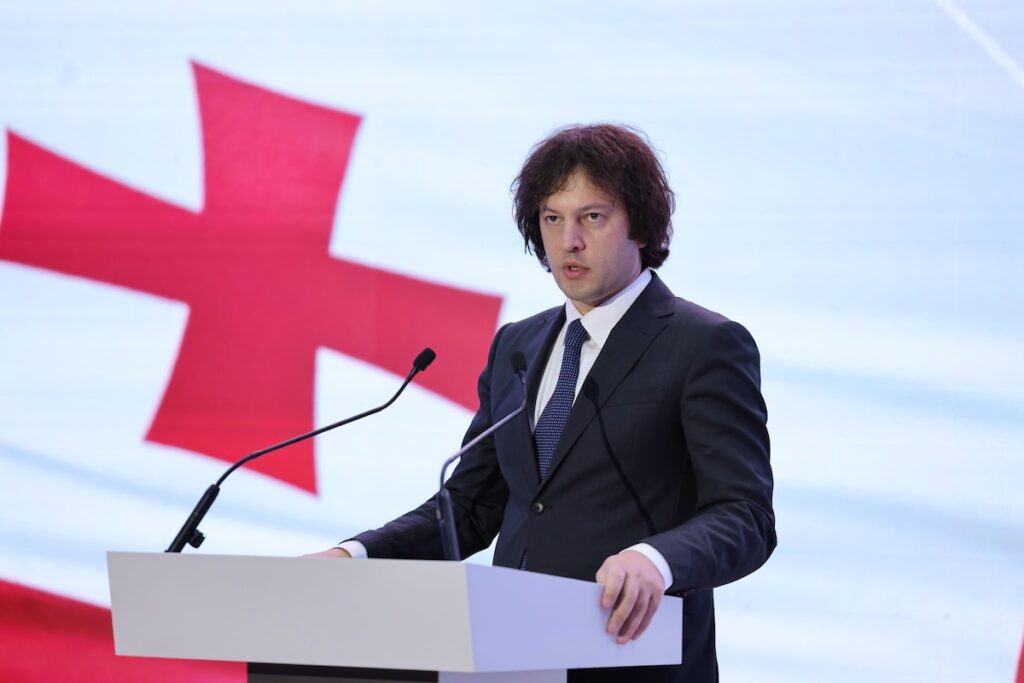
“After Russia occupied parts of Georgia in 2008 and recognised the independence of Abkhazia and South Ossetia, the United National Movement not only refrained from pursuing a hardline policy towards Russia, but shortly after the war its leader personally welcomed Russian citizens at the border and encouraged them to visit Georgia as tourists and invest in the country.”
According to Kobakhidze, neither members of the then government nor figures who are now in opposition objected to that policy. He specifically named opposition politicians Elene Khoshtaria, Zurab Japaridze and Misha Mshvildadze.
“We all remember how today’s leading ‘Russophobes’ — Elene Khoshtaria, Zurab Japaridze, Misha Mshvildadze and others — welcomed Russian tourists, Russian money, which apparently ‘didn’t smell’ at the time, and closer trade, economic and cultural ties with Russia.”
Based on this, Kobakhidze argues that the opposition’s current anti-Russian rhetoric and what he calls “Russophobia” are not the result of a consistent political position but of instructions received from abroad. In his statement, he describes his opponents as “foreign agents” and links their actions to the “deep state” and the “Global War Party.”
“The foreign agents declared Russia their sworn enemy only after it launched its second invasion of Ukraine.”
Kobakhidze asks why the same attitude did not emerge in 2008, when Georgia itself became the victim of Russian aggression.
“A logical question arises: why did they become Russophobes now, rather than when Georgia was under attack? Do they not even formally regard Georgia as their homeland? Is Ukraine their homeland instead?”
Another of his arguments concerns Elene Khoshtaria, who receives inherited royalties from Russia for the work of her late father, Soviet-era theatre director Goga Khoshtaria. Kobakhidze presents this as an example of what he describes as the opposition’s inconsistency.
“We all know that Russophobic politicians, NGO representatives, journalists and activists have remained silent about the millions of Russian roubles transferred to Elene Khoshtaria from the Russian state budget.”
Timing of the statement
Kobakhidze published his statement just a few days before the 18th anniversary of the August 2008 war.
At this time of year, Georgians traditionally commemorate those killed in the conflict, internally displaced people and the territories occupied by Russia. Critics have therefore questioned why the prime minister shifted the focus away from Russia’s responsibility and towards what he describes as the opposition’s “Russophobia”.
Irakli Pavlenishvili of the United National Movement views the statement in that context. In his opinion, raising the issue of “Russophobia” in an occupied country on the eve of the war’s anniversary is no coincidence.
“Promoting this narrative just before the anniversary of the August war is exactly what the Kremlin would want and encourage. It is impossible to believe that complaining about Russophobia in occupied Georgia at such a moment is a coincidence.”
Pavlenishvili argues that this rhetoric pushes Russia’s responsibility into the background while turning Georgia’s former government and the opposition into the main targets of political debate.
“This is another deliberate psychological and propaganda operation against the Georgian people. But they will have to accept that they will not be able to weaken or destroy anti-occupation sentiment among the Georgian public.”
Grigol Gegelia of the Lelo – Strong Georgia movement also emphasised the timing of the statement. He argues that, in the days leading up to the anniversary of the August war, Kobakhidze chose to confront fellow Georgian citizens instead of Russia.
According to Gegelia, the prime minister’s main focus at this time should have been Russia’s aggression and Georgia’s security.
“First and foremost, he should have been talking about Russian aggression and about the fact that Georgia was the first link in the chain of events that later continued elsewhere.”
What do Kobakhidze’s critics say?
Kobakhidze’s critics do not deny that Saakashvili’s government welcomed Russian tourists and maintained some economic ties with Russia after the war. The disagreement lies in how that policy should be interpreted.
Opposition figures distinguish between the Russian government and ordinary Russian citizens. In their view, welcoming tourists did not amount to supporting the Kremlin’s policies.
Gigi Tsereteli, leader of the European Georgia party, says the government sought to avoid creating the image of a xenophobic state. At the same time, he notes, Tbilisi continued to demand that Russia comply with the 12 August 2008 ceasefire agreement.
“Georgia was not a xenophobic country. The idea was to show that many Russians themselves opposed Putin’s expansionist policies. We had nothing against ordinary people. If peaceful tourists wanted to come, they were welcome. If someone was doing business without supporting the war, there was no problem.”
According to Tsereteli, maintaining economic and humanitarian ties was part of Georgia’s diplomatic strategy. At the time, there was still hope that international pressure would persuade Russia to honour its commitments.
“There was an attempt to reverse the process after 2008 and encourage Russia, through diplomacy, to fulfil its obligations. That was the rationale behind this policy.”
He adds that Russia’s full-scale invasion of Ukraine in 2022 fundamentally changed that approach. It demonstrated that the prospects for reaching diplomatic agreements with Moscow had diminished even further.
“The war in Ukraine convinced everyone that there is no longer any real basis for dialogue with Russia.”
Irakli Pavlenishvili makes a similar argument. He says it was important for Georgia after 2008 to show that its conflict was not with the Russian people.
“Because of people like Kobakhidze, who promoted these narratives, we constantly had to explain that we were not fighting Russians, that we were not xenophobic and were not looking for conflict. We could still welcome them as ordinary tourists.”
Pavlenishvili also notes that the previous government faced the opposite criticism at the time. Its opponents accused it of adopting an excessively harsh and xenophobic tone towards Russia.
“The contexts of 2008 and 2022 are different”
Philosopher Levan Gambashidze argues that the biggest flaw in Kobakhidze’s comparison is that it ignores how much the political context has changed. In his view, comparing the post-2008 period with the present day is misleading. Russia’s behaviour has changed, and so has the policy of the Georgian government.
According to Gambashidze, under the previous government there was no widespread perception that the state was pursuing a pro-Russian course.
“There was no sense that we were subordinated to Russia.”
He says the key question is not Kobakhidze’s individual arguments, but his motives. Gambashidze asks who benefits from portraying “Russophobia” as a problem.
“Which country would be concerned about growing ‘Russophobia’ around the world? Russia. Now ask yourself why the Georgian government would be concerned about it.”
According to Gambashidze, since 2022 the authorities have repeatedly warned the public about the possibility of war with Russia. He argues that this has itself contributed to growing fears of Russia.
“If ‘Russophobia’ means fear or hostility towards Russia, and if Georgian Dream has been warning its own population about the possibility of war with Russia since 2022, then what explains the rise in these ‘Russophobic’ sentiments after 2022?”
The Telavi incident
Some of Kobakhidze’s critics also link his statement to a recent confrontation between Georgian citizens and Russian tourists at a wedding in the town of Telavi.
Gigi Tsereteli suggests the statement may have been prompted by the public reaction to that incident. He also says Russia could use such episodes as a pretext to exert political pressure on Georgia.
Grigol Gegelia goes further, arguing that Russian security services could exploit the growing flow of Russian tourists to stage provocations.
“We have long warned that allowing Russians to enter the country without proper controls would end badly. Now Russian intelligence has fertile ground for provocations. It can use these people to carry them out.”
What arguments does Georgian Dream make?
Representatives of the ruling Georgian Dream party have echoed the main points of Kobakhidze’s statement almost word for word.
“You clearly remember what Saakashvili, Khoshtaria and Japaridze were saying. They unilaterally introduced visa-free travel for Russian citizens, transferred ownership of our strategic assets to Russian state-owned companies, cast the decisive vote in favour of Russia’s accession to the World Trade Organization, welcomed Russian tourists at the border because that was the task they had been given, and became Russophobes only after Russia invaded Ukraine,” said Levan Machavariani, first deputy chair of the Georgian Dream parliamentary faction.
Machavariani also cites rulings by international courts to support the government’s position. He points out that Georgia won legal cases against Russia in Strasbourg and The Hague.
“For us, Russia has been an occupying power since August 2008. It makes no difference what it did later in another country.”
Parliamentary Vice Speaker Nino Tsilosani also argues that the opposition’s attitude changed in line with the international political agenda.
“For years after the August 2008 war, we watched today’s radicals applaud the promotion of Russian tourism and Russian capital instead of protesting against it.”
Tsilosani likewise argues that the opposition’s current rhetoric stems not from Georgia’s own experience but from “instructions from abroad” received after 2022.
“Remaining silent about the suffering of your own people while shouting slogans dictated from abroad is neither patriotism nor genuine solidarity. It is simply unquestioning service to someone else’s interests.”
The opposition’s main question
Some opposition parties do not engage with Kobakhidze’s historical comparisons at all. Instead, they focus on the government’s current policies.
Giorgi Sharashidze of the Gakharia – For Georgia party argues that debating the policies of 2008–2012 cannot replace answers about the ongoing occupation and the risk of annexation.
“Does Irakli Kobakhidze mean that today he should continue the same policy that the United National Movement pursued after 2008? Is he using the United National Movement to justify his own collaboration with Georgia’s main enemy — Russia?”
According to Sharashidze, the current government should be responding to Russia’s actions in the Tskhinvali region and assessing the threat of further integration of the occupied territory.
“What matters is not what happened in 2008. What matters is what is happening today.”
Georgia’s Western course
Kobakhidze’s critics also link his statement to Georgia’s foreign policy. In their view, the prime minister’s text portrays the West, the opposition and civil society — rather than Russia — as the country’s main threats.
According to Gigi Tsereteli, although the previous government made many mistakes, it never abandoned Georgia’s Western course.
Tsereteli argues that Kobakhidze’s statement repeats familiar Russian propaganda narratives, particularly by portraying civil society and Western partners as part of a system of external control.
“I believe the text was, at the very least, edited by people affiliated with the Kremlin.”
Nika Gvaramia, leader of the Ahali party, offered an even harsher assessment. In his view, the statement confuses historical facts with political concepts.
“I cannot recall even Bidzina Ivanishvili’s texts containing such a mess, so much slander and falsehood, such confusion of facts, dates and concepts, and, above all, Russophilia on this scale.”