Abkhaz experts discuss Georgian opposition’s proposals, EU stance on conflict resolution






The EU on Abkhazia
Statements by Western officials and initiatives of the Georgian opposition surrounding the status of Abkhazia are once again drawing attention to the region. Abkhaz analysts commented on attempts to intensify Abkhazia’s isolation and evaluated the roles of the EU, Russia, and internal Georgian forces in this process.
Key arguments:
- The Abkhazian question is being used by the Georgian opposition as a tool in their struggle against the ruling Georgian Dream party. Attempts to harden their stance and achieve the withdrawal of recognitions, as seen in the case of Nauru, are aimed at accusing the current government of a lack of patriotism and of making concessions to Moscow.
- The European Union leadership’s focus on the issue of Syria revoking its recognition of Abkhazia is driven not so much by concern for peace as by a desire to weaken Russian influence and maintain levers of influence over Georgia amid a crisis in bilateral relations.
- A peaceful or forceful “return” of Abkhazia to Georgia is an unacceptable paradigm for Abkhaz society. Pressure from the EU and Georgia only destroys trust and narrows the possibilities for a diplomatic settlement.
Here are the questions posed to the experts and their responses.
Why would the Georgian opposition, which already faces plenty of problems in its relations with the authorities, choose at this moment to step up efforts toward the further isolation of Abkhazia, following the successful outcome with Nauru?
Respondent 1
It is difficult to judge the motivation of the Georgian opposition in this matter. I can only assume that, as always, the issue of Abkhazia and the Georgian-Abkhaz conflict serves as a bargaining chip in domestic political processes. Regarding Abkhazia, Georgian Dream behaves with more restraint than previous Georgian authorities, at least at the level of public statements. In contrast to it, and as if to demonstrate greater patriotism, the opposition—which lacks broad support among the population outside of Tbilisi—speaks out much more harshly. Apparently, in its largely ineffective struggle against the current government, the Georgian opposition has decided to weaponize the issue of the Georgian-Abkhaz conflict, or as they call it, the “Abkhazian question”.
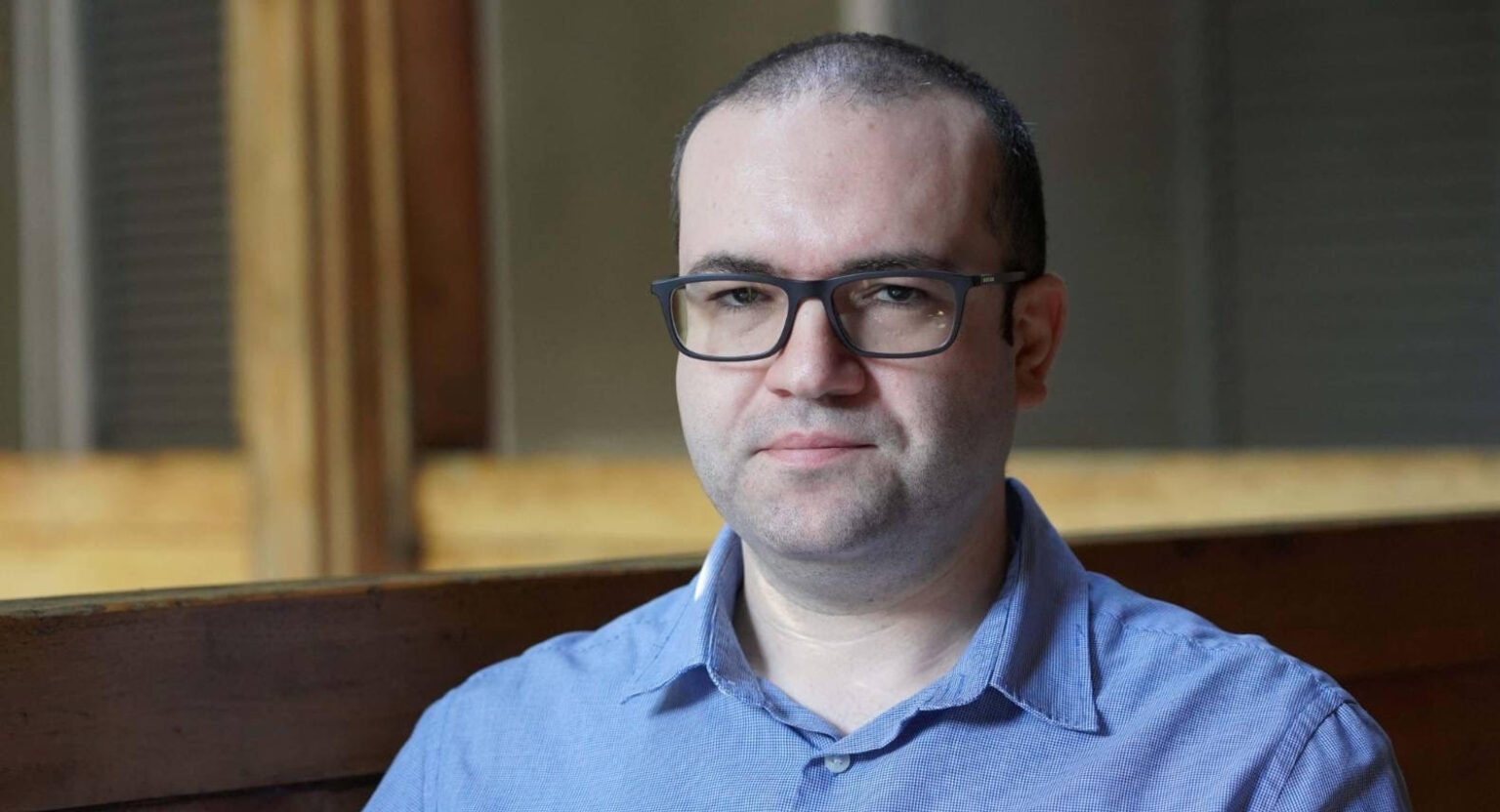
At the same time, other voices are also being heard within the Georgian opposition. For example, Nika Gvaramia recently gave an interview in which he called on Georgian society to move past the traumatic memories of the past. In his view, conflicts should not act as weights tied to Georgia’s feet on its path toward the European Union.
Thus, within opposition circles, there are proponents of both a forceful “return” of Abkhazia and those who advocate for its “peaceful return”. Another matter entirely is that few in Georgia understand that for the Abkhaz people, peace and a “peaceful return” are by no means the same thing. In Abkhazia, such an approach is perceived as achieving the same end by hook or by crook.
Instead of trying to turn back the clock and forgetting everything we went through in the recent past, we ought to accept reality and seek common ground on issues of mutual interest. And such issues do exist, considering that we are neighbors.
To speak of returning Abkhazia, whether by peaceful or violent means, belongs to an entirely different paradigm. The Abkhaz people will resist either of these two options. However, at least a mindset focused on peaceful solutions makes it possible to maintain stability. Unfortunately, if circumstances develop in a way that favors Georgia, those parties advocating a forceful solution will gain the upper hand.
Respondent 2
I believe that the situation surrounding the revocation of recognition by Nauru undoubtedly emboldened Georgian super-patriots. But it also seems to me, paradoxical as it may sound, that the more liberal, pro-democratic forces in Georgia—meaning the current opposition, parts of which were once in the Georgian leadership—have always been and remain more hardline, nationalistic, and hawkish regarding frozen conflicts.
We have always paid attention to this hawkish rhetoric, which was heard back during Mikheil Saakashvili’s rule. On the one hand, he seemed to democratize Georgia’s governance system, but on the other, he approached conflict resolution in a way that was entirely unliberal and disregarded human rights. The current demands of the opposition appear to be a continuation of that policy.
Another factor relates to the fact that relations between the European Union and Georgia—specifically the ruling Georgian Dream party—have deteriorated so sharply that the European Union has no remaining levers of influence over processes taking place inside Georgia. Since the EU is deprived of the ability to affect Georgia’s internal political matters, it compensates by responding to this narrative to cater to the Georgian opposition, which Europe views as pro-democratic and liberal.
Respondent 3
The Georgian opposition raises this issue with a tactical objective: to demonstrate that the current government lacks principle regarding the problem of Georgia’s territorial integrity and is willing to compromise on it. In doing so, it heightens the level of friction between Western countries and Ivanishvili’s government by framing the latter as conduits for Moscow’s global agenda.
In reality, the approach across the entire political spectrum in Georgia toward relations with the former autonomous entities is identical: restoring the territory of the Georgian SSR either by force or through diplomacy.
Respondent 4
In my view, the Georgian opposition has quite a few problems not only in its relations with the government, but also in internal relations within itself; there is no single, clearly defined leader there, and it appears to me to be fragmented and non-united.
The “Coalition for Change” consists of several parties and is headed by a council of four leaders. That is to say, the Georgian opposition has problems with the authorities, within itself, and with the European Union as well.
To both questions, I would answer the same way: the appeal to Ursula von der Leyen lies within the perspective of Georgia’s domestic political problems and its relations with the European Union.
We see that the Georgian opposition has been protesting for a very long time, people are taking to the streets, but these protests yield no visible results; in my view, Georgia’s tilt away from the European Union towards Russia is growing, public support for the Georgian opposition is falling, and its ratings are falling too.
We often hear that the Abkhazian issue currently sits on the periphery of the international agenda and is virtually invisible against the backdrop of other crises. Why, then, do we see such active support from the European Union for the initiative demanding that Syria revoke its recognition of Abkhazia?
Respondent 1
There are two factors here. One is that Abkhazia is indeed at the very bottom of their agenda, if present at all. Russia and Georgia, however, are present. Therefore, the issue of revoking recognition represents, on the one hand, a policy of countering Russia, and on the other, a step toward trying to regain Georgia’s loyalty. Ursula von der Leyen’s support for the Georgian opposition’s demand on such a sensitive, patriotic issue also serves to bolster the position of opposition forces within Georgian society.
On the whole, the fact that against the backdrop of highly acute global and regional problems, the President of the European Commission finds time for the issue of Syria revoking its recognition of Abkhazia reflects political bias and the double standards associated with such bias, which, unfortunately, have always been displayed toward us by Europe and the international community at large.
It would be appropriate here to ask von der Leyen a question: if EU representatives claim to be committed to a peaceful resolution of the conflict, what does revoking Syria’s recognition have to do with it? How does it bring us any closer to peace? If anything, it does the opposite. Such steps certainly do not help the negotiation process, the building of trust, or any of the other goals declared by the Europeans. What they certainly do is call into question the EU’s role as a mediator, further shrinking its already dramatically reduced presence in the region.
Respondent 2
It is true that in words we often hear that amid the major wars taking place around the EU, the Georgian-Abkhaz context is irrelevant. In practice, however, whenever decisions are made that restrict the rights of Abkhazia’s residents, EU officials quickly spring into action.
Interestingly, Ursula von der Leyen herself, who intends to address the revocation of Syria’s recognition of the Republic of Abkhazia, appears to be going through a difficult period within the European Union. From news sources, we can see how European Parliament sessions unfold, with MEPs from various countries harshly criticizing von der Leyen’s actions, raising many grievances and questions.
In this situation, it is remarkable that despite serious internal problems and challenges, she finds the time to attend to the requests of certain political forces in a non-EU country, Georgia, regarding pressure on another non-EU country, Syria. We have always noted the European Union’s special attitude toward Georgia—an attitude I would describe as unrequited love.
The European Union contributed greatly to the development of the modern Georgian state and supported the reform of its state institutions. It seems to me that Georgia was forgiven for things that were never forgiven in other countries. What is happening now appears to be the lingering, phantom feelings toward Georgia at a time when its official representatives have ceased to reciprocate.
Of course, the factor of relations between the European Union and Russia also plays a role that cannot be ignored. Here, the EU operates on the principle of “the friend of my enemy is my enemy”. Perhaps that is why they show little concern for how EU decisions will be received by the government and civil society in Abkhazia, how these decisions impact the protection of Abkhazia residents’ rights, or how they might ultimately affect the state of the conflict.
Respondent 3
I think it is premature to speak of overly active support for this issue on the part of the European Commission. Although, on the whole, a moderate level of activity aimed at having Syria revoke its recognition of Abkhazia’s sovereignty would not surprise me. First and foremost, it is an effort to undo political acts of the Assad era and further weaken Russian influence in the Eastern Mediterranean.
The complaints of the Georgian opposition are of minor importance in this context. What is interesting, however, is whether it is truly in the West’s own interest to indulge Georgia, given the country’s systematic and deliberate drift toward the East. That remains an open question, and I doubt I am the only one considering it.
Respondent 4
Against the backdrop of these problems in relations between the Georgian opposition and the European Union, a certain reboot is required. Running slightly ahead and trying to answer the second question about why the European Union needs this, I think that such a reboot is needed for the European Union as well.
The chosen tactic and strategy of the European Union—not to engage in contacts with the Georgian government, but rather to cooperate more actively and closely with the Georgian opposition on the assumption that it will sooner or later manage to take power in Georgia—seems to me not to be working or to be working poorly, and it requires a new impetus. Yet no visible tracks on which success could be achieved are in sight.
By success, I mean the need to boost the rating of the opposition itself among the Georgian population and to raise its status. After the regime change in Syria, the new leadership of that country needs some assistance from the European Union, and the EU holds certain leverage over it.
If, at the request of the Georgian opposition, it manages to achieve some progress on the issue of Syria revoking its recognition of Abkhazia, this could sharply boost the rating of the opposition in general and of this opposition bloc in particular. The exact same thing, in my opinion, is required for the European Union itself, since the previous tactic is not working and the opposition forces in Georgia are not gaining, but on the contrary are losing strength and influence.
The European Union put forward eight or nine conditions to the Georgian government so that it could return to the previous course of relations with the EU; Georgia is not fulfilling these conditions, and what is more, the tilt towards Russia has already turned into a stable trend toward rapprochement between these countries against the backdrop of the war with Ukraine and in the Persian Gulf, where Europe has a great deal of problems.
Naturally, the European Union needs to restore relations with Georgia, especially since Georgia is located in that region and used to be a partner of the EU, but is no longer one now.
In this context, I allow that the appeal of the opposition bloc to Ursula von der Leyen is necessary for all the purposes I have mentioned.
The terminology, place names and views expressed in this article are those of the author and do not necessarily reflect the editorial position of this website