Why can Russia conscript students from Abkhazia?






Russia conscripts Abkhaz students
A schoolteacher, lawyer and blogger from Abkhazia, Said Beya, has looked into the issue of Abkhaz students studying in Russia being conscripted into the Russian army.


Said Beya: “Recently, there has been active public discussion of reports that the Abkhaz Foreign Ministry is trying to reach an agreement with Russia so that our students with dual citizenship are not required to register for military service in Russia.
Many people are asking: ‘How is this even possible? We are already registered for military service at home!’
Let’s look at the legal side of the issue and see where exactly the mistake was made.
What is the legal basis?
The status of people holding both passports is governed by the Agreement between Russia and the Republic of Abkhazia on resolving issues of dual citizenship. The document was signed by the Abkhaz and Russian sides in Sukhumi on 19 September 2022. Following a lengthy ratification process, the agreement fully entered into force on 25 April 2025.
The main source of the problem lies in Article 5 of the agreement. It states:
‘Persons holding citizenship of both parties shall perform compulsory military service in the party in whose territory they permanently reside at the time of conscription.’
The agreement protects those who have already completed military service in Abkhazia, meaning they cannot be conscripted in Russia. But if a young man has not yet served in the Abkhaz armed forces and travels to Russia to study, he becomes vulnerable to conscription.”
Why does Russia have the right to do this?
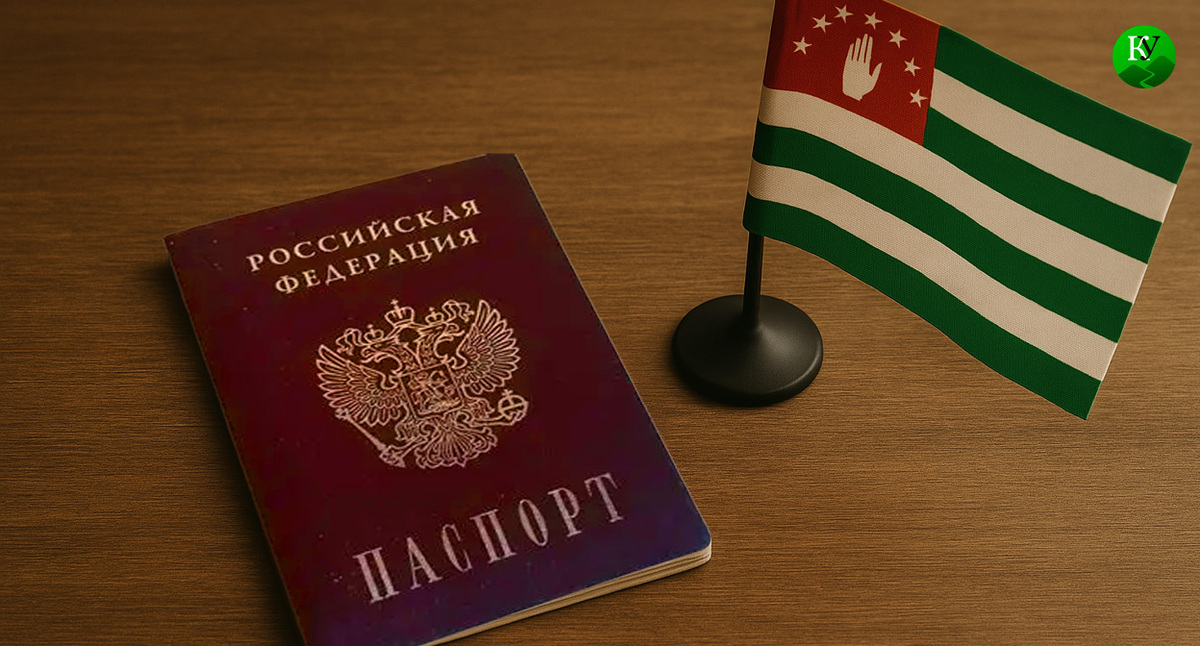
For the Russian authorities, anyone holding a Russian passport while in the country is regarded exclusively as a Russian citizen. An Abkhaz passport carries no weight with Russian military recruitment offices.
Under Russia’s law on military service, any Russian citizen who moves to a new place for more than three months is required to register with the local military authorities.
Students who come to Russia to study obtain temporary registration in halls of residence or rented accommodation, usually for several years. The Russian side interprets this unequivocally: if a young man lives and studies in Russia, then under Article 5 of the agreement, Russia is his current place of residence. This means the military recruitment office is entitled to require him to report for registration and conscript him for military service, unless he is eligible for a student deferment.
Why did the Abkhaz side fail to address this issue when signing the agreement in 2022?
This is now the main question facing the Abkhaz diplomats and officials who drafted and signed the document in 2022.
There appears to be a significant legal omission:
A crucial exemption is missing. Article 5 of the agreement does not contain wording along the lines of: “…with the exception of citizens temporarily staying in the territory of the other Party for the purpose of receiving an education.”
Had such a provision been included, Russian military recruitment offices would have had no grounds to make such demands of Abkhaz students.
In 2022, our authorities signed a framework agreement without taking some of the legal nuances into account.
Years later, after large numbers of students were told to register for military service in Russia, the Abkhaz Foreign Ministry has been forced to hold urgent meetings with the president and seek to renegotiate the issue with Moscow.
While these negotiations continue, the requirements imposed by Russian military recruitment offices on students temporarily registered in Russia unfortunately remain lawful.
For now, the only way for these students to avoid conscription is to make sure they obtain an official student defermentin Russia in time.”
The terminology, place names and views expressed in this article are those of the author and do not necessarily reflect the editorial position of this website.