Pashinyan on Catholicos: 'Ex-president Serzh Sargsyan also didn't want to step down, but was forced to'






Pashinyan: “Sargsyan didn’t want to step down”
Armenian Prime Minister Nikol Pashinyan has said that he and ten bishops who sit on the Church Reform Council intend to do everything possible to ensure that the Catholicos of All Armenians steps down from the throne. He made the remarks at his regular weekly briefing on Thursday, held after a government meeting.
“[Former Armenian president] Serzh Sargsyan did not plan to leave either, but he had to. The same applies to Ktrich Nersisyan [the Catholicos’s secular name]. He will have to go,” Mr Pashinyan said.
By referring to the former president’s departure, Mr Pashinyan pointed to Armenia’s 2018 “Velvet Revolution”. At the time, opposition politician Nikol Pashinyan and his team mobilised a critical mass of citizens and brought them onto the streets. As a result, Serzh Sargsyan resigned, and Mr Pashinyan took office as prime minister. Observers commonly describe the “Velvet Revolution”, which brought him to power, as peaceful.
The prime minister has now said that the process of removing the Patriarch from office will take place “without upheaval”. He added that the process would reflect “Christian tolerance and love”.
The Church Reform Council has issued a statement outlining its next steps. Mr Pashinyan described the document as a “roadmap”. Its stated goal is to remove Garegin II from the throne and to elect a new Catholicos of All Armenians.
Opposition figures accuse the prime minister of interfering in the internal affairs of the Church and, as a result, of violating the country’s laws. Mr Pashinyan has rejected the accusations. He has responded by quoting the Psalms and by saying that he is not only the prime minister, but also a follower of the Armenian Apostolic Church.
Armenia’s constitution regulates relations between the state and religious organisations. It enshrines the separation of religious bodies from the state and obliges the authorities to guarantee freedom of religious activity.
All the latest developments in the standoff between the authorities and the Church.
- ‘Catholicos of All Armenians has no intention of deserting’ – Head of Holy See’s Office
- Armenian Church faces rift as several priests condemn Catholicos’s stance
- ‘Suspend service’: Appeal to Catholicos of All Armenians over intimate video allegedly involving archbishop
‘Pashinyan is violating the Constitution‘
The parliamentary opposition has repeatedly pointed out that Armenia’s constitution enshrines the separation of church and state. On this basis, opposition figures argue that Prime Minister Nikol Pashinyan violated the country’s basic law when he signed a statement on church reform.
“The first part of Article 6 of the constitution states that state bodies and officials may carry out only those actions for which the constitution grants them authority. By acting without such authority, Pashinyan has effectively suspended Article 6. That amounts to an overthrow of the constitutional order. His actions may qualify as a particularly serious crime carrying criminal liability. Under this provision, the punishment ranges from 10 to 15 years in prison,” MP Artsvik Minasyan said.
The opposition politician insists that the prime minister has abused his official powers and interfered with the lawful activities of a religious organisation.
According to Artsvik Minasyan, a lawyer and a member of the Armenia parliamentary faction, Pashinyan has breached several articles of the Criminal Code.
“What Nikol Pashinyan has done does not amount only to an abuse of power. His actions also have a specific legal definition under several articles of the Criminal Code, in particular Articles 209 and 441,” he said.
Article 209 of Armenia’s Criminal Code sets out penalties for the use of official powers to obstruct a person’s right to freedom of conscience or religion. The provision also covers interference with the lawful activities of a religious organisation or the performance of a religious rite.
The penalties include a fine, community service, or a ban on holding certain positions. Courts may also impose restrictions on liberty for up to two years, short-term detention of up to two months, or a prison sentence of up to two years.
Article 441 addresses abuse of office that causes “substantial harm” to the rights, freedoms, or lawful interests of an individual or organisation, or to the lawful interests of society or the state.
Under this article, the court may impose restrictions on liberty for between one and three years. It may also order short-term imprisonment of between one and two months or a prison sentence of between one and four years. If a group of officials commits the offence by prior agreement, the Criminal Code предусматривает imprisonment for a term of four to eight years.
Pashinyan: ‘Any act that entails criminal liability will be assessed‘
During the briefing, Pashinyan responded to opposition claims that he should face criminal liability:
“The Republic of Armenia is an institutional state. Rest assured, if my actions or those of anyone else contain elements that fall under criminal liability or the Criminal Code, they will certainly be assessed.”
Addressing accusations of interfering in church affairs, he said:
“The prime minister must address issues of public significance for the country. I link the office of the prime minister with the role of a citizen and a church follower. I become a bridge to the New Testament, to the institution of prayer.”
Journalists reminded Pashinyan that he had previously said he wanted to renew the church as a follower, but signed the Reform Council’s statement in his capacity as prime minister.
“For what purpose is this hypocrisy? I could have signed as ‘Nikol Pashinyan, citizen of the Republic of Armenia.’ In that case, today you would have asked: ‘Citizen Nikol Pashinyan, what were you doing in the prime minister’s residence, why didn’t you go home to Ijevan to organise this meeting?’ I don’t see a problem here. Yes, I act as a follower of the Armenian Apostolic Church, but also as the prime minister of Armenia,” he stated.
Responding to accusations of undermining the constitutional order, he quoted a psalm: “They sought lawlessness, and they failed in seeking investigation.”
“Let them continue searching and investigating. They will achieve nothing but fatigue,” the prime minister added.
For more than six months, Pashinyan has periodically raised the issue of removing the Catholicos from his position. He first claimed that Karekin II could not lead the church because he broke his vow of celibacy and has a daughter. He later added a further accusation, alleging links between the Patriarch and foreign intelligence services.
The prime minister made a similar allegation against Karekin II’s brother. Archbishop Ezras Nersisyan serves as the head of the Russian and New Nakhichevan diocese. In December 2025, the pro-government website civic.am published a copy of a document suggesting that the Patriarch’s brother had collaborated with the USSR State Security Committee under the agent codename “Karo.”
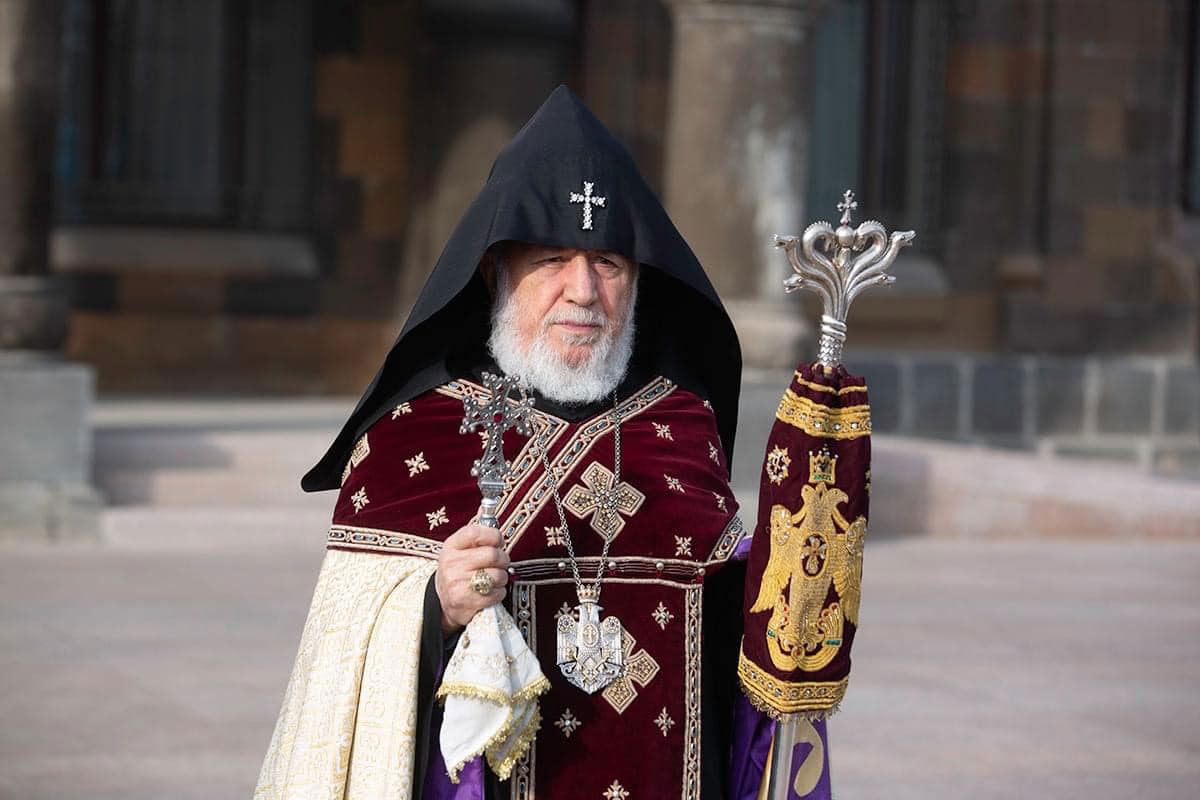
The Church Reform Council held its first meeting.
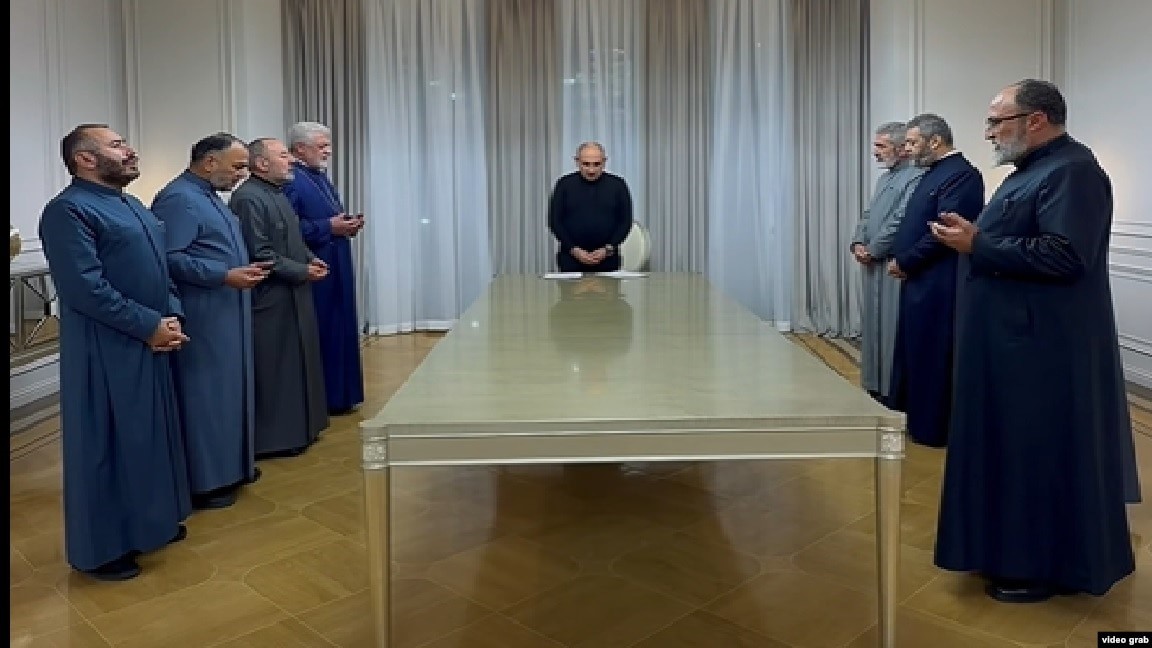
The day before, the Armenian Prime Minister announced on his Facebook page that the Church Reform Council of the Armenian Apostolic Church had held its first meeting. The council, established on 4 January, included the prime minister and ten bishops. Another clergyman, Archimandrite Gusan Alchanyan, locum tenens of the Armenian Diocese in Switzerland, expressed his wish to join.
During the first meeting, the council reportedly discussed:
- main directions of the reform process, the organizational steps, and the scale of the upcoming work,
- actions aimed at implementing the ‘roadmap’ without disruption.
Pashinyan: “Sargsyan didn’t want to step down”