Opinion: restricting protests in areas without traffic violates freedom of assembly in Georgia






Opinion on restricting protests in Georgia
“Imposing restrictions on rallies in areas where no cars pass is completely unacceptable. Essentially, it criminalizes freedom of expression and assembly — it will have a highly chilling effect, and the aim [of the new legislative amendments] is clear,” said Nona Kurdovanidze, chair of the Georgian Young Lawyers’ Association.
Kurdovanidze explained that the changes proposed in the new bill contradict Georgia’s constitution.
The new amendments require organisers to notify the Georgian Interior Ministry in advance if a gathering or demonstration takes place in areas with pedestrian or vehicle traffic, or if the event obstructs the movement of people or vehicles. Notification must be submitted to the Patrol Police Department of the Interior Ministry no later than five days before each gathering or demonstration.
“If participants refuse to hold a gathering or demonstration in the location proposed by the Interior Ministry, they will face administrative detention for up to 15 days, and in the case of a repeat offence — criminal liability, including imprisonment for up to one year,” said Irakli Kirtskhalia, a Georgian Dream MP, at a briefing.

Regarding the amendment requiring organisers to notify the Interior Ministry in advance of a demonstration in areas open to public movement, Kurdovanidze said this effectively means obtaining permission to hold a rally, making spontaneous gatherings impossible.

Nona Kurdovanidze said: “In areas where no cars pass, introducing such restrictions is completely unacceptable and violates the constitution. It is, in essence, the criminalisation of freedom of speech and assembly. It will have a highly negative effect, and the aim [of the new amendments] is clear.
This continues already implemented legislative changes, which have become particularly severe in recent years. In 2024–2025, a series of amendments were made to the Law on Assemblies and Demonstrations and the Georgian Criminal Code, which effectively eliminate citizens’ ability to hold gatherings freely.
What can citizens do in this situation?… It is possible that the provisions adopted by parliament will be challenged in the Constitutional Court. However, unfortunately, expectations that the Constitutional Court could play any positive role, given the current circumstances, may be unrealistic.”
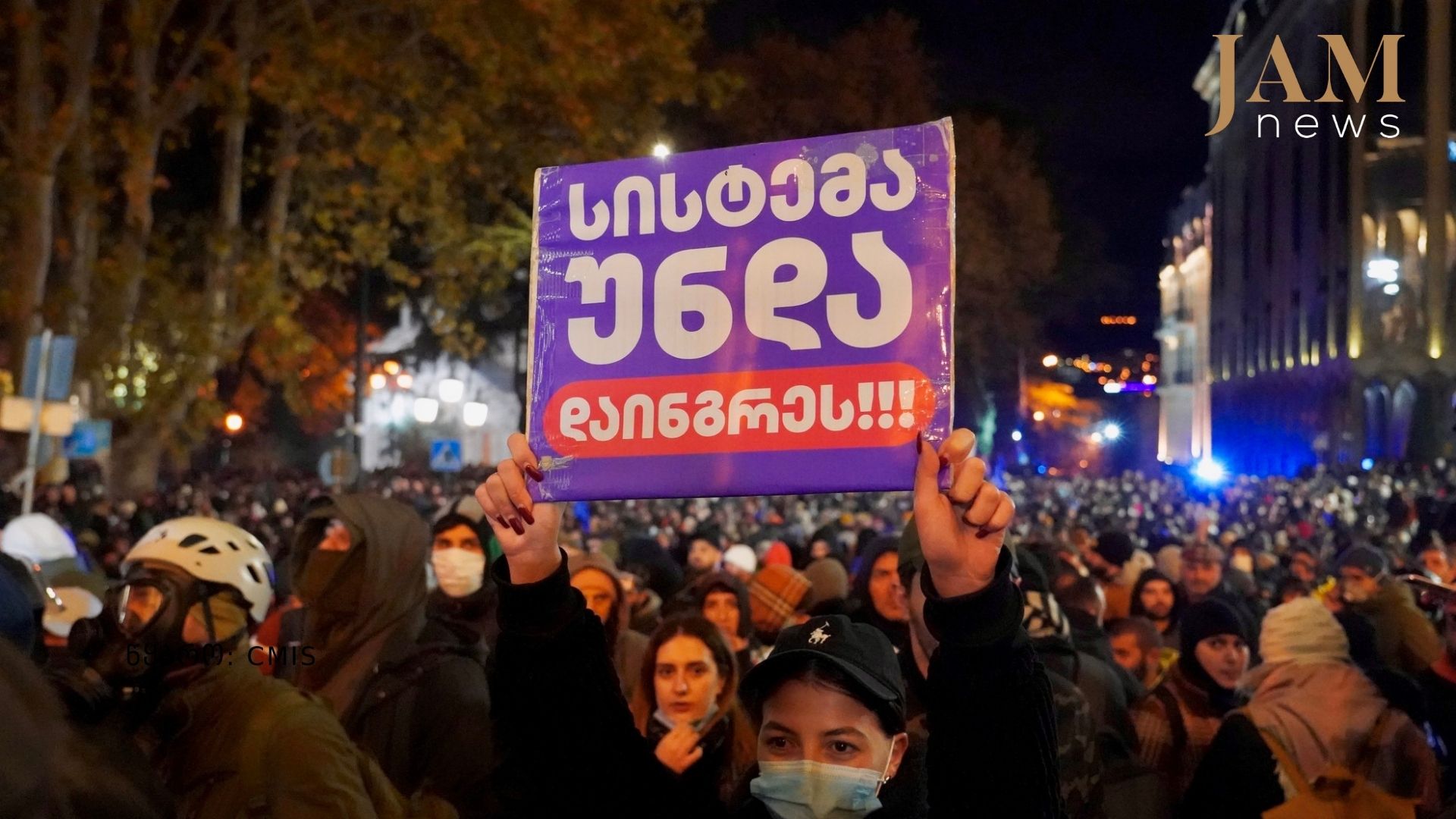
It is claimed that [the requirement to notify the Interior Ministry of a rally] is merely informational, but given the content of the [bill] and its restrictive tone, it is equivalent to obtaining prior permission [for a protest]. This is prohibited both by international treaties to which Georgia is a party and by the Georgian constitution.
Moreover, the Constitutional Court of Georgia has already ruled on these issues, stating that restrictions cannot be imposed that make spontaneous expressions of protest by citizens impossible. Yet the new amendments effectively exclude the possibility of holding spontaneous gatherings.

Opinion on restricting protests in Georgia