Top stories in Azerbaijan, Armenia, and Georgia from 23-27 February, 2026
 Live
Live




-
Friday, February 27, Armenia. Armenia and Poland signed an agreement on military-technical cooperation
-
Friday, February 27, Azerbaijan. Milli Majlis called on the international community to recognize the Khojaly genocide
-
Friday, February 27, Georgia. Foreign Minister: "Georgia expects a review of relations with the United States"
-
Thursday, February 26, Azerbaijan. The 34th anniversary of the Khojaly genocide
-
Thursday, February 26, Armenia. Pensions will increase by $27 (in dram equivalent)
-
Thursday, February 26, Georgia. The pro-government TV channels Imedi and POSTV, which were placed under UK sanctions, will apparently lose banking support
-
Wednesday, February 25, Azerbaijan. NGOs from Azerbaijan have sent a protest letter to British politicians who initiated hearings on the alleged “destruction of Armenian cultural heritage in Nagorno-Karabakh”
-
Wednesday, February 25, Georgia. The Estonia ambassador has been summoned to the Foreign Ministry over a social media post supporting protesters at Ilia State University
-
Wednesday, February 25, Armenia. The European Union will create a “hybrid rapid response team” in Armenia to counter Kremlin disinformation
-
Monday, February 23, Armenia. About 100 Armenian trucks are stuck at the Armenia–Georgia border, as they are not being allowed through from the Georgian side
-
Monday, February 23, Georgia. Students and faculty of Ilia State University are protesting against the reform
-
Monday, February 23, Azerbaijan. Transformation of state institutions, including in the field of media
-
Top stories in Azerbaijan, Armenia, and Georgia from 16-20 February, 2026

-
Friday, February 27, Armenia. Armenia and Poland signed an agreement on military-technical cooperation
● Armenia and Poland signed an agreement on military-technical cooperation during the official visit of Armenian Prime Minister Nikol Pashinyan to Poland. “I know how much effort it took to realize this political vision. In the context of Russian aggression against Ukraine, this is a very rare achievement, and you should set an example on this political path. Society must understand that peace is extremely important. It is a difficult road that requires great effort. I highly value your work in this direction,” Polish Prime Minister Donald Tusk said at a joint press conference.
● Pashinyan also met with Polish President Karol Nawrocki, emphasizing Poland’s role in deepening ties between Armenia and the EU, as well as in supporting and promoting democratic reforms in Armenia.
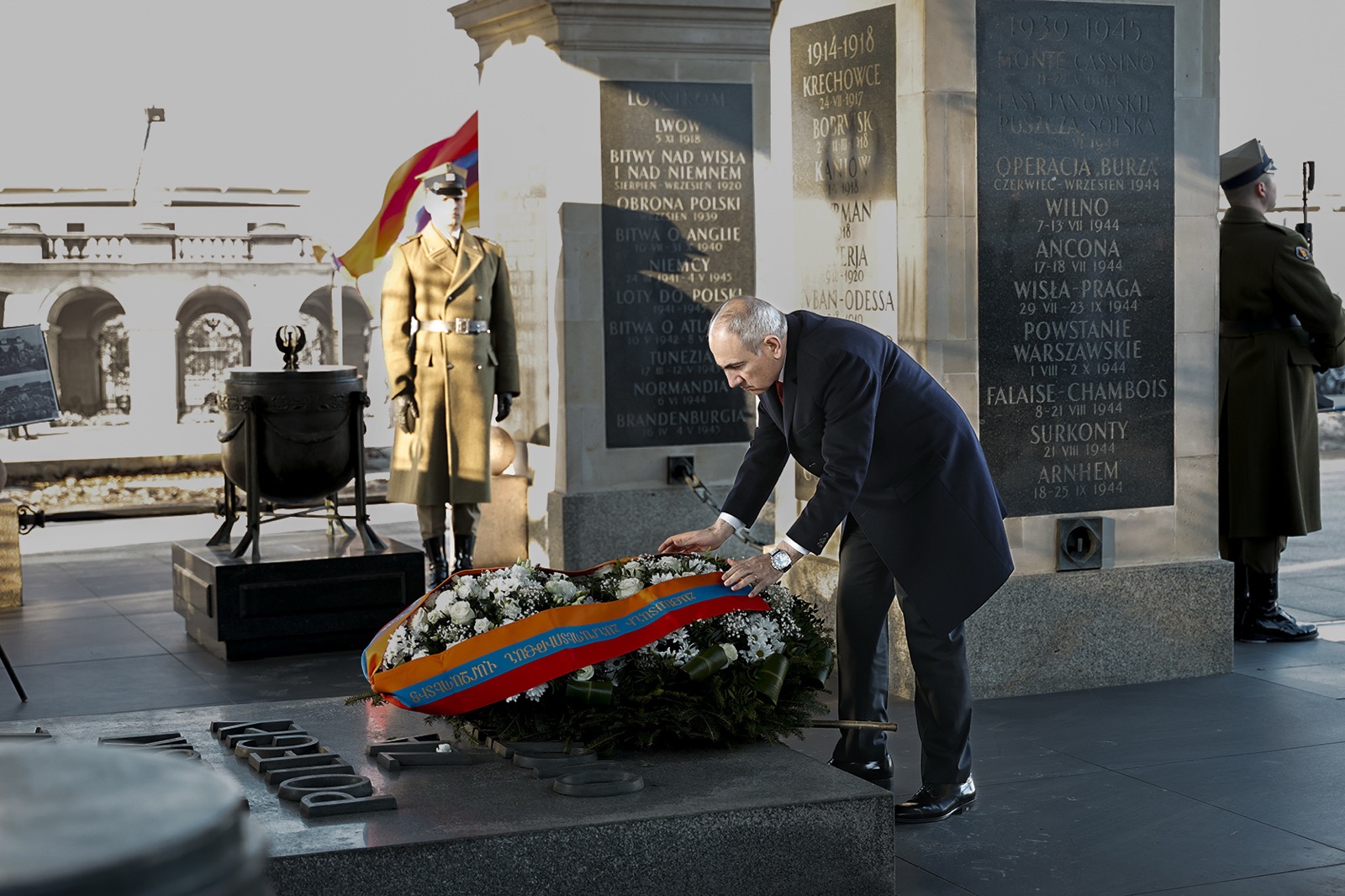
● The Armenian prime minister visited the Tomb of the Unknown Soldier in Warsaw accompanied by an honor guard, laid a wreath, and learned about the memorial’s history. During the ceremony, the national anthems of Armenia and Poland were played, and a military march took place.
● As is his tradition, Pashinyan went live on social media and showed his well-known “heart” gesture. While he was smiling to music, Donald Tusk unexpectedly appeared behind him and also made the “heart” sign.
● “The Armenian government does not plan to close the Russian military base operating in the country,” Pashinyan said in response to a question during a meeting with foreign ambassadors, diplomats, and analysts at the Polish Institute of International Affairs. “At present, all border checkpoints are controlled by Armenian border guards. We have no plans or concerns regarding the presence of the Russian military base. We are close partners with Russia and maintain very tight economic and political ties […] but it is clear these relations are changing due to many factors. It is also important to note that in November 2020, Russia and its president played a decisive role in achieving the ceasefire with Azerbaijan,” he said.
● The government officially confirmed that in early 2026 Russian border guards were withdrawn from the Akhurik checkpoint on the Armenian-Turkish border. Only Armenian National Security Service border guards are now stationed there. Another checkpoint on the Turkish border — Margara — has been fully controlled by Armenian forces since March 1, 2025. The government report states that there are currently no operating checkpoints on Armenia’s border with Turkey that are not fully controlled by Armenia’s National Security Service.
Moscow and Yerevan signed an agreement in September 1992 on deploying Russian border guards along Armenia’s borders with Turkey and Iran. In late 2024, the Agarak checkpoint on the Iranian border also came fully under Armenian control, and Russian guards ended their service at Yerevan’s airport.
● A group of 20 European experts will provide technical support for Armenia’s parliamentary elections scheduled for June 7, including assistance in countering hybrid threats, Deputy Justice Minister Tigran Dadunts said. According to local media, the expert mission was sent in response to a request from Armenia’s Foreign Minister.
● The second tunnel on the 32-kilometer Kajaran–Agarak section of the North–South highway — the largest infrastructure project in Armenia — is ready for launch, Territorial Administration and Infrastructure Minister Davit Khudatyan said on Facebook.
● Justice Minister Srbuhi Galyan stated that criminal prosecution for social-media posts is legitimate if they contain hate speech, discrimination, or insults that fall under criminal law. She was commenting on reports about the arrest of a woman over a Facebook post and the detention of a TikTok blogger who criticized Prime Minister Pashinyan.
● A fatal shooting occurred at a military position in Armenia’s Gegharkunik region. The victim was 19-year-old Narek Hakobyan from Abovyan. Local media report that a suspect has been identified.
● Salaries of employees of municipal kindergartens in Yerevan will increase by 15–20% starting May 1. Mayor Tigran Avinyan said this is the second pay raise for them in the past three years. The opposition, widely seen as pro-Russian, called the move a “pre-election show.”
#Armenia and #Poland have signed a military-technical cooperation agreement in Warsaw. The Foreign Ministers of both countries signed the deal, followed by statements from Prime Ministers Nikol Pashinyan and Donald Tusk.
#Armenia and #Poland have signed a military-technical cooperation agreement in Warsaw. The Foreign Ministers of both countries signed the deal, followed by statements from Prime Ministers Nikol Pashinyan and Donald Tusk.
“My good friend Nikol Pashinyan, we are very pleased to… pic.twitter.com/jD69TiG7FQ
— JAMnews (@JAMnewsCaucasus) February 26, 2026
-
Friday, February 27, Azerbaijan. Milli Majlis called on the international community to recognize the Khojaly genocide
● Azerbaijan’s Mission to the United Nations posted a message on X marking the 34th anniversary of the Khojaly genocide. “The international community condemns the Khojaly massacre as a gross violation of international law and regards it as a crime against humanity and an act of genocide. Those who committed this crime must unquestionably be held accountable. Azerbaijan will continue its efforts to restore justice and to establish and strengthen peace and stability in the region,” the statement said. The mission also circulated a detailed press release.
On the night of February 25–26, 1992, in Khojaly in Karabakh, one of the bloodiest tragedies of the Karabakh conflict took place. According to official information, Armenian armed formations, with the participation of the Soviet army’s 366th regiment stationed in Khankendi, carried out a mass killing. A total of 613 people were killed with particular brutality, including 106 women, 63 children, and 70 elderly people. Another 1,275 civilians were taken captive, and the fate of many hostages remains unknown to this day.
Khojaly was retaken from Armenian forces in September 2023 following an Azerbaijani military “anti-terror operation.” As of today, 144 families (651 people) of formerly displaced Azerbaijanis have returned there. In total, 950 families — nearly 4,000 people — have returned to homes across the Khojaly district. On February 5, 2026, a military court in Baku convicted a group of former military-political leaders of the former unrecognized “Nagorno-Karabakh Republic” for involvement in the Khojaly events, sentencing them to prison terms ranging from 20 years to life.
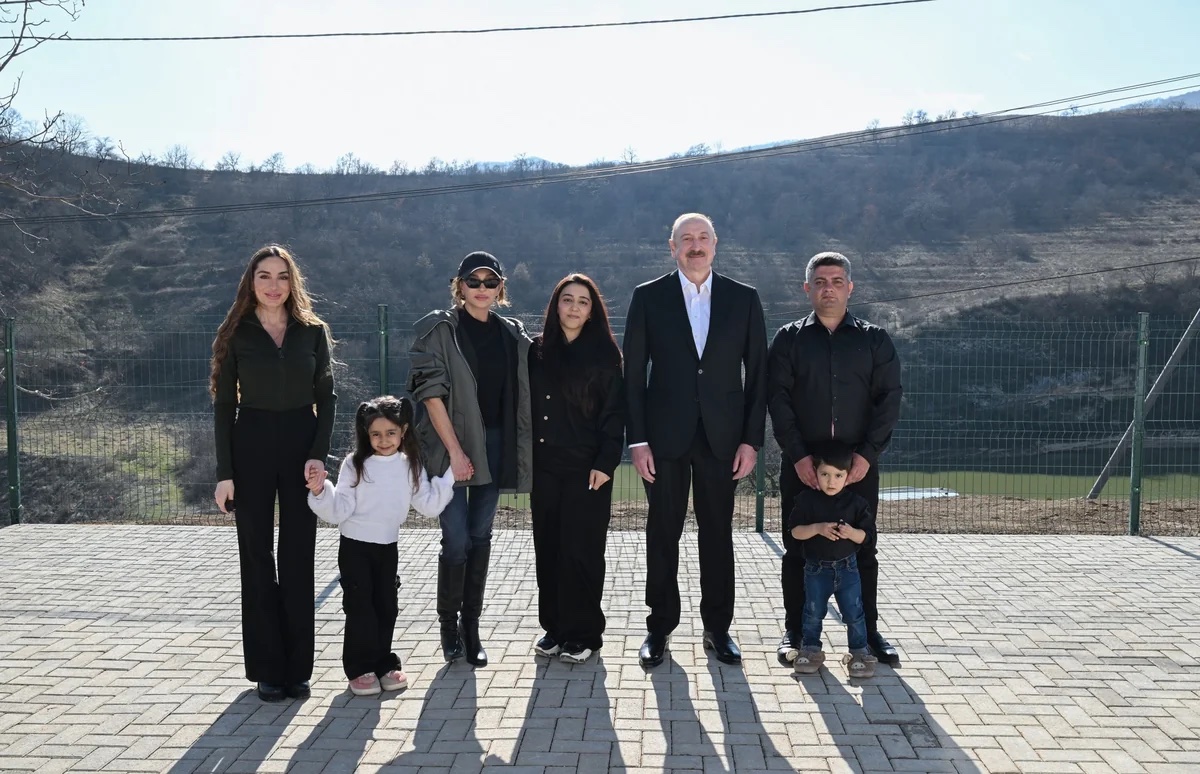
● President Ilham Aliyev, First Lady Mehriban Aliyeva, and family members attended the opening of a Khojaly Genocide Victims Memorial. The memorial is surrounded on four sides by a wall shaped like symbolic protecting hands. Almond trees were planted in the courtyard, with the almond blossom serving as a symbol of the international campaign “Justice for Khojaly.” The memorial has four sections, including exhibition halls dedicated to the victims. The display concludes with information on the 44-day war of autumn 2020, the restoration of state sovereignty, and the “Great Return” project.
● Speaking at the opening, President Ilham Aliyev said: “It is rare in the world for a country to achieve a complete victory in a just war, restore its territorial integrity by liberating every inch of land, and bring war criminals to justice. We — the Azerbaijani state — have done this.”
● He also stated: “International organizations and leading countries showed indifference to this tragedy and tried to conceal this bloody crime committed by the Armenian state. We moved step by step toward justice. Recognition of the Khojaly genocide by nearly 20 countries was the first step. The Patriotic War and our glorious victory were the second step. The liberation of Khojaly two and a half years ago was among the final steps. The recent trial of war criminals in Baku was the last step.”
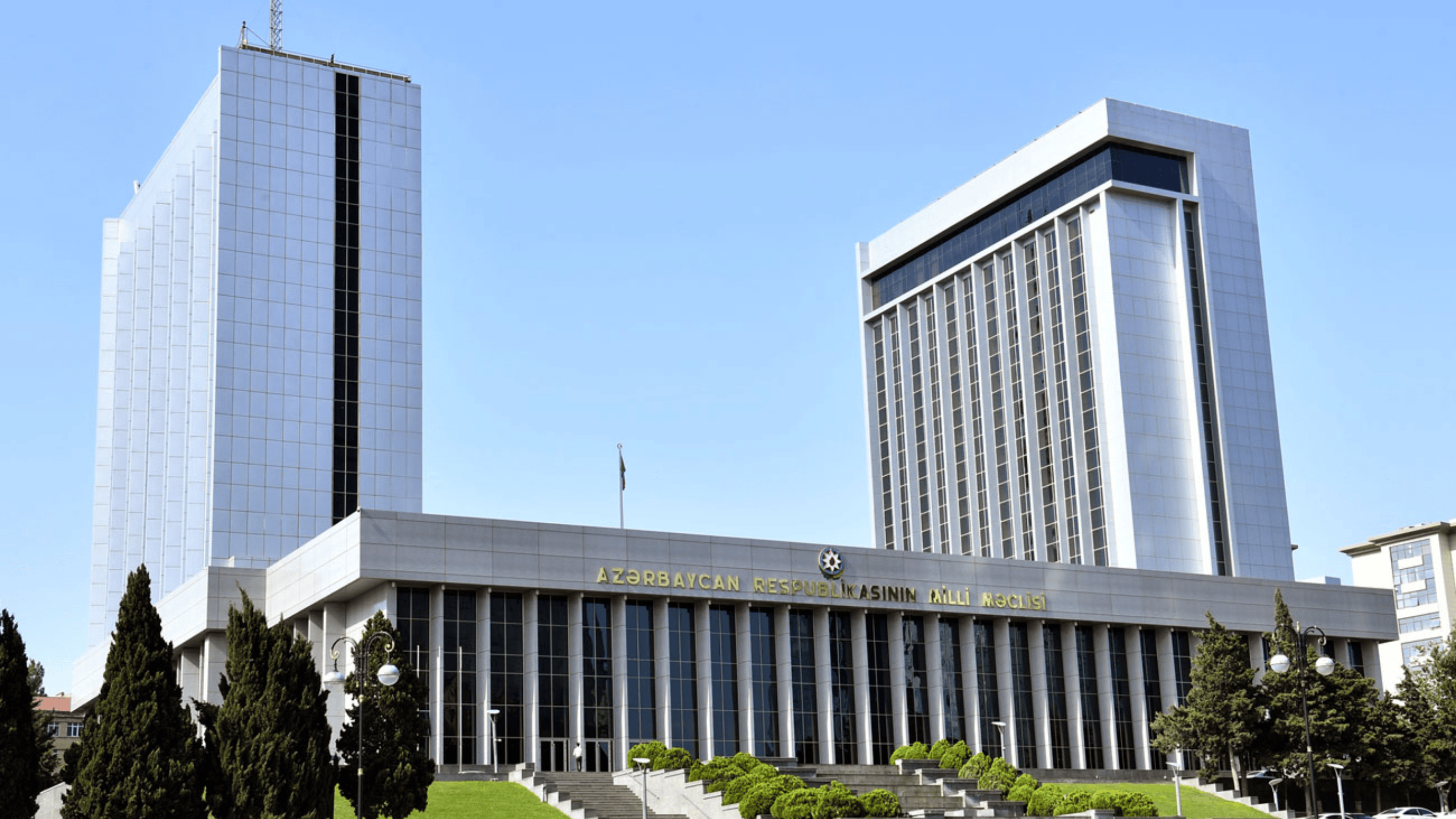
● Azerbaijan’s parliament, the Milli Majlis, called on the international community to recognize the Khojaly genocide and sent appeals to interparliamentary groups, foreign parliamentary committees, and international parliamentary organizations.
● An investigation published by Financial Times names Azerbaijani businessmen in connection with a Russian oil network, reporting that tankers linked to Azerbaijan became key elements in mechanisms used to bypass sanctions. Read more here
● In Georgia’s Kakheti region, the seventh Azerbaijan–Georgia–Turkey business forum is taking place, with more than 400 companies participating. Attendees include Azerbaijan’s Economy Minister Mikayil Jabbarov, Georgia’s Economy Minister Mariam Kvrivishvili, and Turkey’s Trade Minister Omer Bolat. The previous forum was held in Baku in 2021.
● Minister Mikayil Jabbarov said Turkey and Georgia hold leading positions among destinations for Azerbaijani foreign investment. Mutual investments between Azerbaijan and Turkey have approached $21 billion, while Azerbaijani investment in Georgia exceeds $3.1 billion, led by state oil company SOCAR. He noted Azerbaijan supplies natural gas to 16 countries, including 10 EU members.
● During the forum, Azerbaijani and Georgian ministers discussed cooperation in oil and gas transport, including the Southern Gas Corridor, through which Azerbaijani gas transits Georgia to Turkey and Europe. They also emphasized railway modernization and port infrastructure development.
● Ethiopia’s Prime Minister Abiy Ahmed is on an official visit to Azerbaijan.
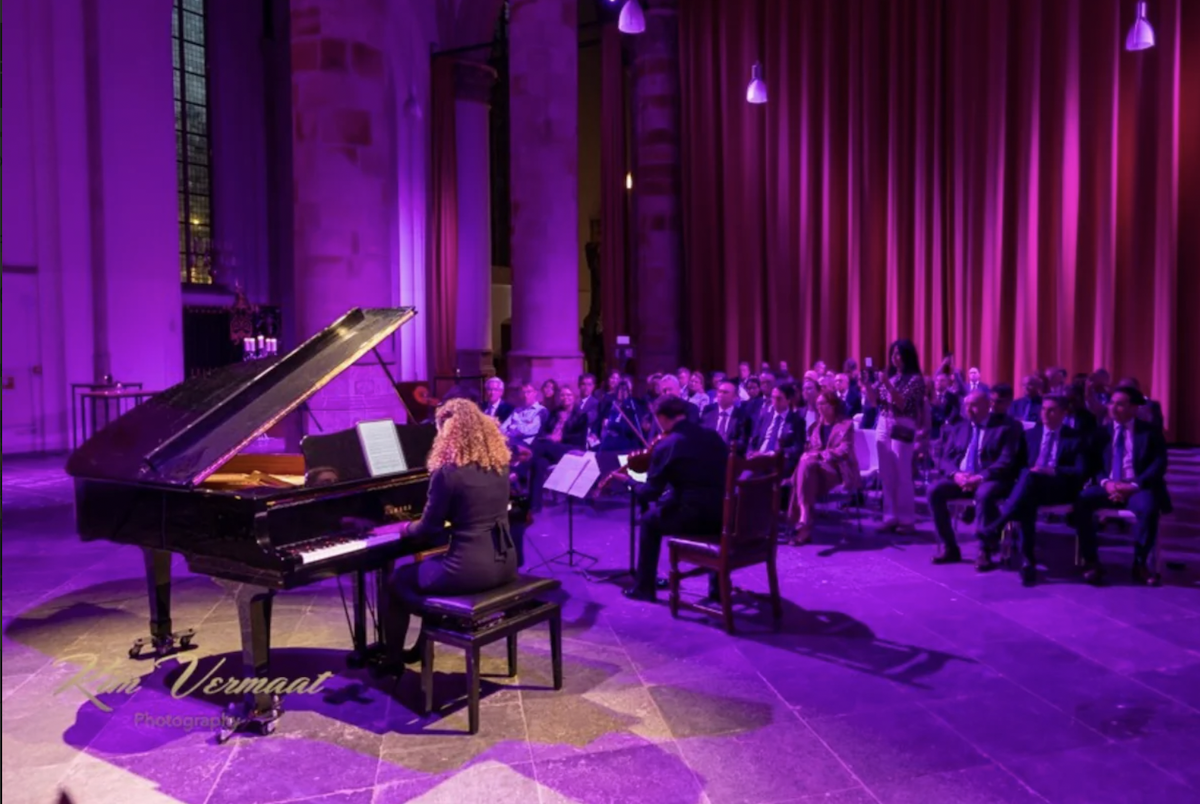
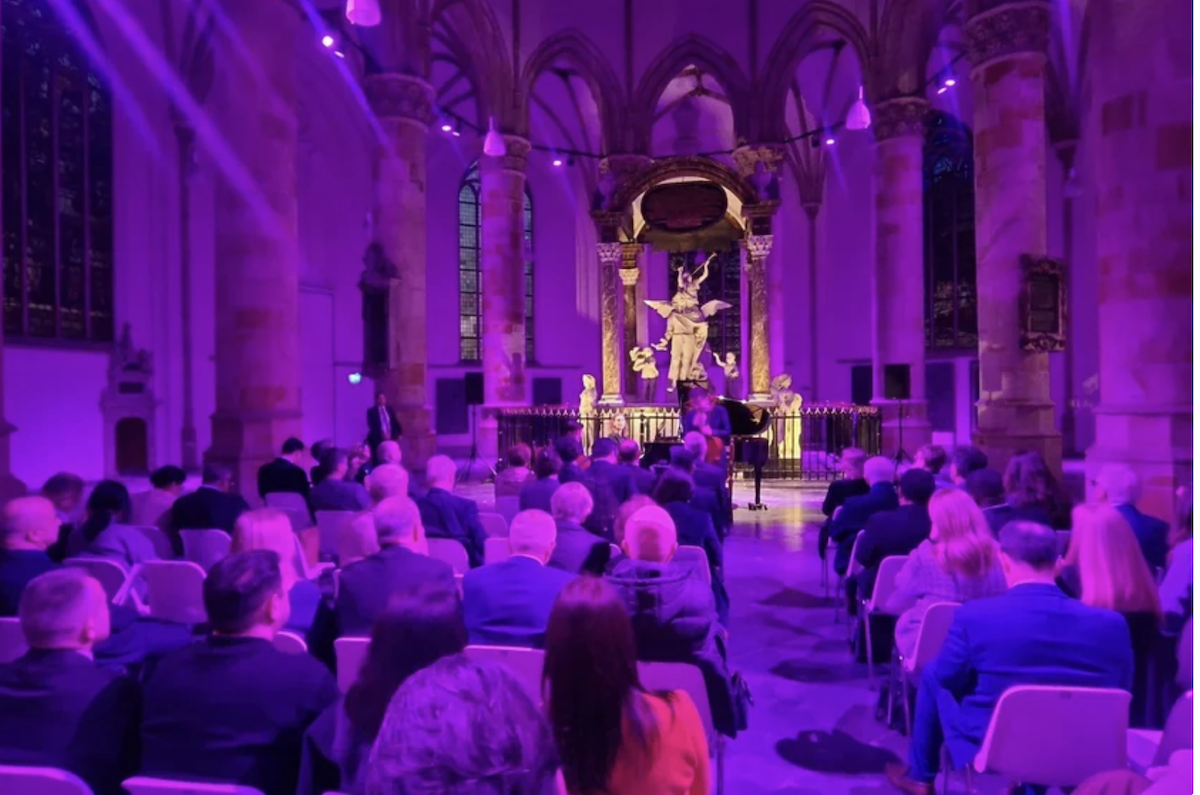
● A memorial chamber concert marking the 34th anniversary of the Khojaly genocide was held at the Grote Kerk in The Hague, attended by Dutch officials, diplomats, politicians, scholars, and public figures. Azerbaijan’s ambassador to the Netherlands, Mammad Ahmadzade, said that the installation in The Hague of Europe’s first monument dedicated to the Khojaly genocide reflects respect for historical memory and solidarity with the Azerbaijani people.
-
Friday, February 27, Georgia. Foreign Minister: "Georgia expects a review of relations with the United States"
● Ursula von der Leyen, President of the European Commission, responded to a letter from part of the Georgian opposition urging the EU to impose sanctions on the ruling Georgian Dream party, including possible restrictions on visa-free travel. The reply referred to the human rights situation in Georgia and warned that visa-free travel could, in such a case, be suspended for the country’s entire population. Read more here
● The United Kingdom Ambassador to Georgia, Gareth Ward, was summoned to the Foreign Ministry over British sanctions against pro-government TV channels Imedi and POSTV for “spreading Russian disinformation.” The foreign minister demanded an explanation of the legal grounds and said the sanctions harm bilateral partnership. The ambassador did not comment on the meeting.
● The seventh Azerbaijan–Georgia–Turkey business forum is taking place in Georgia’s Kakheti region with participation of more than 400 companies. Economy ministers from the three countries are attending. Discussions include cooperation within the Southern Gas Corridor, which transports Azerbaijani natural gas through Georgia to Turkey and Europe. Georgian and Azerbaijani economy ministers also held a separate meeting, where they discussed the need to modernize Georgian Railways, renew its rolling stock and locomotives, and develop port infrastructure.
● Foreign Minister Maka Bochorishvili commented on local media reports about Georgia possibly being excluded from regional transit projects. “This mainly concerns the Middle Corridor, and in this context it is unthinkable to underestimate Georgia’s role. No one excludes the existence of alternative routes, but Georgia is the only country with access to the sea, and that alone is enough to show its role cannot be underestimated,” she said.
● Bochorishvili also stated that “Georgia expects a review of relations with the United States that will allow both countries to return to a strategic partnership based on mutual respect and equality.” She added that Tbilisi hopes consultations will help overcome “the difficult legacy left by the Biden administration” in bilateral relations.
● President Mikheil Kavelashvili awarded state prizes to film director Merab Kokochashvili and opera singer Badri Maisuradze.
● Three people have been placed in pre-trial detention in a case involving violations of rules on handling environmentally hazardous substances. Investigators say an illegal medical-waste storage site had been created in a dilapidated building in the city of Samtredia. Police detained the company director, an employee, and a municipal sanitation worker. According to TV Pirveli, surgical waste — including amputated body parts — had been dumped for more than a month at an abandoned farm.
● One person has been arrested on charges of violating privacy. According to investigators, he illegally accessed the victim’s Facebook account, downloaded intimate materials, and used them for blackmail to force the continuation of a relationship.
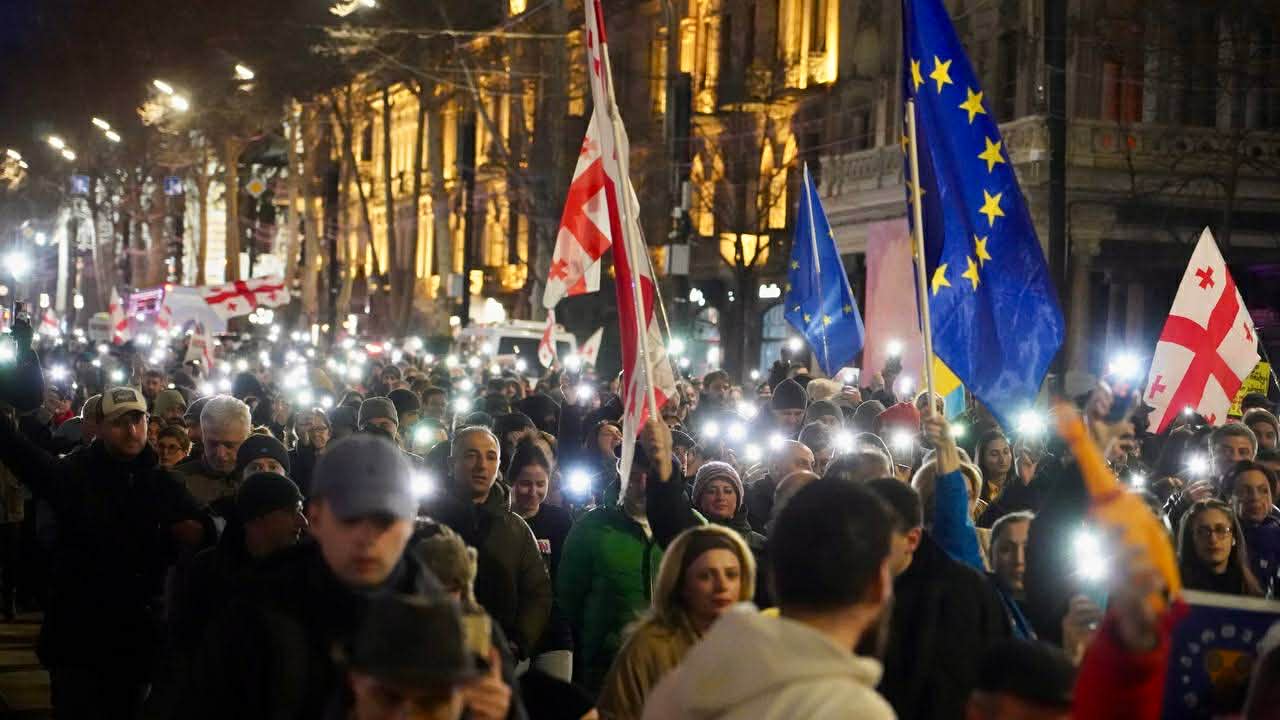
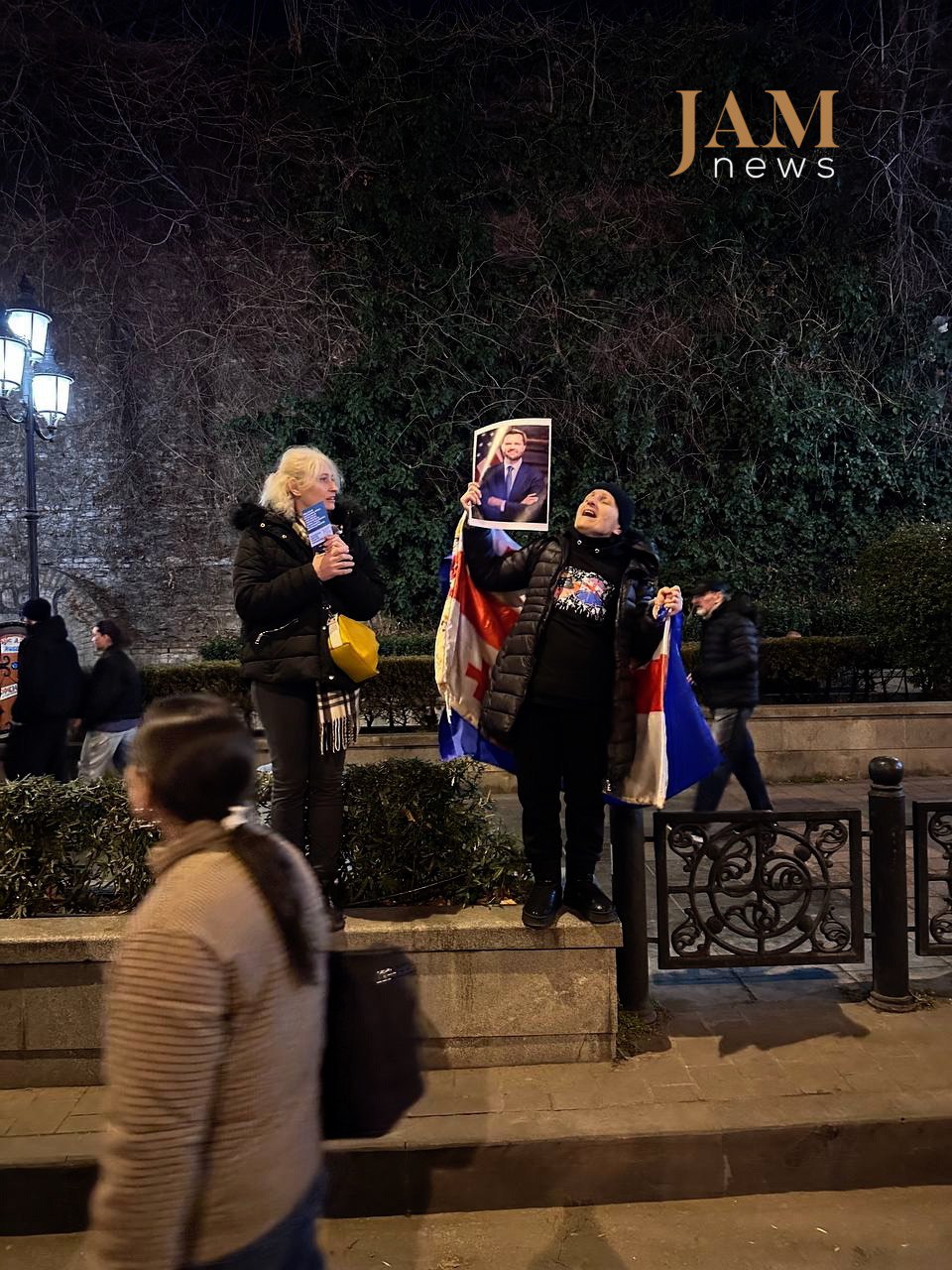
PHOTO: An elderly woman holding a portrait of JD Vance at a pro-European protest in Tbilisi is trying to draw the United States’ attention to the arrests of participants in large-scale rallies supporting Georgia’s European integration, which have been continuing almost nonstop for more than a year and a half. Photo by JAMnews.
-
Thursday, February 26, Azerbaijan. The 34th anniversary of the Khojaly genocide
● Azerbaijan is marking these days the 34th anniversary of the Khojaly genocide. On the night of February 25–26, 1992, one of the bloodiest tragedies in the history of the Karabakh conflict took place. According to official information, Armenian armed formations, with the participation of the Soviet army’s 366th regiment stationed in Khankendi, attacked the town of Khojaly in Karabakh. During the mass killing, carried out with particular brutality, 613 people were killed, including 106 women, 63 children, and 70 elderly people. Another 1,275 civilians were taken captive, and the fate of many hostages remains unknown to this day.
Read here a chapter from Black Garden by British journalist and analyst Thomas de Waal, which examines eyewitness accounts as well as legal and expert assessments of the tragedy.
In 1994, at the initiative of President Heydar Aliyev, a decision was made to establish February 26 as the Day of Remembrance of the Khojaly genocide. A memorial to the victims has been erected in Baku’s Khatai district. The town of Khojaly was brought back under Azerbaijani control in September 2023 following an anti-terror operation by the Azerbaijani army. As of today, 144 families (651 people) — formerly internally displaced Azerbaijanis — have returned to Khojaly. Overall, 950 families, nearly 4,000 people, have returned to homes in the Khojaly district.
On February 5, 2026, by decision of the Baku Military Court, a group of former military-political leaders of the former unrecognized Nagorno-Karabakh Republic were found guilty of involvement in the Khojaly events and sentenced to prison terms ranging from 20 years to life imprisonment.
● Azerbaijan’s Foreign Ministry issued a statement marking the anniversary, calling the events “one of the bloodiest tragedies of Armenia’s occupation and genocidal policy against Azerbaijan.” It stated: “These massacres were not simply a military operation but part of a policy of ethnic hatred and discrimination. The targeted killings of Azerbaijanis carried out by Armenia in other settlements of Azerbaijan clearly demonstrate the systematic and planned nature of the Khojaly genocide. […] This tragedy, as a crime against humanity, must receive proper assessment within the global legal system. Existing facts, including admissions by one of the organizers of the genocide — former Armenian defense minister and later head of state Serzh Sargsyan — show that this tragedy was part of a deliberate policy.”
● The parliaments of Pakistan, Mexico, the Czech Republic, Colombia, Bosnia and Herzegovina, and several other countries have recognized the Khojaly tragedy as genocide and as a crime against Azerbaijan. Legislative bodies in more than 20 U.S. states have also recognized it. Since mid-February, an international awareness campaign titled “Justice for Khojaly!” has been held in dozens of countries worldwide.
● UK MP Bob Blackman has introduced a legislative initiative related to the Khojaly genocide. The document, published on the UK Parliament website, describes atrocities committed in Khojaly in 1992 by Armenian armed forces with support from Russia’s 366th motor rifle regiment. The tragedy is described as a grave crime against Azerbaijani civilians. The initiative also welcomes steps toward normalization and sustainable peace between Armenia and Azerbaijan.
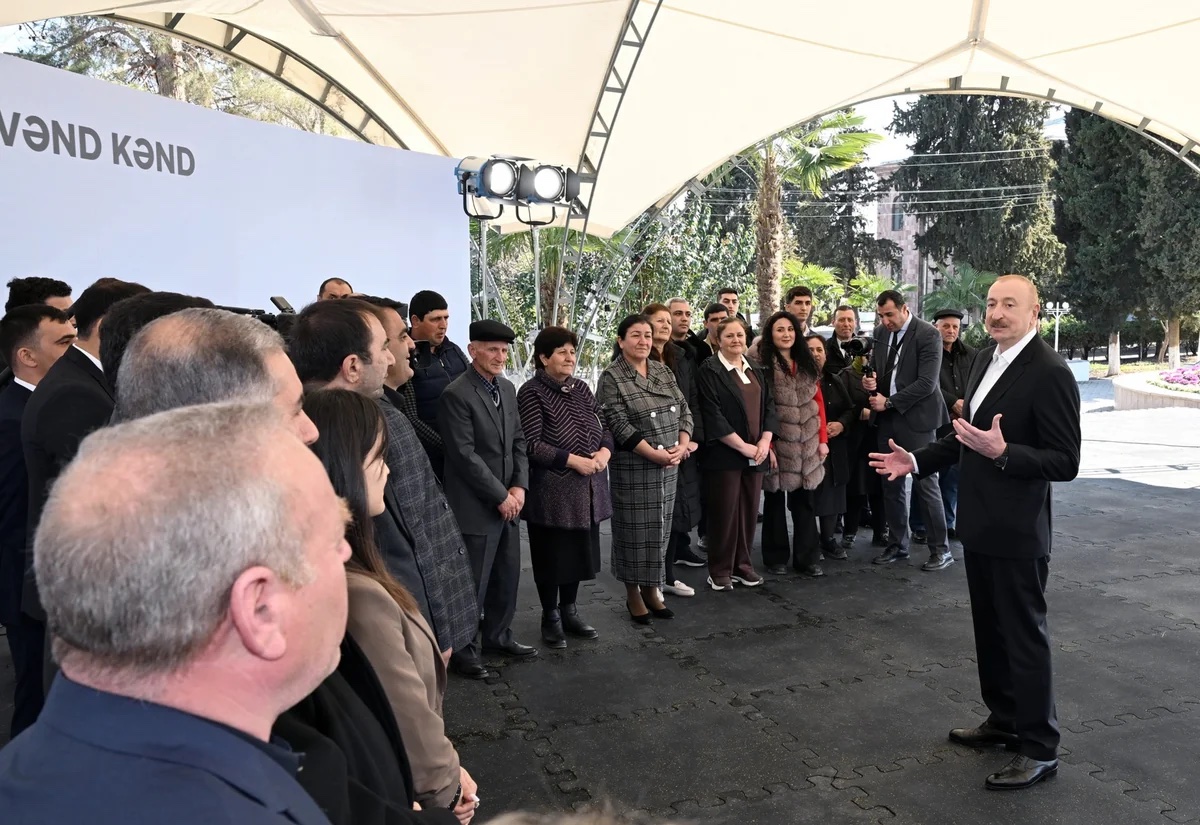
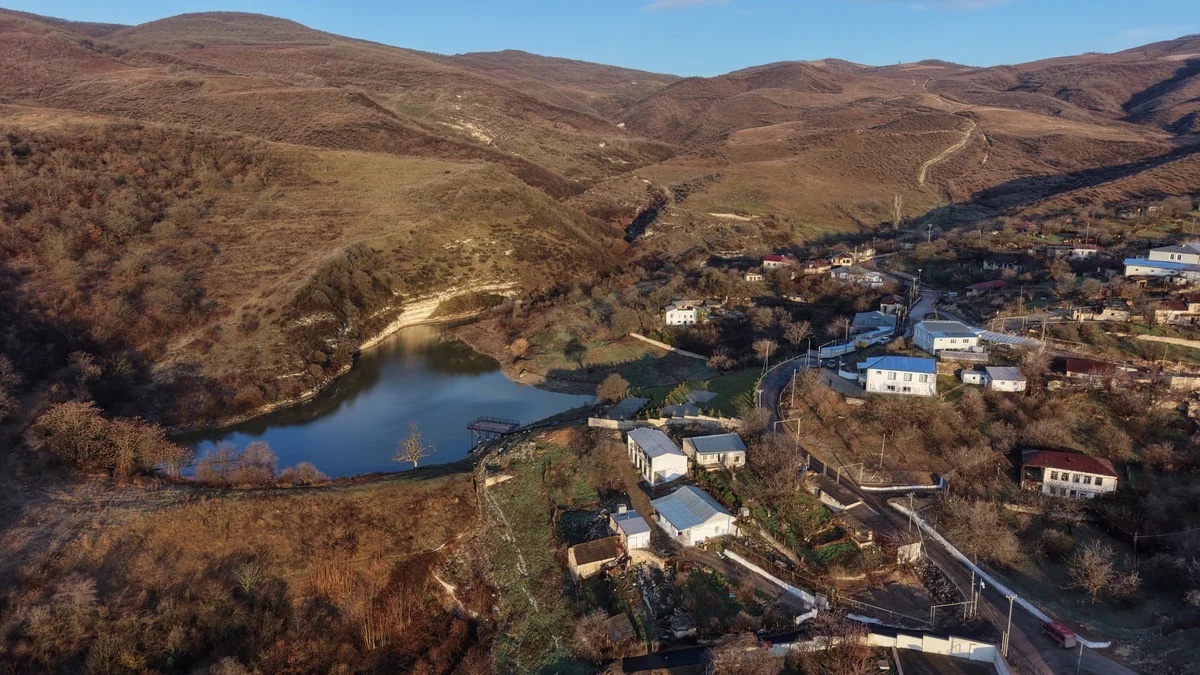
● President Ilham Aliyev, accompanied by First Lady Mehriban Aliyeva and their daughter Arzu Aliyeva, is visiting the Khojaly district, inspecting reconstruction work in villages and meeting local residents.
● Ilham Aliyev: “For more than two years we have controlled the entire sovereign territory of Azerbaijan. We destroyed the enemy’s stronghold, expelled the separatists, brought them to justice, and fully restored fairness. This difficult period is now behind us and will never return. In the past 80 years, no other country has achieved such a complete and absolute victory as Azerbaijan.”
● Azerbaijan has sent another 4,500 tons of diesel fuel to Armenia by rail transit through Georgia. In December, 1,220 tons of AI-95 gasoline were sent; in January, 1,742 tons of AI-95 gasoline and 956 tons of diesel fuel, followed by 979 tons of AI-92 gasoline.
● “Azerbaijani gasoline is in high demand on the Armenian market and sells out very quickly. As soon as it runs out, gasoline prices in Armenia rise,” Armenian Economy Minister Gevorg Papoyan reportedly said.
● The energy ministers of Azerbaijan and Ukraine held an online discussion on cooperation in the energy sector, including Azerbaijan’s continued assistance in strengthening Ukraine’s energy resilience.
● Another group of Ukrainian children — 26 in total — arrived in Baku for rehabilitation. “Since 2022, 498 Ukrainian children have undergone rehabilitation in Azerbaijan. We are grateful to Azerbaijan for its solidarity and support,” wrote Ukraine’s ambassador to Azerbaijan, Yuriy Husyev, on X.
● A delegation from Russia’s Defense Ministry, led by a deputy commander-in-chief of the Aerospace Forces, is visiting Baku. According to a press release, discussions focus on military cooperation between Azerbaijan and Russia and innovations in military education.
-
Thursday, February 26, Armenia. Pensions will increase by $27 (in dram equivalent)
● The Foreign Ministry did not deny reports that a letter had been sent to Brussels requesting the deployment to Yerevan of a “rapid response group to counter Kremlin disinformation.” In a conversation with the outlet Pastinfo, Foreign Ministry spokesperson Ani Badalyan said that “Armenia continues to cooperate with the European Union in strengthening democratic resilience.”
● Many residents of Yerevan have expressed outrage over an announcement by the company Veolia Djur about introducing a water supply schedule. The company said the decision was made due to the connection of tens of thousands of new consumers following large-scale residential construction.
● Minister of Territorial Administration and Infrastructure David Khudatyan said the announcement about scheduled water supply was considered problematic not only by the public but also within the government. According to him, an emergency meeting with all relevant agencies was held and a decision was made to suspend the schedule. The issue will be studied further over the next two weeks, after which a new, improved water supply schedule for 2024 and 2025 will be published, the minister said.
● Prime Minister Nikol Pashinyan began a two-day official visit to Poland. Meetings are planned with the prime minister, president, and the speaker of the Sejm, as well as a visit to the Polish Institute of International Affairs. The visit began with a tour of the Royal Castle Museum in Warsaw, where one hall features a unique collection of Armenian carpets from the Teresa Sahakyan Foundation, whose exhibition will open within the next two months.
● From April 1, pensions in Armenia will increase by 10,000 drams (about $27). According to Economy Minister Gevorg Papoyan, this will require an additional annual budget allocation of about 75 billion drams.
● Narek Karapetyan, founder of the opposition party Strong Armenia, said the pension increase resulted from opposition pressure, which “created a sense of threat” for the authorities.
● Another opposition figure, MP Gegam Manukyan from the Armenia Alliance, said “everyone in Armenia understands that the pension increase is linked to the parliamentary elections scheduled for June 7.” He also said the current authorities had “turned the state and statehood into a personal instrument,” while expressing satisfaction with the pension increase itself. Much of Armenia’s opposition is generally seen as pro-Russian.
● “Azerbaijani gasoline, which costs 430 drams (about $1.15), sells very quickly. The more we import, the faster it sells. As soon as Azerbaijani gasoline runs out, the price of other gasoline rises again,” Economy Minister Gevorg Papoyan told journalists. “The conclusion is that we need to import large quantities of Azerbaijani gasoline. For every 10 liters, a person saves about 750 drams (around $2) or more,” he said.
● Defense Minister Suren Papikyan discussed regional security during a visit to Iran with Ali Larijani, secretary of Iran’s Supreme National Security Council. Prospects for bilateral cooperation were also discussed. Papikyan said he emphasized the need to resolve issues around Iran through diplomatic means.
● Armenia’s ambassador to Georgia, Ashot Smbatyan, discussed a wide range of bilateral cooperation issues with Georgian Deputy Foreign Minister Alexander Khvtisiashvili.
● The brother of Armenia’s ambassador to the United States, Narek Mkrtchyan, was given a one-year suspended sentence for illegal weapons possession, according to Datalex.
● By orders of Armenia’s Interior Minister, major personnel changes have taken place within the police system.
● Changes in top leadership at the Interior Ministry:
- • Head of the Criminal Police Main Department Vardan Vardanyan was dismissed and replaced by Artur Barseghyan.
- • Head of the Public Police Main Department Karen Hakobyan was dismissed; Karen Khachatryan was appointed acting head.
- • Head of the Patrol Police Service Artur Khudinyan was dismissed and replaced by Gevorg Zakaryan.
• By separate orders, Vardan Vardanyan and Karen Hakobyan were appointed advisers to the Interior Minister, while Artur Khudinyan was appointed assistant to the minister.
-
Thursday, February 26, Georgia. The pro-government TV channels Imedi and POSTV, which were placed under UK sanctions, will apparently lose banking support
● Republican Congressman Joe Wilson has introduced a bill in the U.S. Congress that предусматривает preparing a report on the activities of Russian and Chinese intelligence services in Georgia. The bill’s co-author is Democratic Congressman Steve Cohen. The text of the bill has not yet been published on the Congress website.
● Foreign Minister Maka Bochorishvili said that the “Brussels bureaucracy” does not take the reality regarding Georgia into account, and that relations are developing “irrationally.”
● According to Bochorishvili, today, February 26, the UK ambassador to Georgia will be summoned to the Foreign Ministry to provide explanations regarding the sanctions London imposed on the pro-government TV channels Imedi and POSTV. Read more here
● Prime Minister Irakli Kobakhidze said that state and private companies are obliged to continue cooperating with the sanctioned TV channels and that “media freedom and freedom of enterprise in the country must not be violated.”
● National Bank President Natia Turnava commented on reports that the bank accounts of the two TV channels will no longer be serviced due to UK sanctions. According to Imedi, Turnava said local commercial banks must follow Georgia’s Constitution and legislation in the event of possible conflicts with the jurisdictions of other countries.
● Nika Gvaramia, one of the leaders of the opposition coalition “For Change,” said the sanctions would practically halt the operations of Imedi and POSTV, including licensing, advertising, and international broadcasting.
● The state registry approved a request by former Imedi owner Irakli Rukhadze and three other members to leave the TV channel’s supervisory board. Only Maka Lomidze remains on the board.
● During discussions of the 2025 report on Georgia in the European Parliament’s Foreign Affairs Committee, German MEP Tobias Cremer said the ruling authorities are leading the country into Russia’s sphere of influence. He did not rule out stronger targeted sanctions. The main rapporteur, Rasa Juknevičienė, also sharply criticized the Georgian government’s policies.
● Parliament Speaker Shalva Papuashvili said that “neither Volodymyr Zelenskyy nor Brussels deserve Georgia’s support,” but noted that Georgia supports the Ukrainian people.
● On the fourth anniversary of the war in Ukraine, the United Kingdom added the tanker ALTURA (formerly KAISERI), which delivered Russian oil to the port of Kulevi in October 2025, to its sanctions list. It is not yet known whether this will directly affect Georgian ports or already completed operations. Read more here
● According to the DPA agency, 671 Georgian citizens were deported from Germany in 2025 — the highest number by nationality among all deportees. Overall, the number of deportations of Georgian citizens decreased compared to 2024.
● By decision of the Adjara regional government, demolition has begun of the Wedding House near the central entrance to Batumi Boulevard. A building with the same purpose will be constructed in another location.
-
Wednesday, February 25, Azerbaijan. NGOs from Azerbaijan have sent a protest letter to British politicians who initiated hearings on the alleged “destruction of Armenian cultural heritage in Nagorno-Karabakh”
● Opposition figure Gultekin Hajiyeva, who was deported from Turkey to Baku in mid-February after months of international efforts to prevent this, has testified as a witness at Azerbaijan’s State Security Service and is currently not under arrest. Earlier, a search was conducted at her home.
Hajiyeva is a member of the National Council of Democratic Forces and a former member of parliament. She is accused under an article related to “activities threatening national security” and is involved in a case linked to the arrested Ramiz Mehdiyev — the former head of the presidential administration under both the previous and current presidents, long considered the “grey cardinal” of Azerbaijani politics. Local media mention Hajiyeva’s name in connection with an alleged coup plot. A court in Ankara has banned her from entering Turkey for five years. Despite her forced return, she has not been detained and no preventive measures have been imposed on her.
● Deputy foreign ministers of Azerbaijan and Armenia — Elnur Mammadov and Robert Abisoghomonyan — discussed possible confidence-building measures within multilateral platforms and international organizations during a meeting in Geneva on the sidelines of a session of the UN Human Rights Council.
● Another trilateral meeting of the foreign relations committees of the parliaments of Azerbaijan, Turkey, and Georgia was held in Baku. Participants discussed regional developments and possibilities for diplomatic settlement of the Russia-Ukraine and Israel-Palestine conflicts. Foreign Minister Jeyhun Bayramov met with participants and provided detailed information about the Azerbaijan-Armenia peace process and normalization efforts. It was decided that the next meeting will be held in Georgia.
● The head of the Turkish parliament’s foreign affairs committee and former vice president Fuat Oktay said at the meeting that “Turkey considers steps by Azerbaijan and Armenia to build confidence between them to be very important.” He noted that the agreed regional transit route TRIPP (from Azerbaijan to its Nakhchivan exclave through Armenian territory) is important for the entire region and expressed confidence that Georgia would also benefit. He added that Armenia is already purchasing petroleum products from Azerbaijan and said these developments would inevitably lead to the normalization of relations between Turkey and Armenia.
● A group of NGO leaders from Azerbaijan sent an open protest letter to prominent British figures: House of Commons Speaker Lindsay Hoyle, House of Lords Speaker Michael Forsyth, International Bar Association President Claudio Visco, and UK Ambassador to Azerbaijan Fergus Auld. The protest concerns a request sent by these politicians regarding the alleged “destruction of Armenian cultural heritage in Nagorno-Karabakh.” The first hearing on the issue is scheduled for February 25 in the UK Parliament.
The letter states that there is no administrative-territorial unit called “Nagorno-Karabakh” in Azerbaijan and that the Karabakh region is Azerbaijan’s sovereign territory, recognized by the international community, including the UK. It says no Azerbaijani official bodies were contacted during the initial stage of the inquiry and that collected information was not verified. The authors call the initiative a “dirty political campaign” based on false information and aimed at undermining Azerbaijan’s territorial integrity.
They also state that the Armenia-Azerbaijan conflict is over, both countries have made significant progress in the peace process, and a draft peace agreement was initialed at a summit in Washington last August. According to the letter, the initiative seeks to undermine trust in normalization, encourage revanchism, and revive separatist tendencies — which, they argue, does not align with UK government interests. They criticize the planned presentation of a report by the Center for Justice and Truth, saying its materials falsify regional history and question Karabakh’s принадлежность to Azerbaijan. The letter also raises allegations of destruction of Azerbaijani heritage during decades of Armenian control and calls for an investigation into the initiators of the parliamentary inquiry.
● In Nakhchivan, 40 sub-artesian wells will be drilled in 38 settlements to improve water supply for about 80,000 residents.
● The Health Ministry warned about “fake” inspections allegedly conducted on behalf of the Republican Center of Hygiene and Epidemiology. Individuals posing as representatives of the center have reportedly visited facilities in Baku and the regions, offering paid disinfection services and threatening administrative penalties if refused. The ministry said such actions are illegal and urged citizens to report cases to its hotline or the police.
● Starting from the new academic year, state education documents in Azerbaijan will be issued only in electronic format.
● Azerbaijan marked the first Tuesday of the Novruz spring cycle — “Su Chershenbesi” (Water Tuesday). Preparations for the spring holiday have begun. Water symbolizes purification, renewal, and the beginning of a new life cycle. Fire Tuesday will be observed on March 3, Wind Tuesday on March 10, and Earth Tuesday on March 17. Astronomical spring this year will begin on March 20 at 18:45:53 Baku time.
● In the UEFA Champions League playoff return match, Azerbaijani club Qarabag FK lost 2–3 to English side Newcastle United at St James’ Park. After also losing the first match 1–6, Qarabag ended its Champions League campaign.
● UEFA allocated 65.8 million manats (about $38 million) to Qarabag, Youth and Sports Minister Farid Gayibov said. Under UEFA’s solidarity mechanism, each of the other clubs in Azerbaijan’s Premier League will receive about 1.6 million manats (around $940,000).
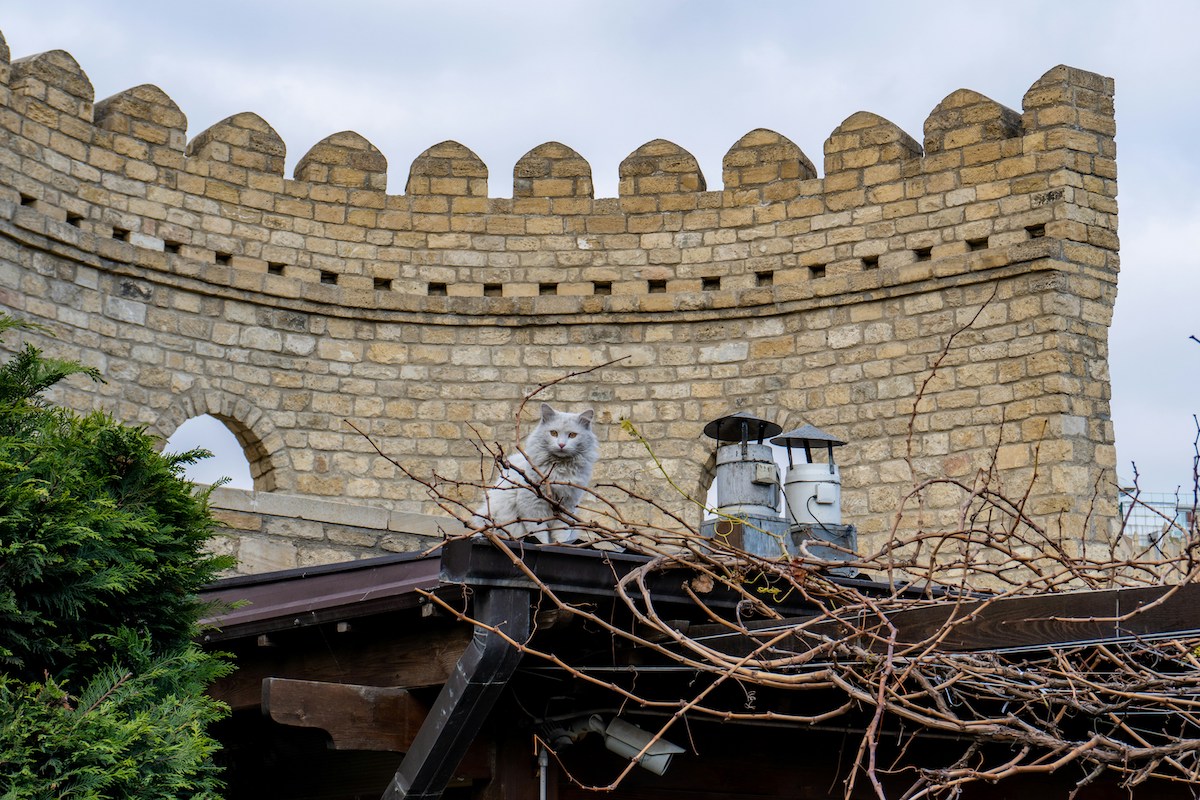
Icheri Sheher, the “Old City” in Baku. Photo by Zulfugar Karimov.
-
Wednesday, February 25, Georgia. The Estonia ambassador has been summoned to the Foreign Ministry over a social media post supporting protesters at Ilia State University
● The United Kingdom has imposed sanctions on pro-government TV channels Imedi TV and POSTV “for spreading Russian disinformation.” Representatives of the ruling Georgian Dream party called the decision absurd and politically motivated. Sharp statements criticizing the British authorities have followed, including from the TV companies themselves. Read more here
● The Georgian Dream government says attempts to impose sanctions on Georgia are groundless. President Mikheil Kavelashvili stated that the country “will not retreat from its chosen foreign policy course.” Foreign Minister Maka Botchorishvili described the sanctions against the broadcasters as an attack on freedom of speech.
● Shortly before the sanctions were introduced, POSTV owner Viktor Japaridze transferred management of his 52% stake to another person. According to the registry, Zaza Maridashvili is now managing that share. Japaridze had owned the company since 2022 and personally served as its manager until January 30, 2026.
● Just before the sanctions announcement, changes also occurred in the ownership structure of Imedi. A holding company owned by Irakli Rukhadze sold 50% of its stake for a symbolic sum to the Georgian company Prime Media Global. The remaining 50% will be distributed among members of the board of directors. Read more here
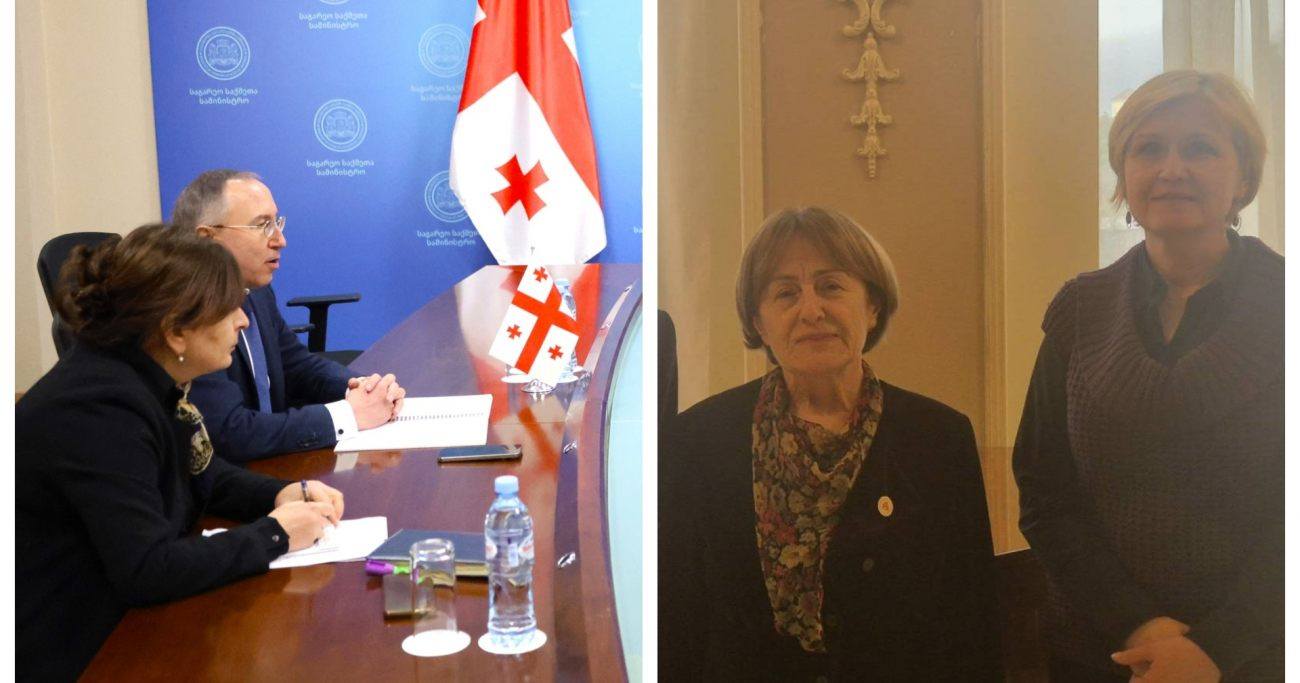
● Estonia’s ambassador Marge Mardisalu-Kahar was summoned to the Foreign Ministry over a social media post supporting Ilia State University, which is protesting education system reforms. She posted a photo with the university’s rector Nino Doborjginidze captioned: “Standing with Ilia State University.” (pictured) The Foreign Ministry said the statement was an attempt to politicize the reform and called it interference in internal affairs, adding that the ambassador could obtain full information from the Education Ministry if interested.
The university’s leadership, faculty, and students say the reform cut 92% of academic programs and has put the institution at risk of closure. Ilia State University is the only public university in the country where the rector is elected by the academic community rather than appointed by authorities. A protest march is scheduled for March 9, with students from other universities expected to join.
● Germany’s ambassador Peter Fischer said the EU’s 20th sanctions package included a legislative proposal and evidence for sanctions against the Kulevi Port, but the package was blocked by vetoes from Hungary and Slovakia.
● President Mikheil Kavelashvili said that “the main goal of Georgia’s peace policy is coexistence with the population of Abkhazia and the Tskhinvali Region within a unified Georgia.” He expressed hope for the country’s future reunification and said this goal would be supported by concrete steps.
● Foreign Minister Maka Botchorishvili stated that “Georgia has always firmly supported the territorial integrity and sovereignty of Ukraine,” and said the international community should take into account Georgia’s efforts to support Ukraine.
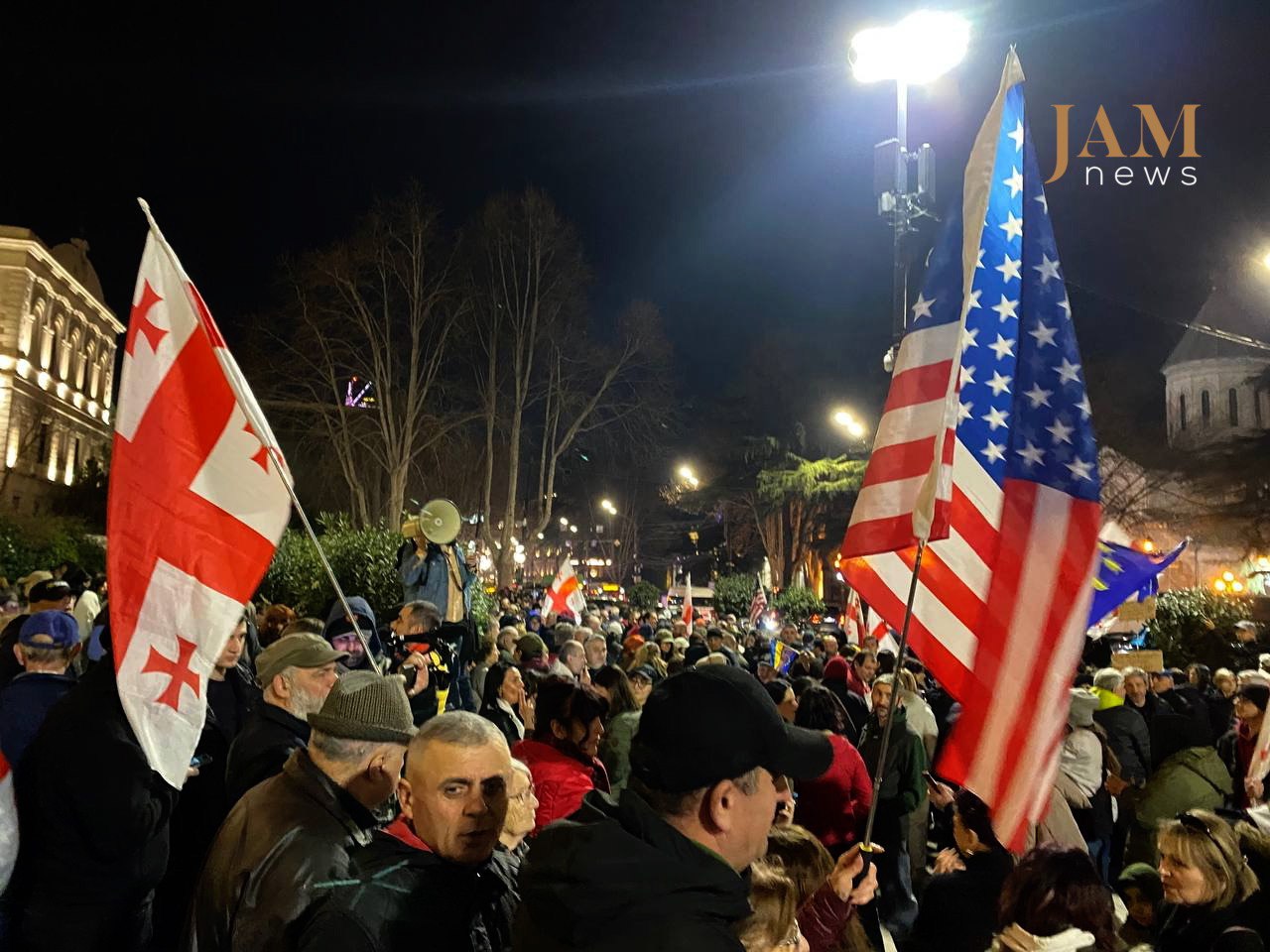
● A court fined several citizens or sentenced them to administrative detention for standing on a sidewalk during a protest. Zura Papiashvili was detained for four days, Temur Berianidze was fined 5,000 lari, and Tamo Gogoladze received a verbal warning. The trial of Zviad Mzhavanadze was postponed until March 6. Large pro-European protests in Georgia have continued uninterrupted for a year and a half despite steadily harsher penalties for participants.
-
Wednesday, February 25, Armenia. The European Union will create a “hybrid rapid response team” in Armenia to counter Kremlin disinformation
● The European Union is preparing to help Armenia prevent possible Russian interference in the parliamentary elections scheduled for June 7. A “hybrid rapid response team” will be deployed to counter Kremlin disinformation, and a permanent civilian mission in Armenia may later be established. This was reported by the Armenian service of Radio Free Europe/Radio Liberty. The outlet says it obtained a February 13 letter from Armenia’s foreign minister to Brussels requesting such a team be sent to Yerevan. EU diplomats told RFE/RL the mission is expected to launch by the EU–Armenia summit in Yerevan on May 4, meaning a decision should be made in March.
● Armenia’s Interior Ministry is making personnel changes in the police leadership; details will be announced later.
● In Geneva, on the sidelines of the 61st session of the UN Human Rights Council, Armenian and Azerbaijani deputy foreign ministers Robert Abisoghomonyan and Elnur Mammadov met to discuss confidence-building measures within multilateral platforms and international organizations.
● Defense Minister Suren Papikyan met in Tehran with Iranian President Masoud Pezeshkian. They stressed the importance of continued high-level Armenia–Iran cooperation, including in defense, and the need for regional peace and stability. Papikyan said he emphasized resolving tensions around Iran through diplomacy. Pezeshkian confirmed readiness to finalize a comprehensive strategic partnership document between Tehran and Yerevan and noted progress in Armenia–Azerbaijan peace efforts, according to Mehr.
● Prime Minister Nikol Pashinyan said on Facebook that Armenia has overcome a historic cycle in which it repeatedly gained independence and then lost statehood due to geopolitical circumstances.
● Parliamentary Vice-Speaker Ruben Rubinyan of the ruling Civil Contract party said media outlets should “finally burn all bridges” with former presidents Robert Kocharyan and Serzh Sargsyan and move toward independent funding.
● Authorities said 45.5 kg of medicines were allegedly being smuggled from Georgia into Armenia. The drugs were found hidden under a passenger’s berth on a Tbilisi–Yerevan train. An investigation is underway.
-
Monday, February 23, Armenia. About 100 Armenian trucks are stuck at the Armenia–Georgia border, as they are not being allowed through from the Georgian side
● Representatives of the European Union paid a working visit to Armenia to assess progress in developing a new EU–Armenia strategic agenda ahead of the planned March 19–20 trip by Commissioner Marta Kos and the first EU–Armenia summit. This was reported by The Brussels Times. The EU confirmed a €202.5 million assistance package for Armenia.
● If railway connections between Azerbaijan and Turkey are restored via Armenia’s Syunik region, travel time would be reduced by 25% compared to the current Baku–Tbilisi–Kars transit route, according to a European Commission study.
● On February 23–24, Foreign Minister Ararat Mirzoyan will be on a working visit to Switzerland, where he will speak at high-level segments of the UN Human Rights Council and at the Conference on Disarmament.
● About 100 Armenian trucks have been stuck on the Georgian-Armenian border on the Georgian side since February 12 because Georgian border guards are not allowing them to pass. The trucks were in transit from Russia carrying construction materials. Drivers told Radio Free Europe/Radio Liberty’s Armenian service that no one in Georgia is providing clear explanations and they are in a desperate situation. Armenian truck drivers have faced similar problems before: last year, alcohol transporters spent weeks and sometimes months at checkpoints when leaving Georgia for Russia while Georgian authorities conducted extensive laboratory testing of transit cargo not intended for Georgia.
● Catholicos of All Armenians Garegin II refused to testify to prosecutors, his lawyer said. On February 14, a criminal case was opened against him on charges of obstructing enforcement of a court ruling related to Bishop Arman Sargsyan. The Catholicos had removed the bishop after he supported Prime Minister Nikol Pashinyan’s initiative to reform the Church. The bishop sued, and the court barred the Church from interfering with his duties pending a final decision, but the Catholicos stripped him of his rank. The case prohibits the Catholicos from leaving the country, preventing him from attending a bishops’ assembly in Austria. His lawyer said the case aimed to disrupt that meeting and called it “one of the shameful days in Armenia’s history,” warning of serious consequences.
In early January, the prime minister and ten bishops signed a statement launching church reform, with the ultimate goal of removing Garegin II and electing a new Catholicos. Main accusations against him include political involvement and violating celibacy rules. Read more here
● International rating agency S&P Global Ratings forecasts Armenia’s GDP growth at 5.3% in 2026 and 4.8% in 2027 and upgraded the country’s outlook from stable to positive, citing potential improvements in regional geopolitics and further progress in normalization between Armenia and Azerbaijan.
● Economy Minister Gevorg Papoyan said Armenia’s GDP per capita reached 3,666,540 drams (about $9,474) in 2025, a 7.2% increase year-on-year.
● President Vahagn Khachaturyan, summarizing his visit to Greece, said discussions focused on global developments and finding solutions under current conditions. He emphasized that the key formula is peace and noted historical parallels between Armenia and Greece, both concluding that peaceful and good-neighborly relations are the only solution.
● Design work has been completed for a new tunnel on the Sevan–Dilijan section. It will run parallel to the existing tunnel, which will later be converted into an evacuation route. Construction is estimated at €70–80 million and planned under a loan agreement with the Asian Development Bank. The project was designed by an Austrian company, and construction is expected to take 4–4.5 years.
● Former prosecutor Tigran Sukiasyan died after falling from Victory Bridge in Yerevan. According to reports, his body was found in the Hrazdan River with no signs of violence, and the circumstances are under investigation. He had been dismissed during staff changes in late 2023 and early 2024.
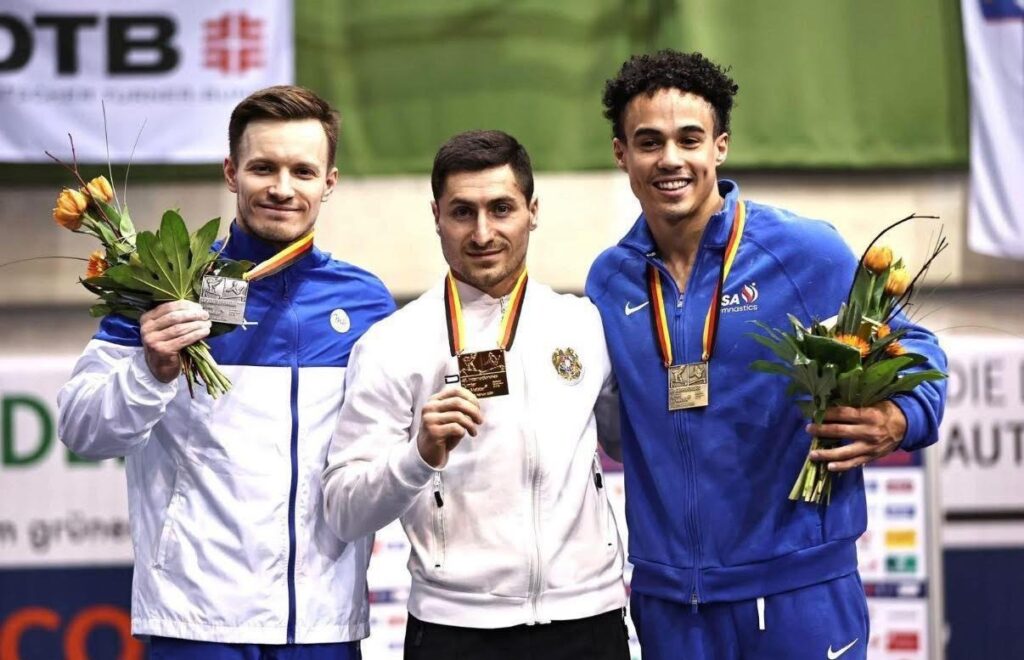
● Armenian gymnasts performed successfully at the first stage of the Artistic Gymnastics World Cup in Germany: Artur Avetisyan won gold on the rings, and Mamikon Khachatryan took silver on the pommel horse.
-
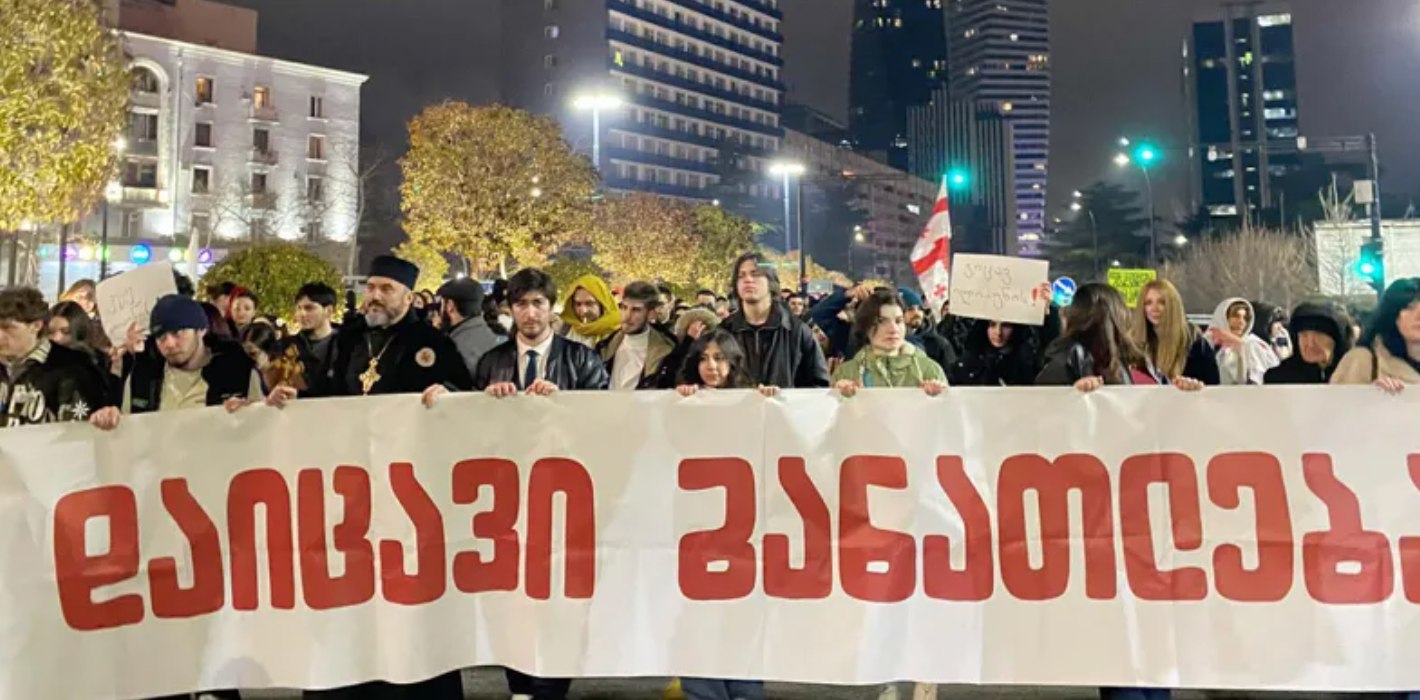
Monday, February 23, Georgia. Students and faculty of Ilia State University are protesting against the reform
● Students and faculty of Ilia State University have signed a manifesto demanding the cancellation of a decision by Georgia’s Education Ministry to cut several programs and reduce admissions as part of a large-scale reform of the education system. The ministry announced that in the 2026–2027 academic year a total of 6,650 students will be admitted to Tbilisi State University, and 3,880 to Georgian Technical University. Ilia State University, however, will be allowed to admit only 300 students in total. In addition, only pedagogy and STEM fields (science, technology, engineering, and mathematics) will remain active programs there next academic year. Ilia State University is the only public university in the country whose rector is not appointed by the authorities but elected by the academic community, local media report. A protest march is scheduled for March 9, with students from other universities expected to join.
● Lasha Bakradze, an associate professor at Ilia State University, described the reduction of university quotas as “an absolutely political decision.” “This has nothing to do with improving the quality of education. There is no plan except to destroy Ilia University first of all, because they see it as a breeding ground of liberalism. They want to eliminate a space of freedom where people are taught free thinking. The country is undergoing a large-scale dismantling of free, democratic institutions — the very institutions we saw as the future of our development,” Bakradze said.
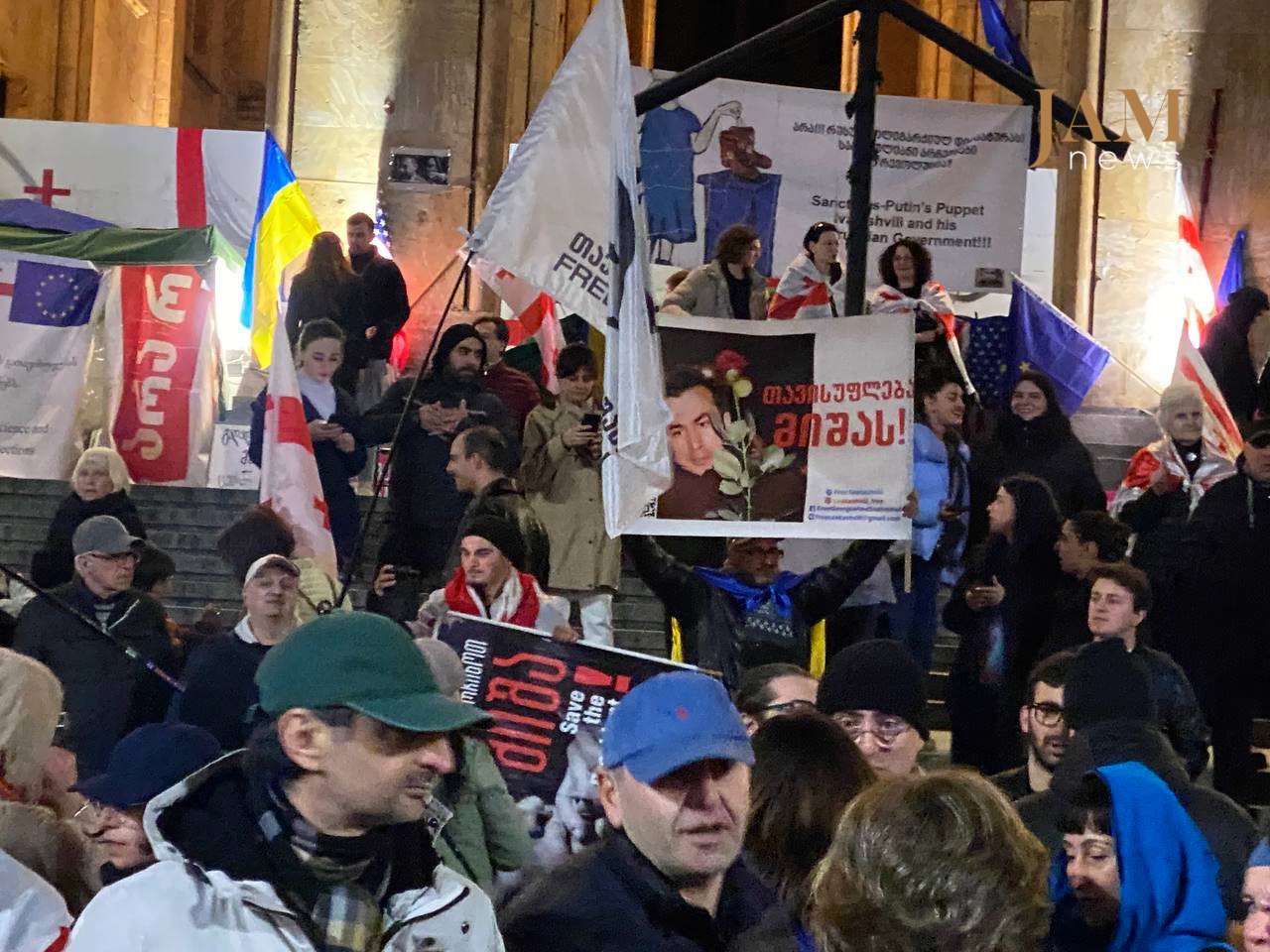
● Leading actors of Tbilisi’s Vaso Abashidze New Theatre resigned in protest after a banner featuring their colleague, well-known actor Andro Chichinadze, was removed from the building. In September 2025 he was sentenced to two years for participating in pro-European protests and found guilty of “organizing or taking part in group actions disrupting public order.” Chichinadze was among dozens detained during pro-European protests in Tbilisi that have continued for more than a year and a half since November 28, 2024, when the ruling party Georgian Dream announced the suspension of Georgia’s EU integration process. Read more here
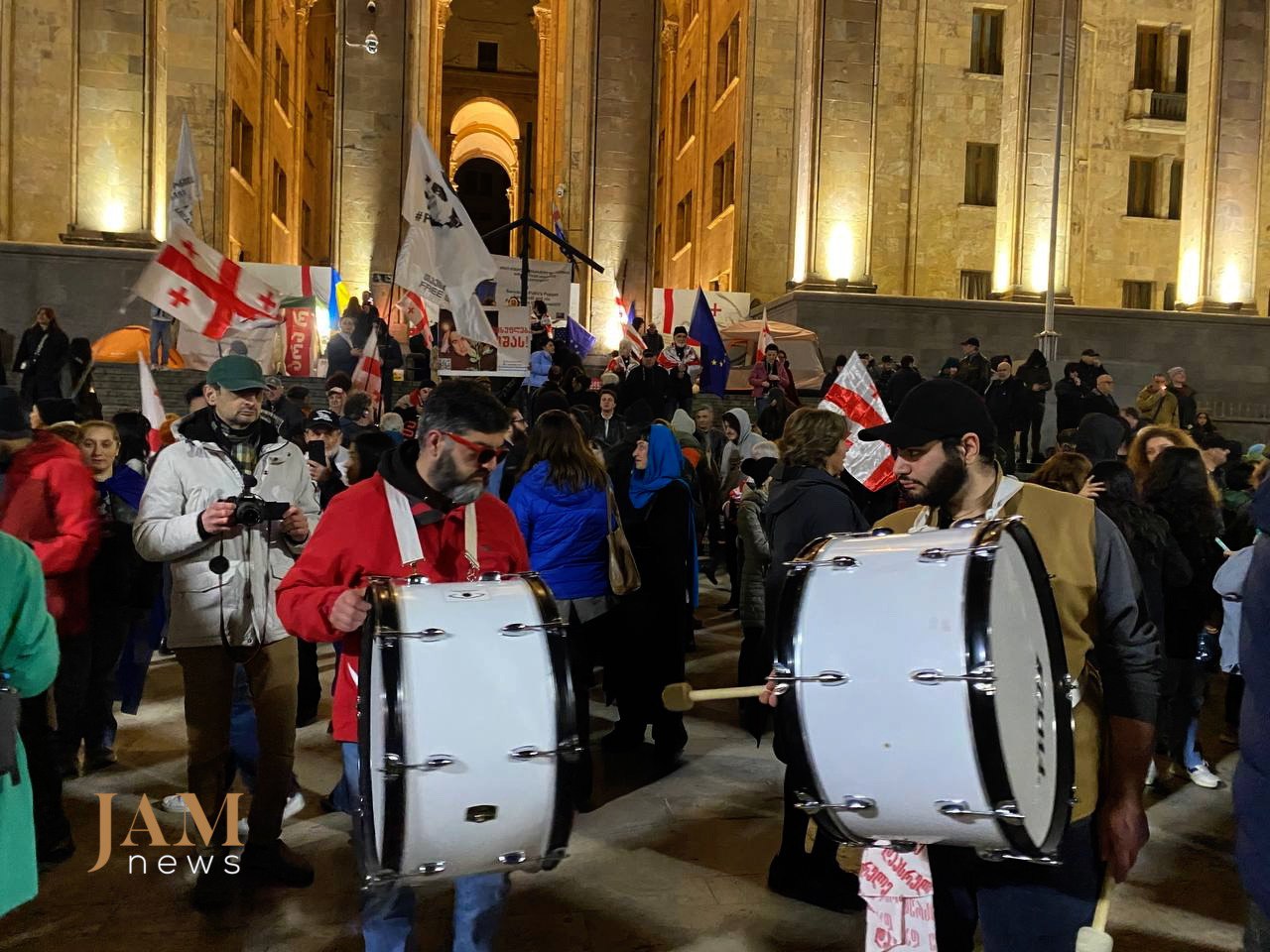
● A large protest rally-march under the slogan “We Will Not Tolerate Occupation” is planned in Tbilisi on February 25. Participants will gather near Vera Park and march toward the parliament building. According to organizers, the rally is linked to the events of February 25, 1921, when the Russian Bolshevik Red Army invaded Georgia.
Daily pro-European protests outside the Parliament of Georgia have now continued for more than 450 days.
● Catholicos-Patriarch of All Georgia Ilia II called on believers to seek reconciliation ahead of the start of Lent.
● Archbishop Iakob Iakobishvili of Bodbe also called for reconciliation during a sermon. “The authorities must understand that together with the Church they need to take steps toward national reconciliation. If this is not done, everyone will receive what is due […] We call on everyone to reflect on living together without remaining in a state of tension. If we think about adopting laws to stop someone at some point, let us think about what God wants,” he said.
● Starting March 1, foreign citizens without permanent residency will be banned from working as couriers, guides, and taxi drivers.
● In Batumi, at the Medina Clinic, an employee gave birth in a restroom and allegedly attempted to harm the newborn. According to available information, the baby sustained very serious injuries but survived and is in intensive care. The mother is undergoing a psychiatric evaluation.
● Three minors were killed in a road accident in the village of Melani in Georgia’s Gurjaani district. According to local residents, a 14-year-old was driving the car. After the collision, the vehicle overturned and caught fire; two passengers survived.
-
Monday, February 23, Azerbaijan. Transformation of state institutions, including in the field of media
● Pro-government media have published a video investigation by Baku TV analyzing footage of an incident in Washington, D.C. between members of the Azerbaijani presidential security service and a group of activists who staged a protest outside the hotel where President Ilham Aliyev was staying. The report disputes claims by several Western and Russian media outlets, including BBC, that disproportionate force was used against the protesters. According to the publication, “individuals calling themselves ‘protesters’ deliberately engaged in provocations despite police demands to leave the area and attempted to unsettle members of the presidential state security service. One of the provocateurs suddenly rushed toward the guards, trying to break through their cordon. This created a real risk of a threat to the head of state’s vehicle. The security service personnel acted promptly and within their authority. No use of tasers, weapons, or even physical force intended to cause harm was recorded — there was only intervention aimed at detention,” the report states.
●A campaign against Azerbaijan is being carried out on social media and in various media outlets, according to a commission of the Milli Majlis dealing with foreign interference and hybrid threats. According to the commission, this activity is “controlled from a single center” and has been ongoing for more than a year. It is reported that the goal is to “confuse public opinion, create conflict within society, and undermine trust in state institutions.” The commission claims the campaign has intensified amid actions by President Ilham Aliyev related to restoring Azerbaijan’s territorial integrity, participating in energy projects, and pursuing an independent policy regarding regional transport corridors. The commission stated that the state will not change its position on “hybrid threats” and will continue to protect its information space.
● Iran’s Minister of Roads and Urban Development, Farzaneh Sadegh, is on a visit to Azerbaijan, where she is taking part in the latest meeting of the Azerbaijan–Iran Joint Commission on Economic Cooperation. The main goals are described as removing existing obstacles and accelerating the implementation of joint economic projects, primarily in transport, energy, trade, and cultural cooperation.
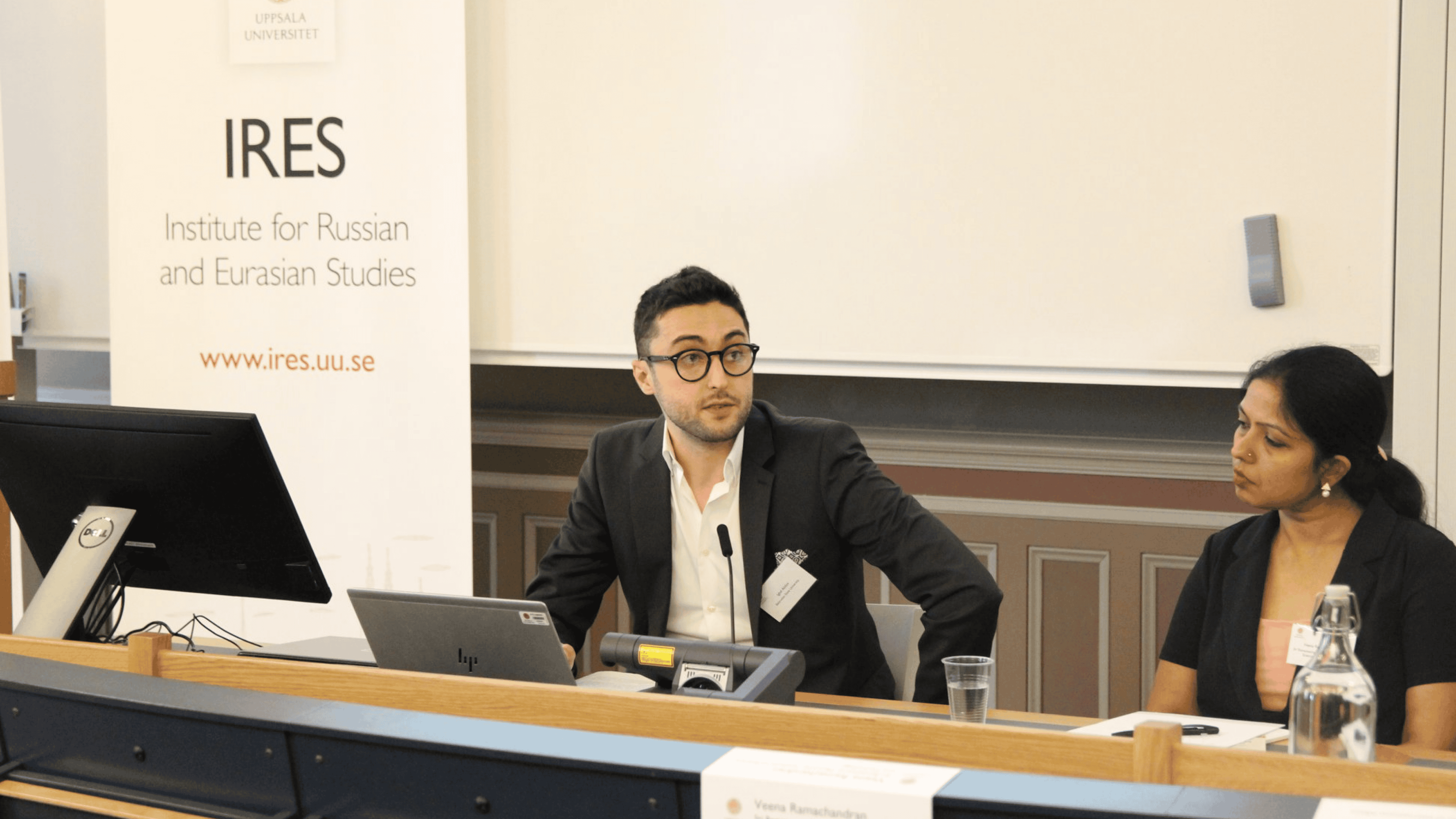
● Igbal Abilov (pictured), an ethnographer and editor-in-chief of the journal Vestnik of the Talysh National Academy, who was sentenced to 18 years on treason charges, protested in a letter from prison against pressure on the Talysh language in Azerbaijan. “February 21 — International Mother Language Day — is a sad day for me, because it once again reminds me that my native language, Talysh, is on the verge of extinction. Its use in public life in Azerbaijan is accompanied by fear and is possible only with permission. Even in pretrial detention, I was forbidden to speak Talysh on the phone with my parents […] The sentence handed down to me is part of a death sentence that these forces have issued to my people and my native language,” Abilov wrote. Read more here
● Several state institutions in Azerbaijan are being reorganized through mergers. The Media Development Agency of Azerbaijan will be expanded by absorbing the Center for Social Research. The Center of Analysis of International Relations will merge with the Baku International Multiculturalism Centre and operate under the new name “Center for Analysis of International Relations and Multiculturalism.” Property, rights, and obligations will be transferred from the former bodies to the new institutions. Approval of their charters, appointment of leadership, staffing levels, and salaries will be coordinated with the president.
-
Top stories in Azerbaijan, Armenia, and Georgia from 16-20 February, 2026