

Top stories in Azerbaijan, Armenia, and Georgia from 12-16 January, 2026
 Live
Live




-
Friday, January 16, Armenia. There has been public criticism over the fact that the families of Armenians transferred by Azerbaijan were not informed in advance
-
Friday, January 16, Georgia. Georgian Dream has filed a complaint with the BBC, demanding the removal of an article and a documentary alleging the use of a World War I–era chemical substance in Georgia to suppress protests
-
Friday, January 16, Azerbaijan. Supplies of Azerbaijani gas to Austria and Germany have begun
-
Thursday, January 15, Armenia. Azerbaijan has transferred four ethnic Armenians who had been held in prison to Armenia
-
Thursday, January 15, Georgia. The case of Mzia Amaghlobeli is being actively considered by the European Court of Human Rights in Strasbourg
-
Thursday, January 15, Azerbaijan. The framework document on TRIPP signed between the United States and Armenia is highly valued in Baku
-
Wednesday, January 14, Azerbaijan. The children of Lieutenant Colonel Gafarov, who died as a result of torture in the “Terter case,” are demanding compensation
-
Wednesday, January 14, Armenia. Mirzoyan and Rubio approved a joint statement on the implementation of the TRIPP program between Armenia and the United States
-
Wednesday, January 14, Georgia. Pro-government media used trolls in a campaign against the relatives of convicted former PM Garibashvili
-
Tuesday, January 13, Georgia. Zurabishvili: “Terror first targeted civil society and the opposition; now it has reached the ruling elite”
-
Tuesday, January 13, Armenia. Russian propagandist Solovyov called for launching military aggression against Armenia
-
Tuesday, January 13, Azerbaijan. An ambitious state program to improve water supply systems in Baku and on the Absheron Peninsula has been adopted
-
Monday, January 12, Azerbaijan. Another 979 tonnes of motor gasoline were shipped from Azerbaijan to Armenia
-
Monday, January 12, Georgia. One year since the arrest of Mzia Amaglobeli
-
Monday, January 12, Armenia. Armenian activist Ejmi Masikhi was killed during protests in Iran

-
Friday, January 16, Armenia. There has been public criticism over the fact that the families of Armenians transferred by Azerbaijan were not informed in advance
● Representatives of the Armenian and Azerbaijani sides carried out a joint inspection of the current condition of infrastructure on the Yeraskh–Sadarak railway section along the border between the two countries. The stated goal was to assess its technical suitability for the movement of specialized railway construction equipment needed for infrastructure restoration.
● Russian Foreign Ministry spokesperson Maria Zakharova commented on controversial remarks by Russian TV host Vladimir Solovyov, who said that “losing Armenia is not in Russia’s interests” and that Russia should conduct a “special military operation” not only in Ukraine but also in territories within Russia’s sphere of influence. Zakharova said this was a journalist’s personal opinion framed as a question, not an official statement. “It is absolutely obvious that these phrases were later presented in a provocative manner by armchair analysts as almost Russia’s official position,” she said. In Armenia, Solovyov’s remarks sparked widespread outrage.
● “Armenia’s balanced policy cannot lead to a repetition of the Ukrainian scenario for the country,” Armenian Prime Minister Nikol Pashinyan said, commenting on Solovyov’s statement. He noted that the joint Armenia–U.S. TRIPP transit project—creating a route from Azerbaijan to its Nakhchivan exclave through Armenian territory—is an example of such a balanced policy and an important factor in ensuring Armenia’s security.
● The Human Rights Defender (Ombudsperson) met with four ethnic Armenians who had been held in detention in Azerbaijan and were transferred to Armenia yesterday “as a practical result of the peace process established between Armenia and Azerbaijan.” The ombudsperson held confidential private meetings with them.
● The families of the four individuals transferred from Azerbaijan were not informed in advance. Relatives learned about the transfer through media reports and unofficial sources. Human rights activist Zhanna Andreasyan wrote on Facebook that this shows a lack of attention and proper consideration by the authorities. She suggested the authorities may have hoped to shock the public and present the move as a major pre-election achievement, but miscalculated. According to her, public attention was instead drawn to reports about the return of detainees coinciding with “astronomical bonus payments” received by Nikol Pashinyan.
● Prime Minister Pashinyan said there is no connection between the return of the four ethnic Armenians imprisoned in Azerbaijan and the transfer to Syria of two Syrian citizens sentenced to life imprisonment in Armenia for fighting on Azerbaijan’s side in the 2020 Second Karabakh War. He said the issue of Syrian mercenaries was discussed with Syrian authorities and that the men were transferred via Turkey. “Everything has been published, and all discussions should be viewed within the framework of that information,” Pashinyan said.
● Health problems have been identified in Vigen Euljekdjian, one of the four ethnic Armenians transferred from Azerbaijani detention. “Vigen has back problems, his neck is in a brace, and he will need surgery. But he is in good spirits and happy to be in Armenia,” said Zare Sinanyan, Armenia’s High Commissioner for Diaspora Affairs.
● “If we win, the new prime minister will not receive bonuses, and his salary will be just one dram (about $0.002),” said Narek Karapetyan, coordinator of the Our Way movement. He is the nephew of Russian billionaire Samvel Karapetyan, who is currently under arrest on charges of calling for a coup in Armenia.
● “Armenia will be unblocked and will become an important hub for major international logistics routes. This will in no way come at the expense of our sovereignty, territorial integrity, or jurisdiction,” Foreign Minister Ararat Mirzoyan wrote on Facebook.
● A new military uniform is undergoing field testing in the armed forces, Defense Minister Suren Papikyan wrote on Facebook, sharing a video.
-
Friday, January 16, Georgia. Georgian Dream has filed a complaint with the BBC, demanding the removal of an article and a documentary alleging the use of a World War I–era chemical substance in Georgia to suppress protests
● Georgia’s ruling party Georgian Dream has filed an official complaint with the BBC, demanding the removal of an article and documentary published on December 1. The materials claimed that Georgian authorities may have used a World War I–era chemical substance to suppress anti-government protests in late 2024. The complaint also calls for a public apology. The party says the BBC violated editorial standards, accuracy, and impartiality, presenting unsubstantiated claims as facts.
● According to Radio Free Europe/Radio Liberty, the BBC has confirmed receipt of the complaint and said it will respond in line with established procedures. “We have received the complaint and will respond accordingly. Journalistic work has our full support, and we thank the brave people who took part in it,” a BBC representative told RFE/RL.
● Georgia’s State Security Service has launched an investigation into the publication of details of a deal between Georgian Dream and Russian state energy giant Gazprom on the government administration’s website. Authorities claim the site was subjected to a cyberattack aimed at harming Georgia’s state interests by spreading false information.
For nearly a decade, Georgian Dream has kept details of its Gazprom deal secret despite repeated calls from experts and civil society. On December 25 last year, a decree signed by Prime Minister Irakli Kobakhidze appeared on the government website, disclosing volumes and prices of Russian gas purchases. The information was removed after it was discussed on Formula TV on January 13.
● The Communications Commission has issued a written warning to independent TV channel Formula for receiving funding from a political party. According to the commission, the company owning the channel received 540,000 lari (about $200,000) from the political alliance Unity–National Movement in the third quarter of 2025. The National Movement was founded by imprisoned former president Mikheil Saakashvili and was Georgia’s ruling party until 2012, when Georgian Dream came to power.
● According to the National Bank of Georgia, money transfers into the country increased by 18.4% in December compared to the same month in 2024, totaling $337.95 million. As before, the largest share came from the United States (18.85%), followed by Italy (17.36%).
● Another suspect in a fraud case involving Sfera Holding has been detained in Italy. Giorgi Murusidze, director of Sfera Invest, was charged in November 2025 and placed on an international wanted list. His arrest was confirmed by his lawyer. Earlier, Givi Tsuleiskiri, the founder of Sfera Holding, was arrested in the same case. Prosecutors say Tsuleiskiri and Murusidze collected large sums from 244 citizens, failed to meet their obligations, and fraudulently misappropriated up to 12 million lari (about $4.5 million).
● According to Georgia’s RFE/RL service, two of four minors arrested in the case of the killing of young teacher Giga Avaliani in Tbilisi have been charged with intentional infliction of grievous bodily harm with particular cruelty. The information was shared on social media by the mother of one of the detainees. Avaliani, a 26-year-old medical student, died in intensive care nearly a month after being brutally assaulted on the street last fall.
-
Friday, January 16, Azerbaijan. Supplies of Azerbaijani gas to Austria and Germany have begun
● Delegations from Baku and Yerevan conducted a joint inspection of the condition of infrastructure on the Sadarak–Yeraskh railway section along the border between the two countries. Specialists assessed whether the tracks are suitable for the movement of specialized railway construction equipment, which is required to begin railway restoration work, according to a press release.
● Azerbaijani Foreign Minister Jeyhun Bayramov met with the EU Special Representative for the South Caucasus and the crisis in Georgia, Magdalena Grono. The sides discussed prospects for Azerbaijan–EU cooperation in the political, economic, and transport sectors, as well as energy security issues. Bayramov briefed the EU representative on progress and prospects in the peace process between Azerbaijan and Armenia. Measures aimed at building confidence within the normalization process were positively assessed, the press release said.
● Turkish Foreign Minister Hakan Fidan said that ensuring lasting peace in the South Caucasus in 2025 remained one of Turkey’s key priorities, along with cooperation with Balkan countries.
● Azerbaijan’s state oil company SOCAR has begun supplying Azerbaijani gas to Austria and Germany via the Trans Adriatic Pipeline (TAP), which is the European segment of the Southern Gas Corridor. Supplies are routed through Italy. The number of countries importing Azerbaijani gas has now reached 16.
● Azerbaijan has prepared its first-ever state program for tourism development, aimed at sustainable growth of the sector and increasing tourist arrivals to 5–6 million per year in the medium term. Priority areas include expanding international air connections, introducing visa-free regimes to boost inbound tourism, and improving transport accessibility to key regional tourist hubs. Azerbaijan also plans to actively promote itself as a destination for gastronomic, wellness, winter, and eco-tourism.
● An international conference is being held in Baku on the Indian government’s repressive policies toward national minorities. Titled “Racism and Violence Against Sikhs and Other National Minorities in India: Current Realities,” the event is organized by the Baku Initiative Group and is being held for the first time. Participants include the human rights minister of Pakistan’s Punjab province, representatives of Sikh communities from Canada, the UK, and the U.S., as well as international experts.
● A ban on the dissemination of information violating moral standards on websites and social media has come into force. The relevant amendments to the law “On Information, Informatization, and Information Protection” were previously approved by the president. In particular, the law prohibits the spread of content that offends public morality or openly shows disrespect for society, including obscene language or gestures.
-
Thursday, January 15, Armenia. Azerbaijan has transferred four ethnic Armenians who had been held in prison to Armenia
● Azerbaijan has transferred four ethnic Armenians who had been held in prison to Armenia: Davit Davtyan, Gevorg Sudjyan, Vigen Euljekdjyan, and Vagif Khachatryan. “The process was carried out as a practical result of the peace process established between Armenia and Azerbaijan,” Armenia’s National Security Service said. More details here.
● Three of them have been transferred to a military hospital for medical examinations. Vagif Khachatryan has been admitted to Nork-Marash Medical Center. The clinic’s director, Mikael Adamyan, said Khachatryan has a mild exacerbation of a chronic heart condition. The health minister said that “Vagif Khachatryan is in good spirits because he is back home in Armenia and is awaiting a meeting with his relatives.”
● Local media report that at the same time Armenia transferred two prisoners to Syria via Turkey. They are reportedly Syrian mercenaries who fought against Armenians during the 44-day war with Azerbaijan in 2020. They had been sentenced to life imprisonment.
● In some political circles, these two actions are being described as part of a deal. Lawyer Siranush Sahakyan, who represents Armenian detainees at the European Court of Human Rights, said: “Two for four, but it is not a beneficial deal. If the Armenian authorities more carefully assess how much leverage these individuals had, they will realize they made an unfavorable deal.”
● “The institutionalization of peace with Azerbaijan and the TRIPP project are interconnected. The stronger the peace, the more successful the project will be – and the more successful the project, the stronger the peace,” Foreign Minister Ararat Mirzoyan said during a live broadcast from Washington following his meeting with U.S. Secretary of State Marco Rubio on the implementation of TRIPP. TRIPP is a road that will connect Azerbaijan with its Nakhchivan exclave through Armenian territory. The agreement on the project was reached during a summit of Armenian and Azerbaijani leaders in Washington with the participation of Donald Trump. Mirzoyan said practical results on implementation are expected in late summer or early autumn. Read more here
● Sarkis Khandanyan, chair of the Armenian parliament’s Foreign Relations Committee, commented on media reports claiming that, at Baku’s demand, Armenian border guards would not be present along the TRIPP transit route. “Within the framework of TRIPP, all security issues will be handled by Armenian law enforcement agencies,” Khandanyan said.
● Khandanyan also addressed the question of possible Russian involvement in the TRIPP project. “The participation of third parties will be determined by mutual agreement between Armenia and the United States,” he said.
● “Certain developments will take place in Armenia–Turkey relations,” Prime Minister Nikol Pashinyan said at the forum “Armenia and Peace at the Crossroads of Risks and Opportunities.” “We always say: ‘When it happens, then we’ll start preparing.’ We need to change that approach. For example, bridges must already be built on the Armenian–Turkish border at Margara and Akhurik, and customs and border checkpoints must be established there. There will likely also be changes on the Ijevan–Gazakh section of the border with Azerbaijan. There are also certain changes on the southern section. Power transmission lines on the Armenian–Turkish border may also need to be upgraded. We are already receiving signals from the private sector, which is asking whether it can start thinking now about electricity transmission in the Armenian–Turkish and Turkish–Armenian directions. We are telling them: yes, you can.”
● Prime Minister Nikol Pashinyan said: “We understand that we cannot simultaneously be members of both the European Union and the Eurasian Economic Union (led by Russia). For now, there is room to maneuver—we can move toward the EU while remaining an EAEU member. When we reach EU standards, we will have two options: either we are accepted into the EU or we are not. In both cases, we benefit. Even if we are not accepted, the country will already meet European standards and will have a developed, modern state. But I want to once again clearly state the government’s position: do we want to be a full member of the European Union? Yes—unconditionally and unequivocally.”
● Iran’s ambassador to Armenia, Khalil Shirgholami, said that a strategic partnership agreement between the two countries is being prepared and expressed hope that it will be signed this year.
● The ambassador also criticized the Armenian authorities over rallies in Yerevan supporting protests in Iran. He said he had repeatedly sent protests to the relevant Armenian authorities. “In Tehran, the perception is forming that Armenia is becoming a center for the activities of forces hostile to Iran. In the most difficult moments, we stood by the Armenian government—there are many such examples. Today we are in a difficult situation, and what is happening near the Iranian embassy in Armenia will remain in the historical memory of the Iranian people,” the ambassador said.
● In response, Armenia’s Interior Ministry issued a statement assuring that it ensures the security of all diplomatic missions, including the Iranian embassy. “At the same time, Armenia, as a democratic state, in accordance with the Constitution, the Law on Freedom of Assembly, and its international obligations, cannot prevent citizens from exercising their right to freedom of movement and peaceful assembly,” the statement said.
● Secretary of Armenia’s Security Council Armen Grigoryan said: “Armenia has managed to stabilize the situation in the region amid global instability and to open broad opportunities for the country.”
● European Union programs in Armenia include key initiatives in the energy sector aimed at expanding regional connectivity and export opportunities with Georgia, EU Ambassador to Armenia Vassilis Maragos said at the forum “Armenia and Peace at the Crossroads of Risks and Opportunities.” He noted that the EU has already supported the creation of infrastructure for several solar power plants in Syunik and invested in the private sector in the Masrik community near Lake Sevan, where full interconnection with neighboring countries’ power grids will soon take place. “This will significantly expand electricity export potential,” Maragos said.
● Maragos also described Armenia’s participation in the European Peace Facility as an important achievement. He said the first measure has already been agreed, involving procurement for the Armenian armed forces. He stressed that this does not involve weapons. “These are items necessary for operational functionality, logistics, and medical services,” the ambassador said.
● Armenia has been included among countries with the most stable business environments in Europe and Central Asia. According to the World Bank’s B-READY 2025 report, published on December 29, 2025, Armenia scored 66.7 points overall—6.6 points above the average of the 101 countries assessed.
● Armenia is among 75 countries whose citizens face a suspension of U.S. immigrant visa issuance, alongside Georgia, Azerbaijan, and Russia. The decision will take effect on January 21 and will not apply to applications for tourist, business, or other non-immigrant visas.
● Asoghik Karapetyan, director of the museums and archives of the Mother See of Holy Etchmiadzin, denied reports about damage to or the disappearance of a unique relic—the spear believed to have pierced Jesus Christ, known as the “Geghard.” “The relic is intact, unharmed, safe, and located at the Mother See of Holy Etchmiadzin,” Karapetyan said during questioning by the Investigative Committee in a case opened following the reports. Asked to clarify claims that a fragment of the spear had allegedly been gifted to the Russian Orthodox Church, Karapetyan said: “For centuries, Christian churches have exchanged relics. We gifted only a copy of the Geghard. You can purchase a similar replica in any souvenir shop on church grounds.”
● Armenian citizens who have graduated from one of the world’s top 50 universities and worked in Armenia for at least three years will be exempt from military service, Minister of Education, Science, Culture and Sports Zhanna Andreasyan said.
-
Thursday, January 15, Georgia. The case of Mzia Amaghlobeli is being actively considered by the European Court of Human Rights in Strasbourg
● The U.S. State Department is temporarily suspending the issuance of immigrant visas to citizens of 75 countries, including Georgia; Armenia, Azerbaijan, and Russia are also on the list. The decision will take effect on January 21 and remain in force until the department reviews the visa issuance process. The aim is to prevent the entry of applicants who could become a “public charge” and dependent on the state. More details here.
● The case of Mzia Amaghlobeli, founder of the popular outlets Batumelebi and Netgazeti and sentenced to two years in prison, is being actively considered by the European Court of Human Rights in Strasbourg. According to the Georgian Young Lawyers’ Association (GYLA), written submissions have already been filed in one case, and the ECHR has officially registered a second complaint. More details here.
● Activist Nutsa Makharadze was arrested during a protest rally outside the Iranian embassy in Tbilisi (video). The reason for her arrest is not yet known.
● The Tbilisi City Court refused to accept a lawsuit filed by activist Mariam Mekantsishvili against Georgian Dream parliamentary speaker Shalva Papuashvili. The suit demanded a retraction of what it described as defamatory statements made by Papuashvili about protesters, as well as compensation for moral damages.
● The German Association for East European Studies responded to the education reform initiated by the Georgian Dream party with a letter expressing concern about the expected outcomes of the reform. In the letter, published in translation by Publika, the association expressed solidarity with Georgian colleagues defending independent academic activity and academic freedom.
● “European integration is part of our political agenda. Our Constitution states that we must become a full member of the European Union, and we will follow this plan,” Georgian Dream Prime Minister Irakli Kobakhidze said during a panel discussion at the Abu Dhabi Sustainability Week. The main theme of the forum was “The Middle Corridor — Connecting Europe and Asia Through Energy.”
“European integration is part of our political program. The Constitution stipulates that we must become a full member of the European Union. We will follow this plan and strictly adhere to the provisions of the Association Agreement. In this regard, we will carry out sustainable reforms,” Kobakhidze said.
● Irakli Kobakhidze said that the Eagle Hills investment project will bring 11 billion lari to Georgia’s economy this year, and over the next 10 years will generate about 700 million lari annually for the state budget. The project involves an Arab investor building high-rise residential districts near Tbilisi and in Gonio on the Black Sea coast. The project has sparked heated debate in Georgia, and the agreement signed with the investor was declared a commercial secret. “Both the economy and the budget will benefit, and thousands of jobs will be created. During the implementation phase alone, 24,000 jobs will be created, and 8,000 permanent jobs will remain after completion,” Kobakhidze said.
● “Some people think it is good to throw a Molotov cocktail, a stone, or a stick at a police officer, or to organize a revolution. But Georgia must build its future on forgiveness, on human values, and on positive development of relations between people — otherwise the country will collapse,” the first deputy speaker of parliament told journalists in response to a question about pardoning citizens arrested during protests.
Video by Civil.ge
Rallies continue at the Iranian Embassy in Tbilisi amid deadly crackdown on protests in Iran. Georgian protesters joined Iranian demonstrators in solidarity.
🎥 Nini Gabritchidze/Civil.ge pic.twitter.com/B4RLwpVn6O— Civil.ge (@CivilGe) January 14, 2026
-
Thursday, January 15, Azerbaijan. The framework document on TRIPP signed between the United States and Armenia is highly valued in Baku
● Azerbaijan considers the framework document on the “Trump Route” (TRIPP) project, signed the previous day between the United States and Armenia, an important step toward the practical implementation of the agreements reached at the Baku–Yerevan leaders’ summit held in Washington on August 8, 2025, with the participation of Donald Trump. This was stated by Azerbaijani Foreign Ministry spokesperson Aykhan Hajizada. TRIPP is a transit route that will run from Azerbaijan to its Nakhchivan Autonomous Republic through Armenian territory. “The signed document is also important in terms of fulfilling the commitments undertaken by Armenia,” Hajizada emphasized. More details on the document here.
● Former US Ambassador to Azerbaijan Matthew Bryza also stressed the significance of the TRIPP framework document signed between the US and Armenia in comments to the pro-government outlet Report. Bryza noted that the document clearly underlines Armenia’s full sovereignty over the territories included in the route. “It envisages only a 49-year land lease,” he said.
“TRIPP will allow Azerbaijan to become one of the key links in a major transit corridor connecting Central Asia via the Caspian Sea, through Azerbaijan and Armenia, to Turkey and onward to European and global markets. Such cooperation could create a solid foundation for finalizing a peace agreement between Azerbaijan and Armenia,” Bryza said.
● Azerbaijan has handed over to Armenia four ethnic Armenians sentenced to 15–20 years in prison for crimes against the state: Gevorg Sudjyan, Davit Davtyan, Vigen Euljekdjyan, and Vagif Khachatryan. Pro-government media describe the move as “one of the practical results of the peace process between Azerbaijan and Armenia.” No official comments have yet been published. In Armenia, the transfer was confirmed by the National Security Service and Prime Minister Nikol Pashinyan. Armenian media report that 19 more ethnic Armenian prisoners remain in Azerbaijani prisons. Read more here
● Journalist Sevinj Osmanqizi, who lives abroad, and bloggers Abid Gafarov and Beydulla Manafov have been sentenced in absentia to eight years in prison. They were accused of calling on YouTube and other online platforms for the violent seizure of power and disobedience to lawful demands of the authorities. All three previously denied the charges. Similar in absentia sentences have also been handed down to several other bloggers and public figures who have emigrated.
● The pro-government outlet Report published an exposé targeting an Azerbaijani-language Facebook and TikTok page called Palitra. The publication claims the accounts are run by Armenian citizens who deliberately spread disinformation about Azerbaijani state institutions and engage in anti-Azerbaijani propaganda. The article names alleged owners of the pages and lists their addresses in Yerevan. Report called for an investigation into the authors whose content appears on the page, stating that “despite public statements about commitment to the peace process, Armenia has unfortunately not abandoned information and other operations directed against Azerbaijan.”
● Agriculture Minister Majnun Mammadov announced that discussions were held with counterparts in Israel on the possibility of establishing a joint livestock artificial insemination center in Azerbaijan.
● Six state programs aimed at developing national culture will be implemented through 2040, according to the new “Culture of Azerbaijan – 2040” concept approved by presidential decree. The programs include:
– Development of the Azerbaijani language and literature;
– Protection of cultural and natural heritage;
– Development of the arts;
– Development of the audiovisual industry;
– Development of behavioral culture and information culture;
– Development of cultural and creative industries.● Under the new concept, funding will be allocated to fully digitize the national film archive as well as state television and radio archives.
● The Information Security Service has urged the public not to trust fake online messages calling on users to follow links to receive targeted social assistance from the state. Scammers use social media and messaging apps to steal citizens’ personal data, often exploiting the name of the myGov portal. Information about such domains is published on the Blacklist.gov.az platform, which is designed to protect citizens from fraudulent websites.
-
Wednesday, January 14, Azerbaijan. The children of Lieutenant Colonel Gafarov, who died as a result of torture in the “Terter case,” are demanding compensation
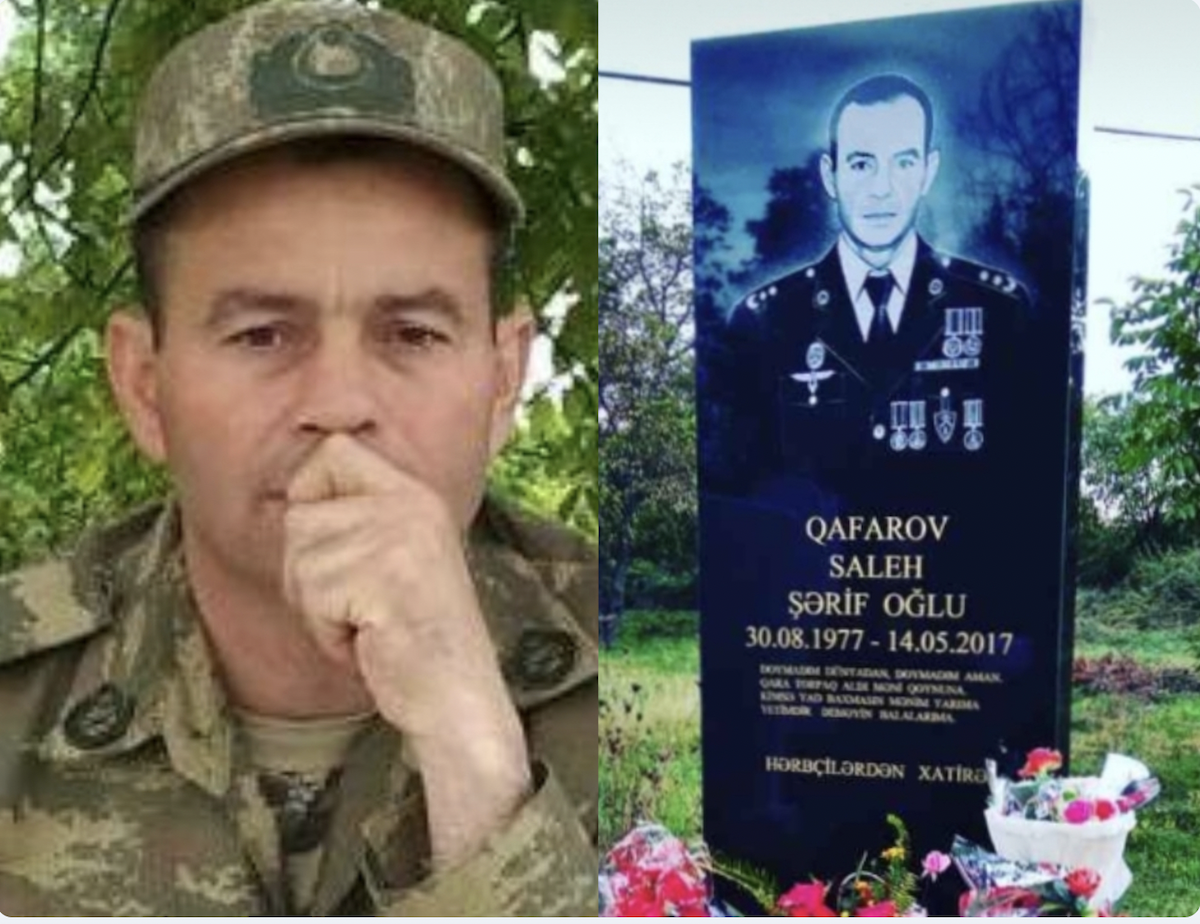
● Two children of Lieutenant Colonel Saleh Gafarov (pictured), who died in May 2017 as a result of mass torture of servicemen in the town of Terter on charges of treason, are seeking 600,000 manats (about $353,000) in compensation for their father’s death — 300,000 manats each. However, the court awarded only 20,000 manats (about $12,000) in compensation, or 10,000 manats per person.
The late officer’s children, aged 19 and 22, stated in court that their innocent father was branded a traitor without any grounds, destroying the lives of the entire family.Saleh Gafarov was on vacation with his family when he was taken from his home on May 4, 2017. According to the children’s court statement, Gafarov was tortured with his hands tied and eyes blindfolded. He was beaten, kicked, struck with plastic pipes and other objects. His head was repeatedly submerged in barrels of water until suffocation, his fingernails and toenails were torn out, he was repeatedly subjected to electric shocks, and deprived of food, water, and basic necessities. After several days of torture, Gafarov jumped out of a window after being left unattended in a second-floor room. He later died in hospital.
Exactly one year later, on May 4, 2018, a court fully acquitted Saleh Gafarov and closed the criminal case against him.
In their lawsuit, the children named the Ministry of Finance as the defendant. In response, it was stated that there was no evidence of the ministry’s guilt and that the claim could not be satisfied. The court justified awarding a much smaller sum by noting that compensation had previously been paid to Gafarov’s wife. She had sought 1.5 million manats (about $883,000) in compensation, but the court ordered the state to pay her 50,000 manats (about $30,000).
In 2017, dozens of servicemen were arrested on charges of spying for Armenia. As a result of mass torture, 11 people died. In December 2021, after the reopening of the “Terter case,” a total of 452 people, including family members, were officially recognized as victims. Thirteen individuals were convicted in connection with the case and sentenced to between 4 years and 10 months and 13 years in prison. However, no high-ranking officials were held accountable. The then–military prosecutor Khanlar Valiyev was later appointed a judge of the Constitutional Court. Read more here
● The European Court of Human Rights has upheld two complaints filed by Azerbaijani public figure Elgiz Gahraman, who is currently under arrest. The court ordered the state to pay him €10,000 in compensation for material damage and €2,054.81 in legal costs.
Gahraman was arrested in 2016 on drug possession charges and sentenced to five and a half years in prison; the term was later reduced to three years. He denied the charges, saying he was framed and that his arrest was linked to a critical Facebook post about the authorities. In 2024, a new case was opened against him: he was named a defendant in the case of detained journalist Imran Aliyev, head of the website meclis.info. Gahraman was placed in pretrial detention and charged under eight articles of the criminal code, including smuggling, tax evasion, money laundering, and illegal entrepreneurship, carrying a potential sentence of up to 12 years. He has been in custody since April 19, 2024.Over the past three years, more than 30 journalists and public figures in Azerbaijan have been arrested on smuggling charges. All deny the accusations and say they are being persecuted for criticizing the authorities.
Human rights defenders report that ECHR compensation rulings are no longer enforced in Azerbaijan after the Parliamentary Assembly of the Council of Europe refused to ratify the credentials of Azerbaijani delegates in January 2024, citing the deterioration of the human rights situation. On April 9 last year, President Ilham Aliyev stated: “Given that we do not participate in the election of judges of the European Court of Human Rights, the decisions of this court have no legal force for us.”
● The World Bank said that the peace treaty initialed between Armenia and Azerbaijan in August 2025 is important for economic prospects and deeper integration in the South Caucasus. The January edition of the Global Economic Prospects report notes that geopolitical tensions remain one of the key risks to the region’s economic outlook in Europe and Central Asia.
● President Ilham Aliyev laid the foundation stone for a Special Operations Center in the Aghdara district, liberated from Armenian control following the 2020 second Karabakh war. The center will host large-scale drills and training involving numerous personnel, firing ranges for small arms and heavy weapons, drone and strike-drone training, various simulations, special operations training, as well as driving and swimming instruction. The complex will also include a штаб, barracks, medical unit, club, academic building, guest house, indoor sports complex, outdoor sports facilities, and other infrastructure.
● “In the past 80 years, there has been no other country that has achieved such a complete and absolute victory as Azerbaijan,” Ilham Aliyev said at a meeting with residents of villages in the Aghdara district. “There have been wars and conflicts, and they continue today, but none resulted in a full and absolute victory. Only we, as a great nation, achieved this — in just 44 days. And after that, within a single day […] Azerbaijanis returned to their ancestral lands and will live here with pride, happiness, and peace. I am sure there will be no more war. Azerbaijan is a strong state,” the president said.
● Ilham Aliyev added: “After the anti-terrorist operation, from 2023 to today, life has been revived in all liberated regions — Aghdara, Khojaly, Khankendi, Khojavend. Today, 73,000 people already live here, including former displaced persons and those who came to work or study. And every month the number of citizens returning to Karabakh continues to grow.”
● Italy could become a logistics hub for Europe as part of the Middle Corridor transit project, Energy Minister Parviz Shahbazov said at the 6th meeting of the Azerbaijan–Italy intergovernmental commission on economic cooperation in Baku. He noted that cooperation between the two countries is steadily developing across multiple sectors, including military-technical cooperation. “Italy is also one of the first countries involved in projects in territories liberated from Armenian occupation,” the minister said.
● The U.S. Department of Energy has left unchanged its forecast for oil and other hydrocarbon production in Azerbaijan for 2027. According to the report, Azerbaijan is expected to produce 540,000 barrels of liquid hydrocarbons per day in 2027 — the same level forecast for 2026.
● The Ministry of Labor reported a significant improvement in social protection in 2025. According to the ministry, five packages of social reforms implemented between 2019 and 2025 covered 4 million citizens. Funding for targeted social assistance increased fourfold during this period. Social spending reached 41.1% of the state budget. The subsistence minimum rose by 73%. Minimum pensions increased by 14.3% to 320 manats (about $188). Social benefits were also expanded, covering an additional 700,000 people.
Photo by Abzac Media
-
Wednesday, January 14, Armenia. Mirzoyan and Rubio approved a joint statement on the implementation of the TRIPP program between Armenia and the United States
● Armenian Foreign Minister Ararat Mirzoyan met with U.S. Secretary of State Marco Rubio in Washington. They approved a joint statement on a framework for implementing the “Trump Route for International Peace and Prosperity” (TRIPP) program between Armenia and the United States.
● According to the U.S. State Department, “This document is another step toward fulfilling the commitments made at the White House on August 8, 2025, to advance lasting peace in the South Caucasus. The framework outlines a concrete path for the practical implementation of TRIPP and is intended to ensure seamless multimodal transit connectivity across Armenia. By linking mainland Azerbaijan with its Nakhchivan Autonomous Republic and creating a vital segment of the Trans-Caspian trade route, TRIPP is expected to deliver mutual benefits for Armenia’s international and domestic transport connectivity.
“The ultimate goal of TRIPP is to strengthen the prosperity and security of Armenia and Azerbaijan, while further expanding U.S. trade by increasing regional commerce and connectivity and creating new transit opportunities linking Central Asia and the Caspian region with Europe.”
● Marco Rubio commented on the joint statement, saying: “This is a model example of how a country can open itself to economic activity and prosperity without in any way questioning or undermining its sovereignty and territorial integrity.”
● Armenian authorities are preparing to remove Russian border guards from the Akhurik border crossing on the Armenian-Turkish border, News.am reports citing a diplomatic source. The decision is said to have already been made and a flagpole installed, although Russian border guards are expected to remain at the crossing for now. Other sources say Turkey has already begun construction work at another checkpoint, Margara. Taken together, these steps—including the planned opening of Akhurik—are seen as signs of serious intent to open the Armenian-Turkish border in the foreseeable future.
● “The Armenian government is consistently advancing its agenda to unblock borders with Turkey. We hope that opening the border will create new economic opportunities in border areas—customs warehouses, terminals, and logistics centers,” Economy Minister Gevorg Papoyan said at a meeting with investors and entrepreneurs. He noted that state support may be provided to companies involved in such investment projects.
● Armenia’s army will combine both contract-based and conscription service in the future, Defense Minister Suren Papikyan said while presenting his vision for the armed forces over the next five years. “I see conscription as a channel through which the contract service will be replenished,” he noted. Under this vision, conscripts would move into the reserve after completing mandatory service, with some later choosing to join the professional army.
● Lawyers for Russian dollar billionaire Samvel Karapetyan, who is under arrest in Armenia, have complained about inadequate medical care. They claim Karapetyan developed bilateral pneumonia due to poor detention conditions, saying he told them his cell was cold and that no steps were taken to address the issue.
● The import of Azerbaijani gasoline, which began in mid-December, has already led to an overall 15% drop in fuel prices in Armenia, Prime Minister Nikol Pashinyan said. According to him, most of the imports are PREMIUM-grade gasoline. “Two days ago, diesel fuel was also imported from Azerbaijan. Over this period, diesel prices fell by 2%, and REGULAR gasoline prices dropped by 8% compared to December,” Pashinyan said.
● The opposition Dashnaktsutyun party plans to take part in the 2026 parliamentary elections as part of a coalition. Party representative and MP Ishkhan Saghatelyan said discussions to form such a coalition will begin soon. Much of Armenia’s opposition, including Dashnaktsutyun, is widely seen as pro-Russian.
● A snowball fight between two young people in Yerevan escalated into a scuffle and then a fight, during which a 17-year-old stabbed a 16-year-old boy. The attacker has been detained and has confessed.
-
Wednesday, January 14, Georgia. Pro-government media used trolls in a campaign against the relatives of convicted former PM Garibashvili
● Georgia’s fifth president, Salome Zurabishvili, said in her speech at the Global European Forum: “It is necessary to actively curb and prevent election manipulation and propaganda. This also means supporting civil society. It is not enough to simply state that Europe will no longer recognize the Georgian regime as a candidate country and that it will help civil society defend itself. These are statements, but there is no reality behind them. It is very important to show Russia and other countries that when democracy is under threat, the West is ready for action, not just statements. Georgia’s struggle is not secondary to Europe’s future. It is a warning for Europe. If democratic backsliding can be normalized on Europe’s borders without any cost for Russia, it can be repeated inside Europe as well.”
● According to Myth Detector, state media used trolls in an organized campaign against relatives of former Prime Minister Irakli Garibashvili, who was sentenced to five years in prison for illegal financial operations. Myth Detector found that social media accounts posting provocative messages used photos of unrelated people for their profiles; those people said the images were used without their knowledge. Read more here
● Irakli Garibashvili’s lawyer said he visited him in prison and that the former prime minister himself requested a plea deal and admitted guilt. “It became clear to him that he would serve a prison sentence. Logically, the sooner he goes to prison and begins serving it, the sooner he will be released,” the lawyer said.
● Prime Minister from Georgian Dream, Irakli Kobakhidze, said that “as a human being” he is deeply saddened by Garibashvili’s arrest and conviction, but cannot comment because it is “a matter of justice.”
● Radio Free Europe/Radio Liberty reported that the captain of the oil tanker Marinera, seized by the United States and sailing under the Russian flag, is a Georgian citizen. Presumably, there are five more Georgian citizens on board; their identities are not yet known.
● The decision to keep opposition figure Aleko Elisashvili, a member of the “Lelo – Strong Georgia” coalition, in pretrial detention was upheld. On November 29 last year, he attempted to set fire to the building of the Tbilisi City Court Chancellery. The judge said no new circumstances had emerged. Elisashvili’s lawyers sought his release, at least on bail or with additional restrictions. Read more here
● Activist Nana Sander, detained in connection with the October 4 case when protesters attempted to storm the presidential palace, told a court hearing about ill-treatment in prison and health problems. She said she would begin a hunger strike if not released.
● Russian state oil and gas giant Gazprom said on its Telegram channel that in 2025 supplies of Russian gas to Georgia increased by 40.4%. Supplies to Kazakhstan, Uzbekistan, and Kyrgyzstan increased by 22.2%. The company did not specify export volumes.
● The Transport Corridors Research Center issued a sharply critical statement on the deep-water port of Anaklia in western Georgia, whose construction has repeatedly been halted amid political scandals and changes of owners and investors influenced by the ruling party. “By blocking Anaklia, Georgia has lost its status as a global player in the region. By suspending the project, Georgia missed the opportunity to attract return cargo flows from Eastern and Central Europe through this port. The indefinite suspension allows Russia to intercept strategic cargo flows from Central Asia and redirect them through its own transport corridors and ports,” the statement said.
● The Interior Ministry reported that in January, 27 foreign nationals were deported from Georgia, including citizens of Turkey, India, Azerbaijan, China, Thailand, Turkmenistan, Germany, Pakistan, Egypt, Israel, and Lebanon.
-
Tuesday, January 13, Georgia. Zurabishvili: “Terror first targeted civil society and the opposition; now it has reached the ruling elite”
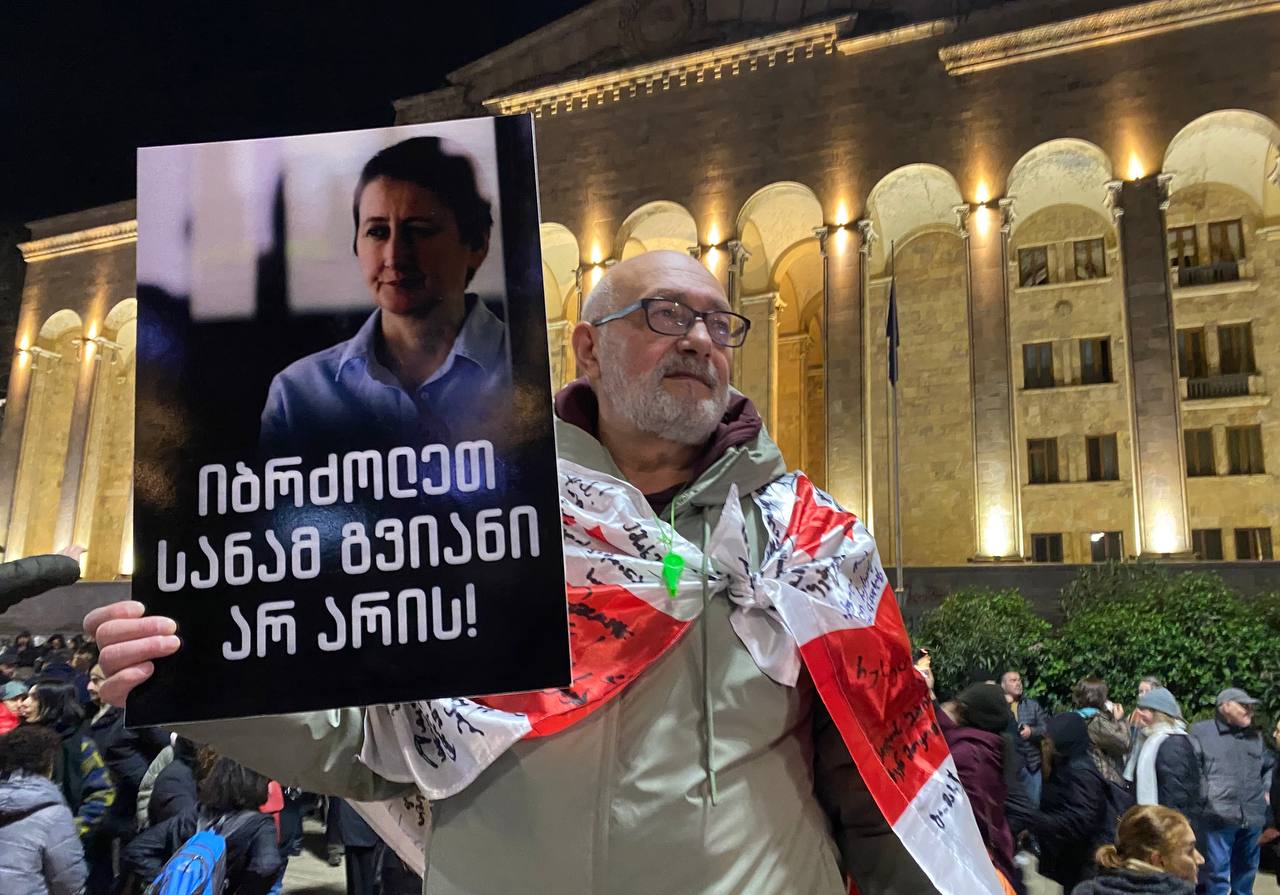
● A mass march involving thousands took place in Tbilisi in support of Mzia Amaghlobeli, founder of the popular outlets Batumelebi and Netgazeti, who was sentenced to two years in prison for slapping a police officer who had insulted her. One year has passed since her arrest.
● Irakli Dgebuadze, the former head of Batumi police and the officer whom Mzia Amaghlobeli slapped, has been appointed head of the Interior Ministry’s Main Department for Combating Organized Crime.
● According to materials published by ISFED, alongside rallies and court proceedings in support of Mzia Amaghlobeli, a year-long campaign to discredit her was conducted. The human rights group reports that representatives of the ruling Georgian Dream party, party-linked experts, pro-government media, anonymous actors, and anonymous networks controlled from Russia were involved.
● “A year ago, the Georgian regime imprisoned Mzia Amaghlobeli, a recipient of the prestigious international Sakharov Prize. Her courage is a symbol of resistance for a nation that continues to protest injustice. Europe stands with the Georgian people!” wrote Lithuanian MEP Rasa Juknevičienė on social media.
● Former Prime Minister Irakli Garibashvili has been sentenced to five years in prison for large-scale money laundering and transferred to Rustavi prison. Garibashvili pleaded guilty in court, and the prosecution reached a plea deal under which he was also fined 1 million lari (about $370,000). In addition, $6.5 million found in his home during a search was confiscated in favor of the state.
● Georgia’s fifth president, Salome Zurabishvili, commented on the high-profile arrest: “Terror first began against civil society and the opposition; now it has reached the ruling elite. The defense minister, the state security minister, the economy minister, and now the former prime minister are already in prison! The regime is turning on its own.”
● Activists Gela Khasaia and Vasil Kerdikoshvili have again been kept in pretrial detention. Both are charged with intentionally causing minor bodily harm, with authorities claiming they jointly attacked Georgian citizen Ramaz Chaduneli last September. The activists deny the charges and say the case was deliberately staged by law enforcement.
● Prime Minister Irakli Kobakhidze of Georgian Dream has traveled to Abu Dhabi, UAE, where he will take part in the Abu Dhabi Sustainability Week (ADSW) summit on January 13–15. Kobakhidze is scheduled to speak on a panel titled “The Middle Corridor – Connecting Europe and Asia Through Energy.”
● “The European Union’s misguided political course toward Georgia harms Europe itself and its interests. We value relations with the EU, but the approaches recently applied toward our country are unacceptable,” said Georgian Dream Foreign Minister Maka Bochorishvili.
● The Interior Ministry reports that family members were also involved in a large-scale fight among minors in the western Georgian town of Ozurgeti. A police officer trying to stop the clashes suffered a head laceration. He drew a firearm in self-defense but did not use it, despite being attacked by several people, the statement said.
Photo by JAMnews. The placard with a photo of Mzia Amaghlobeli reads: “Fight before it’s too late!”
-
Tuesday, January 13, Armenia. Russian propagandist Solovyov called for launching military aggression against Armenia
● A statement by Russian propagandist Vladimir Solovyov has escalated into a diplomatic scandal between Armenia and Russia. Russia’s ambassador was summoned to Armenia’s Foreign Ministry, where he was handed a note of protest over Solovyov’s public call for military aggression against Armenia. The Russian Embassy in Armenia said it would convey the Armenian side’s concerns about Solovyov’s remarks to the Kremlin. Armenia’s “Union of Informed Citizens” has also filed a request with the country’s Prosecutor General over Solovyov’s statements. Read more here
● Justice Minister Srbuhi Galyan said: “There are cases where a judge considers a simple defamation case for seven years and then fails to publish the ruling for another year. Instead of deciding within a few days whether to accept a motion for review, a judge may delay, and a person can remain in detention for five years or more. In every such case, these actions must lead to disciplinary liability for judges.”
● National Geographic has highlighted five of Armenia’s most beautiful monasteries for travelers: Geghard, Tatev Monastery, Noravank, and the monastic complexes of Sanahin and Haghpat. “From rock-carved chapels to mountaintop fortresses, these UNESCO-recognized sites allow travelers to experience 17 centuries of ritual and craftsmanship. Since Armenia adopted Christianity in 301 AD, the country’s monasteries have played a central role in its religious traditions. Seventeen centuries later, these UNESCO-listed sites remain vital centers of community life, reflecting and shaping the culture of the world’s first Christian nation,” National Geographic writes.
● The investment program for Yerevan’s Ajapnyak metro station totals 98 billion drams and is to be fully financed by the Armenian government. Design work was carried out from 2021 to 2025, with the implementation phase planned for 2026–2031.
● A plane that arrived this morning from Vienna to Yerevan landed in Tbilisi due to bad weather, passengers were told by the crew. One passenger told local media that the crew of the Austrian Airlines aircraft kept the doors closed for several hours without explanation, and then, three hours later, announced that passengers would either have to make their own way to Yerevan or return to Vienna on the same plane.
● Interior Ministry: In 2025, 5,435 decisions were issued to revoke drivers’ licenses, with 90.1% of them related to drunk driving cases.
-
Tuesday, January 13, Azerbaijan. An ambitious state program to improve water supply systems in Baku and on the Absheron Peninsula has been adopted
● First Deputy Minister of Economy Elnur Aliyev discussed prospects for further cooperation in trade, energy, transit, industry, and other areas with Karl Kress, Regional Director of the U.S. Trade and Development Agency (USTDA). The talks also covered the potential transit route known as the Trump Route for International Peace and Prosperity (TRIPP), which is expected to connect Azerbaijan with its Nakhchivan exclave via Armenian territory. The participants highly praised the progress toward signing a Strategic Partnership Charter between the two countries.
● There are no complications in passenger transportation from Baku to the Nakhchivan Autonomous Republic via Iran despite recent developments in Iran, according to the Land Transport Agency and the International Road Carriers Association.
● By 2029, 50% of industrial wastewater in Baku will be treated and reused. This is outlined in a specialized state program for 2026–2035 approved by the president. Initially, wastewater reuse systems will be introduced in two pilot zones, with expansion to five zones planned later.
● President Ilham Aliyev outlined specific tasks in this sector at a meeting dedicated to the state program for improving water supply and sewage systems in Baku and on the Absheron Peninsula. According to the state agency Azertag, the measures include:
- • Construction of around 30 new water reservoirs
- • Continuous water supply coverage to increase from 70% to 95% of the population
- • 100% metering of water consumption
- • Construction and reconstruction of more than 200 km of main canals and an equal length of distribution networks
- • Reduction of current water losses, which stand at about 40–45%
- • Expansion of sewage services from 50% to 95% of the population
- • Construction of nine new wastewater treatment plants in Baku and on the Absheron Peninsula
- • Construction of 12 new collectors and rehabilitation of three existing ones, along with new stormwater and sewage networks on 30 streets in Baku
- • Creation of an annual reserve of 100 million cubic meters of drinking water through desalination
- • Construction of two major reservoirs—Hakarichay and Bargushadchay—in territories liberated after the 2020 Second Karabakh War, where preparatory work is already underway
● Azerbaijan’s population gasification rate has reached 96%, President Ilham Aliyev said at the same meeting. “I mean the population — people, not settlements,” he emphasized.
● Five hundred people will receive state funding to study at prestigious foreign universities at the bachelor’s, master’s, and doctoral levels under a government program approved for the 2026/2027 academic year. Along with 15 priority fields, opportunities in culture and the arts have been expanded this year.
● Well-known singer Agadadash Agayev has been released from the remaining part of his suspended sentence. In July 2024, an incident occurred between Agayev and a security guard at Medera Hospital in Baku. During an argument, Agayev threw an axe at the guard, hitting and injuring a hospital employee. It was reported that the guard had repeatedly struck the singer. Both Agayev and the guard were sentenced to two years in prison. On January 8, it was announced that Agayev and the hospital, as well as the guard and the injured employee, had reconciled. Both were released under the new Amnesty Law, which came into force on December 22 last year.
According to official statements, the law will apply to around 18,000 inmates overall. More than 15 civil society representatives issued a statement calling the law “manipulative,” saying it made no significant contribution to the release of political prisoners. Human rights defenders estimate that about 400 political prisoners remain in Azerbaijan. A small number were covered by the amnesty — mostly individuals from religious circles convicted on drug-related charges — while opposition figures, civic activists, and journalists were largely excluded.
● The term of active military service for officers in peacetime has been reduced by six months.
● In 2025, both marriages and divorces declined in Azerbaijan — by 2.1% and 4.2%, respectively.
-
Monday, January 12, Azerbaijan. Another 979 tonnes of motor gasoline were shipped from Azerbaijan to Armenia
● Another 979 tonnes of AI-92 motor gasoline were shipped from Azerbaijan to Armenia on January 11. The 18-car train will arrive in Yerevan via Georgia. On January 9, Armenia received 2,698 tonnes of petroleum products (gasoline and diesel fuel). Earlier, on December 18, 2025, a train carrying 1,220 tonnes of AI-95 gasoline was sent along the same route.
After 30 years of closed transit between Azerbaijan and Armenia due to the unresolved conflict, the railway shipments that began late last year are considered a rare and significant development.
● Israeli Foreign Minister Gideon Sa’ar will pay a working visit to Azerbaijan on January 26, according to the Azerbaijani-Israeli alliance AIA Global. He will then travel to Kazakhstan.
● Joint projects to rebuild Ukraine were discussed in Kyiv by Azerbaijan’s ambassador Seymur Mardaliyev and Ukraine’s Deputy Minister for Communities and Territories Development Artem Rybchenko. Writing on X, the ambassador said the talks focused on continuing Azerbaijan’s humanitarian aid to Ukraine and on reconstruction projects in the city of Irpin and the Kyiv region.
● Journalist Ulviya Ali (pictured), who has been in prison for eight months, has been nominated for an international award. Dutch organisation Free Press Unlimited has announced the nominees for the 2025 Free Press Award, with Ulviya Ali shortlisted in the “Most Resilient Journalist” category. The winners will be announced on February 3. FPU said Ali has spent more than a decade investigating repression, political trials and violations of civil liberties in Azerbaijan. She was arrested on May 7, 2025, in the “Meydan TV” case.
On December 12, prosecutors announced indictments against 12 journalists detained in the case, accusing them of financial crimes (receiving funding from Western donors), currency smuggling, money laundering and tax evasion. All deny the charges and say they are being persecuted for critical reporting. If convicted, they face up to 12 years in prison.
● Another anti-personnel mine explosion was reported in the Agdara district of Karabakh. A staff member of a non-governmental organisation involved in humanitarian demining operations was injured while on duty and had his leg amputated.
Earlier reports said that since the end of the 2020 Second Karabakh War, more than 412 people have fallen victim to mines laid by Armenian forces.● Prosecutors have completed the preliminary investigation into a criminal case involving the illegal production of orders and medals. The case involves Mehdi Mehdiyev, head of the public association “Disabled of the Karabakh War, Veterans and Families of Martyrs,” Sayaf Orujov, head of the “Beynəlmiləlçi Əlil Döyüşçülər” foundation, and Fizuli Rzaguliev, head of the “Azerbaijan Patriotic War Veterans” association. According to investigators, they unlawfully established numerous orders, medals and badges and awarded them to many individuals based on personal ties or in exchange for money.

-
Monday, January 12, Georgia. One year since the arrest of Mzia Amaglobeli
● One year since the arrest of Mzia Amaglobeli, founder and director of the popular outlets Batumelebi and Netgazeti. She was sentenced to two years in prison for slapping a police officer who insulted her during a pro-European protest in Batumi. Journalists and activists held a solidarity rally outside the women’s prison in Rustavi, where Mzia is being held (video below). Many carried banners reading “Freedom for the regime’s prisoners!”, “Free Mzia!”, and “Fight while it’s not too late!”. Protesters also lit candles on the pavement to spell out “Freedom under the sun.”
Mzia is the first woman journalist to be recognized as a political prisoner in the history of independent Georgia. In December, she was awarded the European Union’s highest honour, the Sakharov Prize.
● A solidarity rally with Iranian protesters was held outside the Iranian embassy in Tbilisi. Demonstrators expressed support for protests in Iran that have been ongoing for two weeks, demanding political change and improved economic conditions. Reports say live ammunition has been used against protesters and that hundreds have been killed.
● Georgia’s mandarin exports fell by 54% in 2025 compared to 2024, dropping from $10.561 million to $4.862 million. About 75% of Georgia’s mandarin exports last year went to Russia.
● Severe weather has hit Georgia, prompting the closure of major international roads. Due to a high avalanche risk, all traffic has been restricted on the Gudauri–Kobi section of the Mtskheta–Stepantsminda–Larsi highway. Drivers are strongly advised to consider the restrictions when planning travel.
● Pierre-Henri Broncan, a 51-year-old French national, has been appointed head coach of Georgia’s national rugby team. A former flanker, Broncan began his coaching career in 2006 and has worked with clubs including Castres and Brive.
● Georgia ranks 33rd globally in the Passport Index, meaning Georgian citizens can travel to 133 countries visa-free or with simplified entry. Visa-free access applies to 79 countries, visas on arrival are available in 50 countries, and electronic travel authorisation is required for four. Visas are still required for travel to 65 countries, including the United States and Japan.
Today marks exactly one year since the arrest of Georgian journalist Mzia Amaghlobeli, the founder of the popular media outlets Batumelebi and Netgazeti. She was sentenced to two years in prison for slapping a police officer who had insulted her. A solidarity rally was held today… pic.twitter.com/BFSULCIR4u
— JAMnews (@JAMnewsCaucasus) January 11, 2026
-
Monday, January 12, Armenia. Armenian activist Ejmi Masikhi was killed during protests in Iran
● Another freight train of 48 railcars, carrying more than 2,600 tonnes of cargo, will be sent from Azerbaijan to Armenia in transit through Georgia. The shipment is being delivered under existing bilateral agreements between Baku and Yerevan.
● Since the start of 2025, 4,040 Armenian families from Karabakh have received housing purchase certificates in Armenia, the minister of labour and social affairs said.
● Armenian activist Ejmi Masikhi was killed during protests in Iran. According to Iran expert Tigran Davudyan, Masikhi lived in the Armenian-populated Zeytun (Majidi) district of Tehran.
● A Yerevan court has extended by three months the detention of Imnemnimi podcast hosts Vazgen Sagatelyan and Narek Samsonyan, granting the prosecutor’s request. One argument cited by the prosecution was that Sagatelyan is a Russian citizen and could allegedly attempt to leave the country — a claim the blogger called “shameful.” After the ruling, Samsonyan announced an open-ended hunger strike in protest. His lawyer later said Samsonyan had been placed in solitary confinement, reportedly because the facility lacks a designated cell for hunger strikers.
The bloggers were detained on November 13 on hooliganism charges over remarks about parliament speaker Alen Simonyan.● Prime Minister Nikol Pashinyan said he will no longer publicly announce which church he plans to attend for worship.
● Prime Minister’s wife Anna Hakobyan sharply criticised Catholicos of All Armenians Karekin II, saying he has “irreversibly lost his status as a spiritual leader” and bears responsibility for a deep crisis in the Armenian Apostolic Church. She said the church under its current leadership has become vulnerable to external influence and lost its role as a moral pillar of society.
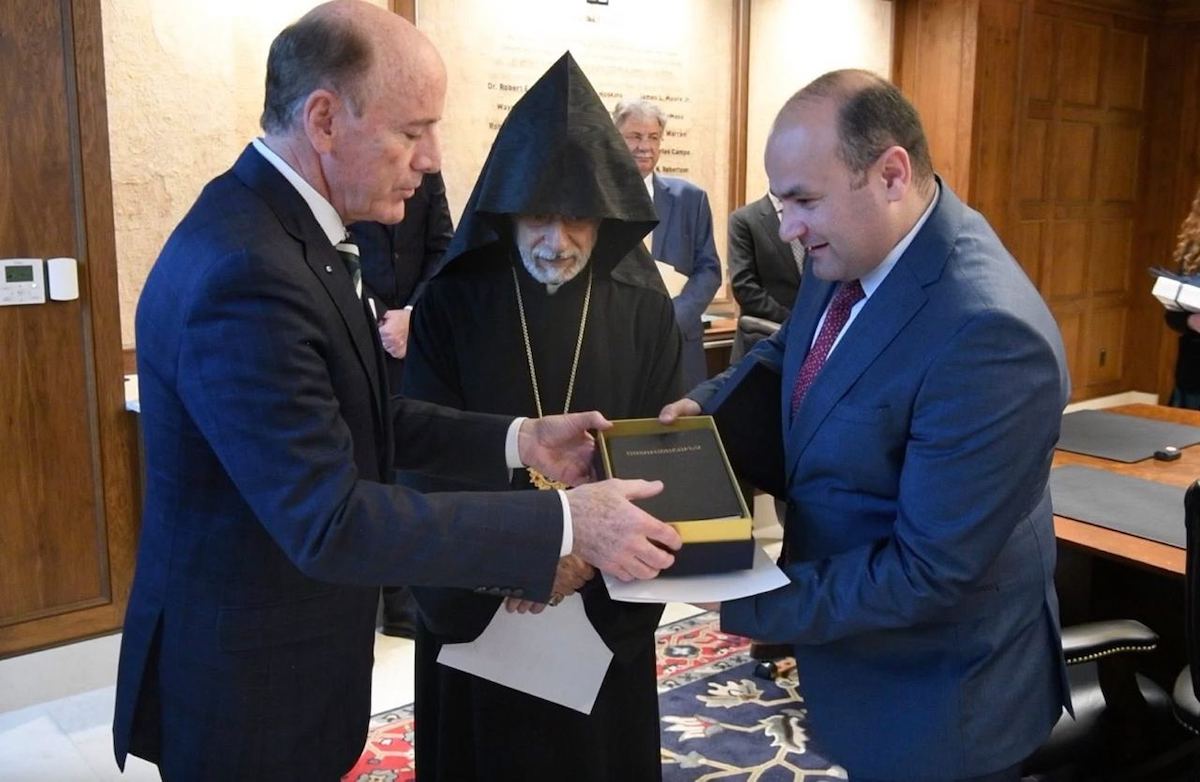
“We were the first nation to adopt Christianity at the state level, and we must defend our spiritual ‘self’ and the Armenian Apostolic Church with the same resolve, not allowing unworthy people to throw our faith and soul at the feet of foreigners,” Hakobyan wrote.● Armenia’s ambassador to the United States, Narek Mkrtchyan, took part in a ceremony transferring a Bible — previously donated by Prime Minister Nikol Pashinyan — to the Museum of the Bible in Washington. The rare historical edition is expected to be given a special place in the museum’s collection and put on public display in 2026.