How a Russian village lives after all the men went to war: million-ruble debts at grocery stores, bears roaming the streets






A Russian village of military valor
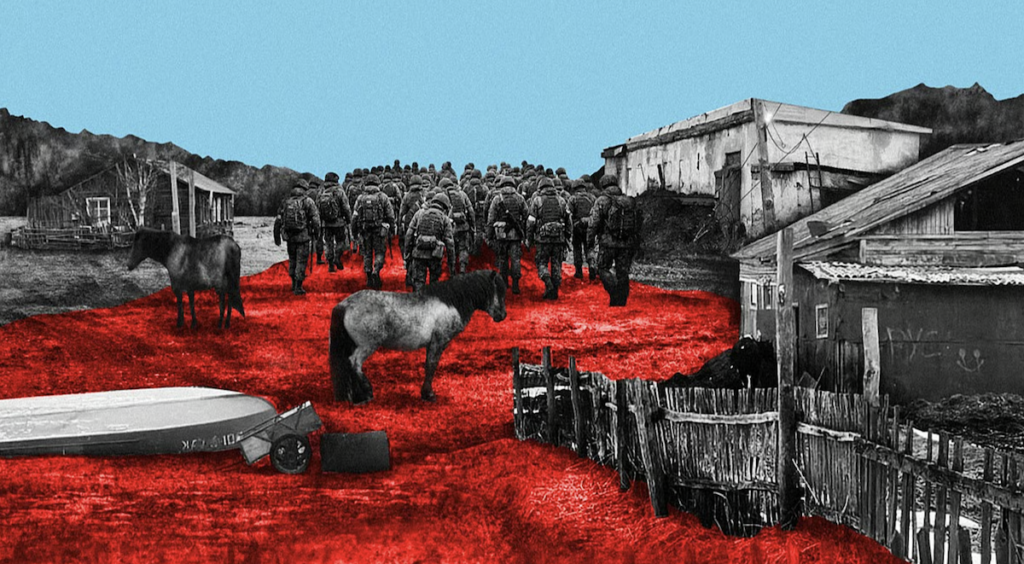
In March 2026, Russia designated its first settlement with the official title “Village of Military Valor” in connection with the war in Ukraine. The honor went to Sedanka — a village of roughly 250 people in a remote corner of Kamchatka, populated largely by Indigenous communities. More than half of the village’s military-age men have gone off to war. Many have already been killed.
Novaya Gazeta Baltia published a report from Sedanka on how the new status has affected the small settlement at the edge of the world. The outlet spoke with local residents and reconstructed life in a place where families accumulate grocery debts worth millions of rubles, emaciated bears roam the streets, and going to the front can become the only available form of employment.
Sedanka is remote even by Kamchatka standards. Reaching Petropavlovsk-Kamchatsky requires roughly 10 hours of travel with a helicopter transfer, or a two-day ride by all-terrain vehicle in the summer. Many residents have never traveled not only beyond the region, but even to the regional capital itself.
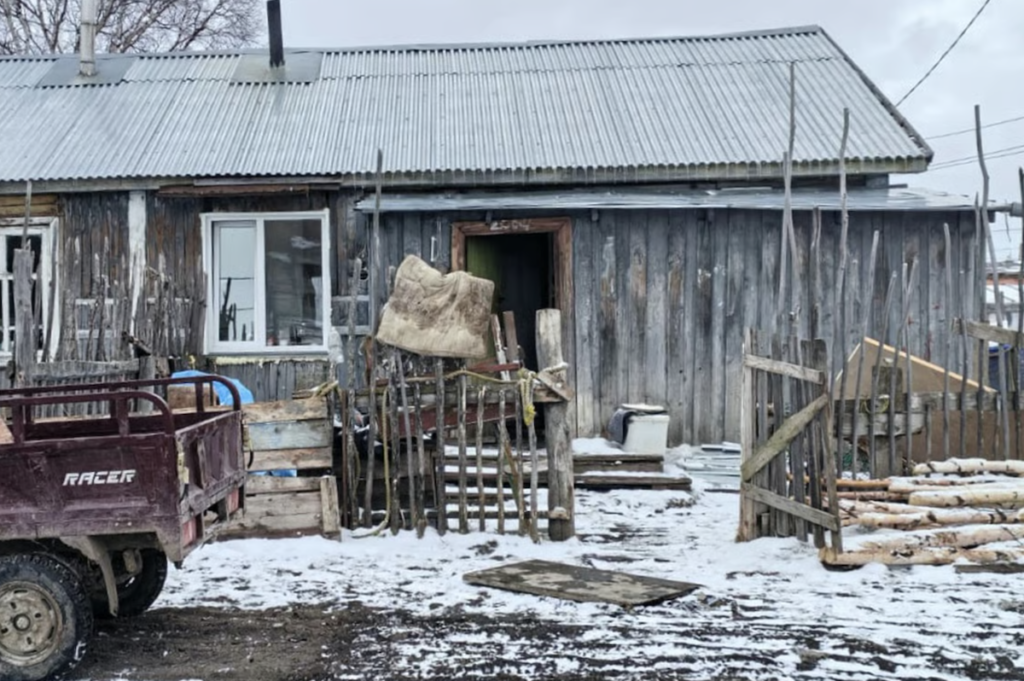
The village is populated mainly by Koryaks and Itelmens, Indigenous peoples of Russia’s Far North. Almost no one owns their home outright: residents are registered in municipal housing or aging wooden barracks. Most of the buildings, including the school, are considered unsafe. Many homes lack running water and central heating. Residents chop their own firewood, haul water from a spring, bathe at neighbors’ houses or wash themselves in basins at home. The public bathhouse shut down years ago, in the early 2000s.
Every spring, black-and-white mold spreads through the homes. It creeps across walls, floors and ceilings. Residents scrape it away with knives and coat the surfaces with concentrated salt solutions, but the relief never lasts long. Sewage systems in the barracks rupture regularly; the rusted pipes have gone unrepaired for years. In the spring and summer, foul-smelling pools from burst pipes collect throughout the village. Animals drink from them, and local residents later eat their meat. Garbage goes uncollected for months. Stray cows, wild horses and starving bears chew through discarded food packaging in the streets.
Residents say Sedanka was once a thriving village during the Soviet era. Women worked in sewing workshops, making traditional clothing and footwear from reindeer hides. Men held jobs at the state farm, the dairy operation and fishing cooperatives. After the collapse of the Soviet Union, the enterprises shut down, and new regulations sharply restricted hunting and fishing. Since 2002, the population has shrunk by nearly a third. Now, residents say, survival itself has become the village’s main occupation.
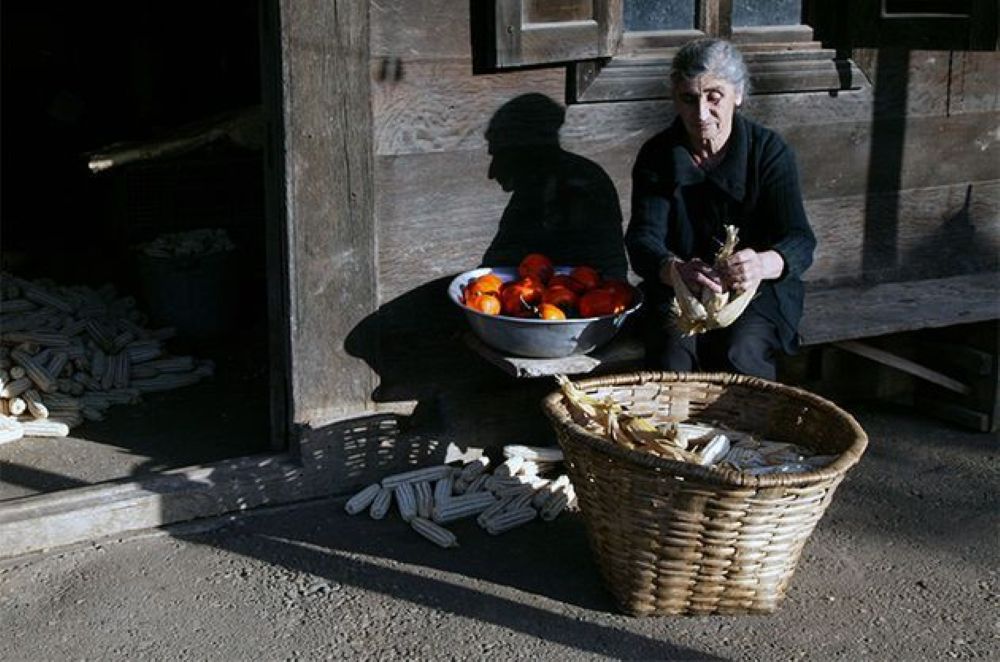
Work is scarce. Those who managed to secure employment found positions at the boiler house. The rest survive on occasional side jobs, fishing, and what the state classifies as illegal poaching. The Napana River feeds the village: it is home to pink salmon, coho salmon and chum salmon. But catching them requires quotas. In the tundra, residents gather berries and mushrooms. For many, this is not ethnography or postcard “traditional culture,” but the only way to avoid hunger.
A new source of income has emerged far from Sedanka — the war. Out of 67 men over the age of 18, 52 volunteered to go to the front. Nineteen have been killed. Their mothers and wives have been left without the male labor on which daily life depends in such conditions: chopping firewood, hauling water, repairing stoves, wiring, or roofs. These tasks are now often paid out to neighbors.
After a visit to Sedanka, Kamchatka regional governor Vladimir Solodov wrote: “Kamchatka is a land of strong people. Every family here carries a story of courage.” He later proposed awarding Sedanka the title of “Village of Military Valor.” In March 2026, the regional parliament approved the initiative. In effect, Sedanka was given a new official status — for its “contribution to the special military operation.”
But when Svetlana Zakharova, the widow of a fallen serviceman and mother of four children, asked officials at the regional ministry of local self-government what the new status would actually bring to residents, she was told, in her account, something to the effect of this: you did a good thing, you were patted on the shoulder, and you were given a certificate. The certificate, she was told, is the reward.
War as a social ladder
Grigory Kotta has a second-degree disability; after an injury in childhood, the right side of his body was paralyzed. He lives with his 71-year-old mother in an old wooden house. His younger brother, Yevgeny Antonov, struggled for years to find stability: he worked as a laborer, took shifts in a boiler house, fell into bouts of heavy drinking, and repeatedly lost his job.
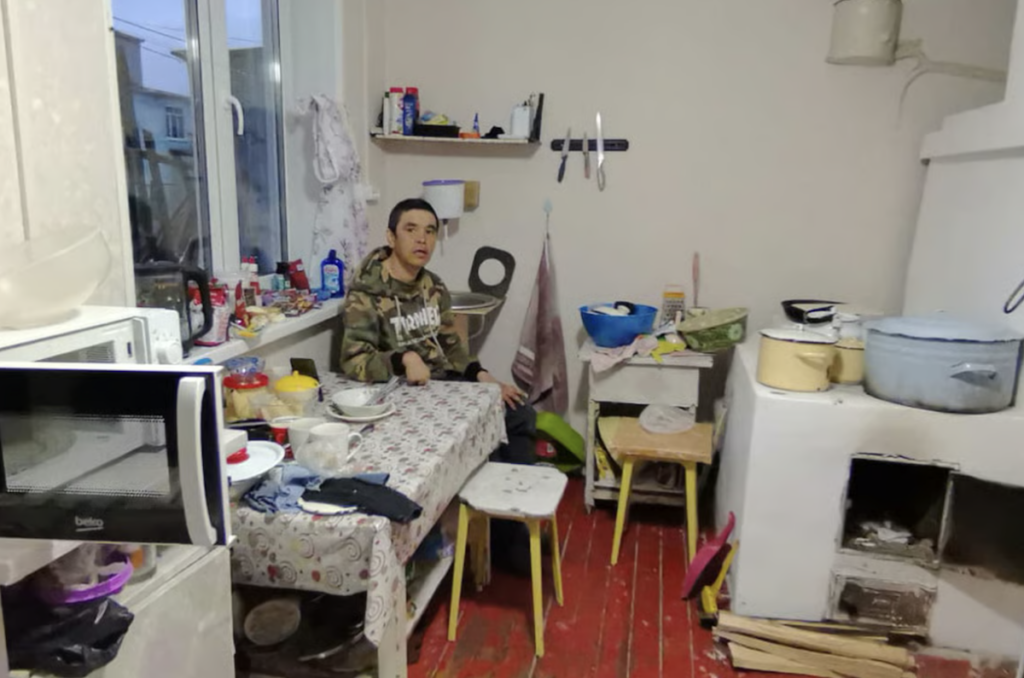
In the winter of 2023, Yevgeny decided to go to the front. He told his family almost at the last moment. Over the course of a year, he was wounded several times and sent home on leave. After drinking, he would tell his brother: “Grishka, I’ve found my place. I feel good there.”
He was offered the chance to complete his service in Petropavlovsk-Kamchatsky, but refused. “I have my family there, my brothers. I’ve already grown used to it there.”
“He could no longer live without the war,” Grigory says.
In September 2024, Yevgeny stopped responding to calls. At first, the family was told he was missing in action. Later, they were urged to have him declared dead in order to receive compensation. His mother and brother refused for a long time: “Until he is found, we will not accept it.” But they were told, in essence: “He cannot be found there anymore.” The family eventually agreed.
The payout amounted, according to Grigory, to eight million rubles (about $112,400). His mother divided the money among her four children. Grigory first used his share to pay off debts at three local grocery stores: 400,000, 300,000 and 200,000 rubles (about $5,620; $4,210; and $2,810).
Nearly a million rubles in grocery debt in Sedanka is not an exception but a pattern. Food prices in Kamchatka are high; in remote villages, they are higher still. A liter of milk costs 320 rubles ($4.50), a dozen eggs 280 rubles ($3.95), and chicken about 480 rubles per kilogram ($6.75).
“Pensions are small, there is no work. People borrow until payday, then repay and borrow again,” Kotta explains.
Former local deputy Andrei Antonov says such debt ledgers exist in nearly every shop. Shopkeepers extend credit because everyone knows everyone else, and people come not for comfort but for food for their children.
The money received for his brother’s death allowed Grigory to buy a motorcycle so he could take his mother to the store and fetch water. But the house remained unchanged: built in 1953, decayed, and affected by mold. After the promised renovation, Kotta says workers carried out only superficial cosmetic repairs: they installed plastic windows into rotten frames and covered the walls with drywall.
“Now it will just stay damp, and the mold will spread throughout the house,” he says.
Bears, funerals, and a second son at the front
Anna Koerkova works as a school cook. She leaves for work before dawn and keeps looking over her shoulder: bears often appear in Sedanka. One stood directly under her balcony, next to a dog. Another walked out in daylight toward the village shop, where several women were standing. Within minutes, it was shot dead.
In other settlements across Kamchatka, wildlife rangers track dangerous bears and sometimes try to drive them away from inhabited areas. In Sedanka, there are no such specialists. Residents say the bears come because they are starving. As fish stocks decline in the rivers, garbage dumps filled with food waste draw the animals closer to people.
Anna’s house is also in an аварий condition: the balcony sways, the floors are warped, holes gape in the bathroom and toilet, and mold has again eaten through the flooring. The electrical wiring regularly smokes.
In 2022, her husband, Vladimir Akeev, who had survived on odd jobs and seasonal fishing, left for the front. During leave, he brought his family gifts from Moscow, where everything was cheaper: televisions, laptops, bicycles for grandchildren, clothes and jewelry for his wife. That leave turned out to be his last. In October 2024, Vladimir was killed.
Anna learned about her husband’s death only on the fourth day. By then, many in the village already knew but were afraid to tell her. It was her elder son who eventually informed her. Vladimir was buried in a closed coffin. The commander told the family: “That is definitely your husband. We closed it ourselves.”
A year after his father’s death, in February 2026, Anna’s eldest son, 25-year-old Ivan, also left for the front. In Sedanka, he had been employed pumping out sewage. But he had a criminal record, and the war became a way to clear it. According to his mother, the military enlistment office called her and said: “He is no longer a criminal. The record has been cleared.”
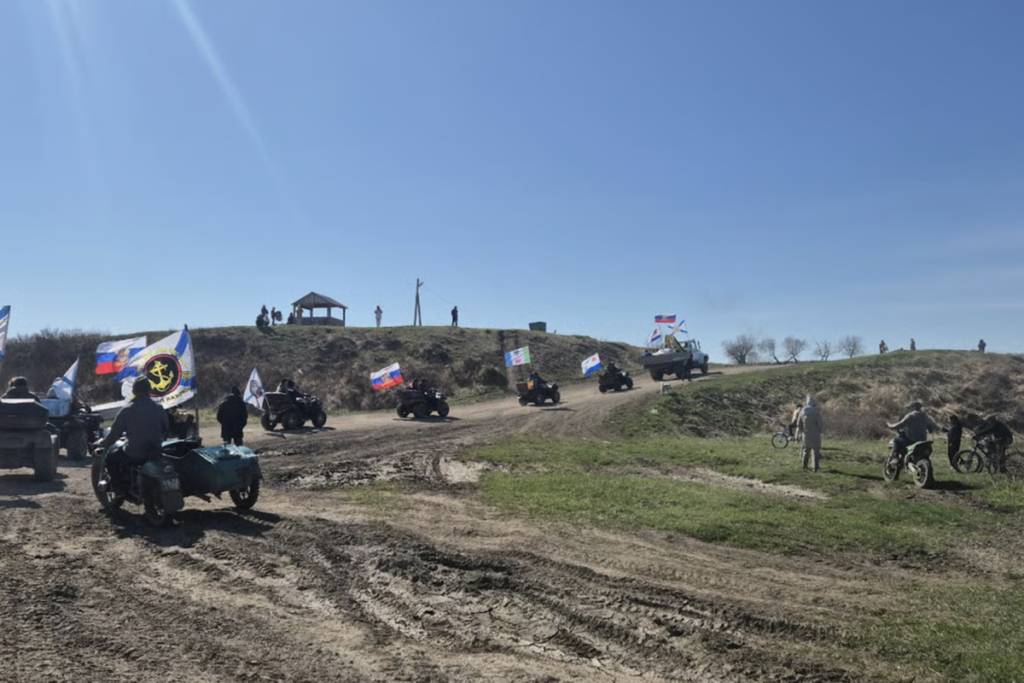
The money received after her husband’s death, Anna says, first went toward debts — 1.3 million rubles owed to local grocery stores. She then bought her sons a motorcycle and an all-terrain vehicle. She left untouched the share belonging to her youngest, 15-year-old Alexander: when he grows up, the family hopes to try moving to a city.
Now Anna lives again in a state of waiting — this time for a call from her son. She takes sedatives, sleeps poorly, and cries often.
“Support sounds beautiful, but in reality it does not exist”
Svetlana Zakharova, an Itelmen woman and mother of four, lost her former husband, Aleksandr Chevvin, in 2023. The couple had divorced but continued living together. Aleksandr worked as a boiler-house mechanic before, along with other villagers, voluntarily going to the front. Their children and his elderly mother tried to dissuade him, but he wanted to “be a hero” in his son’s eyes.
From the front, he would call Svetlana and ask her to send money: for a chainsaw, a car, a thermoelectric generator. The family pooled what they could and sent it. “The president talks about supporting soldiers and supporting families. It sounds beautiful, but in reality it does not exist,” Zakharova says.
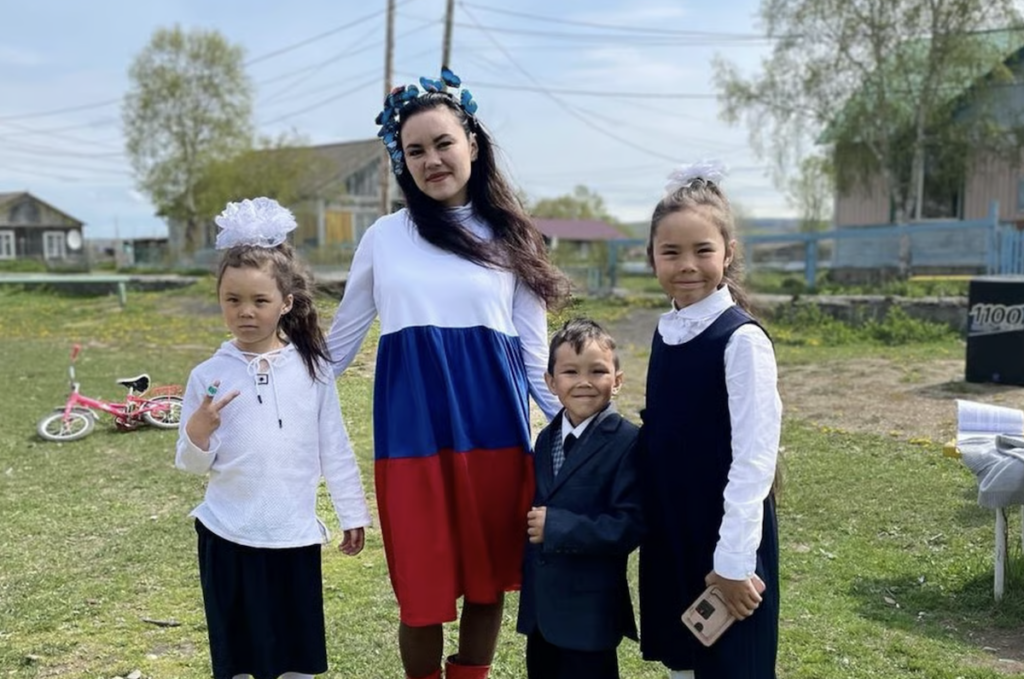
In July 2023, Chevvin was killed near Nikolskoye in Donbas. He was not officially declared dead until a year later. His remains took almost another year to reach Kamchatka. It later emerged that the coffin did not contain his full body, but only a fragment of a leg. The mother of the deceased agreed to bury what had arrived: she could not bear the thought of her son’s remains lying unburied.
A farewell ceremony was held at Sedanka’s community center: a coffin, speeches, a national flag, schoolchildren in camouflage standing by the casket. But behind the ritual, there is increasingly only emptiness.
According to Zakharova, the village once voted almost unanimously for the president. Now, she says, people mostly wave it off: “Nothing good will come of it.” There is, she adds, a deep sense of disappointment and mourning in the village. People remain silent and believe in little anymore.
Indigenous peoples between laws, quotas, and fines
As early as 2020, Zakharova founded a volunteer initiative in Sedanka, helping pensioners with firewood and home repairs. She later realized that physical assistance alone was not enough — formal authority was needed. She ran for the local council of deputies and became its chair.
Zakharova wrote to prosecutors and the local administration, pushing for housing repairs and demanding action on mold, unsafe buildings, and failing sewage systems. According to her, responses were either purely formal or never came at all. At sessions of the district assembly, she was struck by what she describes as performative bureaucracy: officials drank tea and voted as instructed by the head of the administration.
When she raised issues concerning Indigenous villages, she was shouted down: “Do not speak about this.”
A separate issue is the rights of Indigenous small-numbered peoples of the North. Zakharova argues that in Kamchatka, federal guarantees for these communities effectively do not work. Formally, authorities set fish quotas — in 2025, 200 kilograms per person per year. But residents of Sedanka see the permit system itself as a violation of their rights: for them, fishing is not a commercial activity for profit, but part of a traditional way of life.
“We live on the spawning Napana River, and yet access to it is restricted,” Zakharova says. According to her, areas traditionally used for subsistence are now controlled by private fishing companies, while locals are driven away from ancestral fishing grounds and fined.
Grigory Kotta has also been stopped by inspectors. He would tell them plainly: the pension is small, there is no work, what am I supposed to eat? The inspectors would agree — and still issue fines.
Andrei Antonov calls this a form of dismantling the Indigenous way of life: fines for catching fish have become unmanageable, and just a few “tails” can turn into a criminal case. People who, in practice, have no way to feed their families end up treated as poachers on their own land.
A monument instead of solutions
In 2022, Zakharova founded a district association of Indigenous small-numbered peoples in the Tigil district. She has been pushing for Indigenous representation in local government, but says officials do not even invite them to meetings. When activists show up on their own and raise questions about federal laws, she says they are accused of “discrediting government bodies.”
Local officials have publicly claimed that families of those taking part in the war receive assistance — firewood, home repairs, and help with everyday needs. Zakharova insists this is not true. According to her, no volunteers were ever sent to Sedanka, and firewood was delivered only once, a year later, as a one-off campaign. She has collected written statements from residents confirming they never received the promised support.
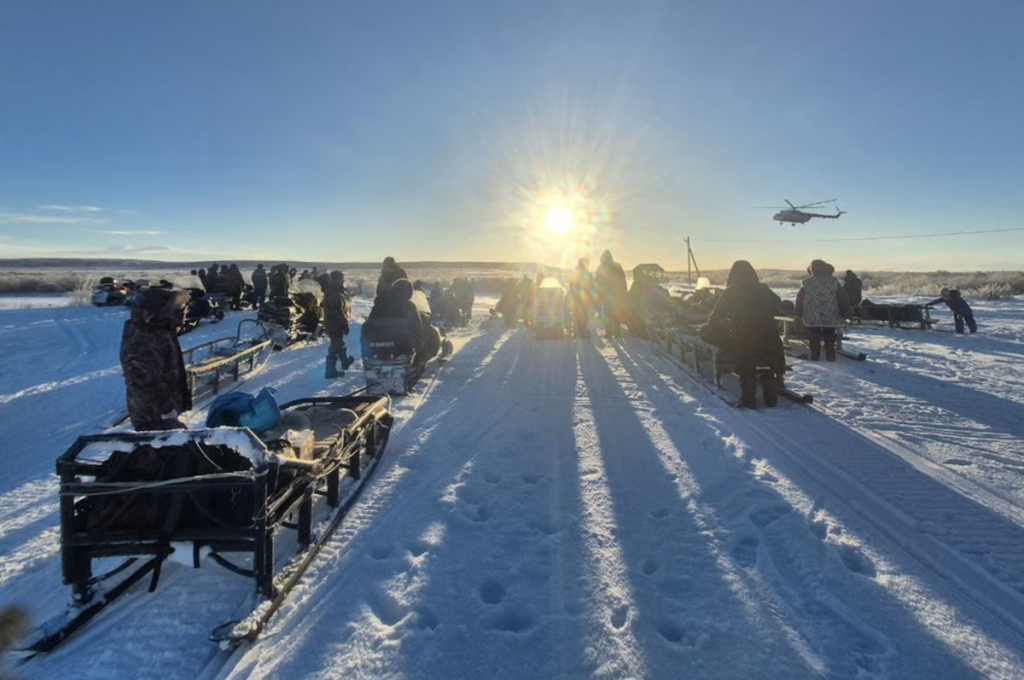
In 2024, a monument dedicated to participants in the war in Ukraine was installed in Sedanka. “It’s a beautiful monument. But what does it give us?” Zakharova says. According to her, what people need is housing, access to fishing, and employment. Those returning from the war have nowhere to work.
Zakharova herself lost her job at the local library. She believes she was dismissed because of her activism. She says pressure also began on those who supported her: the wives of servicemen who spoke out about the lack of assistance were reportedly subjected to cuts and dismissals.
Svetlana now works as a social educator at the school and runs a “war museum” — collecting the biographies of Sedanka’s residents who were killed. Her position is paradoxical: she is at once the widow of a serviceman, the caretaker of a school “heroes’ corner,” and an activist who says she is intimidated with accusations of “discrediting” and pressure from security services.
She says she once “idolized the president” and believed that the law and the constitution would protect her. Now, she says simply: “Nothing worked.”
When Sedanka was designated a “Village of Military Valor,” there were no celebrations in the village itself. Residents learned about it from afar. No positive changes followed. At most, the roof of a single barrack began to be repaired.
In response to demands for infrastructure repairs, officials sometimes say the village will “soon be closed,” suggesting that resettling residents would be easier than restoring basic services. Zakharova initially also wanted to leave after her former husband’s death. But she changed her mind.
“I want to build a house here for myself. I was born in Sedanka. I would like to fight for it and preserve our village,” she says.
For the state, Sedanka has become a symbol of military valor. For its residents, it is a place where war has taken the men, brought families money to cover debts, and resolved none of the conditions that led those men to leave in the first place.
exchange