

Ivanishvili’s lawyer on Credit Suisse case: 'This is part of campaign by foreign intelligence services'






Ivanishvili–Credit Suisse dispute
The lawyer representing Bidzina Ivanishvili, the founder and de facto leader of Georgia’s ruling party, has claimed that “political persecution” of his client by the “Deep State” began back in 2008. He made the comment in the context of Ivanishvili’s long-running legal battle with the Swiss bank Credit Suisse.
The final hearing in the case is scheduled to take place in London on 24 November. According to the lawyer, Temo Tsikvadze, Ivanishvili is convinced that regardless of the court’s decision, he will not be allowed to access the funds at the centre of the dispute.
The lawyer says that “Mr Bidzina Ivanishvili” and his family continue to “protect the peace and economic stability of our country” and to engage in charitable activities even without access to these assets.
In his statement, he also refers to the US sanctions imposed on Ivanishvili as “absurd, introduced at the behest of the Deep State”, and claims that President Donald Trump’s decision on the matter will be one of the indicators of how serious his “fight against the Deep State” really is.
Statement by the lawyer:
“Political persecution of Mr Ivanishvili by foreign intelligence services, or the so-called ‘Deep State’, began in 2008. It was then that the previous government – the United National Movement – rigged the elections and usurped power, as a result of which Bidzina Ivanishvili completely distanced himself from that political force. This decision proved entirely unacceptable to the foreign patrons of the former government, and they deliberately began to destroy the financial accounts held in Switzerland.
They easily recruited a specific individual – Credit Suisse personal banker Patrice Lescaudron – through whose hands Mr Ivanishvili’s accounts were robbed. Years later he was found hanged in a forest, and the case was classified as a suicide and subsequently closed. The intelligence services drove the situation to the point where, in the course of persecuting Bidzina Ivanishvili, they completely destroyed the prestige of the Swiss banking system, and Credit Suisse – once the best bank in the world – was driven to bankruptcy.
We have been engaged in legal proceedings for more than 10 years. It should be noted that the case is, in essence, unprecedentedly simple: it is clearly a scheme of a whole system deliberately robbing one person. We won the case in Singapore, as well as in two court instances in Bermuda, and now it is the third, highest instance that will announce the ruling.
In parallel with the legal proceedings, the political persecution of Bidzina Ivanishvili has over time reached new scales and new heights of absurdity, which ultimately resulted in the previous US administration imposing sanctions on him under the pretext of ‘advancing Russian interests’ in Georgia. It is obvious that it is difficult for the informal managers, the so-called ‘Deep State’, to control court proceedings, especially when there is not the slightest doubt in the case, but at the same time they have many other levers, including the sanctions mentioned.
In addition to the fact that no one from the previous US administration explained why the sanctions were imposed or what exactly the ‘Russian interest’ was that Mr Ivanishvili allegedly promoted in Georgia, the sanctions were directed precisely against those funds on which a decision will be announced in London on 24 November. This is one of the two major assets that Mr Ivanishvili owns abroad. Imposing sanctions on property that my client has not yet legally returned to himself was a simple message: ‘perhaps you will win the case, but the question of returning the asset will still be decided by us’.
There is also another case, even more cynical and crudely fabricated by the intelligence services, in Switzerland, which they control, at the bank Julius Baer. Despite the fact that US sanctions have nothing to do with these funds, the bank crudely blocked Mr Ivanishvili’s assets, as well as access to the funds of his wife and children. And while in Mr Ivanishvili’s case the bank at least tries to cover itself with the American sanctions, in the case of the funds belonging to his wife and children it cannot explain anything at all. The intelligence services could not impose sanctions on them ‘for advancing Russian interests’, because that would be too much even for the ‘Deep State’, and when no formal pretext can be found, they resort to crude force and bandit methods.
These, briefly, are the processes that have been ongoing for years and before our eyes have created an unprecedented example of persecution, robbery and blackmail of a person solely because he placed Georgia’s national interests above everything else and refused to follow the instructions of the intelligence services, the same ‘Deep State’. It is no coincidence that the current US president, Donald Trump, openly acknowledges that the previous administration was entirely under the influence of informal forces, while he himself is actively fighting these structures. The sanctions imposed on Bidzina Ivanishvili were imposed by these very informal managers, and Trump’s decision will be one of the indicators for us of whether his fight against the ‘Deep State’ is real.
As for the opposition’s speculations and those of the media under its control regarding the London proceedings, the frozen funds and the supposedly expected additional sanctions from the United Kingdom, it is unclear what these bankrupt forces are celebrating. Bidzina Ivanishvili fully understands that regardless of the court’s outcome – and most likely, as in the previous two instances, we will win the third as well – these funds will not be returned.
We also state with confidence and full responsibility that we were not even aware of the planned announcement of the final ruling on 24 November; we learned about it from public sources. And the reason is simple: Mr Ivanishvili has fully resigned himself to the fact that neither the Credit Suisse funds nor the assets held at Julius Baer (with which he has even ceased correspondence because of the bank’s illegal actions) will be returned to him and his family, for the same reasons of political persecution and blackmail.
Mr Ivanishvili and his family, despite everything, continue to protect the peace and economic stability of the country and to engage in charitable activities.”
Dispute between Ivanishvili and Credit Suisse
The dispute between Bidzina Ivanishvili and Credit Suisse began in 2011, when Ivanishvili was a client of the bank.
It was during this period that the fraud committed by one of the bank’s managers, Patrice Lescaudron, became known. He had stolen money from confidential accounts, including from Ivanishvili’s account and from the account of his business partner, Russian oligarch Vitaly Malkin.
The Swiss regulator Finma published a report indicating that Credit Suisse failed to take appropriate measures despite numerous warnings and suspicious circumstances.
Ivanishvili accused Credit Suisse of failing to protect his investments and demanded 800 million dollars from the bank, claiming that this was the amount he had lost due to Lescaudron’s actions.
Credit Suisse’s trust division, for its part, said Ivanishvili’s claim was excessive and asked the court to dismiss it.
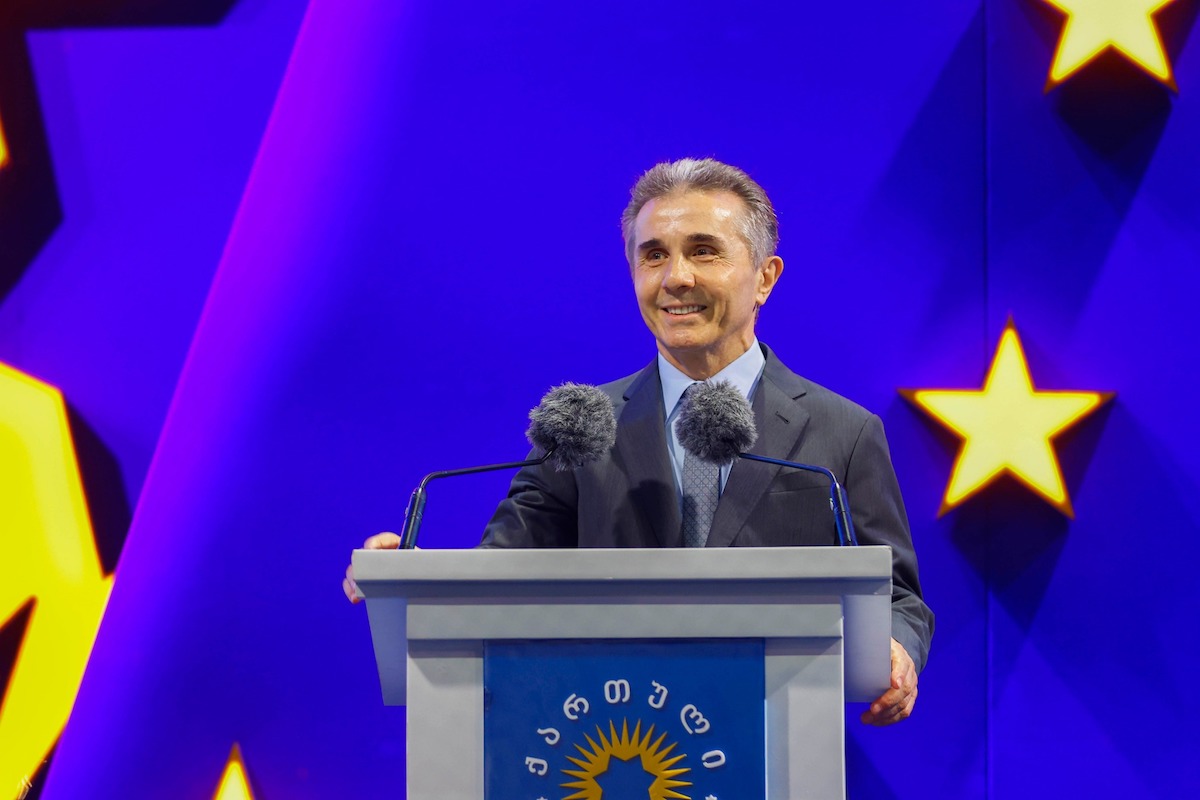
Lescaudron was found guilty of fraud in 2018. Before the trial, he spent two years in pre-trial detention; he was sentenced in 2019, and in July 2020 he died by suicide. Earlier, Lescaudron had admitted that during the 2008 financial crisis he secretly covered the losses of clients affected by his failed investment decisions using money stolen from the accounts of other clients.
In March 2022, the Financial Times reported that Bidzina Ivanishvili had won his case against Credit Suisse in a court in Bermuda and was awarded more than 500 million dollars (607 million dollars, according to Bloomberg) in compensation.
The next stage of the confrontation between Ivanishvili and Credit Suisse began after Russia’s invasion of Ukraine in 2022. Ivanishvili had filed several other claims against Credit Suisse, one of which concerned the bank’s operational failures that, he argued, led to financial losses. It was reported that the bank had frozen the businessman’s 2.7-billion-pound account on the grounds that the funds may have been of Russian origin.
In September 2022, Ivanishvili told a court in Singapore that Credit Suisse had failed to take appropriate measures, causing him to lose 1.27 billion dollars.
In February 2023, Bloomberg reported that Credit Suisse Group AG had paid Ivanishvili 210 million dollars.
On 24 November, the third and final instance in London will announce its ruling in the case.

Ivanishvili–Credit Suisse dispute