Giga Avaliani case: What is known about murder of young teacher in Georgia






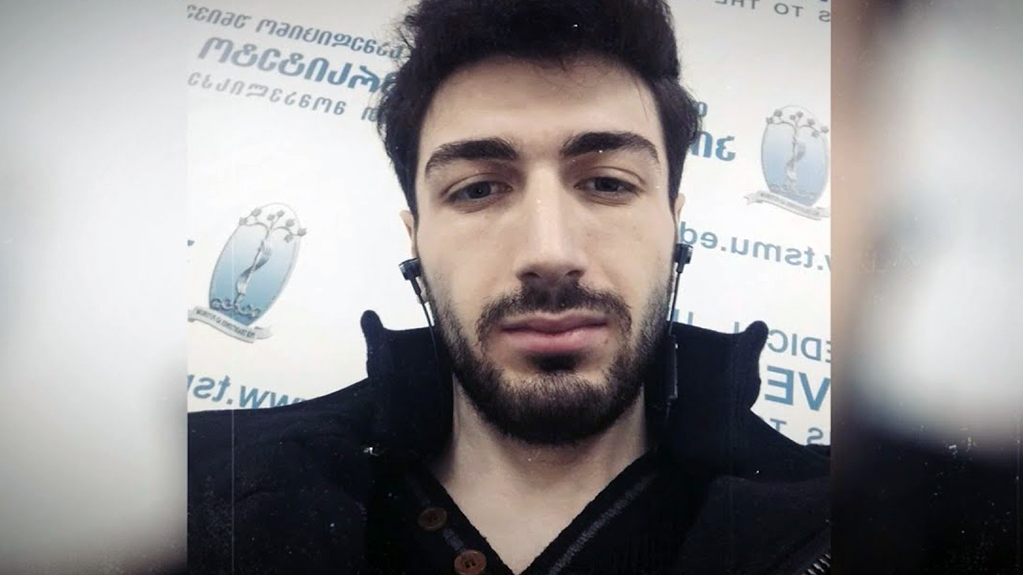
Late in the evening of 1 October 2025, Giga Avaliani, a 28-year-old mathematics teacher, was returning home to the outskirts of Tbilisi. He was attacked at the entrance to his apartment building. Avaliani spent 23 days in a coma and died without regaining consciousness on 24 October.
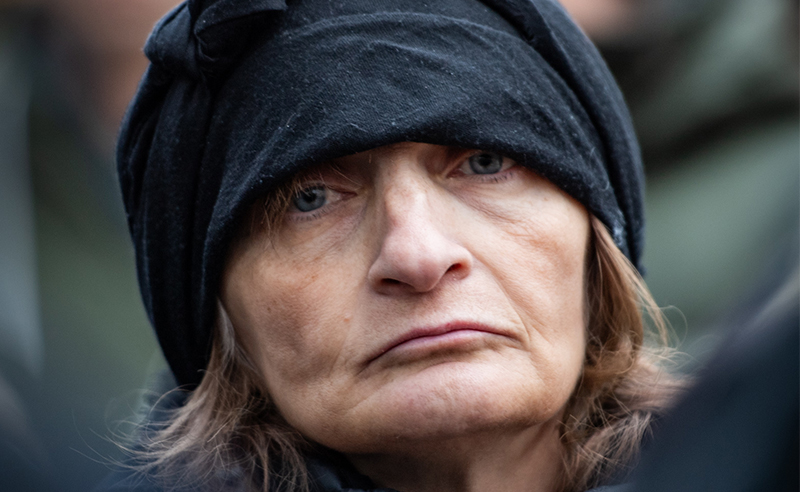
The case gained wide public attention after his mother, Eka Kupatadze, shared her son’s story on social media, describing the circumstances of his murder and claiming that the investigation is being mishandled.
- Sixteen neo-Nazi group members arrested in Georgia
- Opinion: New law on offenders under 14 could violate children’s rights in Georgia
- Education reform in Georgia: Official statements and expert opinions
The desperate fight waged by Eka Kupatadze, a mother left to confront the system on her own, has shocked many. The case quickly became a matter of public concern. Kupatadze has held several rallies, drawing the support of many well-known public figures.
The Giga Avaliani case is no longer seen as a tragedy affecting a single family, but as an example exposing a range of systemic problems — shortcomings in investigative bodies and a lack of public trust in them, flaws in juvenile justice, limited mechanisms for protecting victims’ rights, and failures within the healthcare system.
In this article, we aim to summarise everything known about the case so far — its current status, why Giga’s family does not trust the investigation, which elements of the multi-volume case file underpin the mother’s suspicions, and what the parents of the suspects, in turn, are fighting for.
Attack
Giga Avaliani was trained as a doctor and worked in that sector for a while. However, while still at university, the young man — who grew up in a family of mathematicians — began tutoring, teaching mathematics to university applicants. His mother says he was planning to continue his studies in the United States and was saving money to do so.
Together with his mother, Giga opened a preparatory education centre, where he was working at the time of his death.
On 1 October 2025, Giga Avaliani finished his final class late in the evening, at 22:20. He was returning home alone.
As Giga left the education centre and headed towards his nearby home, he was followed by two teenagers. One of them filmed what happened on a smartphone.

As a result of the attack, Giga Avaliani fell into a coma. He was found at 23:00 and taken to the Georgian–Dutch clinic.
After 23 days, Avaliani died on 24 October, without regaining consciousness.
According to the forensic report, the cause of death was a “closed craniocerebral injury and a fracture of the right frontal bone”.
Under the prosecution’s initial version, one of the attackers delivered a fatal punch to Avaliani’s forehead.
His family rejects this account, arguing that it is impossible to fracture a skull with a single punch. They also rule out the possibility that his death was caused by an injury sustained in a fall.
Suspects
As of now, four minors — friends and neighbours — have been arrested in connection with the case.
The first, identified as A.G., was arrested before Giga’s death, on 19 October. He is the main suspect and has been charged with intentional infliction of grievous bodily harm resulting in death (Article 117, Part 2 of Georgia’s Criminal Code).
A few days later, on 25 October, 17-year-old G.R. was arrested and charged with concealment of a particularly serious crime (Article 376 of the Criminal Code).
On 20 December, following public protests and demands by Giga’s family, two more teenagers — A.N. and D.Ch. — were arrested.
D.Ch. has been charged with preparing the intentional infliction of grievous bodily harm by a group of persons, an offence classified as particularly serious. A.N. has been charged with concealment of information about a committed crime.
Under Georgia’s juvenile justice code, given the age of the defendants, any prison sentence — if their guilt is proven — would be reduced by one quarter.
Motive: honour or revenge?
Investigators say the motive behind the attack was “unwanted communication with a girl and jealousy”.
The arrested teenagers have also stuck to this version. They claim that Giga Avaliani allegedly sent sexually explicit messages to one of his students. The girl is said to have told her boyfriend, who then decided to “deal with” the teacher.
According to Eka Kupatadze, however, the reality was different. She says the girl — who was indeed Giga’s student — had missed several classes. Eka informed the girl’s mother about the absences, which came as an unpleasant surprise to her.
Kupatadze believes the girl became angry, complained to her boyfriend, and that he then decided to take revenge on Giga.
The missed classes are also confirmed by documents: Giga’s schedule includes sessions the student was required to make up.

Messages exchanged between the teenagers and included in the case file show how the attack on the teacher was planned. The correspondence is dated 29 September, two days before the assault. In it, the participants openly discuss the use of violence, with phrases such as “take him down”, “he’d better surrender or I’ll storm the lesson”, and “I’ll break his ribs”.
“Everything is here — a group attack, premeditated murder, threats… the full set,” one of the teenagers warns in a message to the main suspect.
“I’m not scared at all,” he replies.
The messages indicate that the teenagers monitored Giga Avaliani for several days, studying his route from the education centre to his home and assigning each other to find out whether he returned alone or with his mother. One message also discusses an alternative scenario: if the teacher was with his mother, a “bag would be put over her head” as well.
This correspondence — parts of which the victim’s mother made public — is seen by the family and their lawyers as direct evidence of group preparation and prior conspiracy. The messages also show roles being assigned, including who would carry out the assault and who would film it.
What Giga Avaliani’s family demands
From the outset, Giga’s family has demanded that the prosecution classify the case as a group attack. Such a classification would constitute an aggravating circumstance, and the families of the suspects are, according to Giga’s relatives, doing everything possible to prevent this.
Because the case involves minors, court proceedings are being held behind closed doors. As a result, the victim’s side did not initially have full access to the case materials. Gaining access therefore became another key demand. The family secured this only after public protests and the sustained, determined campaign led by Eka Kupatadze.
The case file comprises 11 volumes, each exceeding 200 pages. It includes the defendants’ correspondence, recordings of their conversations obtained through surveillance, video evidence, medical and forensic conclusions, and interrogation transcripts.
After reviewing these materials, Kupatadze’s doubts deepened further, and new questions were raised about the investigation.
Another demand made by the family is for the authorities to open an investigation into the girl at the centre of the dispute, whom they believe should be treated as an accomplice to the crime.
Alleged investigative failures
The family of Giga Avaliani has said from the outset that the investigation was marred by multiple violations, a view they say was only reinforced after they were granted access to the case materials.
One of the key issues, according to the family, concerns the quality of evidence collection:
- Crime scene examination: Police did not collect Giga’s headphones from the scene. His family later found them themselves and handed them over to investigators;
- Suspected weapon: Near the education centre, in the courtyard from which the teenagers were watching Avaliani, there is a circle of decorative stones — one of which is missing. The family later found a similar stone near their home. It has since been sent for forensic examination. The family says this points to investigators’ failure to properly examine the scene;
- Clothing and footwear: The suspects told investigators that they had “sold” the jacket taken from Giga and thrown his shoes into a rubbish bin. The family argues that this should have prompted additional investigative steps, including searches — notably of the teenagers’ homes — but no such searches were carried out;
- Video evidence: The video of the attack submitted by one of the teenagers initially lasted just four seconds. Investigators later recovered an additional 19 seconds that had been deleted. Even so, the footage remains incomplete. According to the family, the original video was longer and shows violence being used both before and after Giga fell to the ground;
Questions surrounding clinic
Giga’s case has also exposed potential problems in the healthcare system.
The ambulance service — called by other teenagers living in the area — took Giga Avaliani to the Georgian–Dutch clinic in a nearby settlement.
Based on symptoms such as vomiting, clinic doctors initially suspected an overdose and began gastric lavage.
A CT scan was also carried out, but its results were not treated as a priority. According to the family, doctors only began analysing the scan around an hour and a half after hospitalisation, and only after Giga’s relatives insisted. By that point, visible signs of head trauma had already become apparent.
Eka Kupatadze says Giga had bruises on his head and body, but these were not recorded in his medical file.
Believing that Giga did not receive proper medical care at the clinic, his family appealed to the healthcare regulator under the Ministry of Health. It is known that the ministry seized all relevant documentation from the clinic, but what happened next remains unclear. The clinic has declined to comment.
What the suspects’ families seek
After Eka Kupatadze launched her campaign for justice and the case gained wide public attention, the families of the suspects also began publicly defending their position.
According to their version, Giga Avaliani died as a result of a fall. They claim that A.G. struck Giga with his fist, causing him to fall and sustain a fatal head injury — but insist there was no severe beating and no blow with a stone.
The parents of the suspects say the prosecution is “sacrificing” their children in order to appease the victim’s family. They also allege that their sons have been subjected to ill-treatment by investigators.
Sofo Dzneladze, the mother of D.Ch., who is suspected of inflicting grievous bodily harm and faces up to 13 years in prison, has staged a protest outside the prosecutor’s office and went on hunger strike. She has threatened to set herself on fire along with the prosecutor’s office if her son is convicted under this charge.
“Show me a man who has never fought over a girl or won’t fight tomorrow. This is Georgia,” the father of the main suspect, A.G., told Radio Free Europe/Radio Liberty, seemingly justifying violence as a cultural norm.
In the interview, he said he himself had fought over women on multiple occasions, including over his current wife, and described his son’s message saying he was “not scared at all” as mere bravado. He also claimed that A.G.’s friends expected him to prove that he was “not a nobody”.
A.G.’s father repeatedly raises the possibility of medical error as the true cause of Giga Avaliani’s death, stressing that while he does not deny his son bears some responsibility, it should not necessarily amount to liability for murder.
Role of school, ministry and education system
All four arrested teenagers study at the private school Intellect School. According to the school’s director, law enforcement did not contact the school at the initial stage of the investigation; only a social worker requested behavioural profiles of the students who were later arrested.
The school has also said that N.I. — the student of Giga Avaliani at the centre of the case — is no longer attending classes there.
According to Giga’s family and their supporters, Ministry of Education of Georgia has so far failed to demonstrate a systemic response to the case within the broader education sector.
Ill-treatment of minors, crisis of trust and wider context
The Giga Avaliani case brings together several highly sensitive issues at once:
- Violence involving minors and the extent of their criminal responsibility;
- Investigative standards and methods of evidence collection;
- The balance within the juvenile justice system — between the interests of adolescents and the rights of victims;
- Public trust in the prosecution service and law enforcement institutions.
The fight waged by Giga Avaliani’s family continues. They are demanding that all those responsible be identified and held to account, including medical professionals, as well as the parents of the suspects, where relevant.
“I cannot shed blood, I cannot take revenge — I demand justice from my state,” said Kote Kupatadze, Giga Avaliani’s uncle and a teacher at a specialist mathematics and physics school.
After the family of the slain teacher launched protests and accused the prosecution of negligence, investigators have already met some of their demands. They provided the family with copies of the case materials and brought charges against two teenagers detained for failing to report the crime. According to the latest information, additional charges may also be brought against the main suspect.
The final outcome — whether the charges are reclassified or new defendants emerge — will only become clear after court proceedings and the completion of forensic examinations.
The Giga Avaliani case has become a test for the state: whether the system can protect the rights of the victim while also safeguarding the rights of minors and their parents, who are seeking an impartial investigation.
Meanwhile, Eka Kupatadze has repeatedly stressed in public that, for her, this is not only a fight for justice, but also a fight for the honour of her late son.