Georgian Foreign Ministry expresses 'regret' over EU sanctions on Kulevi plant






Georgia on EU’s 21st sanctions package
In an official statement, Georgia‘s Foreign Ministry expressed regret over the inclusion of the Kulevi oil terminal in the EU’s 21st sanctions package. The ministry said that “there are neither factual nor legal grounds for placing the Kulevi oil terminal on the sanctions list.”
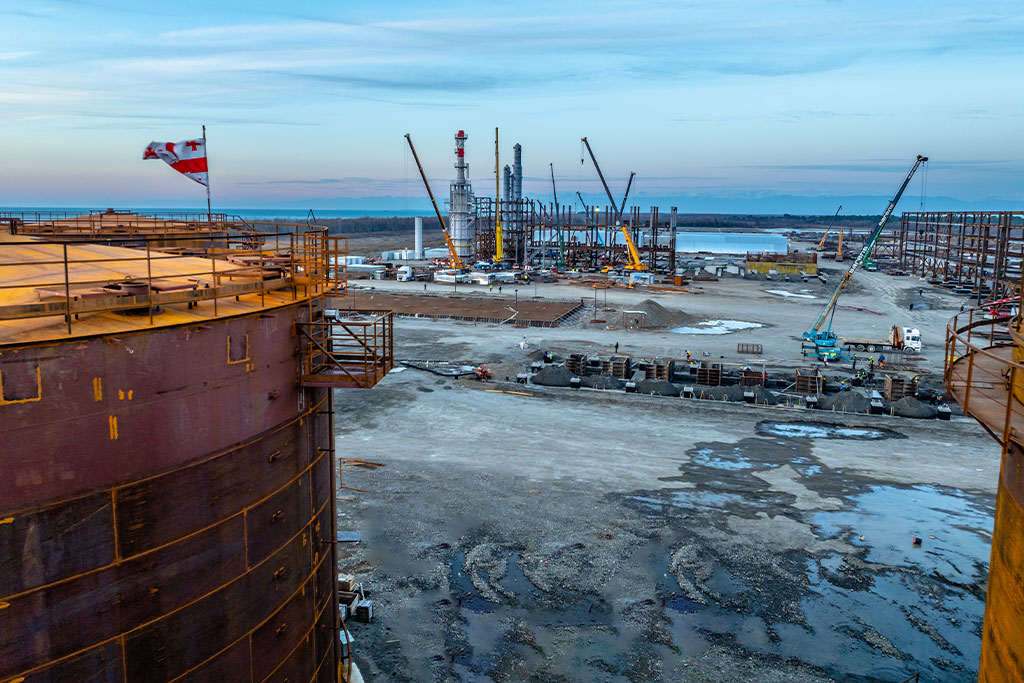
On 23 July, the European Union’s 21st sanctions package against Russia was announced. It includes the Kulevi oil terminal in Georgia and several cryptocurrency platforms.
The ban on transactions with the Kulevi oil terminal will take effect in six months unless the facility changes its operating practices.
Georgia’s Foreign Ministry said the country fully takes into account the EU sanctions regime, “the context of that regime”, and is taking all necessary measures to ensure that Georgian territory is not used to circumvent sanctions.
The statement also stresses that cooperation with the EU in this area is based on transparency and openness. Georgian authorities, it says, consistently provide EU institutions with all necessary information and clarifications in a timely manner.
The ministry also said that, to date, authorities have not recorded any cases of EU sanctions being circumvented through Georgian territory.
“During preparations for the EU’s 21st sanctions package, the Georgian side provided the European Commission with comprehensive information and supporting documentation clearly demonstrating that there are neither factual nor legal grounds for placing the Kulevi oil terminal on the sanctions list,” the statement says.
The Foreign Ministry also expressed hope that the relevant departments of the European Commission and EU member states “will be guided by the principle of fairness and review the decision” within the next six months.
A brief overview of the new sanctions package
The EU’s 21st sanctions package against Russia, which is due to take effect shortly, received final approval from the permanent representatives of the EU member states on 23 July 2026.
The sanctions are expected to enter into force on 23 July following approval by EU leaders and their official publication.
The measures target sectors of the Russian economy that provide the greatest financial support for the war in Ukraine, including energy, financial services and the cryptocurrency sector.
The package also imposes sanctions on more than 50 companies and organisations that supply military equipment and weapons to Russia.
It also includes the largest set of individual sanctions to date, targeting a total of 218 entities: 48 individuals and 170 legal entities.
It marks one of the largest expansions of EU sanctions over the past four years.
Georgia on EU’s 21st sanctions package