Georgian Dream rolls out new law criminalising any cooperation with foreign foundations






Georgia to jail people for receiving foreign money
The ruling party, Georgian Dream, is further tightening laws on “foreign funding.” On January 28, it was announced that any cooperation with foreign foundations or legal entities without government approval will become a criminal offense.
In this way, the ruling party is seeking to block all avenues of foreign funding in Georgia, including the alternative channels that civil society organizations found after earlier amendments.
- UN rapporteur on situation in Georgia: ‘New laws amount to systematic pressure on civil society’
- Transparency International says arrests over pavement protests in Georgia violate the constitution
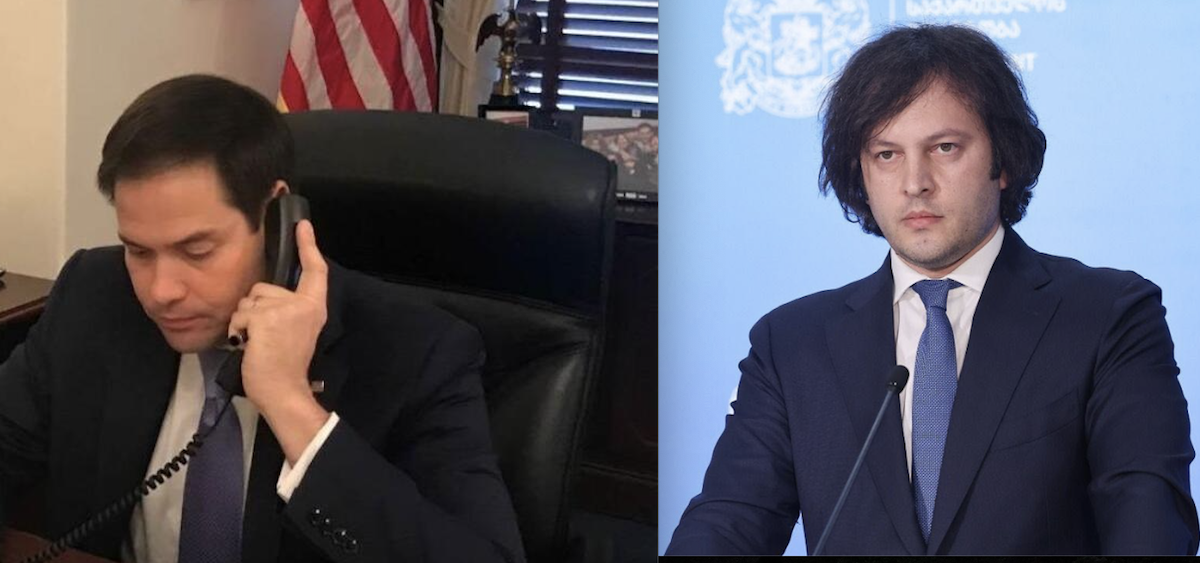
The changes were announced by Irakli Kirtskhalia, one of the leaders of the Georgian Dream party, after a meeting of the parliamentary majority on January 28.
“We are introducing amendments to the legislation so that in the future no one will be able to find alternative ways to finance unrest and violence in Georgia from abroad,” Kirtskhalia said.
The draft law introducing these changes has not yet been published, so the only information publicly available is what was said at today’s briefing.
It is already clear that the amendments will affect civil society and media organizations, political parties, businesspeople, and anyone engaged in what is defined as “public political activity.” The main message appears to be this:
All flows of foreign funding in the country must be fully controlled by Georgian Dream.
What is known so far
1. All foreign inflows will be classified as grants
Amendments will be introduced to the Law on Grants. It is already known that the definition of the term “grant” will be significantly expanded and, in effect, almost any inflow of foreign funds will be considered a grant.
A preliminary version of the new definition reads as follows:
A grant is defined as funds transferred by any person to any person, in cash or in kind, to be used for any activity affecting the Government of Georgia or any part of society, if such funds are aimed at shaping or implementing attempts to change the country’s domestic policy.
Such a grant may be received only with prior approval from the government.
The amendments will also introduce the concept of “another state legal entity whose activities essentially involve matters related to Georgia.”
Under this provision, an organization registered abroad that “essentially operates in Georgia” will also be required to seek permission from the Georgian government to transfer funds into the country.
Failure to do so would result in criminal liability.
Under the amendments, funds transferred in cash or in kind in exchange for the grant recipient providing technical assistance or sharing knowledge, experience, or expertise will also be classified as a grant.
In other words, if a foreign state hires experts in Georgia, those payments will be considered a grant, and government approval will likewise be required to issue such a grant.
Prior government approval will also be required for a representative office, branch, or department of a non-resident legal entity if funds are transferred into the country from that non-resident.
If such a branch or representative office receives a grant without government approval, it will face administrative liability and be required to pay a fine equal to twice the amount of the grant received.
2. Violations of the Law on Grants will be punishable by imprisonment
The amendments will also be incorporated into the Criminal Code, establishing criminal liability for violations of the Law on Grants.
Violations will carry penalties in the form of a fine, community service of 300 to 500 hours, or imprisonment for a term of 6 to 9 years.
Article 194 of the Criminal Code, which addresses “money laundering,” will be supplemented with an aggravating circumstance: “money laundering for the purpose of carrying out political activities in Georgia.”
Under this article, the penalty will be imprisonment for a term of 9 to 12 years.
A political party leader will also face imprisonment if he or she receives, for example, foreign funding. The law formulates this as a violation of the organic law “On Political Associations of Citizens.”
Penalties for such a violation include community service of 300 to 500 hours or imprisonment for up to six years.
Foreign lobbying will also be criminalized.
This is defined as the direct or indirect transfer of money, securities, other property, property-related benefits, or any other advantages to a citizen of another state or to a legal entity in exchange for activities on political issues related to Georgia.
In such cases, the punishment will likewise be a fine, community service of 300 to 500 hours, or imprisonment for up to six years.
3. Restrictions on political parties: fewer people eligible for membership, easier arrests of leaders
Amendments will also be made to the law “On Political Associations of Citizens.”
These changes will prohibit anyone from joining a political party if they receive a salary funded by foreign sources – that is, if they work for an organization whose annual income from a foreign state exceeds 20%.
Such individuals will be barred from joining any political party for eight years.
The State Audit Service will be granted the authority to monitor the financial activities of political party members. This means the state will have access to the bank accounts even of ordinary party members.
The amendments will also apply to individuals deemed to have a declared party-political purpose.
In other words, even if a person is not formally a member of any political party but is simply an active individual, Georgian Dream may interpret his or her activities as having a political objective.
4. Entrepreneurs to be fined for public political activity
Amendments are also planned to the Code of Administrative Offenses.
Under these changes, any company engaged in public political activity unrelated to its core business operations will be subject to fines.
The first fine will amount to 20,000 lari (around $7,000); a повторное violation will result in a 40,000-lari fine.
“As of early 2026, there are 667,318 individual entrepreneurs in Georgia. Express any criticism of Ivanishvili and you’ll get a 20,000-lari fine,” lawyer Giorgi Mshvenieradze wrote on social media.
Initial reactions
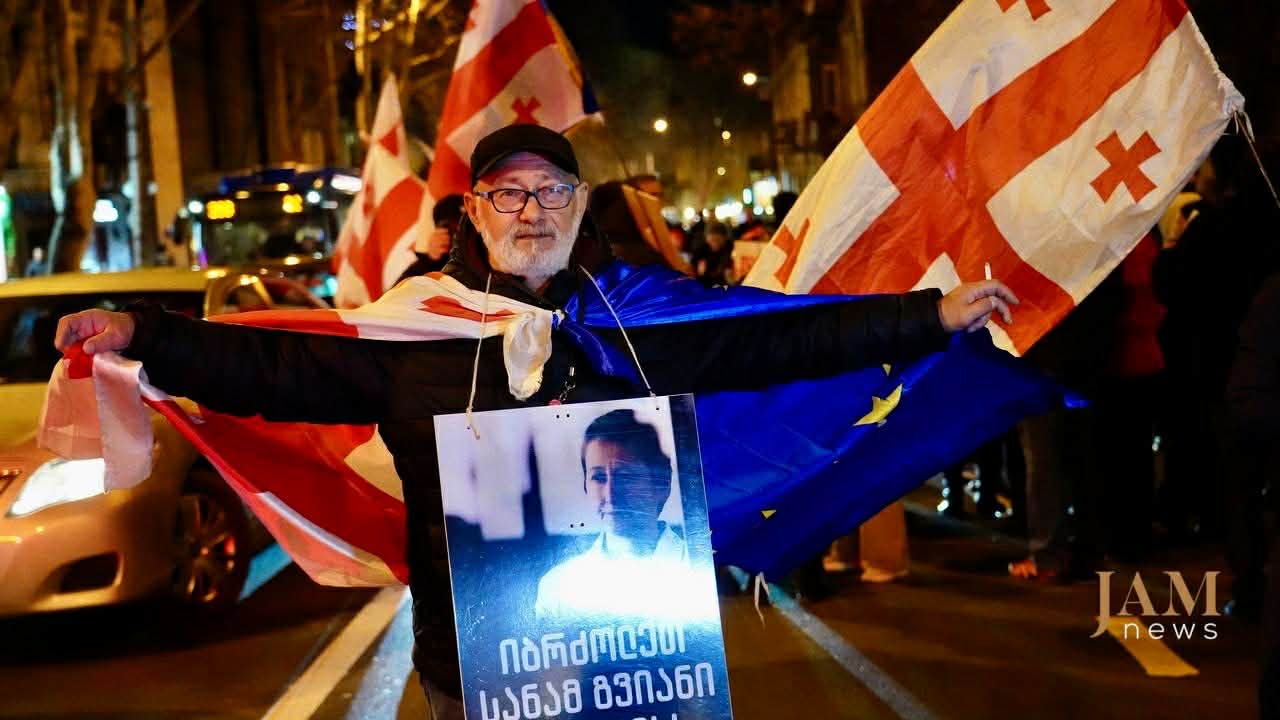
The announcement of the new repressive laws has triggered a strong backlash on social media.

Tamta Mikeladze, Social Justice Center:
“The legislative initiative announced by the Georgian Dream government places any form of cooperation with foreign countries under state control and imposes extremely severe criminal liability.
This reflects an intention to establish total control over society as a whole, not only over institutions and sectors that were already nearly destroyed by last year’s repressive laws and unprecedented restrictions on political freedoms.
But the initiative also has a hidden overarching goal: to force a critical mass of society into migration.
Students, researchers, artists, experts, human rights defenders, psychologists, social workers, teachers, professors, doctors, scientists, and others involved in projects funded from abroad and seeking to influence society directly or indirectly will be left with a stark choice: either agree to work under total state control – or face prison sentences of six years, and in some cases nine to twelve years.
In other words, the critical segment of society that has so far remained autonomous from the influence of Georgian Dream and its business interests, and that has dared to work in the public interest, will simply be destroyed economically and, ultimately, politically.
This group will have only one choice left: either civic death and the complete privatization of their lives – or migration.
Institutional structures in the country have already been dismantled. Now they have begun to purge the political body of critical masses in order to establish full hegemony over society.
This is the killing of the future in the literal sense. If this process is not stopped, in five years we will no longer recognize our country.”

Levan Tsutskiridze, Freedom Square political party:
“Georgian Dream wants to ban politics and strip us of our civil rights. They want to turn society into a mass of obedient, silent people who can be controlled through lies and intimidation.
This is exactly what their newly announced ‘legislative act’ is meant to achieve. Only a party that fears the truth acts this way.
We are fighting for a Georgia based on civic consensus, where a government temporarily elected by the people does not rule them through fear, but serves them and is accountable to them.
The choice becomes clearer every day, and I know for certain which side is ours. It is the same choice it has always been: dignity, justice, and freedom.”
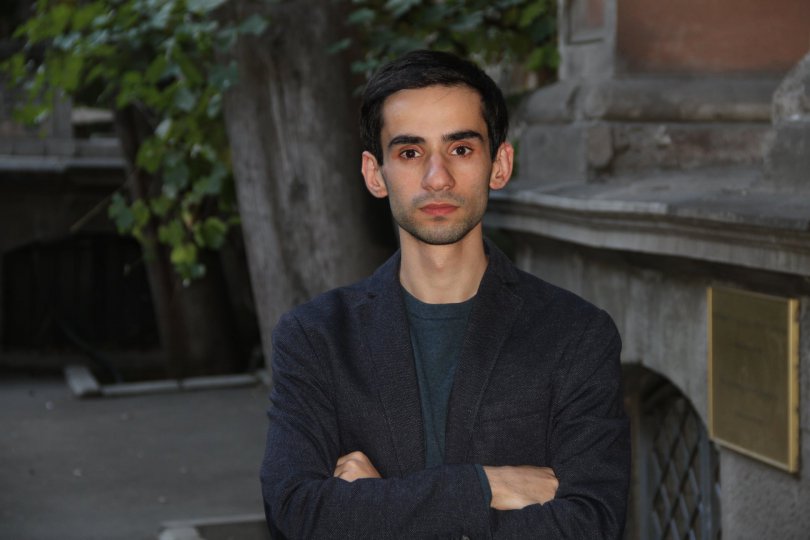
Nika Simonishvili, lawyer:
“None of Georgian Dream’s repressive laws have worked, because all of them were designed to instill fear – and we responded with unity and solidarity.
When they passed the ‘foreign agents’ law, they thought we would be afraid. They thought the same when they began arresting people for blocking roads, for standing on sidewalks, and through many other absurd actions.
None of it worked. Not because the laws had loopholes, but because they could not break the people.”
News in Georgia