Georgia jails opposition TV host for 14 days over Facebook posts






Arrests over social media posts in Georgia
On 22 July 2026, the Tbilisi City Court sentenced journalist and Formula TV host Vakho Sanaia to 14 days of administrative detention over posts he published on Facebook. The ruling was handed down by Judge Zviad Tsekvava.
The case against Sanaia was launched over Facebook posts about Parliament Speaker Shalva Papuashvili and MP Vladimer Bozhadze. Bozhadze has represented the European Socialists party since 2025, although he entered parliament on the ruling Georgian Dream party list following the 2024 parliamentary elections.
- ‘Threat of censorship’: What we know about Georgia’s new Interior Ministry department overseeing public communication
- Opinion: ‘The calculation is that people will resort to self-censorship’
The Hate Speech Department, established within the Ministry of Internal Affairs, referred the case to Tbilisi City Court for legal review.
Following an investigation by the department, Sanaia was fined 6,000 lari on 10 July.
In the post that led to the fine, Sanaia wrote: “I hope no one called [Vladimer Bozhadze] d**k, because the law prohibits calling Lado d**k. I would also like to urge everyone not to call Lado a d**k.”
After being fined, Sanaia published another post of a similar nature on social media: “I wrote a post saying, ‘Don’t call Papuashvili and Bozhadze d**k,’ and I was fined 6,000 lari. Am I missing something? Give them a call.”
On 18 July, Sanaia said the court had contacted him over the post and informed him that a hearing had been scheduled in his case.
Sanaia did not attend the court hearing.
“I’m laughing,” he wrote on social media after news emerged that he had been sentenced to administrative detention.
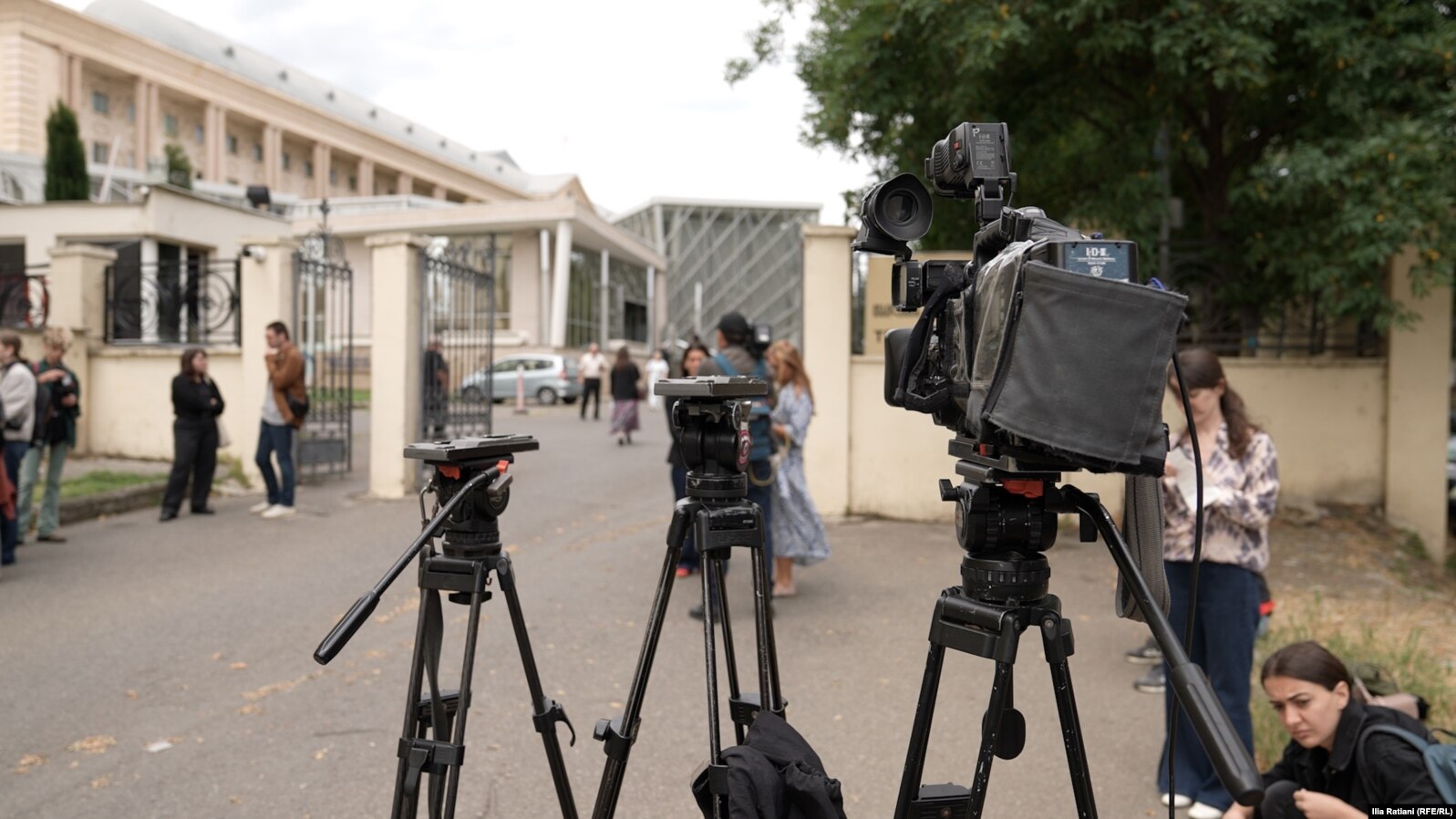
Brief overview of the department
Administrative cases over opinions expressed in the public sphere are initiated on the basis of reports compiled by the Hate Speech Department, which was established within the Ministry of Internal Affairs.
The new department has been operating since 1 June.
Its mandate is to monitor and identify public statements that violate human dignity, contain insults or elements of hate speech, where they may constitute an administrative offence.
According to Radio Free Europe/Radio Liberty, between the department’s launch and 2 July, it identified 170 alleged offences, 150 of which were referred to court.
Of those 150 cases, rulings had been issued in 33 by that date. Thirty-one people were fined, while two received verbal warnings. Most of those fined were activists. Vakho Sanaia became the first journalist to be fined on the basis of a report compiled by the department.
АArrests over social media posts in Georgia