Georgia in reverse: how showcase of post-Soviet democratisation turned into a country with 'functionally pro-Russian' regime






Why Georgia has turned away from the West
Over the past three years, Georgia has followed a path that few could have predicted. A country that received EU candidate status in December 2023 has now effectively frozen its European integration. A state once seen as a model of democratic reform in the post-Soviet space is adopting Russia-style laws and jailing people for standing on pavements during peaceful protests. And a government that until recently professed European values has become politically untouchable in Brussels and Washington.
How did this happen? And, more importantly, can it still be stopped?
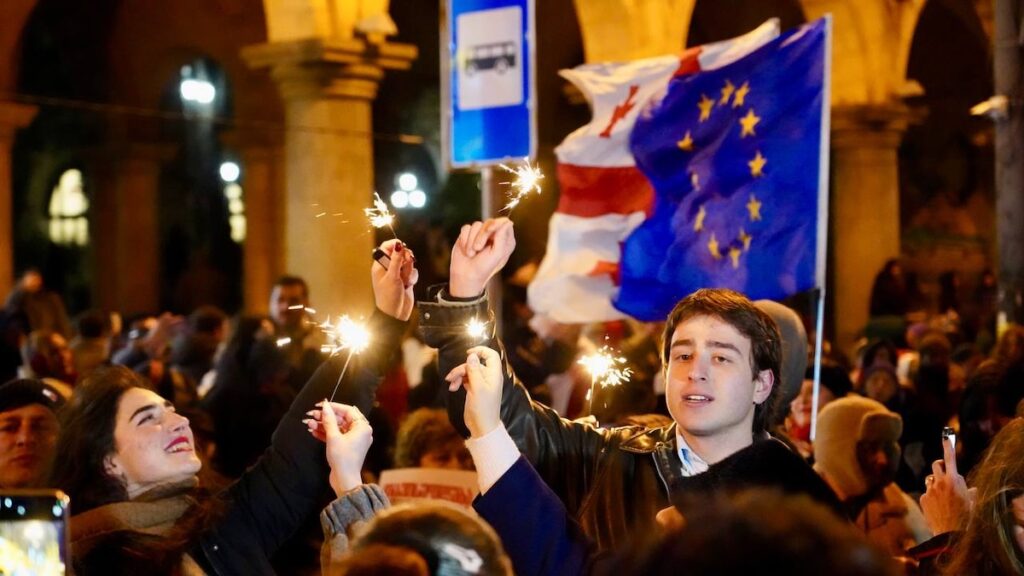
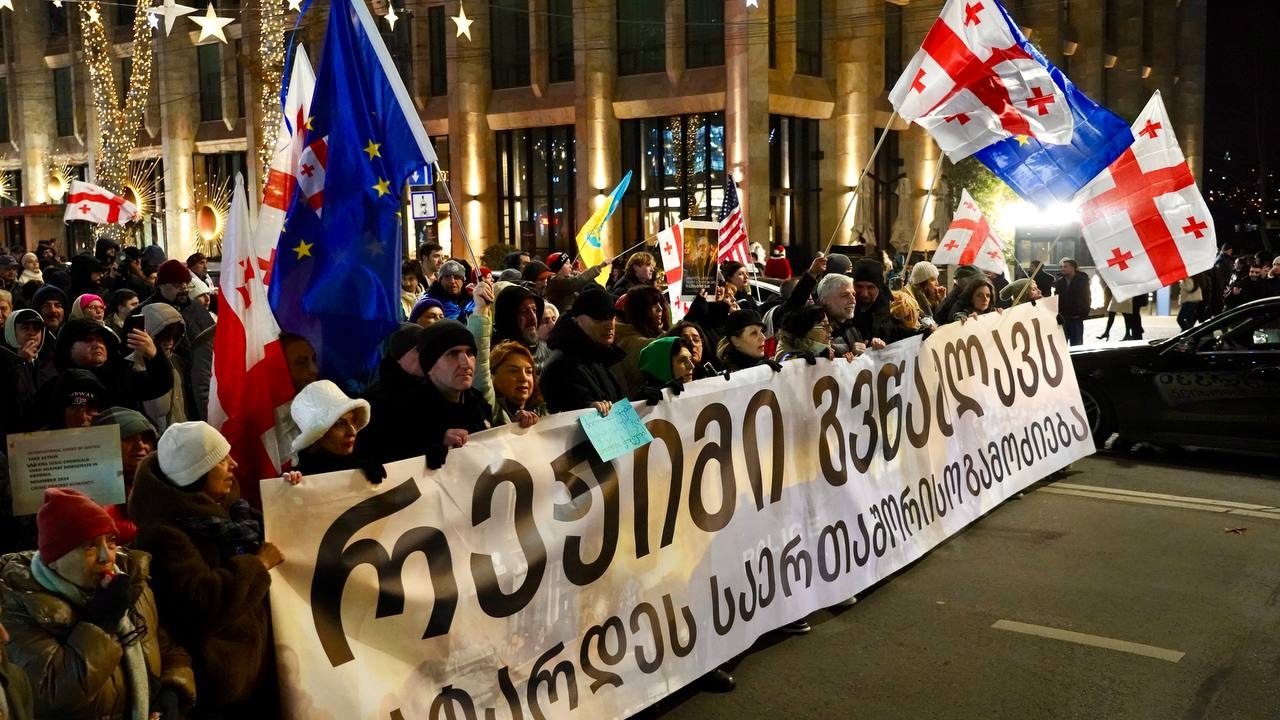
For more than 400 days, flags of Georgia, the European Union and Ukraine have filled Rustaveli Avenue in central Tbilisi every evening, alongside familiar placards demanding the release of political prisoners, fair elections and the repeal of anti-democratic laws.
People gather outside parliament again and again — some come after work, some bring their children or pets, and others arrive straight from police questioning, where officers summoned them over their participation in the protests.
Crowd sizes fluctuate. At times, tens of thousands march through the city; at others, a few hundred determined activists remain on the pavements.
But the protest has not stopped. It has continued without interruption since 28 November 2024, when the authorities announced that they were halting Georgia’s move towards talks on joining the EU.
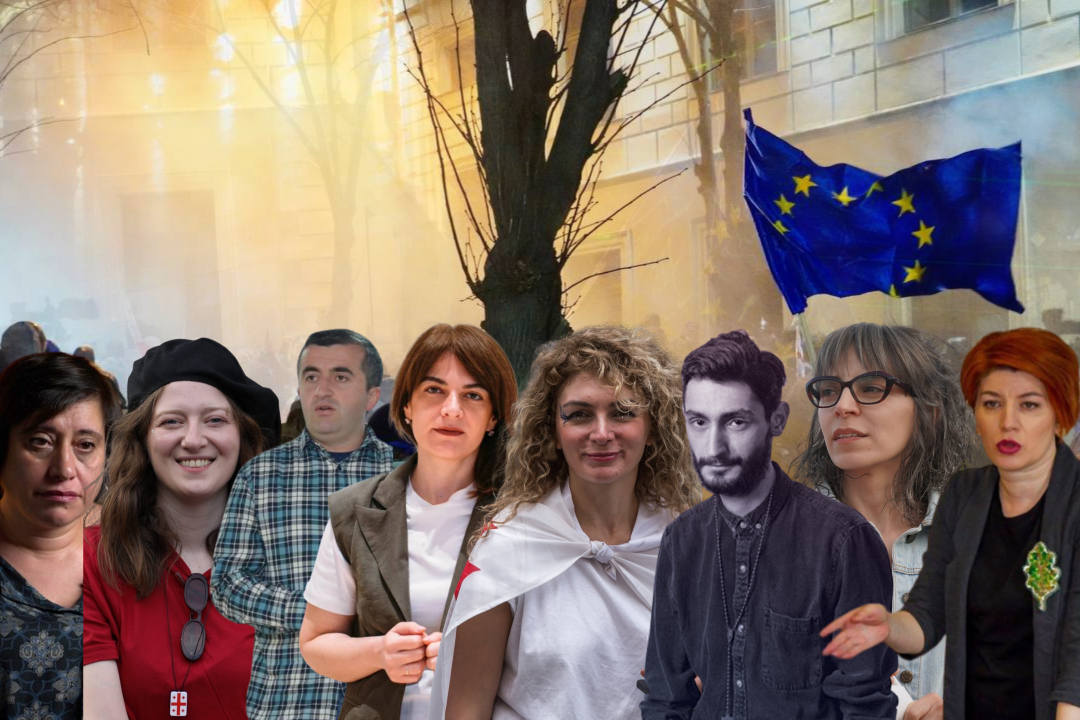
The statement was followed by concrete steps. In addition to the foreign agents law, a copy of Russian legislation that requires NGOs receiving more than 20% of their funding from abroad to register as organisations serving the interests of a foreign state, Georgia has adopted more than a dozen other anti-democratic laws over the past two years. These measures mirror legislation passed by the State Duma and are aimed at fully suppressing democratic processes in the country.
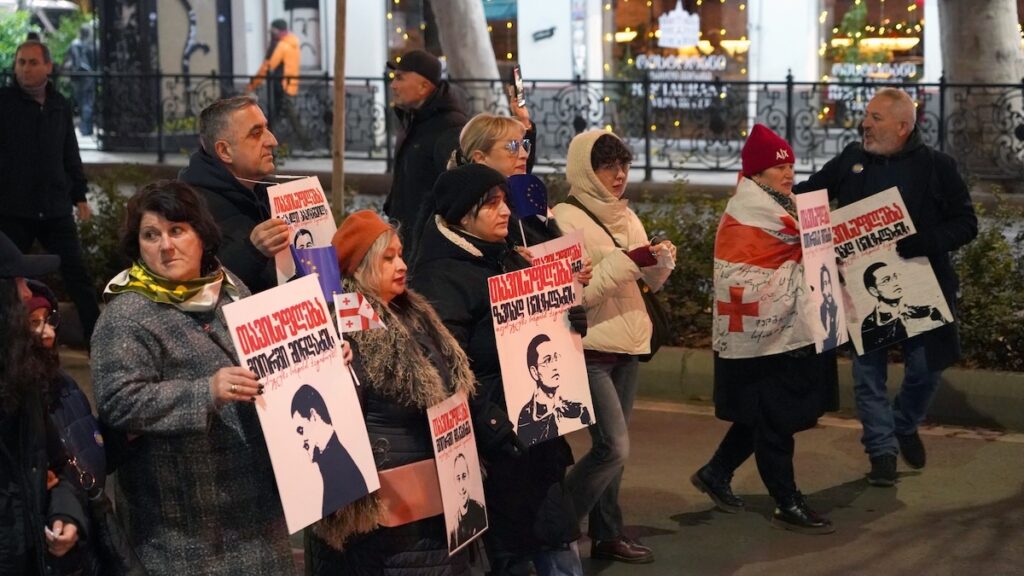
More recently, and for the first time in Georgia’s history, people have been convicted and jailed for several days simply for standing on the pavement during a peaceful protest.
“My country has changed beyond recognition,” says Khatuna Nanuashvili, a 35-year-old taking part in a permanent protest. She is standing outside the city court in Tbilisi, waiting for the outcome of a hearing involving her friend, who has been charged over a protest held on the pavement.
“It feels like I’m trapped in a nightmare that never ends,” she says.
The phrase can now be heard from many people across Georgia.
From a “success story” to the dismantling of a pro-Western course
In the late 2000s and throughout the 2010s, Georgia was widely seen as a model. Rapid reforms, a high-profile fight against corruption and the rhetoric of “we are Europe” defined the country’s politics. Membership of the European Union and NATO was presented as a clear strategic goal.
European officials described Georgia as a “democratic outpost in the South Caucasus”. Candidate status for EU membership was widely viewed as the logical next step in that trajectory.
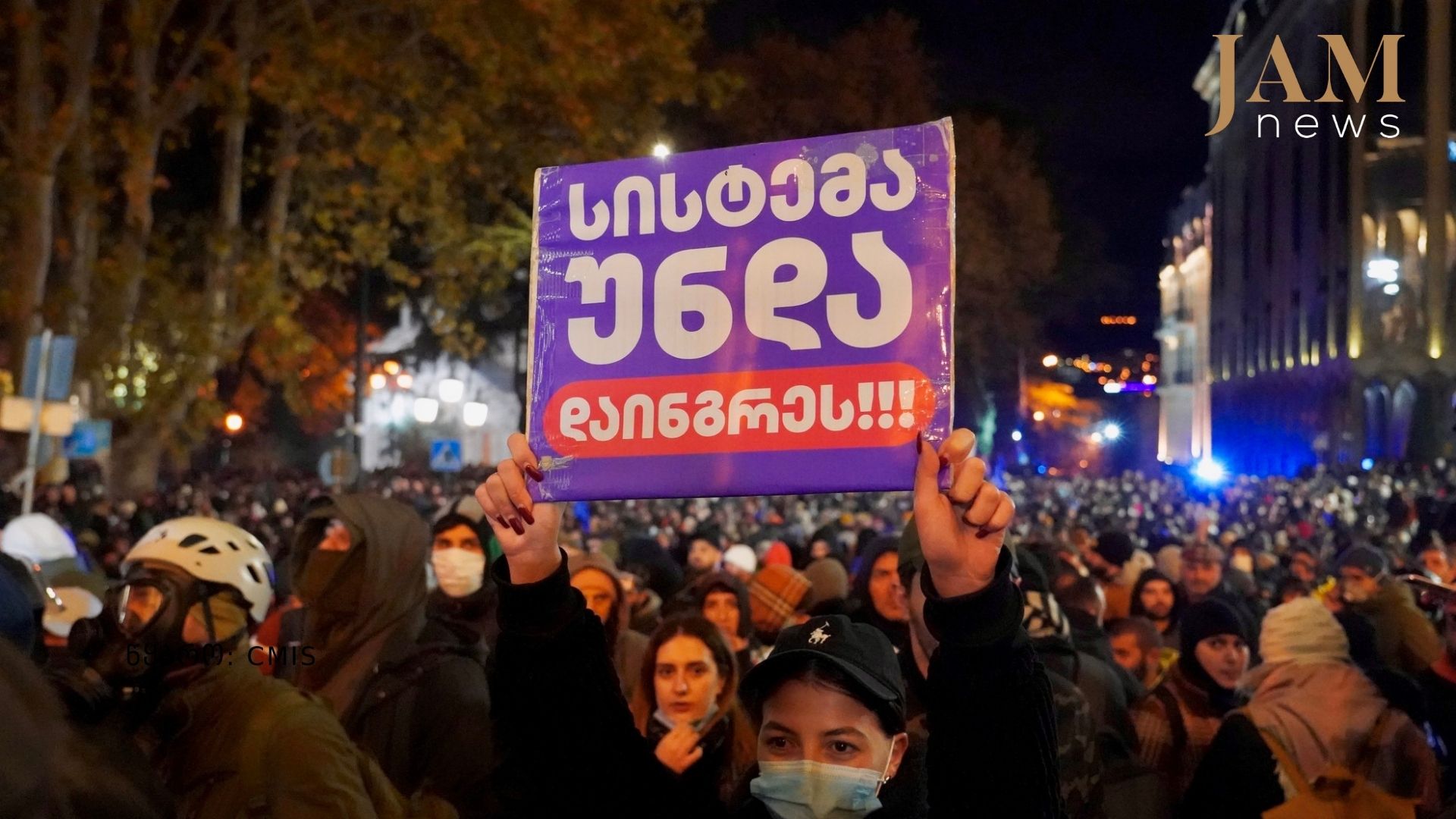
The paradox is that Georgia has turned sharply away from the West at the very moment it was closest to it — after becoming a candidate for EU membership.
What is happening in Georgia has no precedent in the history of EU enlargement, says Kornely Kakachia, a political analyst and director of the Georgian Institute of Politics.
“Candidate countries have sometimes moved backwards, but what is happening in Georgia is different,” he says. “Democratic backsliding is one thing, but Georgia is moving directly towards authoritarianism. We are also seeing ‘reverse conditionality’ for the first time — a situation in which a candidate country sets conditions for the European Union. In other words, it is not the EU demanding reforms, but Georgia demanding that the EU change.”
The situation is indeed paradoxical. Georgia formally received EU candidate status on 14 December 2023. Yet just six months later the process was frozen. In October 2024, the European Commission officially confirmed that Georgia’s accession process had been de facto halted because of the actions of the Georgian government.
The disputed parliamentary elections of 26 October 2024, in which the ruling Georgian Dream claimed victory with 54% of the vote, only deepened the crisis.
International observers documented widespread violations, including voter intimidation, vote manipulation and interference with election monitoring. On 13 February 2025, the European Parliament adopted a resolution refusing to recognise the election results as legitimate and calling for a repeat vote under international supervision.
Reasons for the turn: domestic logic versus European ambitions
What, then, lies behind this dramatic shift — domestic political calculations or geopolitical ones?
“In reality, both factors are at play, but the main driver comes from within,” says Kornely Kakachia.
He dates the beginning of the turn well before the adoption of the so-called “Russian law” and the mass protests that followed.
“It was already clear around 2018 that Georgia was moving away from the Western path,” Kakachia argues. “Over time, it became increasingly evident that the authorities were resisting the rule of law and judicial reforms. From that point on, the Georgian Dream government began to obstruct the fulfilment of the conditions set by the European Union for candidate countries.”
Brussels required Georgia to meet specific recommendations — initially 12 points, later reduced to nine. These included judicial reform and changes to the electoral system.
According to experts, it was precisely these conditions set by the European Union that became the filter through which the authorities’ real political course was finally revealed.
“This process clarified everything completely,” says Kornely Kakachia. “Before that, Georgian Dream hoped it could imitate democratisation on a formal level. But it then became clear that Georgian Dream — or at least the oligarch behind it — decided that EU accession and the implementation of the recommendations posed a threat to the regime and its longevity.”
In his view, Russia’s war in Ukraine merely accelerated the process. The root causes, he argues, are domestic.
Kakachia suggests a thought experiment. “If tomorrow EU leaders told Georgian Dream that they recognise its power as it exists today, would the rhetoric change? I am certain it would. Propaganda would start praising the EU the very next day.”
At the core of this shift, he says, lies the regime’s instinct for self-preservation.
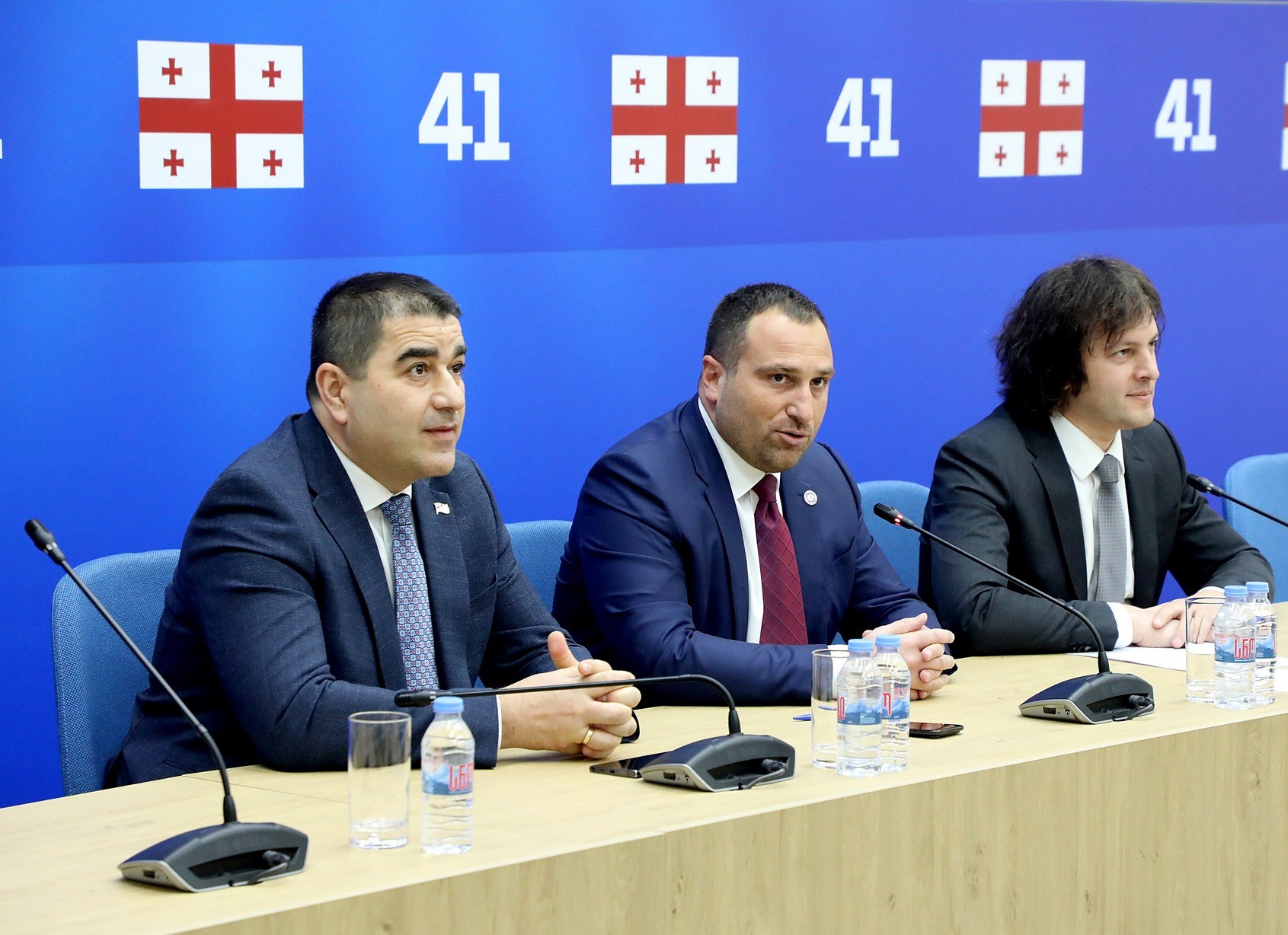
Georgian Dream, founded by billionaire Bidzina Ivanishvili, who made his fortune in Russia, is seeking a fourth consecutive term in power. The party understands that under genuine democracy — with free elections and an independent judiciary — retaining power would be extremely difficult. Yet this is precisely what the EU demands: the rule of law, independent institutions and media freedom.
“Their goal is for both Georgian society and the international community to get used to this reality,” Kakachia explains. “The authorities believe that if Georgia is geopolitically important to the West, then the EU and the US should abandon their value-based principles and accept Georgia as it is — much as they tolerate Viktor Orbán’s regime in Hungary.”
But this strategy has a serious flaw.
“The European Union will not accept a state built on an Azerbaijani model,” the expert argues. Azerbaijan has oil and gas. Georgia, by contrast, has long been viewed by the West as a stronghold of European and democratic interests in the region. If Georgia loses this image, it risks becoming just another post-Soviet state.
Sergi Kapanadze, an international relations expert and former deputy foreign minister, traces the turning point even further back — to the constitutional reform that followed the 2016 parliamentary elections.
“For me, the test was the new constitution,” he says. “Direct presidential elections were abolished, all institutions began to be suffocated, and a one-party authoritarian system was constructed. At that moment, it became clear that neither democracy nor European integration would happen. Both existed only at the level of rhetoric.”
In other words, experts argue, the pro-Western course long functioned as a façade. Behind it, a parallel process was unfolding: the internal architecture of the political system was being actively reshaped to ensure the long-term dominance of Georgian Dream and its leader, Bidzina Ivanishvili.
The war in Ukraine as an accelerator: when the pro-Russian course became explicit
The second major turning point identified by Georgian experts was 2022 and Russia’s war against Ukraine.
Several dynamics converged at that moment.
Georgian society expected clear solidarity with Kyiv, alignment with sanctions against Russia and active lobbying for EU candidate status.
Instead, the authorities adopted the language of “neutrality”, refused to join sanctions and began openly using the rhetoric of “war and peace” to mobilise domestically against their opponents.
“After Russia’s invasion of Ukraine, after the refusal to join sanctions, and after the anti-Ukrainian and anti-Western rhetoric, everything became absolutely clear — even to many supporters of Georgian Dream. And 28 November became the final episode of this process,” says Kornely Kakachia.
Zurab Pardzhiiani, a political analyst and host of an analytical programme on the popular YouTube channel Mismine, also stresses the role of the war in Ukraine as a trigger for Georgia’s retreat from its Western course.
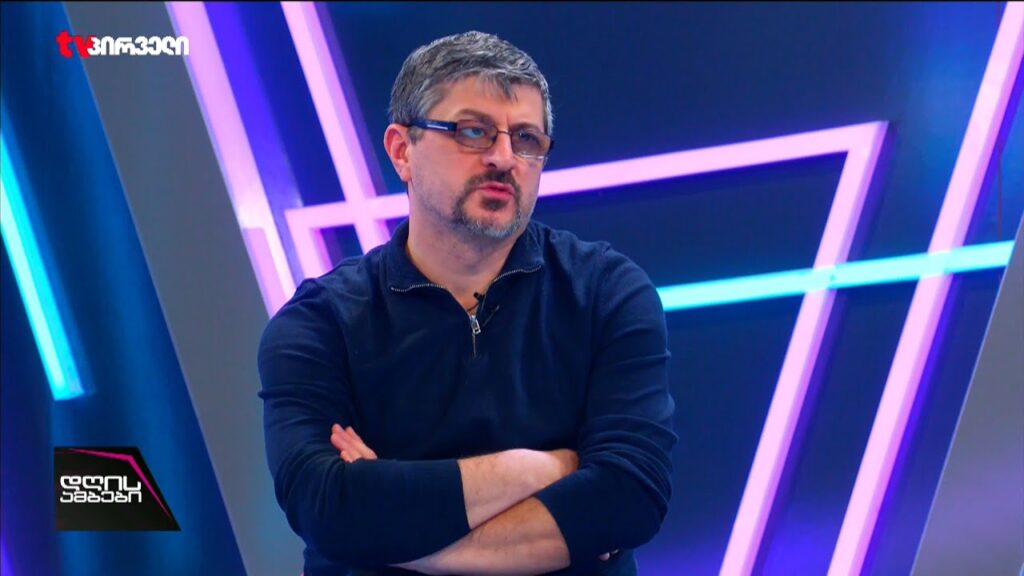
“Georgian Dream has no ideology. They always act from one situation to the next, from one specific case to another. When the war began, they immediately bet on Russia’s victory — that Russia would crush Ukraine, absorb it and win. You could say they backed the wrong side.”
The personal factor: Ivanishvili’s fears
Experts also point to a personal dimension — Bidzina Ivanishvili himself and his concerns over the security of his wealth.
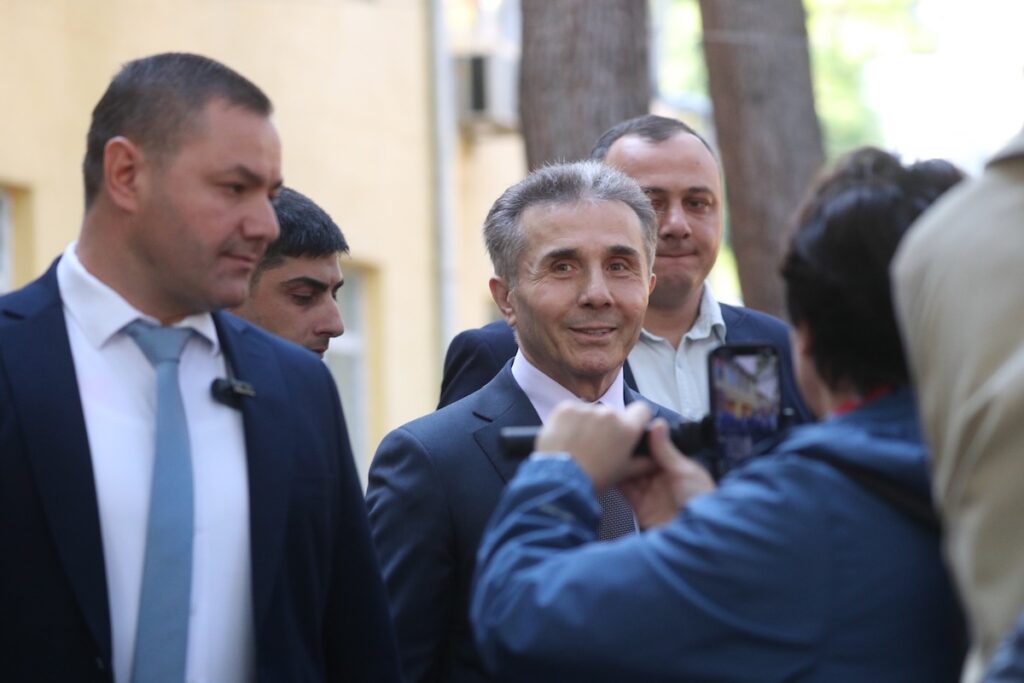
“I also see this as the decision of a single person. At some point, that person became fixated — I am talking about Bidzina Ivanishvili. He came to believe that everyone was conspiring against him. This is about the irrational fears and paranoia of one individual,” says Zurab Pardzhiiani.
Bidzina Ivanishvili, the honorary chair of the ruling Georgian Dream party, has repeatedly claimed that he is being blackmailed. He has blamed what he describes as “financial blackmail” not on the United States or the European Union, but on what he calls the “global war party” and the so-called deep state.
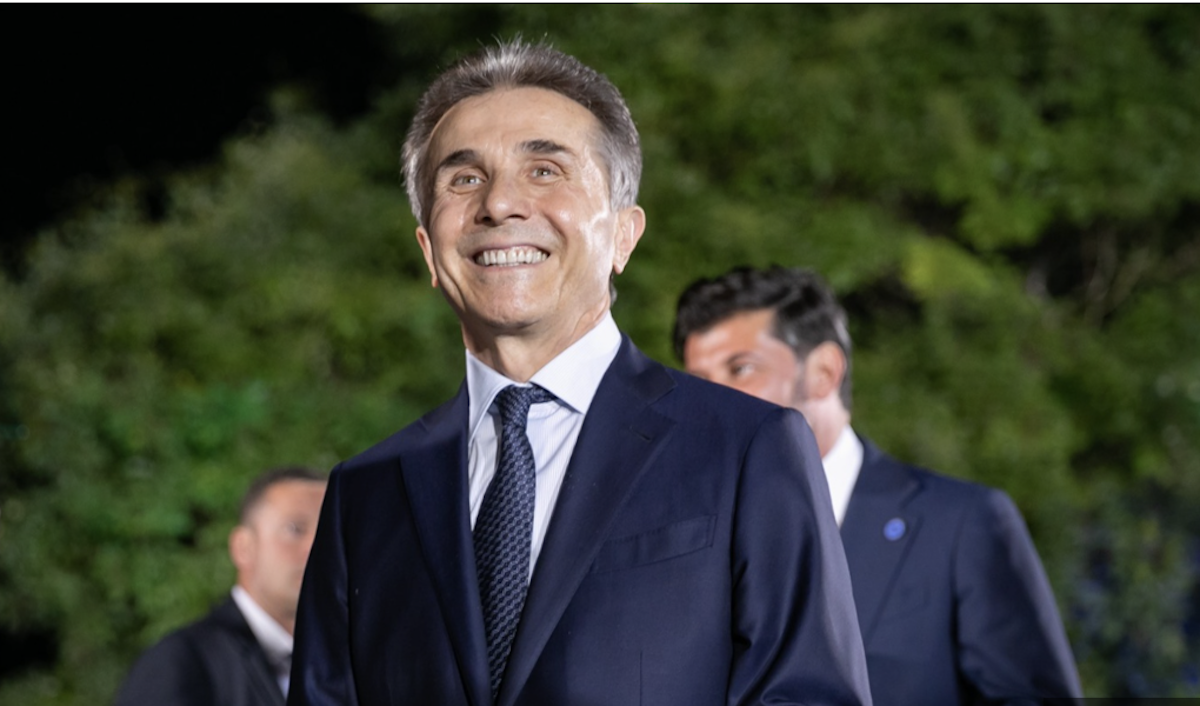
These terms have become an integral part of Georgia’s political vocabulary in recent years. The authorities consistently blame Western countries for the crisis in the country, using expressions such as the global war party and the deep state.
Functionally pro-Russian foreign policy: outcomes matter more than motives
Asked whether today’s Georgia can be considered a pro-Russian country, experts respond cautiously, but their conclusions largely converge.
Kakachia says that there is no information showing whether the authorities receive daily instructions from Russia. That is why everyone except politicians avoids giving a direct answer. But if one asks who benefits most from Georgia’s current foreign and domestic policy, the answer is obvious: Russia. The more isolated the country becomes, the more repressive its policies are, the further it moves away from democracy and the rule of law, the closer it moves toward Russia. Ideological convergence has already taken place.
Kapanadze says he considers their foreign policy to be functionally pro-Russian. By functionally, he means that everything they do works in Russia’s interests rather than Georgia’s. It does not matter whether this is one person’s ideology, specific ties to Russia, or direct control from Moscow. We will not know that unless someone finds written instructions. What matters is the result we are getting. Rhetorically, they may not praise Putin, but in substance almost every decision they make aligns with Russia’s interests.
And this is not only about refusing to impose sanctions or about growing economic dependence. Experts say the areas of convergence are far broader:
– the normalization of the language of “traditional values” and the fight against “liberal NGOs”;
– attacks on the “collective West” portrayed as a “source of revolutions”;
– attempts to rewrite the very meaning of European integration — from values to “European money without European rules.”
Pro-Western orientation as identity: myth or reality?
One of the key questions is whether Georgia’s pro-Western stance was ever a genuine societal choice or merely a political façade constructed by elites.
Historian Beka Kobakhidze believes that Georgia today is fighting not so much over its foreign policy course as over public consciousness itself.
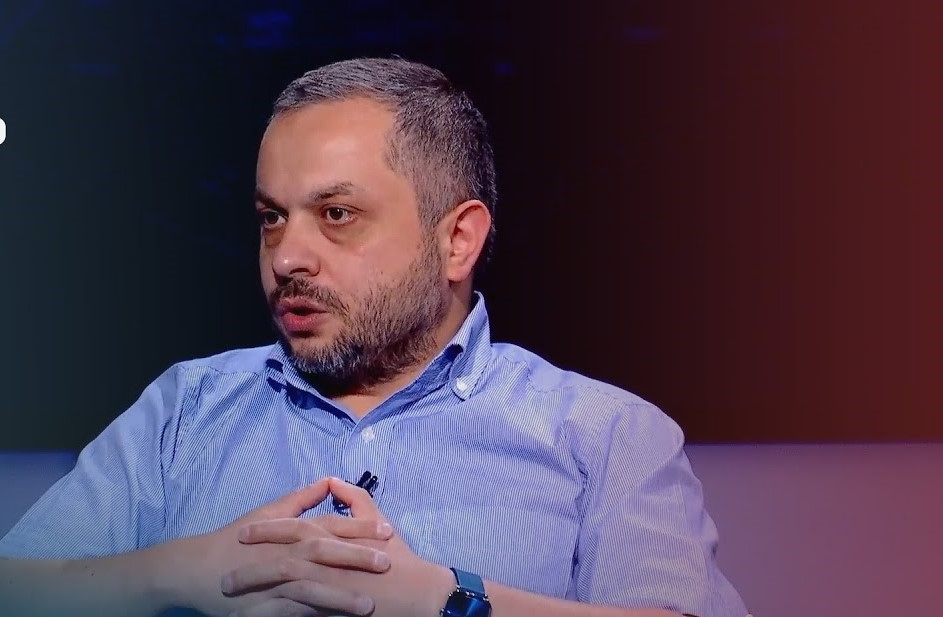
“If you open the Georgian press of the 19th century,” he says, “Europe is constantly being discussed — how people live there, their technologies, economy, fashion, education. One idea keeps coming up: we want to live the same way. This is a natural direction of development for Georgia. It was not imposed from outside.”
According to Beka Kobakhidze, even during the Soviet period the European vector remained part of society’s vision of the future.
“Even Eduard Shevardnadze, a product of the Soviet system, was ultimately forced to choose the European path, because there is simply no alternative for Georgia. It is either Europe or becoming a colony of Russia.”
This is why the current turn, the historian argues, is perceived by many as an attempt to rewrite the country’s very identity — to change how Georgians understand their place in the world.
Kornely Kakachia points to the structure of public opinion. “Over the past 10 to 15 years, there has always been a 15–20% pro-Russian segment. But when the authorities give these sentiments a propaganda form, swing voters emerge. Russia also actively contributes — through the economy, tourism and culture. Crucially, these views are largely held by people over 50. Young people are the ‘Erasmus generation’. That is why it is often said that part of the older generation is trying to deprive the young of their future and block Western integration.”
Sergi Kapanadze sees Georgia’s pro-Western orientation as rooted even deeper.
“For many people, being pro-Western is simply a euphemism for democracy, development and a normal life. There is also historical memory — the Christian tradition, the First Republic, the experience of the 1990s. In the 2000s, after the Rose Revolution, political elites played a major role in activating these sentiments. I would not set this up as a choice between the people and the elites. It was both a popular choice and the result of elite action. European orientation is simply about democracy, development and security. Without these values, European integration is meaningless.”
Society as an immune system against autocracy
Asked whether Georgian society is ready to defend its European choice, both experts give a blunt answer: resistance exists and it is widespread, but it remains unstructured.
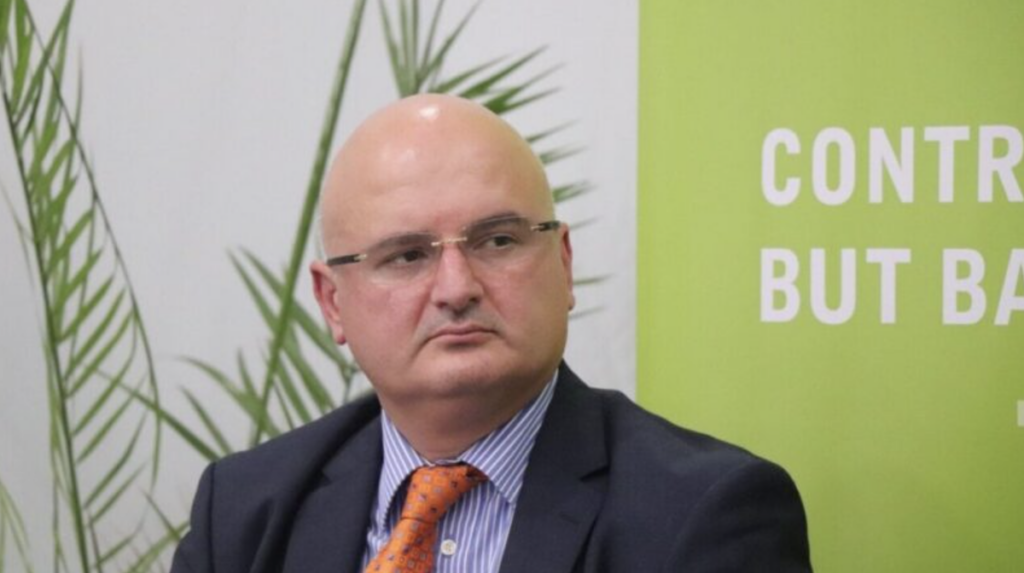
Kornely Kakachia:
“Society is genuinely resisting. It may seem tired, but the fact is that Georgian society does not accept autocracy. It is like a body infected by a virus — the body fights back. The situation has not yet fully crystallised. Despite the severe pressure on civil society and strong authoritarian tendencies, the regime has been unable to consolidate fully. Georgian Dream is sitting on a powder keg. Protests have not stopped, and the authorities have failed to break them.”
Sergi Kapanadze:
“Society has proved as ready as it could be to resist this process, and that struggle is continuing. I do not believe society has abandoned democracy, economic development, security or Europe. But when a dictatorship takes hold and the authorities use all available mechanisms to entrench it, it becomes very difficult to make resistance swift and effective. In the end, the political component is decisive. Greater political consolidation is needed. Resistance matters not only on the streets, but also in the political arena. Without that, public resistance alone will not be enough.”
The key deficit, experts say, is the missing link between street protests, civil society and a credible political alternative. As long as this connection fails to materialise, the authorities retain room for manoeuvre.
The West: between support and “Europe fatigue”
The interviews also highlight another paradox — the role of the West.
Kakachia says Brussels finds itself in an extremely difficult position.
“The war in Ukraine, the Trump factor, internal crises — against this background, Georgia is not a priority. But the European Union has not abandoned us. Georgian Dream would be happy to see Georgia removed from the EU agenda altogether, but that has not happened. They take societal resistance into account. Of course, the EU could do more, but its structures are complex, and there is Hungary and other member states. For now, they are in a waiting mode, hoping that sustained public resistance will improve the situation. If it does not, measures such as suspending visa-free travel could come into force.”
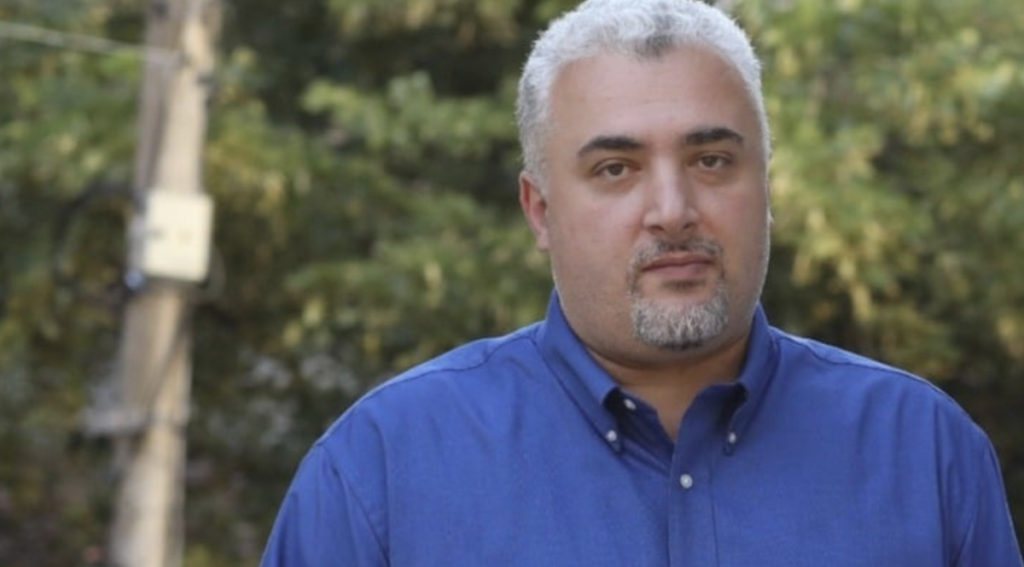
Sergi Kapanadze:
“Support has existed and still exists — and it is adequate. But no one will do our job for us, neither Brussels nor the United States. The West is limited by the lack of its own internal consensus. The one thing it can still do is force a dictatorship to pay a higher price. But that takes time. Ultimately, the decisive factor lies in domestic processes. The external factor is secondary, and the propaganda of Georgian Dream, which portrays everything as externally orchestrated, deliberately turns reality on its head.”
In effect, the West finds itself stuck between a desire not to “lose” Georgia and a reluctance to legitimise an authoritarian turn. For Tbilisi, this opens a window for a cynical political game: appealing to Trump-aligned forces in the US, flirting with Eurosceptics within the EU, retaining candidate status — while simultaneously dismantling democratic institutions.
What comes next: three scenarios and the point of responsibility
For a long time, Georgia lived with a sense of reassurance: “this won’t happen here”, “Georgia is not Belarus”, people will not allow a Russian-style scenario, there will be no full dictatorship, no turn away from Europe.
Georgian experts argue that institutions and society were indeed stronger than in Russia or Belarus — but not strong enough to make autocracy impossible.
The central irony is that Georgia’s European status and pro-Western reputation gave the regime room for manoeuvre. In Brussels and Washington, there was a long-held hope that “things would somehow correct themselves”. In Tbilisi, there was a belief that “the West would not allow it”. Both sides relied on inertia. That same inertia, experts say, allowed the turn to go so far.
Asked about the future, analysts respond without illusions: the worst-case scenario is entirely possible — and it is not theoretical.
Taken together, their views point to three basic scenarios:
- a fully consolidated dictatorship within Russia’s orbit;
- a form of managed authoritarianism, with frozen EU integration and a “candidate in name only” status;
- a political breakthrough from within, driven by opposition consolidation, sustained protest and coordinated Western support.
Kornely Kakachia:
“Today’s international environment is such that nothing can be ruled out. At times, it seems the authorities want Georgia, after the end of the Russia–Ukraine war, to no longer be seen as a candidate country or part of the Associated Trio, but to return to a ‘grey zone’. The fact remains, however, that society and civil actors do not agree with this. The course of events will depend primarily on whether a solution emerges from within the country. Citizens themselves must create a way out. International support will matter, but a decisive external intervention is unlikely.”
Kapanadze is even more blunt about the risks:
“Can Georgia move away from the West? Yes. A dictatorship would distance Georgia from the West for a long time. Will the West give Georgia up? I think, at a principled level, it will not recognise a dictatorship. Some form of relations may remain, but there will be no legitimisation. The main risk lies elsewhere. If a dictatorship becomes entrenched, we will lose not only our Western orientation, but democracy itself. That would mean losing sovereignty, prosperity and security, because a dictatorship in Georgia cannot guarantee security. It would lead to full isolation from the West and a slide into Russia’s sphere of influence. And being in Russia’s sphere of influence is a direct recipe for the loss of independence.”
Produced with the support of Mediaset
Why Georgia has turned away from the West