From 'rapid response' to possible law: who are Georgia's national values being protected from?






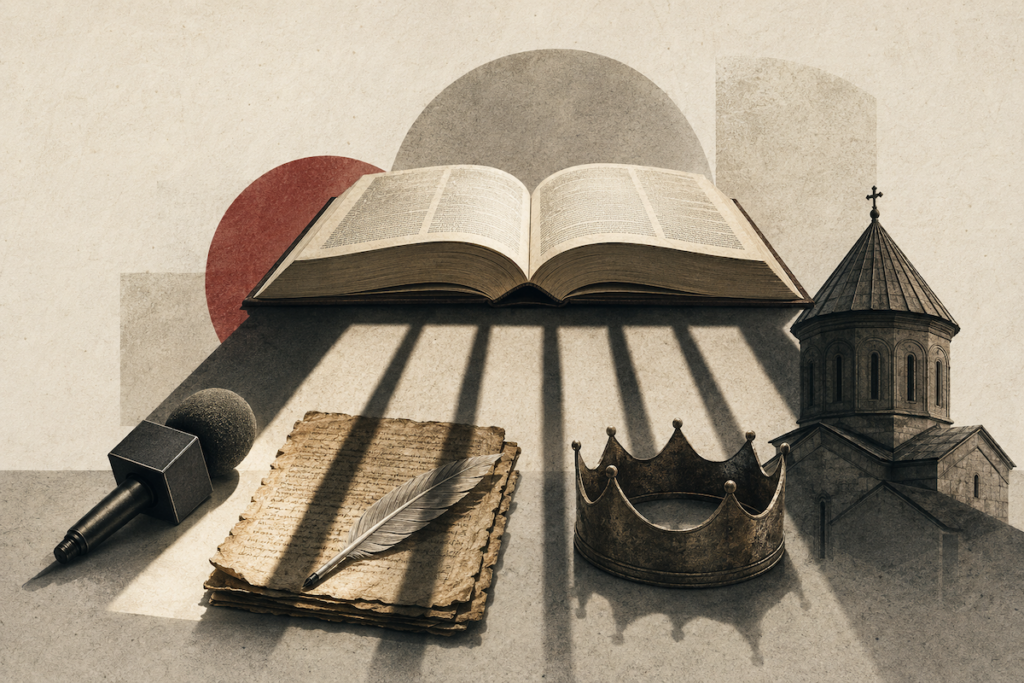
The Georgian government has not ruled out introducing legislation against what it describes as the erosion of national identity. Prime Minister Irakli Kobakhidze says the proposed rules could cover insults directed at saints, monarchs and prominent public figures. No draft law has been introduced yet. However, experts argue that the groundwork is already being laid. Members of the ruling team have already begun discussing penalties and possible regulation of the media.
As the ruling Georgian Dream party debates possible punishment for insulting national values, it is worth examining what such measures could cover and what Russia’s experience suggests.
From assaults to a campaign to “protect national values”
The debate over possible legislation followed an attack on comedian Onise Okriashvili over a joke he made on YouTube. Late on 22 July, a man assaulted him near his home in Tbilisi. The attacker, Niko Khurtsilava, said he acted because Okriashvili had insulted Georgian national culture.
Even before the assault, pro-government television channels had launched a media campaign against Okriashvili. They broadcast a clipped excerpt from his YouTube show in which he referred to renowned Georgian writer Nodar Dumbadze using obscene language.
The writer’s grandson, Nodar Macharashvili, publicly backed the attacker. A few days after the incident, MMA fighter Giorgi Kartvelishvili, who also described himself as Khurtsilava’s friend, announced the creation of a new movement that would provide “rapid response” to insults directed at sacred values, ancestors, religion and history.
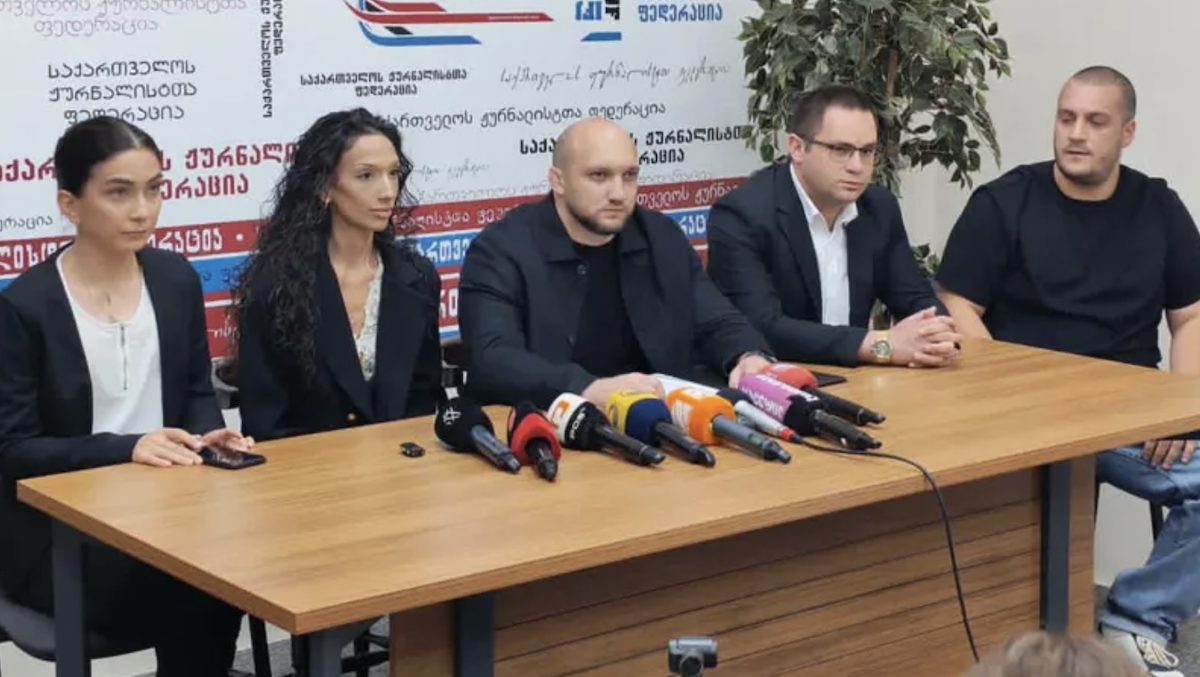
“If protecting our culture and national identity requires it, we will not shy away from any threat. We are ready to take responsibility for every action we take and, if necessary, even go to prison,” Kartvelishvili said.
He did not specify what he meant by “rapid response”. He also declined to answer journalists’ questions about the use of physical violence and vigilantism.
On 28 July, the group applied to the Public Registry to register its newly established organisation under the name National Generation.
A week after the attack on Okriashvili, on 30 July, another initiative group emerged to “protect national values”. It brought together actor Giorgi Shanidze, director Giorgi Sikharulidze and Kote Mzhavia, director of the Batumi Theatre.
Unlike the first movement, this group called for legal mechanisms rather than “rapid response”. Its members said the law should protect the church, sacred sites, historical heroes and national values.
“Freedom of expression is a fundamental value. However, that right cannot become a tool for insulting the sacred symbols and core values that form the country’s historical, cultural and spiritual foundation,” Giorgi Shanidze said.
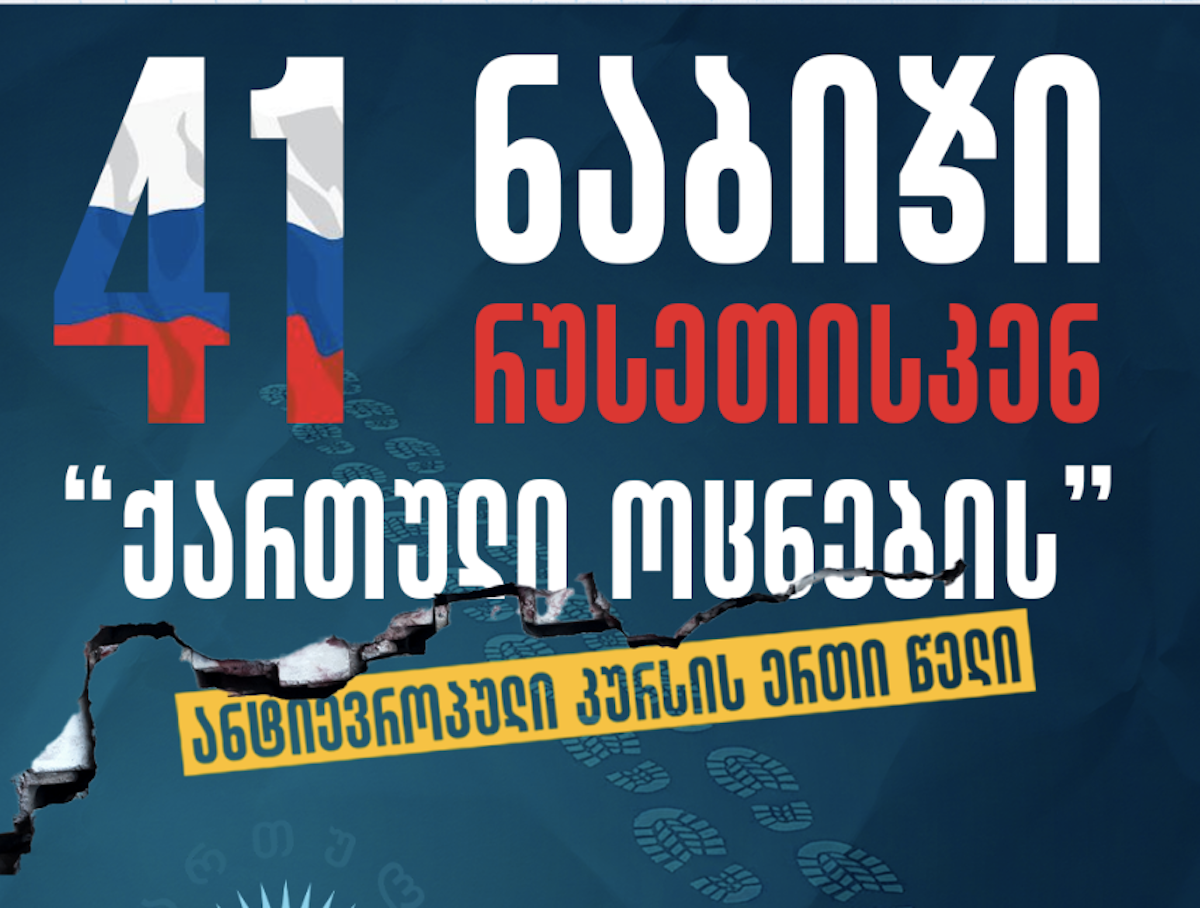
The statement refers to “externally funded destructive groups” whose activities, it says, are creating confrontation between the Georgian nation and small minority groups.
“To prevent the situation from escalating further and reaching the point where even the wise Georgian people could lose patience, responsible steps must be taken and the existing problems must be resolved through legal and peaceful means,” the statement says.
The group plans to hold consultations with lawyers, historians, artists and athletes before drafting a legislative proposal.
However, neither the bill nor its concept has been published, so it remains unclear which actions could become punishable. The proposed form of liability and possible penalties also remain unknown.
What could a law on national values include?
On 3 August, Irakli Kobakhidze told journalists that he did not rule out adopting such legislation. However, he said the authorities had not yet discussed any specific proposals.
“There is indeed a need to respond to the coordinated attack against our identity,” Kobakhidze said.
He also identified possible subjects of future regulation, including saints, kings and prominent public figures.

According to Kobakhidze, insults directed at Georgian saints and kings are part of “a chain of coordinated, commissioned actions.”
“These are not simply untalented people. These are people carrying out a specific assignment. The purpose of that assignment is simple: they are trying to weaken our national identity. That is why they are doing all this,” he said.
Kobakhidze did not specify who had allegedly commissioned the campaign. He also provided no evidence to support the claim.
“We must take every possible measure to counter such processes. If that requires adopting a law, we can discuss that as well.”
Kobakhidze’s remarks do not necessarily mean such a law will be adopted. However, they indicate that the initiative has already received political backing from the prime minister.
Meanwhile, MPs aligned with the ruling party have outlined possible restrictions in greater detail.
Georgian Dream MP Irakli Kadagishvili linked the issue to public swearing, abusive language and hooliganism.
“When people use obscene language against a specific individual or institution at a rally, is that freedom of expression or simply abusive language and hooliganism? We cannot just leave it like this.”
Kadagishvili said he did not know what the legislation might ultimately contain. At the same time, he suggested that the media could also fall within its scope.
The MP claimed that certain television channels — referring to opposition broadcasters — had aired 3,500 “anti-church” reports over the past year and a half. He did not explain how he arrived at that figure or what criteria he used to classify the reports as “anti-church”.
Kadagishvili also suggested that “offensive” media content could become subject to legal regulation.
Guram Macharashvili, a member of the People’s Power party, openly called for penalties for public insults. He said the law should protect faith, the church, the patriarch and national traditions.
“When you publicly insult values such as faith, the church, the patriarch or our traditions, that should, of course, be punishable.”
Macharashvili argued that Georgia had offered excessive protection to dissenting views.
“Dissent has always enjoyed a certain degree of protection in Georgia. But recently, I would say it has been protected in an ultra-liberal, excessive way, and that needs to change.”
What counts as an “insult” — and who decides?
Article 17 of Georgia’s Constitution guarantees freedom of thought and expression. It also prohibits persecution for expressing an opinion.
The constitution also guarantees media freedom and prohibits censorship.
The state may restrict freedom of expression only by law and only when necessary in a democratic society. Such restrictions may serve aims including public safety and the protection of other people’s rights. The constitution does not list “insulting national values” as a separate ground for limiting freedom of expression.
At the same time, freedom of expression is not absolute. The law may restrict incitement to violence, threats, harassment or defamation. However, such restrictions must be clearly defined and predictable.
By contrast, “insulting national values” is a far more ambiguous concept. It remains unclear whether the proposed law would protect the reputation of specific individuals or instead safeguard abstract values or historical figures.
It is also unclear who would decide which saints, kings and public figures deserve legal protection. Would the law apply only to historical figures? Where would the line be drawn between legitimate historical criticism and an “insult”?
For example, pro-government television channels also launched a campaign against literary scholar Levan Berdzenishvili after he criticised the policies of Georgian King Erekle II. Berdzenishvili neither joked about the king nor used obscene language. Nevertheless, Georgian Dream MPs and pro-government media sharply attacked him.
It also remains unclear whether the proposed restrictions would apply to satire, works of art or academic research. Another unanswered question is whether critical media coverage of members of the clergy could be treated as an “insult to sacred values”.
Protecting patriotism or deepening political divisions?
Opposition politicians see the initiative as an attempt to mobilise political support.
Giorgi Sharashidze of the For Georgia party argues that the government is trying to claim a monopoly on patriotism.
“They have a very calculated strategy — to gain exclusive ownership of patriotic issues. Everything serves that goal. They want everyone else to appear as opponents of Georgia’s identity, traditions and church, while presenting themselves as the sole defenders of those values.”
Giorgi Shalamberidze of the First Georgia party believes the proposed law could serve another political purpose.
“It could be a political manoeuvre. It may help mobilise a particular segment of voters, or it could mark the beginning of a much broader tightening of legislation in the long term.”
Shalamberidze acknowledged that freedom of expression can be restricted in certain circumstances. However, he pointed to Georgia’s current political environment.
“If this becomes law and is used as a tool, the question is how it will affect political actors, political parties and their freedom of expression, and to what extent it will become a mechanism for restricting their rights.”
Historians’ concerns
It remains unclear where the proposed law would draw the line between insulting a historical figure and offering a critical assessment. That uncertainty raises concerns for historians, researchers and authors.
Assessing historical figures often requires revisiting disputed facts, competing interpretations and long-established narratives.
If the state decides which interpretations are acceptable, the law could become a tool for restricting academic research and scholarly debate.
It also remains unclear whether the proposed rules would apply to academic publications, public lectures, textbooks or documentary films.
Another unanswered question is who would decide where legitimate historical criticism ends and an “insult” begins.
Historian Irakli Khvadagiani argues that placing faith and artistic expression into legal categories contradicts their very nature.
“Faith and creativity do not recognise prohibitions, nor do they accept categories imposed unilaterally. The idea of banning them through legislation is absurd. Humanity went through this centuries ago. It is simply the obsession of a dictator trying to bend society to his will.”
Risk of creating artificial divisions?
Conflict analyst Paata Zakareishvili believes the proposed legislation could fuel ethnic and religious tensions. In his view, the vague concept of “protecting national identity” risks creating new fault lines within society.
“There are not enough supporters of this ideology in Georgia for Georgian Dream to sustain permanent tensions between Christians and Muslims, between Georgians and non-Georgians, or between Georgian speakers and those who do not speak the language.”
Zakareishvili sees elements of far-right ideology in the government’s approach. He argues that it runs counter to the principles of equality and justice.
“This is a classic example of pure far-right ideology. Humanity has gone through this countless times, and it has repeatedly led to catastrophe and world wars, bringing nothing but destruction.”
The conflict analyst also links the initiative to the electoral cycle. Georgia’s next parliamentary elections are not due until October 2028. However, Zakareishvili believes the ruling party has already begun preparing its campaign.
“Georgian Dream is getting ready for the elections. Before the vote, it needs to create exactly these kinds of flashpoints.”
Cases of violence carried out in the name of “protecting traditions”
Invoking the need to protect national and religious values is not a new phenomenon in Georgian politics.
- In 2023, a man attacked Zurab Japaridze, leader of the Girchi – More Freedom party, in the city of Gori. The attacker said he acted because Japaridze had insulted the church and was “corrupting children”.
- Later that year, protesters disrupted a lecture by Levan Berdzenishvili in Kvareli. They accused him of insulting King Erekle II and Christian values. In Tbilisi, demonstrators also threw eggs at Berdzenishvili.
- On 5 July 2021, opponents of Tbilisi Pride attacked journalists and activists. They justified the violence by saying they were defending the family, the church and traditional values. More than 50 journalists were injured.
- In November 2019, far-right and anti-LGBT groups tried to disrupt the premiere of the film And Then We Danced. The Georgian Orthodox Church described the film as “an insult to Georgia’s traditional values”. Protesters attempted to storm cinemas. One of them threw a stone at civil activist Anna Subeliani, causing a serious head injury. Police arrested 12 people that evening.
- In January 2024, activist Nata Peradze splashed paint on an icon in Tbilisi’s Holy Trinity Cathedral depicting Saint Matrona of Moscow alongside Joseph Stalin. Far-right groups later gathered outside Peradze’s home, demanding that she be punished.
- On 17 May 2013, thousands of people, including members of the clergy, attacked participants in an anti-homophobia rally. At least 17 people were injured. In 2021, the European Court of Human Rights ruled that the violence had taken place in circumstances of the state’s effective acquiescence.
Lessons from Russia: when the state decides what people can joke about
Russia’s experience is particularly relevant in this context because the substance and rationale behind many legislative initiatives promoted by Georgian Dream resemble measures introduced in Russia years earlier.
The clearest example is the Law on Transparency of Foreign Influence. Russian authorities initially justified their version as a tool to ensure transparency over foreign funding. They later expanded it into a mechanism used against independent media outlets and civil society organisations.
Lessons from Russia: when the state decides what people can joke about
Russia’s experience is relevant here because both the substance and the rationale behind many legislative initiatives promoted by Georgian Dream resemble measures introduced in Russia in recent years.
The clearest example is the Law on Transparency of Foreign Influence. Russian authorities initially presented their version as a transparency measure for foreign funding. They later expanded it into a tool used against independent media and civil society organisations.
It is therefore worth looking at how Russia gradually developed legislation under the banner of protecting “traditional values”, religious feelings and historical memory.
Russia did not build its legal framework for protecting religion, historical memory and “traditional values” overnight. The system evolved step by step.
Offending religious feelings
In 2012, members of the punk group Pussy Riot staged an anti-Vladimir Putin performance inside Moscow’s Cathedral of Christ the Saviour. A court convicted them of hooliganism motivated by religious hatred.
A year later, Russia toughened Article 148 of its Criminal Code by criminalising public acts that show clear disrespect for society and are committed with the intention of offending the religious feelings of believers.
One of the best-known cases under the law involved blogger Ruslan Sokolovsky, who filmed himself playing Pokémon Go inside a church and posted the video online. In other videos, he also criticised religion and the Russian Orthodox Church.
In 2017, a court gave Sokolovsky a three-and-a-half-year suspended prison sentence. The case involved several criminal charges, including offending believers’ religious feelings and inciting hatred.
In 2024, the European Court of Human Rights ruled that Sokolovsky’s conviction had violated his right to freedom of expression. The court found that offensive or vulgar speech does not automatically amount to hate speech.
“Traditional values” as state policy
In November 2022, Russian President Vladimir Putin signed a decree on protecting “traditional Russian spiritual and moral values”.
The document lists patriotism, dignity, life and the traditional family among those values. It also includes service to the fatherland, historical memory and continuity between generations.
According to the decree, external forces threaten these values by acting inside Russia through extremist and terrorist organisations.
The decree also identifies the United States and other “unfriendly states” as sources of those threats.
Russian authorities have explicitly linked cultural and values policy to national security.
A similar narrative has emerged in Georgian Dream’s campaign. Both initiative groups have spoken of a coordinated attack on Georgia’s “national identity”. Prime Minister Kobakhidze has used the same wording.
Legal protection of history
Article 354.1 of Russia’s Criminal Code is titled “Rehabilitation of Nazism”. Lawmakers originally introduced it to prohibit the denial of crimes established by the Nuremberg Tribunal.
However, the law goes much further. It also bans the dissemination of what authorities consider to be “knowingly false information” about the Soviet Union’s actions during the Second World War. The article also protects the honour and dignity of war veterans.
In 2021, lawmakers added a new offence covering the “insulting of the memory of the defenders of the Fatherland”. The law also criminalises offensive use of military glory symbols.
As a result, the legislation does more than prohibit denial of historical facts. It also protects the state’s official interpretation of the Soviet Union’s role in history.
According to a 2025 study by the human rights project OVD-Info, Russian courts handed down 25 convictions under Article 354.1 between 2015 and 2019. Many of the cases concerned interpretations of the Soviet Union’s actions and historical comparisons.
Between 2022 and May 2025, OVD-Info recorded 212 prosecutions under the same article.
A court gave Kazan resident Zulfiya Sitdikova a two-year suspended sentence over posters reading “No to war” and “9 Way”. She replaced the “M” in “May” with a “W”, and investigators interpreted this as desecration of Victory Day symbols.
Authorities also opened a criminal case against historian Mikhail Belousov. Investigators accused him of denying facts established by the Nuremberg Tribunal and spreading false information about the Soviet Union.
Prosecutors also opened two cases against historian Tamara Eidelman. They argued that her video lectures showed disrespect for Russia’s military remembrance days.
Russia has therefore created a system in which historians and society no longer have the final say in historical debates. Instead, investigators, expert witnesses and the courts have become the ultimate arbiters.
Where will Georgia draw the line?
Georgia has not yet introduced such a bill, so it is impossible to say whether it will follow the Russian path.
However, statements by members of the ruling party already suggest a broad range of protected subjects, including the church, the patriarch, saints, kings, public figures, traditions and even media content.
Russia’s experience also suggests that broadly defined protected values can gradually expand over time.
Protecting national values in Georgia