Azerbaijan vs Western media: Why were different reports labelled a single 'information campaign'?






Azerbaijan and foreign media
Four separate reports about Azerbaijan have appeared in international media: a TVP World programme by Poland’s public broadcaster on political repression, an Independent report on the conditions in which Ali Karimli is being held, a BBC analysis of political prisoners, and a Guardian review of a documentary about Karabakh.
Baku responded with two official statements. Azerbaijan’s Foreign Ministry summoned Poland’s ambassador over the TVP World programme and handed him a protest note. In a separate statement, the Media Development Agency described the other three publications as possible elements of a single “targeted information campaign”.
However, when examined individually, the reports clearly differ in their subject matter, format and main sources.
TVP: international success and domestic repression
The central question of the TVP World programme “Peace in Azerbaijan comes with repression”, broadcast on 26 August, is why Azerbaijan’s political space continues to shrink despite Baku’s growing international influence.
The programme discusses the arrests of journalists from AbzasMedia, Meydan TV and Toplum TV, as well as criminal cases against opposition figures, activists and researchers. Presenter Benjamin Lee and İPEK Centre deputy director Türkan Bozkurt discuss oil revenues, the transfer of power within one family, the legitimacy Ilham Aliyev gained from victory in Karabakh, relations with the West and the position of national minorities.
Azerbaijan’s Foreign Ministry described the programme as biased and the presenter’s conduct as provocative. Since TVP receives state funding from Poland’s budget, the Azerbaijani side linked the programme’s content to the Polish government’s position and described its broadcast as an “unfriendly act”.
The Independent: conditions of Ali Karimli’s detention
The British newspaper’s 30 August report focuses on a narrower issue. The family and lawyers of Ali Karimli, the detained chairman of the Azerbaijan Popular Front Party, say he has no access to safe drinking water, ventilation, adequate sleep, outdoor exercise or reading materials. A Human Rights Watch representative says the authorities have not presented convincing evidence to the public in his case. The UK Foreign Office confirms that it has raised the issue with Azerbaijani authorities.
The article’s emotive headline highlights the family’s claim that authorities are trying to “break” Karimli. The report also describes the charge against him as “treason”. Officially, however, prosecutors have charged him under an article concerning actions aimed at the violent seizure of power and the forcible alteration of the constitutional order. This is a specific point on which Baku could request a correction.
The newspaper also says it contacted Azerbaijan’s Foreign Ministry for comment but received no response.
BBC: figures and the case of Igbal Abilov
The Russian Service of the BBC’s article “Why is Ilham Aliyev stepping up repression?”, published on 31 August, focuses not on Ali Karimli but on Talysh researcher Igbal Abilov, who received an 18-year prison sentence.
The BBC analysed lists compiled by the Institute for Peace and Democracy from 2021 to May 2026. It concluded that the number of political prisoners had more than tripled, while the average prison sentence in politically motivated cases reached about 12 years in 2026. The article also examines the cases involving AbzasMedia, Radio Azadliq and Toplum TV, as well as the trials of researchers Bahruz Samadov and Igbal Abilov.
The fact that the calculations rely on lists compiled by a single human rights organisation may be open to debate. However, the BBC explains its methodology in detail, includes Ilham Aliyev’s position that he denies political persecution, and says it contacted the Penitentiary Service for comment but received no response.
Who is restricting access to the official position?
The MEDİA Agency accuses foreign news organisations of failing to seek Azerbaijan’s official position. However, in February 2025, the BBC closed its Baku bureau on the Foreign Ministry’s instructions. The bureau had operated in the country since 1994.
The Foreign Ministry cited the principle of reciprocity and the lack of a legal basis for the bureau’s operation. When authorities restrict the work of local bureaus and government agencies leave journalists’ requests unanswered, foreign news organisations have to rely more heavily on lawyers, relatives and experts based outside the country.
The information landscape that Baku describes as one-sided may therefore partly result from the authorities’ own media policies.
The Guardian: a review of a film about Karabakh
The Guardian article is not a political investigation. It is a short review of The Black Garden, a documentary by director Alexis Pazoumian. The film explores the wartime experience of Karabakh Armenians through the stories of two children and a young soldier who lost a leg.
The review’s introduction says Karabakh Armenians fought against “countless military campaigns” by the Azerbaijani army. However, it does not mention the First Karabakh War, the occupation of Azerbaijani territories, Azerbaijani internally displaced people or other aspects of the conflict. The reviewer also acknowledges that the film lacks a broader political and historical context.
Baku can reasonably criticise this one-sided presentation. However, expecting a film critic to seek comment from the Azerbaijani government would mean applying standards associated with news journalism to a piece about culture.
What do the different reports have in common?
What the four publications have in common is not any proven coordination between them, but the fact that the picture of Azerbaijan they present differs from the government’s official narratives.
TVP and the BBC question the authorities’ arguments about domestic stability and the legitimacy of criminal prosecutions. The Independent raises concerns about the conditions in which a particular detainee is being held. The Guardian, meanwhile, presents the Karabakh war primarily through the experience of the Armenian side.
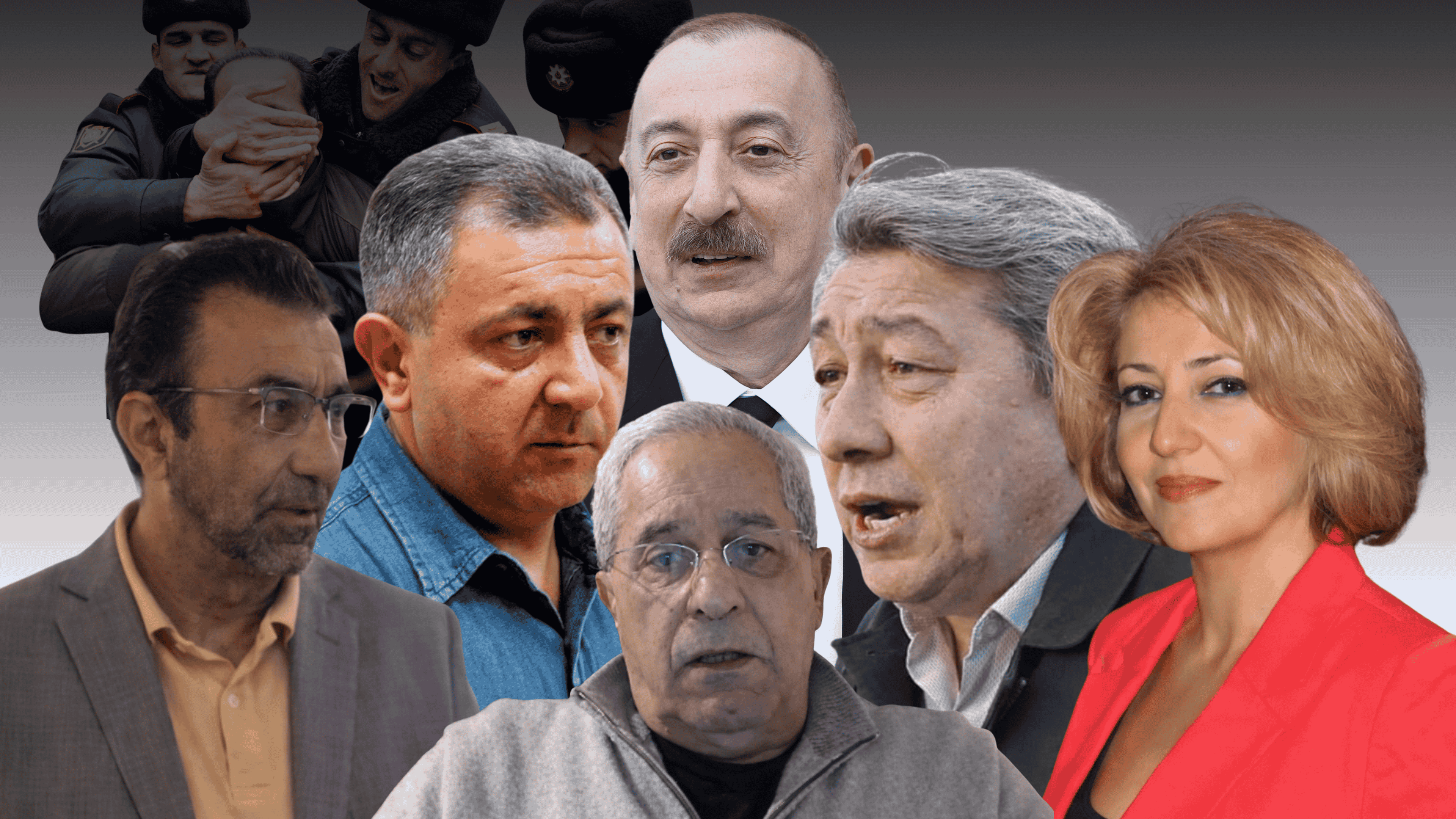
The reports therefore cover different subjects, but within a single week they touch on three sensitive areas for the Azerbaijani state: domestic political control, relations with international partners and the historical narrative surrounding Karabakh. Baku sees them as part of a single attack not because their content is similar, but because all four diverge from the international image that the Azerbaijani authorities seek to project.
Is the “information campaign” proven?
The MEDİA Agency statement does not specify which facts in the reports are incorrect, nor does it provide evidence that could indicate coordination between the news organisations. At the same time, it claims that the authors did not attempt to establish Azerbaijan’s official position.
However, The Independent says it sent a request for comment to Azerbaijan’s Foreign Ministry. The BBC quotes the president’s position and says it also sought comment from the Penitentiary Service.
A separate response to each report would have been more convincing. In the case of the Guardian, the authorities could have pointed out factual inaccuracies in its account of the historical context. For The Independent, they could have provided a documented response to the claims about the charges against Karimli and his conditions of detention. The BBC could have received alternative data on the criteria for including people on political prisoner lists and on sentencing statistics. TVP could also have been asked to give the Azerbaijani side a right of reply on air.
Grouping all the reports together in a single statement and presenting them as a politically motivated campaign erases the differences between them. Moreover, the absence of specific rebuttals does not end the debate. Instead, it creates the conditions for further reporting.
The confrontation here is not simply a conflict between “Baku and Western media”. The main problem is that the state places verifiable factual errors, editorial assessments, statements by human rights groups and even a film review in the same political category. This approach does not weaken the criticism. On the contrary, it creates the impression that different news organisations really are acting as a united front.
Although the agency said it intended to take “necessary measures”, it did not specify whether this meant seeking corrections and a right of reply, filing an official complaint or taking other steps.
Azerbaijan and foreign media