Armenia marks 35 years of independence: the country’s gains and losses, according to AI






Armenia’s 35 years of independence: an AI assessment
Armenia is marking Independence Day. Thirty-five years ago, on 21 September 1991, an overwhelming majority of the population (94.39%) voted in a referendum to leave the USSR and establish an independent democratic state.
JAMnews asked artificial intelligence to analyse Armenia’s journey over the past 35 years.
According to the AI assessment, the past 35 years present a highly mixed picture. Armenia has made significant progress in democratisation, international integration and the development of state institutions.
At the same time, Armenia has suffered major losses. Wars have cost thousands of lives, driven emigration and resulted in the loss of territory. Above all, the country has yet to fully resolve its security concerns.
“The greatest achievement is the survival of an independent state. The greatest loss is the human cost and demographic price Armenia has paid over 35 years,” the AI concluded.
- Pashinyan’s salary to nearly double as Armenian civil servants set for pay rises from 2027
- Armenia’s anti-corruption campaign: law on confiscating illicit assets takes effect
- Armenian citizenship to become harder and five times more expensive under Interior Ministry draft
From survival to state-building
“35 years can be divided into three major stages.
1991–1998: survival and state-building — the declaration of independence, war, blockade, an energy crisis and economic collapse, but also the creation of the foundations of state institutions.
1999–2017: stabilisation and economic growth — macroeconomic stability, rapid growth and infrastructure development, but also emigration, corruption, a closed political system and the unresolved Karabakh conflict.
2018–2026: democratic transformation, war and a new foreign policy strategy — the 2018 “Velvet” Revolution, the 2020 war, the loss of Nagorno-Karabakh, the exodus of Karabakh Armenians from their homeland in 2023, the arrival of more than 100,000 forcibly displaced people in Armenia, and efforts to build a new security system and new foreign policy relationships.”
Key achievements
“Building an independent state”
The greatest achievement is that Armenia has existed for 35 years as an internationally recognised independent state, with its own Constitution, state institutions, army, currency, diplomatic system and international commitments.
Developing an international presence
Armenia joined the UN in 1992 and later joined numerous international organisations. This means that the Armenian state acts as an independent subject in international relations and makes its own decisions.
Building an army and defence system
During the war of the 1990s, Armenia established its armed forces. This became one of the key institutions underpinning its independent statehood.
Economic recovery and long-term growth
After the severe crisis of the early 1990s, the economy began to recover in 1994, followed by rapid growth in the 2000s. According to the World Bank, Armenia’s economy grew by an average of around 6.3% a year between 2000 and 2023. During this period, the economy shifted significantly from agriculture towards industry and services.
Development of the technology and services sectors
IT, services, finance and tourism now play a much larger role in the economy than they did during the early years of independence. This is particularly important for a small landlocked country.
Some improvement in living conditions
The World Bank notes an increase in life expectancy and improvements in several social indicators. Extreme poverty has been virtually eliminated. However, “ordinary poverty” remains a serious problem, particularly in rural areas.
Political change and the ability to transfer power
The peaceful transfer of power in 2018 demonstrated the potential for mass civic mobilisation and political change. Subsequent elections, including the 2021 early parliamentary election, were competitive and well organised, according to international observers, although political polarisation persisted.
Strengthening civil society and national identity
Independence created an environment in which the Armenian language, state symbols, national culture and the idea of statehood became the foundations of an independent country rather than a Soviet republic.”
Losses and setbacks
“Human losses
The First Karabakh War, the four-day war of 2016 and especially the 2020 war claimed thousands of lives and left deep trauma across Armenian society.
Consequences of the 2020 war
Armenia lost control over a significant part of the territories of Nagorno-Karabakh and its previous security system. After 2020, Armenia’s security environment changed radically. In 2024, the prime minister himself described 2020 as a moment when Armenia found itself on the verge of losing its independence.
The loss of homeland for Karabakh Armenians and population displacement
After the military escalation in September 2023, more than 100,000 people moved to Armenia. The International Committee of the Red Cross noted that Armenian social services and the accommodation system struggled to cope with such a large influx of displaced people. For Armenian society, this became not only a territorial loss but also a major demographic, social and psychological one.
Emigration and demographic problems
Mass emigration, which began in the early years of independence, became one of Armenia’s most persistent long-term problems. The World Bank identifies low birth rates, an ageing population and significant emigration as serious constraints on the country’s economic future.
Social inequality and poverty
Despite years of strong economic performance, economic growth has not always translated evenly into higher living standards. According to the World Bank, as of 2022, around half of the population still lived below the international poverty line of $6.85 a day. This threshold applies to upper-middle-income countries.
Weak institutions and political polarisation
Over 35 years, Armenia has not achieved full judicial independence, eliminated corruption or overcome political polarisation. A 2026 analysis by Human Rights Watch says that, despite reforms, serious problems remain concerning the independence of the judiciary, the media and the police, as well as the protection of human rights.
Excessive reliance on external security partners
For 35 years, Armenia has had to build its security system amid difficult regional and geopolitical conditions. Its long-standing reliance on Russia for security and, in recent years, the need to diversify its partnerships show that full strategic autonomy remains a work in progress.”
Independence as a fact
“Armenia has managed to create and preserve an independent state, but it has not yet transformed that independence into a state system that is sufficiently secure, demographically sustainable and socially prosperous.
It is important to distinguish between independence as a legal and statehood fact and independence as a real characteristic of a state. Armenia achieved the former in 1991. The latter — economic, military, demographic, institutional and diplomatic independence — remains an ongoing process.
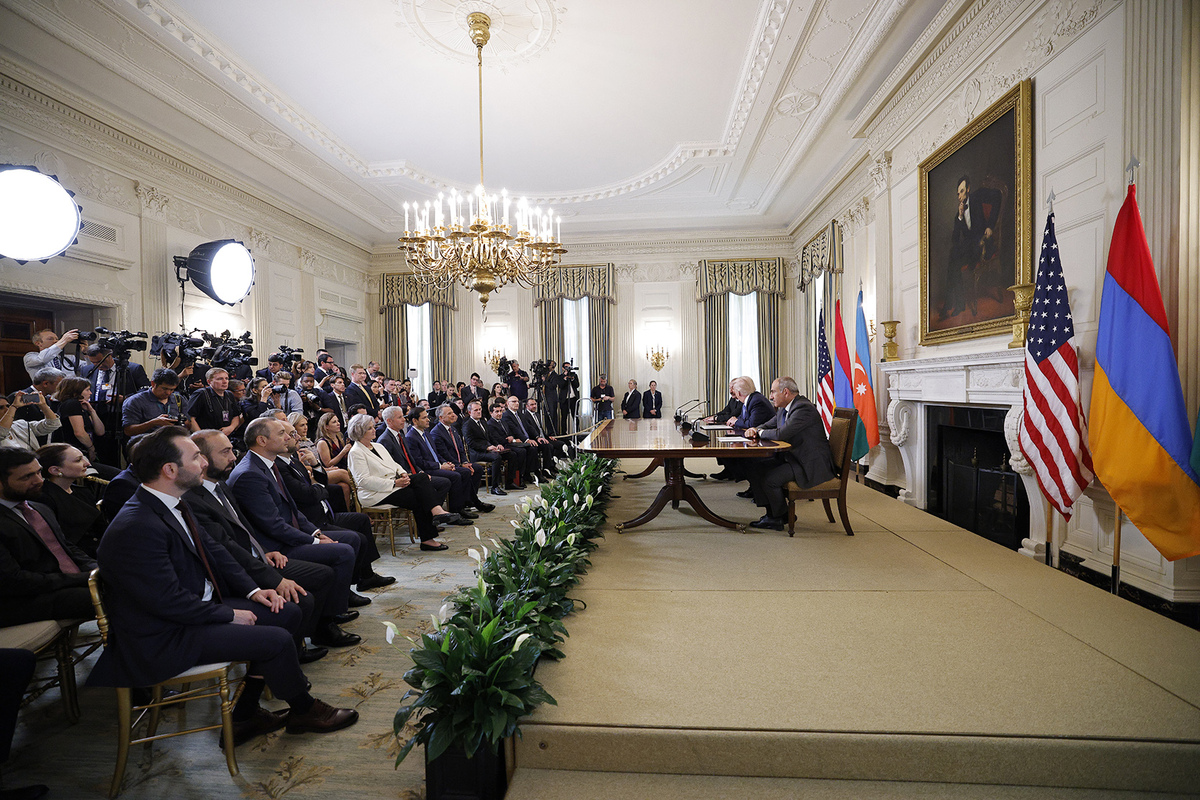
At the same time, the picture of recent years is not limited to losses. In 2025, Armenia and Azerbaijan made progress towards a peace settlement. The prospect of restoring regional ties has also created an opportunity for a new stage to begin, although it is still too early to assess its long-term results.”
Armenia’s 35 years of independence: an AI assessment