Aliyev confirms secret Russia–Germany talks in Baku during Berlin visit, urges Europe to invest in Azerbaijan






Ilham Aliyev’s Berlin briefing
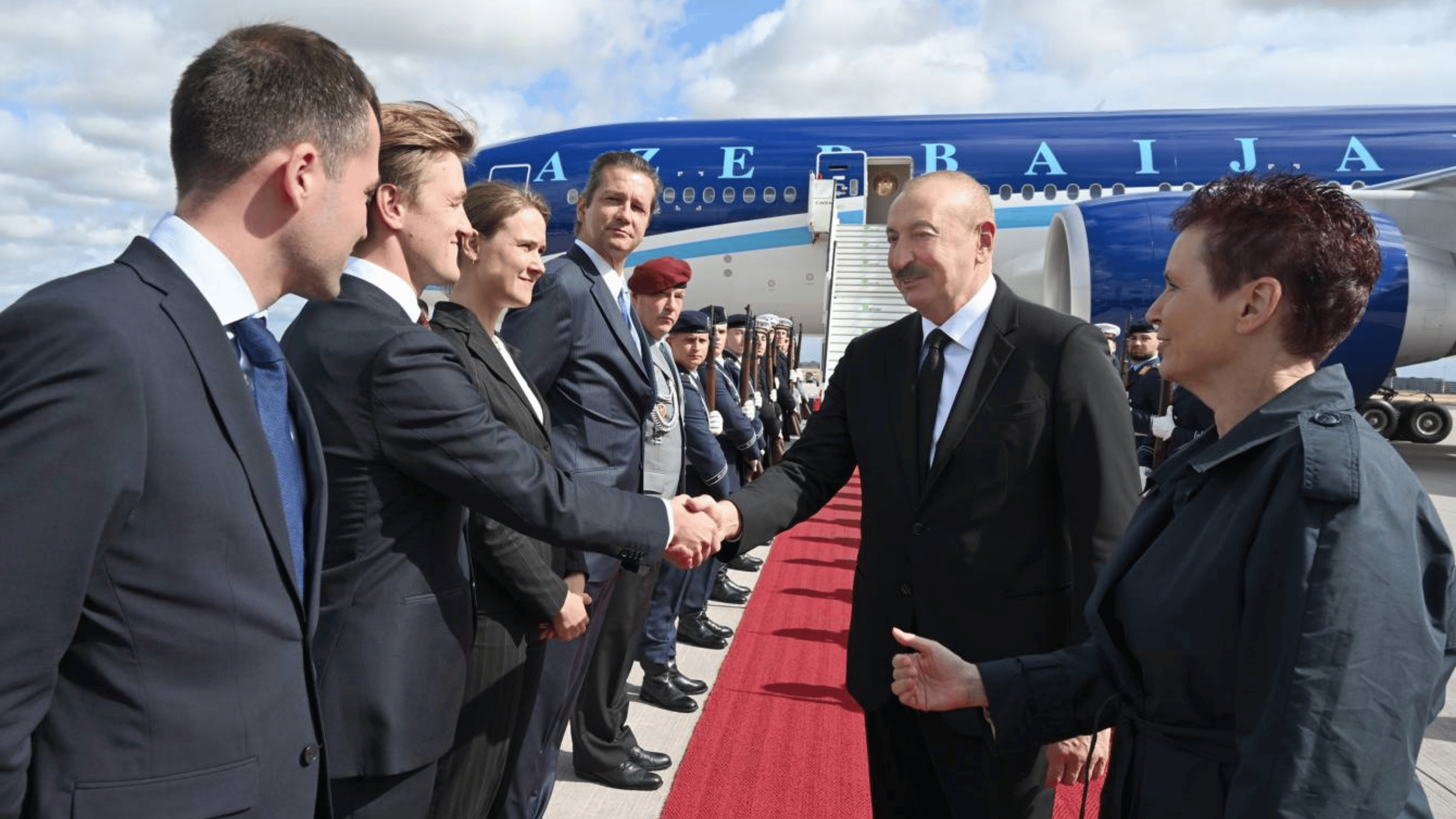
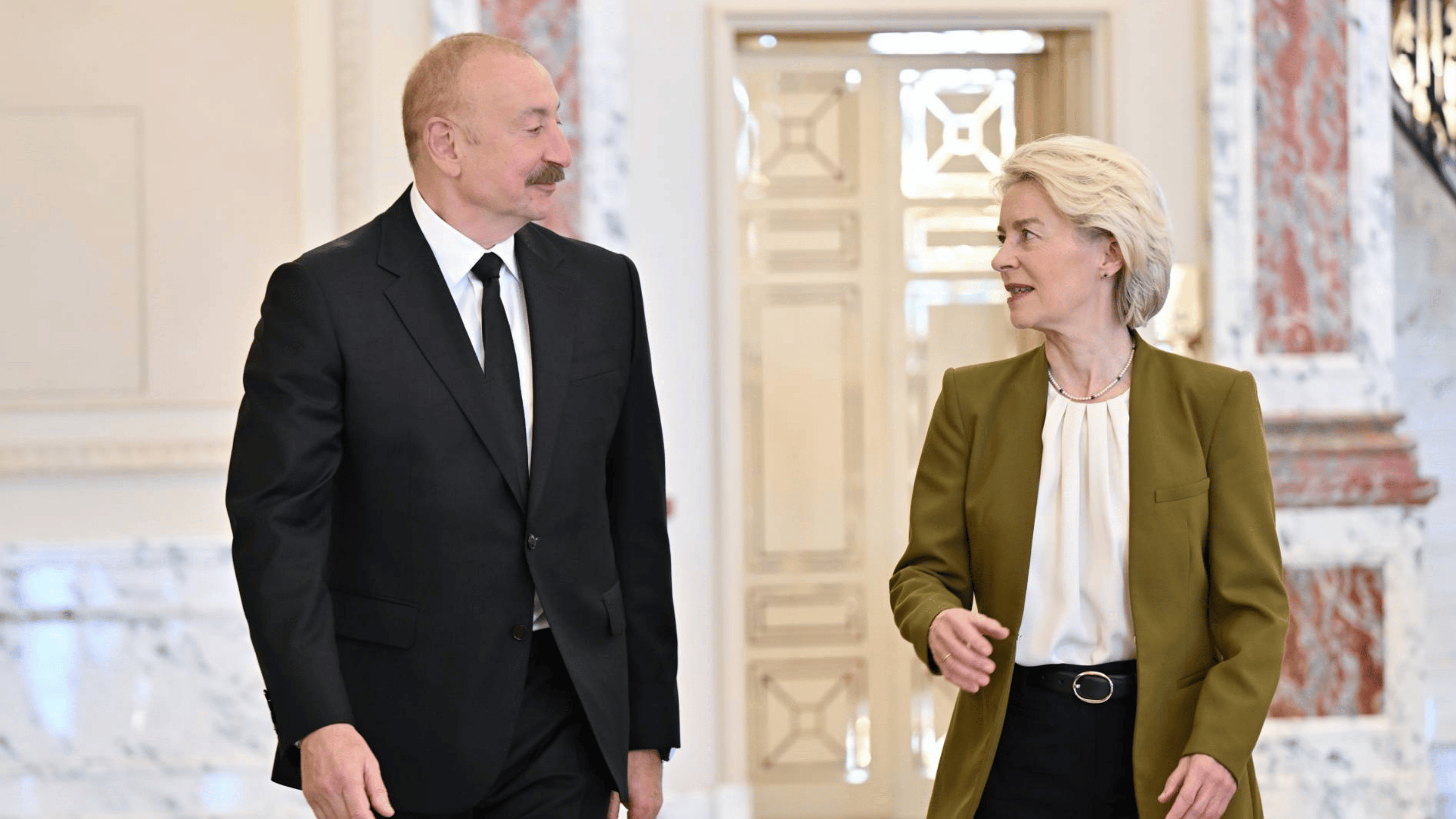
At a joint press conference with Friedrich Merz in Berlin on 21 July, Ilham Aliyev appeared to be addressing three different audiences at once.
To Berlin, he signalled that Azerbaijan does not intend to serve as a venue for other countries’ secret diplomacy. To Brussels, he argued that if Europe wants more Azerbaijani gas, it should also help finance pipelines and interconnectors. And to Moscow and Kyiv, Aliyev sought to demonstrate that Baku remains committed to its multi-vector foreign policy while insisting on setting its own rules.
A strategic agenda signed later that day formally enshrined this political course.
Secret meeting in Baku: what is known and what remains speculation
According to Aliyev, after The Times published its report, the Azerbaijani authorities checked records held by the State Border Service and confirmed that Ronald Pofalla and Matthias Platzeck arrived in Baku from Berlin on 12 July and left on 14 July. During the same period, Viktor Zubkov and Valery Fadeyev flew to Baku from Moscow.
Aliyev said Azerbaijan had received no prior notification from either Germany or Russia and that “Azerbaijan’s territory was used without the knowledge of the authorities”. He stressed that Baku had no confirmed information about the substance of the meeting, but said the travel records suggested that such a meeting could have taken place. He added that if its purpose had been to help end Russia’s war against Ukraine, Azerbaijan could only welcome such efforts.
Merz, for his part, denied any involvement by the German government, saying he had no knowledge of such a meeting.
Investigations by German media describe the contacts as an informal continuation of the Petersburg Dialogue. According to ARD/RBB and Die Zeit, Baku has hosted unofficial meetings since 2024 between former German politicians and figures close to Vladimir Putin.
RBB reported that German security agencies view the meetings as a possible Russian influence operation. Roderich Kiesewetter, a member of the CDU, described them as “shadow diplomacy” that undermines Germany’s position on Ukraine.
At the same time, some participants and their supporters argue that channels of dialogue should remain open even during periods of heightened tensions.
Ukrainian sources have raised a different concern: if the discussions were about the war in Ukraine, why was Ukraine itself not represented at the table? That question remains unanswered, and any conclusions at this stage remain speculative.
Russia’s response
Moscow’s initial reaction was predictable and came in the form of a warning. Alexander Tolmachyov, a member of Russia’s State Duma, told Lenta.ru that Baku was “following Armenia’s path”, arguing that closer ties with Europe had brought neither Ukraine nor Armenia success.
That prompted a sharp response in an article published by Minval.az. The author argued that Azerbaijan had never accepted Moscow’s vision of a “big brother”, had chosen not to join the CSTO, and had consistently pursued a multi-vector foreign policy. In the author’s view, the strategic partnership with Germany does not represent “turning away from Russia” but rather reflects a pragmatic approach. Notably, Baku has framed the issue not in defensive terms but as its sovereign right to make its own decisions.
Other assessments have been more nuanced. German critics view the meetings in Baku as evidence of weaknesses in Berlin’s Russia policy and an attempt to revive old German-Russian political ties.
A different perspective emerges in analyses by the Kyiv Post and the Carnegie Endowment for International Peace. They argue that while Baku continues to support Ukraine’s territorial integrity and expand cooperation with Kyiv, it has not completely severed channels of communication with Moscow, seeking instead to preserve room for diplomatic manoeuvre.
Taken together, the Berlin briefing suggested not so much a decisive “pivot to the West” as a policy of careful balancing. Azerbaijan’s energy interests are increasingly tied to Europe, its security calculations continue to take Russia into account, and its stated position remains grounded in support for Ukraine’s territorial integrity.
Call for investment in gas infrastructure
The second major theme of the Berlin briefing attracted less controversy but carried greater strategic significance. Aliyev announced that Azerbaijan had begun supplying natural gas to Germany this year. Under a ten-year contract, initial deliveries amount to around 1.5 billion cubic metres annually. However, he said any increase in volumes would depend on two factors: additional purchase commitments and expanded infrastructure.
According to Aliyev, both the TANAP and TAP pipelines are already operating at full capacity, leaving no spare transit capacity. Expanding infrastructure within Europe and building new interconnectors will therefore require additional investment. He singled out the European Investment Bank’s decision to stop financing oil and gas projects under the EU’s green transition policy as one of the key obstacles.
The ten-year gas supply agreement between SEFE and SOCAR reinforces this trend. In June, Germany’s ambassador to Azerbaijan, Ralf Horlemann, said contracts signed by German companies provide for annual imports of around 2 billion cubic metres of Azerbaijani gas.
The political message was clear: Baku is urging Europe to help finance the expansion of gas infrastructure. Merz likewise stressed that Germany has a strong interest in diversifying its gas imports.
The scope for increasing gas deliveries to Europe via the Southern Gas Corridor now depends less on political declarations than on whether European countries are willing to invest in new infrastructure. The contradiction is evident: Europe needs additional gas supplies to strengthen its energy security, yet remains reluctant to finance gas projects as part of its green transition agenda.
Declaration on a Strategic Partnership
The Joint Declaration on the Strategic Agenda of the Bilateral Partnership between the Republic of Azerbaijan and the Federal Republic of Germany, signed on 21 July, is a wide-ranging document drafted in technical language.
It outlines cooperation across a broad spectrum of areas, including high-level political dialogue and diplomatic consultations; the German-Azerbaijani High-Level Working Group on Trade and Investment; energy cooperation, including natural gas supplies; renewable energy; low-carbon hydrogen; energy efficiency; transport connectivity and infrastructure; security and defence; humanitarian demining; as well as culture, education, science and innovation.
The declaration also reaffirms Germany’s support for the normalisation of relations between Azerbaijan and Armenia and for peace initiatives launched after the Washington summit on 8 August 2025. It further highlights the “strategic importance” of the partnership between Azerbaijan and the European Union.
What does it mean?
First, the agreement formally elevates relations between Azerbaijan and Germany to the level of a strategic partnership.
Second, Baku is signalling that its cooperation with Germany extends well beyond natural gas. The agenda also includes renewable energy, transport and logistics, industrial modernisation, science and innovation.
Third, Berlin appears to be viewing the South Caucasus not only through the lens of values and norms, but increasingly in terms of energy security and transport connectivity.
In other words, the declaration is more than a symbolic political statement. It provides a framework for expanding German-Azerbaijani cooperation and institutionalising the European dimension of Azerbaijan’s foreign policy.
Ilham Aliyev’s Berlin briefing