New Social Democratic Party formed in Georgia


Social Democratic Party in Georgia
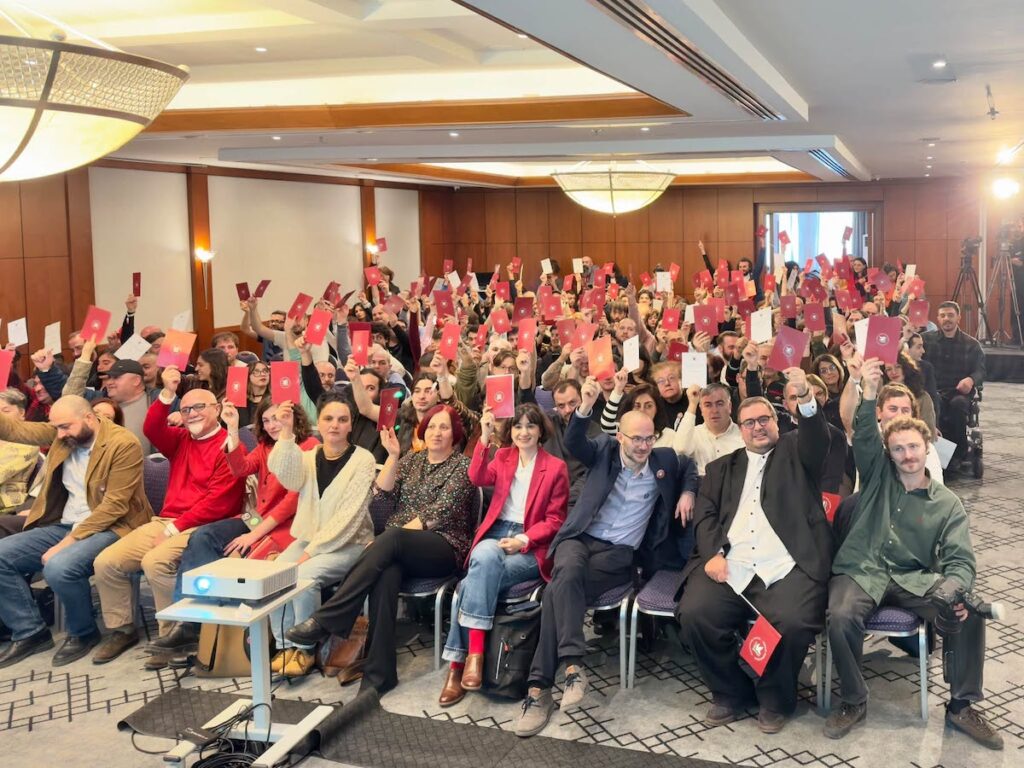
Georgia’s political movement For Social Democracy held a congress on 15 November at which it formally established the Social Democratic Party.
The founders linked the creation of the party to the country’s political and social crisis.
They argued that political and economic inequality, the collapse of democratic institutions and Georgia’s isolation from the European Union were contributing to growing authoritarianism.
The party says its aim is to build a politically and economically just state.
The new political force brings together representatives of various sectors, campaigners for social justice, workers’ rights and environmental protection, students and Georgian citizens living abroad.
At the congress, a 16-member governing body was elected to oversee the party’s activities for the next year. The party’s charter was also approved, and members of its audit commission were elected.
“Overcoming despair and nihilism”: Party’s key priorities
The new party says its aim is to “overcome the despair and nihilism that have spread across the country, bring citizens who have been excluded from politics back into political life and place society’s real problems at the centre of the political agenda”.
“Georgia has managed to bring repressive rule to an end in the past. But it has yet to change the political and economic system that repeatedly plunges the country back into authoritarianism,” Sofo Verdzeuli, one of the leaders of the For Social Democracy movement, said at the founding congress.
She identified the protection of human dignity, citizens’ rights and the country’s sovereignty as the party’s main priorities.
“This is a response to policies that seek to control citizens through fear. The party will oppose the use of people as political instruments,” she said.
The party’s priorities include fair wages, affordable healthcare and education, social protection and environmental protection.
Its programme calls for the democratic transformation of the political and economic system, a fair justice system, stronger local democracy and decent working conditions.
Verdzeuli said Georgian society was living under Russian occupation and understood the value of peace. However, she stressed that peace meant not only the absence of war but also social justice.
“We believe democracy cannot have a future without social justice, but neither can justice exist without a democratic political system,” Verdzeuli said.овать без демократической политической системы», – сказала Вердзеули.
- Georgia without an opposition? How ruling party moved to ban its opponents through constitutional lawsuit
- Singer fined over song. What other forms of dissent can be punished in Georgia
- Scenes from the protests in Georgia: video and photos
The new political force aims to represent the interests of 99% of the country’s population.
This was stated by Gota Chanturia, a participant in the founding congress.
“Society is constantly being told that the main threat to the country comes from various minorities, who must therefore be restricted or excluded. In reality, the threat comes from financial corporations and the business elite, which have been damaging the country’s resources and future for decades,” Chanturia said.
He called for cooperation with teachers, students, cultural workers and people from a range of professions, including metro drivers, couriers, taxi drivers, doctors and nannies.
Chanturia placed particular emphasis on environmental and animal rights activists. He said the party aimed to bring together various social and environmental movements under a single political programme.
“This is a demand to live in a country where there is justice for people, animals and the entire environment,” he said.
Chanturia stressed that uniting these groups could create a force capable not only of resisting but also of transforming the country.

History of the Social Democratic Party’s formation
The new political project, For Social Democracy, dates back to 17 February 2025, when people from various professional backgrounds gathered at a monument to writer Egnate Ninoshvili in Tbilisi on his birthday to announce the creation of a new left-wing political movement.
According to its founders, the movement emerged from growing cooperation between left-wing groups in the periods before and after the October 2024 parliamentary elections.
The alliance initially brought together more than 100 people. According to information published in November 2026, its membership has since grown to more than 200.
The movement’s founders include constitutional law expert Vakhushti Menabde, political scientist and left-wing activist Levan Lortkipanidze, Tatia Dvali, Elene Pasuri and others. Its members also include Sofo Verdzeuli, Gota Chanturia, Giga Bekauri, Nikoloz Tsikaridze, Maia Barkaia and Ia Eradze.
The party’s core membership consists of people from a wide range of professional and civic backgrounds, some of whom have spent years working on human rights, labour rights, social justice and environmental protection.
More about the party’s prominent founders
One of the most prominent founders of the Social Democratic Party is Vakhushti Menabde, an expert in political law and associate professor at Ilia State University’s Faculty of Law.
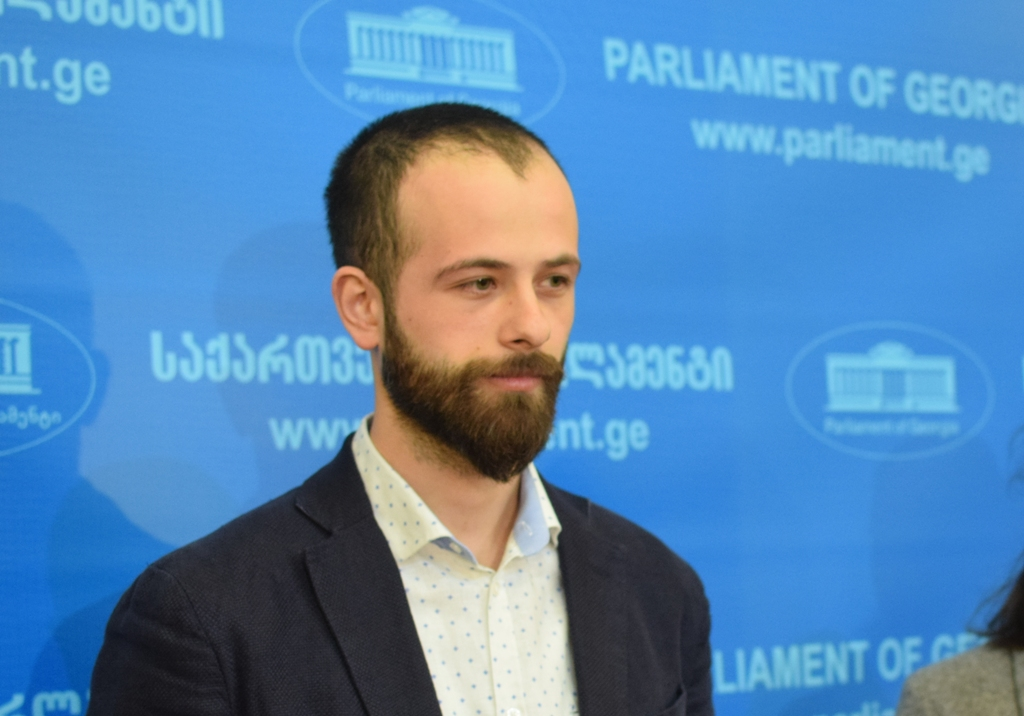
Vakhushti Menabde has worked for many years in the fields of human rights and democratic institutions, including at the Georgian Young Lawyers’ Association (GYLA), the Public Defender’s Office and the Human Rights Education and Monitoring Centre.
Menabde also participated in the constitutional reform process and represented citizens before the Constitutional Court for many years.
Another prominent figure in the movement is Levan Lortkipanidze, a political scientist, researcher of political parties and left-wing activist.
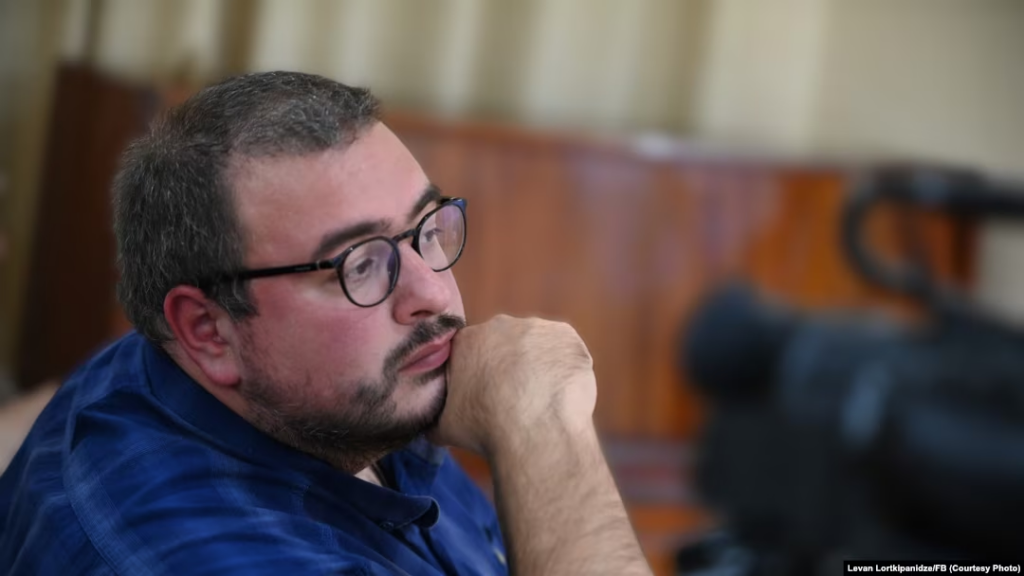
Levan Lortkipanidze was involved in founding and running several socialist and green youth movements in Georgia in the 2010s. His academic and civic work has focused on left-wing political ideas, socialist heritage and green politics.
Lortkipanidze has worked at the Caucasian House and contributed to the publication of Georgian-language left-wing political literature.
Sofo Verdzeuli, one of the movement’s leaders who spoke at the new party’s founding congress, works in the field of legal policy.
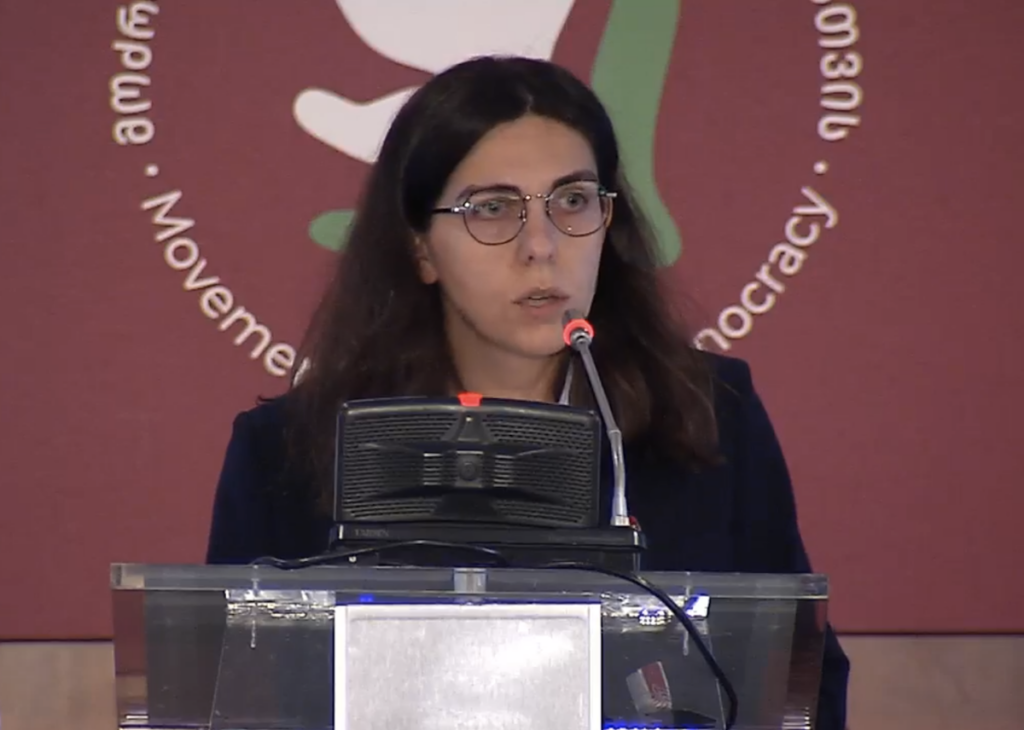
Sofo Verdzeuli is a co-founder of the online publication Commentary, alongside Vakhushti Menabde, and editor of its legal policy section.
Her work focuses on the analysis of legal and political issues.
Gota Chanturia, who delivered a speech at the founding congress on the social foundations of the new political alliance, is known for his civic activism.
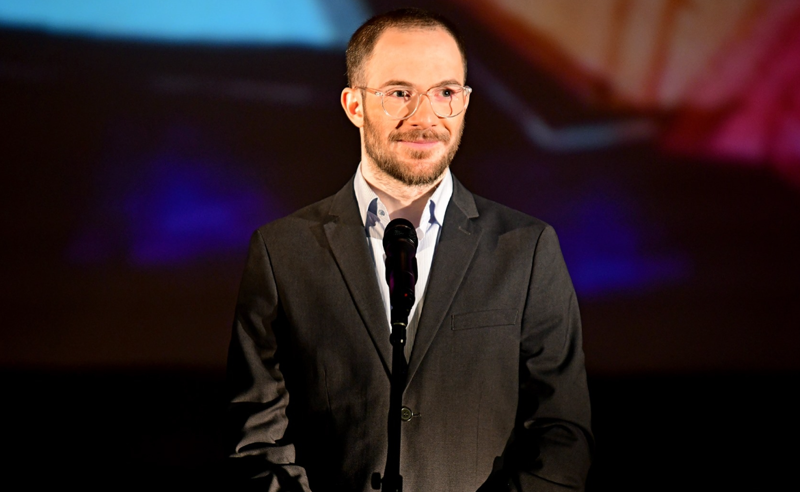
Gota Chanturia’s public statements and activism have focused on civic resistance and criticism of government policies.
The timing and context of the establishment of the For Social Democracy movement in Georgia are important to understanding its political identity.
In February 2025, when the movement was founded, Georgia was experiencing a peak in large-scale pro-European protests.
The founders said their aim was to give the protests a socio-economic dimension, rather than simply demand a change of government.
Their criticism was not limited to the current government. In its founding statement in 2025, the movement criticised the policies of both the ruling Georgian Dream party and the previous government led by former President Mikheil Saakashvili, which was in power from 2003 to 2012.
The founders of the For Social Democracy movement argued that under both administrations, political and economic power had been concentrated in the hands of a small number of groups, ultimately contributing to growing authoritarianism.
On 12 November 2026, the movement published a 48-page policy document.
It sets out specific proposals on progressive taxation, minimum wages, the right to strike in solidarity with other workers, the democratisation of the economy and expanded social protection.
The document draws on the social-democratic legacy of the First Georgian Republic.
- Political party ban case in Georgia
- Georgia’s population grows but ages: What has changed over past decade?
Social Democrats oppose ruling party’s bid to ban five opposition parties
Vakhushti Menabde and Levan Lortkipanidze have repeatedly spoken out against a lawsuit filed by the ruling Georgian Dream party with the Constitutional Court seeking to ban five opposition parties.
Background: The lawsuit was signed by 88 MPs from the ruling party and targets five opposition groups: Unity – National Movement, Coalition for Change, Lelo – Strong Georgia, Gakharia for Georgia and the Federalists.
Georgian Dream argues that the parties violated Article 23 of the Constitution, which prohibits political parties whose aim is to overthrow or forcibly change the country’s constitutional order. One of the arguments cited is the parties’ refusal to recognise the legitimacy of the current authorities. The lawsuit also accuses them of organising attempts to overthrow the government.
The United National Movement faces an additional accusation of undermining the country’s independence and violating its territorial integrity. This is based on allegations that the party, which was in power at the time, was responsible for the August 2008 war with Russia over South Ossetia.
All five parties deny the allegations. The court is expected to issue its final ruling by 24 June 2027. A simple majority is required to uphold the lawsuit, meaning the votes of four of the seven judges would be sufficient.
Speaking on Palitra News’ Political Space programme on 20 October, Menabde said banning a political party was one of the most consequential decisions in a democracy.
He argued that political parties represented sections of the electorate and that banning them deprived some citizens of the opportunity to participate in the political process. According to Menabde, a ban would require evidence that a party posed a genuine and persistent threat to democracy and the rule of law.
He also said that systematic human rights violations committed during the United National Movement’s time in power could not serve as grounds for banning the party today.
Lortkipanidze said the process of banning political parties was contributing to rising political tensions and confrontation within society. In his view, the situation created favourable conditions for manipulation by what he described as an oligarchic government.