Georgia without an opposition? How ruling party moved to ban its opponents through constitutional lawsuit






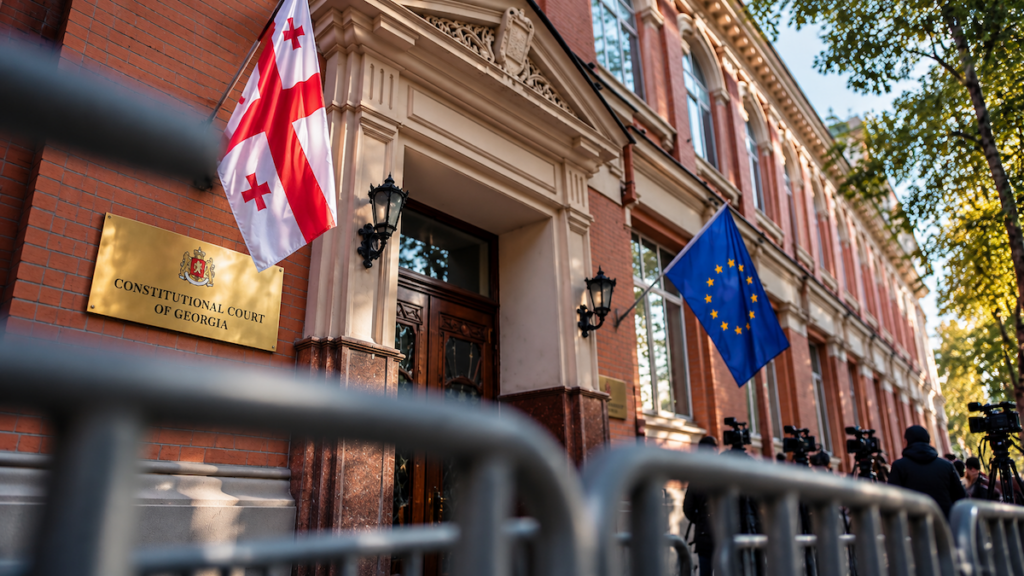
The ruling party Georgian Dream has asked Georgia’s Constitutional Court to ban five opposition parties. Four of them crossed the five per cent threshold in the 2024 parliamentary elections. According to official figures from the Central Election Commission, election stability risks, a total of 784,820 voters — 37.79% of those who took part in the election — voted for the four parties.
What legal grounds does the government cite for seeking to ban the five parties? What does the term “collective United National Movement” mean? How has the list of parties facing a ban changed, and under what conditions does European law allow such a ban? JAMnews examined the Georgian Dream lawsuit, relevant legislation and European practice to answer these questions.
Georgian Dream registered its latest lawsuit with the Constitutional Court on 24 September 2026, under case No. 1979.
The list of parties facing a ban includes Unity — National Movement, Coalition for Change, Strong Georgia — Lelo, Gakharia for Georgia and Federalists.
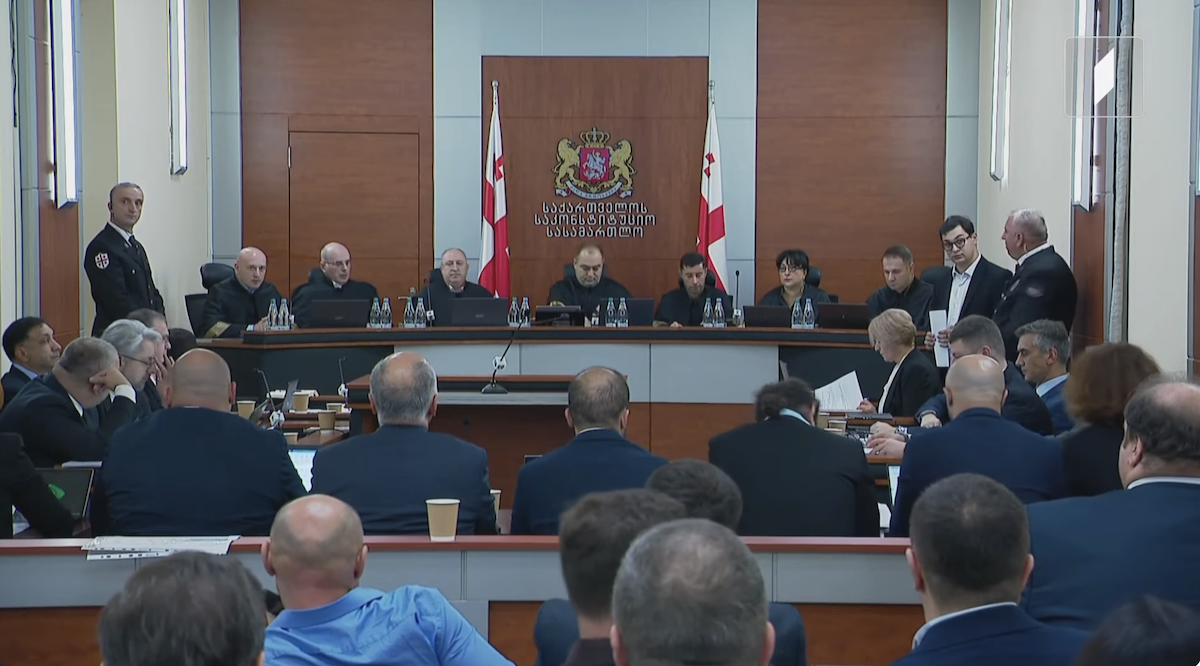
As of 5 October 2026, the court has not yet published a decision on whether it will accept the lawsuit for consideration on the merits, and it has not yet set a hearing date.
The First Chamber is hearing the case, with Vasil Roinishvili serving as the reporting judge. Under the law, the court must issue its final decision within nine months of the filing — no later than 24 June 2027.
- If the court upholds the lawsuit, all opposition forces that crossed the electoral threshold in the last parliamentary elections could disappear from the country’s political system.
Under current legislation, the authorities can also ask the court to ban another political organisation that acts as a “successor” to an already banned party.
An election campaign promise
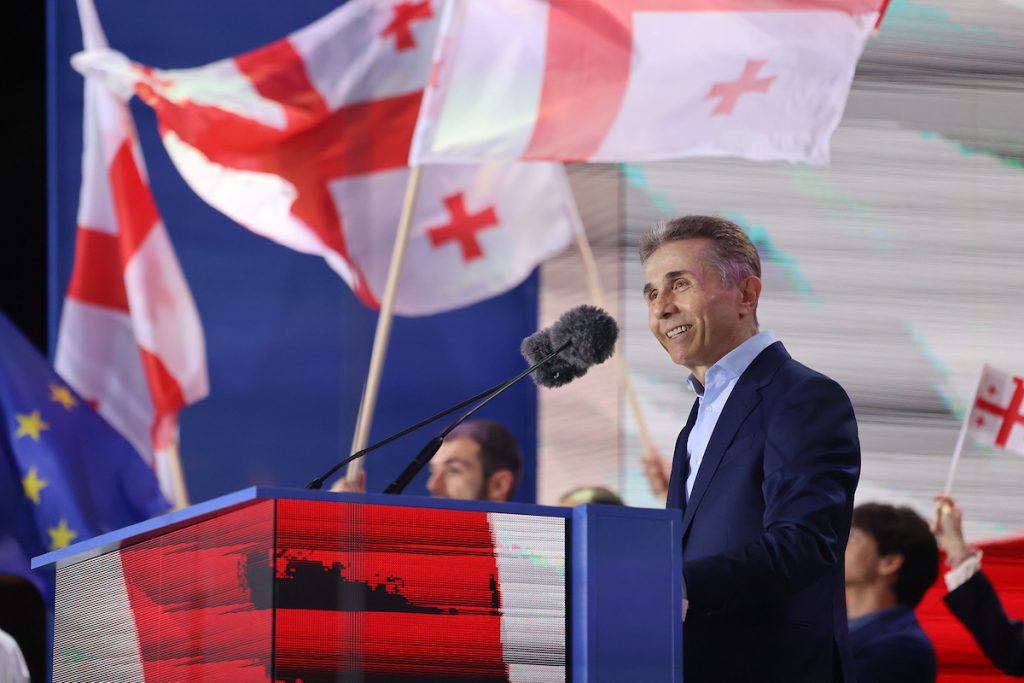
The idea of banning opposition parties did not emerge spontaneously within Georgian Dream. Its founder and honorary chairman, Bidzina Ivanishvili, publicly stated even before the 2024 parliamentary elections that, after the vote, the government would deliver a “strict political and legal verdict” to the “collective National Movement”.
- In other words, the idea of banning the opposition did not emerge after the election. It formed part of the election campaign itself.
“After the election, we will have the opportunity to deliver a strict political and legal verdict to the collective National Movement.”
Ivanishvili also explained why, in his view, this did not happen in 2012. He said the government did not yet have sufficient resources at the time:
“Over these years, we have accumulated enough resources to begin fully strengthening our sovereignty…”

A statement made almost six months before the election gradually turned into a concrete political plan. In August 2024, Georgian Dream openly announced that it needed a constitutional majority in the election to declare the “collective National Movement” illegal. The European Commission included the plan in its report that year.
Then EU High Representative Josep Borrell, speaking in the European Parliament, described the promise to ban opposition parties as one of the worrying developments during Georgia’s election campaign.
Two years later, that campaign promise has turned into a concrete lawsuit filed with the Constitutional Court.
Three lawsuits, three lists — how the number of parties facing a ban grew
The lawsuit changed three times over the course of one year.
The Constitutional Court registered the first lawsuit on 31 October 2025, under case No. 1912. Eighty-eight members of parliament signed it. They sought to ban three political forces:
- Unity — National Movement
- Coalition for Change
- Strong Georgia — Lelo
Later, on 21 April 2026, 89 MPs filed a second lawsuit, No. 1958. They added a fourth party, Federalists, to the list.
The list of parties facing a ban grew again in September 2026.
On 24 September, the Constitutional Court registered lawsuit No. 1979, signed by 88 MPs. This time, the authorities are seeking to ban five parties, including former Prime Minister Giorgi Gakharia’s party, For Georgia.
The law gives the Constitutional Court a maximum of nine months to rule on such a case. Each new lawsuit has therefore sparked debate over whether that period starts again from the beginning.
The authors of the lawsuit hope the Constitutional Court will complete the process by January 2027, by which time all five parties would have been banned.
Opposition representatives, meanwhile, argue that Georgian Dream is actually prolonging the process by adding new parties.
On what grounds can a party be banned?
Georgia’s Constitution sets out specific grounds for banning a political party.
It prohibits parties whose goals include overthrowing or forcibly changing the constitutional order, undermining the country’s independence or violating its territorial integrity. The authorities can also ban parties that promote war or violence or incite national, ethnic, regional, religious or social hatred.
Only the Constitutional Court can ban a political party.
The Georgian Dream lawsuit relies on these constitutional grounds and argues that the listed parties’ activities target the state.
A significant part of the argument draws on the findings of a temporary parliamentary investigative commission, known as the Tsulukiani Commission.
One of the lawsuit’s key arguments concerns the opposition parties’ refusal to recognise the legitimacy of the 2024 election, parliament and the government.
The plaintiffs also link the opposition parties’ actions to “sabotage”, calls for Western sanctions against the Georgian authorities and attempts to “punish” the country.
- The lawsuit, for example, treats the opposition’s refusal to recognise the election results and its view that Georgian Dream is an illegitimate government as “sabotage”.
Prime Minister Irakli Kobakhidze also cited the legitimacy of the government when explaining why the authorities added Gakharia’s party to the list.
He said that although the party, unlike its “fellow opposition parties”, agreed to take part in parliamentary work, it still does not recognise the constitutional order or the legitimacy of the government:
“It is true that they entered parliament, but to this day they do not recognise the constitutional order or the legitimacy of the government. Under these circumstances, the spirit of this political party’s activities is no different from that of the other relevant political parties,” he said.
Why these parties?
The lawsuit explicitly cites the parties’ political influence as a reason for seeking their ban. It also mentions other opposition parties, such as the Republican Party, which does not appear on the list, and says:
“At present, they do not have significant influence on politics or a realistic prospect of crossing the electoral threshold. Accordingly, at this stage, there is no apparent need to ban them.”
-
A brief overview of the five parties facing a ban:

Политические силы, объединенные “Грузинской мечтой” в единый “черный список”, имеют разное происхождение, историю и идеологию.
Некоторые из них действительно произошли из политической семьи «Единого национального движения». Некоторые пытались занять независимое пространство именно между ЕНД и «Грузинской мечтой». Политическое же ядро партии Гиорги Гахария и вовсе вышло из самой «Грузинской мечты».
«Единство — Национальное движение»
«Единое национальное движение» экс-президента Михеила Саакашвили — самая старая партия в этой пятерке и единственная, имеющая опыт пребывания у власти: в течение 9 лет она являлась правящей партией Грузии.
На выборах 2024 года ЕНД официально получила 211 216 голосов — 10,17%.
Уже долгие годы партия переживает кризис лидерства и на данный момент находится в режиме переходного управления. В августе 2026 года был создан временный управляющий совет, руководителем которого стал Иракли Павленишвили. Избрание постоянного председателя партии должно состояться позже.
Главным лицом, принимающим решения в партии, по-прежнему остается Михеил Саакашвили, который уже пять лет находится в тюрьме.
ЕНД позиционирует себя как резко проевропейская и евроатлантическая политическая сила. Её историческое ядро — это политическое наследие правительства Саакашвили. Именно правление ЕНД в 2004-2012 годах является главной мишенью большей части иска «Грузинской мечты» и обвинений комиссии Цулукиани.
Coalition for Change
Coalition for Change was created ahead of the 2024 elections and brought together several different political forces.
The coalition included Nika Melia and Nika Gvaramia’s Akhali party, Zurab Japaridze’s Girchi — More Freedom and Elene Khoshtaria’s Droa. Akhali is a pro-European centre-right liberal party. Girchi — More Freedom has a more distinctly right-libertarian economic platform, while Droa has a liberal and activist profile.
In the 2024 election, the coalition received the largest number of official votes among the opposition forces — 229,161, or 11.03%.
Most of its leaders had previously been associated with the UNM. The coalition brings together parties that broke away from the UNM or emerged independently at different times.
Strong Georgia — Lelo
The core of Strong Georgia is the Lelo party, which Mamuka Khazaradze and Badri Japaridze founded in 2019. Both entered politics after careers in business.
A broader coalition formed around Lelo in 2024. It included Ana Dolidze’s For People, Aleko Elisashvili’s Citizens and Levan Tsutskiridze’s Freedom Square. The coalition sought to present itself as an independent alternative to both Georgian Dream and the former ruling UNM.
The party has a pro-European, centrist-liberal profile. Economic development, institutional reform and Western integration have remained central themes in Lelo’s programmes.
In 2024, Strong Georgia officially received 182,922 votes, or 8.81%.
Gakharia for Georgia
Giorgi Gakharia’s party stands out from the other four parties in the group because of its origins.
Gakharia was not a member of the government under Mikheil Saakashvili. Instead, he served as economy minister, interior minister and eventually prime minister under Georgian Dream. He resigned as prime minister in February 2021 and founded his own For Georgia party in May.
The party initially sought to present itself as an alternative to both Georgian Dream and the UNM. It received 7.79% in the 2021 municipal elections and 161,521 votes, or 7.78%, in the 2024 parliamentary election.
Gakharia’s case shows how broadly Georgian Dream applies the concept of the “collective National Movement”: today, the category also includes a political force led by one of Georgian Dream’s former leaders.
Federalists
Federalists are the newest party among the five.
Giga Bokeria, Tamar Chergoleishvili and their allies founded the party in August 2024 after leaving European Georgia. Giga Bokeria chairs the party, while Tamar Chergoleishvili heads its Tbilisi organisation.
The party identifies individual freedom, human rights, European development, free competition, decentralisation and strong democratic institutions as its core principles. Politically, it is a pro-European and liberal force with a more right-wing economic platform.
Federalists did not take part in the 2024 parliamentary election.
Bokeria and Chergoleishvili’s group has a long-standing political conflict with Mikheil Saakashvili and today’s UNM.
At the same time, the lawsuit notes that the question of whether these parties are unconstitutional could arise in the future if they gain significant influence over the political process.
Initially, the “Federalists” also fell into the category of parties with “no realistic prospect of crossing the electoral threshold”. However, in March 2026, they joined the “Opposition Alliance”, a nine-party coalition. In April, Georgian Dream also called for the Federalists to be banned.
- Thus, according to the lawsuit, a party’s political influence is one of the factors that the plaintiffs themselves take into account when seeking to ban it.
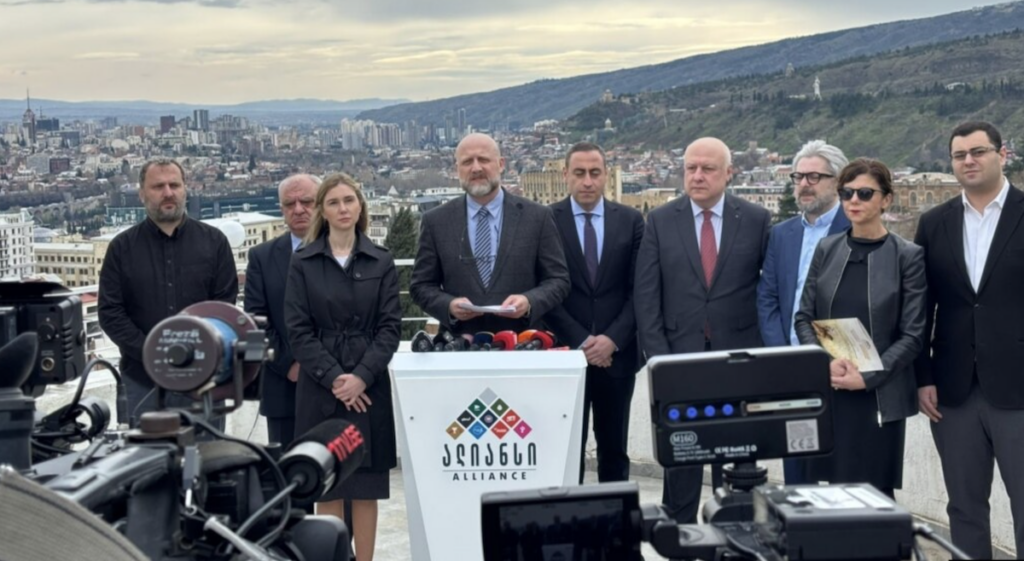
How all opponents of the government became the “collective National Movement”
The “collective National Movement” is neither a party nor a legally recognised political organisation. It is a political term coined by Georgian Dream that it has used for years to group various opposition forces into a single political camp, thereby portraying its opponents as a common “enemy”.
Over the years, the boundaries of this category have gradually expanded. It has come to include not only the National Movement itself (UNM, the former ruling party) and parties that broke away from it, but also forces that positioned themselves as alternatives to both the UNM and Georgian Dream. These include Mamuka Khazaradze’s Lelo and Giorgi Gakharia’s party, even though Gakharia himself previously served as prime minister for Georgian Dream.
The term then expanded further. Irakli Kobakhidze included not only opposition parties but also non-governmental organisations and media outlets as part of the “collective National Movement”:
“They are all in the same pot… All the radical opposition parties, all these radical NGOs, their radical media,” Kobakhidze said.
According to Georgian Dream’s current narrative, the political differences between these forces are not significant. The ruling party portrays them as different parts of a single network controlled from abroad. This logic brings together parties with different histories, leaders and political platforms under the “collective National Movement”.
The rhetoric has gradually acquired a specific political goal. In 2024, Kobakhidze compared removing the “collective National Movement” from the political system with banning the National Socialists in post-war Germany.
A year later, he said: “This crisis within the collective ‘National Movement’ must deepen, and it will deepen, ultimately leading to the complete destruction of the collective ‘National Movement’. Only then will Georgia develop a healthy democratic system.”
What does the attempt to ban the parties mean? Views
Representatives of the opposition parties themselves see the Georgian Dream lawsuit not as a separate legal dispute but as part of a broader process of restricting political competition.
Their main argument is that the government is using the courts to remove from the political arena forces that remain its electoral competitors.
Giorgi Sioridze, a representative of the Strong Georgia — Lelo alliance, points to the fact that the list of parties facing a ban has changed several times. He says that each new lawsuit restarts the nine-month period for considering the case.
He believes this allows the government both to retain the option of banning the parties and to delay a final decision.
Giga Lemondzhava, a representative of Coalition for Change, sees the party ban as a new stage in what he describes as authoritarian politics. However, he says political struggle cannot be ended simply by cancelling a party’s legal registration.
The National Movement takes a similar position. One of its leaders, Levan Khabeishvili, called on the opposition in a letter sent from prison not to focus entirely on the parties’ legal status: “Don’t get hung up on the issue of banning parties! They have banned the country!”
His message is that accepting the legal framework created by Georgian Dream would make the opposition dependent on an agenda set by the government. Political resistance, he argues, should not depend on a party’s registration.
The case of Giorgi Gakharia’s party is particularly notable. For Georgia took part in the 2024 election, later entered parliament and does not support violent struggle against the government. Given all this, the party’s MP Giorgi Sharashidze questions how the main constitutional grounds cited in the lawsuit apply to them:
“Unconstitutionality, calls for violence, calls to overthrow the government… What does any of that have to do with us? … We even entered parliament.”
Giorgi Gakharia, meanwhile, sees his party’s addition to the “blacklist” as part of a broader process. In his view, the authorities are trying to leave no functioning critical opposition within institutional politics:
“Regardless of whether they ban us or not, we will not back down in the struggle to restore Georgia’s democracy and protect its European and Euro-Atlantic path.”
The Federalists’ case exposes another contradiction. The party did not take part in the 2024 parliamentary election. Its leaders previously belonged to former President Mikheil Saakashvili’s political team, but they have been in sharp conflict with both Saakashvili himself and the UNM, the party he founded, for many years. Despite this, the authorities also regard them as part of the “collective National Movement”.
Party leader Tamar Chergoleishvili says banning a political competitor is unacceptable to her regardless of her attitude towards that competitor:
“Of course, we see all the other parties as competitors, but we want to defeat our competitors on a level playing field, through fair competition, not as a result of Bidzina Ivanishvili’s bans.”
Georgian Dream explains the process very differently.
According to the authorities, the issue is not about eliminating political competitors but protecting the democratic system. Georgian Dream MP Levan Machavariani argues that opposition parties that appear different on the surface are actually parts of the same political network. He says dividing them into “radical”, “semi-radical” and relatively “constructive” forces is artificial and serves as a way for a common political centre to assign them different tasks.
Prime Minister Irakli Kobakhidze follows the same logic. He says the government promised voters to “neutralise foreign agents” and is now fulfilling that promise:
“We made a promise to voters that we would neutralise foreign agents in our country, and we are genuinely fulfilling that promise.”
Kobakhidze also uses this argument to explain the ban:
“It is very important that the state make a decision on this issue — a decision that serves the national interest.”
When can democracy ban a political party?
Europe has precedents for banning political parties, but authorities treat such bans as an extreme measure, usually in very different circumstances from those in Georgia. Banning five parties at once would be unprecedented.
Under the standards of the Venice Commission, authorities may justify dissolving a party if it uses violence or advocates overthrowing the democratic constitutional order. A peaceful call to change the political system or constitution does not, in itself, justify a ban.
- European practice focuses not on how radical a party’s position is, but on whether its goals and actions pose a real threat to the democratic order and whether sufficient evidence supports that conclusion.
European case law also sets a high threshold. Spain banned Batasuna after authorities established its links to the ETA terrorist organisation. In Turkey, in the Refah Partisi case, the court considered evidence that the party sought to establish a theocratic system and had made statements linked to the use of force.
In Germany, meanwhile, authorities ultimately did not ban the NPD in 2017, even though the Constitutional Court found that the party’s goals were incompatible with the democratic order. However, the court concluded that the party lacked the real ability to achieve those goals.
What Europe says about Georgia’s case
The Parliamentary Assembly of the Council of Europe (PACE) has taken a particularly strong position on Georgia.
Even before the 2024 election, a PACE monitoring delegation said Georgian Dream’s calls to ban the opposition threatened political pluralism.
In 2025, PACE described the planned ban as targeting “virtually the entire functioning democratic opposition” and said such a move would effectively create a one-party system in Georgia.
In June 2026, the Assembly made its position even clearer.
Resolution No. 2664 says the initiative to ban “virtually all democratic opposition parties” is unacceptable. It says implementing the initiative would effectively create a one-party dictatorship in Georgia, which would be incompatible with membership in the Council of Europe. The Assembly called on the authorities to withdraw the lawsuit filed with the Constitutional Court.
The European Commission’s 2025 report also describes “serious democratic backsliding” in Georgia and says legislative and institutional changes threaten political pluralism. The report also notes that the ruling party has effectively consolidated control over the legislative and executive branches of government.
What happens if the parties are banned?
Banning the five parties could have consequences far beyond cancelling their names and legal registrations. The issue is what kind of political competition will remain in Georgia ahead of the next parliamentary election in 2028.
If the Constitutional Court upholds Georgian Dream’s lawsuit, all opposition forces that crossed the five per cent threshold in 2024 could disappear from the political arena. According to official Central Election Commission figures, nearly 800,000 people voted for them in total — about a quarter of all voters.
The current legislation also allows the authorities to extend restrictions to people linked to the banned parties. The court can prohibit them from establishing or joining other parties, standing as candidates in elections or holding political office. Authorities may also terminate the mandates of sitting elected MPs.
A new party name would not automatically provide a way around the ban. The law already includes the concept of a “successor party”. If a new political force substantially repeats the goals, activities or membership of a banned party, the court can ban it as well.
- Under the Georgian Dream scenario, all of this could effectively leave the country without political parties or politicians representing the current opposition.
The process is not taking place in isolation. In recent years, the government has also adopted several laws that have sharply tightened the legal environment for foreign funding, grants and the activities of NGOs and media outlets.
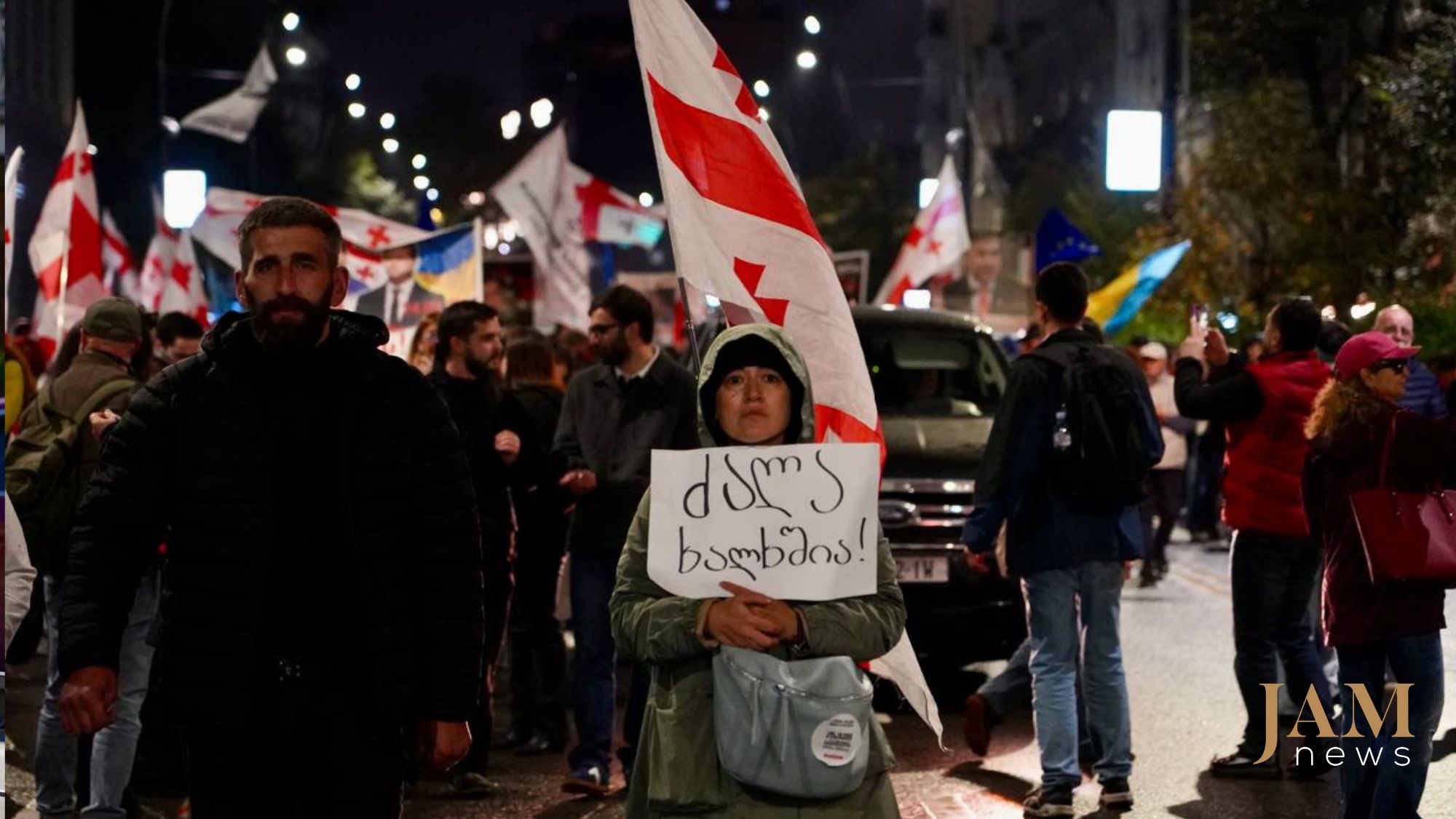
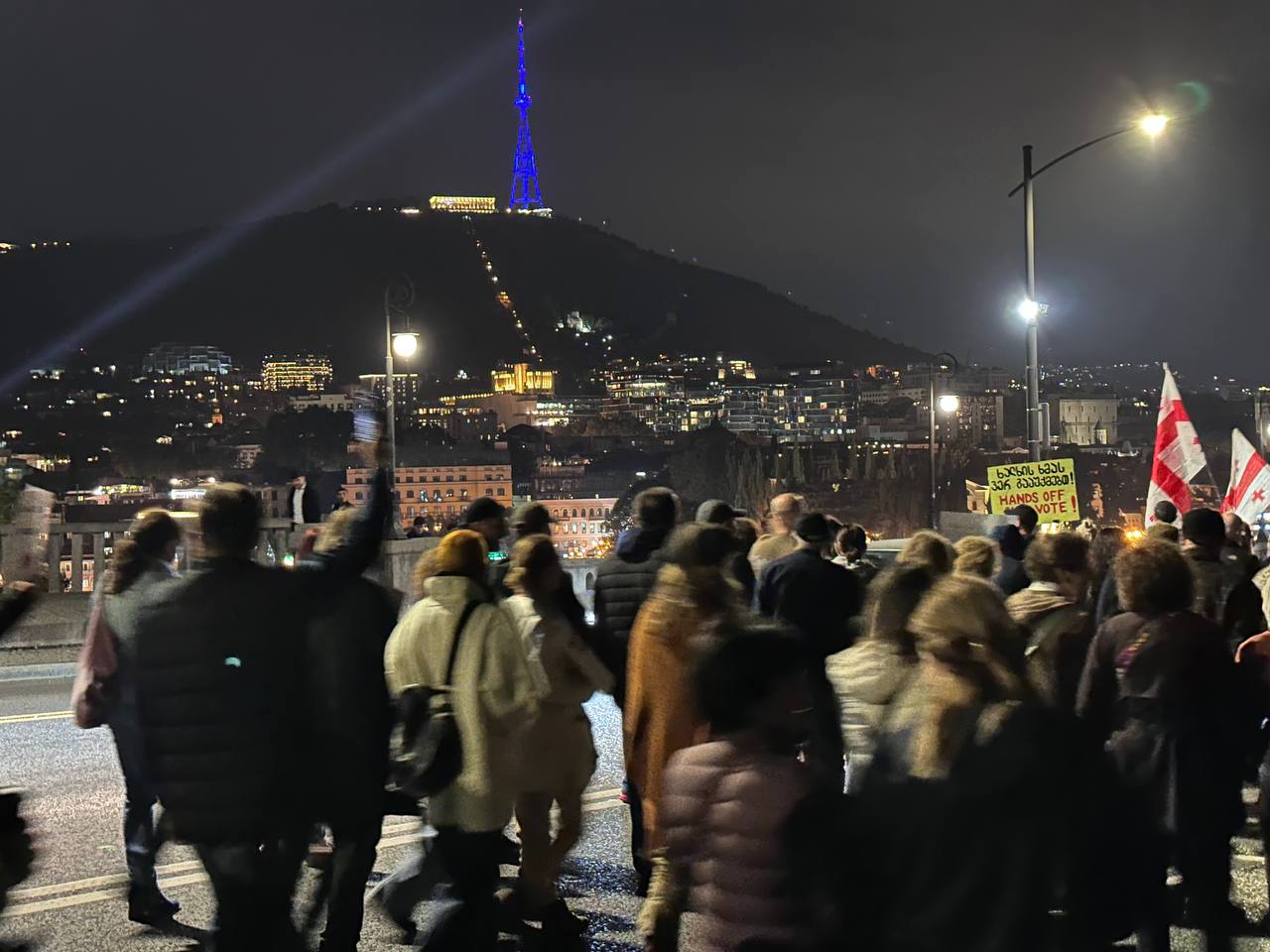
Meanwhile, anti-government protests continue in Georgia, and the political confrontation between the authorities and their opponents remains highly tense.
The 2028 election is key to understanding the political significance of these developments. If the court upholds the lawsuit and the current restrictions remain in force, Georgia could enter the next parliamentary election with all four opposition forces that crossed the threshold in 2024 legally dissolved. The mechanism for quickly banning possible successor parties would already be in place.
Ban on opposition parties in Georgia