Election watchdogs warn that new amendments to Georgia’s Election Code will undermine trust in election results


Three leading election watchdogs in Georgia – the Georgian Young Lawyers’ Association (GYLA), Transparency International Georgia and the International Society for Fair Elections and Democracy (ISFED) – have criticised the amendments to the Election Code proposed by the authorities.
The organisations say the proposed legislation would significantly restrict the right to challenge election results in court, weaken oversight of the electoral process and further centralise the powers of the election administration.
They identify the proposed change to the procedure for challenging the CEC’s final results protocol as one of the most problematic amendments. Under the new rules, the protocol could only be challenged in court to correct mechanical and technical errors.
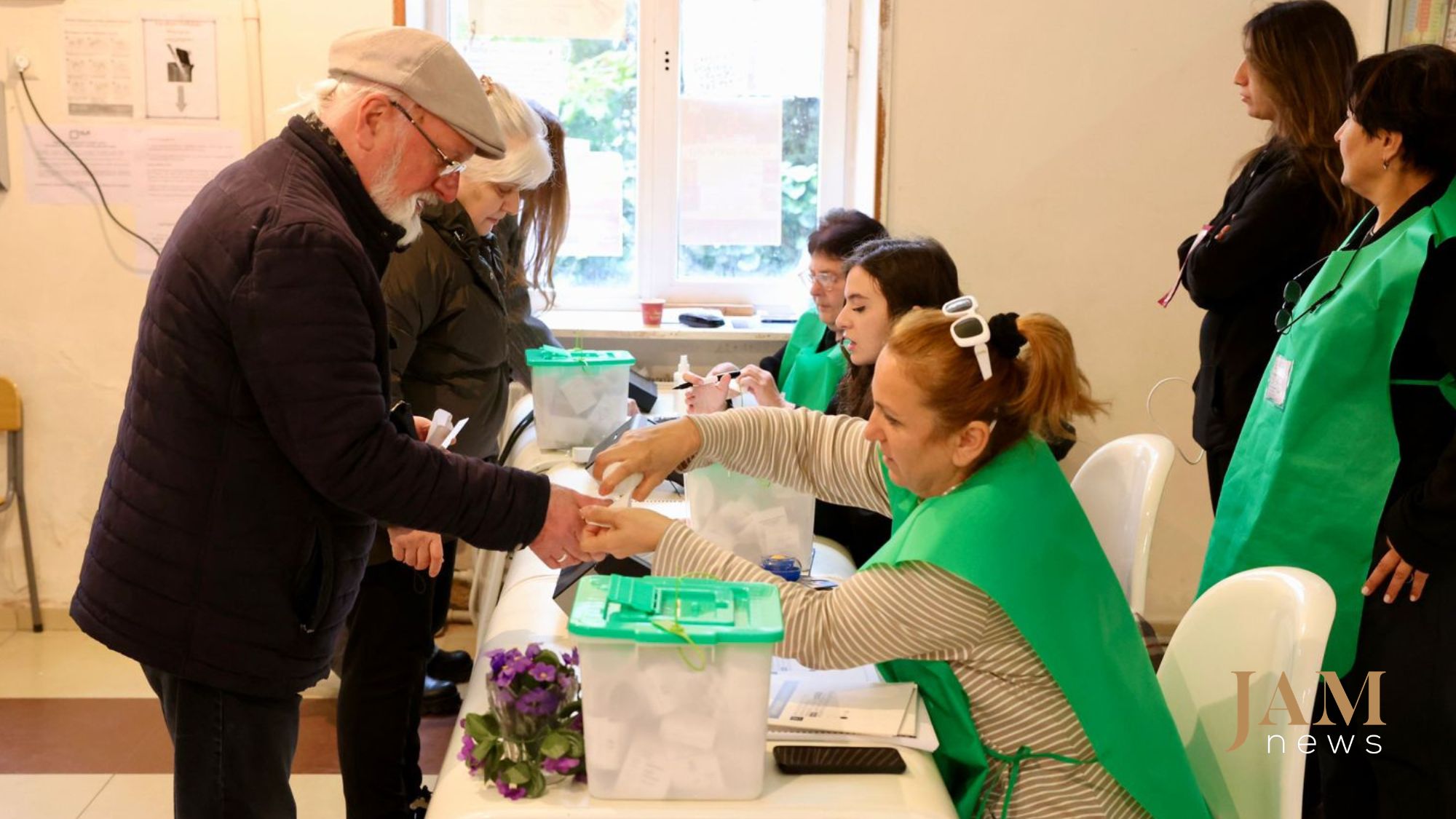
“Such a restriction at the stage of finalising election results rules out disputes over systemic violations and their cumulative impact on the outcome,” the organisations warn.
They explain that the systemic nature and scale of electoral violations can only become apparent through a joint analysis of data from different polling stations and the electoral process as a whole. Therefore, the possibility of challenging results at individual polling stations cannot replace full judicial scrutiny of the final election results.
The organisations also criticise the abolition of mandatory recounts at five polling stations, selected at random by district election commissions. In their view, this change will reduce the transparency of the electoral process and further undermine public trust in the official results.
Another controversial amendment concerns the registration of election observer organisations. Under the proposed rules, the authority to make decisions on registration would rest solely with the chair of the election commission. The organisations warn that this approach increases the risk of subjective and politically motivated decisions, as other commission members, including representatives appointed by political parties, would no longer have a say in the process.
The watchdogs also raise concerns about shorter deadlines for registering election observers and media representatives ahead of the second round of voting. They believe this could hamper the work of electoral stakeholders, observers and journalists.
The organisations have also criticised changes to the rules governing the allocation of free airtime for election campaign advertising. They say the proposed restrictions could further widen the gap between the ruling party and opposition parties, undermining political pluralism.
GYLA, Transparency International Georgia and ISFED note that the authorities did not hold public discussions or consult interested parties before drafting the legislative initiative. According to the organisations, this runs counter to electoral standards set by the Venice Commission.
The watchdogs also view the initiative in the context of the legislative practices that have taken hold in Georgia in recent years. They say legislation is increasingly tailored to serve the interests of the ruling group, while mechanisms for public oversight are steadily weakening.
“Without effective oversight and accountability, the state loses public trust and, instead of protecting the common interest, becomes a system that serves narrow group interests,” the organisations say.
What exactly will change in the Election Code?
The ruling Georgian Dream party has introduced amendments to the Election Code in parliament. Under the proposed changes:
● District election commissions will no longer compile final election results: Precinct election commissions will send their final results protocols directly to the Central Election Commission (CEC), which will compile the definitive results.
● The grounds for challenging the CEC’s final results protocol will be restricted: A challenge will only be admissible if the protocol incorrectly or incompletely records data from precinct election commissions or final court rulings on electoral violations. Courts will reject claims based on any other grounds.
● Mandatory random recounts at five polling stations will be abolished: Previously, district election commissions had to recount the votes at five randomly selected polling stations within six days of the election.
● The deadline for finalising election results will be shortened: The CEC will have a maximum of 15 days to finalise the results of all elections. Previously, the deadline for parliamentary elections and elections in Tbilisi was 26 days.
● The deadline for financial reporting by the winning party will be shortened: A party that, according to preliminary results, receives the legally required number of votes will have to submit a report on its election campaign spending to the State Audit Office within five days. Previously, the deadline was 12 days.
● The consequences of financial violations by electoral contestants will change: If the State Audit Office identifies a serious violation that could have affected the election results, the CEC will be able to apply to the court and finalise the results without counting the votes cast for the party concerned.
● Broadcasters and newspapers will be prohibited from reallocating unused party advertising time: If an electoral contestant does not use its allocated advertising time, the broadcaster or newspaper will no longer be allowed to give that time to another party.
● Requirements for political advertising will be tightened: The name and number of the electoral contestant must appear on screen during the final second of an advert. Broadcasters will be prohibited from airing adverts that fail to meet this requirement.
Amendments to Georgia’s Election Code