Birth rate hits lowest level since 1950: why has number of newborns in Azerbaijan fallen by 42% in 10 years?




Declining birth rates in Azerbaijan
In 2025, 95,875 children were born in Azerbaijan. According to the State Statistics Committee, this was the lowest annual figure since 1950. By comparison, 166,210 children were born in the country in 2015. This means the number of newborns fell by 42% over the decade.
The decline in births has continued this year. In the first half of 2026, the number of births fell by 10.6% compared with the same period last year. Between January and August, 56,404 children were born, while the birth rate dropped from 9.3 to 8.2 per 1,000 people.
However, opinions differ on how serious the situation is. Bahar Muradova, chair of the State Committee for Family, Women and Children Affairs, said the situation had not yet reached a critical level. Economist Natig Jafarli, by contrast, believes that “the country is heading towards a demographic catastrophe”. The key question is:
Is this a temporary decline, or are families genuinely choosing to have fewer children while the government fails to take the necessary steps to reverse the trend?
What do the statistics show?
| Indicator | 2015 | 2025 |
|---|---|---|
| Number of births | 166 210 | 95 875 |
| Average number of children per woman | 2,1 | 1,4 |
| Urban areas | 2,0 | 1,2 |
| Rural areas | 2,2 | 1,6 |
| Natural population increase | 111 513 | 36 041 |
| Registered marriages | 68 773 | 48 546 |
| Divorces | 12 764 | 20 675 |
| Population aged 20–29 | 1.84 million | 1.34 million |
Source: State Statistics Committee
Azerbaijan’s population is still growing. As of 1 July 2026, it stood at 10,273,000. However, the rate of growth is slowing. To maintain a stable population in the long term, each woman needs to have an average of 2.1 children. Azerbaijan’s figure has remained below this level since 2016.
According to calculations by the State Statistics Committee, in 2025 the female population’s replacement rate stood at around 61% of the level needed to replace generations. Between January and August 2026, natural population growth amounted to just 16,213 people.
The decline in birth rates is also uneven. In urban areas, women have an average of 1.2 children, compared with 1.6 in rural areas. In the first half of 2026, the overall birth rate stood at 8.0 per 1,000 people. In the Mountainous Shirvan economic region, it reached 10.1, while in the Lankaran-Astara economic region it stood at 9.9.

A temporary decline or a long-term trend?
Two distinct demographic processes lie behind the falling birth rate.
The first stems from the consequences of the 1990s. In 1991, 190,353 children were born in Azerbaijan. By 2001, that figure had fallen to just 110,356. The smaller generation born during the years of war and economic crisis has now reached the age when people typically start families and have children. Over the past decade, the population aged 20–29 has fallen by around 27%. This factor alone would have been enough to reduce the number of births.
However, the impact of this demographic wave may begin to ease. Birth rates started rising again in the mid-2000s, and today the number of teenagers aged 15–19 is significantly higher than the number of young people aged 20–24: 817,000 compared with 672,000. In the coming years, more people will reach the age at which they typically start families.
The second process cannot be explained by demographic fluctuations alone: the average number of children per woman has fallen from 2.1 to 1.4. In other words, not only are there fewer potential parents, but they are also having fewer children. If the next generation maintains the current birth rate, the number of newborns may not increase significantly.
Marriage statistics also point to this trend. In 2013, Azerbaijan recorded 86,852 marriages, compared with just 48,546 in 2025. In the first half of this year, the number of marriages fell by a further 22.5%. Meanwhile, the average age at which women marry for the first time has changed little over the past decade, rising from 23.6 to 24.1. This suggests that the main change is not that people are marrying later, but that fewer marriages are taking place. It is worth noting that these statistics cover only officially registered marriages.
“A change in mindset” or housing problems?
Bahar Muradova, chair of the State Committee for Family, Women and Children Affairs, believes the decline in births has more to do with changing attitudes. She expressed confidence that the situation in Azerbaijan would not reach a critical level and compared the trend with developments in developed countries.
The statistics partly support this comparison. According to Eurostat, the average fertility rate in the European Union stood at 1.34 children per woman in 2024. However, Azerbaijan’s figure fell from 2.1 to 1.4 in just ten years. The country’s birth rate has therefore reached a level comparable to that of the EU, although household incomes remain significantly lower than in Europe.
Economist Natig Jafarli, by contrast, links the problem to economic factors. He identifies limited access to housing and high property prices as major causes. He also points to growing emigration among young people of reproductive age.
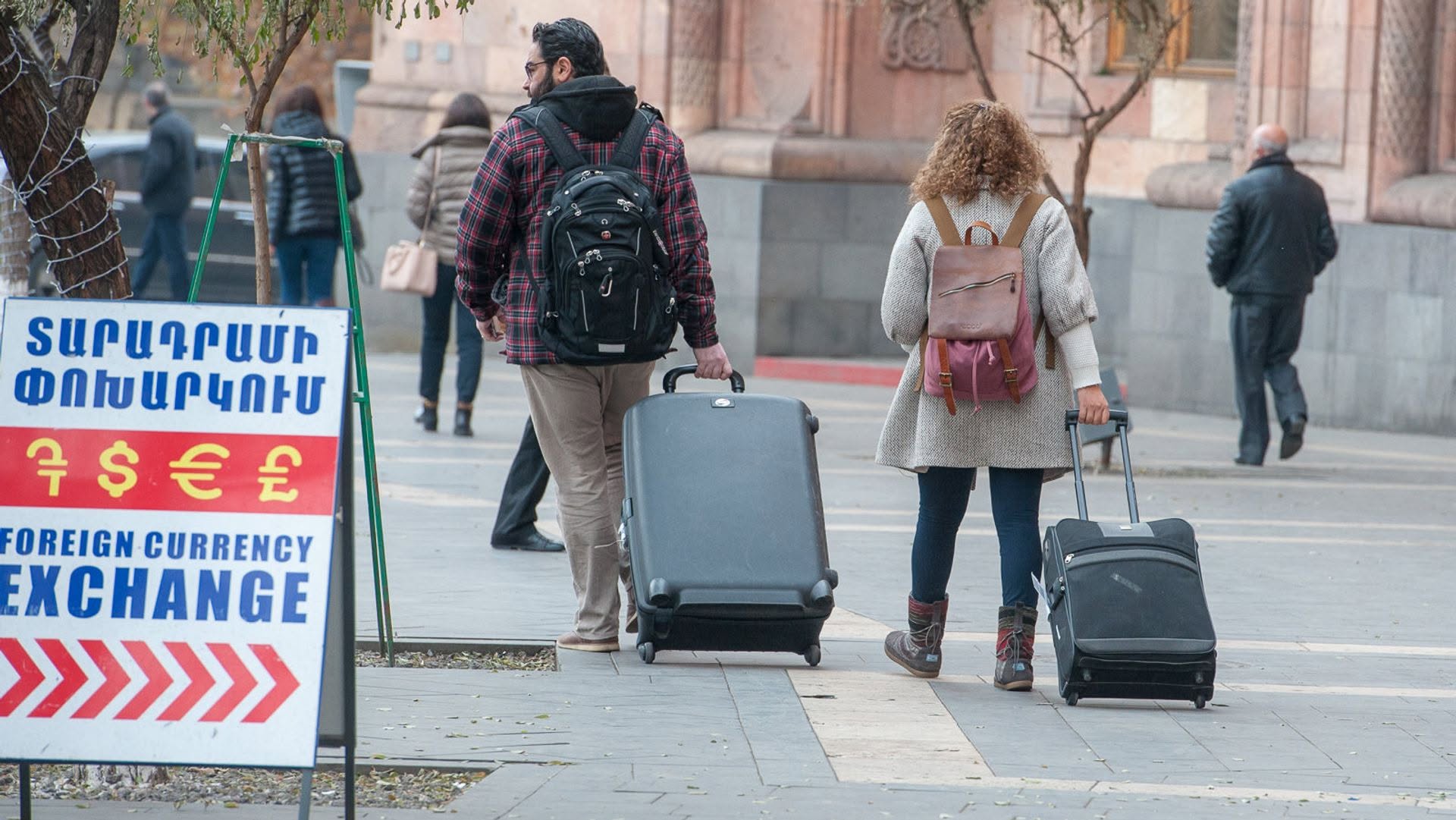
It is difficult to assess the impact of migration on birth rates. According to official statistics, 2,000 people left Azerbaijan to take up permanent residence abroad in 2025, while 3,400 moved to the country. However, these figures cover only registered cases of permanent relocation and do not capture the scale of emigration Jafarli describes.
Access to kindergartens is another problem. According to a report by the Cabinet of Ministers, only 38.7% of children aged one to five have access to pre-school education. The government’s target for 2026 is 50%.
What measures is the government proposing?
According to the State Social Protection Fund, mothers who are not in employment receive a one-off payment of 600 manats following the birth of a child. Between January and October this year, the fund awarded this benefit to 72,655 recipients.
Working parents who take parental leave receive a monthly allowance of 44 manats until the child reaches 18 months, and 28 manats from 18 months to three years. Women who give birth to and raise five or more children receive 140 manats per child. A total of 2,939 women receive this benefit.
Azerbaijan does not provide a universal monthly child benefit. Sociologist Uzeyir Shafiyev says the authorities abolished such payments in 2006 after introducing targeted social assistance. He proposes reinstating child benefits and revising the criteria for recognising families as large.
“It would make sense to lower the minimum number of children required for a family to qualify for large-family status from five to three,” the sociologist says.
Akif Nasirli, head of the Centre for Liberal Economists, also sees child benefits as a long-term investment in improving the demographic situation.
However, MPs have differing views on the issue. Gunay Agamali, an MP and chair of the Ana Vatan party, argues that child benefits could encourage a sense of entitlement among parents:
“When deciding to have a child, families should not expect the state to be obliged to provide them with something in return.”
Expert Ilgar Huseynli disagrees: “There is no reason to associate this with laziness.”
MP Razi Nurullayev also believes it is wrong to reduce the problem of falling birth rates solely to child benefits. He proposes a comprehensive programme that would include preferential mortgages and better access to kindergartens.
The government has yet to announce any plans to reinstate child benefits.
When will the effects become tangible?
The effects of falling birth rates are already being felt in the education system. In March, Ali Ahmadov, First Deputy Speaker of the Milli Majlis, told parliament that 1.5–1.6 million pupils attended schools in 2015. However, if the current trend continues, that figure could fall to one million within a few years. This would put around 50,000 teachers’ jobs at risk. At the start of the 2024–2025 academic year, Azerbaijan had 146,381 teachers. In other words, roughly one in three could be affected.
In the longer term, falling birth rates could also affect the labour market and pension system. The number of children under five fell from 851,000 in 2015 to 539,000 at the beginning of 2026. Jafarli believes that “pension funding will become one of the main items of state budget expenditure”. He warns: “If we do not take action today, it will be too late tomorrow.”
If the birth rate recorded between January and August continues through the end of the year, around 85,000 children will be born in Azerbaijan in 2026. By comparison, 90,280 children were born in 1950, which until recently was the lowest annual figure in the State Statistics Committee’s records.
Declining birth rates in Azerbaijan