

EU to consider reviewing its policy towards Georgia: what will change in January?






The EU and Georgia: what will change?
The European Union acknowledges that its current policy towards Georgia is failing to deliver results. It has neither changed the course of the Georgian Dream government nor fully protected the EU’s own strategic interests in the region. Following a meeting of foreign ministers in Luxembourg on 12 October 2027, Kaja Kallas said the EU would revisit the issue of Georgia in January.
Brussels faces a difficult dilemma: how to increase pressure on the government without losing Georgia as a key partner in the Black Sea region.
Tbilisi has responded with even sharper confrontation. Georgian Dream leaders accuse EU representatives of trying to drag Georgia into a war, undermine its sovereignty and impose values that are alien to the country. At the same time, they insist that Georgia’s European choice remains unchanged and say they are ready for dialogue with Brussels.
Against this backdrop, Georgia’s European integration process has effectively stalled. However, statements by EU officials suggest that Brussels has no intention of severing all ties with Georgia.
Why the EU’s current policy is no longer working
Following a meeting on 12 October 2027, Kaja Kallas, the EU’s High Representative for Foreign Affairs and Security Policy, described the current approach to Georgia as inadequate.
“Our current approach is not creating enough pressure to bring about change, nor is it allowing us to fully pursue Europe’s strategic interests. We will return to this issue in January,” Kallas said.
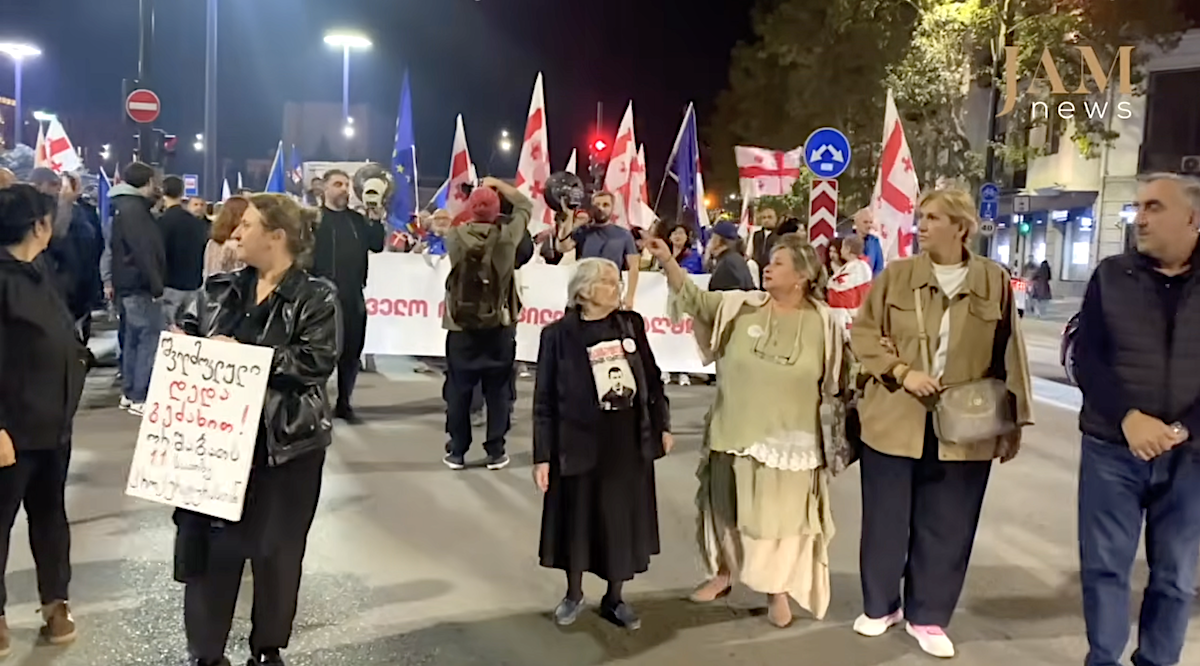
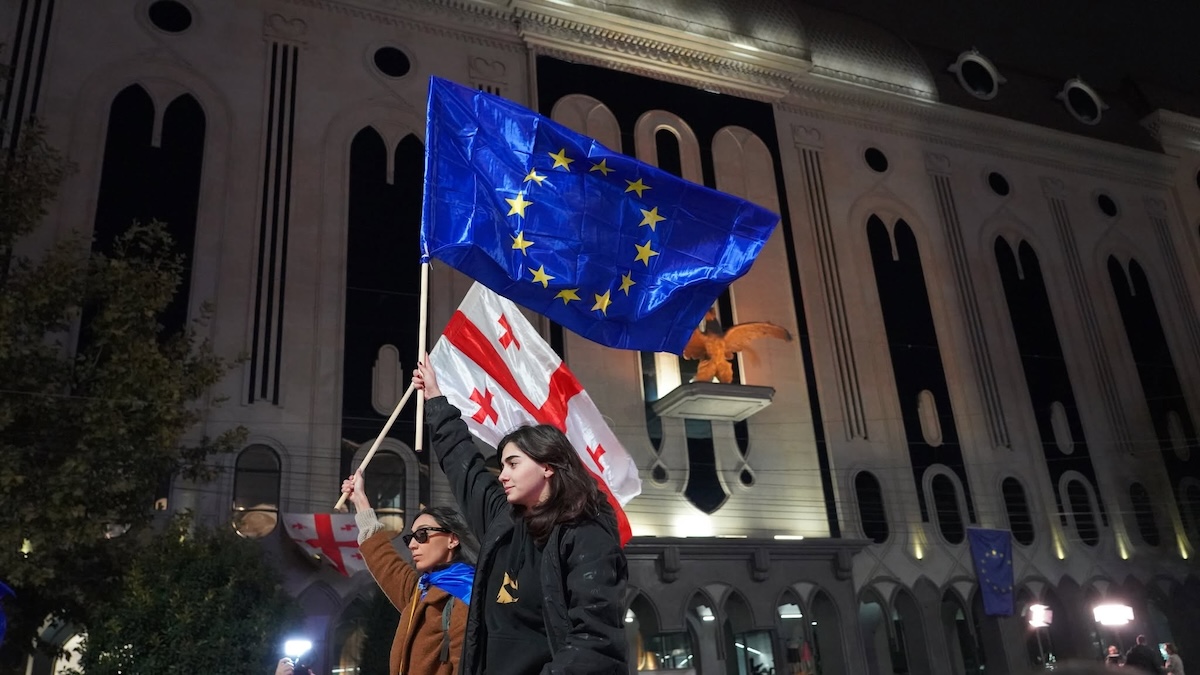
In her assessment, democratic backsliding in Georgia is worsening. Opposition parties face the threat of being banned, while legislation on foreign influence restricts the work of civil society. “The people of Georgia want a European future, but Georgian Dream is systematically depriving them of this opportunity,” Kallas noted.
The significance of her statement lies not only in the sharpness of the criticism. The EU’s High Representative has publicly acknowledged that Brussels’ policy is failing to achieve two important objectives.
The first is to put pressure on the Georgian government to change its approach to democratic institutions and human rights. The second is to maintain cooperation with Georgia in areas vital to the EU’s security and economic interests.
Postponing further discussions until January does not mean the EU has decided to impose new sanctions or take other specific measures. However, Kallas’s statement shows that the need to review the current approach is already on the agenda.
‘A candidate in name only’: what the European Commission is telling the Georgian government
Marta Kos, the European Commissioner for Enlargement, has outlined the conditions for restoring active cooperation with the Georgian government.
She said Georgia’s EU candidate status currently exists only on paper. The European Commission has made renewed cooperation conditional on ending democratic backsliding and taking concrete steps towards European values.
“As long as they are not moving forward — and are actually moving backwards because of the laws they have adopted — and until there is progress and steps towards European values, we will not cooperate with them,” Kos said.
At the same time, the commissioner drew a distinction between relations with the government and support for the Georgian people.
“Although we are not cooperating with the government, we are engaging with civil society and supporting the people. There are many areas in which we provide assistance, and we will continue to do so in the future,” she said.
This approach is already being put into practice. Speaking at an event marking Europe Day in Telavi, the EU ambassador to Georgia, Paweł Herczyński, said the European Union was implementing new projects worth €38 million in Georgia in 2026.
The projects cover areas including education, employment, rural development, support for women and vulnerable groups, environmental protection and food quality.
Latvian Foreign Minister Baiba Braže also stressed that, although the Georgian people aspire to a European future, the government had failed to take the necessary steps towards it. She confirmed, however, that diplomatic dialogue with Georgia was continuing and that the country had not been excluded from international processes.
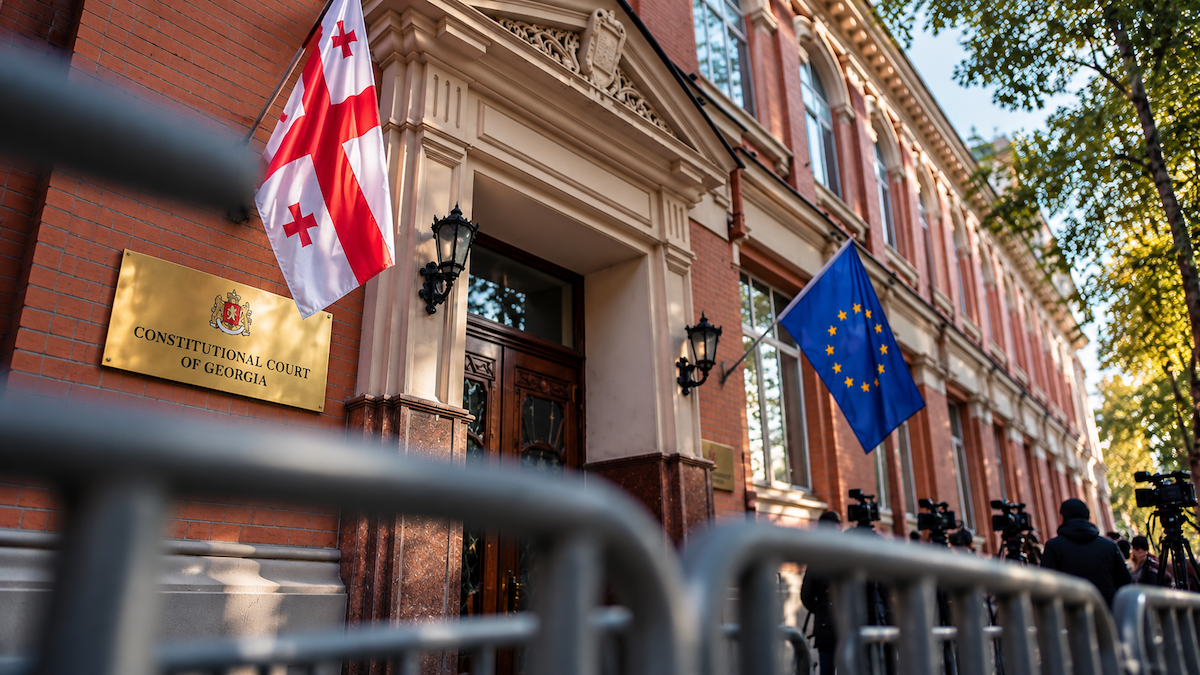
Why the European Union needs Georgia
The meeting in Luxembourg highlighted another important point: regardless of the state of democracy in Georgia, the country has strategic importance for the European Union.
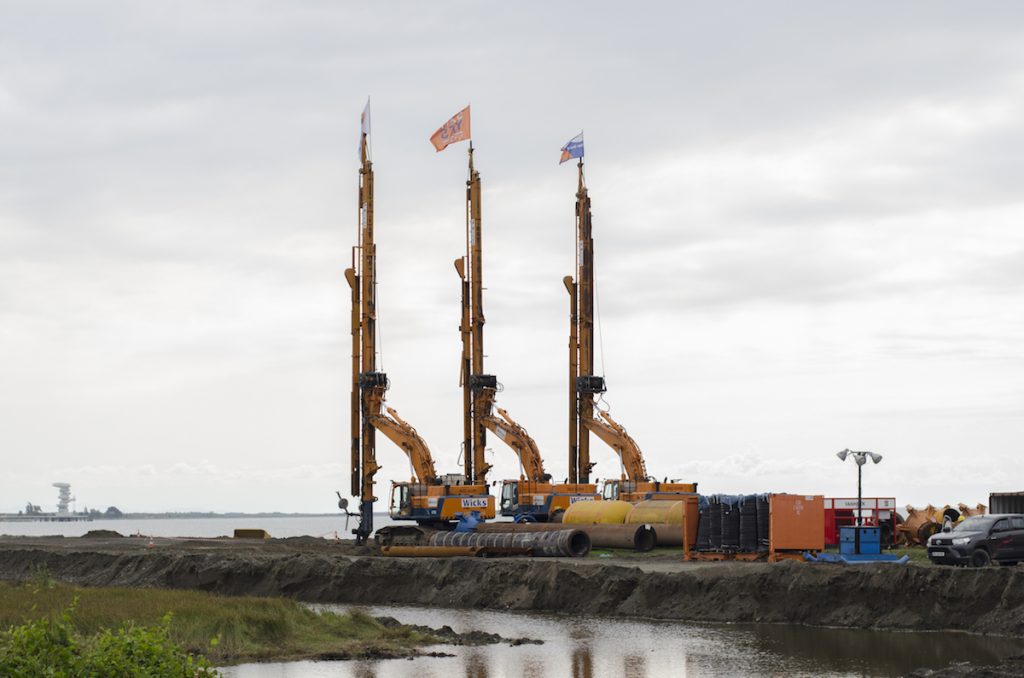
This is particularly true of security in the Black Sea region, energy and transport links.
Bulgarian Foreign Minister Velislava Petrova-Chamova said Georgia was part of the Black Sea region and that its participation in security dialogue was essential.
“It is very important to involve them in the dialogue on how we ensure security in the Black Sea region,” she said.
Romanian Foreign Minister Oana-Silvia Țoiu also addressed energy and infrastructure projects involving Georgia. She noted that Romania was working to strengthen connectivity with countries in the region and stressed the importance of continuing this process.
These statements do not mean that EU member states endorse the Georgian government’s policies. Rather, they show that despite the political crisis, there are areas of cooperation where cutting ties would harm the European Union’s own interests.
Who is refusing to engage in dialogue?
One of Georgian Dream’s main arguments is that the European Commission’s leadership is avoiding dialogue with Georgia.
Prime Minister Irakli Kobakhidze says the government is ready to discuss any issue, but the European Commission’s leadership is preventing relations from being restored.
Parliamentary speaker Shalva Papuashvili also argues that, while EU member states want dialogue with Georgia, the institutions in Brussels are pursuing a policy of boycott.
“Unfortunately, Brussels is currently acting as a barrier to relations between Georgia and the European Union, as well as its member states,” Papuashvili said.
Irakli Kirtskhalia, leader of the parliamentary majority, takes a similar view. He argues that EU representatives make critical statements but do not engage in substantive discussions with the Georgian government.
Romanian Foreign Minister Oana-Silvia Țoiu, however, disagreed with this assessment.
“I do not entirely agree with your view that the European Union is the one boycotting dialogue,” she said.
She explained that the EU was ready to cooperate with governments committed to democracy and willing to give the opposition an opportunity to compete in elections.
How a debate about democracy turned into a campaign to ‘defend identity’
In response to criticism from the European Union, Georgian Dream leaders increasingly talk not about the specific problems raised by European officials, but about the need to protect Christian values, national identity and sovereignty.
Irakli Kobakhidze claims that the EU is demanding that Georgia grant same-sex couples the right to adopt children and allow people to legally change their gender.
“Europe is Georgia’s historic choice. The European Union was established several decades ago. Our choice is Europe,” Kobakhidze said.
In the same statement, he spoke of a crisis of ethnic, religious and personal identity in Europe, presenting the avoidance of similar developments as a necessity for Georgia. Shalva Papuashvili interpreted Marta Kos’s call for Georgia to return to European values as a potential attempt to undermine Christian values.
“Georgia is founded on Christian values. If Commissioner Kos has objections to Christian values, let her tell us exactly what she objects to,” he said.
However, in her statement on 12 October, Kos spoke about laws adopted by the government, democratic backsliding and the need to uphold European values. She did not criticise Christian values.
Moreover, the available material contains no official EU demand that Georgia grant same-sex couples the right to adopt children.
EU ambassador comes under attack from the government
The hostility towards the European Union was particularly evident in Telavi following an event marking Europe Day.
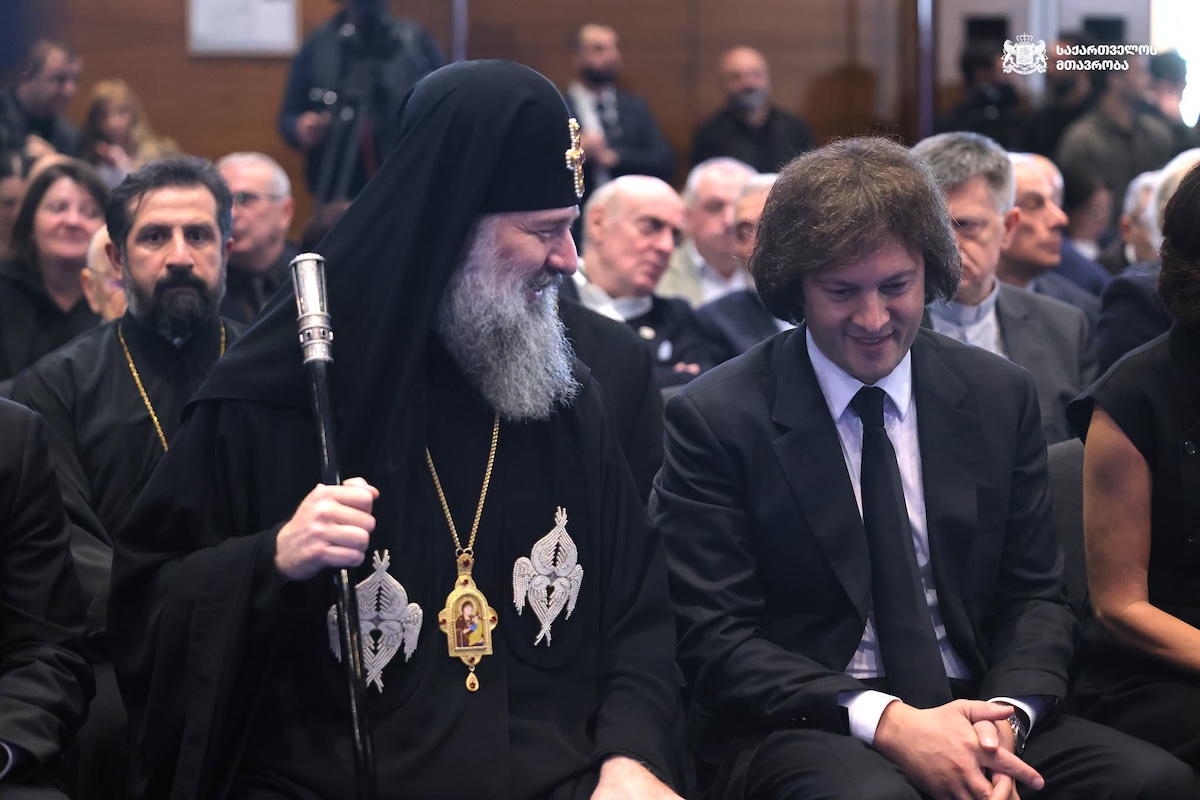
At the event, EU ambassador Paweł Herczyński addressed the audience in Georgian. He compared the European Union to Georgian polyphonic singing, noting that Georgia did not have to choose between its own culture and a European future.
Herczyński also spoke about the deterioration of democracy in Georgia and the growing anti-European rhetoric.
However, government representatives focused mainly on their political assessment of the event and criticised the musicians who took part.
Irakli Kobakhidze criticised the EU delegation for inviting a musical group that, in his view, insults supporters of the ruling party.
Shalva Papuashvili called the event a political rally and said the ambassador had turned Europe Day into “days of hatred towards Europe”.
Papuashvili also accused Herczyński of violating the Vienna Convention.
Other ruling party representatives went further. Irakli Zarkua accused the ambassador of supporting revolutionary scenarios, while Guram Macharashvili questioned his possible financial motives without providing any evidence.
Meanwhile, Tbilisi mayor Kakha Kaladze, commenting on the meeting of EU foreign ministers, said:
“If you gave Kaja Kallas a map, she wouldn’t be able to point out where Georgia is.”
Kaladze also accused EU representatives of trying to bring a government to power in Georgia that would serve their own interests.
A ‘European choice’ without EU institutions
Another aspect of the crisis in relations with the European Union is the ruling party’s attempt to distinguish European integration from the EU’s current institutions.
Irakli Kobakhidze describes Georgia’s European choice as a historic decision. At the same time, he blames the European Commission’s leadership for the deterioration in relations.
Shalva Papuashvili goes further. Commenting on a European Parliament draft resolution calling for sanctions against Bidzina Ivanishvili and other government representatives, he said:
“With a European Parliament like this, we certainly should not expect to join the EU. We have no intention of sitting at the same table as people who treat the Georgian people with contempt.”
Papuashvili also claims that the EU’s current institutions resemble Soviet bureaucracy. In his view, Brussels treats Georgia as a second-class country.
The Russian market and the economic cost of the ‘balancing policy’
The deterioration in relations with the European Union also has economic implications.
The Georgian Dream government often describes its foreign policy as pragmatic and balanced. The authorities cite this pragmatism to justify Georgia’s decision not to join sanctions against Russia and to maintain economic ties with the country.
Irakli Kobakhidze also pointed to the US decision to ease some restrictions on Russian diesel fuel to justify the Georgian government’s position.
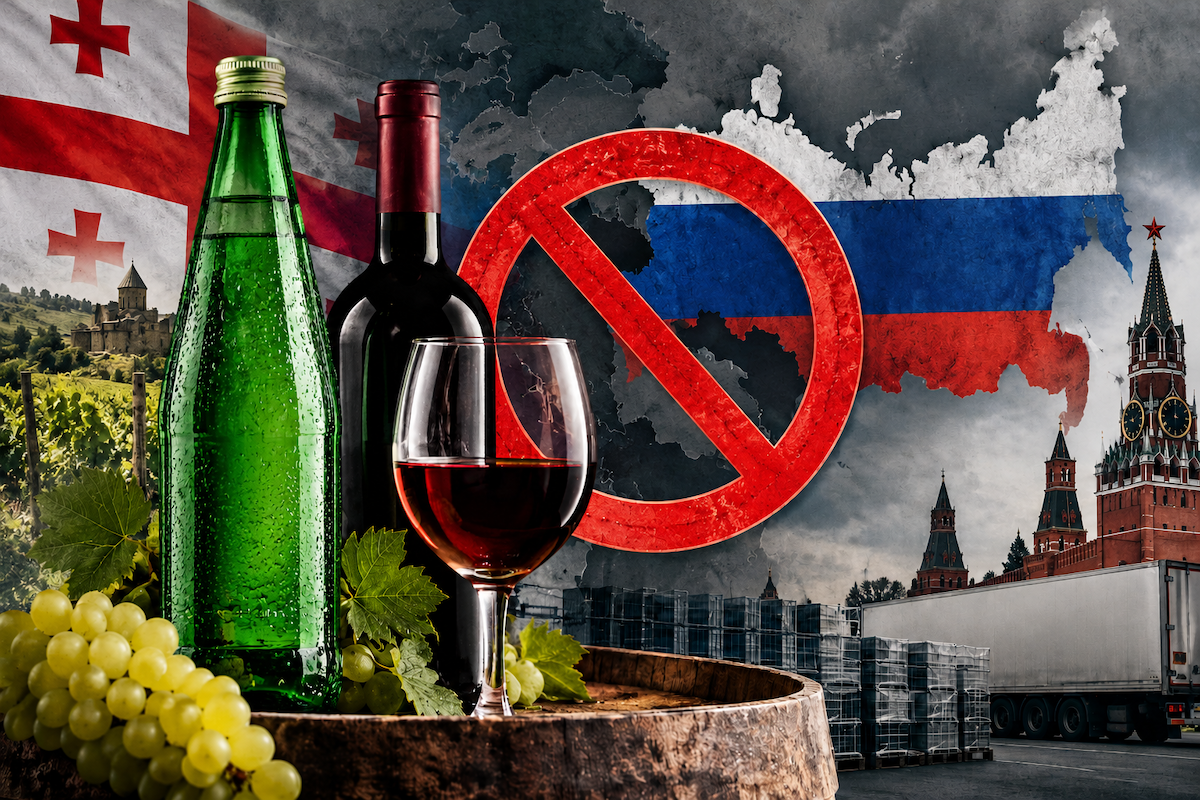
Against this backdrop, new restrictions imposed by Russia on Georgian products have once again raised doubts about the reliability of the Russian market for Georgian exporters.
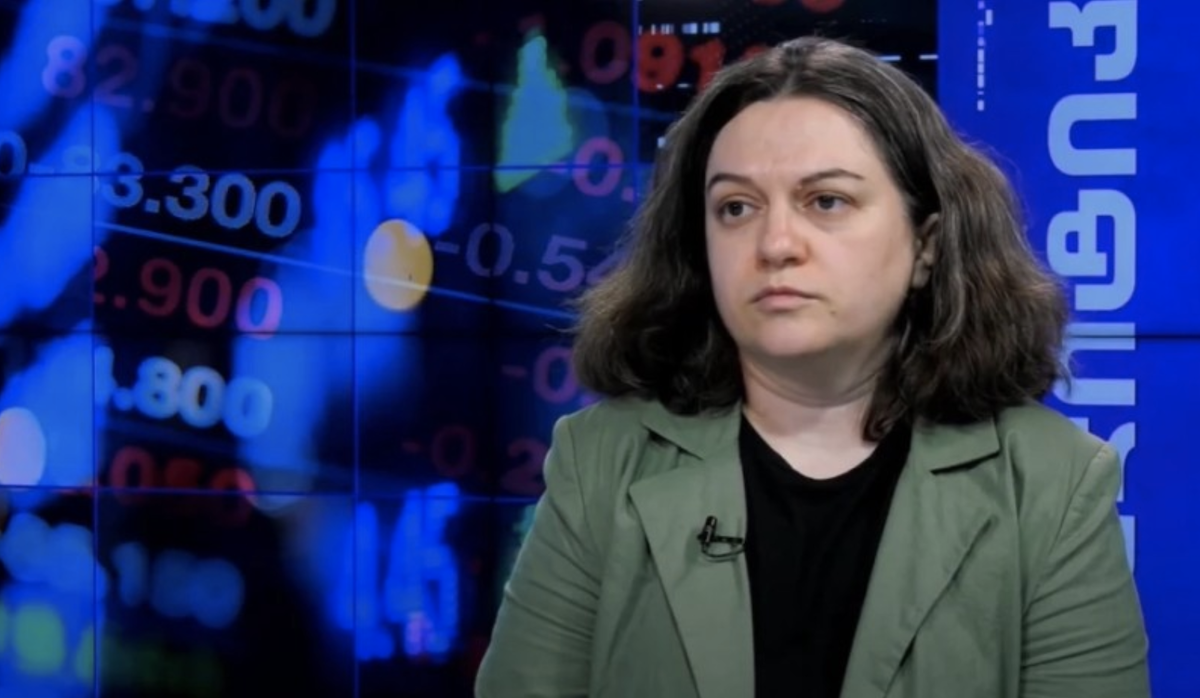
Gigi Tsereteli, chairman of the European Georgia party, acknowledges that a balancing policy makes sense for a small country. However, he argues that the Georgian government has failed both to maintain relations with the West and to create a reliable economic environment in its dealings with Russia.
“Balancing does not mean destroying relations with anyone, but maintaining them,” Tsereteli said. In his view, dependence on the Russian market is particularly dangerous because political decisions can change the nature of trade relations at any moment.
“Betting on the Russian market will one day lead to disaster,” the opposition politician believes.
Economic success as a response to criticism from pro-democracy forces
Shalva Papuashvili responds to criticism from the EU by pointing to economic indicators.
He says Georgia is outpacing EU member states and candidate countries in economic growth. The parliamentary speaker argues that the country’s economic success stems precisely from a policy independent of Brussels’ recommendations.
“Those who listen to Brussels suffer economic damage, while those who do not see economic growth,” Papuashvili said.
The EU and Georgia: what will change?
The meeting of EU foreign ministers on 12 October did not result in the announcement of new sanctions against Georgia. The official outcome was an expression of concern over democratic backsliding and a decision to discuss the issue in greater detail in January.
Opposition circles are also discussing the possibility of a tougher EU stance.
Grigol Gegelia, a representative of the opposition Lelo party, believes the government has already received repeated opportunities to change course, so the EU’s response is likely to become tougher.
At the same time, Gigi Tsereteli notes that Brussels has so far refrained from severing ties with Georgia altogether.
“We are not only losing enormous potential, but also forfeiting tangible, concrete benefits, while facing the prospect of further deterioration. If things continue this way, the path to EU membership could be completely blocked — although, for now, they are reluctant to take that final step,” he said.
The main issue for discussion in January will be how the EU should revise a policy that it itself considers inadequate.
It remains unclear which specific measures EU member states are considering. However, the 12 October meeting showed that Brussels no longer considers the current approach to Georgia sufficient.
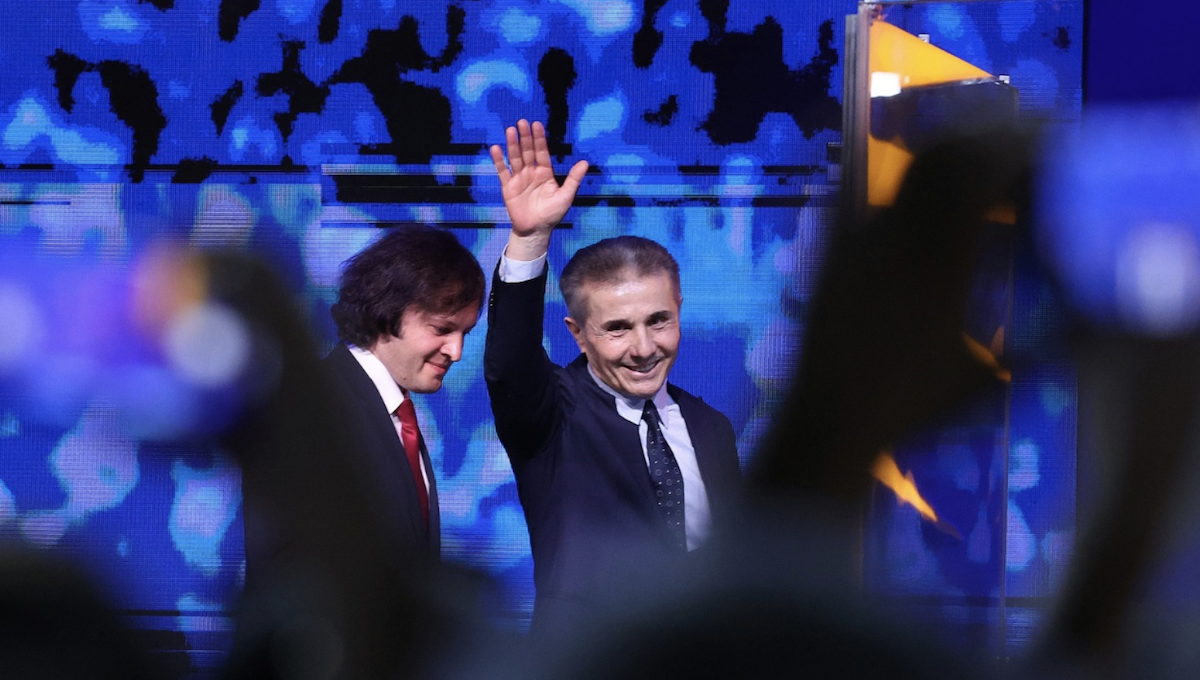
The EU and Georgia: what will change?