

From ‘crown prince’ to prisoner: Irakli Garibashvili’s break with Georgia’s ruling party






Irakli Garibashvili vs Georgian Dream
Georgia’s two-time former Prime Minister Irakli Garibashvili is currently in prison, from where he has openly challenged the authorities he himself represented for many years.
Over the past few weeks, he has published six letters accusing the Georgian government of persecution, blackmail and attempts to destroy his political future.
Garibashvili initially said the pressure against him had been exerted on the orders of Bidzina Ivanishvili, the founder and honorary chairman of the ruling Georgian Dream party. His criticism, however, later focused primarily on current Prime Minister Irakli Kobakhidze and another influential party figure, Mamuka Mdinaradze.
The confrontation is particularly unusual for a party that for many years appeared from the outside to be an entirely monolithic political organisation.
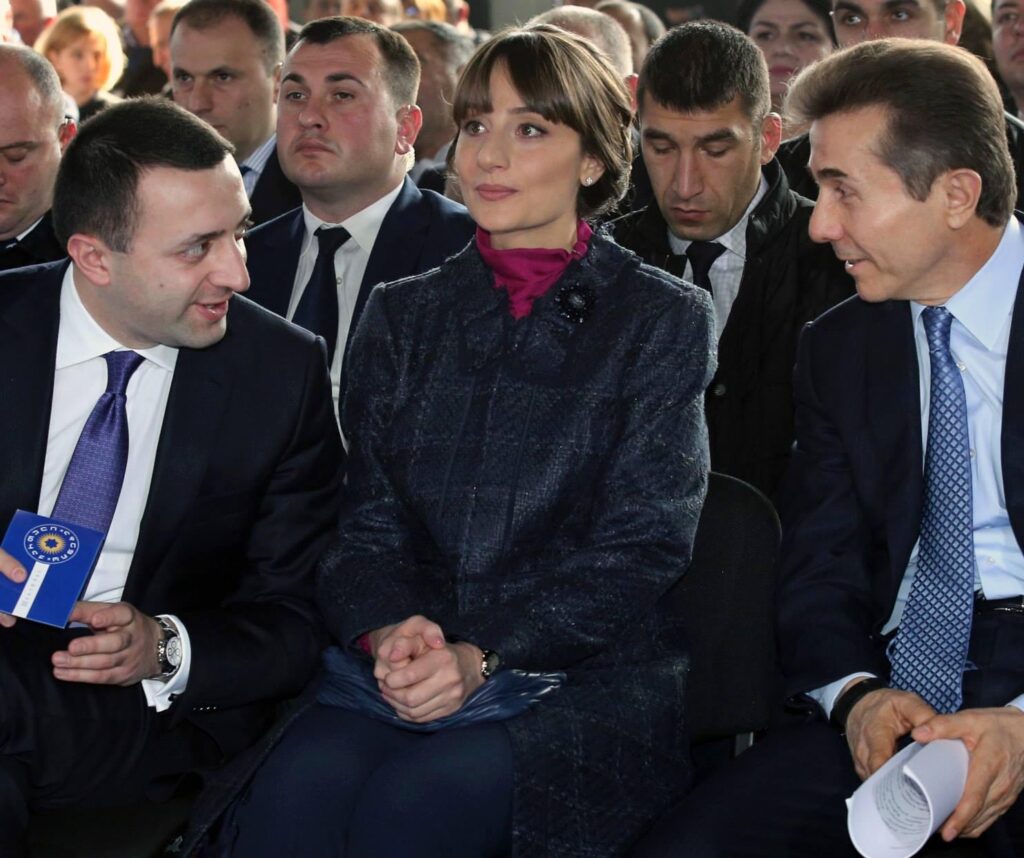
Irakli Garibashvili is far from an ordinary former official. For almost two decades, he was one of Bidzina Ivanishvili‘s closest and most trusted associates. When Ivanishvili stepped down as prime minister in 2013, he effectively installed the then 31-year-old Garibashvili as his successor.
Now Ivanishvili’s former chosen successor is writing from prison that the very system he once served has “stabbed him in the back”.
Garibashvili’s case is therefore no longer simply a criminal case involving a former prime minister. It has exposed a conflict within Georgian Dream and raised a broader question: is a new redistribution of power beginning within the ruling party?
From prime minister’s office to prison cell
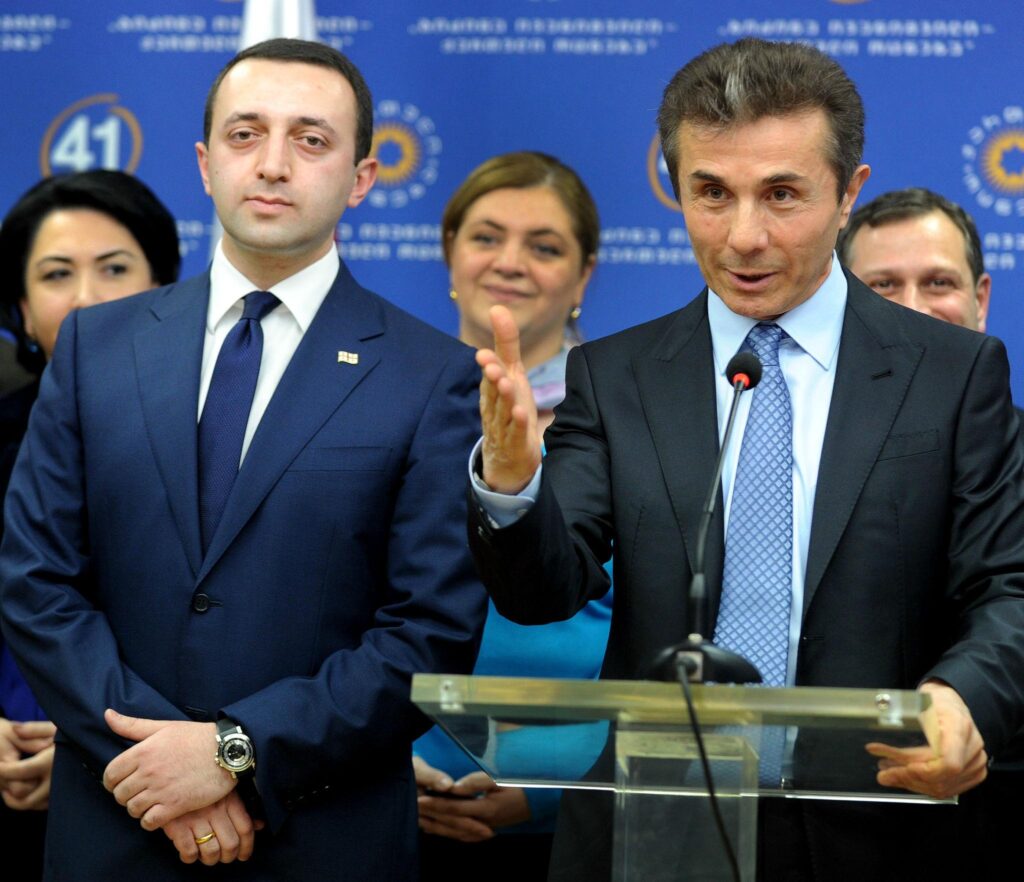
Irakli Garibashvili’s career under Bidzina Ivanishvili’s wing began long before Georgian Dream came to power in 2012.
As early as 2011, Ivanishvili referred to Garibashvili as one of his closest advisers and aides.
Following Georgian Dream’s victory in the 2012 parliamentary election, Garibashvili became interior minister. A year later, Ivanishvili stepped down as prime minister and named Garibashvili as his successor.
Garibashvili consequently served his first term as Georgia’s prime minister from 2013 to 2015. He unexpectedly left government at the end of 2015, but returned in 2019 as defence minister. In 2021, he became prime minister for a second time.
During his second premiership, Garibashvili was one of Georgian Dream’s most hardline figures. He frequently clashed with the opposition, civil society and Western critics. Following Russia’s full-scale invasion of Ukraine, Garibashvili repeatedly echoed the government’s narrative about the threat of a “second front” being opened in Georgia and accused some Western figures of supporting the opposition.
In January 2024, he again stepped down as prime minister and was replaced by Irakli Kobakhidze. Garibashvili, meanwhile, became chairman of Georgian Dream. At the time, the party presented the change as a routine internal reshuffle.
In April 2025, Garibashvili announced that he was leaving politics altogether.
Several months later, a criminal investigation was launched against him.
How former prime minister ended up in prison
In October 2025, prosecutors charged Irakli Garibashvili with laundering a particularly large amount of illicit income.
According to investigators, the former prime minister provided false information in his asset declarations in an attempt to make illegally obtained income appear legitimate.
At the time, Garibashvili chose to remain silent and did not contest the case. On 12 January 2026, he pleaded guilty and reached a plea agreement with prosecutors. Under the deal, he was sentenced to five years in prison and fined 1m lari ($360,000). Two of his cars and $6.5m seized during a search of his home were also forfeited to the state.
After being taken into custody in the courtroom, Garibashvili was transferred directly to Penitentiary Establishment No 12 in the city of Rustavi.
Garibashvili later gave an almost sacred significance to his decision to remain silent. He now says that, at the time, he had consciously chosen not to confront the authorities.
Garibashvili and Ivanishvili: relationship spanning almost 20 years
Garibashvili worked in Ivanishvili’s circle even before Georgian Dream was founded. When Ivanishvili entered politics in 2011, Garibashvili was one of his closest associates. And, as noted above, in 2013 Ivanishvili handed him the leadership of the Georgian government.
Ivanishvili himself has often spoken about the early years of their personal relationship. In 2013, he recalled that Garibashvili had worked in the commercial department of one of his companies when Ivanishvili was buying a French-made helicopter. According to Ivanishvili, the young Garibashvili handled the negotiations with the French side so successfully that the sellers wanted to meet him in person.
In Georgian political circles, their relationship was widely seen as one between a patron and his political successor. Government opponents even described Garibashvili as Ivanishvili’s “obedient servant”, while Georgian media frequently portrayed him as a politician “groomed” by Ivanishvili and as being as close to him “as a son”.
Another episode also illustrates the hierarchical nature of their relationship.
In 2021, when Garibashvili was serving his second term as Georgia’s prime minister, a video recording of Bidzina Ivanishvili giving evidence in a Bermuda court was made public. The case concerned Ivanishvili’s legal dispute with Swiss bank Credit Suisse.
In court, Ivanishvili was asked what role Garibashvili had played in his financial affairs years earlier. Ivanishvili explained that Garibashvili had not been a financier and had mainly performed organisational tasks, such as arranging meetings, making phone calls and handling similar matters.
Asked, “So was he something like your secretary?”, Ivanishvili laughed and replied: “Call him whatever you like. Use whichever description you prefer.”
Following the release of the recording, political commentators highlighted the fact that Ivanishvili had twice appointed as the country’s prime minister a former subordinate whose earlier duties he had described in court in dismissive terms.
Ivanishvili mentioned in Garibashvili’s letter from prison
Against this backdrop, Garibashvili’s first public reference to Ivanishvili in a letter from prison, published on 17 August 2026, was particularly significant.
Garibashvili wrote that he had received an offer made on Ivanishvili’s instructions: to confess to another offence, this time a serious corruption crime. In return, he said he had been promised that the new charge would not add to his existing five-year prison sentence.
According to the former prime minister, the deal came with another condition: after his release from prison, he would not be allowed to return to politics.
Garibashvili said the authorities were seeking to ensure that he could not make a political comeback. In the same statement, he held Ivanishvili and the Georgian Dream leadership personally responsible for his own safety and that of his family.
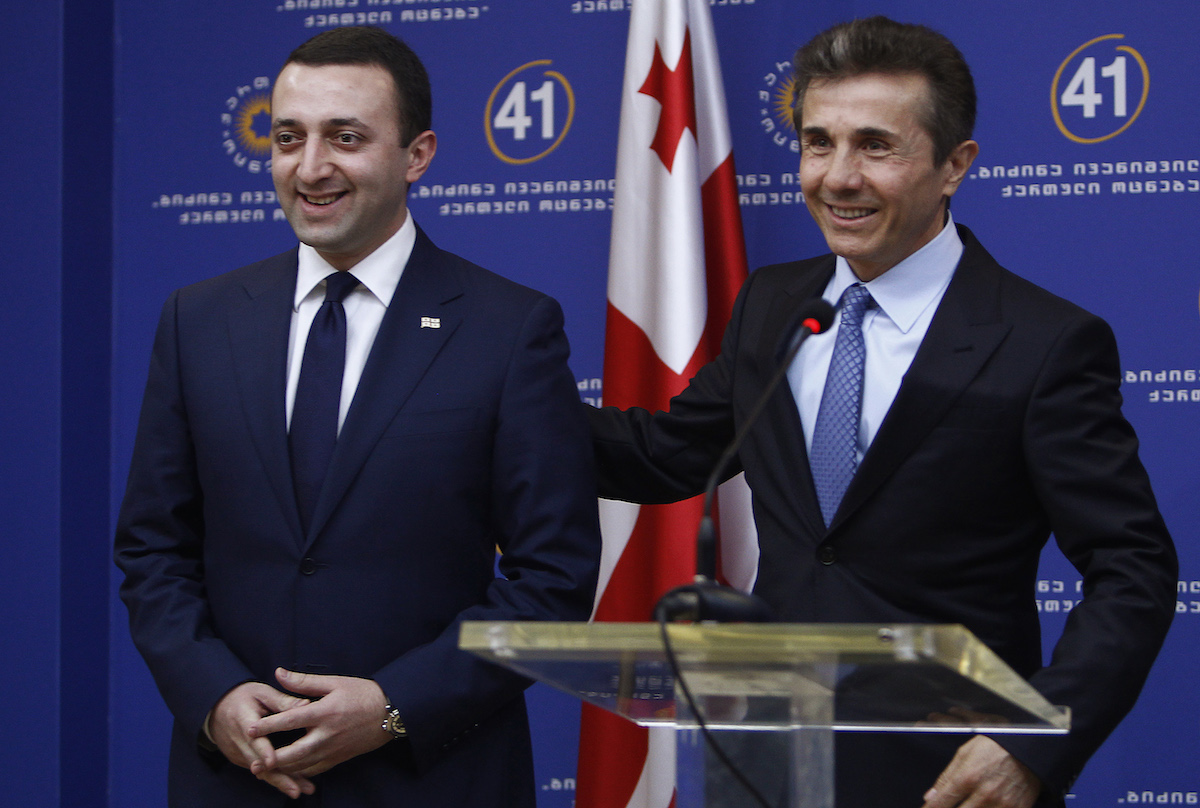
In his next letter, Garibashvili again referred to Ivanishvili, but this time in a markedly different tone.
He wrote that he had endured the authorities’ actions for many months because of his “20-year relationship with Bidzina Ivanishvili, immense love and respect for him, boundless gratitude and absolute loyalty to him“.
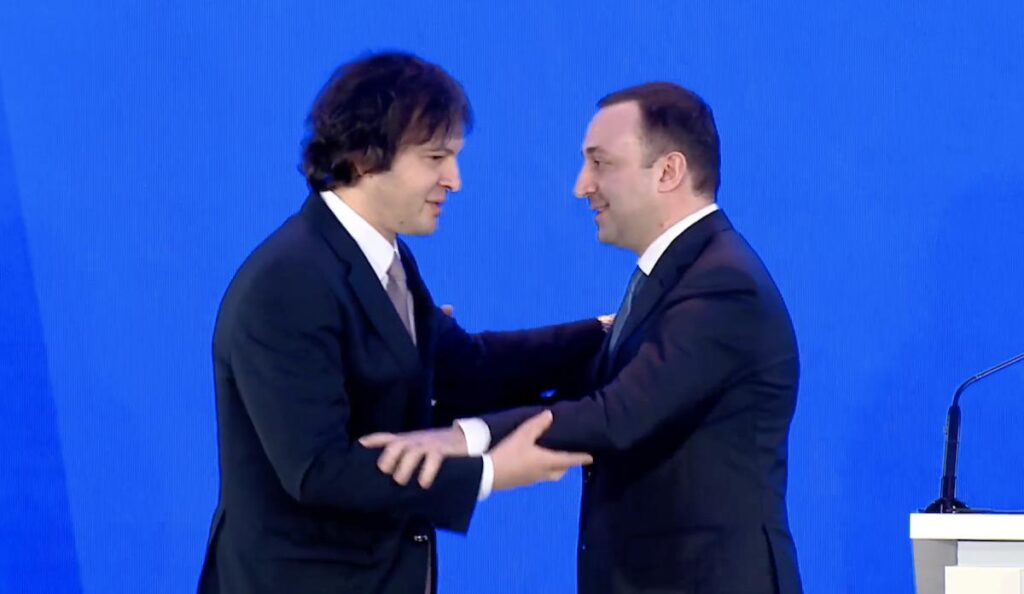
In subsequent letters, Garibashvili has sought gradually to shift the focus of the conflict away from Ivanishvili and towards the Kobakhidze-Mdinaradze tandem.
Some analysts believe Garibashvili is trying to avoid burning his remaining bridges with Ivanishvili and to persuade him that the real problem lies with the current prime minister and his circle.
What changed after Garibashvili‘s letters
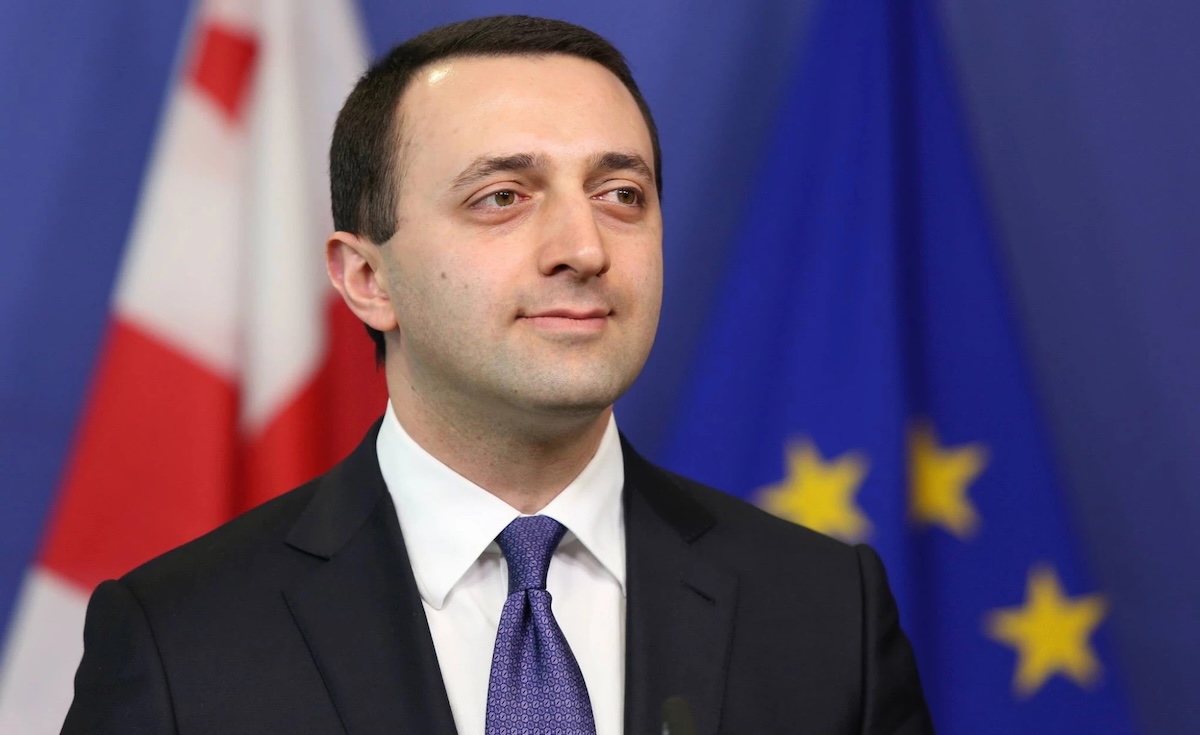
After 17 August, Garibashvili definitively broke his silence.
Several key allegations gradually emerged from his letters. He claims that the authorities deceived him, put pressure on members of his family, demanded that he confess to another corruption offence, and ultimately sought to eliminate any possibility of his return to politics.
Garibashvili also said that he had been given indications that his 75-year-old father could also be arrested.
Mamuka Mdinaradze rejected these allegations.
However, subsequent developments lent additional weight to Garibashvili’s claims.
On 24 August, prosecutors brought new charges against him.
This time, the case concerns the alleged receipt of a particularly large bribe, an offence punishable by between 11 and 15 years in prison if he is convicted.
According to prosecutors, Garibashvili received 750,000 lari ($275,735) through a scheme involving classified procurement contracts at the Defence Ministry. The investigation relies primarily on testimony from former Defence Minister Juansher Burchuladze and his alleged accomplice, Vasil Mkheidze.
Garibashvili has pleaded not guilty to the new charge.
The former prime minister says the proceedings are being used as a tool to exert political pressure on him.
Mdinaradze’s sudden departure
Meanwhile, against the backdrop of Garibashvili’s letters and his allegations against Kobakhidze and Mdinaradze, another significant development took place:
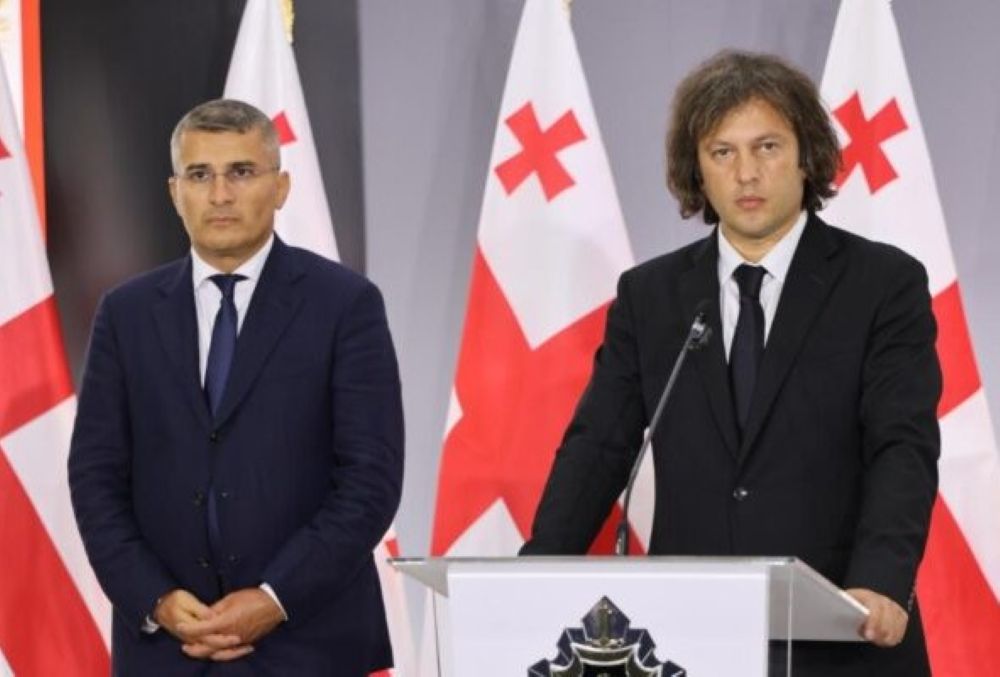
Mamuka Mdinaradze, who for many years was one of Georgian Dream’s most influential figures and one of Kobakhidze’s closest political allies, announced that he was leaving the government and withdrawing from politics altogether.
In 2025, Mdinaradze was appointed head of the State Security Service, but remained in the post for only a short time. In July 2026, Irakli Kobakhidze announced that Mdinaradze would become regional development minister in September and was expected to play a key role in overseeing regional policy.
However, on 27 August, Mdinaradze unexpectedly announced that he was not only stepping down from his ministerial post but leaving politics altogether.
Garibashvili linked the move to his letters.
“Mamuka Mdinaradze made such serious and grave mistakes in this case that they resulted not only in his removal from office, but also in his departure from politics,” the disgraced former prime minister wrote on 2 September in his fifth letter.
Mdinaradze himself presented his departure as a personal decision.
Why Garibashvili has become a problem for Kobakhidze
Garibashvili’s letters have raised questions about how much political influence the former prime minister retains while in prison. Some analysts believe Garibashvili still has supporters within Georgian Dream and that the authorities’ sharp response to his letters is evidence of his continuing political significance.
Conflict analyst Paata Zakareishvili says Garibashvili realised that he enjoyed greater sympathy within Georgian Dream than Kobakhidze did, and that this encouraged him to continue resisting.
Kobakhidze, Zakareishvili argues, in turn discovered that “even Garibashvili sitting in prison is stronger than he is”.
One possible explanation for this assessment lies in the two men’s very different political backgrounds.
Garibashvili belongs to the first generation of the ruling party and has been part of Georgian Dream since its foundation. He was a member of Ivanishvili’s inner circle and built up strong political connections over the years, particularly in the regions.
Kobakhidze’s power, by contrast, is much more closely tied to the party apparatus and Ivanishvili’s direct backing.
Analyst Irakli Melashvili describes Garibashvili as a “symbolic figure” for supporters of the “old Georgian Dream”. In his assessment, the former prime minister was particularly close to the party’s conservative and pro-Russian electorate.
At the same time, Melashvili points to a fundamental contradiction: Garibashvili has now himself become a target of the system of which he was one of the principal architects and leaders for many years.
For that reason, his resistance cannot automatically be seen as a struggle for a democratic system.
“This is a struggle for his own survival, not for the public good,” Melashvili says.
Lazare Jorbenadze case and a new phase of confrontation
On 1 September, Garibashvili went a step further.
In another letter from prison, he demanded that the authorities provide answers about the circumstances surrounding the death of human rights activist Lazare Jorbenadze, who had publicly criticised Kobakhidze.
Garibashvili also wrote that questions remained unanswered about other cases of suicide which, he said, were linked to the period when the Kobakhidze-Mdinaradze group was in power.
Prosecutors subsequently questioned Garibashvili himself, as well as several other politicians and public figures. A prosecution service representative said Garibashvili had provided no information to substantiate claims that Jorbenadze may have been murdered.
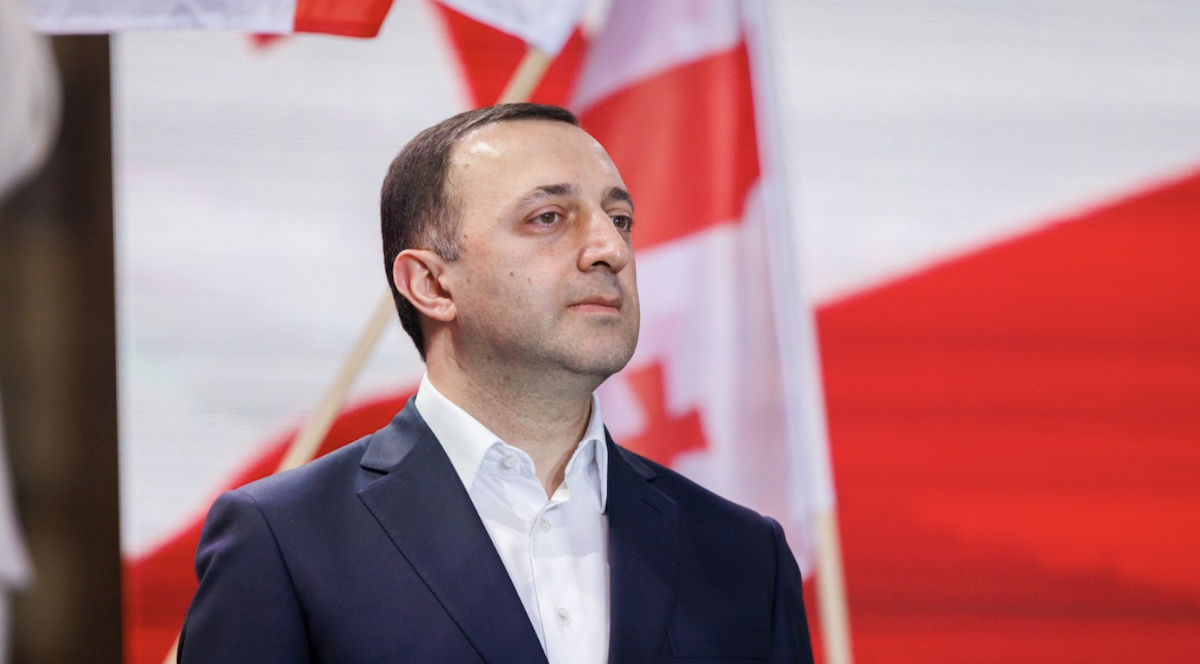
Sixth letter: open confrontation with authorities
On 8 September, Garibashvili published his sixth letter.
He described the authorities’ response as a “ridiculous, repulsive and tragic masquerade” and said the questioning over the Jorbenadze case was an attempt to link him to the opposition United National Movement party.
Garibashvili also responded sarcastically to allegations in pro-government media that he had been acting in the interests of the “deep state” or France.
“I am lucky that I don’t know any other foreign languages, otherwise I would probably have been declared an agent of other countries as well,” he wrote.
He then addressed the authorities directly: “Stop these dirty political games against me!”
Garibashvili said he served neither the West nor the East, neither the North nor the South, and that his sole aim had been to serve Georgia.
He addressed parliament speaker Shalva Papuashvili separately: “Shalva, this is not a legal process — this is ruthless political persecution!“
The letter ends with a message the former prime minister has repeatedly made in recent weeks:
“I am not fighting anyone — you yourselves stabbed me in the back… Now I am forced to defend myself and my family against this injustice and cruelty.”
‘Criminal’, ‘traitor’, ‘agent’: how party responded to former PM
Following Garibashvili’s fifth letter, Georgian Dream’s response became particularly harsh.
A man who twice served as prime minister for the party is now being described by his former allies as a “criminal” and a “traitor”.
A politician who for years himself used harsh rhetoric against government opponents has now become a target of the same system. The language being used against him will be familiar to the government’s critics: allegations of corruption, betrayal, serving the radical opposition and acting in the interests of foreign states.
Georgian Dream representatives say Garibashvili’s narrative has become indistinguishable from that of the “radical opposition”.
MP Gia Volski suggested that the former prime minister may have been led to believe that his struggle could help advance a “revolutionary process” in the country and that he could subsequently benefit from it politically.
Another MP, Dimitri Samkharadze, described Garibashvili as a “self-confessed criminal” and a traitor.
Meanwhile, pro-government television channels, citing Azerbaijani media, circulated allegations that Garibashvili had been acting in France’s interests in Georgia.
Current Prime Minister Irakli Kobakhidze also responded in exceptionally harsh terms.
He described his predecessor’s letters as “ridiculous and tragic”, saying Garibashvili had “sunk to the level of a blogger for some shady little newspaper”.
Georgian Dream secretary-general and Tbilisi mayor Kakha Kaladze, meanwhile, said it was regrettable to see his former ally in such a position, but publicly expressed his full support for Kobakhidze.
Ivanishvili remains silent
The key figure in the entire confrontation has so far remained largely out of public view.
Bidzina Ivanishvili has remained silent.
This is particularly notable because both sides in the conflict ultimately derived their political weight from his backing.
Political analyst Gia Khukhashvili sees one possible scenario in which Ivanishvili himself is managing the current process, with the ultimate aim of weakening Kobakhidze’s team.
Other analysts offer a more cautious interpretation: Ivanishvili is watching the confrontation unfold and will make a decision only when it becomes clear which figure is more useful for preserving his system.
David Zurabishvili, who supports this interpretation, says Ivanishvili has no permanent allies, only permanent interests. Accordingly, neither Garibashvili nor Kobakhidze is indispensable to him.
This explanation is also consistent with Georgian Dream’s history: prime ministers have changed repeatedly during the party’s time in power, while the centre of power has consistently remained with Ivanishvili.
Kobakhidze has no intention of stepping down
Against this backdrop, speculation is already mounting in Georgia over the possible resignation of Irakli Kobakhidze himself.
He has, however, dismissed the rumours.
Kobakhidze said journalists ask him “every three months” whether he is planning to step down as prime minister, adding that he expects to be asked the same question again in another three months.
More significant, however, was his explanation of what had happened within the government after he took office.
According to Kobakhidze, he and his team needed a year and five months to address what he described as “fundamental problems” that had accumulated within the system of government, acting on Bidzina Ivanishvili’s instructions.
Kobakhidze did not directly name Garibashvili in his remarks. The chronology, however, is clear: he was referring to problems that had accumulated in the system during his namesake’s tenure as prime minister.
Is Georgian Dream’s monolith beginning to crack?
Georgian Dream formally retains almost complete control over Georgia’s political system.
It dominates parliament, is seeking to ban several opposition groups, and many opposition leaders are in prison.
Yet it is under these circumstances that a conflict has erupted not between the government and the opposition, but between current and former leaders of the ruling establishment itself.
Giorgi Melashvili, head of the Europe-Georgia Institute, describes the situation as two parallel processes: on the one hand, the circle of decision-makers is narrowing and the system is becoming increasingly centralised; on the other, the Garibashvili case has exposed cracks in Georgian Dream’s internal monolith.
In his assessment, neither the opposition nor other former Georgian Dream figures have dealt the party a blow comparable to that inflicted by Garibashvili’s letters.
Gia Khukhashvili, meanwhile, describes the developments as a confrontation between two factions “at the royal court”. In his view, Ivanishvili remains the only person with the final say.
Much about these scenarios remains speculative, but the facts themselves already present a highly unusual picture:
- Former PM behind bars: A two-time former prime minister is in prison, accusing the authorities of political persecution and his former allies of trying to destroy him and his family.
- New criminal case: Following his first letters, he was hit with a new and significantly more serious criminal charge.
- Mdinaradze’s sudden departure: One of his main opponents within the ruling team, Mamuka Mdinaradze, unexpectedly left politics altogether.
- Question of succession: Current Prime Minister Irakli Kobakhidze is already having to publicly answer questions about whether he could become the “next former” prime minister.
And Bidzina Ivanishvili, who stands at the centre of all these developments, continues to remain silent.