

'Police violence in Georgia has become part of everyday life,' says Social Justice Center






Police violence in Georgia
According to the Social Justice Center, physical violence, ill-treatment and abuse of power by law enforcement officers in Georgia have gone beyond isolated cases of police misconduct and become a routine feature of the system.
The organisation says recent information points to the normalisation of inhuman treatment of detainees, describing the trend as deeply alarming.
- Georgian NGOs: State has used torture and abuse as political weapon for years
- Arrests, alleged violence and tighter speech restrictions: Georgian ombudsman report
- Georgia: 500 days of protests, crackdowns and resilience – Amnesty International report
The organisation says police violence is driven by several factors, including a lack of political will, weak institutional oversight, a culture of impunity and political influence over the police.
It argues that the cases reported by the media represent only a fraction of the true scale of the violence.
According to the organisation, most victims choose not to speak out against law enforcement for fear of retaliation, fabricated evidence, new criminal charges or being falsely accused of drug offences.
High-profile cases: Torture, coma and death
The Social Justice Center highlights several serious cases that have recently received widespread media attention.
- The case of Alan Kakitashvili and Irakli Tatunashvili
Friends Alan Kakitashvili and Irakli Tatunashvili were arrested at a police station in Tbilisi last year following a fight at a restaurant in the city of Gori.
Kakitashvili says that he and Tatunashvili were severely beaten inside the police station. After being questioned at the Gldani-Nadzaladevi police station, Tatunashvili was taken to hospital in a coma. He died on 9 June 2025.
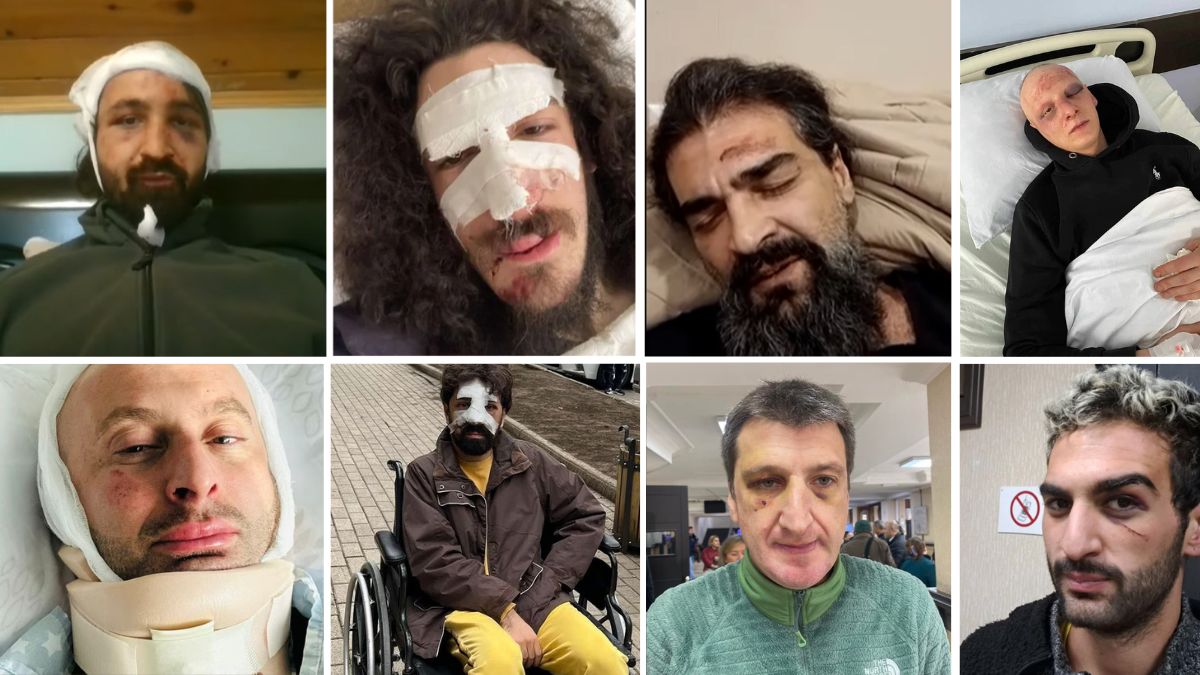
Alan Kakitashvili himself spent nine months in prison before being fully acquitted by two courts.
Although an investigation into the alleged police violence has been launched, Tatunashvili has yet to be granted victim status and has not been questioned by investigators.
- Violence at Dusheti police station
The Georgian broadcaster Pirveli recently aired a report in which Aleksandre Gogochuri said he had been beaten by around 15 employees of the Dusheti municipal administration.
According to the Social Justice Center, prosecutors dropped the criminal investigation against the alleged perpetrator but instead charged Gogochuri with giving false testimony, avoiding the question of possible police accountability.
- Gori: Dozens of police officers accused of assaulting two men
On 27 May 2026, the news outlet Kartlis Ambebi published video footage appearing to show more than 10 police officers beating two men.
These are only a small number of the high-profile cases reported in recent months.
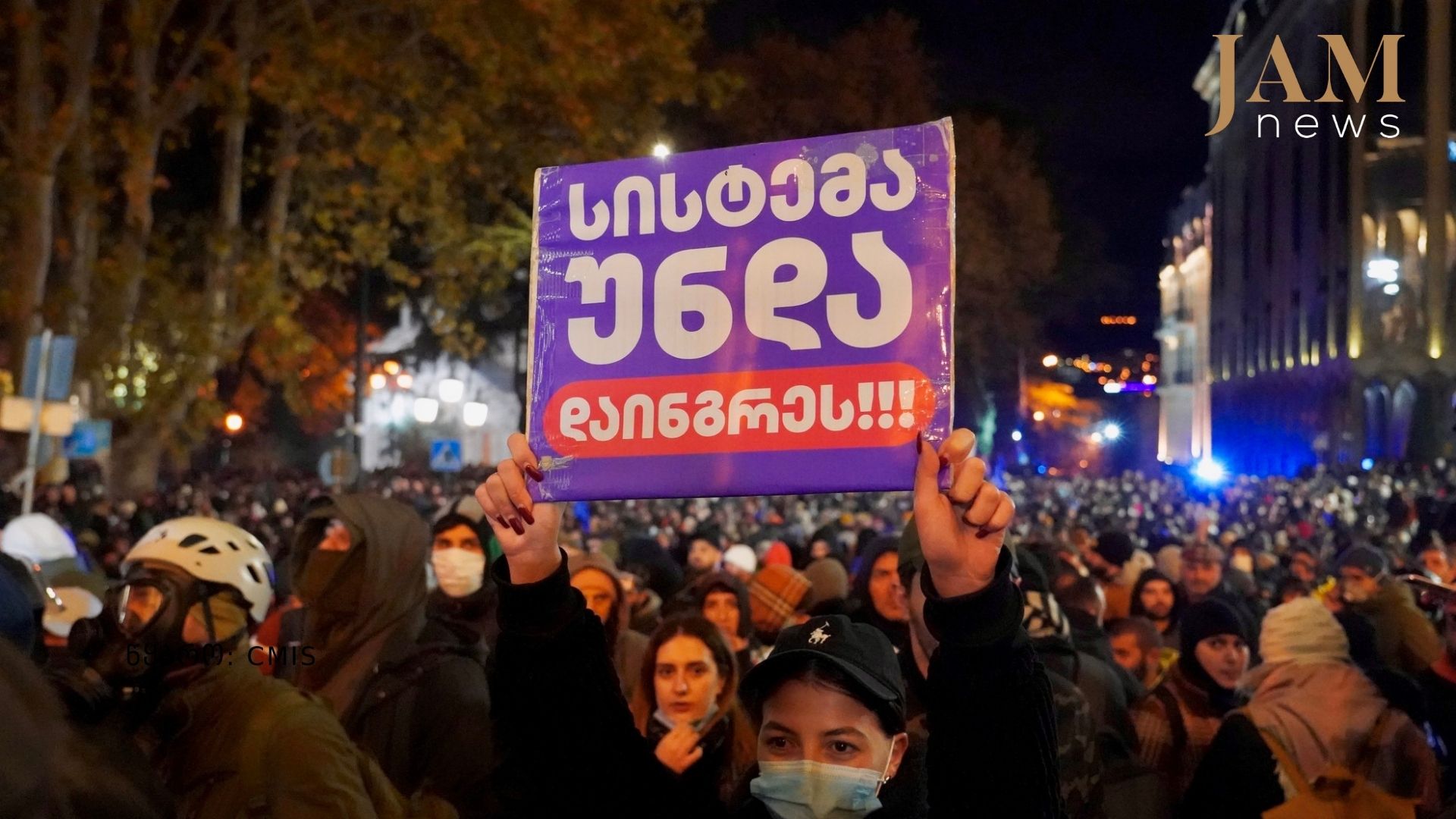
The Social Justice Center says it has documented hundreds of cases of violence during the dispersal of protests and the arrest of demonstrators over the past two years.
The organisation also cites findings by the Public Defender, which indicate that the number of people reporting ill-treatment after arrest has continued to rise.
According to the report, 30.2% of those detained during the 20–21 June 2019 protests said they had been subjected to ill-treatment. That figure rose to 79.5% among those detained between 29 November and 2 December 2024, and to 88% for arrests made between 2 and 3 February 2025.
Despite the scale of the violence, the organisation says no adequate legal response has been taken to date.
What needs to change?
The Social Justice Center says preventing police violence requires:
- Independent and impartial investigations into alleged crimes committed by police officers that are timely, effective and unbiased;
- Appropriate legal classification of ill-treatment under the relevant provisions of the Criminal Code, rather than general offences related to abuse of office;
- Investigations extending beyond direct perpetrators to include senior officials who may bear responsibility;
- Stronger protections for victims, shielding them from retaliation, renewed prosecution, new criminal charges or fabricated evidence;
- Mandatory video and audio recording for all law enforcement officers, not only patrol police;
- Institutional reform, including depoliticising the police and strengthening public and legal oversight of the force.
Police violence in Georgia