Will PACE's message on human rights change anything in Azerbaijan?






PACE resolution on Azerbaijan
During its summer session in Strasbourg, the Parliamentary Assembly of the Council of Europe (PACE) adopted a dedicated resolution on the state of political and civil liberties in Azerbaijan.
The document, officially titled Silencing Critical Voices in Azerbaijan, was drafted by Belgian MP Christophe Lacroix. It was adopted by 68 votes in favour, with eight against and six abstentions.
The significance of the resolution goes beyond another round of criticism directed at Baku. For the first time in recent years, PACE has brought together previously separate concerns over repression, political prisoners, pressure on the media and non-governmental organisations into a single framework, describing developments in Azerbaijan as a systematic shrinking of civic space.
Moreover, the resolution does more than simply document these concerns. It specifically highlights the Azerbaijani authorities’ failure to implement judgments of the European Court of Human Rights and calls on the Secretary General of the Council of Europe to seek explanations from Azerbaijan under Article 52 of the European Convention on Human Rights. This makes the resolution not merely a political statement, but also a potential instrument of institutional pressure.
What does PACE resolution say?
In its resolution, PACE levels several key accusations against Azerbaijan.
First, it highlights the restrictive impact of the country’s laws on the media, political parties and non-governmental organisations. According to the Assembly, the combined effect of this legislation has significantly curtailed independent journalism, genuine political competition, freedom of expression and civic space.
The resolution states that, as of 2026, no independent media outlets remain in Azerbaijan. It also notes that the Council of Europe’s Platform for the Protection of Journalism and Safety of Journalists lists Azerbaijan as having 36 journalists currently in detention.
Second, the resolution once again places the issue of political prisoners at the centre of attention. According to PACE, their number had reached 328 by May 2026. As one example, the resolution specifically refers to the case of human rights defender and election observer Anar Mammadli. The Assembly says his current imprisonment bears the hallmarks of political motivation and recalls that the European Court of Human Rights had previously ruled that his earlier detention was politically motivated.
The resolution also presents the lengthy prison sentences handed down to journalists from AbzasMedia, along with the prosecution of staff from Meydan TV, Toplum TV, Kanal 11, Kanal 13 and RFE/RL’s Azerbaijani Service, as part of a broader pattern of repression.
Third, the resolution identifies Azerbaijan’s failure to implement judgments of the European Court of Human Rights as a separate systemic problem. PACE notes that many key rulings against the country have remained unimplemented for years. These include cases involving the blocking of online media, the arbitrary disbarment of lawyers, restrictions on the registration and operation of non-governmental organisations, the safety of journalists, and the misuse of criminal law against government critics.
The document also recalls that, in September 2025, the Committee of Ministers of the Council of Europe adopted an interim resolution on the issue and, in March 2026, expressed its “deep concern” over the lack of any progress.
In addition, the Assembly condemned the harsh prison sentences imposed on independent researchers Igbal Abilov and Bahruz Samadov on what it described as fabricated treason charges linked to their regular contacts with Armenian universities and citizens. Referring to its Resolution 2352 (2020), Threats to Academic Freedom and Autonomy of Higher Education Institutions in Europe, PACE reaffirmed that academic freedom is an essential component of a democratic society.

What is civic space?
In international human rights practice, the term “civic space” refers to the legal, political and institutional environment in which individuals and groups are able to express their views freely, associate with one another, assemble peacefully, access information, participate in public decision-making and obtain funding for their activities.
The UN Office of the High Commissioner for Human Rights defines civic space as an environment built on freedom of expression, freedom of association, peaceful assembly and participation in public life. CIVICUS adds access to resources and funding, as well as the state’s responsibility to protect these freedoms. The Council of Europe, meanwhile, regards a “vibrant civic space” as one of the foundations of a genuine democracy.
In the PACE resolution, the term is not used as an abstract concept but in connection with specific governance mechanisms: restrictive legislation, barriers to international funding, state control over the media, the criminal prosecution of government critics and the failure to implement court judgments.
In other words, the issue extends beyond individual arrests. It concerns the narrowing of the channels through which people can speak freely, organise collectively and hold the authorities to account.
Historical and political context
The resolution should be viewed against the backdrop of a crisis in relations that began in 2024. In January that year, PACE declined to ratify the credentials of the Azerbaijani delegation, citing Azerbaijan’s failure to fulfil the commitments it undertook upon joining the Council of Europe, particularly in the areas of democracy, human rights and the rule of law.
In response, Baku chose not to submit the credentials of its delegation to the Assembly in either 2025 or 2026. As a result, the current resolution was adopted at a time when dialogue between the two sides had effectively been suspended.
The new resolution both resembles and differs from previous PACE resolutions on Azerbaijan.
Like Resolution 2184 (2017), it expresses concern over freedom of expression, association and assembly, judicial independence, and pressure on government critics. Resolution 2322 (2020), meanwhile, highlighted the systemic nature of the problem of political prisoners.
The 2026 text, however, adopts a narrower and more pointed focus. Rather than addressing democratic institutions in general, it centres specifically on the “silencing of critical voices” — the shrinking of civic space — and explicitly links this issue to Azerbaijan’s failure to implement judgments of the European Court of Human Rights.
What could this resolution change?
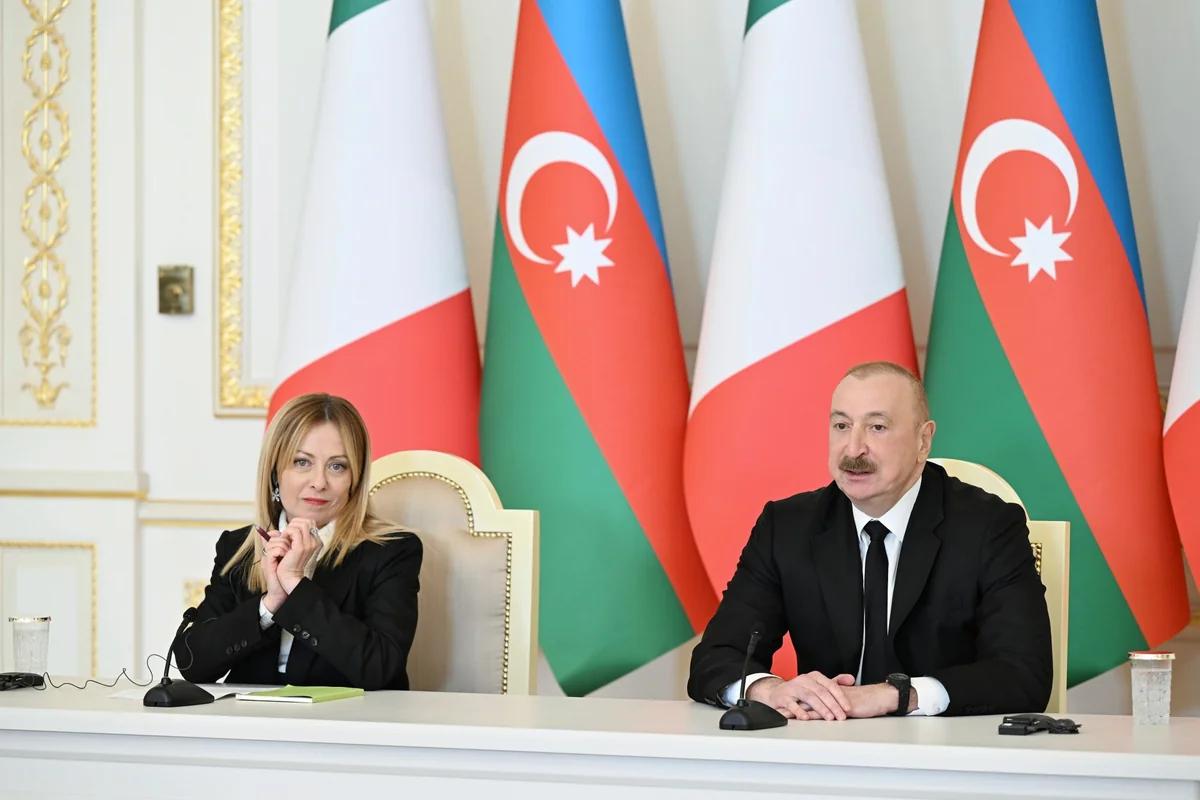
The resolution has limited capacity to trigger immediate legal consequences, particularly as Azerbaijan no longer participates in PACE’s work. Nevertheless, its political and diplomatic significance remains considerable.
First, it establishes an official institutional framework within the Council of Europe. Rather than treating the cases of individual journalists or activists separately, the resolution frames the issue as a systemic silencing of critical voices.
Second, it calls on Council of Europe member states and the European Union to make greater use of bilateral and multilateral channels to press for the release of political prisoners, reject politically motivated extradition requests, and pay closer attention to asylum claims from at-risk activists.
Third, its call to invoke Article 52 of the European Convention on Human Rights, together with its emphasis on the implementation of European Court of Human Rights judgments, suggests that the issue could move into a more robust phase of legal scrutiny.
In the longer term, the shrinking of civic space weakens feedback mechanisms in any political system. In the absence of independent media, watchdog NGOs and human rights defenders, corruption, policy failures and public discontent tend to become visible only at a later stage. Public participation declines, society becomes more passive, and dialogue between the state and society is increasingly replaced by the language of security and loyalty.
The approaches taken by the UN Office of the High Commissioner for Human Rights, the Council of Europe and CIVICUS likewise suggest that an open civic space is not only a matter of protecting rights but also a prerequisite for stability and accountability. Human Rights Watch’s 2026 World Report and the CIVICUS Monitor similarly conclude that pressure on government critics and independent media in Azerbaijan continues.
In theory, the Azerbaijani authorities have three possible courses of action: restore dialogue with PACE and pursue legal and technical reforms; reject the criticism outright as politically biased; or seek to ease international pressure through selective concessions.
The experience of the past two years suggests that the authorities have favoured the second approach. However, the most effective path towards reducing long-term tensions still lies in meaningful reforms to legislation and judicial practice.
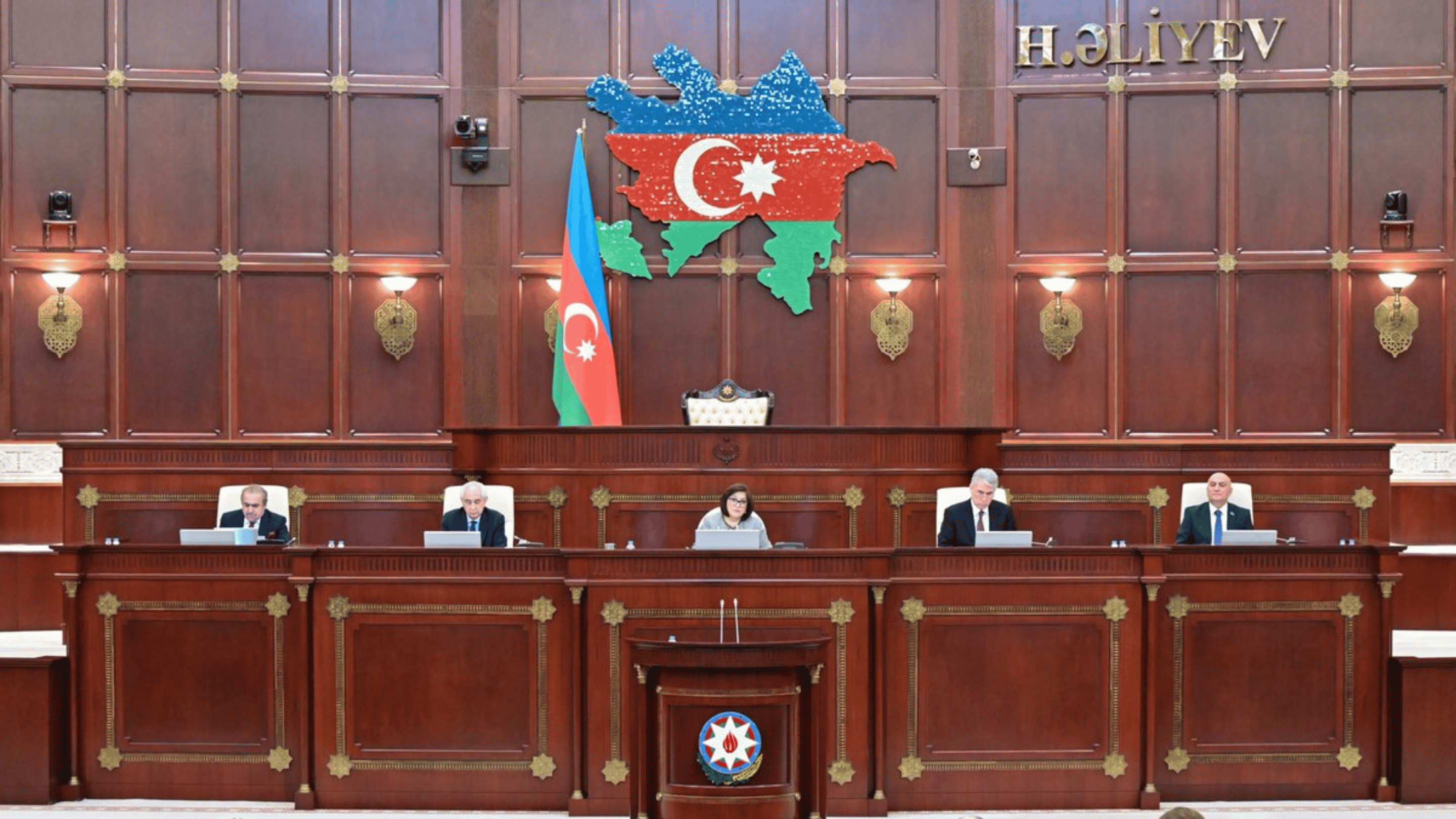
The 24 June resolution does not reveal any new facts about Azerbaijan. Rather, it brings together concerns that have been accumulating for years into a single political and legal diagnosis.
What sets it apart is that the focus is no longer solely on individual arrests, but on the broader shrinking of civic space.
This raises the central question:
Will Baku dismiss the resolution as another temporary expression of political criticism, or recognise it as a warning of a deeper crisis of confidence in its relationship with the Council of Europe — and in the country’s own system of governance?