From Baku to Africa: what could Azerbaijan’s mining partnership with Eswatini bring?






Partnership between Azerbaijan and Eswatini
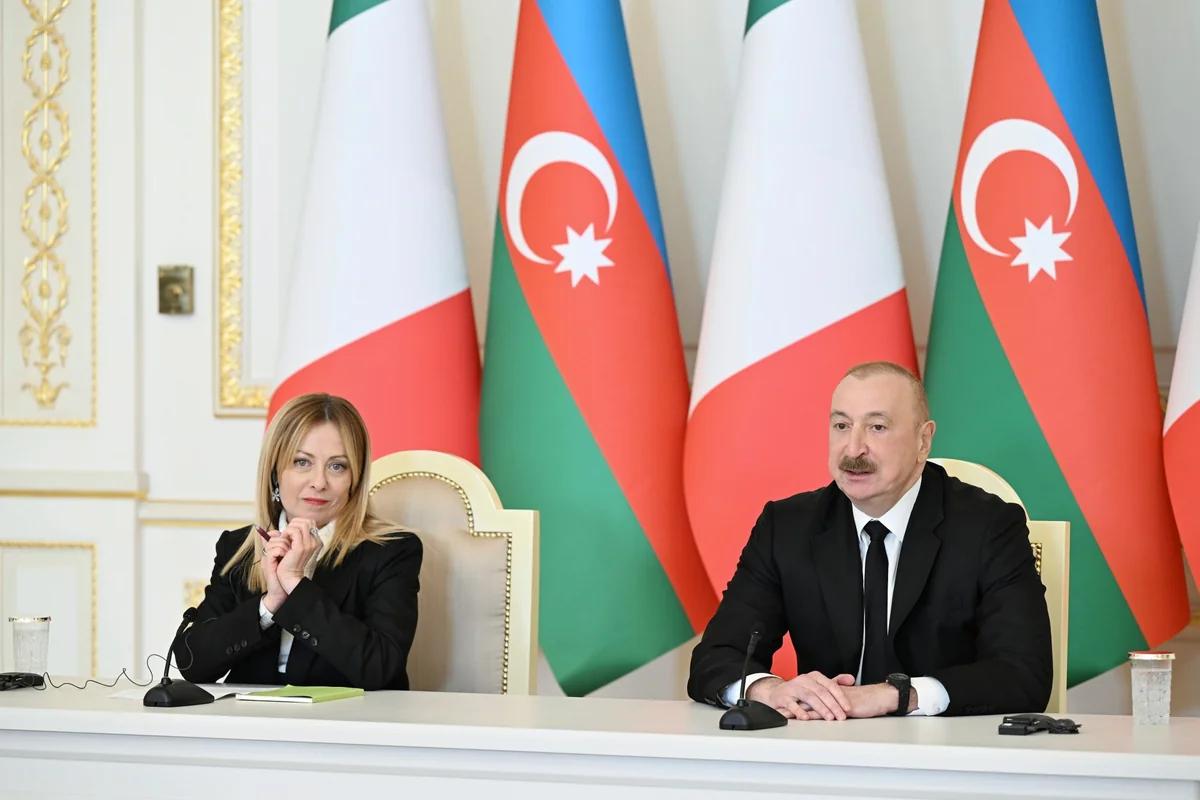
Amid political and economic negotiations taking place during the WUF13 week in Baku, another notable agreement was signed: Prince Lonkhokhela, Eswatini’s minister of natural resources and energy, and Zakir Ibrahimov, chairman of the board of AzerGold, signed a memorandum of cooperation in the mining sector.
The signing coincided with the visit to Baku by Mswati III, his meeting with Ilham Aliyev, and a broader backdrop of high-level political engagement surrounding WUF13.
However, a question remains: is the memorandum merely a diplomatic gesture, or does it mark the beginning of a new phase in Azerbaijan’s Africa policy, driven by more pragmatic and economic interests?
This cooperation did not emerge overnight. As early as 12 November 2024, during COP29, Azerbaijan’s Prime Minister Ali Asadov and Eswatini’s Prime Minister Russell Dlamini discussed the development of bilateral and multilateral relations.
In February this year, Azerbaijan’s diplomatic representative in Southern Africa raised issues of cooperation in energy, transport, investment and, in particular, joint projects in the mining sector during a meeting with Mswati III.
A meeting between the leadership of AzerGold and Eswatini’s ambassador on 6 May formed part of the corporate groundwork for the process.
Eswatini presented its mineral potential, while the Azerbaijani side highlighted its technical and managerial expertise. A statement by Eswatini representative Peter Deon Anderson at WUF13 about “a number of partnership agreements” also suggests that cooperation extends beyond the signing of a single document.

What is the strategic significance of the memorandum?
According to publicly available information, the document is less an agreement tied to a specific deposit and more a framework for future cooperation. Rather than signalling the immediate start of extraction projects, it appears aimed at creating a legal and political basis for exchanging geological data, technical expertise, assessing investment opportunities and developing joint projects in the future.
During a meeting in Baku on 6 May, Eswatini’s ambassador highlighted the country’s rich mineral potential and said that the experience of AzerGold in geological exploration and resource management could play an important role in making effective use of those assets.
Perhaps the most significant aspect is that the memorandum is developing alongside broader energy diplomacy. During his meeting with Ilham Aliyev, Mswati III called on SOCAR to invest in Eswatini’s fuel infrastructure, a strategic oil reserve project and, in the longer term, the construction of an oil refinery.
The king also said Azerbaijan could potentially supply Eswatini with around 10 million barrels of oil annually. Reports suggest President Aliyev instructed relevant ministers to explore cooperation opportunities in mining and oil refining. An extract from Eswatini’s 2026–2027 budget also states that construction of an 80-million-litre strategic oil reserve facility is expected to be completed by the end of 2028.
In other words, cooperation between Azerbaijan and Eswatini appears to extend beyond mining and increasingly covers energy, transport and trade.
The reality of Eswatini’s mining sector
Eswatini’s mining industry is relatively small, though the country possesses notable geological potential. Rights to mineral extraction remain under the control of the king. The system is overseen by the Mining Regulatory Board and the Department of Mines, while the legal framework is based on the Mines and Minerals Act and the Diamond Act, both adopted in 2011.
The sector is estimated to account for around 2% of GDP and exports. However, an official extract from the 2026–2027 budget states that the mining industry contracted by 1.3% in 2025. At the same time, 6.13 million lilangeni (about $371,000) was allocated to identifying additional mineral targets, while the budget of the Ministry of Natural Resources, Energy and Mining amounted to 1.73 billion lilangeni, approximately $10.5m.
The main feature of Eswatini’s mineral resources is the absence of a single dominant deposit. Instead, the country has a range of partially developed mineral reserves.
Anthracite coal: Maloma is considered one of Eswatini’s largest coal deposits, where anthracite extraction has been ongoing since 1992. According to official figures, the Maloma site alone contains around 35.3 million tonnes of coal. Total coal reserves across the country are estimated at 143.5 million tonnes.
Gold: Old gold deposits are located in north-western Eswatini, particularly around the Piggs Peak area. Government data says more than 130,000 ounces of gold have been extracted there since 1910.
Iron ore: Ancient and substantial iron ore deposits are located in the Ngwenya area. Official data suggests the average iron content of the ore is around 45%.
Diamonds, kaolin and silica: Reports indicate that the diamond deposit in the Dvokolwako area contains around 5 million tonnes of ore. Earlier estimates suggested the potential to produce up to 80,000 carats of diamonds annually. Official data also points to kaolin reserves of 700,000 tonnes in the Mahlangatsha area and around 230,000 tonnes of silica in the Madinda Hills region.
Why is this cooperation important for Eswatini?
Eswatini faces not only geological constraints but also significant economic challenges. In 2023, youth unemployment reached 56%.
HIV prevalence among people aged 15 to 49 was estimated at 23.4% in 2024.
The mining sector alone is unlikely to solve these issues. However, recent government budget documents suggest that Mbabane increasingly sees the extractive and energy industries as strategic tools for economic renewal.
What are Azerbaijan’s interests?
For Azerbaijan, AzerGold serves both as an instrument of economic diversification and a platform for external economic expansion.
According to government strategy documents and data from the World Bank, Azerbaijan has set a target of maintaining sustainable growth in non-oil sectors at around 5% between 2022 and 2026. As the relative importance of hydrocarbons declines, the role of the non-oil economy continues to grow.
Official data from AzerGold shows the company has sold 563,000 ounces of gold and 989,000 ounces of silver, generating more than 1.9bn manats (around $1.12bn) for the economy. Within the Chovdar project, gold reserves increased from 179,000 to 609,000 ounces. Between 2017 and 2021, 243,355 ounces of gold were extracted during the oxide stage of the deposit.
Meanwhile, the Filizchay deposit — with underground resources estimated at 112.71 million tonnes — is considered one of Europe’s largest polymetallic deposits.

Why Eswatini?
First, political access appears to be open at the highest level: the cooperation has been backed by a personal invitation from the king.
Second, the country’s licensing system is highly centralised, which could accelerate decision-making processes.
Third, Eswatini presents itself as an energy and logistics hub between South Africa and Mozambique, openly promoting regional ambitions in fuel supply and even oil refining.
Fourth, the partnership extends beyond mineral extraction. Azerbaijan and Eswatini appear to be seeking to broaden bilateral relations into a wider political and economic partnership. Both countries are trying to strengthen cooperation within the United Nations and the Non-Aligned Movement, while Azerbaijan is also promoting the ASAN public service model in African states.
In other words, the relationship increasingly looks not only economic, but also political and diplomatic in nature.
Potential benefits and risks
If the memorandum moves into the stage of concrete projects, Eswatini could gain several advantages, including technology transfer, new geological exploration, expanded laboratory and resource assessment capacity, job creation and a broader export portfolio.
For Azerbaijan, it would provide an opportunity for AzerGold to test its first significant overseas mining portfolio, expand exports of engineering and technical services, and strengthen political influence across the Global South. In this sense, the document could serve as a pilot project for the internationalisation of Azerbaijan’s non-oil economic strategy.
However, there are also risks.
- First, market risks remain significant. One of Eswatini’s largest coal projects, Maloma Colliery, has in recent months been forced to reduce production and cut part of its workforce because of falling demand from key buyers. The example illustrates that Eswatini’s mining sector remains heavily dependent on the South African market. If industrial output slows in the region, or demand weakens in sectors such as metallurgy and energy, the effects are likely to be felt directly in mining projects and employment in Eswatini.
- Second, challenges related to infrastructure and water supply persist. Government documents on mineral resources note that full-scale development of some coal deposits would require additional railway lines, reservoirs and even new settlements. Without efficient transport links connecting extracted coal or ore to ports and industrial centres, projects lose economic viability. Mining activity also requires large volumes of water, making investment in water infrastructure critical.
- Third, there are risks linked to governance and environmental standards. Eswatini’s official documents stress the need for stronger environmental oversight, greater protection for local communities and a fairer distribution of economic benefits from extractive projects. This suggests that, despite the sector’s considerable potential, implementing such initiatives could involve complex governance and social challenges. In other words, entering the market may be relatively straightforward, but delivering long-term, sustainable projects is likely to prove much more difficult.
From a practical perspective, the key question will be what steps both sides take over the coming months. If joint working groups are established and specific pilot projects selected within the next six to twelve months — such as gold exploration or a technical assessment of the Ngwenya iron ore area — cooperation between Azerbaijan and Eswatini in mining could evolve from a diplomatic gesture into a genuine economic partnership.
Otherwise, the agreement risks becoming one of many memorandums signed during WUF13 that ultimately fail to produce tangible results.
Partnership between Azerbaijan and Eswatini