Religion in Soviet Azerbaijan: between Allah and the KGB — historian Jamil Hasanli’s first article






Religion in Soviet Azerbaijan
In the former Soviet Union, including Soviet Azerbaijan, religious life — particularly Islam and its followers — went through a difficult and dramatic period.
During the last 50 years of Soviet rule, both overt and covert struggle for control over religion took place between the KGB and Allah. Throughout this period, in line with communist ideology, the abbreviation KGB was always written in capital letters, while the word “Allah” often appeared in lowercase in official discourse.

Jamil Poladkhan oglu Hasanli is a prominent Azerbaijani historian, Doctor of Historical Sciences and professor.
He was born in 1952 in the village of Aghalykend in the Bilasuvar district. Over many years, he has worked as a professor at Baku State University and Khazar University. He is known for his in-depth research on the history of Azerbaijan and the Soviet Union in the 20th century, the Cold War period, South Azerbaijan and international relations. He has authored several books and is noted for an objective style based on archival documents and factual evidence.
Between 1988 and 1991, he took an active part in the Azerbaijani national liberation movement. He was a member of the Azerbaijani Popular Front and was involved in its organisation at Baku State University. In 1993, he served as an adviser to the president of Azerbaijan. From 2000 to 2010, he was elected twice as a member of parliament. In 2013, he became chairman of the National Council of Democratic Forces and ran in the presidential election that year as a unified opposition candidate.
Jamil Hasanli is publishing a series of articles titled “Religion in Soviet Azerbaijan: between Allah and the KGB” on his Facebook page.
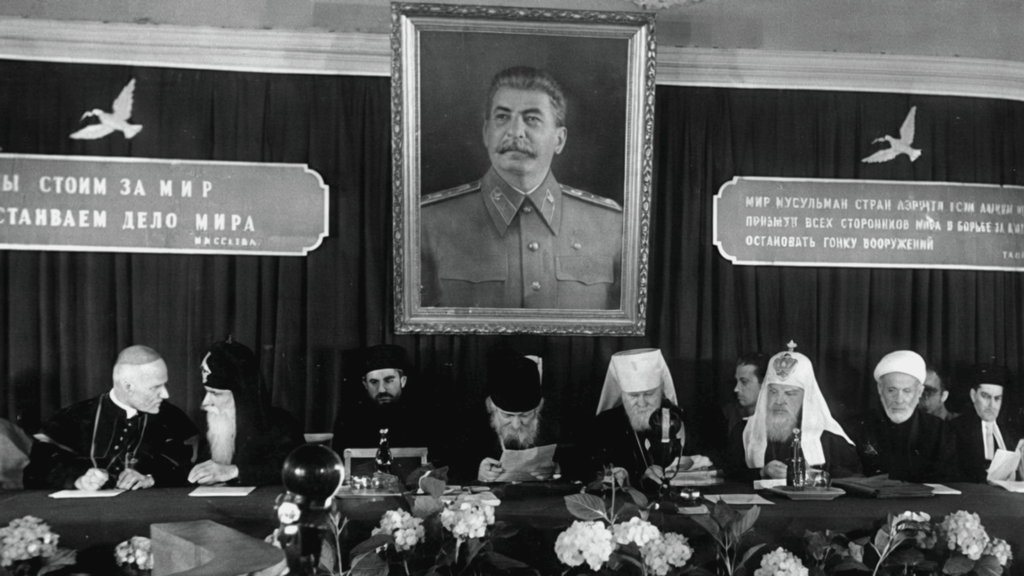
In the 1920s and 1930s, atheist propaganda expanded widely across the Soviet Union, including in Azerbaijan. As elsewhere in the USSR, the persecution of religion and clergy in Azerbaijan began well before 1937, the year associated with Stalin’s mass repressions. Authorities arrested a number of prominent Islamic scholars, sent them into exile and subjected them to severe repression, including execution. Alongside the persecution of clergy, religious institutions were destroyed or repurposed. Churches and synagogues were also affected, including those in central Baku where religious services had been held.
However, after the outbreak of the Second World War, the Soviet leadership adopted a more accommodating stance towards religion, including Islam. The authorities needed this shift for several reasons. They relied on appeals from religious leaders to support mobilisation into the army. They also sought help in raising funds for the war effort. At the same time, they aimed to address Muslims worldwide with calls for jihad against Nazism (see the 1944 appeal by Sheikh-ul-Islam Akhund Agha Alizade to Muslims around the world).
How tolerant was the attitude towards religion during the war years?
In the early years of the war, intelligence reports from various regions indicated that newly mobilised conscripts were being blessed with the Quran before being sent to the front. Other reports noted that “bulletproof” prayers were written down for recruits and sewn into the lining of their clothing. Despite this, and given the needs of the army, the People’s Commissariat for State Security did not interfere with such practices.
As part of this more accommodating approach, the authorities established several official religious bodies. On 10 June 1943, they created the Spiritual Administration of Muslims of Central Asia and Kazakhstan. In March 1944, they set up the Spiritual Administration of Muslims of the North Caucasus, based in Buynaksk in the Dagestan ASSR. On 14 April of the same year, they established the Spiritual Administration of Muslims of Transcaucasia, with its centre in Baku, the capital of the Azerbaijan SSR.
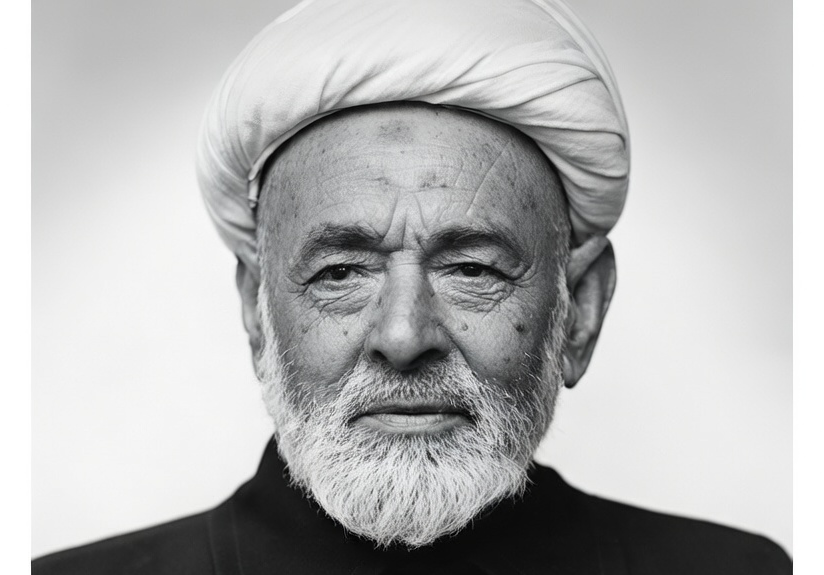
On the eve of Sovietisation, this body was headed by the last Sheikh-ul-Islam, Akhund Molla Agha Alizade. He was an educated and enlightened religious figure who received higher theological education at the University of Theology in Baghdad and at the Higher Religious University in Najaf. He placed such emphasis on education that, after his death in 1954, his grandson Masud Alizade later became First Secretary of the Azerbaijani Komsomol.
Notably, the Spiritual Administration of Muslims of Transcaucasia was located in Baku on Kamo Street (named after Simon Ter-Petrosyan), and this did not provoke objections.
When it is said that the Spiritual Administration of Muslims of Transcaucasia was created in 1944, it in fact refers to its restoration. The body had operated between 1872 and 1917 with its centre in Tiflis, and between 1918 and 1920 in Baku. After Soviet power was established in Azerbaijan in April 1920 and declared the state atheist, the authorities no longer saw a need for such an institution. The restoration of these structures in 1943–1944 also reflected Moscow’s intention to expand its influence in the Muslim East after the war. The aim was to show Muslim populations along the USSR’s southern borders that the Soviet Union was not an atheist state.
As part of this effort, Sheikh-ul-Islam Alizade travelled to Iran from 22 May to 26 June 1945. He delivered sermons in mosques in Tabriz, Tehran, Qom and Mashhad, and met Mohammad Reza Shah. After the 34-day visit, Azerbaijan’s State Security Commissar Stepan Yemelyanov prepared a 22-page secret report and sent it to Moscow.
However, this strategy did not materialise. Soon after the war, the Soviet Union resumed its campaign against religion. Post-war ideological policies associated with Central Committee secretary Andrei Zhdanov affected both religious institutions and believers. The wartime tolerance gave way once again to militant atheism. By the late 1940s, the Ministry of State Security had restored comprehensive surveillance over clergy and Islamic scholars, marking a new wave of repression that continued even after Stalin’s death.
In 1955, Anatoly Guskov, chairman of the State Security Committee of the Azerbaijan SSR, sent a detailed report to the USSR KGB based on intelligence materials from the so-called “Islamists” case. The document referred to alleged links between several religious figures living in border regions and clerics in Iran.
Guskov wrote that intelligence data had not confirmed any ties between Mir Muhammad Kazymov, a resident of the Astrakhanbazar district who was under investigation in the case, and Iranian intelligence services. As a result, the case against him was closed in August 1955. However, Guskov informed Moscow that surveillance of Kazymov would continue.
Similar information appeared in the case of mullah Huseyn Teymurov. Reports had suggested contacts with Iranian intelligence before 1950. In practice, what Guskov described as “espionage” amounted to the illegal import of religious literature and various pamphlets.
After the death of Sheikh-ul-Islam Akhund Molla Agha Alizade in 1954, Mirmohsun Hakimzade was elected chairman of the Spiritual Administration. He had received a solid religious education in Shiite centres such as Mashhad, Khorasan and Najaf. In 1928, Azerbaijan’s political administration arrested him and confiscated his extensive library of religious literature. He was released six months later and in the following years worked in various manual jobs in Baku.
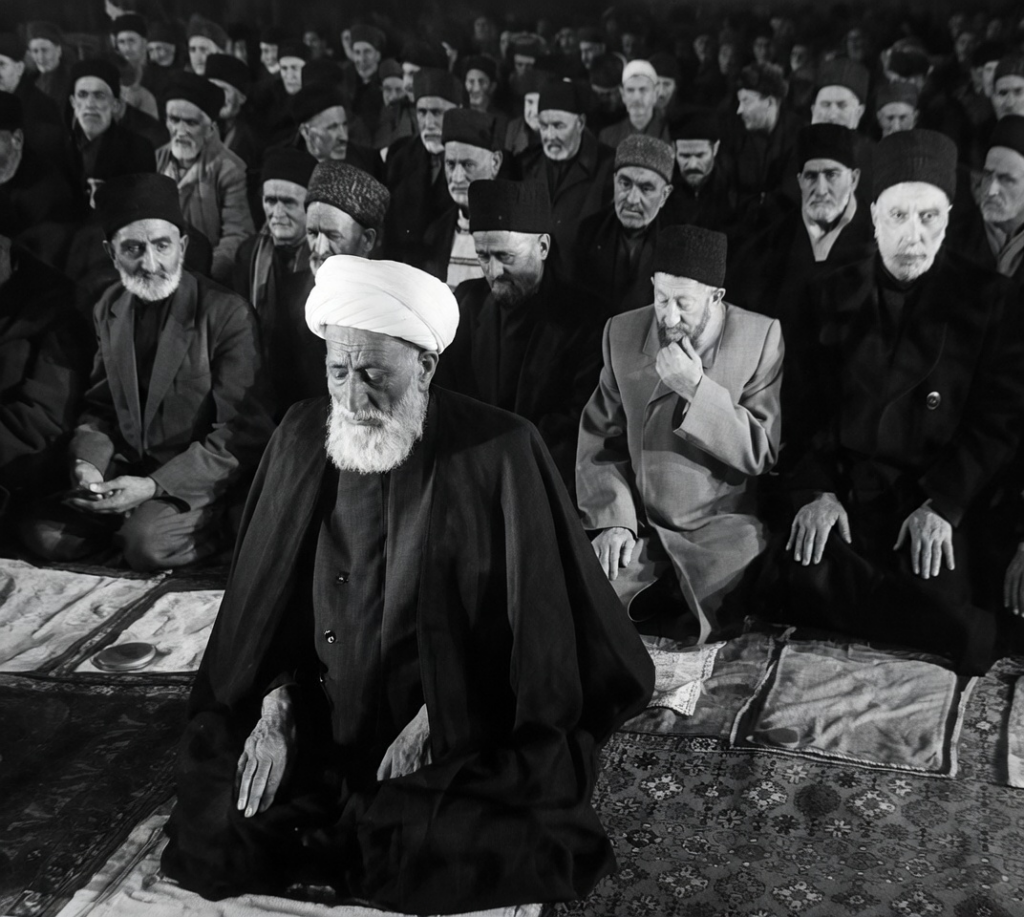
After the restoration of the Spiritual Administration of Muslims of Transcaucasia in 1944, Mirmohsun Hakimzade was elected deputy chairman and held the post until 1954. Following the death of Akhund Agha Alizade, a congress of Muslims of Transcaucasia convened. Delegates elected Sheikh Mirmohsun Hakimzade as chairman of the Spiritual Administration of Muslims of the Caucasus by an overwhelming majority.
After Stalin’s death and the 20th Party Congress, he sought to take advantage of the relative liberalisation in Soviet society. He pushed for the opening of new mosques, permission to issue calls to prayer from minarets in some mosques, and the construction of new madrasas.
Sheikh-ul-Islam Mirmohsun Hakimzade was a notable figure. Despite the difficulties, he tried to observe religious rites and adhere to Islamic law. In September 1958, after the death of Azerbaijan SSR Foreign Minister Mahmud Aliyev, his wife approached the Spiritual Administration and asked Hakimzade to perform the funeral prayer and recite the Quran.
However, as the Sheikh-ul-Islam began preparing for the funeral prayer, it became clear that the body was not present. When asked about its whereabouts, the minister’s widow said they feared bringing the body to a mosque and requested that the prayer be performed in absentia. Hakimzade replied that it was not possible to perform the funeral prayer without the body.
Religion in Soviet Azerbaijan