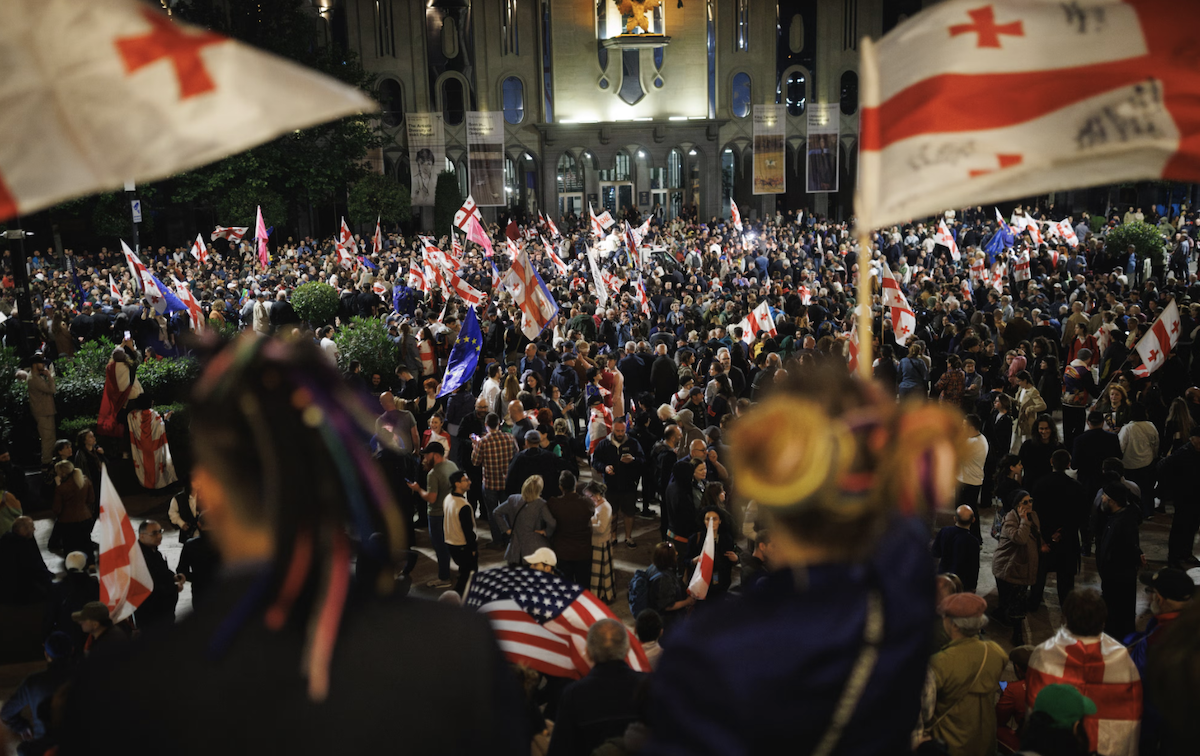
Opinion: Sentence of Georgian opposition figure Elene Khoshtaria is 'political revenge'






Opinion on Elene Khoshtaria’s sentence
Lawyers and the Alliance of Liberals and Democrats for Europe (ALDE) party have reacted to the court verdict against Droa party leader Elene Khoshtaria in a vandalism case involving election banners, saying the sentence is an instrument of political revenge.
Tbilisi City Court has sentenced opposition politician Elene Khoshtaria to 18 months in prison for writing “Russian Dream” on an election poster of Tbilisi Mayor Kakha Kaladze.
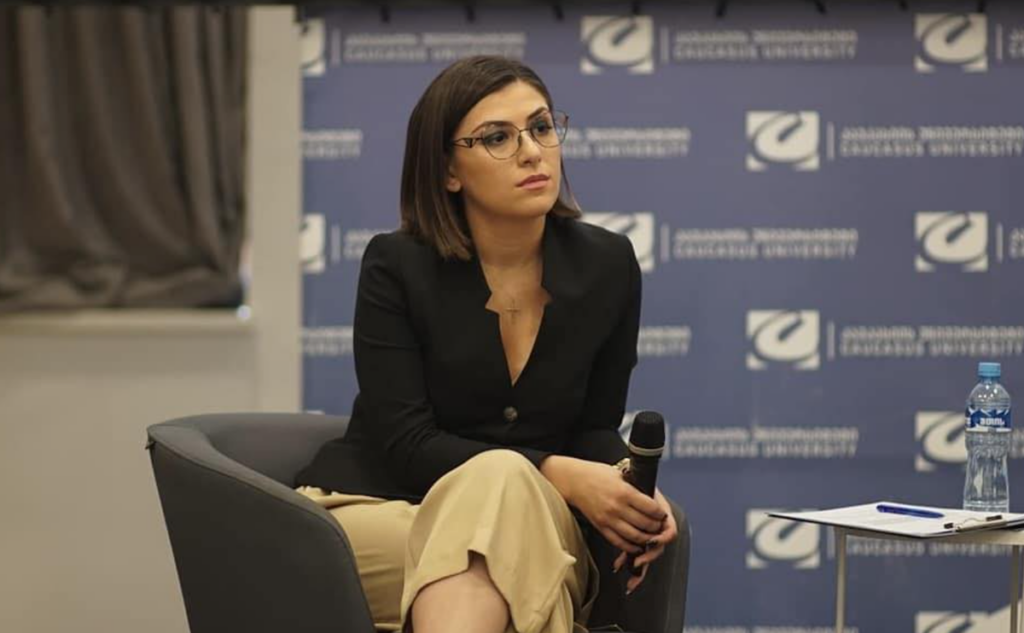
Tamar Oniani, chair of the Georgian Young Lawyers’ Association, said:
“The 18-month prison sentence handed to Elene Khoshtaria for writing on a poster is another example of the judiciary being used as a tool of political revenge.
Such a decision cannot be justified by arguing that the current criminal law framework left the court with no alternative. In reality, the case concerns an act whose classification as a criminal offence is itself questionable. Even if it did fall under this framework, the court had the option to impose a fine (Article 187.1 of the Criminal Code) instead of a custodial sentence.
The criminal response in this case is manufactured and, unfortunately, has become part of a broader trend, where the judiciary treats differing opinions and forms of political expression as grounds for imprisonment. It responds with threats and coercion, often supported by rapidly adopted legislative changes in the Georgian parliament.”
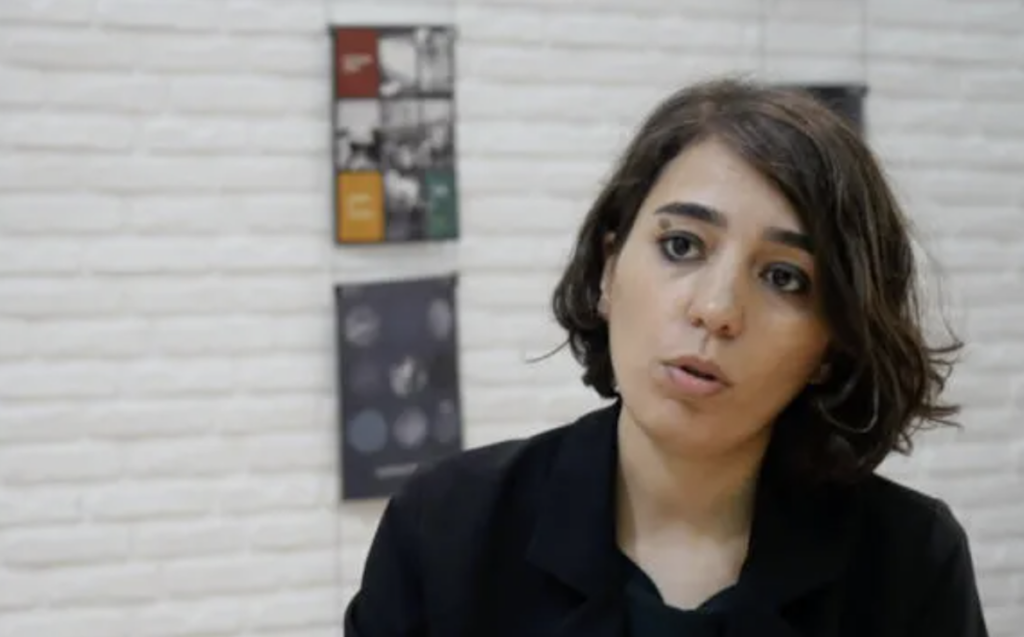
Tamta Mikeladze, director of the Social Justice Centre, said:
“The sentence against Elene Khoshtaria is outrageous and immoral. Let us first assess the legal aspect of the case.
Article 187 of the Criminal Code, under which Khoshtaria was convicted, concerns damage to another person’s property causing significant harm, or its destruction. ‘Significant harm’ in this context applies if the value of the property exceeds 150 lari.
According to judicial practice, ‘destruction’ means rendering property completely unusable or eliminating it altogether, whereas in cases of ‘damage’, the property can be restored.
Footage circulating in the media shows the inscription on Kakha Kaladze’s campaign banner.
It should be emphasised that liability for damaging a campaign banner is предусмотрена a specific law — the Election Code — which directly regulates campaign materials. This excludes criminal liability for such an act and further underlines the absurdity of the charges.
The same code also provides for administrative liability for the unlawful removal, tearing down, covering or damage of election posters.
Even if it is objectively established that the banner was damaged, this still does not justify initiating criminal proceedings. Under the relevant provisions, only administrative sanctions may apply.
Moreover, when determining punishment, it is necessary to assess whether the defendant’s actions fall under the protection of freedom of expression. Freedom of expression includes symbolic acts. This can include writing on a banner, which, given the minor nature of the act, cannot be considered a violation of the rights of any political party.
Criminal law should be used as ultima ratio — a last resort — and only when other, less severe legal measures, such as administrative sanctions, are insufficient. Ignoring this principle amounts to the politicisation of criminal law and a fundamental distortion of its function. In this case, given the nature and consequences of the act, the application of criminal liability is theoretically unfounded.
Therefore, Judge Giorgi Arevadze’s decision is clearly unlawful and another sign of political bias.
It is evident that this case primarily has a political dimension. Punishing politicians for political actions indicates political persecution and repression. In a system where legal tools are used to target specific political figures, the legal system becomes a mechanism of political control and punishment, and the courts act as instruments of the ruling party. In such conditions, the judiciary loses even a minimal standard of independence.
At the same time, it is impossible not to address the moral dimension. Issuing such a decision against a woman politician with four children, whose health has deteriorated — in part due to the political stress she has endured — is deeply immoral. No previous political regime has made such decisions against women as the current leadership of Georgian Dream, which presents itself as a defender of family values.
The courage and resilience of Elene Khoshtaria, who is sacrificing her health in her struggle against the Georgian Dream government, are evident to citizens, regardless of whether they share her political views.”
The Alliance of Liberals and Democrats for Europe (ALDE) said:
“We condemn the 18-month prison sentence handed to Droa party leader Elene Khoshtaria, which is wholly disproportionate to her alleged offence — exercising freedom of expression and advocating for Georgia’s pro-European future. We call for her immediate release and the dropping of all politically motivated charges against her and other leaders and activists of the democratic opposition. We also call for the introduction of additional targeted sanctions. Georgians, you are not alone!”
Opinion on Elene Khoshtaria’s sentence