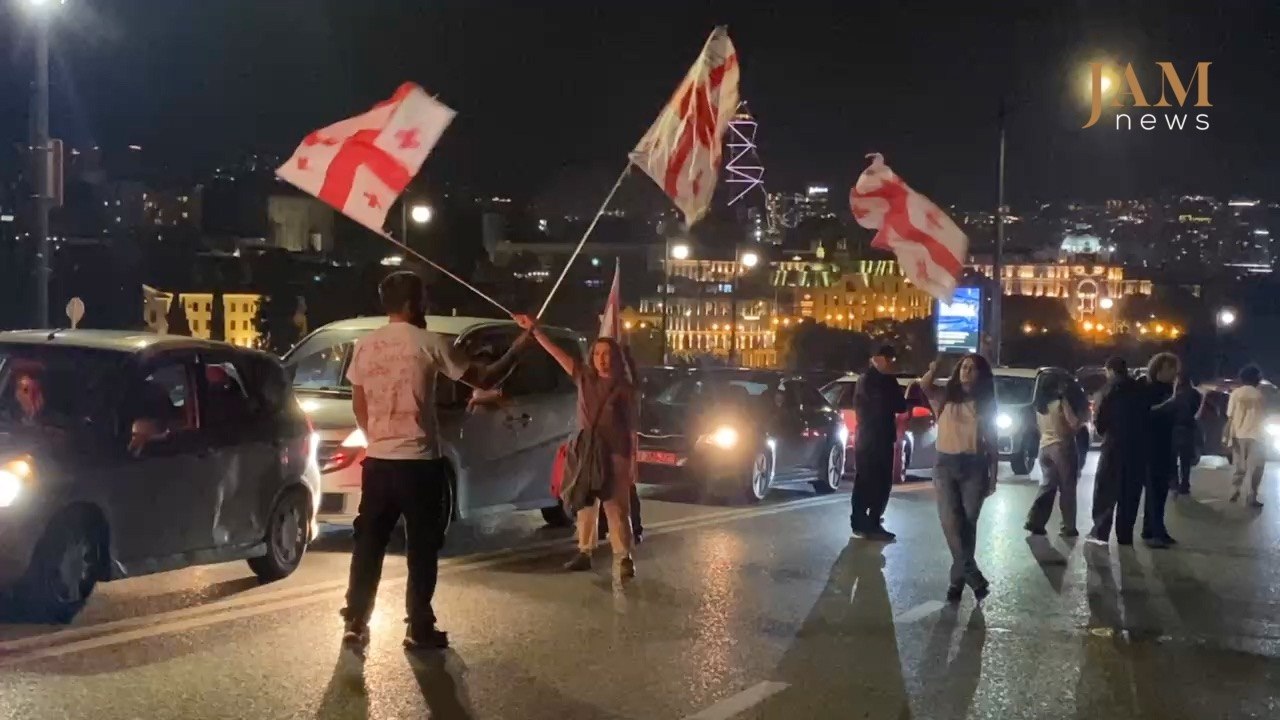
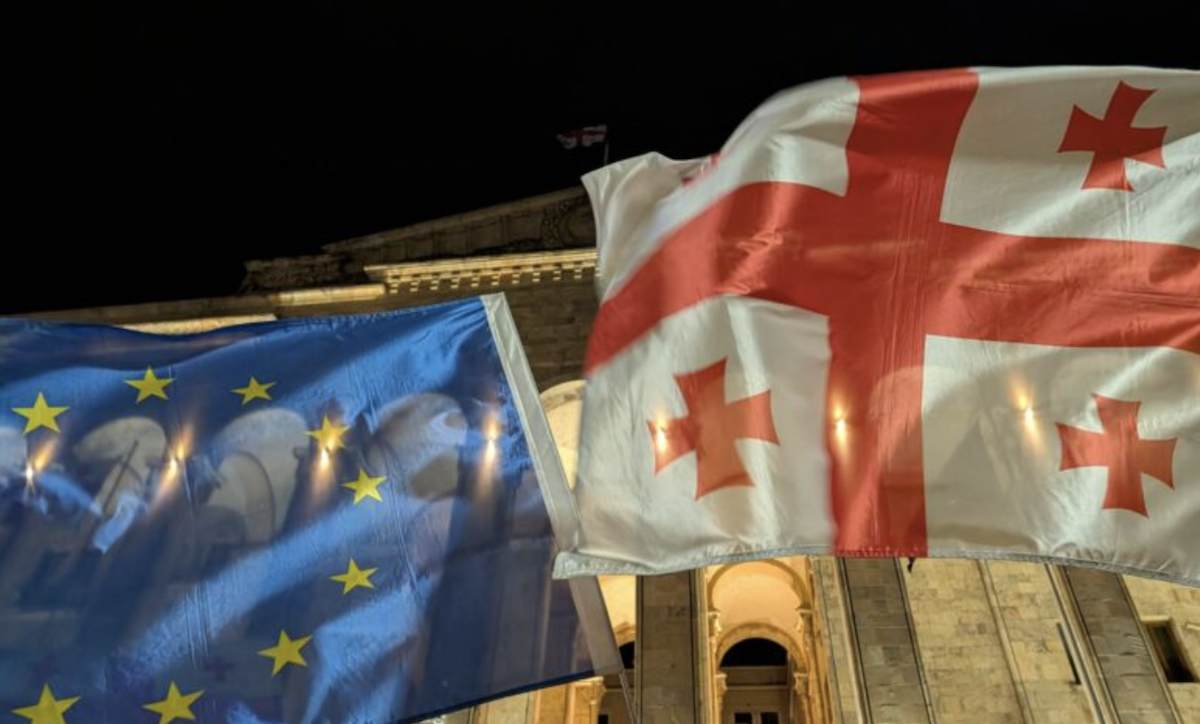
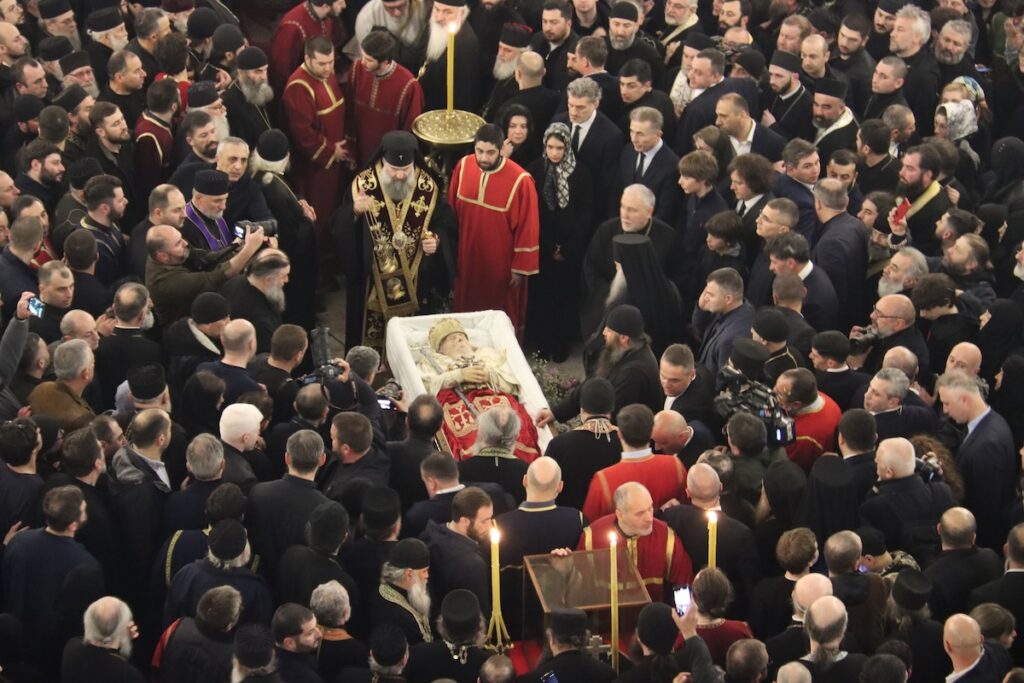
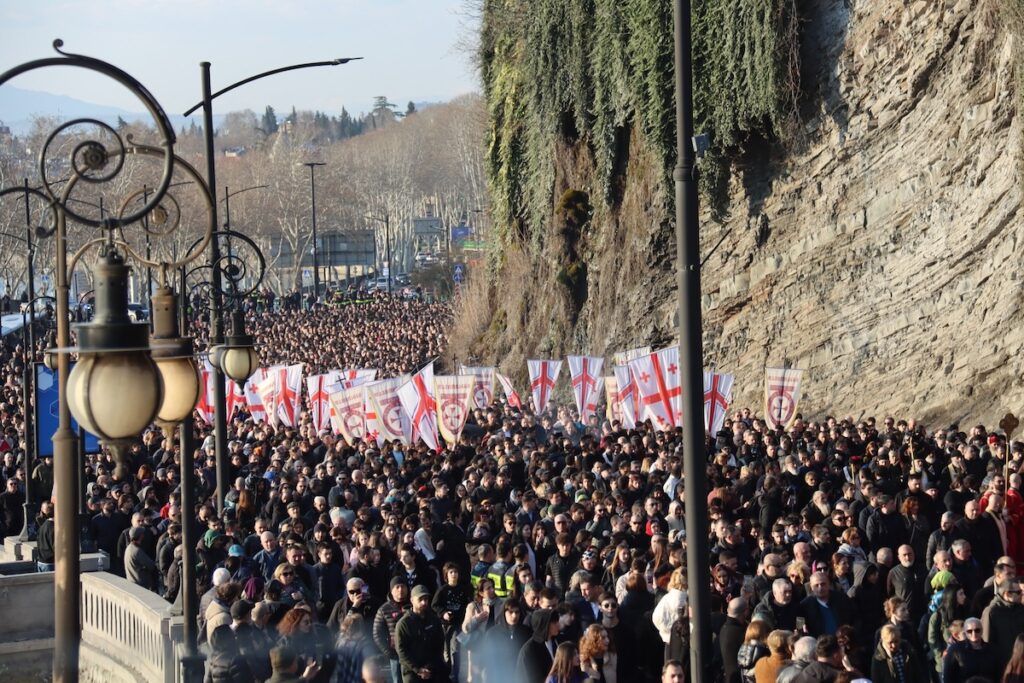
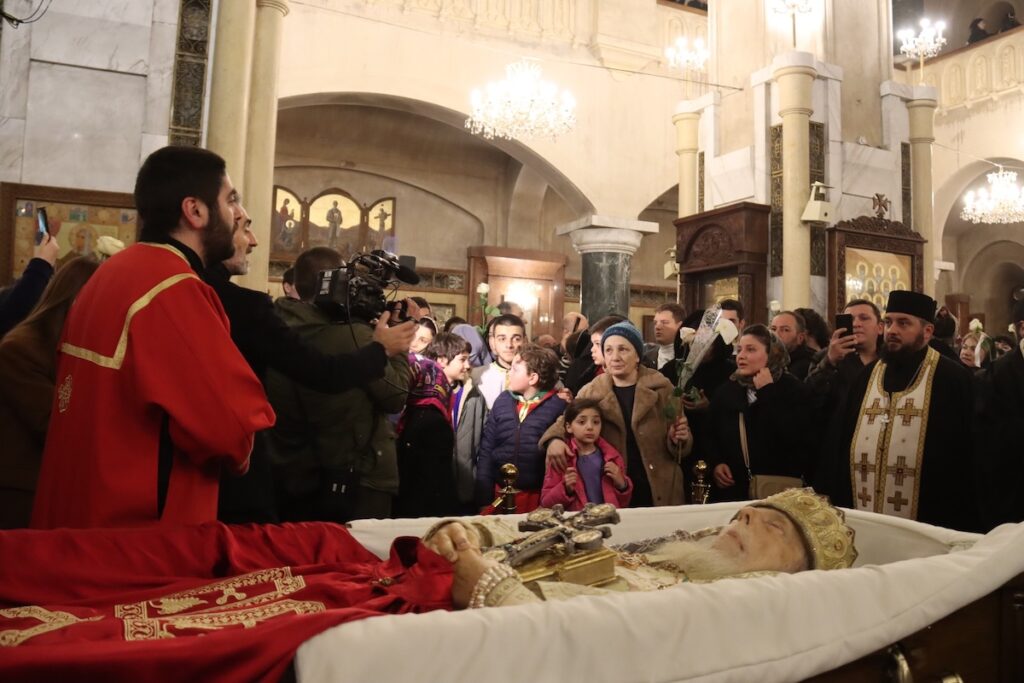
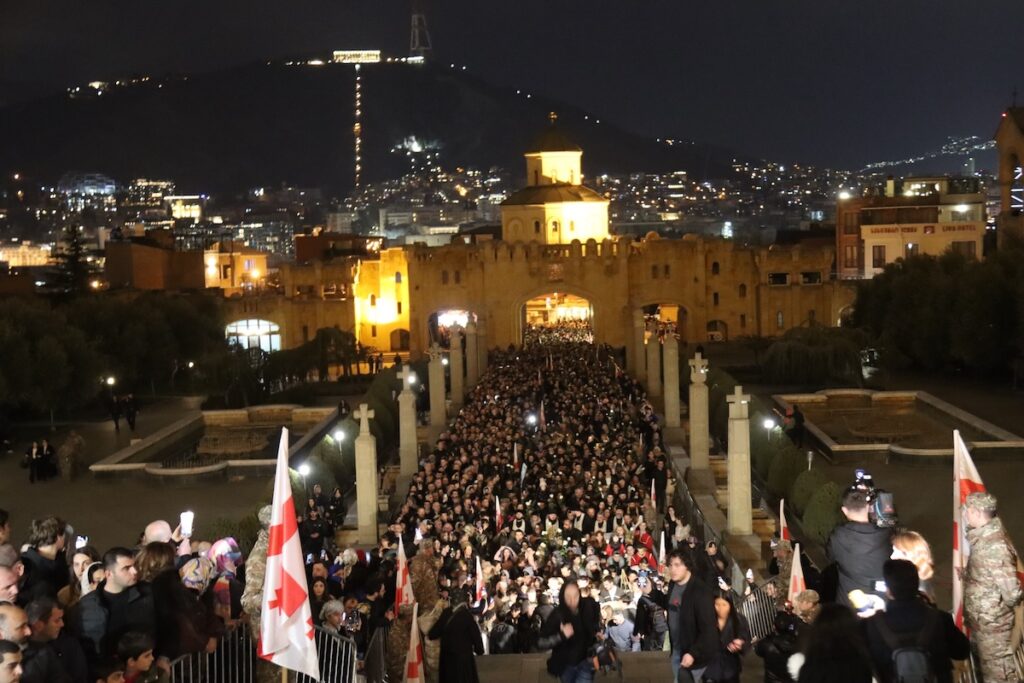
Flags at half-mast as crowds gather at Holy Trinity Cathedral - Georgia bids farewell to patriarch. Photo






Farewell to Georgia’s patriarch
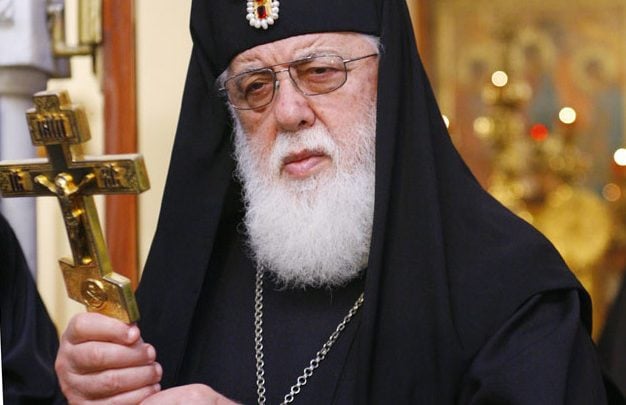
Catholicos-Patriarch of Georgia Ilia II died in hospital late on 17 March 2026 at the age of 93. He led the Georgian Orthodox Church for 48 years. His funeral will take place on 22 March, and the days leading up to it have been declared a period of national mourning in Georgia.
The patriarch will be buried in Sioni Cathedral, to the left of the altar — a place that has traditionally served as the final resting place of Georgian church leaders.
Despite widespread expectations that he would be laid to rest at the Holy Trinity Cathedral, the final decision followed Ilia II’s own wishes. He had expressed a desire to be buried at Sioni Cathedral.
On the day of the funeral, the Sunday service will begin at 09:00. Locum tenens of the Patriarchal Throne, Metropolitan Shio, will lead the service together with church hierarchs and will oversee the Church until a new patriarch is elected.
Ahead of the funeral, a civil memorial service is being held at Holy Trinity Cathedral, which is currently open around the clock. On 22 March, access to the cathedral will be restricted to pass holders.
Crowds have continued to gather at the cathedral, with a steady stream of people arriving to pay their respects. Many have been willing to stand in the rain overnight to honour the patriarch’s memory.
On 19 March, the patriarch’s godchildren — thousands of people baptised under a mass baptism tradition introduced by Ilia II — held a procession from Avlabari to Holy Trinity Cathedral. The initiative, launched in 2008, saw Ilia II personally act as godfather to third and subsequent children in Georgian families. As a result, thousands in Georgia count the patriarch as their godfather.
Due to an expected increase in passenger traffic, the capital’s public transport schedule has been temporarily adjusted. Tbilisi City Hall says the metro will run until 02:00 instead of midnight from 20 to 22 March. Public transport will be free on 21 and 22 March.
Avlabari metro station has been particularly busy due to its proximity to Holy Trinity Cathedral.
According to the government, additional bus and rail services have been scheduled for those travelling to Tbilisi from the regions.
Authorities have carried out a large-scale reorganisation of urban infrastructure to manage the flow of people. Many now see the event not only as a funeral, but as a moment of national significance.
At 12:00 on 21 and 22 March, mourning bells will ring in all functioning churches and monasteries across Georgia.
Patriarch Ilia II: an architect of an era with a complex legacy
Catholicos-Patriarch of Georgia Ilia II, born Irakli Shiolashvili, was born on 4 January 1933. He grew up during the Soviet period, when the state systematically suppressed religion. His childhood coincided with Stalin-era repression, the destruction of churches and the near-total dismantling of religious life.
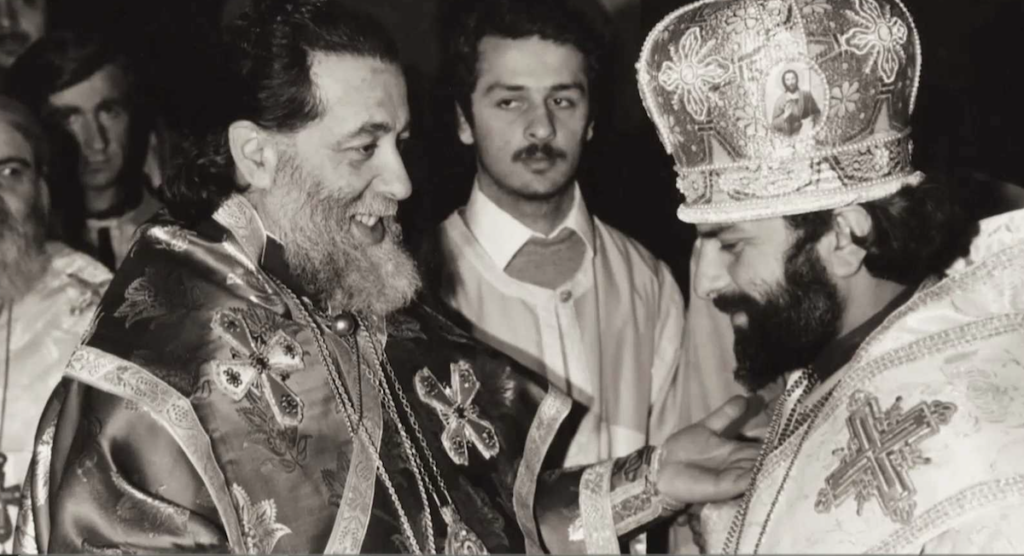
He received his theological education in Moscow, as no such institutions existed in Georgia at the time. At the age of 24, he took monastic vows and adopted the name Ilia. He later recalled that no Georgian attended the ceremony — a symbolic reflection of the Church’s condition at the time.
In 1977, at the age of 44, Ilia II was elected Catholicos-Patriarch of Georgia. He inherited an institution that had been severely weakened: just 34 functioning churches, a few monasteries and around 80 clergy. Half a century later, the picture had changed dramatically. Hundreds of churches had been built, and the Georgian Orthodox Church had become one of the most influential institutions in the country.
Ilia II played a central role in this transformation. His patriarchate is often described as a “sunlit night” — a phrase he coined himself. It reflected his vision of maintaining stability in times of crisis and restoring the Church not only physically, but also symbolically, as a core element of national identity.
One of his major achievements came in 1990, when the Ecumenical Patriarchate formally recognised the autocephaly of the Georgian Orthodox Church — an issue that had remained unresolved for decades. At the same time, the Church gradually evolved into not only a religious institution, but also a social and political actor.
Ilia II’s authority was exceptional. Opinion polls consistently ranked him as the most respected figure in the country for many years. His influence endured despite his age and despite deep political polarisation.
At the same time, his legacy remains complex.
He often sought to maintain political neutrality, which drew criticism. He avoided taking clear positions on several key issues, including relations with Russia, the autocephaly of the Ukrainian Church and domestic political crises. Some saw this as caution, others as a moral compromise.
The 2002 concordat between the Church and the state, which granted the Church special status, remains controversial. Critics argue it disrupted the balance in favour of the Church at the expense of religious pluralism.
Another distinctive initiative was the mass baptism programme, under which Ilia II personally became godfather to tens of thousands of children. The initiative symbolically united society and further strengthened his personal authority. Some families in Georgia even chose to have additional children so they could be baptised by the patriarch.
His patriarchate spanned nearly every major stage of modern Georgian history: the collapse of the Soviet Union, civil war, territorial conflicts, state-building and subsequent crises. He often acted as a moral authority, while carefully avoiding direct political involvement.
His death marks the end of an era in which the Church not only revived but also became one of the country’s central pillars. It also raises questions about how stable this system will be without its central figure.
International reaction
Ilia II’s death has prompted a wide international response, from religious leaders to political figures.
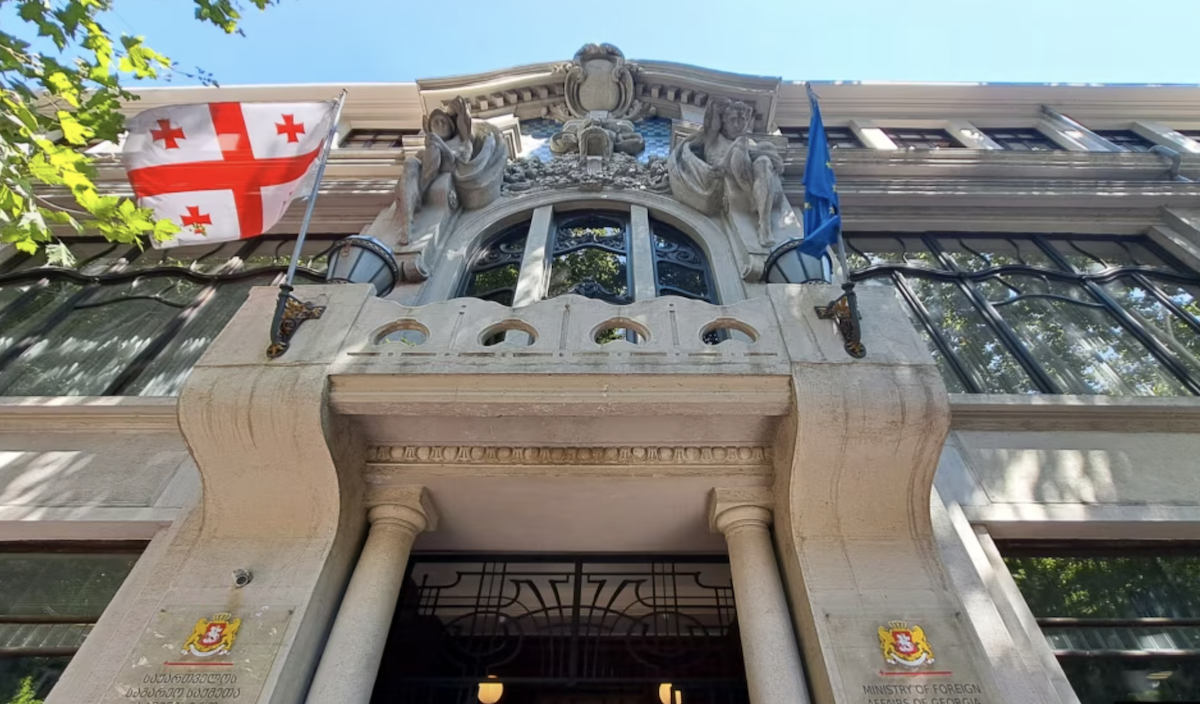
Georgia has received condolences from embassies and senior officials across Europe, as well as from neighbouring countries.
Ecumenical Patriarchate
Ecumenical Patriarch Bartholomew is expected to arrive in Tbilisi on 22 March to attend the funeral. He had been expected to lead the liturgy as the most senior guest, but organisers later said he would not preside over the farewell ceremony.
Vatican
Cardinal Kurt Koch, Prefect of the Dicastery for Promoting Christian Unity, will travel from the Vatican to attend the funeral, according to catholic.ge, citing the Vatican embassy.
Russia
The Russian Orthodox Church is expected to send Metropolitan Veniamin of Minsk and Zaslavl, who also serves as Patriarchal Exarch of Belarus. He has already expressed condolences.
Armenia
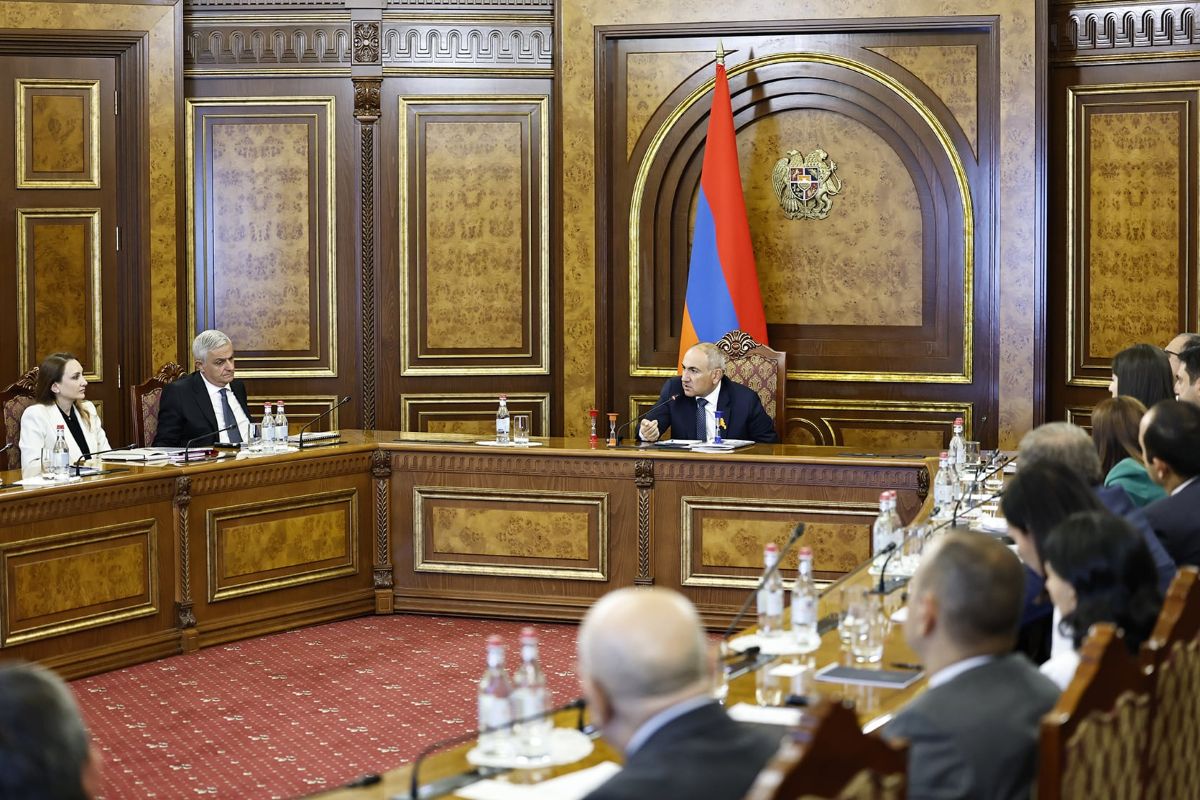
Armenian Prime Minister Nikol Pashinyan said Armenia would take part in the funeral “at the highest level”, although the exact format is still under discussion. He also referred to internal church tensions, saying he did not know whether Armenian Patriarch Garegin II would attend and adding that he does not recognise him as Catholicos.
United States
US Secretary of State Marco Rubio described Ilia II as “a spiritual leader whose legacy will endure for generations”. His statement highlighted both the loss and the patriarch’s influence in Georgia.
Turkey
Turkish President Recep Tayyip Erdogan said he received the news of Ilia II’s death with “deep sorrow” and expressed support for the Georgian government, the Georgian Orthodox Church and the Georgian people.
Farewell to Georgia’s patriarch