Twelve hours in Azerbaijan’s State Security Service: the story of journalist Javid Agha






Security service pressure on journalists in Azerbaijan
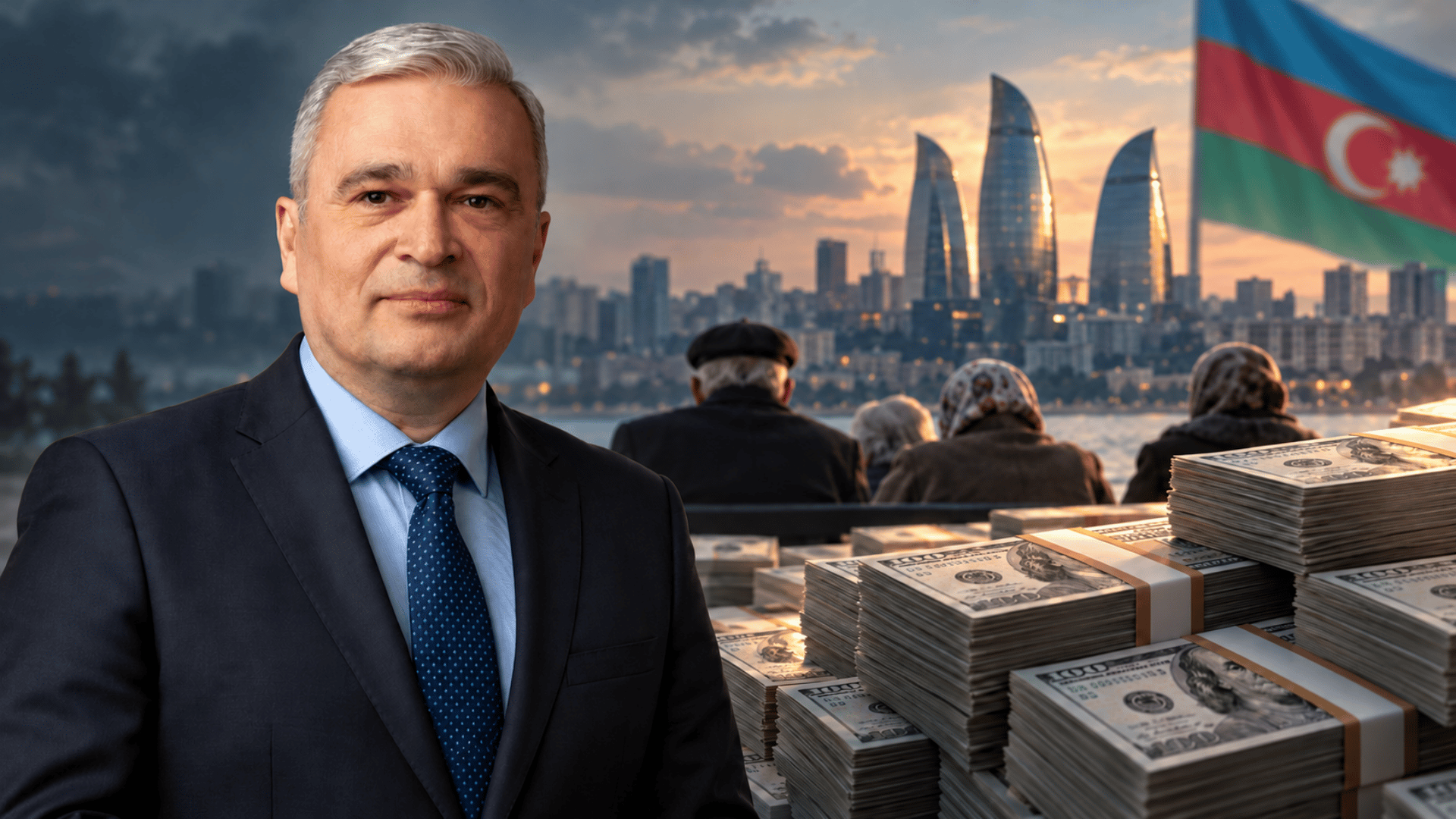
Azerbaijani investigative journalist Javid Agha spent 12 hours in the State Security Service on the very day he was due to leave the country to study in Lithuania — an experience that would dramatically change his life. Since then, he has faced a travel ban, systematic pressure and constant surveillance.
27 August 2024 was meant to mark the start of a new chapter. Javid Agha was preparing to leave Azerbaijan to study at Vilnius University in Lithuania. But at the airport, border guards stopped him and informed him he was banned from leaving the country. Minutes later, he was taken to the headquarters of the State Security Service in central Baku.
Describing the events, Javid Agha says he had been aware of the risks associated with his journalistic work and had prepared for a possible detention. He had installed antivirus software on his phone and shared the contact details of his family and lawyer with his colleague, journalist Ulviya Ali, who at the time was still free. Even so, what happened inside the State Security Service proved far more difficult than he had expected.
Accusations of close ties to Bahruz Samadov
At the State Security Service, he was told the reason for his detention was his “close ties” to academic Bahruz Samadov, who had been sentenced to 15 years in prison on charges of “high treason”. Javid Agha calls the accusation absurd.
In his account, he says their relationship had ended many years earlier, and that his last meeting with Samadov before the arrest had been purely accidental.
The interrogation lasted a continuous 12 hours, from 06:00 to 18:00. According to the journalist, psychological pressure began at the very first stage, which was described as an “introductory conversation”.
He was questioned about his political views, future plans, friends, and his personal ideological positions.
He decided to speak as openly as possible, later describing the decision as a “strategy to prevent blackmail.”
Starbucks instead of torture
He says he was not subjected to physical torture, but stresses that psychological manipulation was present.
According to him, he later learned that another witness in Bahruz Samadov’s case, Samed Shikhy, had been beaten with a copy of Azerbaijan’s Criminal Code. Speaking about his own experience, he recalls with irony that he was twice “treated” to a latte from Starbucks.
Some of the security officers’ questions focused on his private life. In particular, they asked about Bahruz Samadov’s sexual orientation, without explaining how this was related to the “high treason” case.
Javid Agha believes such questions were meant to collect material for later public humiliation.
Within days, Bahruz Samadov did indeed become a target of pro-government media in exactly that context.
Falsified testimony
In the evening, the process of giving formal testimony began.
Javid Agha says that in his statement he described his contacts with Bahruz Samadov as minimal, mostly limited to occasional encounters in public places. However, after reviewing the case materials, he discovered that his words had been significantly distorted.
The documents claim that Javid Agha said Samadov had spread an “anti-Azerbaijani position” on the Khojaly genocide.
The journalist insists this is not true: “I neither said nor heard anything like that.”
Spyware found on his phone
After his release from the State Security Service, Javid Agha says he used an antivirus application and discovered that spyware had been installed on his phone.
The hidden program, called System Settings, was, according to him, capable of recording calls, taking screenshots and tracking his messages.
He did not remove the application immediately and continued using the phone for some time, aware that he was under surveillance.
Social isolation and propaganda
After the incident, the journalist’s social circle shrank dramatically. Many friends blocked him on social media, and some stopped even greeting him during chance encounters on the street.
Among members of the foreign diplomatic corps, only diplomats from France, Israel and Poland kept in contact with him.
In a report aired on Baku TV, a channel linked to SOCAR, Javid Agha was presented as a “member of a terrorist network”.
The broadcast caused serious fear in his family, after which his father urged him to leave Baku.
Сontinuing pressure and “offers”
An officer from the State Security Service named Anar continued to contact the journalist afterwards, suggesting meetings.
According to Javid Agha, during these meetings he was offered various “prospects”, financial support, participation in political projects, and even a “managed role” as an opposition leader.
This process stopped only after his public meeting with a diplomat from a country allied with Azerbaijan. Javid Agha believes this was because the State Security Service began to see him as “untouchable”.
Forced to leave the country
The travel ban was lifted only in January 2025. Javid Agha left for Turkey to join his parents, before moving on to Poland. He now lives in Warsaw, where he continues his journalistic work.
He describes the case against Bahruz Samadov as politically motivated, saying: “This case is part of a systemic attack on academic freedom and freedom of speech.”
“By the time I wrote this text, a year had passed since my detention. Some details may have faded from memory. But one thing I know for certain: in this country, freedom can be taken away in a single day.”
Security service pressure on journalists in Azerbaijan