

Why more foreign students choose to study in Georgia: stories and statistics






In recent years, the number of young foreigners on the streets of Tbilisi has grown noticeably. Many of them have come to Georgia to pursue higher education. Most are from countries in Asia and Africa.
Alongside their studies, foreign students are becoming part of Georgia’s labour market. The most common job for them is working as couriers for food delivery services.
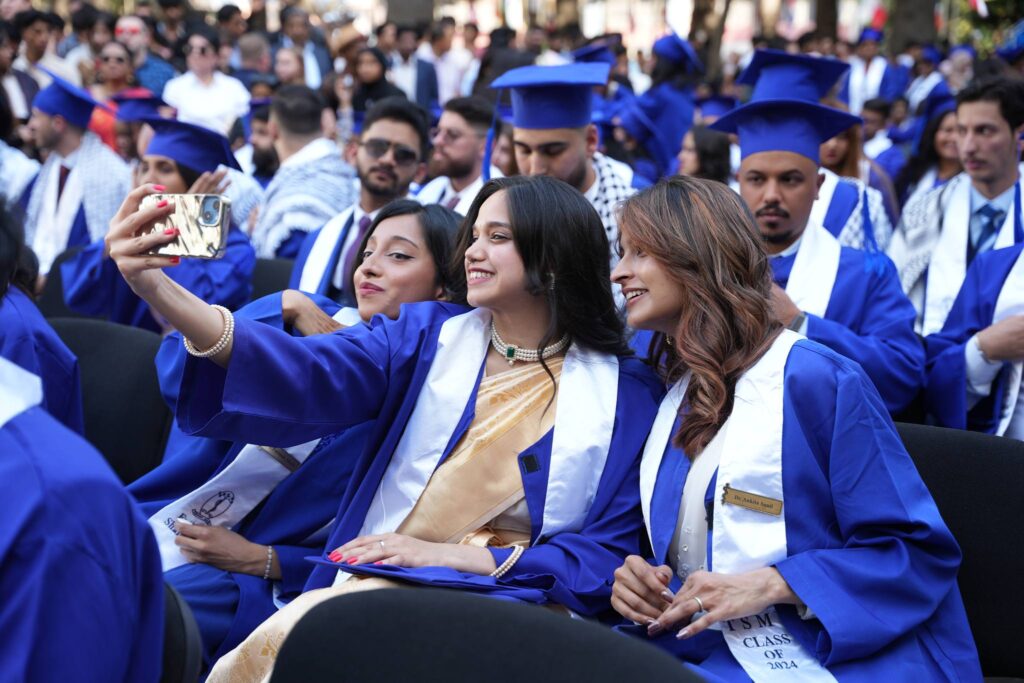
Ninety-one per cent of foreign students in Georgia are studying medicine. Most of them are Indian nationals, where a medical degree is highly valued. One such student is Sanchita Sakri. She has been studying for four years at European University in Tbilisi on an English-language programme.
“In India, students who want to study abroad often turn to special agencies for advice. One of these agencies told me that Georgia is one of the best destinations for medical education. They also recommended a specific university,” Sanchita says.
“For me, as a woman, it was also important that Georgia has a low crime rate. That was another factor that influenced my decision to come here.”
Sanjay Vegi also considers Georgia a safe country. However, the main reason he chose to study there was the relatively low cost of tuition and living expenses.
“When choosing a university, the financial aspect was the most important for me. Compared with other European countries, the cost of studying in Georgia is much lower.
On top of that, I personally know Indian graduates of Georgian universities who were satisfied with their education and had no difficulty finding work after returning to India,” says Sanjay, who, like Sanchita, studies medicine at European University in English.
Both students say they are happy with the quality of education and life in Georgia. At the same time, they note that they sometimes face discrimination from Georgians.
“I don’t feel aggression or negativity either on the street or at university. But we often face discrimination when trying to rent accommodation. My friends and I struggled to find housing because landlords refused to rent to us. From what I’ve seen, students of other nationalities, for example Arabs, do not face the same problems,” Sanchita says.
Indians living in Georgia spoke about racism, discrimination and stereotypes in interview with JAMnews in 2020.
Compared with 2022, the number of Indian students coming to study in Georgia has doubled. Compared with 2018, it has increased fivefold.
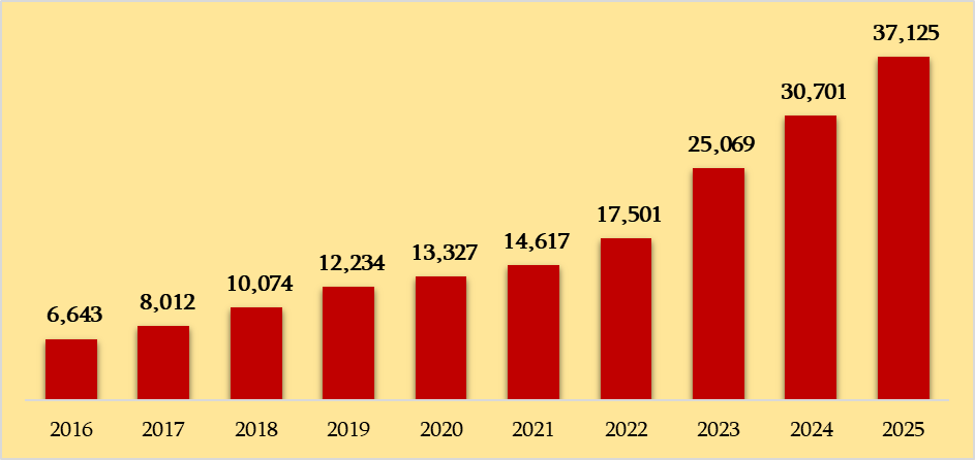
In the 2024–2025 academic year, out of 37,125 foreign students in Georgia, 20,319 were Indian citizens. Students from Jordan ranked second, with 2,487 Jordanians studying at Georgian universities. Compared with 2019, their number has increased twelvefold.
Notably, 2,210 foreign students in Georgia came from Israel. Their number has been rising year on year and has increased fivefold over the past three years.
Another 1,774 students came from Sudan. Sudan is among the ten poorest countries in the world, but English is an official language there, which helps young people pursue education abroad.
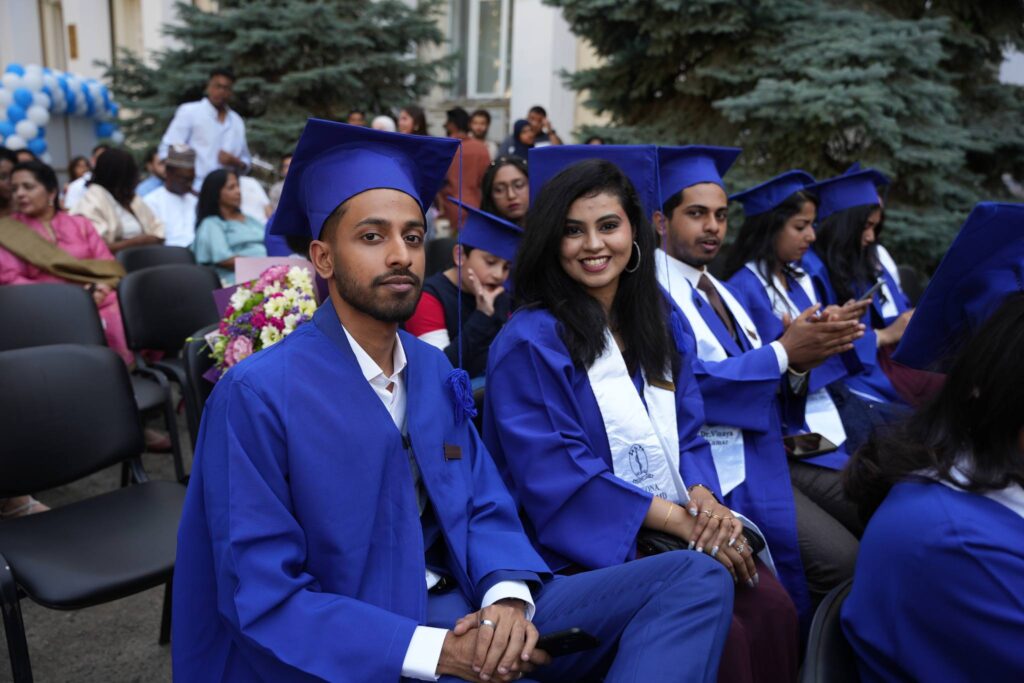
“My parents wanted me to get a medical education abroad. But because my family is not wealthy, we were looking for relatively affordable universities. It was also important that teaching was in English.
That is how we found Tbilisi State Medical University, where I am now studying dentistry. I am in my first year and so far I am very satisfied with the Georgian education system,” says Omer, one of the Sudanese students.
Georgian universities also host Russian citizens. There are 651 Russian students in total. Until 2022, their number had remained stable at around 200 to 300. After the start of the war in Ukraine, it doubled.
Overall, more than 80% of foreign students in Georgia come from India, Jordan, Israel, Sudan, Pakistan, the United Kingdom and Egypt.
At present, out of 37,125 foreign students in Georgia, 33,854 are studying medicine. Another 1,337 are enrolled in natural sciences, 1,298 in business and law, 264 in engineering, and 372 in other fields.
In other words, without the strong demand for medical education, Georgia would have only a few thousand foreign students.
According to Georgia’s National Statistics Office (Geostat), the number of foreign students in the country has increased almost sixfold since 2016. The figure doubled between 2017 and 2019, then growth slowed during the pandemic, before doubling again in 2023–2025.
In total, about 188,000 students are enrolled in higher education in Georgia, with foreign students accounting for 20%. By comparison, foreigners made up 5% of all students in 2016 and 11% in 2022.
The rapid rise in the number of foreign students in recent years has had a broad impact on Georgia’s education sector. Compared with 2018, the education economy has doubled in size. Growth in the sector reached 29% in 2024, up from 18% in 2023.
The largest number of foreign students in Georgia study in English at Tbilisi State Medical University. Tuition fees differ significantly depending on the language of instruction. Annual fees are 2,250 lari (about $830) for programmes taught in Georgian and 8,000 lari (nearly $3,000) for those taught in English. Among private institutions, the highest numbers of foreign students are enrolled at European University and Caucasus International University. Overall, 7,268 foreign students study at state universities in Georgia, compared with 29,857 at private institutions.
Georgian universities are increasingly running marketing campaigns to attract foreign students. At the same time, the number of English-language programmes is growing. As a result, unless disrupted by political developments or other unforeseen circumstances, the number of foreign students in Georgia is expected to continue to rise.
Foreign students in Georgia