Georgia’s neutrality: how new pro-Russian political project is taking shape






On 11–12 December, Georgia’s prime minister Irakli Kobakhidze visited Ashgabat, where he took part in an international forum marking the anniversary of Turkmenistan’s neutrality.
Vladimir Putin, Iran’s president Masoud Pezeshkian and other authoritarian leaders also attended the event. A photograph taken there shows Kobakhidze alongside Putin.
The celebration of Neutrality Day is a long-standing tradition in Turkmenistan. The country marks it every year on 12 December, marking 30 years since the United Nations granted Turkmenistan neutral status.
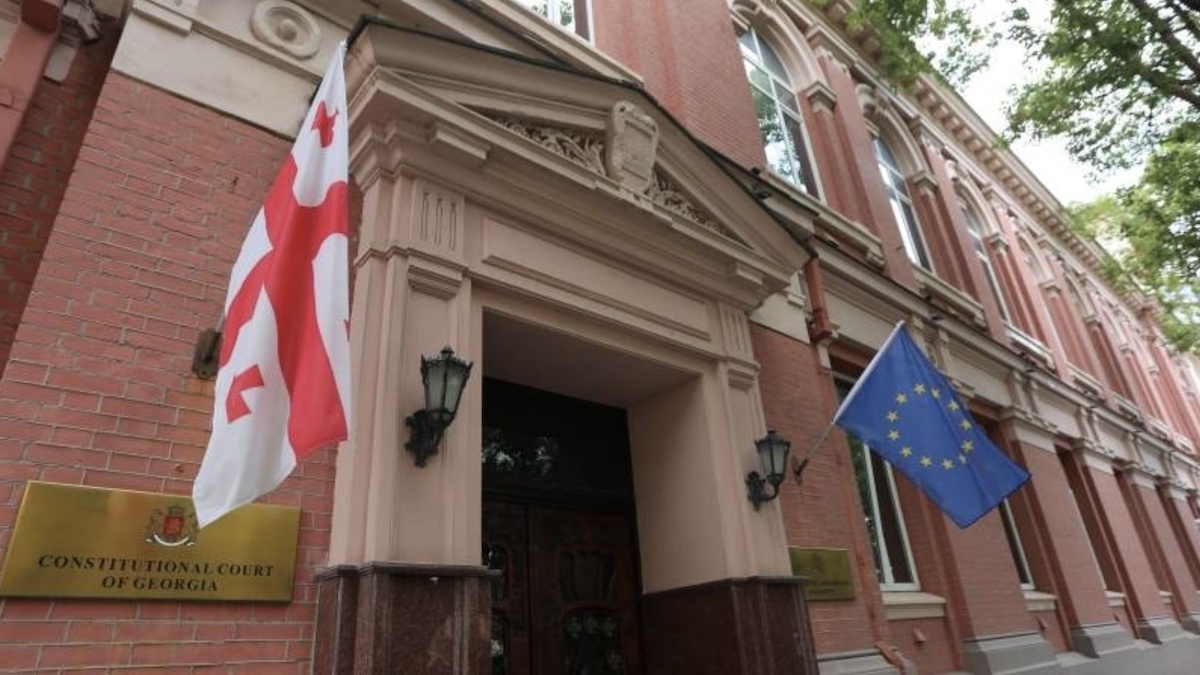
Georgia does not have a similar public holiday. Article 78 of the country’s constitution states that the government must do everything possible to secure membership of NATO and the European Union.
However, in recent months two Georgian political groups – one based in Georgia, the other in Russia – have been actively calling for the repeal of this article.
The word “neutrality” has increasingly been used by experts and politicians close to the ruling Georgian Dream party.
‘Neutral Georgia’
“Neutral Georgia” is one of the main political forces promoting this narrative. It initially presented itself as a civic movement, but was registered as a political party on 1 December 2025.
One of its founders is Vato Shakarashvili, a former member of the ruling Georgian Dream party. This is a common practice for Georgian Dream: creating a separate political party made up of loyalists to advance the most radical, anti-Western and anti-democratic initiatives. Shakarashvili and other leaders have already put forward a number of proposals that were later taken up by Georgian Dream.
“We [must] pull the country out of the euro-illusion and work towards neutral status,” the party said in a statement on 9 December.
One of its first initiatives was a proposal to hold a referendum on declaring neutrality.
“If we want to preserve peace and stability, and achieve an economic breakthrough, development and prosperity in the country, neutrality is essential,” Mr Shakarashvili said.
Another party founder, Bidzina Giorgobiani, has promised to make neutrality one of the main campaign pledges in the 2028 parliamentary elections.
According to him, neutrality would bring Georgia closer to the “restoration of its territorial integrity” and help improve relations with “neighbouring countries”.
“Neutral Georgia” echoes a number of Kremlin propaganda talking points in its statements.
The party has also threatened opposition voters with legal prosecution.
In its view, the European Union has “almost completely degraded”, is fighting Christianity and traditional values, and is overwhelmed by LGBT propaganda — which is why Georgia should abandon its bid to join the bloc.
Russian propaganda treads carefully
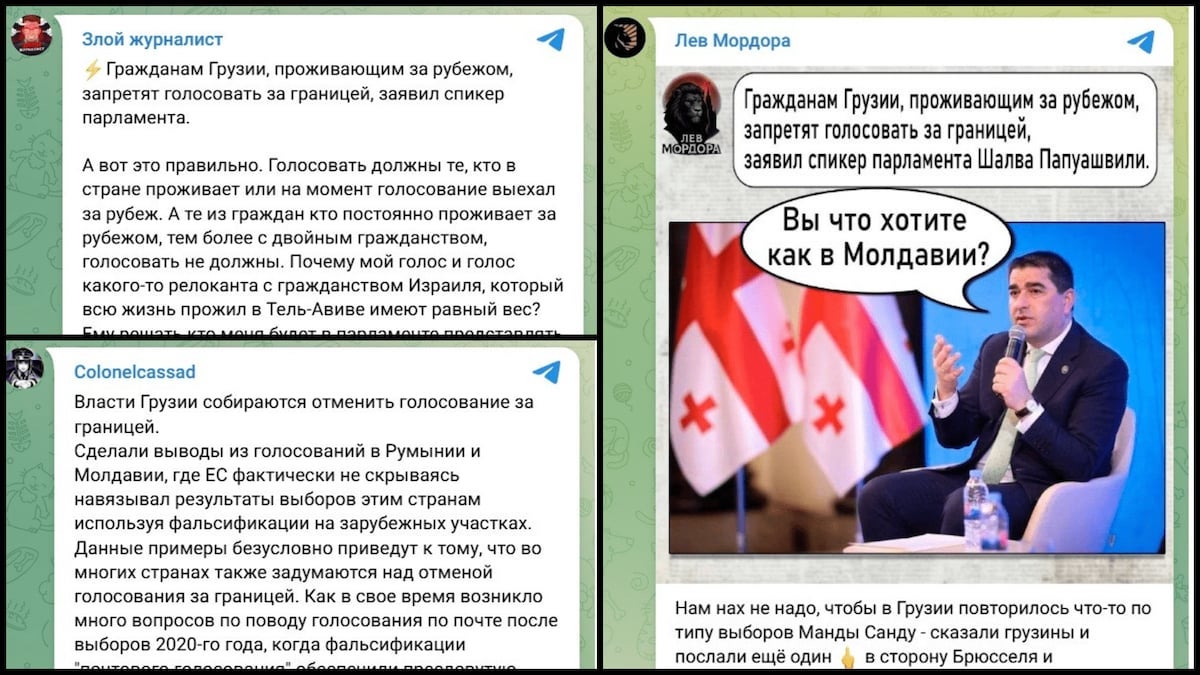
Russian media have shown little interest in “Neutral Georgia”. Brief comments appeared mainly on Telegram channels run by pro-war Z bloggers.
“Neutral Georgia will try to find a sponsor and partner in Russia,” says Vladimir Novikov, head of the pro-Kremlin Institute of CIS Countries.
According to him, the party is “merely a tool of the ruling team [Georgian Dream] to blackmail the European Union and Nato”.
The Telegram channel Kavkazsky Dozor makes a similar claim, describing the party as an “instrument of pressure” on the West.
Another pro-Kremlin organisation, the Centre for Political Technologies, has welcomed “Neutral Georgia” with cautious optimism.
“It is not impossible that Vato Shakarishvili will succeed. But putting neutrality into practice will not be as simple as some may think,” the organisation wrote.
A propaganda favourite
Pro-Kremlin media have already chosen their favourite Georgian party: Solidarity for Peace, led by businessman Mamuka Pipia.
Pipia is a frequent guest on the programmes of Russia’s leading TV propagandist, Vladimir Solovyov.
On 20 November, he suggested that Georgia should form a union state with Russia, similar to Belarus.
According to him, Georgia “faces a choice: continue a confrontational course with Russia or restore historical ties.”
Pipia argues that for Georgia to achieve “true independence,” it must “replace the political elite” and “overcome the influence of the fifth column acting in the interests of the West.”
Solovyov backed him, saying that Tbilisi and Moscow should start their relationship “with a clean slate.”
Pipia frequently makes statements of this kind, which appeal to the Kremlin.
Recently, he also supported Moscow’s proposal to move the Russian-Georgian dialogue from Geneva to Minsk.
By contrast, “Neutral Georgia” and its initiatives have so far received no coverage on Kremlin TV channels or from their main propagandists.
Despite the supposed ideological consensus, they are not mentioned even in Mamuka Pipia’s own Telegram channels or those of his party.
Pro-Russian satellite of Georgian Dream
The civic movement “United Neutral Georgia” was founded in July 2024.
From the outset, it declared that Tbilisi should abandon unconditional EU membership and that Article 78, which commits the country to pursuing EU and Nato membership, should be removed from the constitution.
The movement and its members have already proposed a number of initiatives that were later adopted by Georgian Dream.
For example, in August 2025, a court froze the accounts of seven non-governmental organisations. The prosecution accused them of “sabotage” and attempting to organise a coup in November–December 2024.
The investigation was launched based on a statement from Neutral Georgia, which claimed that these NGOs were part of an “agent network” and should be held accountable for “sabotage”.
The same statement also underpins investigations into opposition politicians.
Earlier, in 2023, Vato Shakarashvili demanded a ban on the non-existent “LGBT propaganda”, which Georgian Dream implemented in September 2024.
Who is promoting Georgia’s neutrality and why