Vanishing Abkhaz language and myth of unity - video interview with Erik Mikaia






Vanishing Abkhaz language and the myth of unity
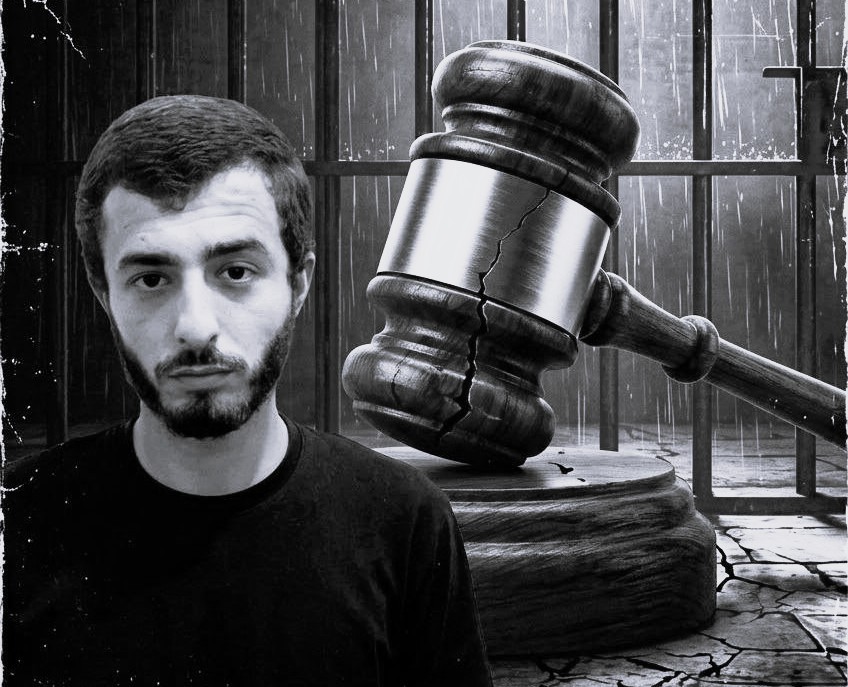
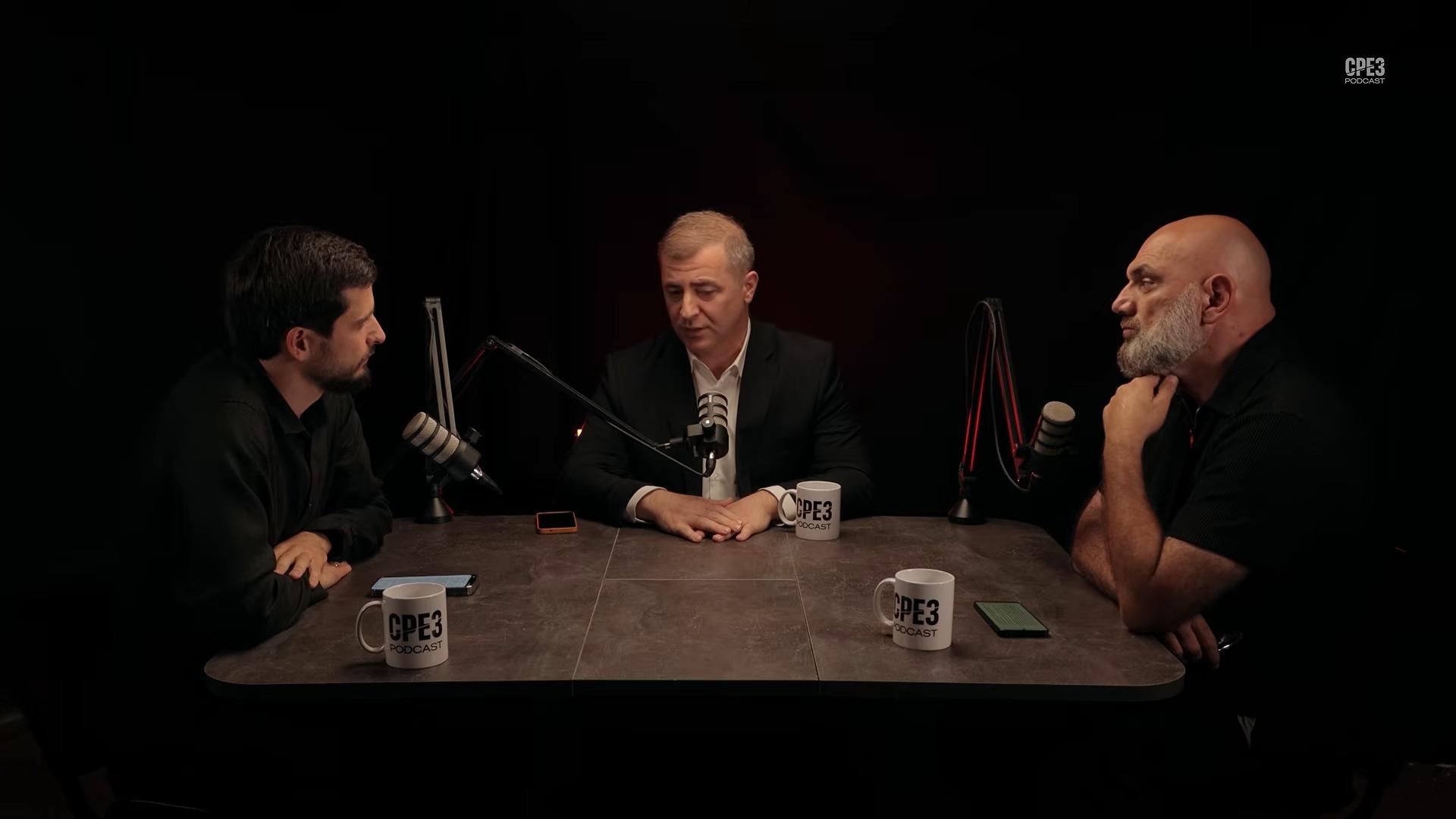
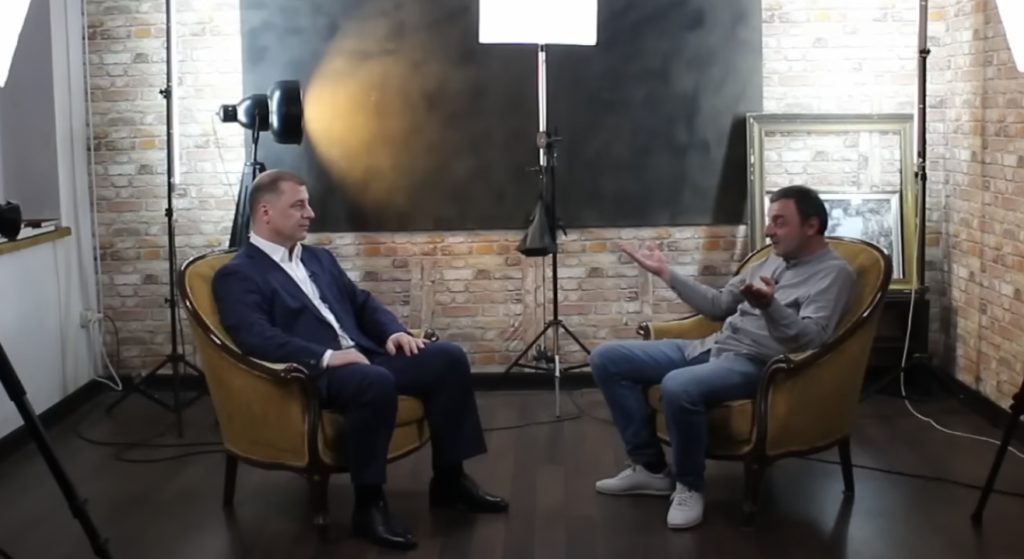
Inal Khashig, the editor of the Abkhaz newspaper “Chegemskaya Pravda,” and musician, showman, and artist Erik Mikaia discuss the “domestic political deadlock” that continues to hinder the development of Abkhazia. Mikaia describes the consolidation of society in Abkhazia as a “unicorn”—a concept everyone knows about, but which “no one has ever actually seen.”
He argues that the nation is exhausted by the “eternal division into ‘yours’ and ‘ours’,” which wastes vital public energy.
Central to this crisis is the “catastrophic” erosion of the Abkhaz language, which, Mikaia warns, is actively vanishing from everyday use.
He believes that while the people are only paying lip service to the goal of self-preservation, the lack of a fundamental plan is leading to a profound loss of cultural perspective.
Inal Khashig: Hello. Today, we have a rather unexpected expert with us—Erik Mikaia. He is known not only in Abkhazia but also far beyond its borders as someone with a sharp wit, a talent for humor, and a deep capacity for analysis. In fact, that is exactly why I invited him today.
Erik, good day.
Given that our program is always dedicated to pressing issues, let me start with this: last week, a civil forum was held with the goal of finding a way out of the domestic political deadlock our society has found itself in. We are caught in a perpetual confrontation between two opposing political forces, and this struggle is severely hindering the development of our state.
Unfortunately, it seems to me that despite the forum taking place, a political revival is unlikely to follow. I didn’t see any real willingness from our so-called political elite to shift from the rigid positions they have frozen into. How do you view this problem, and do you see any potential paths out of this dead-end situation?
Erik Mikaia: Hello once again, Inal. Thank you for inviting me to your podcast. I do watch it and always follow it with great interest; the broadcasts, at least, are easily accessible.
To answer unequivocally… Lord, if I actually had a definitive answer on how to pull us out of this crisis, I would give it. But of course, I don’t have a ready-made solution, and frankly, I don’t think anyone else does either. However, my goal on your podcast is to speak frankly, directly, and simply, and to properly argue my points.
Inal, let’s be clear: I am not saying this forum is just an empty waste of time—I would never utter such stupidities, God forbid—but it simply won’t work. It just won’t work.
Let’s be honest: we are Abkhaz, and we know ourselves better than anyone. No matter how much we try to avoid a conflict with our own consciences, or how much we judge ourselves during quiet evenings, we know the reality.
Regarding this forum—even though I didn’t actively attend it—I am sure all sides waiting for consolidation genuinely want it because there are real proposals on the table. This is not just about criticism. Today, we aren’t talking about the forum in a conditional sense, nor are we speaking about its immediate consequences; we are talking about the root cause of the deadlock and how to eliminate it.
You are a mature, smart person, Inal—is it really possible for a two- or three-day forum to piece together and fix what has been breaking apart for almost 18 years? I believe it is impossible.
To me, the “consolidation of society” on our scale—if I can fantasize a bit as a musician, artist, and humorist without straying too far from reality—sounds like a unicorn. There is a joke in American philosophy that democracy is like a unicorn: everyone knows exactly what it is, but nobody has ever actually seen it. No one can stand up and say, “I have seen this.”
For me, consolidation in our current conditions means creating environments where the majority can inherently plug in by default—starting with a basic quality of life and reliable social safety nets. Let’s be frank: we are all exhausted by this perpetual divide between “yours” and “ours.” If life were genuinely fulfilling and prosperous on both sides—domestically, informationally, and with excellent healthcare—would we still be boasting about empty achievements? Would our presidents—who are literally all our brothers, uncles, friends, and classmates—finally take meaningful action?
The fact remains as it is. When everything was falling apart, the words were there, but nobody actually did the work. No one proposed real solutions to anyone. And now, the current government steps in and a forum is being organized. I am certain the political opposition will not show up gladly just to try and prove a point. It is a matter of our mental code. In a different society, why not? We see it in movies or read about it in historical chronologies. But we carry specific mental nuances and missed dogmas that shape us into a very distinct formation today—not necessarily special, but certainly different from other societies.
We completely lack adaptive politics – politics tailored specifically for us. We have no adaptive economy and no adaptive programs that can function without massive external investments. We have no proper media field —you understand this better than I do—and no strategic popularization where we could use thousands of different levers to shift the narrative. There is simply none of it!
Instead, we gather at a forum for three days. Again, I am not criticizing anyone; I merely observed the information field as best I could. But right now, my mother, my sisters, and my brother—literally yesterday and today—have absolutely no idea what this forum was even about. And why don’t they know? They are actively involved in the life of the capital, yet it completely passed them by. There are thousands of people just like my family and friends who know nothing about it. Why? Because it was never made to feel urgent or sharp enough to demand their attention.
Inal Khashig: Right. And regarding that urgency, you are entirely correct; perhaps this forum only really interests an internal political “circle”—a specific group of people who are either currently in power or actively striving for it.
Erik Mikaia: People who are personally involved or have some direct connection to the political apparatus.
Inal Khashig: The vast majority of the population, of course, lives an ordinary life from election to election, and in their day-to-day lives, these votes change absolutely nothing. Yet, we understand that the theoretical goal of any political struggle should be solving the tasks set before the government, the state, and society. What are those goals now? You mentioned 18 years—counting back, presumably, from the moment Russia recognized our independence.
Erik Mikaia: Plus or minus, ever since our modern statehood was formed. I wouldn’t even undertake to analyze the period before that.
Inal Khashig: Before the 1992–1993 war, we had a clear set of goals: during the war, it was to win and to stand firm. After the war, amid severe economic blockades and hardships, the goal was simply survival. Then we wanted recognition, and we achieved it. Finally, Russia recognized us, and a certain calm, a complacency, set in.
Now, what are our goals and tasks? In a world that has entered a global zone of turbulence, chaos, and instability, it is foolish to speak of another hundred states recognizing us or being accepted into the UN. But what should we strive for? Where should the government lead us? What should that path look like?
Erik Mikaia: That is a fascinating question. Have you actually heard any specifics from anyone in leadership? For my part, I am certain of one thing—and anyone might dismiss this by saying, “Of course, you haven’t worked in governance or encountered it firsthand”—but what self-respecting person of mature age in our society would admit they couldn’t handle the leader’s chair? I would be genuinely surprised if anyone said no.
Inal Khashig: Well, there are simply no such Abkhaz!
Erik Mikaia: Exactly, that roughly defines our national character. We weigh different personal ambitions.
Inal Khashig: Every Abkhaz is ready to become president tomorrow and believes they know exactly how to run the country.
Erik Mikaia: But look at what actually happened here: the world became multipolar and continues to change rapidly and multifacetedly.
Inal Khashig: Sharply and anxiously.
Erik Mikaia: Yes, sharply and anxiously. And what did we do? We decided that we could bypass the internal combustion engine and the steam engine entirely—essentially trying to jump from a standing start into a metaphorical “Teslaphone.” It just doesn’t happen that way; it is structurally impossible. It is like trying to force the mind of a forty-year-old man into a fifteen-year-old youth—he won’t cope with the strain. There is much to be said about a classic Woe from Wit scenario and how that always ends. But alright.
Let’s say we had to maneuver, drift, and evolve with the times. Instead, we are trapped in a state of constant, bitter political confrontation. This consumes a vast amount of societal energy that should be used for generation and state-building. Our “reactor,” so to speak, provides us with just enough energy to succeed, but we spend it entirely elsewhere, leaving us feeling as though we don’t have enough charge for anything else. On this baseline, it is completely impossible to become a brightly flourishing resort region—it would take a long time to explain the economics of it, but I think people fundamentally agree.
We have beautiful lands and magnificent resources. In short, several political teams have been in power, starting back with Sergei Bagapsh and so on. We have witnessed everything that happened yesterday and the day before. Did any of them take a path that wasn’t just promising, “I assure you I won’t fire my political opponents”? We heard those promises repeatedly. Someone fired people, someone didn’t. The leader who didn’t ended up regretting it, and the next one observed that regret and fired everyone down to the clerks. The cycle of institutional leapfrog never ended.
But no one, for example, did the logical things that immediately come to mind. After so many years, we all know the decaying aesthetic state of our capital and our homes. Yet, the leadership completely failed to call upon our “limiters”—pardon the term—the young people studying on state quotas. We are paying for their education with public funds.
Many citizens of Abkhazia, as I recently discovered, don’t even understand the essence of this quota system. They don’t realize that when a student finishes studying at the country’s expense in a major foreign city, the state is supposed to expect dividends, mandatory gratitude, and a professional return on investment. This is standard institutional logic; the system itself is decades old.
Why not call up ten senior landscape design or architecture students who entered creative universities on our quotas and offer them a small state tender? My God, it wouldn’t cost much money, but it would create a massive, positive information field. Propose, for example, that they paint our old Soviet-era Khrushchevkas in vibrant pastel tones.
Take a look at the main residential district—it is treated like a “platinum district” during elections to secure votes, but remains just a forgotten “new district” the rest of the time. I was born and raised there, and my mother still lives there, so I speak out of no personal jealousy; I am simply calling things by their names.
What if you painted those buildings so beautifully that millions of onlookers with cameras headed here simply because they saw the visuals trending on the internet? You invest once in paint and administrative approval—perhaps two to five million rubles. To do this, we don’t need to negotiate with the UN, Turkey, or Georgia; these are strictly internal affairs. That is how you legitimately attract the world’s positive attention.
Perhaps I don’t see the development of society or its current creation from the traditional political angle, but I see it this way: taking care of our physical environment and painting it in beautiful pastel tones would create a genuinely stunning effect. We live in the subtropics, give or take a few percent. Right now, while our natural surroundings are wonderful, thank God, our human environment leaves us deeply dissatisfied.
Instead of empty rhetoric, they could have given people a practical opportunity to develop. You invest a certain sum once into infrastructure and energy, and it yields returns. In my understanding, our current political spending is comparable to maintaining a hundred useless focus groups at 1.5 million rubles per month each.
We all understand how those political operatives work. You don’t need to waste money on them; investing that capital into visual and physical infrastructure would bring structural dividends for decades in the form of free, organic advertising across global networks. Once content is on the internet, it doesn’t disappear.
But we aren’t even doing that. We want to constantly tell everyone how unique we are, but we have absolutely nothing tangible to show for it. Look at what happened when the musician Azamat remixed traditional folk music with modern beats—the traditionalists scolded him. They accused him of offending our sacred culture. He rightly replied that in its old, stagnant form, the youth weren’t listening to it anymore, and he wanted everyone to hear it anew; he breathed a new lease on life into it. Only later did they resign themselves to his success.
We are deeply resistant to innovations, yet we fail to propose any viable modern alternatives ourselves.
Inal Khashig: And there are simply not many of us to begin with, I must say. This is the tragic paradox of a small nation: when genuinely talented people appear, there is a subconscious desire within the collective to ignore them or push them back. Right now, we are sitting in the house-museum of Daur Zantaria. I believe he was a writer of pure genius. Yet, he was poorly valued during his lifetime and is still not fully understood by many after his death. I say he wasn’t noticed during his life because today you won’t find a single archival video frame of him on Abkhaz television, despite him being our contemporary.
It is a profound pity that it requires a person to die for a fanatically devoted admirer, like Tsiza Gumba, to step in and try to organize a museum out of sheer willpower.
Erik Mikaia: Things have begun to devalue at an accelerated pace. This is one of the most tragic structural trends affecting us. If you were to rewind time and set up our cultural framework differently, society would surely react to the loss of figures like Zantaria with deep reverence. To my great regret—and I am an optimistic, lighthearted person by nature—there are stark realities I cannot argue with because they are blindingly obvious.
I believe it has actually become politically uncomfortable for certain circles among us that the “old school” stubbornly holds onto symbols and serious historical memory. The faster these legacies lose relevance, fade away, and are forgotten, the more comfortable it is for those who want a blank slate for opportunism. This happens for various reasons, but it is actively happening.
Instead of substance, we engage in inflated, superficial gossip about who is “pro-Russian” or “anti-Russian.” Such polarizing arguments shouldn’t be happening at all. My friends and comrades in this city know I don’t play at politics, especially “big” geopolitics. It is a complex arithmetic where the devil himself would break a leg. I don’t pretend to understand it, and frankly, very few people in the world truly do—and those who do are rarely heard.
I touch on this because I see these convoluted comparisons and “what-ifs” floating around our society. I view it much more simply: imagine a huge whale swimming along the Gulf Stream in the correct direction. Nearby, there might be some minor disorder, but the whale just keeps moving forward. Underneath it is a small, agile, natural-born predator—a cool little tuna. It also travels along the Gulf Stream right beneath the whale; it is completely safe there, it can hunt effectively, and it can always return to shelter. Everything is fine as long as it cleans away shells or warns the whale of incoming dangers. But if that tiny tuna were to suddenly turn around diametrically and say, “Listen to me now, I will do the talking and you will listen,” the whale would slowly open its massive mouth, the talking tuna would slide right in, the jaws would close, and that would be the absolute end of it.
I’m not saying anyone should live in a state of fear. I’m saying that today, a massive confrontation between two global spheres is literally unfolding. And we fail to understand that we must engage first and foremost with ourselves, because we have no other choice.
We must focus on our internal development, right here, inside our borders. We shouldn’t just stand at forums lamenting how sadly things are arranged and how good it would be to fix it; we must actually take action and implement solutions. But how? Again, I risk being misunderstood. The information field is filled with political events, but the ordinary citizen in the village feels absolutely nothing from them and understands none of it.
The village remained an isolated village. Not a single political team that came to power made a comprehensive, nationwide agricultural program a genuine priority—and you don’t need genius wit to design one. Conditionally, the goal should be to resolve our regulatory standards with Rospotrebnadzor over the next two to three years and open clean, reliable corridors for our food products. At the same time, gather our villagers and farmers and say: “We officially guarantee the state purchase of this exact volume of your products; we will assist you with seeds, sowing, and logistics.” Everything can be precisely calculated.
Yes, this is an old methodology, but it works; it worked on this very land before. Buying directly from your own citizens and then exporting quality-assured products to your neighbors would instantly raise the internal standard of living. Why? Because life would immediately return to the village. The local schools would fill up again. This revitalization could happen rapidly without requiring massive, unachievable foreign investments, but we refuse to engage in it.
I once stated on my own channel that if our institutions lack the time or competence to work normally with our youth today—ensuring we don’t have massive societal claims against them in 10 to 15 years, which is exactly where we are heading—then let us step in as volunteers.
Let those of us who have a public media presence and can attract attention go directly into the rural schools. Let us conduct seminars on motivation, choosing life goals, and human relationships. Let’s give those rural kids a tangible feeling that someone remembers them, thinks about them, and that they are not completely alienated from the urban centers. That is a real, organic form of consolidation, isn’t it? It would actually unite people.
Inal Khashig: But we completely lack a complex state program to back that up; that is the core of the problem.
Erik Mikaia: Exactly, you cannot unite disparate social groups without a foundational, structural plan.
Inal Khashig: Right now, this year has been officially declared the “Year of the Village.” They are even allocating funds—about a million rubles for each village—though it is difficult to imagine what a single million can achieve, given that our villages vary drastically in population and infrastructure needs.
Erik Mikaia: A single specialized agricultural truck (like a Lazik) costs roughly a million rubles today.
Inal Khashig: Exactly. In the era when our parents lived in the villages, the communities and schools were overcrowded; simply getting transport into the city was a major logistical hurdle. On the flip side, the Abkhazian village was the true forge of Abkhazian literature, fine art, and our entire intelligentsia. The education received in rural schools back then was remarkably high-quality under Soviet standards. We cannot complain about the caliber of professionals that system produced. But now, there are fewer people and fewer children left in the villages. Parents are forced to transport their children to schools in Gudauta because local education has collapsed. Some village schools are left with only 10 to 15 students in the entire building.
Erik Mikaia: And the structural reasons for that are completely understandable.
Inal Khashig: But the institutional logic should be to secure a proper, comprehensive educational package for every single rural school—ensuring qualified teachers for mathematics, physics, chemistry, and literature. Right now, that is practically impossible; even our main schools in Sukhum frequently lack chemistry teachers, let alone the villages. Perhaps the realistic solution is to leave only primary schools (up to the 4th grade) in the smaller villages, and consolidate grades 5 through 11 into one high-quality, regional “ten-year” school for every cluster of five or six villages.
Erik Mikaia: Doesn’t this remind you of something?
Inal Khashig: Yes, a centralized ten-year school with a proper collective of specialized teachers providing a real education. There was an attempt to push this exact reform through 10 or 15 years ago, but it met a categorical, emotional “no” from the public. People defensively asked, “How can we close our village school?” But if you leave the primary school intact, why keep a full upper school open if it provides no real education to the children? We become hostages to nostalgic stereotypes like “Haygidi Azamat” [romanticizing past glory]. But how can we remake that tradition in a modern, functional way?
Erik Mikaia: And why are there fewer children to begin with? Our birth rate is facing a catastrophic decline. When you and I were becoming men, a broken family or a divorce was a heavy, resonant scandal in the community. I agree we cannot remain completely orthodox or frozen in the past, but the current scale of family breakdown is a catastrophic signal—a genuine distress signal for our ethnos. And our institutions are doing absolutely nothing about it.
We are stuck under the hooves of global technological advancement, yet the actual technogenic world hasn’t even fully reached our infrastructure yet. Strangely enough—and I don’t know what kind of miracle this is—it is a sin to complain about basic daily survival today, to be completely honest. It is just the way it is. But people are deeply exhausted by the exact same political figures telling them for 20 years straight that tomorrow everything will be excellent. Don’t be offended, but that is our reality. Who, intentionally or unintentionally, has not deceived us in modern Abkhazia?
Inal Khashig: Yes, we ourselves are happy to be deceived.
Erik Mikaia: Of course; we are glad to be deceived. It also deeply amazes me that it has become completely normalized to watch a public official on television, a subject standing confidently at a podium, who is lying blatantly. We all know he is lying; he knows that we know he is lying; we know that he knows that we know he is lying. It is a total play on words, yet he remains securely in his seat and continues to lie. And we discuss it the next day as if it were a major political event: “Did you hear what he said from the tribune?”
How did we allow ourselves to reach this point? It seems like a nonsensical topic, but how did we get here? From one election cycle to the next, the political signal begins to loom on the horizon. There is the intensive campaign period, and then the “post-production” phase. It takes a long time for the population to recover from the rhetoric; it actively consumes the people’s vital energy and life-time. Perhaps a faction needed this noise purely as a resource to seize power, but leaders must bear responsibility for those they have mobilized and “tamed.” Where do you put them afterward?
Each new political era gives birth to highly vocal, young “heroes”—though you wouldn’t call them actual heroes in the grand sense—who are noisy, bright, and claim to know everything. They dominate the arena for five years, and then their entire team moves into the opposition camp while the previous team returns to power. These new figures then have to be awkwardly integrated into a system that is already severely overfilled with careerists from past “epochal births.”
Why am I talking about these people? They are born out of crisis, and nine out of ten who manage to infiltrate the system offer absolutely no benefit. They simply don’t have the capacity for it.
Inal Khashig: I would argue that it’s not the time for true heroes at all; it is entirely the era of the functionary.
Erik Mikaia: Young activists. I meant “heroes” in a loud, sarcastic sense.
Inal Khashig: I believe it is the era of the function—the “person-function.” A mere cog in a predetermined political game. A deputy behaves like an automaton: you put in a coin, and they vote exactly as instructed. The system is intentionally built that way now.
We always invoke the memory of Vladislav Ardzinba as the ultimate symbol of our statehood. But if you placed someone with Vladislav’s fierce principles in an election today, he wouldn’t even win a seat in parliament, let alone become president. This is simply not his time. This is the era of opportunists who tell comfortable untruths to fit the immediate conjuncture. But a state cannot afford to be opportunistic all the time, because eventually, you completely lose sight of why you established institutions and where the country is going. The entire vision becomes blurred.
It goes like in spiral – time of heroes is replaced by time of person-function and maybe time of heroes will return once again. However, we are small country, our resources are limited and I fear that we might not be able to get to the next stage when time of heroes will come back again. Our resources might not be sufficient to live till that moment.
Erik Mikaia: I am still firmly convinced that the core strategic directions of state-building are vitally important. I mean the highly specialized, strategic directions that support the state machine itself.
Let’s nostalgize a bit: we could have easily anticipated this back in the early 2000s, right around the time of our recognition. Once that initial euphoria passed after a year or two, why didn’t our society and our elders think to silently begin training a powerful domestic army of technical, agricultural, and higher engineering specialists? As a pedagogue who defended a thesis on teaching methodology at ASU, I can see that our human cadres were never properly segmented. Instead, we retain this “bright Leninism” featuring children holding carnations under the sun. While the picture looks good for state media, it does not feed a rural family or plow a farmer’s land. Young rural families are not being supported to stay together or to have children. They aren’t even waiting for massive state handouts; they just want a baseline institutional guarantee that nothing terrifying will happen to their livelihood if they become parents.
I fear this trajectory myself. I see no baseline guarantee and no strong hope that things will change for the better in the next 7 to 10 years. In our current perspective, we don’t even have ten years to spare. I’m not saying we will physically disappear entirely as a population; I mean that as an ancient culture and a distinct people, we will lose our perspective. Why? Because today we calmly scroll past Instagram advertisements for “Abkhazian conversational language courses for adults.” If I had heard of such a thing 15 years ago, I would have thought it was a joke meant for a madhouse. We are a tiny country where our native language is actively disappearing from daily, natural use. I believed in fairy tales for a long time, but I have matured; there are no fairy tales, only reality.
We are profoundly interconnected, interwoven like the capillary structure of a single vital organ that pulses constantly. No matter how hard politics tries to tear us apart, these social gaps don’t stay empty; they weave back together through personal and familial connections. That is the inherent nature of the ancient selection of peoples here in the South. Yet, we are throwing away our own unique potential, our distinct economic opportunities, and our independent path just to cling to alien, unadapted political games and mimic them. It simply does not fit us—mentally, culturally, or socially.
Inal Khashig: Yet, I even see punk-rock emerging in the Abkhaz language among the youth…
Erik Mikaia: Take the teenagers who play rock, for example. Of course, you and I might not fully understand their sound, but it is one of the paths for their development. In any case, that energy will eventually melt into something else later.
Then there is the youth in general. We tend to complain that they are passive, that they won’t step up. Yes, there are such moments, some alarming signals. But I sincerely stand up for them on my channel. I say, “Guys, let’s admit it—we haven’t engaged with them at all for the last 15 to 17 years.” We simply didn’t have time for them. Whether it was right or wrong, Inal, the fact is we completely neglected them. We were entirely consumed by basic survival, trying to ensure they had the bare necessities. We didn’t dive into their thinking or consciously form them as the cells of our society; we simply lacked the time for it.
Life forced us into conditions where we had to direct all our energy elsewhere. And what is the result? We didn’t achieve breakthrough success in state-building, and we missed cultivating this generation as well. And now we turn around and ask, “Why aren’t you bowing to us? Why don’t you appreciate our past efforts?”
Inal Khashig: I think it’s not even a matter of a lack of attention as such. Rather, we simply modeled the wrong values for them. We explicitly showed them what kinds of values are rewarded: acquiring wealth by any means necessary, by hook or by crook. A stereotype emerged: if you enter public service, it is viewed not as a civic duty, but as a direct source of personal income—not in terms of a standard salary, but as an instrument through which you can enrich yourself. We introduced these false orientations, cultivating a purely consumerist path in upbringing, and now we are reaping the harvest.
Yet, on the other hand, we constantly repeat the mantra that we are a small nation and that independence is necessary for our self-preservation.
Erik Mikaia: Yes, of course, I see logic in your words.
Inal Khashig: Exactly, for the sake of self-preservation—independence is not an end in itself. We don’t live merely for the sake of having a state apparatus, nor do we need it just to eat well, drink, and dress beautifully. But if we claim this is our goal, why do we forget why we say an Abkhaz state is necessary? It is supposed to be the only vehicle to preserve the Abkhaz ethnos. If the Abkhaz ethnos merely pays lip service to this idea while living by entirely different, opportunistic rules and harboring completely different strivings, then why are we clinging to this state structure?
Erik Mikaia: That is a logical question, absolutely logical. And it is one that is rarely voiced among us, even though it hits right at the root of the issue. In my view, to cover all these disparate, vital directions under a single protective dome—the way a bass guitar in music holds the entire foundation together—there must be a core idea. You and I know exactly how powerfully a shared national idea worked for us during the hardships of the 1990s. We survived and remained who we are today exclusively because of it. Our generation is still dragging that legacy along, moving forward and holding on precisely because of those foundations. We were formed in an era when we were driven by a profound idea and hope…
Inal Khashig: And a clear goal.
Erik Mikaia: And a goal, absolutely. We had a definitive goal, and we were led by a common faith that our idea was correct, necessary, and right. Remember how it used to be? People were guiding themselves by the principle of “wait, morning is wiser than the evening, we will get through this.” But today, for a person facing severe socio-economic need, those old consolations no longer work. Modern citizens are surrounded by such an overwhelming flood of information that they cannot easily choose what to believe.
This informational flow is accessible to everyone, yet no one—not even for the sake of a national idea—has systematically and boldly utilized this modern availability to channel it into a constructive direction for our people. Do you agree? This is an incredible opportunity; it is effectively the fourth branch of power. I am telling you this because I precisely know and feel it to be true: the media and information sphere is the single most effective tool today. We already perceive the entire world, the concepts of truth and falsehood, good and evil, through sensors and screens. Since these are our current conditions, we are structurally obligated to learn how to manage this process.
Inal Khashig: To take advantage of the medium.
Erik Mikaia: Yes, exactly. Even the most beautiful miracle or, metaphorically speaking, a drop of a sacred super-elixir can cause immense harm in bad hands, just as it can perform miracles in good hands; it depends entirely on where and how it is applied. This is understandable, but dammit, we don’t have a population of one and a half million, two million, ten, or fifty million.
We are a very small nation, and guys, we are actively diminishing.
Inal Khashig: Indeed. I must emphasize once again that given our small numbers, we cannot realistically act as creators of high technology. But civilization is defined by how wisely a society utilizes existing global technologies for its own structural development. The way you apply these advancements within your society and state dictates the trajectory of your path. If you approach it wisely, sooner or later you might reach a level where you can begin creating unique technologies yourself. But when your entire interest in technology is reduced exclusively to wanting to eat tastier food and sleep more comfortably, then that is where all development essentially ends.
On that note, I will conclude our program. Erik, thank you very much for this deeply philosophical, candid conversation. What do we actually want on our small scale in Abkhazia? What are we truly striving toward? This remains our eternal question, which we tried to talk through today.
We will say goodbye now. Our guest today was Erik Mikaia. Thank you, and until next time.
The terminology, place names and views expressed in this article are those of the author and do not necessarily reflect the editorial position of this website.