SJC: 'Expulsion of Tamar Mearakishvili sends dangerous signal to Georgians living in South Ossetia'






The de facto authorities in South Ossetia have expelled Tamar Mearakishvili, an activist and journalist of Georgian origin who was previously arrested on charges of spying for Georgia.
Georgia’s Social Justice Centre (SJC) has described the decision as political repression, warning that it sets a dangerous precedent for ethnic Georgians living in South Ossetia who hold Georgian citizenship. The organisation points in particular to the Akhalgori region.
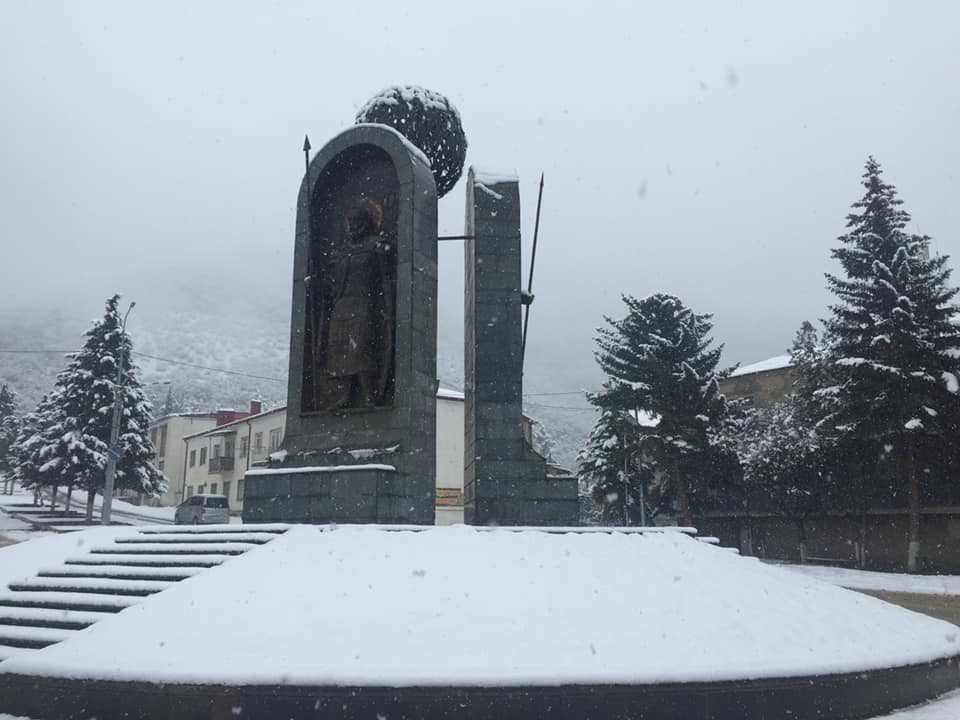
According to the SJC, Akhalgori has been experiencing depopulation for many years. Restrictions on freedom of movement, harsh socio-economic conditions and a persistent sense of insecurity have forced residents to leave the area. The organisation says the case of Tamar Mearakishvili is likely to further aggravate the situation.

“Tamar Mearakishvili was detained overnight on 22 December 2025 in Tskhinvali. Prosecutors accused her of an offence under Article 276 of Russia’s Criminal Code (“espionage”), which carries a prison sentence of between 10 and 20 years.
According to the Social Justice Centre (SJC), the arrest was carried out as a “demonstrative special operation”. The activist said that more than 20 armed, masked officers broke into her home, while the area outside was controlled by more than a hundred special forces personnel. She said she was not informed of the charges against her before her arrest,” the SJC recalled.
Prosecutors allege that Tamar Mearakishvili publicly disseminated images of “strategically significant objects” in South Ossetia.
In protest, Mearakishvili declared a “dry hunger strike” while in prison. According to her, during this period she was subjected to “ethnic insults” and “threats of violence”.
On 24 December, a South Ossetian court sentenced the activist to two months of pre-trial detention. However, on 31 December the court “changed its mind” and issued a ruling expelling her from South Ossetia, citing claims that Mearakishvili’s South Ossetian citizenship had been obtained “illegally”. As a result, the criminal case was turned into an administrative one. In the view of the Social Justice Centre, this sudden transformation only confirms that the activist’s arrest was politically motivated from the outset.”

The SJC says that all the required legal procedures for stripping the activist of her citizenship and expelling her were completely ignored, and that Mearakishvili was simply “thrown out” of South Ossetia in a single day. In the organisation’s view, this sends a clear political signal to local ethnic Georgians who criticise the authorities.
“Tamar Mearakishvili had for many years been one of the few independent voices speaking out about human rights and social issues, exposing corruption and criticising local officials. Her work was not limited to the interests of the Georgian community: she also spoke publicly about the problems faced by Ossetians and sought to maintain dialogue,” the SJC said.
The SJC is no less critical of the response from the Georgian government. The organisation says that official Tbilisi failed to properly condemn the de facto expulsion of Tamar Mearakishvili, while some Georgian politicians even accused her of provocation. It also says the Georgian state has not taken effective steps to ensure she has access to housing or to provide psychosocial rehabilitation.
The SJC says it will continue to support Tamar Mearakishvili, warning that the case is not just about one individual, but reflects the political reality in which ethnic Georgians who remain in South Ossetia live on a daily basis.
On case of activist Tamar Mearakishvili