In Abkhazia, Russia is opening a customs terminal for transit from Georgia: how it will work and what Tbilisi says about it






Russian transit terminal in Abkhazia
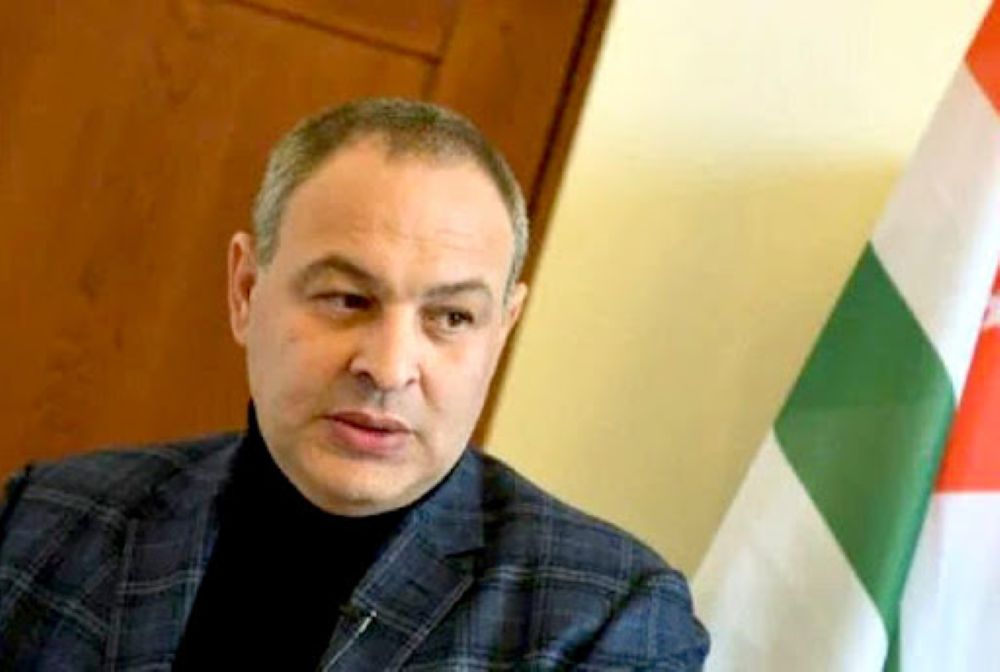
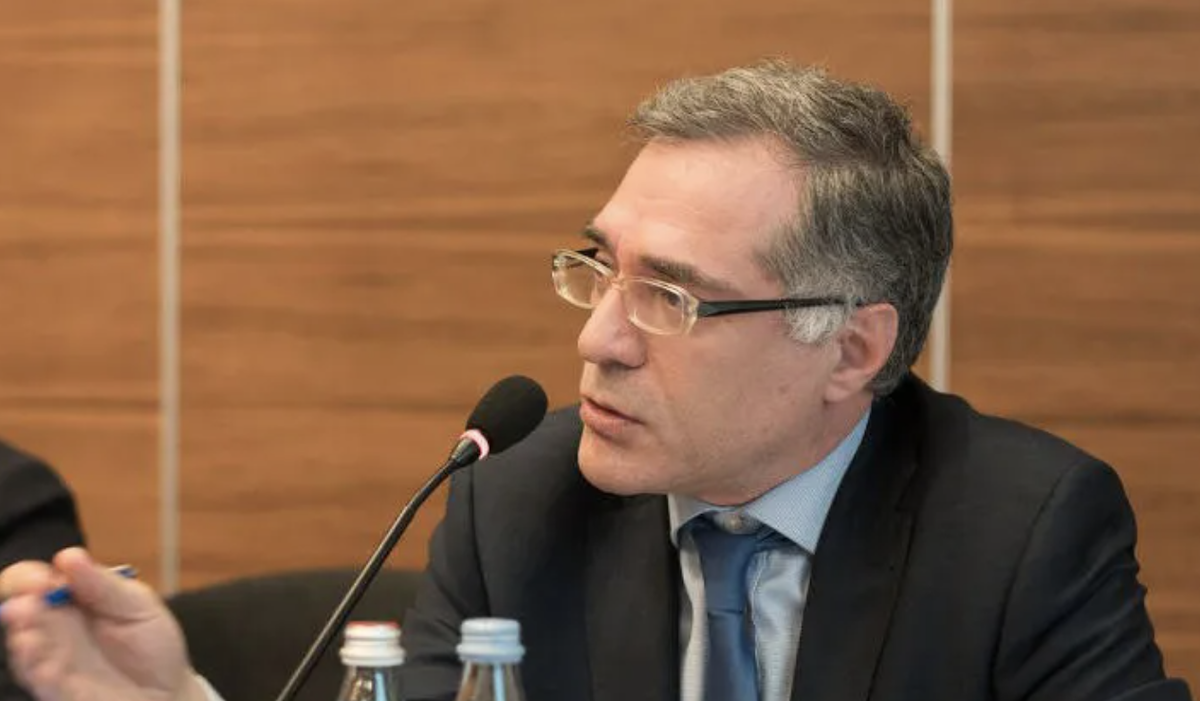
Astamur Akhsalba, head of a transit and logistics company and chair of the Assembly of the Peoples of the World in Abkhazia, told Abkhaz media that a customs terminal will open in Gali on the Inguri River. He said construction is almost finished and Abkhazia is, in theory, ready to start cargo transit.
Georgia’s Prime Minister, Irakli Kobakhidze of Georgian Dream, commented on the announcement. He said Georgia had taken no steps in that direction.
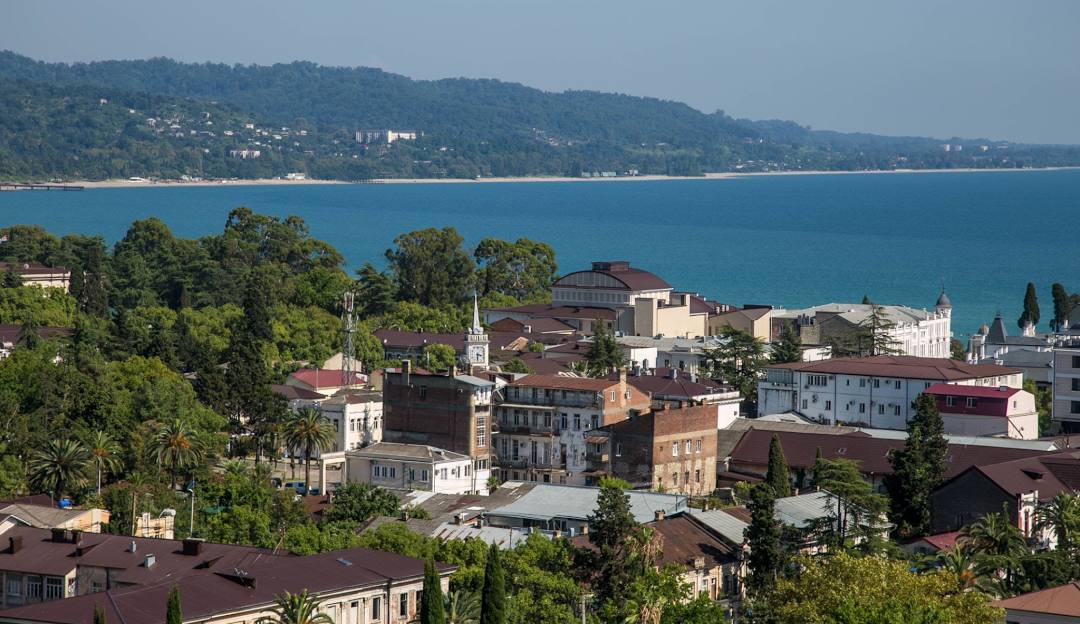
What the customs terminal in Gali looks like
Information about the terminal’s construction has been circulating for several years, but the authorities in Sukhumi had kept it under wraps until now.
In an interview with pro-government media in Sukhumi, Astamur Akhsalba said that the customs terminal will handle shipments from third countries — including China and India — destined for Russia.
He added that cargo from Georgia will not be transported through the terminal until the “necessary” documents are signed.
In October 2010, Moscow and Sukhumi signed an agreement on cooperation and mutual assistance in customs matters. The document provided, among other things, for simplified movement of goods and vehicles, mutual recognition of customs papers, seals and stamps, and the option of setting up a specialised customs body on the other side’s territory.
Akhsalba says the project was not implemented because of the geopolitical situation between 2012 and 2014 and for “objective reasons” linked to the administration of former Georgian president Mikheil Saakashvili.
He now argues that, after Russia’s invasion of Ukraine in 2022, the project has become “vital” for Abkhazia’s strategic partner, Russia.
According to Ekho Kavkaza, Akhsalba’s logistics company proposed the project to Russia in the Gali district.
The outlet also reports that, while the container terminal in Ochamchire was built with Russian funding, the new facility is a private investment project involving Abkhaz and Russian business owners.
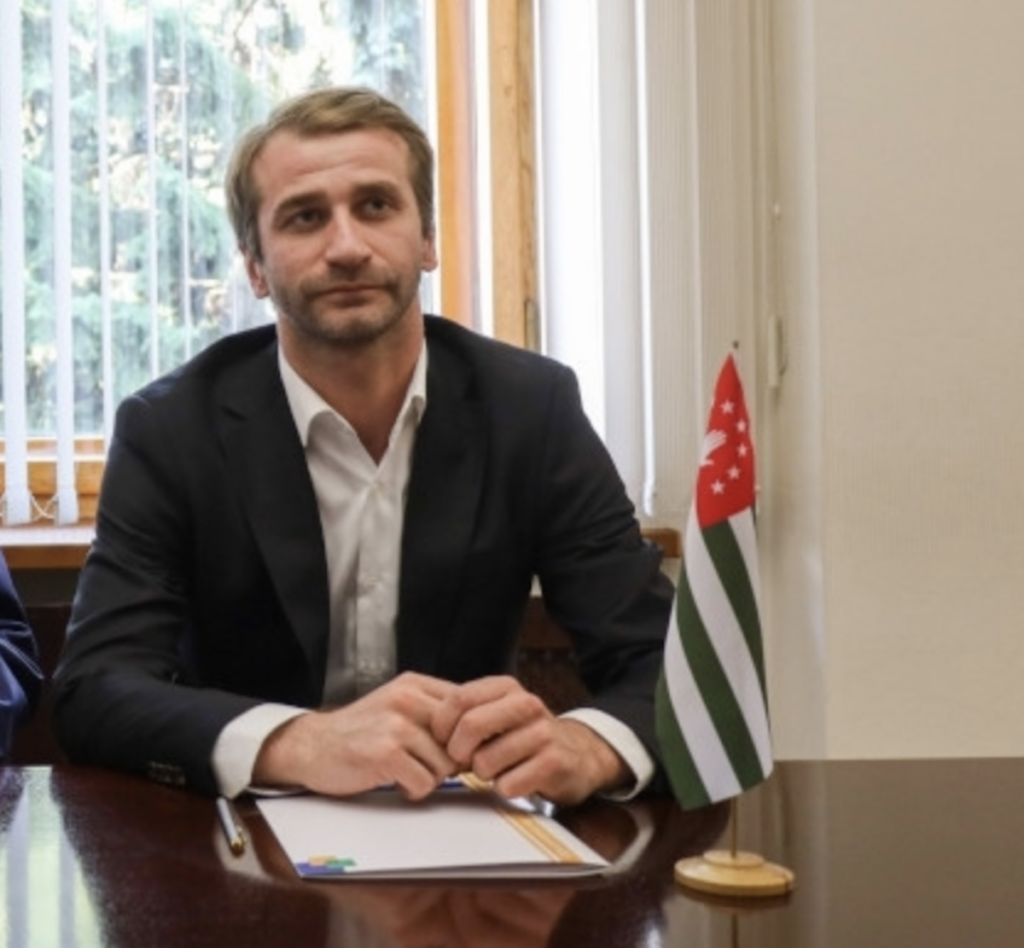
Akhsalba stresses that the project will face difficulties, since third countries will encounter legal and customs barriers due to Abkhazia’s status.
“We are working on all of this with the support of Andrei Belyaninov. The World People’s Assembly, which has opened in Abkhazia, is helping us not only with the project but also with broader economic cooperation,” he said.
Andrei Belyaninov is the former head of Russia’s Federal Customs Service and the former chair of the Eurasian Development Bank. Since 2025 he has served as secretary general of the Assembly of the Peoples of the World. According to the assembly’s website, one of his deputies is Igor Giorgadze. He is a former KGB general and served as Georgia’s state security minister in 1993–95. Giorgadze is accused of organising an assassination attempt on President Eduard Shevardnadze. He has lived in Russia for more than 30 years and remains on an international wanted list.
According to Astamur Akhsalba, goods from third countries will not be able to enter Abkhazian stores. However, he explains that “over time, the opposite will happen,” with Abkhazian products eventually reaching foreign markets via this corridor.
“Theoretically, trucks registered in Armenia, Turkey, and Iran could pass through, and drivers could be citizens of different countries,” Akhsalba said.
Geographically, the potential transit scheme cannot avoid passing through Georgian territory.
Akhsalba outlined the plan as follows.
The main cargo would consist of consumer goods — household appliances, food, vegetables, and so on.
If the goods come from Iran, an Iranian truck would be able to enter Abkhazia (probably from the Georgian side via the bridge over the Inguri River, currently considered the administrative boundary in the Georgian-Abkhaz conflict zone – JAMnews).
The vehicle would then travel to the Ochamchira district, unload at a railway terminal, and exit Abkhazia along the same route.
If necessary, the vehicle could continue moving within Abkhazia under the supervision of security services.
According to Akhsalba, Georgian citizens would be prohibited from participating in this process.
“This arrangement will remain in place until, God willing, good-neighbourly relations are established, at least at the level of a non-aggression agreement,” Astamur Akhsalba said.
- A brief analysis of potential Georgia-Russia transit through Abkhazia and South Ossetia involving Swiss firm SGS
- Opinion: ‘Russia becomes involved in Abkhazia’s political process’
- Leaders of the Georgian opposition on resolving the Abkhaz and South Ossetian conflicts. Video
- “How to resolve the Georgian-Abkhaz conflict once Russia withdraws from the Caucasus” – discussion, VIDEO
Tbilisi’s response
Tbilisi has not made any statements regarding the establishment of a customs terminal in Gali.
The only reaction came from Georgian Dream Prime Minister Irakli Kobakhidze. Responding to a journalist’s question about the terminal, he said that “Georgia does not recognize the so-called state border” between Abkhazia and Georgia.
“As you know, we do not recognize the so-called state border; it is completely false, so it is natural for us not to comment on it. You may recall that under the previous government, a specific agreement was signed, under which that government gave its consent for Russia to join the World Trade Organization. Since then, there was an agreement to enable the transport of goods through Swiss mediation.
However, this issue has been suspended since then, and no steps have been taken on our side, so all of this is speculation,” Kobakhidze said.
When asked how the construction of the terminal in Gali could have begun secretly without Tbilisi’s knowledge, Kobakhidze replied:
“I repeat, no steps have been taken on our side in this regard. There is a general agreement, but no activity has occurred. This is our position, and if there are any changes, you will, of course, hear about them from us.”
Russian transit terminal in Abkhazia