International Press Institute: 'New laws in Georgia threaten to paralyse independent media'






The International Press Institute (IPI) has sharply criticised a new legislative package adopted by Parliament of Georgia. The package significantly restricts the receipt of foreign funding and cooperation with international partners. In some cases, it also introduces criminal liability.
According to the IPI, the new laws pose a serious threat to the work of independent media and could paralyse their activities.

The International Press Institute (IPI) says the new regulations significantly expand state control over foreign funding and introduce possible criminal penalties for cooperation with international organisations or donors. The changes also address public criticism of the authorities’ legitimacy, creating an additional climate of censorship for critical journalism.
According to the organisation, the legislative amendments greatly broaden the definition of a “grant”. The new definition includes almost any form of foreign financial assistance if authorities link it to vaguely defined political purposes. Media outlets will need government approval for such funding, and violations could lead to criminal liability, including prison sentences.
IPI says the regulations will directly affect media organisations that receive international funding for journalistic projects, training programmes or participation in professional conferences.
The International Press Institute (IPI) places particular emphasis on a new “extremism” provision added to the law. Under this article, authorities can punish the “systematic” questioning of the government’s legitimacy with a prison sentence of up to three years for individuals. If authorities bring similar accusations against organisations, including media outlets, courts can impose heavy fines or even order their closure.
IPI says these changes add to a growing list of legislative measures adopted in 2024 and 2025 that restrict media freedom and the work of civil society in Georgia.
The organisation states:
“The adoption of repressive and anti-democratic legislation, alongside large-scale political prosecutions, has reached unprecedented levels in a country that is a candidate for EU membership and was once seen as a model of democracy in the South Caucasus.”
IPI also says the ruling Georgian Dream party increasingly uses “methods characteristic of Russian authoritarian rule” to silence critics, restrict human rights and weaken democratic institutions.
The organisation also highlights that lawmakers adopted the legislative package on the same day that the Supreme Court of Georgia refused to consider an appeal against a two-year prison sentence for journalist Mzia Amaghlobeli, whom IPI has recognised as a “World Press Freedom Hero”. According to IPI, this development further signals the authorities’ intention to sharply reduce the space for independent journalism.
The International Press Institute (IPI) calls on the Georgian authorities to immediately repeal the laws and stop legal action against media outlets.
The organisation also urges the European Union and the international community to respond firmly to pressure on media and civil society in Georgia. It calls for targeted sanctions. According to IPI, such measures should apply not only to members of the ruling Georgian Dream party but also to decision-makers and judges involved in restricting media freedom.
The organisation also calls on the Organization for Security and Co-operation in Europe (OSCE) to activate the Moscow Mechanism and provide a direct assessment of the new legislative package. According to IPI, this process should encourage OSCE participating states to take concrete steps to address the situation in Georgia. At the same time, the Venice Commission should carry out additional monitoring.
IPI says freedom of the media and freedom of expression form the fundamental basis of democracy and European values. The organisation argues that these principles must remain central to Georgia’s relations with the European Union and its international partners.
Background
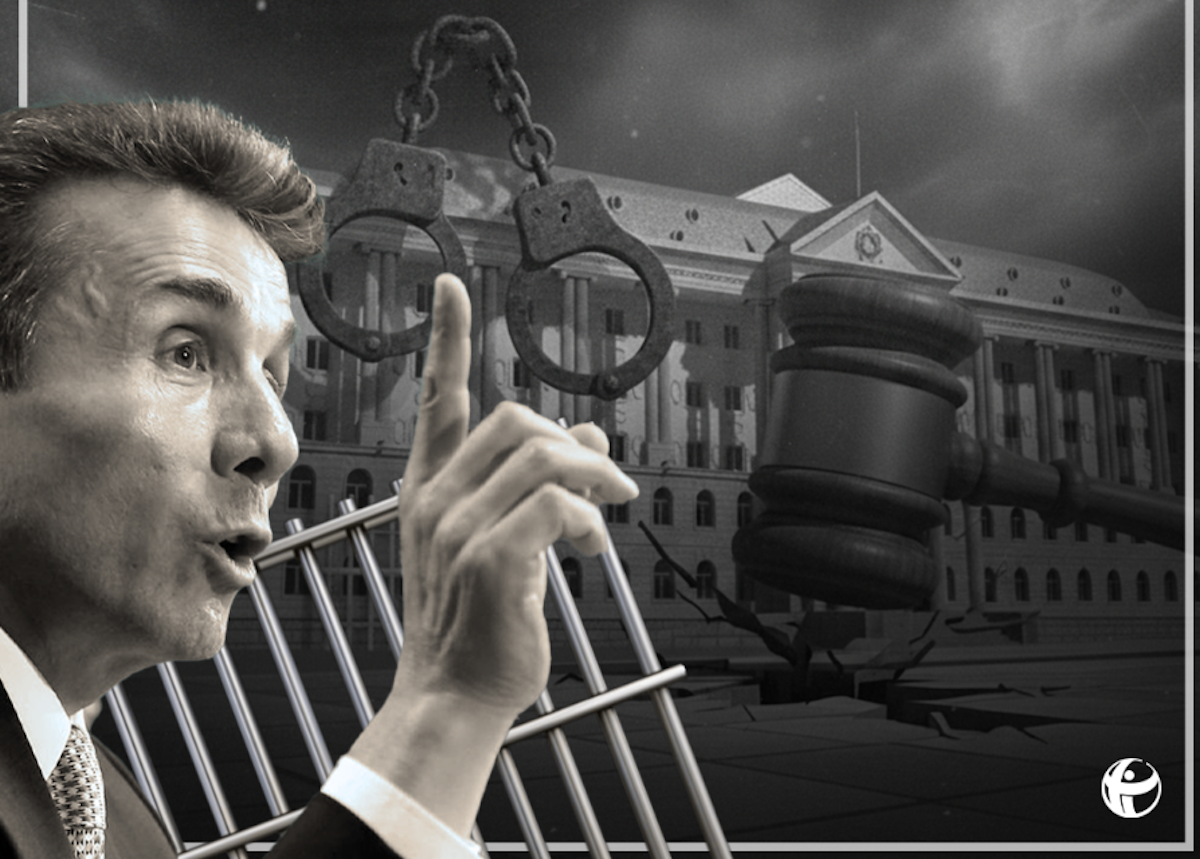
On 4 March, the ruling Georgian Dream party passed the so-called “law on grants” in its third reading. Among other provisions, the law criminalises the non-recognition of the authorities. Lawmakers added an article titled “Extremism against the constitutional order” to the criminal code. The article предусматривает a fine, community service or a prison sentence of up to three years.
The authorities also introduce criminal liability for “foreign lobbying”. Lawmakers amended the organic law “On Political Unions of Citizens”. Under the new rules, a person who works under contract for an organisation whose annual income includes more than 20% from a “foreign power” cannot become a member of a political party for eight years.
Press freedom in Georgia