

Pashinyan and Merz sign Armenia–Germany strategic partnership declaration






Armenia-Germany strategic partnership declaration
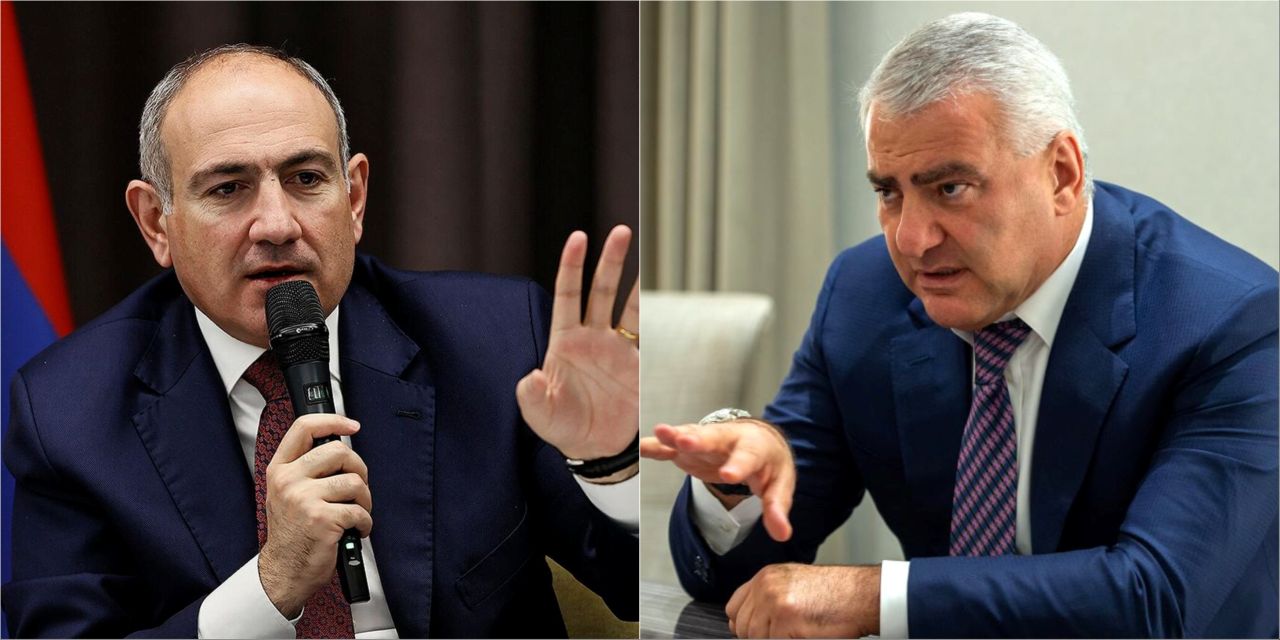
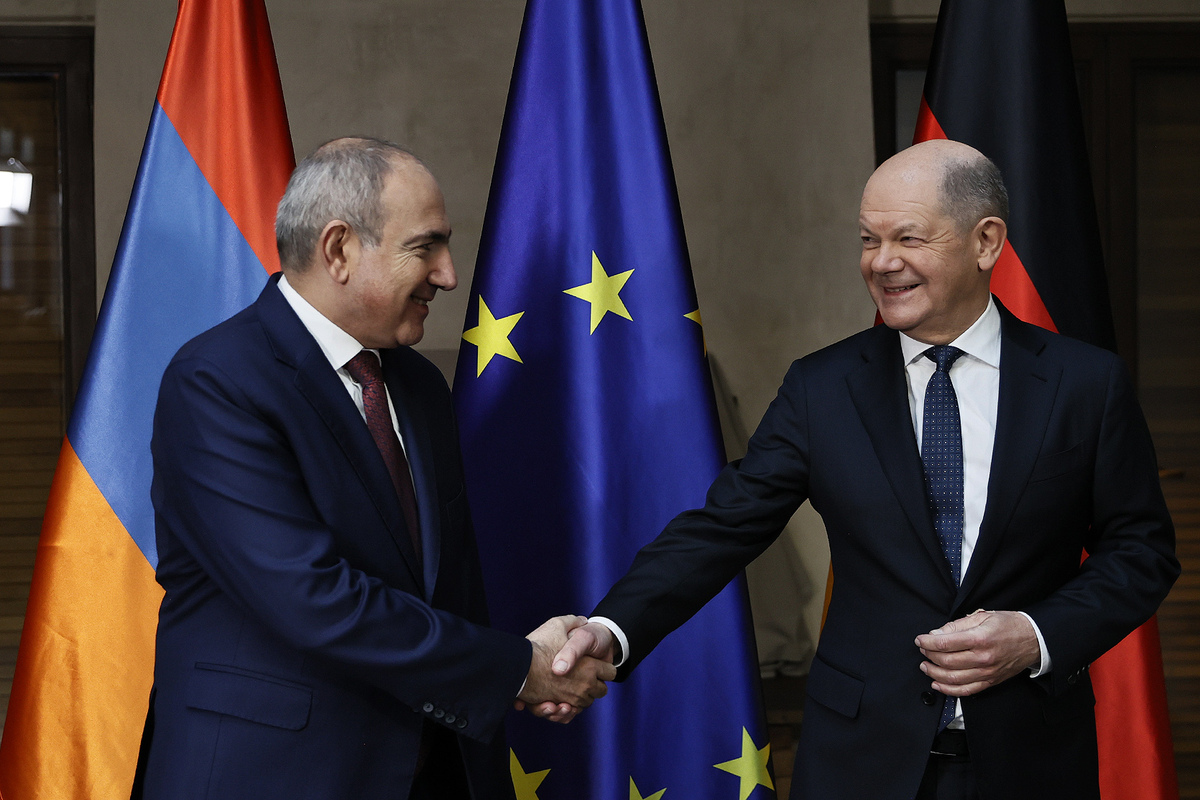
During an official visit by Armenia’s prime minister to Germany, the two sides signed a “Declaration on the Strategic Agenda of Bilateral Partnership.” Prime Minister Nikol Pashinyan and Chancellor Friedrich Merz signed the document.
The declaration states that both governments want a deeper bilateral partnership. It also notes that their interests align in several areas.
The text outlines a wide range of sectors where the two countries plan to expand cooperation. These include the economy, security and other key fields.
Pashinyan described his visit to Germany as historic. He argued that relations between Yerevan and Berlin have entered a stage of strategic partnership.
“Our countries base their relations on mutual respect, trust and shared values,” he said. “These values include human rights, democracy and the rule of law.”
Below are the key points of the signed declaration and the statements made by Armenia’s prime minister and Germany’s chancellor.
- Armenian parliament backs agreement defining Yerevan’s role in EU crisis-management missions
- “Azerbaijan has always been as much a brotherly state for the CSTO as Armenia,” says Pashinyan
- “We are strengthening Armenia’s defence capabilities”: French foreign minister visits Yerevan
Yerevan and Berlin set out a cooperation plan across multiple sectors
The declaration says the two sides plan to cooperate without limiting their partnership to the following areas:
- Cooperation in political and diplomatic matters
- Strengthening economic and trade ties
- Promoting development and capacity-building through technical and financial assistance programmes and various internship initiatives
- Encouraging cultural, educational, linguistic, and people-to-people exchanges
- Advancing science, technology, and innovation, including joint research projects, digital transformation, and innovation ecosystems
- Dialogue on security and defence
The document frames defence cooperation as a dialogue on regional and global security issues. The agenda includes nuclear security, cybersecurity and efforts to counter disinformation.
The declaration places special emphasis on future economic cooperation. The two governments want to stimulate bilateral trade and investment. They also aim to deepen cooperation in energy, infrastructure, technology and transport, and to expand tourism links.
‘The declaration does not constitute an international agreement‘
The document states that the “joint declaration on the strategic agenda of bilateral partnership” does not constitute an international agreement:
“Therefore, it does not create rights or obligations under domestic or international law.”
It emphasizes that the implementation of actions under the document will depend on the availability of resources and relevant laws and regulations. The two sides may jointly determine and approve additional areas of cooperation. Accordingly, the text of the declaration may be amended at any time by mutual consent.
Merz: ‘Russia is trying to spread fear about closer ties with the EU and the West’
The German chancellor welcomed the Armenian government’s vision for the country’s development and peaceful coexistence with its neighbors. According to Friedrich Merz, the parliamentary elections in Armenia in June 2026 will form part of the country’s democratic development. He also warned about the risks of destructive interference in this process.
“Enemies of democracy, particularly Russia, are using hybrid methods. They are trying to spread fears about closer ties with the European Union and the West, and about strengthening relations,” he said.
Merz stressed that the same forces spread disinformation about EU values in an attempt to destabilize the situation.
“In this context, we discussed our plans and how Germany can support Armenia’s resilience. It is obvious to us that we want to help address key issues related to sovereignty, strengthen security, and offer a broader agenda of cooperation with Armenia,” he added.
Regarding the intensification of economic ties, the chancellor noted growing interest from German companies in Armenia.
“The region and Armenia are important as a link between Asia and Europe. We need to use our potential. For this, we require a stable framework, peace, the rule of law, and free competition,” he said.
Nikol Pashinyan counts on Germany’s support “on the path towards EU membership.”
During a joint press conference, Armenian Prime Minister Nikol Pashinyan said Germany is an important partner for Armenia, emphasizing the significance of both bilateral cooperation and the Armenia-EU partnership.
“The renewed momentum of the European integration process in Armenia is based on the European aspirations of Armenian citizens and their commitment to democratic values. This was also reflected in the law adopted by the National Assembly of Armenia in March this year, ‘On launching the process of Armenia’s accession to the EU.’ In this context, I highly value Germany’s support for deepening the Armenia-EU partnership. I expect further political backing on the complex and long-term path toward EU membership,” he said.
Pashinyan expressed hope that joint efforts would give the Armenia-Germany partnership “new impetus and quality.”
“In this period, full of unprecedented challenges, when democracies face rapidly spreading, often hybrid threats, only through more coordinated and effective actions by like-minded countries can we strengthen our collective democratic resilience.”
The prime minister noted that the focus of his visit to Berlin is on establishing and strengthening economic ties.
“Germany is one of Armenia’s main trading partners and ranks first among EU countries in economic indicators. We are interested in further deepening mutually beneficial economic cooperation.”
Pashinyan expects the current favorable situation in and around Armenia to attract German business interest in investments and to boost cooperation with Armenian entrepreneurs.
Armenia-Germany strategic partnership declaration