Opinion: ‘Armenia signals to Russia that it cannot join TRIPP project’






Armenia rules out Russia’s participation in TRIPP
Armenian Prime Minister Nikol Pashinyan discussed the TRIPP project (the Trump Route for International Peace and Prosperity) during a meeting with Russian President Vladimir Putin.
At the meeting in St Petersburg, he said that Armenia and the United States are holding “very constructive bilateral talks” on implementing the project.
The plan concerns a route that would link Azerbaijan with its exclave of Nakhchivan through Armenian territory.
For several years, Yerevan and Baku failed to reach an agreement on the issue. Azerbaijan demanded a road it described as the “Zangezur corridor”. Armenian authorities responded that they were ready to unblock all transport routes, but rejected the term “corridor”, arguing that it implied a loss of sovereign rights over the territory.
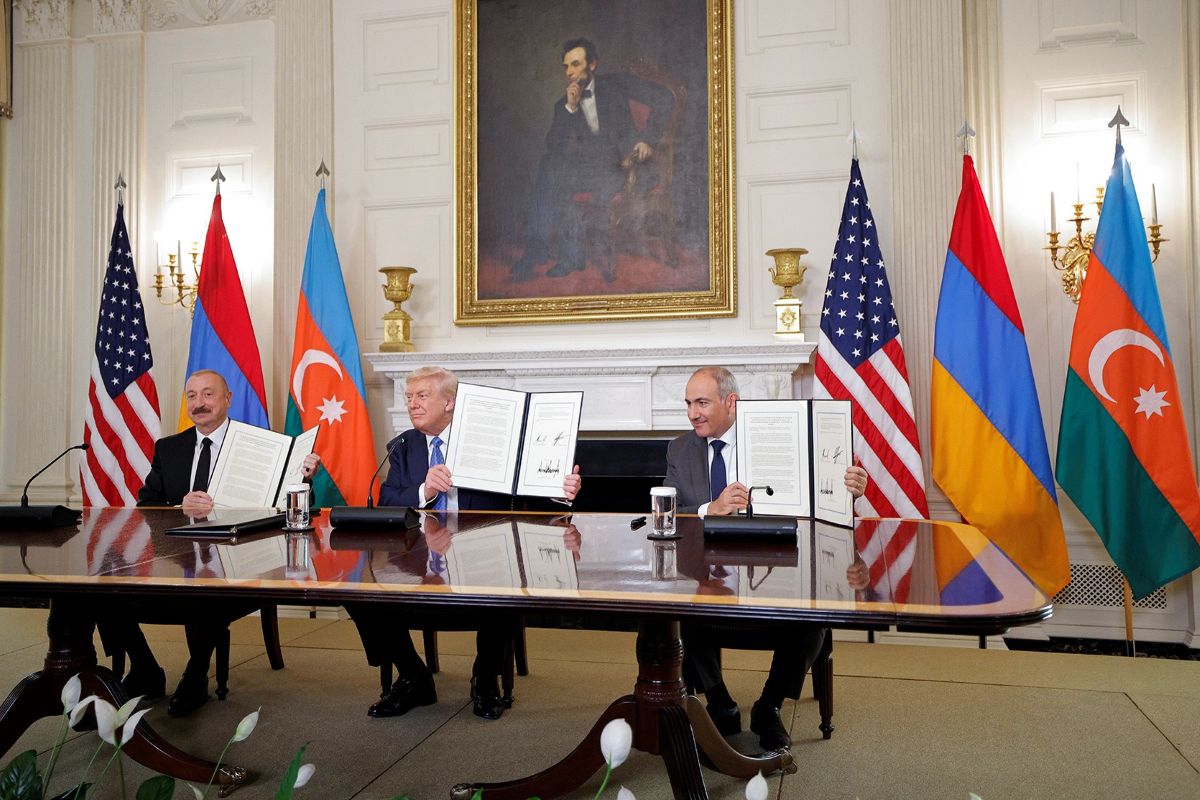
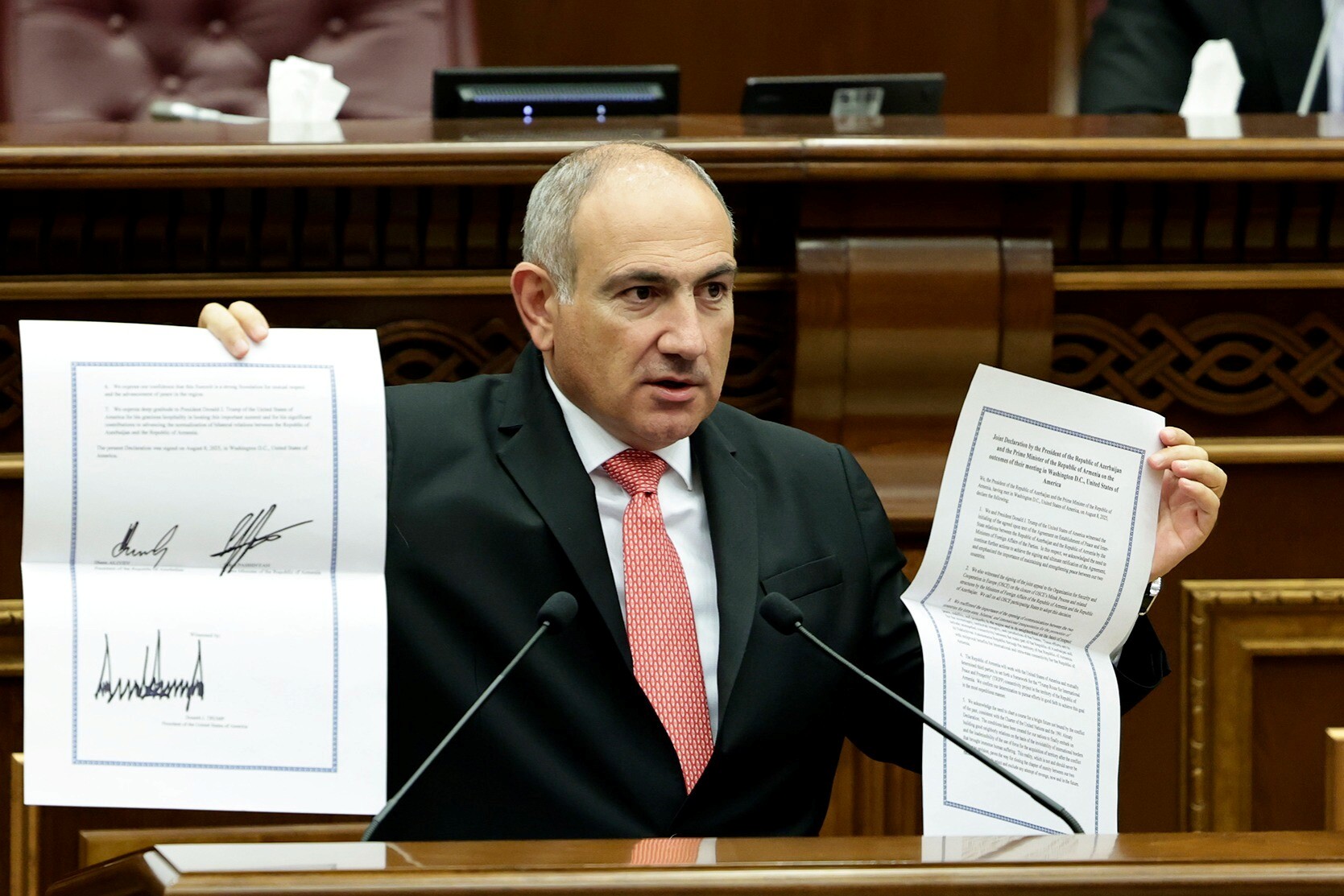
Only on 8 August, in Washington, did the leaders of Armenia and Azerbaijan reach an agreement.
They agreed that Armenia would retain sovereign control over the road, while the United States would join the unblocking process as a business partner. As a result, the project became known as the “Trump Route”, named after the mediator of the negotiations.
“These are truly major and substantive changes in our region. They also involve many nuances related to our bilateral relations with Russia,” Pashinyan said at the start of the meeting, without going into details while journalists were still in the room.
Last week, Mikhail Kalugin, director of the Russian foreign ministry’s Fourth CIS Department, addressed the issue. He said Russia stood ready “to consult with our Armenian partners to discuss […] possible Russian involvement.” Yerevan responded sharply soon after. Deputy parliamentary speaker Ruben Rubinyan said that Armenia does not discuss any possible Russian participation in TRIPP.
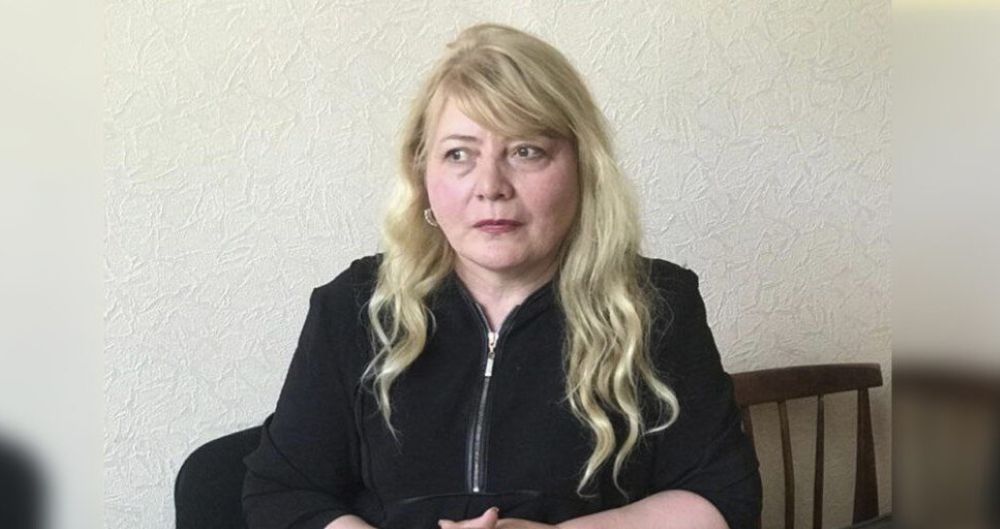
Political analyst Robert Gevondyan believes that the nuances Pashinyan mentioned do not concern the “Trump Route” itself, but its extension. He said Pashinyan referred to plans to build a railway from Yeraskh to the Nakhchivan border and from Gyumri to the Turkish border.
“The Armenian authorities are trying to show Russia that this is the maximum it can expect,” Gevondyan told JAMnews.
A Russian company runs Armenia’s railway network under a concession agreement. In 2008, Armenia and Russian Railways signed an agreement that transferred management of the state-owned Armenian Railways to South Caucasus Railway. It operates as a wholly owned subsidiary of Russian Railways.
According to the analyst, the 2008 agreement does not envisage any role for the Russian company in TRIPP. The document transfers to YUKZhD only the existing infrastructure and any facilities the company builds itself. He stressed that Russia will not build the “Trump Route”. Therefore, the idea of handing over to Russia the management of a railway running along this route does not arise.
“This would be naive if the Russians expect Armenia to hand over control to them. It is highly unlikely that Armenia and the United States would create a joint company to build a railway and then transfer its management to Russia,” the political scientist said.
- Opinion: ‘US involvement in South Caucasus is serious step, not game’
- Armenia between the West and Russia: risks of the government’s ‘balanced’ policy
- Opinion: ‘If Baku cared about security, it could have negotiated practical guarantees with Yerevan’
Pashinyan and Putin comment on new transport routes
“At our previous meeting, you raised questions about several areas where we could work together,” Vladimir Putin told Nikol Pashinyan. “I mean the restoration of old routes and the creation of new ones that would open Armenia’s borders.”
The Armenian prime minister replied that trains from Russia already reach Armenia via Azerbaijan.
“New opportunities are opening up,” Pashinyan said. “The agenda for restoring some other railway sections in our country has also effectively matured. I am referring in particular to the Ijevan, Yeraskh and Akhurik sections.”
He explained that these railways would connect Armenia with Azerbaijan, link mainland Azerbaijan with Nakhchivan, and extend onward to Turkey.
“A fairly active political process is under way,” Pashinyan added. “I cannot say that there are already political decisions to open these railways. But I think the situation has matured to the point where preparatory work should now begin.”
Political analyst’s commentary
Political analyst Robert Ghevondyan says Armenia is actively preparing for the logical continuation of the TRIPP project. He argues that this effort requires, among other things, the reconstruction of railway sections from Yeraskh to the Nakhchivan border and from Gyumri to the Turkish border.
“We have a railway on this route. A Russian company, South Caucasus Railway, manages it. However, the line does not function fully,” he says. “There are sections from Yeraskh to Yerevan and from Yerevan to Gyumri. Armenia needs to restore the sections from Gyumri to the Armenia–Turkey border and from Yeraskh to Nakhchivan.”
Ghevondyan believes that the Armenian prime minister discussed exactly these “nuances” with President Vladimir Putin.
Asked why the talks focus on TRIPP rather than the broader “Crossroads of Peace” initiative to unblock all regional communications, the analyst explained:
“There are two possible continuations of the Trump Route. One is the Kars–Nakhchivan railway, which Turkey plans to build. The other is the Yeraskh–Gyumri railway. The ‘Crossroads of Peace’ is a much larger process. It demands far more attention and resources. The Trump Route, and the logic I described, represent a more concrete programme. Armenia can realistically implement it in the foreseeable future.”
The “Crossroads of Peace” initiative comes from the Armenian government. It aims to unblock regional communications in all directions. “The goal of the project is to connect east and west, north and south. It will promote political dialogue by strengthening economic and cultural ties,” Foreign Minister Ararat Zurabyan explained.
According to the political analyst, Armenia should aim to develop high-capacity railways to meet the needs of countries interested in the “Trump route”:
“When transporting cargo on the existing railway, speeds should not exceed 35-40 km/h. By comparison, on the railway operating in Turkey and on the one being constructed in Azerbaijan, speeds can reach 100-120 km/h,” he said.
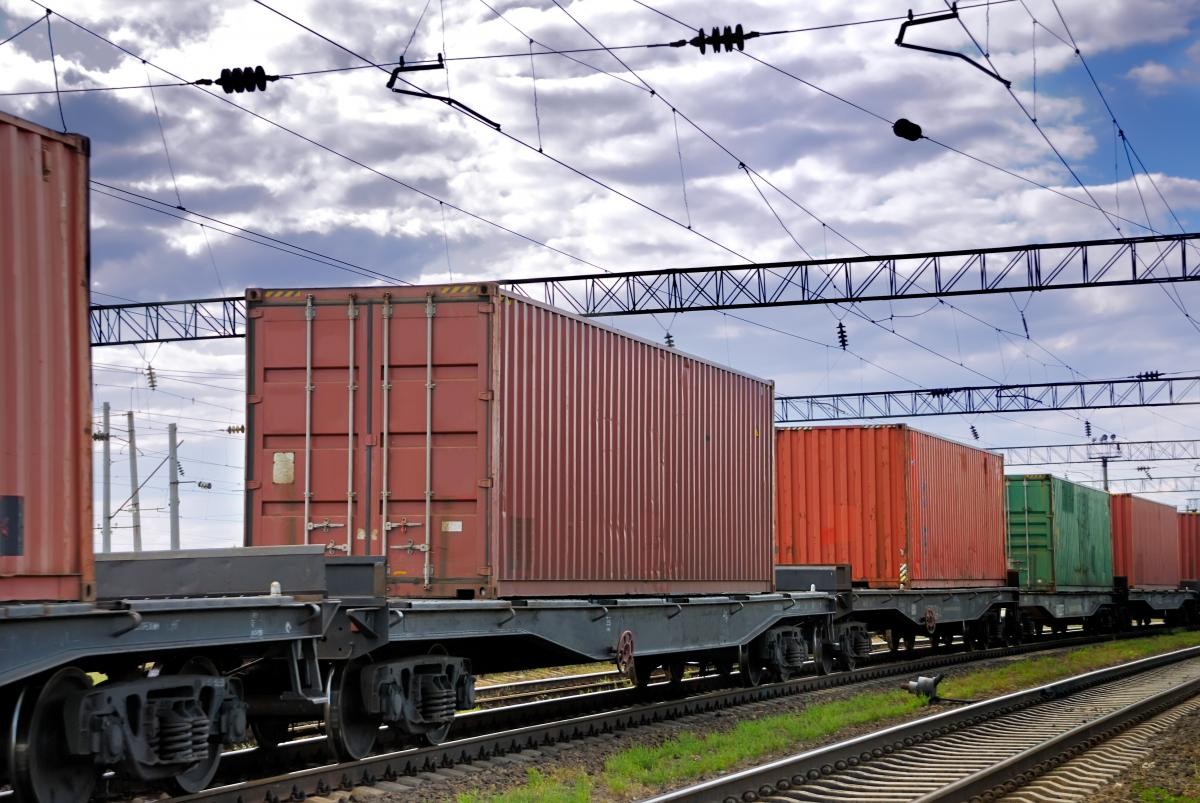
Gevondyan believes that the South Caucasus Railway will have a lot of work to do—if, of course, Russia wants to participate in the unblocking process and profit from cargo transport.
“A political decision will be made if Russia agrees to modernize, build, reconstruct, cooperate with Armenia, and share the economic benefits. In other words, to do what the US did in Syunik with TRIPP,” he explained.
However, the analyst does not rule out the possibility of Moscow sabotaging the process. He says it is “geopolitically disadvantageous” for Russia to have high-quality railways in Armenia.
“Considering the prevailing mentality in the Kremlin and its approach to post-Soviet processes, Russia will most likely try to hold several watermelons in one hand and lose them all,” he added.
He also discussed the Ijevan–Gazakh route, noting that if this railway starts functioning, it will become “the shortest land route in history between East and West.”
“In Azerbaijan, they are already saying that Baku can quickly repair the railway from Gazakh to the Armenian border. This will allow cargo to reach the Armenian border in a short time. This route could become vital for us,” said Gevondyan.
He believes that Russia could participate in the reconstruction and construction of railways both on the Eraskh–Ahurik route and the Ijevan route. Moscow could invest in these lines and profit. However, the political analyst considers it more likely that Russia will aim for too much and end up losing everything.
Armenia rules out Russia’s participation in TRIPP