Top stories in Azerbaijan, Armenia, and Georgia from 7-11 September, 2026
 Live
Live




-
Friday, September 11, Azerbaijan. South Korea launches project to restore traditional underground water supply systems in Karabakh
-
Friday, September 11, Armenia. Armenia plans to launch at least three satellites into space
-
Friday, September 11, Georgia. Blogger faces case after saying he was responding to insults by Kremlin propagandists; accused of insulting Georgia’s prime minister
-
Thursday, September 10, Georgia. Georgian Church distances itself from “Father Gabriel Urgebadze unit” in Russian armed forces and expresses concern over support for the initiative by Russian Orthodox priests
-
Thursday, September 10, Armenia. Konstantin Zatulin: “As long as Nikol Pashinyan is in power in Armenia, there will be no easing of relations with Russia”
-
Thursday, September 10, Azerbaijan. Analysis of Azerbaijan-Russia relations by Azerbaijan’s ambassador to Russia
-
Wednesday, September 9, Azerbaijan. Kamal Isayev, known for advocating Talysh rights in Azerbaijan, has been sentenced to 8.5 years in prison
-
Wednesday, September 9, Armenia. Armenia has appealed to the EAEU, which operates under Russian leadership, over Russia’s ban on imports of Armenian products
-
Wednesday, September 9, Georgia. EU has expressed “deep concern” over the politically motivated use of the judiciary and repressive measures against civil society in Georgia
-
Tuesday, September 8, Armenia. Visits to Latvia and the UAE aimed at diversifying markets for Armenian exports
-
Tuesday, September 8, Georgia. Sixth letter by imprisoned ex-PM Gharibashvili accuses authorities
-
Tuesday, September 8, Azerbaijan. Human rights defender Anar Mammadli sentenced to 13 years in prison
-
Monday, September 7, Georgia. Irakli Kobakhidze called Russia “the state that has occupied 20% of Georgia’s territory” but again spoke of “artificially fuelling Russophobia” in the country
-
Monday, September 7, Azerbaijan. “Lack of evidence, attempt to undermine peace process” — Azerbaijan ombudsman rejects claims of persecution of Armenian prisoners in prison in Azerbaijan
-
Monday, September 7, Armenia. Prime Minister Nikol Pashinyan’s visit to Russia could take place soon
-
Top stories in Azerbaijan, Armenia, and Georgia from 31 August-4 September, 2026

-
Friday, September 11, Azerbaijan. South Korea launches project to restore traditional underground water supply systems in Karabakh
● Azerbaijani Ambassador to Ukraine Seymur Mardaliyev and Kyiv Regional Administration head Timur Tkachenko discussed priority areas for further cooperation, including major projects to rebuild the city of Irpin, which was destroyed by Russian missile strikes. Plans include constructing an apartment building on the site of a destroyed building and a new modern arts centre, as well as restoring the Youth and Sports School and the Central House of Culture. To date, with Azerbaijan’s assistance, the Academician Zarifa Aliyeva Linguistic Lyceum has been restored in Irpin, along with a modern shelter; the city clinic has been renovated and energy equipment installed. Five electric buses are expected to arrive in September. Tkachenko expressed his gratitude to Azerbaijan for its solidarity and support, particularly its humanitarian initiatives, including the rehabilitation of Ukrainian children in Azerbaijan. Mardaliyev said 660 children had already undergone rehabilitation in Azerbaijan and that Baku would continue providing humanitarian assistance to Kyiv. Irpin is twinned with the Azerbaijani city of Lachin.
● Azerbaijan and Ukraine are preparing to launch new joint business initiatives, with Azerbaijani investment in the Ukrainian economy also under discussion. The issues were discussed at a meeting between Yusif Abdullayev, head of Azerbaijan’s Export and Investment Promotion Agency (AZPROMO), and Ukrainian Ambassador to Azerbaijan Yuriy Husyev. In a post on X, Husyev said the focus was on strengthening coordination between Ukrainian and Azerbaijani businesses, with a view to greater Azerbaijani business involvement in Ukraine’s reconstruction and development.
● Foreign Minister Jeyhun Bayramov met with EU Special Representative for the South Caucasus Magdalena Grono. They discussed steps to strengthen peace and confidence between Azerbaijan and Armenia, as well as prospects for Azerbaijan-EU relations. In particular, they stressed the need to finalise negotiations on the Azerbaijan-EU Partnership Priorities document and sign a new bilateral agreement.
● Two Azerbaijani citizens were killed and two others injured in a drone attack on the foreign-flagged cargo vessel TEDY in the Black Sea. The Foreign Ministry expressed condolences to the families of those killed and wished the injured a speedy recovery. According to the information available, the vessel was attacked by drones on September 9. “We once again call on Azerbaijani citizens to refrain from travelling to regions where military hostilities are ongoing or instability persists, including working on means of transport, such as vessels operating along such routes,” the Foreign Ministry said. It did not specify which country’s drones struck the vessel.
● Newly appointed Swedish Ambassador to Azerbaijan Louise Morsing said in a video message on X that Sweden intends to further strengthen bilateral relations with Azerbaijan and develop cooperation in investment, trade, sustainable development and education.
● The World Bank’s new representative in Azerbaijan, Sacha Akira Backes, will also represent the International Bank for Reconstruction and Development (IBRD), the International Finance Corporation (IFC) and the Multilateral Investment Guarantee Agency (MIGA). Backes has worked for the World Bank Group since 2007.
● Sabina Hajiyeva, head of the Cultural Heritage Protection Service at Azerbaijan’s Culture Ministry, cited examples of damage to Azerbaijan’s cultural heritage during the years when Azerbaijani territories were under Armenian control. Speaking at UN Climate Week in Baku, she said Armenian forces had carried out illegal restoration work at the Khudavang monastery in Kalbajar district “with the aim of falsifying history” and had taken two frescoes they had restored from the monastery when they withdrew. “This information has been conveyed to the international community, and we hope they will help us return these examples of our cultural heritage,” Hajiyeva said.
According to Hajiyeva, the ancient Azykh Cave in Khojavend district was used as a weapons depot. Before that, illegal excavations had been carried out there and numerous finds had been removed.
She said 68 monuments, as well as tombs, cemeteries and mosques, had been completely destroyed in the territories that were retaken by Azerbaijan. “These figures include only monuments on the official list. However, their number in the retaken territories is significantly higher,” Hajiyeva said.
She stressed that a full inventory of the monuments had not yet been completed because of the risk posed by landmines.
● An employee of Azerbaijan’s Mine Action Agency (ANAMA) was injured by another mine explosion in Khojaly district. He was taken to hospital and is in satisfactory condition.
● South Korea will begin a project this year to restore karez — traditional underground water supply systems — in Karabakh. The $5.5 million project will run until 2030, South Korean Ambassador to Azerbaijan Kang Kim-gu said. He stressed that South Korea gives priority to supporting the reconstruction and development of Azerbaijan’s retaken territories, including Karabakh and Eastern Zangezur.
● President Ilham Aliyev attended the opening of a major paper and hygiene products plant operated by Fabriora Group in Baku’s Garadagh district. The facility covers about 11 hectares and employs 240 people. Modern, highly automated German, Italian and Turkish technologies have been installed. The plant will produce a wide range of goods, including nappies, tissues and cleaning products. In addition to the domestic market, products will be exported to Georgia, Kazakhstan, Russia, the Middle East and other countries.
● More than 140 countries have received international assistance from Azerbaijan over the past 15 years, with about $400 million provided through bilateral and multilateral channels since 2020. Foreign Minister Jeyhun Bayramov said this at a conference marking the 15th anniversary of the Azerbaijan International Development Agency (AIDA). Recipients include 54 African countries, 52 members of the Organisation of Islamic Cooperation, 43 of the world’s least developed countries and 28 small island developing states. Bayramov said Azerbaijan’s assistance had included support for the fight against the Ebola epidemic and participation in the Alliance for the Elimination of Preventable Blindness.
● Azerbaijan has approved a state food security programme for 2027–2032. It commits the authorities to ensuring that the population has access to safe, high-quality food and bringing the food security system into line with international standards. The Azerbaijan Food Safety Agency will coordinate and oversee implementation and report annually to the president. The Centre for Analysis of Economic Reforms and Communication will monitor and evaluate the measures.
● A criminal case has been opened in Sheki district over the deaths of two tourists at a recreation centre after a zipline cable broke. The investigation is being conducted under the article on negligence resulting in death by recklessness. According to preliminary information, the victims were Azerbaijani citizens Ujal Bayramov, 27, and Joshgun Mammadzade, 31.
● A decision by the city authorities has halved the number of cars allowed to enter Baku’s Old City, Icherisheher. The previous limit was 600 vehicles; it has now been reduced to 300. Aytaj Alisultanli, a board member of the Icherisheher State Historical-Architectural Reserve, said the Old City occupies a very limited area of just 22 hectares within its fortress walls. Completely banning cars is impossible because residents and businesses also use vehicles, but the restrictions are an important step, she said.
● Baku club Sabah lost 4–0 to Manchester United in the first round of the UEFA Champions League league phase. Sabah head coach Valdas Dambrauskas said at the post-match press conference: “We knew a big challenge awaited us. Just competing against them was a great honour for me. We can learn a lot from this defeat. They are one of the greatest clubs in the world. Manchester United showed tonight how a top-level team should perform on the pitch.” Sabah’s next match will be against Czech club Slavia Prague in Baku on October 13.
-
Friday, September 11, Armenia. Armenia plans to launch at least three satellites into space
● The European Parliament will vote on September 15 on a bill introducing temporary trade liberalisation measures for Armenian goods. The proposal would temporarily remove import duties on around 80% of Armenia’s exports to the EU. The issue is on the agenda of the European Parliament’s plenary session, taking place in Strasbourg on September 14–17.
● Armenia plans to launch at least three satellites — two for Earth observation and one for telecommunications. Prime Minister Nikol Pashinyan said this at the International Space Summit in Paris. He said developing Armenia’s national space capabilities had been defined as a separate strategic goal in the government’s 2026–2031 programme. At the same time, Armenia needs to develop its own ground infrastructure and data processing and analysis capabilities. “A network of ground stations could serve not only Armenia’s national needs but also support international space missions and growing demand for satellite data and services,” Pashinyan said.
● If Russia withdraws its military base from Armenia, the country would have to increase the size of its armed forces, said Vova Vartanov, head of the Armenian military-political organisation VOMA. “An additional 25,000 troops would be needed: 5,000 active-duty personnel and 20,000 reservists. The number of border guards in this section of the border would also need to be increased by 5,000. At the same time, the number of conscripts in the country has fallen by 25%,” Vartanov said. Discussion of a possible Russian base withdrawal began after the Russian president raised the issue some time ago. Putin said Armenia should decide whether the base should remain. Pashinyan responded that the issue had not been raised in Armenia, but “if Russia decides to withdraw the military base, we will not object”. More here.
● Narek Karapetyan, head of the opposition pro-Russian Strong Armenia parliamentary faction, said it was necessary to “keep the village of Tigranashen within Armenia” and proposed an alternative development plan for the village. Tigranashen (Azerbaijani name Karki) is one of the enclaves under Armenian control disputed by Armenia and Azerbaijan. Its status will be addressed during the delimitation of the Armenian-Azerbaijani border. Karapetyan made the statement while visiting Tigranashen with members of his faction. “People want to remain in their homeland,” he said. Karapetyan stressed that the village is about a 40-minute drive from Yerevan but, according to residents, lacks necessary development programmes. “We propose development, while the ruling Civil Contract proposes surrender,” the politician said.
● Belarusian-Russian dual national businessman Mikalay Vinitsky has filed a case against Armenia at the International Centre for Settlement of Investment Disputes (ICSID). He is a business partner of Gagik Tsarukyan, leader of the pro-Russian opposition Prosperous Armenia party, who is under arrest on fraud charges. Vinitsky claims that the Armenian authorities “targeted his investments” for political reasons. He is invoking the 2001 Belarus-Armenia bilateral investment treaty, as well as the Eurasian Economic Union (EAEU) Treaty, a Russia-led bloc of which Armenia is a member. According to Vinitsky, the Armenian government breached its obligations under these agreements.
● A civil lawsuit has been filed against the prime minister by Samvel Karapetyan, chairman of the opposition pro-Russian Strong Armenia party and a Russian billionaire. He is under arrest in Yerevan on charges of calling for the overthrow of the Armenian government. The lawsuit is based on statements Pashinyan made about Karapetyan during the election campaign. In particular, Karapetyan is asking the court to order Pashinyan to publicly apologise to him for insulting him. He has even submitted the exact wording of the proposed apology, beginning: “I, Nikol Vovayevich Pashinyan, apologise to Samvel Sargisovich Karapetyan,” and is demanding that the prime minister deliver it live via video recording.
● Members of the opposition pro-Russian Armenia parliamentary faction met with the Russian ambassador to discuss tense Armenian-Russian relations. According to a statement on the meeting, the MPs stressed the importance of strengthening bilateral ties and said that the impact of Russia’s restrictions on foreign trade — imposed on almost all Armenian products — was being felt by ordinary citizens, villagers, farmers and entrepreneurs. The arrest of leaders of opposition pro-Russian forces was also discussed.
● Former mayor Arush Arushanyan is the ruling Civil Contract party’s candidate in the upcoming municipal elections in Goris, despite having previously been a strong critic of the current authorities, including Nikol Pashinyan. After the 44-day war with Azerbaijan in 2020, he and other community heads in the region called for Pashinyan’s resignation. “Our Business party is running in the election in alliance with Civil Contract. We have constructive relations,” Arushanyan told journalists.
● National Assembly Speaker Ruben Rubinyan met with a delegation headed by Polish Foreign Ministry State Secretary and Sejm member Marcin Bosacki. They discussed the development of bilateral cooperation.
● Economy Minister Gevorg Papoyan met with representatives of rose-growing companies. They discussed state policy on greenhouse farming, government support mechanisms to promote exports and ways to increase the sector’s competitiveness.
-
Friday, September 11, Georgia. Blogger faces case after saying he was responding to insults by Kremlin propagandists; accused of insulting Georgia’s prime minister
● The Interior Ministry’s Department for Combating Incitement to Hatred has opened an administrative case against blogger and civil activist Tornike Razmadze. Razmadze initially filed a complaint, saying he was being accused of insulting Kremlin propagandists Margarita Simonyan and Vladimir Solovyov. The case concerns a Facebook comment containing profanity under a video in which Razmadze discussed insulting statements by Simonyan and Solovyov about Georgia and Georgian King Erekle II. The case sparked a strong reaction on social media and in the media. The Interior Ministry subsequently clarified that Razmadze was accused of insulting Georgian Prime Minister Irakli Kobakhidze, not the Russian propagandists. Razmadze’s lawyer, Mikheil Zakareishvili, says the original Interior Ministry protocols made no mention of insulting a public official. The Georgian Young Lawyers’ Association (GYLA) called the case another precedent for restricting freedom of expression and censorship, and urged authorities to drop the proceedings. Razmadze faces a fine of 500 to 3,000 lari (about $200–1,000) or up to 20 days in administrative detention. The case is scheduled to be heard on 29 September. Read more here.
● Prime Minister Irakli Kobakhidze attended the first international summit on space in Paris, where he met with several national leaders and, according to him, discussed the current situation in Georgia with them. The summit was initiated by French President Emmanuel Macron and co-chaired by France and Germany. The main topics were science, research, security and defence. Kobakhidze is in France with a delegation that includes Foreign Minister Maka Botchorishvili and Defence Minister Irakli Chikovani.
● Irakli Kobakhidze called European Commissioner Marta Kos’s statement “strange” that EU candidate countries should not deepen their ties with Donald Trump’s MAGA movement, as this runs counter to the EU’s long-term interests. Kos said that Russia is not the only force opposing EU enlargement, and that there is also pressure from “MAGA ideologues” who speak of the decline of European democracy and the economy. Kobakhidze said Europe has many problems and that he “does not understand why, in such a situation, [it should] look for additional reasons for confrontation with the US”. Other leaders of the ruling Georgian Dream party interpreted the European commissioner’s statement as a call for candidate countries to limit relations with the current US administration. Foreign Minister Maka Botchorishvili said imposing such a criterion on candidate countries was unacceptable and that more cooperation was needed in today’s global politics.
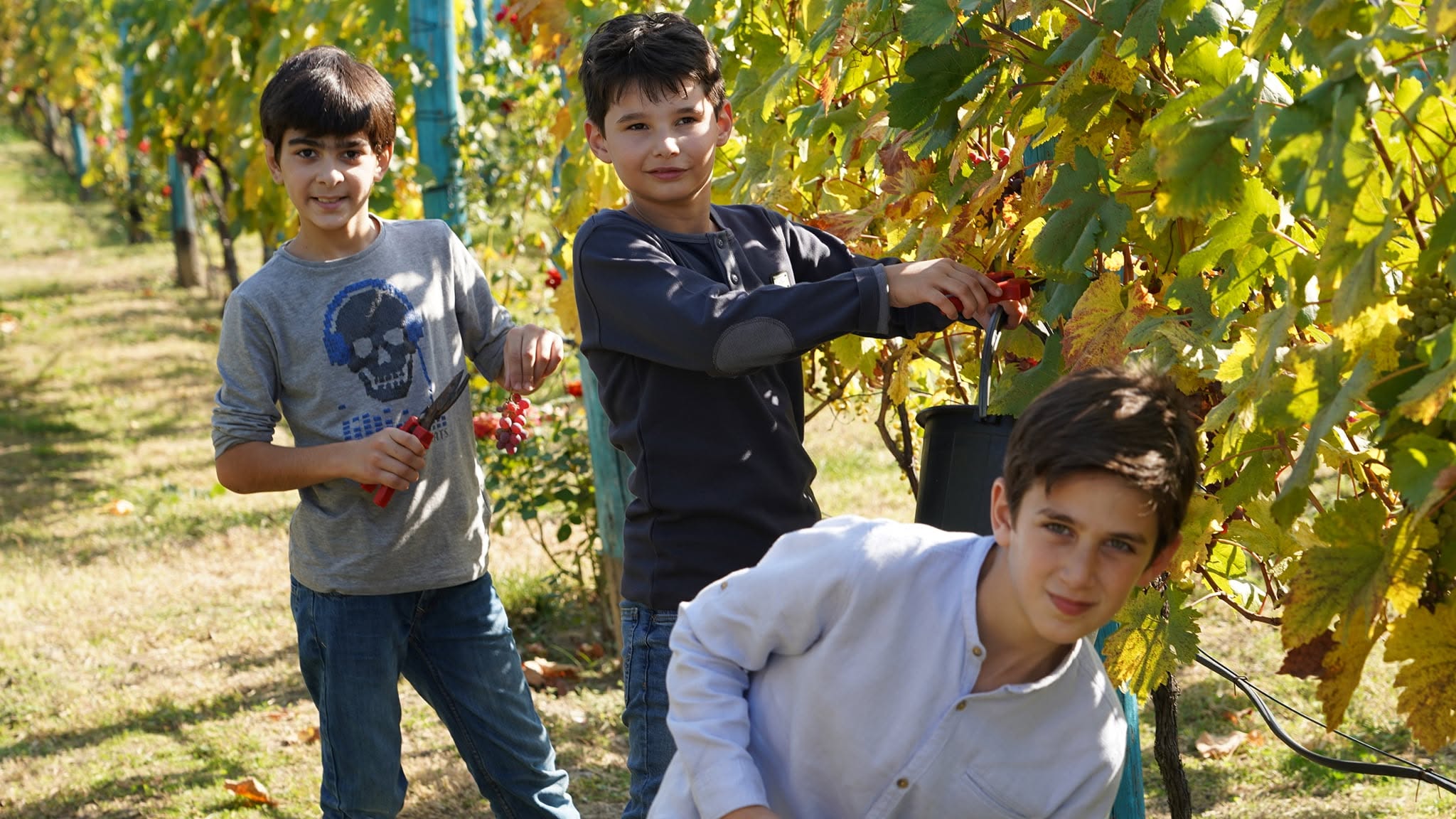
● Rtveli, Georgia’s grape harvest season, has begun in Kakheti. Last year, the region accounted for almost all grapes processed in Georgia. In 2025, around 327,000 tonnes of grapes were processed in Kakheti — a record for the past 30 years. Kakheti’s grape growers earned a total of 432 million lari (about $166 million) from grape sales.
-
Thursday, September 10, Georgia. Georgian Church distances itself from “Father Gabriel Urgebadze unit” in Russian armed forces and expresses concern over support for the initiative by Russian Orthodox priests
● According to a study by Transparency International Georgia, the privatisation of state-owned property in the Adjara region is often carried out without competition and in favour of people linked to the ruling Georgian Dream party. According to the organisation, 54 of 69 electronic auctions announced since January 2025 failed to attract bidders, while in eight of the 15 successful auctions, the property was sold without competitors. The study found that the owners of winning companies and their family members donated a total of 1.387 million lari (about $500,000) to the ruling party, while two companies received more than 59.5 million lari (about $23 million) in state tenders. The region received just 4.5 million lari (about $1.7 million) from privatisation, against a planned 125 million lari (about $48 million) — just 3.6% of the target.
● Parliament Speaker Shalva Papuashvili says that “no one in the world is saying anymore that convicted journalist Mzia Amaglobeli is innocent”, and that international statements now concern only the proportionality of her sentence — two years in prison for slapping a police officer who had insulted her. According to Papuashvili, Amaglobeli was offered a plea deal, which she rejected. He called the founder of the popular Netgazeti and Batumelebi outlets “a prisoner of the opposition and Brussels’ dishonesty” and accused foreign diplomats of strengthening her position.
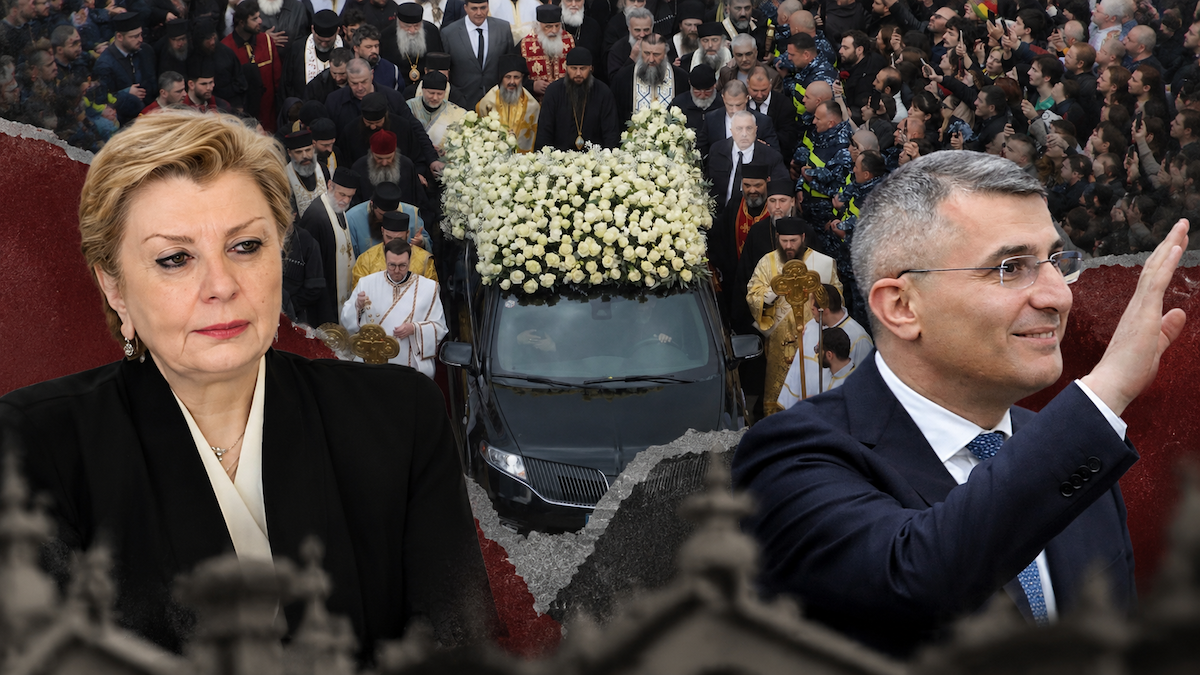
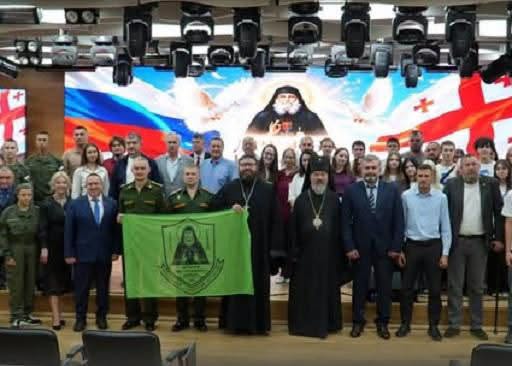
● The Georgian Orthodox Church is distancing itself from the creation of a “Father Gabriel Urgebadze unit” in the Russian armed forces and the use of the saint’s name. Andria Jagmaidze, a representative of the Patriarchate, said the Georgian Church had not been consulted on the matter. He also said it was concerning that some Russian Orthodox clergy had supported the initiative.
Earlier, reports emerged that a “Father Gabriel Urgebadze unit” was taking part in fighting against Ukraine, with the support of “Georgian public figure Besik Danelia” and including “Georgian volunteers”. The information was disseminated by Russian state news agency RIA Novosti.
● Former Georgian Prosecutor General Otar Romanov-Partskhaladze said he decided to join Russia’s war against Ukraine after Vladimir Putin invited him to the May 9, 2025 Victory Day parade. According to Partskhaladze, he served for nine months in the Arbat volunteer corps before creating an international volunteer unit, Georgievski, together with his associates. Partskhaladze also said he was proud of the Western sanctions imposed on him, comparing them to an “Order of Truth”. He said members of Georgievski “will defend Russia against the West”, which he accused of “oppressing traditional family, culture and identity”. More here.
● Imprisoned former president Mikheil Saakashvili commented on letters sharply criticising the authorities that are also being published by imprisoned former prime minister Irakli Gharibashvili. Saakashvili said the former prime minister was so far only “gently warning Bidzina Ivanishvili” — honorary chairman of the ruling Georgian Dream party and an oligarch widely seen as Georgia’s de facto ruler. According to Saakashvili, Gharibashvili would cause real harm to Ivanishvili if he began speaking about possible crimes of which he himself has information. Saakashvili also called on members of the ruling team to disclose information about Ivanishvili.
● A private plane flying from Batumi to Turkey made an emergency landing in the Black Sea after an engine failure. The plane landed about four nautical miles off the coast of Rize province. The two Belgian citizens on board were rescued by the Turkish coast guard. Neither was injured, and both were taken to hospital for examination.
● The Tbilisi Court of Appeals rejected an appeal by prominent animal rights activist and businessman Tamaz Elizbarashvili and kept him in custody. Prosecutors accuse Elizbarashvili of threatening his opponent with death and physical violence during a conflict in Tbilisi on August 30. Elizbarashvili denies the charges and went on hunger strike after his arrest.
● According to a report by the PMC Research Center, the volume of transit cargo passing through Georgia fell by 9.5% in 2025, from 15.1 million tonnes to 13.7 million tonnes. The main reason was a 7.8% decline in cargo flows along the East-West corridor, which accounts for almost 70% of Georgia’s transit cargo. Cargo turnover along the corridor fell by 33.5%, reaching its lowest level since 2019.
● A 6.5 million lari (about $2.5 million) tender has been announced to prepare design documentation for the reconstruction of the Tbilisi Philharmonic Hall. The project includes improving the hall’s acoustics, inspecting stage equipment, modernising lifts, upgrading the security system and making the building accessible to people with disabilities. The existing screen on the main façade is also to be removed.
● Education Minister Givi Mikanadze met Ukrainian Education and Science Minister Andrii Butenko in Bratislava. They discussed deepening cooperation, the results of the international PISA student assessment and the possibility of signing a new bilateral agreement. Butenko thanked Georgia for supporting Ukraine and for organising exams in Georgia for Ukrainian applicants seeking admission to Ukrainian universities.
Photo: “Father Gabriel Urgebadze unit” fighting in Ukraine on Russia’s side. Photo from Telegram channels
-
Thursday, September 10, Armenia. Konstantin Zatulin: “As long as Nikol Pashinyan is in power in Armenia, there will be no easing of relations with Russia”
● Armenian Prime Minister Nikol Pashinyan and French President Emmanuel Macron met at the Élysée Palace. They stressed the importance of starting construction work as soon as possible on the Bargushat Tunnel project in Armenia, with the involvement of a consortium of French companies, VINCI Construction Grands Projets and Razel-Bec.
The Bargushat Tunnel is Armenia’s largest infrastructure project. It will be about 8.6 km long, making it the country’s longest tunnel, and will form part of the new Sisian–Kajaran road, itself part of the strategic North–South transport corridor linking key regions of Armenia. The project also includes 27 bridges and nine additional tunnels with a combined length of 12.5 km. It is expected to significantly improve transport in the country and speed up freight flows through the region.
● In Paris, Nikol Pashinyan is taking part in the International Space Summit on September 9–10, attended by delegations from around 120 countries.
● Nikol Pashinyan posted a video (see below) saying it is artichoke season in France and showing himself trying them. “They say artichokes are already being grown in Armenia, and they have great export potential to France,” the prime minister said. He also said he travelled on a regular commercial flight, finished reading Khalil Gibran’s “The Madman” on the plane, and then gave the book to one of the passengers.
● “As long as Nikol Pashinyan is prime minister of Armenia, there will be no easing of trade and economic relations between Armenia and Russia,” Konstantin Zatulin, deputy chair of the Russian State Duma’s CIS Affairs Committee, told journalists. He said the deterioration in relations was linked to Yerevan’s policy of seeking alliances with Moscow’s opponents.
● The date of Nikol Pashinyan’s visit to Moscow has not yet been determined, Russian presidential spokesman Dmitry Peskov told journalists.
● “Armenia is not facing a choice of where to be – in the Russia-led Eurasian Economic Union (EAEU) or the EU – and is not planning to leave the EAEU at this stage,” Sargis Khandanyan, chair of the Armenian parliament’s Foreign Relations Committee, told journalists. Under EAEU rules, Armenia would have to notify the organisation six months in advance if it intended to withdraw. “Clearly, the organisation will not be notified by December. There is no such discussion at all, neither about freezing nor leaving the organisation. We remain a full member and our EAEU commitments are being fulfilled,” Khandanyan said.
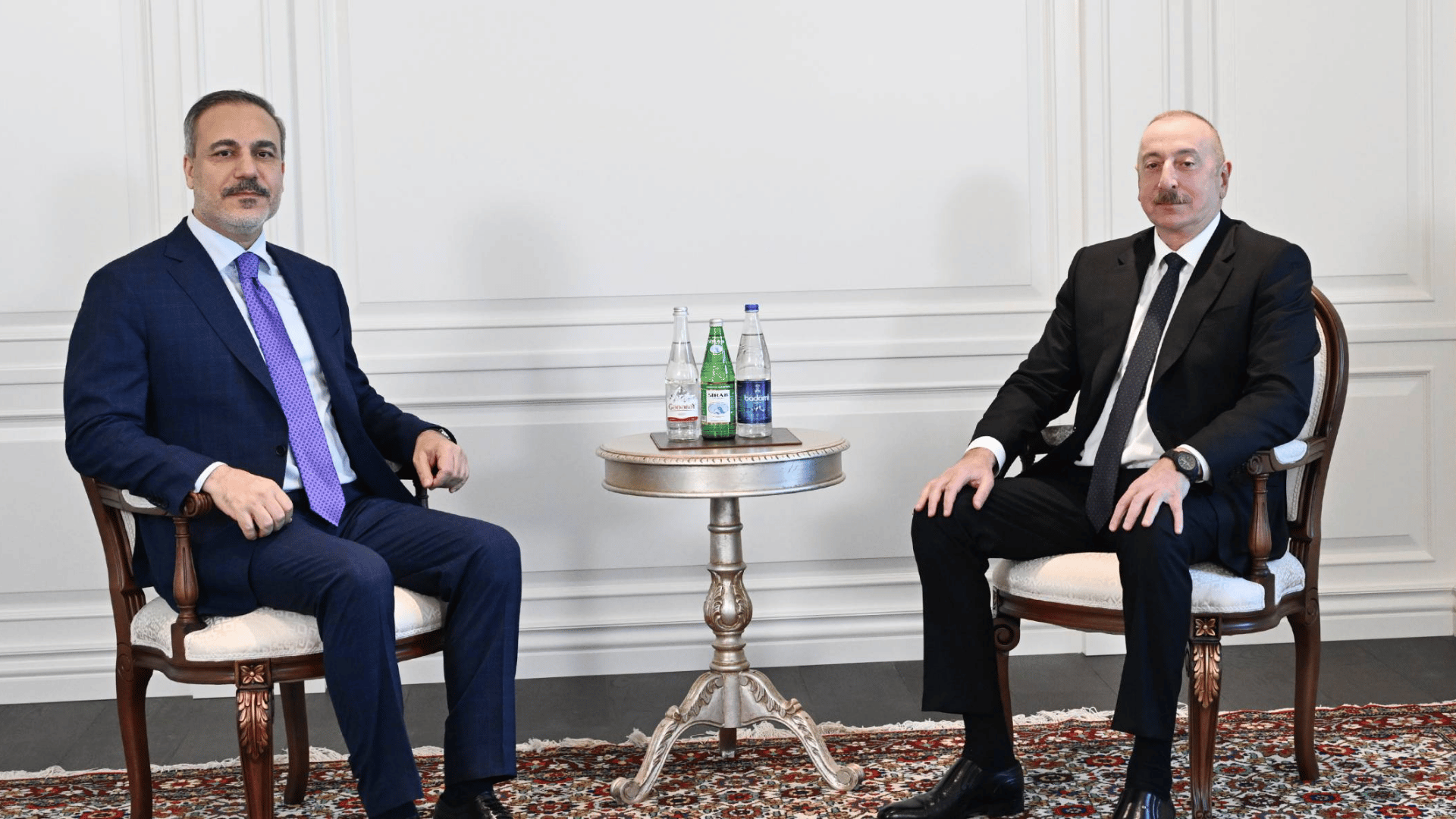
● An agreement has been reached on an upcoming meeting between the Armenian and Azerbaijani foreign ministers, Armenian Foreign Ministry spokesperson Ani Badalyan said, without providing details about a possible meeting between Ararat Mirzoyan and Jeyhun Bayramov. Earlier, Azerbaijani Foreign Minister Jeyhun Bayramov said he did not rule out meeting his Armenian counterpart in the near future. He said border delimitation was an important part of the discussions.
● Azerbaijan and Armenia have agreed to carry out state border delimitation work from north to south, starting from the point where the borders of Armenia, Azerbaijan and Georgia meet, Azerbaijani Foreign Minister Jeyhun Bayramov told journalists.
● The government has proposed transferring 100% of the shares in Armenia’s strategically important Electricity Networks of Armenia to the state. The company is currently owned by Samvel Karapetyan, a Russian billionaire of Armenian origin who is under arrest in Yerevan on charges of calling for the overthrow of Armenia’s government. According to the published draft declaring a prevailing public interest in the company’s 100% shares, the expropriation process is to begin by July 1, 2027 and be completed by October 1, 2027. The state will acquire the shares, with the process coordinated by the Ministry of Territorial Administration and Infrastructure.
The stated aims are to ensure state and public security, protect consumers’ legitimate interests, guarantee uninterrupted electricity supplies and ensure the normal operation of social and strategic facilities. The company’s owners will receive equivalent compensation in accordance with the law.
● Eight people, including the head of Meghri community and the head of the Syunik regional branch of the Eco-Patrol Service, have been detained on bribery charges as part of a criminal case initiated by the Anti-Corruption Committee.
● Former Armenian Security Council Secretary Armen Grigoryan has joined international consulting company Policy and Management Consulting Group (PMCG) as a senior adviser. The company announced this in a press release on LinkedIn.
● Twenty railcars of barley and 21 railcars of wheat will be sent from Russia to Armenia via Azerbaijan today.
● A protest was held outside Armenia’s National Assembly, with participants demanding a full amnesty in cases involving the compulsory enforcement of court decisions. Among other demands, they called for all accumulated fines and enforcement costs to be cancelled, saying that many citizens have had their bank accounts and cards blocked, making their lives more difficult.
● The Interior Ministry has proposed raising the state fee for Armenian citizenship from the current 50,000 drams (about $140) to 250,000 drams (about $700). The fee for renouncing Armenian citizenship would rise from 150,000 drams (about $400) to 1.5 million drams (about $4,130). The ministry has submitted the draft for public discussion. It cites a significant increase in the number of citizenship applications. Digital analysis over the past 15 years shows that around 250,000 people have obtained Armenian citizenship, most of whom have never registered permanent residence in Armenia.
● Political consultations between the Armenian and Iraqi foreign ministries were held in Baghdad. Memoranda were signed on cooperation in youth and sports, as well as between the Armenian Foreign Ministry’s Diplomatic School and the Iraqi Foreign Ministry’s Institute of Foreign Service.
● A reading room for people with disabilities has opened at the National Library. It is equipped with audiobooks, Braille and alternative-format publications, as well as modern technological solutions.
● In Yerevan, an eagle became entangled in the branches of a poplar tree on Tbilisi Highway. Rescuers freed the bird and took it to a fire and rescue unit, after which it was transferred to the Ark Granta Foundation.
-
Thursday, September 10, Azerbaijan. Analysis of Azerbaijan-Russia relations by Azerbaijan’s ambassador to Russia
● Azerbaijani Ambassador to Russia Rahman Mustafayev gave Russian media a wide-ranging interview on the state of Azerbaijan-Russia relations. He said the possibility of developing cooperation based on an alliance emerged after issues related to the crash of an Azerbaijani passenger plane, shot down by Russian air defences near Grozny in December 2024, were “fairly resolved”. “All issues, including compensation payments, have been fully settled. […] We proceed from the fact that this painful chapter in our bilateral relations is closed and actively support the process of normalising relations,” Mustafayev said. He noted that a decision had been made to restore direct AZAL flights between Baku and three Russian cities.
● “The presidents of the two countries reaffirmed their commitment to cooperation based on strategic partnership and alliance principles during phone calls on March 11 and July 28,” Rahman Mustafayev said. At the same time, he drew attention to a “negative information campaign against Azerbaijan” conducted by some Russian experts, bloggers and journalists who make insulting and provocative statements about Azerbaijan and its leadership. “We expect Moscow to respond firmly and take concrete steps to rectify this unacceptable situation,” the ambassador said.
● Rahman Mustafayev also highlighted serious problems affecting the Azerbaijani diaspora in Russia. He recalled the tragic incident in Yekaterinburg last summer that resulted in the deaths of Azerbaijani citizens, and expressed concern over pressure on leaders and representatives of the Azerbaijani community in Russia, as well as the stripping of their Russian citizenship. Mustafayev stressed that the Russian community in Azerbaijan and the Azerbaijani community in Russia are important factors in bringing the two nations and states closer together. “We expect the Russian side to support this approach,” he said.
● A new phase in Azerbaijan-Russia relations could be driven by new projects in various fields, Azerbaijani Ambassador to Russia Rahman Mustafayev told journalists. “This could be a new investment project, the creation of a joint university or a breakthrough in addressing the Caspian Sea’s shrinking, reciprocal cultural days, increased tourism or more active dialogue between civil societies,” he said. Mustafayev also stressed the importance of teaching Azerbaijani in Russian schools in regions with large Azerbaijani communities. He also gave comparative figures for high-level visits: 30 bilateral visits took place in the first seven months of this year. In 2024, the most successful year in relations between the two countries, there were 66 such visits, compared with 20 in the crisis-hit 2025.
● Rahman Mustafayev said Baku could consider becoming a venue for dialogue or a communication channel as part of efforts to resolve the Russia-Ukraine conflict. He was commenting on a closed-door meeting between Russian and German representatives held in Baku in July. Mustafayev stressed that Azerbaijan consistently supports the principles of territorial integrity and the inviolability of states’ borders, and referred to President Ilham Aliyev’s statement to this effect at the recent international media forum in Shusha.
● Turkish and Russian foreign ministry officials discussed cooperation in the South Caucasus and Central Asia, as well as Russia’s war in Ukraine. Turkey was represented by Mehmet Samsar, head of the department for Eastern Europe and the South Caucasus, while Russia was represented by Deputy Foreign Minister Mikhail Galuzin. “The inadmissibility of introducing from outside any initiatives that could create new dividing lines in the South Caucasus and Central Asia was noted. The parties stressed their interest in continuing the 3+3 regional cooperation platform (Azerbaijan, Armenia, Georgia plus Russia, Iran and Türkiye) as a promising mechanism for strengthening stability and security based on the principle of ‘regional responsibility’,” Turkey’s Foreign Ministry said. The statement did not mention that Georgia refuses to participate in the platform while Russia occupies Georgian territory.
● “Baku’s position on the territorial claims enshrined in Armenia’s Constitution remains unchanged: abandoning these provisions is necessary for signing a peace agreement,” Foreign Minister Jeyhun Bayramov told journalists. He recalled that under the joint statement signed in Washington in August 2025, steps necessary to complete the process should be taken after the peace agreement is initialled. One of them is holding a referendum in Armenia and amending the Constitution. Bayramov also stressed that Azerbaijan has taken important steps of its own to advance the peace process with Armenia.
Context: Armenia’s Constitution refers to the 1990 Declaration of Independence, which mentions the “reunification of Armenia and Nagorno-Karabakh”. Azerbaijan considers this a territorial claim and insists that a peace agreement can only be signed once the provision is removed from Armenia’s Constitution.
● The main negotiations on the TRIPP transit project (Trump Route) are being conducted between the US and Armenia, but its implementation is impossible without Azerbaijan’s involvement, Jeyhun Bayramov said. He noted that US partners regularly brief Azerbaijani authorities on the project’s progress. The foreign minister said implementation had previously been expected to begin by the end of this year, but according to the latest information, it is now planned for 2027. Azerbaijan, meanwhile, has already begun rebuilding railways in the Nakhchivan Autonomous Republic. TRIPP will establish a land route between mainland Azerbaijan and Nakhchivan. “We consider this project very important for Azerbaijan, Armenia and the entire region, as well as for international partnership,” Bayramov said.
● Ghalib Bayramov, head of the Centre for Economic Research and one of the civil society representatives arrested in Azerbaijan as part of the criminal “NGO case”, has been given an eight-year prison sentence suspended. He was placed on three years’ probation, while police supervision was replaced by a travel restriction. Bayramov was found guilty of money laundering and fraud. He continues to maintain his innocence and rejects the charges.
Around 50 people are currently under investigation in the “NGO case”. They include staff members of international organisations that provided grants in Azerbaijan. None of the defendants have pleaded guilty and they describe the prosecutions as politically motivated.
● Finance Minister Sahil Babayev met in Baku with a World Bank delegation led by South Caucasus Regional Director Roland Price and the bank’s new country manager for Azerbaijan, Sasha Bakes. It was noted that since the start of the partnership, around $4.9 billion has been allocated to 53 projects in various sectors. Price praised Azerbaijan’s socio-economic achievements and reforms in recent years and said the World Bank was ready to continue supporting the country and expand cooperation into new areas.
● State oil company SOCAR plans to develop a special programme to prevent oil leaks from old wells in the Caspian Sea. SOCAR Vice President Afgan Isayev called this one of the most serious environmental problems. “As a legacy of the Soviet era, we have tens of thousands of such wells. We assume that some of them are leaking oil and gas. This issue is extremely difficult from a commercial standpoint,” Isayev said at the UN-backed Baku Climate Action Week 2026 international forum. He said that “without the support of international development banks, it is practically impossible to solve the problem” and that SOCAR had held talks with the World Bank, Asian Development Bank and Asian Infrastructure Investment Bank. “They have agreed to support SOCAR in this process,” Isayev said.
● Under the state vehicle recycling programme, 36,728 vehicles have been safely removed from circulation, including 18,852 since the beginning of this year. Russian Lada vehicles account for 56% of all cars recycled. GAZ vehicles make up 9%, Mercedes-Benz 6%, Opel 3% and Daewoo 2%. According to official statistics, one in five vehicles in the country currently fails to meet environmental requirements and safety standards. An electronic portal has been launched to simplify the process of handing over vehicles for recycling. After the vehicle is handed over to the operator, the owner receives a confirmation document allowing them to receive a one-off payment or a discount on a new locally produced vehicle. Under the programme, 1,991 new locally produced cars have been sold at preferential rates. More than 1 million manats (around $590,000) has been transferred to applicants’ bank accounts as one-off payments.
● The Association of Football Federations of Azerbaijan has begun creating a database of young Azerbaijani footballers born between 2006 and 2015 who live abroad, mainly in Europe. The aim is to establish contacts with promising players.
● The Manchester United–Sabah match in the UEFA Champions League league phase will take place in Baku today at 23:00. Sabah head coach Valdas Dambrauskas told journalists that the match is a historic event for Azerbaijani football as a whole. “Manchester United are one of the greatest clubs in world football. Playing against such a team is a huge responsibility and an exciting experience. We are not going onto the pitch simply to surrender or defend. We will try to play our game and take our chances. We want to give everything on the pitch and show our fans good football.”
-
Wednesday, September 9, Azerbaijan. Kamal Isayev, known for advocating Talysh rights in Azerbaijan, has been sentenced to 8.5 years in prison
● Azerbaijan’s Deputy Foreign Minister Elnur Mammadov met with US Chargé d’Affaires in Armenia David Allen and US Chargé d’Affaires in Azerbaijan Amy Carlon, who arrived in Baku. They discussed the normalisation of Azerbaijan-Armenia relations and prospects for lasting peace, as well as Mammadov’s recent US visit, the implementation of the Trump Route for International Peace and Prosperity (TRIPP), and Azerbaijan-US cooperation under the Strategic Partnership Charter.
● The shrinking Caspian Sea is creating new challenges for shipping and threatening the efficiency of the Middle Corridor, said Alekber Azizli of Azerbaijan Caspian Shipping Company (ASCO) at the UN-backed Baku Climate Action Week 2026. The Caspian’s water level is falling by more than 20 cm annually, affecting cargo capacity and access to ports and offshore platforms. Azerbaijan, Kazakhstan and Turkmenistan face similar problems, including the need to deepen channels, extend piers and update navigation charts.
● Adapting smallholder farmers to climate change is Azerbaijan’s main agricultural priority, said World Bank Country Manager for Azerbaijan Stefanie Stallmeister. She said climate change is particularly affecting small farms, but adaptation solutions can be implemented at both small and large scale.
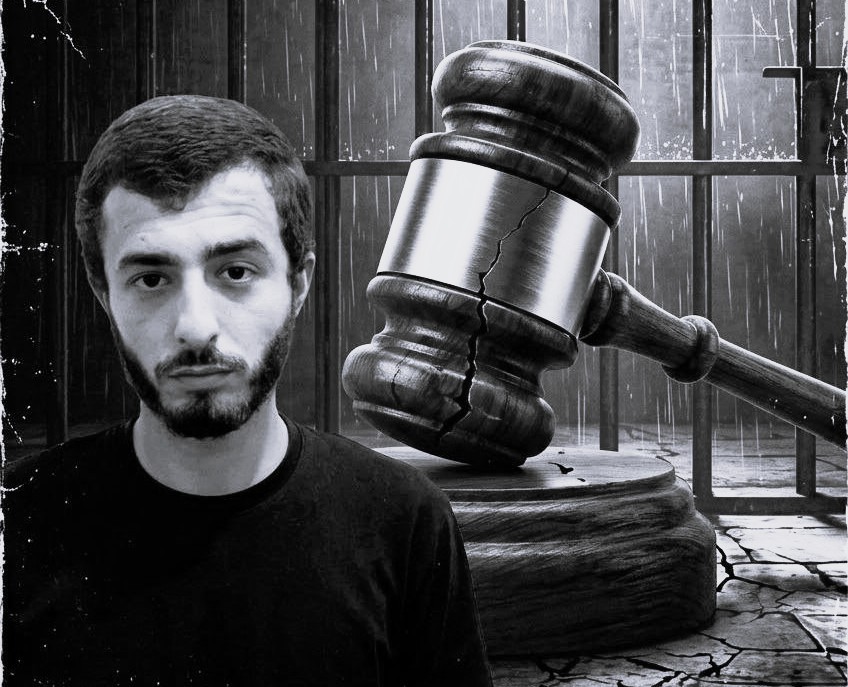
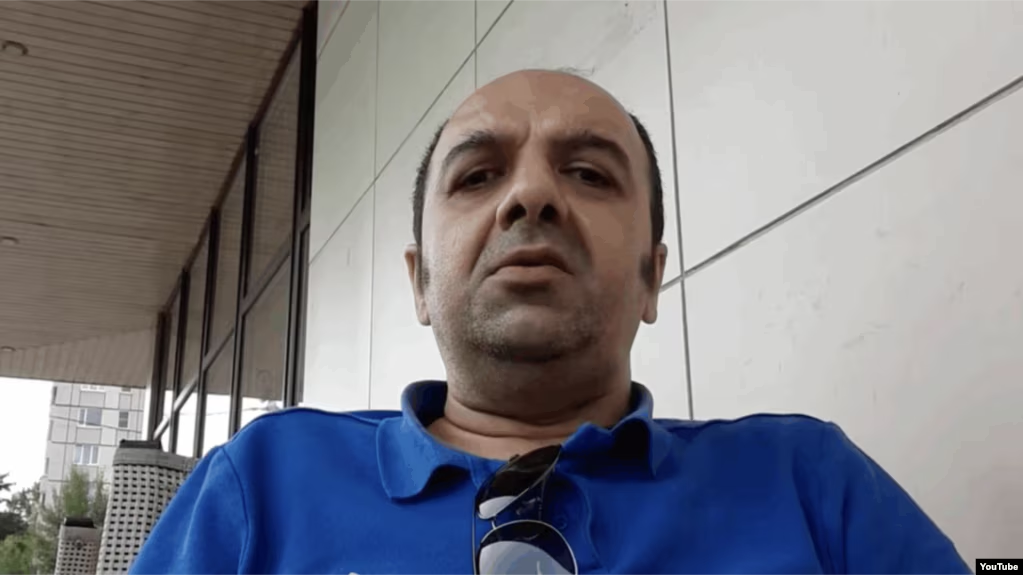
● Kamal Isayev, a Russian citizen known in Azerbaijan for speaking out on ethnic minority issues, particularly Talysh rights, has been sentenced to 8.5 years in prison. He was found guilty of publicly calling for action against the state, distributing symbols aimed at violating Azerbaijan’s territorial integrity, and inciting ethnic hatred through violence or threats of violence. Isayev, who was reportedly detained in Istanbul last year and brought to Baku, denied the charges. In court, he said he had always recognised Azerbaijan’s territorial integrity and never discriminated against any ethnic group. His lawyers said his activities were solely aimed at protecting the Talysh language and cultural heritage, stressing that the right to develop a native language is a fundamental right protected under international standards for ethnic minorities.
● Azerbaijan’s Interior Ministry has been granted observer status in the American Police Community (AMERIPOL), which the ministry said will expand cooperation against transnational organised crime, drug trafficking, cybercrime, extremism and human trafficking.
● Foreign Minister Jeyhun Bayramov congratulated Ismail Ould Cheikh Ahmed on his election as Secretary-General of the Organisation of Islamic Cooperation and invited him to visit Azerbaijan.
● Victims of mine incidents will now receive psychological assistance at state medical institutions at the expense of the state budget.
● Azerbaijan’s State Committee for Diaspora Affairs said it had helped more than 10,000 Azerbaijanis living in Türkiye without proper documentation to legalise their status.
● Two tourists died in the Sheki region after falling from a height when a zipline cable broke at a recreation centre. An investigation is underway.
-
Wednesday, September 9, Armenia. Armenia has appealed to the EAEU, which operates under Russian leadership, over Russia’s ban on imports of Armenian products
● Armenia has appealed to the Eurasian Economic Union (EAEU), which operates under Russian leadership, over Russia’s restrictions on imports of Armenian products. Deputy Economy Minister Tigran Gasparyan said Armenia had presented Moscow with arguments that the restrictions were unjustified and held talks on the issue. “What matters is not only our contacts with Russia, but also the mechanisms available within the EAEU. The union has specific mechanisms for removing such obstacles, and we hope they will work,” Gasparyan said.
● Latvian President Edgars Rinkēvičs received Armenian Foreign Minister and Minister for International Trade Ararat Mirzoyan in Riga. They discussed the deepening Armenia-EU partnership. Mirzoyan stressed that Armenia highly values the continued support of EU member states, including Latvia, for advancing Armenia’s European integration agenda. They also welcomed the successful European Political Community summit held in Yerevan in May.
● During his visit, Ararat Mirzoyan met representatives of Latvian think tanks. The minister presented developments in the South Caucasus, the process of normalising and developing Armenia’s relations with countries in the region, and efforts to deepen existing partnerships beyond the region.
● The parliamentary committee on regional and Eurasian integration issued a positive opinion on ratifying the free trade agreement between the Eurasian Economic Union and Indonesia. The agreement aims, among other things, to reduce tariff and non-tariff barriers and create favourable conditions for cooperation.
● Newly appointed French Ambassador Florian Escudier presented his credentials to Armenian President Vahagn Khachaturyan. They discussed prospects for effectively implementing the countries’ strategic partnership.
● Prime Minister Nikol Pashinyan left for a two-day working visit to France, where he will attend the International Space Summit. Pashinyan posted a video on social media showing him travelling on a regular commercial flight alongside other passengers.
● The detention of Andranik Tevanyan, chairman of the pro-Russian opposition Mother Armenia party, has been extended by three months, while the detention of party governing body member Aregnaz Manukyan has been extended by one month. According to the charges, Tevanyan passed secret information from a closed session of the National Assembly to a foreign centre in 2024. The initial charges of espionage and recruiting for a foreign intelligence service were later dropped and replaced with an article on disclosure of state secrets. The defence says the accusations are unfounded.
● Armenia took part for the first time in the international PISA 2025 assessment (Programme for International Student Assessment). The assessment was conducted from March to May 2025 and involved around 7,000 students from 295 schools. The performance of 15-year-olds was assessed in three areas: reading, mathematics and science. Armenia’s results were relatively low compared with other countries in the region and the OECD average:
Science: Armenia — 369 points; Azerbaijan — 421; Georgia — 422; OECD average — 482.
Mathematics: Armenia — 348 points; Azerbaijan — 374; Georgia — 416; OECD average — 463.
Reading: Armenia — 376 points; Azerbaijan — 388; Georgia — 384; OECD average — 461.
● Yerevan Mayor Tigran Avinyan said radically improving the performance of condominium management bodies was his political commitment. “We have effectively taken over the functions of the condominiums: we are making capital investments, and by the end of the year 3,060–3,070 lifts will have been replaced across the city, leaving only about 1,300 to be replaced. But condominiums are not performing their functions, and municipal intervention is necessary,” Avinyan said. In his view, new genuine elections should be held and “the system of idlers who just sit there and collect their salaries must be eradicated.”
● Prime Minister Nikol Pashinyan met representatives of the Oxford Alumni Business Club of Armenia. They discussed, among other things, the idea of establishing a fund to support talented young people and organising an Armenian-British business forum planned for October in Yerevan.
● The environment minister took part in the Kunming Dialogue under the UN Convention on Biological Diversity.
● Armenia will host the 2029 European Track Cycling Championships for juniors, Cycling Federation President Ara Sadoyan told journalists.
● Veronika Zonabend, wife of Rubén Vardanyan, the convicted former state minister of the former unrecognised Nagorno-Karabakh Republic, called on Security Council Secretary Alen Simonyan to meet Armenian prisoners held in Azerbaijan. She said she was ready to travel to Baku with him and asked him to consider the possibility and assist in “organising meetings with our loved ones.”
● Health Minister Anahit Avanesyan visited a medical centre where several residents of the village of Byureghavan are being treated after being poisoned by contaminated drinking water. “The water and other biological samples are still being examined. We once again urge residents to use only boiled water until the laboratory test results are available,” the minister said.
● Wizz Air is increasing the number of aircraft based in Armenia to four. The company plans to launch flights from Yerevan to three new destinations — Basel, Varna and Valencia. Three weekly flights to Basel will begin on December 18.
-
Wednesday, September 9, Georgia. EU has expressed “deep concern” over the politically motivated use of the judiciary and repressive measures against civil society in Georgia
● The European Union has expressed “deep concern” over the politically motivated use of the judiciary and repressive measures against civil society in Georgia. The statement was submitted by the EU to the UN Human Rights Council. The EU condemned the detention of opposition leaders, independent journalists and civil society representatives, and called on the Georgian authorities to repeal or substantially amend laws that contradict international human rights standards.
● Former Defence Minister Juansher Burchuladze and his relative Vasil Mkhiedze have reached plea agreements with the prosecution in a major bribery case. Burchuladze was sentenced to five years in prison, three of which he will serve in jail and two suspended. He was also fined GEL 1 million (about $385,000). Mkhiedze was sentenced to one year and two months in prison and fined GEL 100,000 (about $39,000).
According to the Prosecutor’s Office, in three secret procurements, the Defence Ministry purchased medical equipment and supplies worth GEL 11.5 million (about $4.5 million) for GEL 18.5 million (about $7.1 million). The state suffered losses of nearly GEL 7 million (about $2.7 million). Investigators allege that Mkhiedze embezzled GEL 400,000 (about $155,000) and transferred GEL 1.5 million (about $578,000) to Burchuladze. According to the investigation, Burchuladze then transferred GEL 750,000 (about $290,000) from that amount to then-Prime Minister Irakli Gharibashvili. Gharibashvili, who has already been convicted, is also charged in connection with this episode.
● The Prosecutor’s Office is negotiating a plea agreement with Juansher Burchuladze in a second criminal case. Burchuladze was found guilty in that case of abuse of office and money laundering and sentenced to 10 years in prison. The terms of a possible plea deal have not yet been determined. An appeal hearing is scheduled for September 28.
● The 134th meeting of the Incident Prevention and Response Mechanism, an international format operating in Ergneti in the Georgian-Ossetian conflict zone, was held. Georgian representatives again demanded the release of Georgian citizens illegally detained in the Russian-occupied Tskhinvali region (South Ossetia) and raised the issue of accountability for Russian occupation forces over the killing of local resident Tamaz Ginturi. The meeting also addressed the illegal “border” and restrictions on freedom of movement for the local Georgian population. The next meeting will be held on October 22. Read more here
● According to the Social Justice Center, from November 2024 to June 26, 2026, parliament adopted around 300 legislative initiatives or packages, most of them hastily and without substantive discussion. The organisation says the overall direction of these changes is to restrict human rights, weaken democratic institutions and expand the influence of the executive branch.
● Illegal schools and kindergartens operating under Russian curricula are proliferating in Tbilisi, opposition United National Movement chairman Irakli Pavlenishvili said. According to him, children at such schools are taught that Georgia is the aggressor and that Abkhazia and so-called South Ossetia are independent countries. Pavlenishvili called on Education Minister Givi Mikanadze to provide explanations.
● Well-known animal rights activist and businessman Tamaz Elizbarashvili has gone on hunger strike in prison. He announced this in a letter sent to TV Pirveli. Elizbarashvili was detained on charges of threatening several people with death and bodily harm following a dispute at a restaurant in Tbilisi on August 30. He denies the allegations.
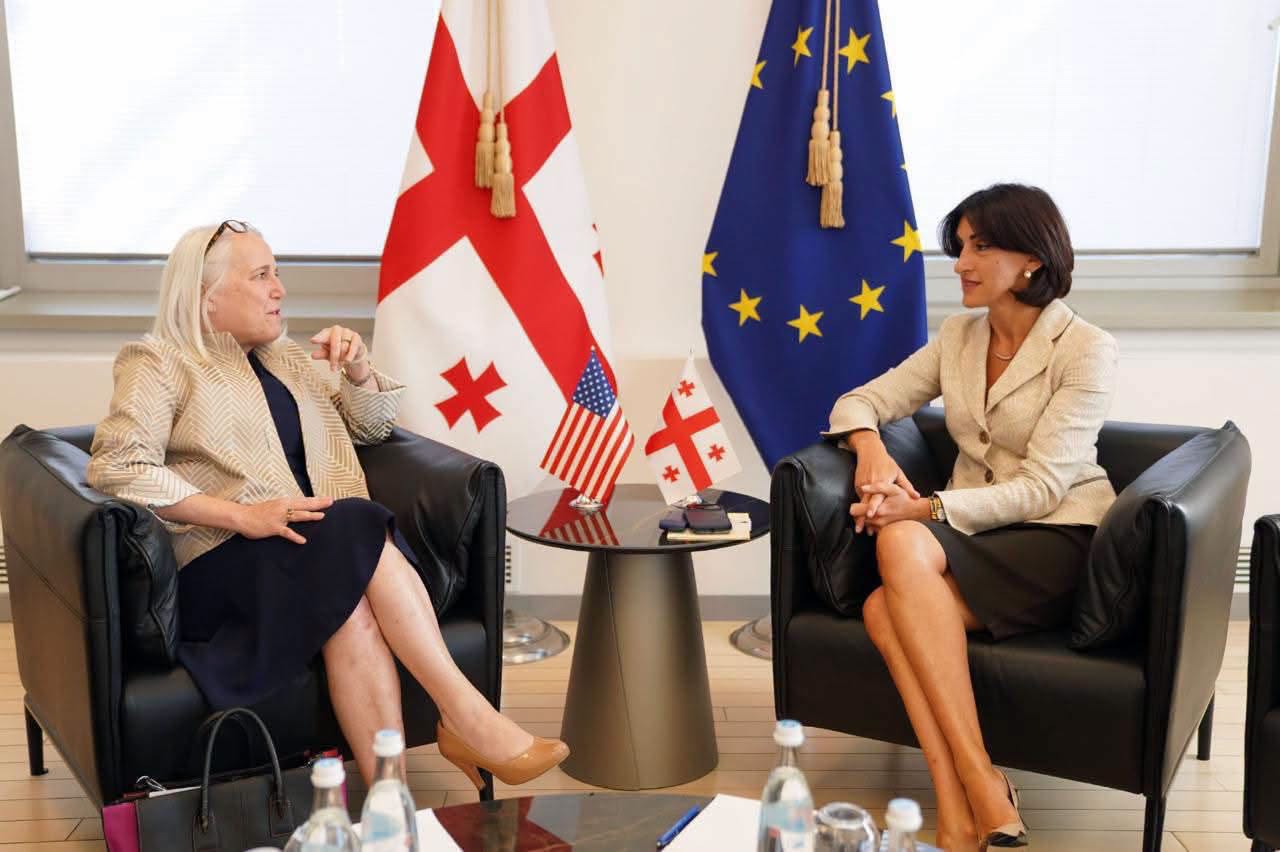
● Foreign Minister Maka Botchorishvili met newly appointed US Chargé d’Affaires in Georgia Courtney Austrian (pictured). They discussed prospects for cooperation in various areas and expressed readiness to deepen bilateral ties.
● Prime Minister Irakli Kobakhidze said that the “elimination of high-level corruption” in the country was one of the reasons for improved economic growth. According to him, the economy grew by 8% in July, while economic growth this year stands at 7.9%.
● Prime Minister Irakli Kobakhidze will attend the first international summit on space in Paris on September 9–10 at the invitation of the French president. The summit is co-chaired by France and Germany and will focus on science, research, security and defence.
● Under the new national curriculum, chemistry will now be taught from seventh grade instead of eighth. In the same grade, students will study “World History” and “History of Georgia” as separate subjects. Under the new curriculum, “History of Georgia” will continue to be taught in grades 10–12.
● The maximum speed limit in areas around schools is planned to be reduced to 30 km/h.
● Schools are introducing new textbooks. Prime Minister Irakli Kobakhidze said the textbooks had been revised together with the national curriculum and are based, among other things, on “traditional Georgian values”. It was also announced that robotics clubs will open in 100 schools, while another 100 schools will introduce military education programmes. Elective courses will include financial and media literacy, as well as an introduction to artificial intelligence.
-
Tuesday, September 8, Armenia. Visits to Latvia and the UAE aimed at diversifying markets for Armenian exports
● The working visit of Foreign Minister Ararat Mirzoyan to Latvia is continuing. During his meeting with President Edgars Rinkēvičs, they discussed, among other issues, mechanisms for expanding access for Armenian products to European markets. This has become a key issue for the Armenian authorities amid Russia’s ban on imports of almost all Armenian goods, introduced after Armenia declared its course towards European integration. Some EAEU member states, part of the Russia-led bloc, have also imposed partial restrictions on Armenian goods.
● During Ararat Mirzoyan’s meeting with Latvian Foreign Minister Baiba Braže, a protocol was signed on implementing the Armenia-EU readmission agreement concerning persons residing without authorisation.
● European Commission spokesperson Paula Pinho said Europe is interested in strengthening cooperation with Armenia, but said “it is still too early to say when visa liberalisation may take place”. “We can confirm that discussions are under way in a number of areas, and once these issues are sufficiently advanced, we will move to the next stage of closer partnership with Armenia,” Pinho said.
● The Armenian and Kazakh authorities have officially denied as fake statements circulating on social media attributed to Armenian Prime Minister Nikol Pashinyan. The misinformation was based on Pashinyan’s actual response at his September 3 briefing to a journalist’s question about possible pressure on Yerevan from Moscow. Pashinyan ironically replied: “Do you perhaps still think that you are facing the First Secretary of the Central Committee of the Communist Party of Soviet Armenia?” Pashinyan meant that he does not answer to Moscow and did not mention Kazakhstan at all. However, some bloggers launched a social media campaign with a fabricated version of his remarks, claiming he had also spoken about the “subordination of the president of Kazakhstan” and “rich Kazakhs”, giving the comments an insulting context towards Kazakhstan. The posts were circulated by accounts using Kazakh names and also attributed other statements to Pashinyan concerning Armenia’s relations with Russia and developments with Azerbaijan. The Armenian Prime Minister’s Office and Kazakh authorities called the publications fabricated and disinformation. “Prime Minister Pashinyan has never made such statements,” the statement said.
● A criminal case against Catholicos Garegin II and six bishops will be heard by the Armavir Regional Court of General Jurisdiction, the Court of Cassation has ruled. The case was launched after Garegin II allegedly defied a court ruling concerning Bishop Gevorg Saroyan, who had supported the Armenian prime minister’s campaign to “reform the Church”. Saroyan was removed as head of his diocese and challenged the decision in court. The court ordered his reinstatement pending the outcome of the case. However, the Supreme Spiritual Council, headed by the Catholicos, declared that the Church’s internal affairs were outside the court’s jurisdiction and also stripped Saroyan of his rank. The six bishops are defendants because they participated in the Supreme Spiritual Council’s decision.
● Deputy Economy Minister Tigran Gasparyan met a delegation from the French research and technology institute CEA-Leti. They discussed cooperation in microelectronics, semiconductors, photonics and digital technologies. Particular emphasis was placed on involving Armenian universities and research institutions in joint programmes with CEA-Leti, including internships, PhD programmes, joint research projects and internationally funded programmes.
● Economy Minister Gevorg Papoyan attended an annual investment forum in Dubai. He met UAE Minister of State for Foreign Trade Thani bin Ahmed Al Zeyoudi to discuss ways of facilitating Armenian exporters’ access to the UAE market. Papoyan proposed establishing a joint business-linkage mechanism to help Armenian companies better understand market requirements, standards and certification procedures. He also proposed reciprocal business visits to help move from trial shipments to long-term contracts.
● Gevorg Papoyan also visited Watermelon Ecosystem in Dubai. A memorandum of understanding was signed with the company in late August, launching exports of Armenian fruit and vegetables to the UAE. Initially, up to 40 tonnes of agricultural produce will be shipped from Armenia each week, with volumes potentially increasing later.
● National Assembly Speaker Ruben Rubinyan met Swedish Ambassador Eva Sunkvist. They discussed the importance of deepening bilateral cooperation.
● Yerevan is preparing to host COP17, the 17th meeting of the Conference of the Parties to the UN Convention on Biological Diversity, scheduled for October 19–30. A “urban biodiversity zone” is being created in the city to showcase environmental programmes implemented by Yerevan Municipality, as well as initiatives to develop green infrastructure and biodiversity.
● Minister of Territorial Administration and Infrastructure David Khudatyan attended the opening ceremony of the Georgian International Maritime Forum in Batumi, Georgia. On the sidelines, he met Georgian Economy Minister Mariam Kvrivishvili. They discussed bilateral cooperation in transport, energy and aviation, with particular emphasis on creating new direct air routes between Armenian and Georgian cities and increasing flight frequencies.
● Strong winds resembling a tornado caused damage in Gegharot, Aragatsotn province. The roof of the village administration building was blown off, while the roofs of two houses and a barn were damaged. Three electricity poles and a section of the gas pipeline were also damaged. Electricity was restored overnight, while work to restore gas supplies is under way.
● Five medical workers were detained at Edem Hospital in Masis after a 69-year-old woman died under general anaesthesia.
● Lawyer Ashot Simonyan said his client was tortured at a police station to extract a confession and published photographs on Facebook as evidence. “After approximately six hours of unlawful detention and torture at the police station, the citizen was taken to an investigative department where, without any legal assistance, he was forced to ‘confess’ that a drug allegedly planted on him by police officers belonged to him and was intended for his personal use,” the lawyer said.
● Another case of poisoning, reportedly linked to contaminated drinking water, was recorded in the Byureghavan community. “Calls started coming in during the middle of the night; by morning the clinic had received 23–24 calls. Three children, aged 3, 5 and 12, were hospitalised,” the director of the Byureghavan municipal clinic told NEWS.am. During a similar outbreak on July 24, Armenia’s National Center for Disease Control and Prevention reported that total coliform bacteria had been found in two repeat drinking-water samples from the Byureghavan community.
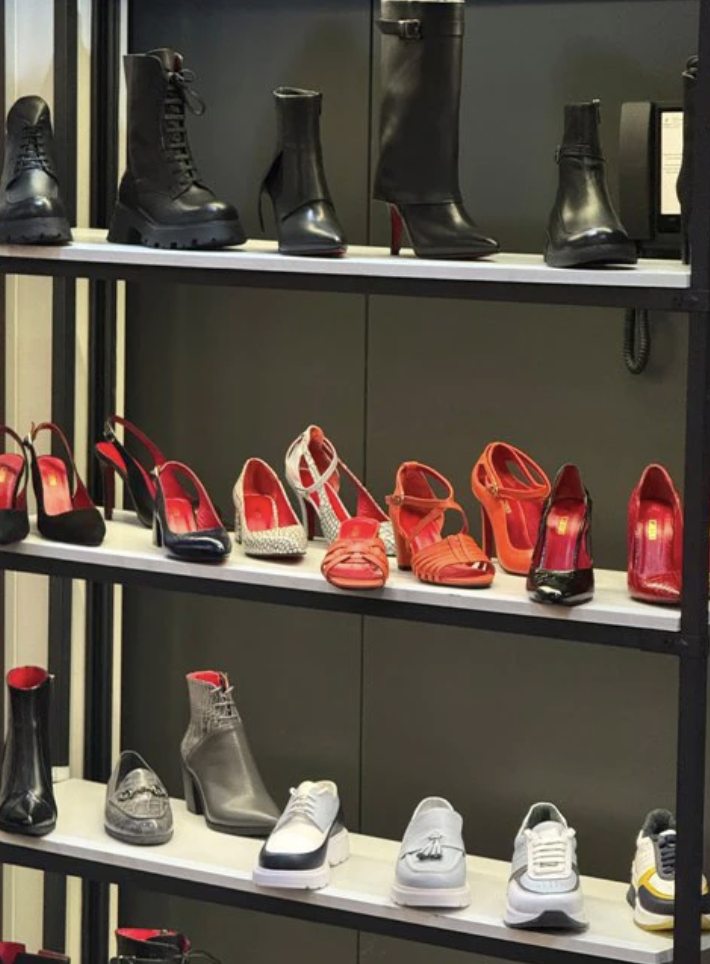
PHOTO: An exhibition of Iranian footwear was held in Armenia for the first time.

-
Tuesday, September 8, Georgia. Sixth letter by imprisoned ex-PM Gharibashvili accuses authorities
● Former Prosecutor General Otar Partskhaladze, who is wanted internationally by Georgia on murder charges and currently lives in Russia under the name Otar Romanov-Partskhaladze, will lead the international military unit “Georgievsky” to fight on Russia’s side in the war against Ukraine. Partskhaladze told the Russian state-run TASS news agency that the unit’s name refers to the 1783 Treaty of Georgievsk, which established a Russian protectorate over eastern Georgia. He said he was “ready to help Russia achieve the goals set by its leader”.
● Imprisoned former Prime Minister Irakli Gharibashvili published his sixth public letter, accusing the authorities of “dirty political games” against him. Gharibashvili wrote that he has no connection whatsoever with the opposition United National Movement, founded by fellow imprisoned former President Mikheil Saakashvili. He also sarcastically responded to reports alleging that he is an agent of the “deep state” or France. Addressing Parliament Speaker Shalva Papuashvili, Gharibashvili wrote: “This is not a legal process — it is ruthless political persecution.” He again said he was not fighting against his former allies, writing: “You stabbed me in the back.”
● Leaders of the ruling Georgian Dream party responded to Gharibashvili’s latest letter.
Party secretary-general and Tbilisi Mayor Kakha Kaladze called the former prime minister’s statements unfounded and said it was painful to see his former ally “in the situation he has put himself in”. Asked whether Prime Minister Irakli Kobakhidze could resign, Kaladze described Kobakhidze as an “honest, decent person” and expressed his support for him.
Kobakhidze, in turn, called Gharibashvili’s letters frivolous. He said the former prime minister had “sunk to the level of a blogger from a peculiar black-and-white newspaper” and described his letters as “absurd and tragic”.
● A contract has been signed in Tbilisi for the design and construction of a tram line. The project has a budget of 287.65 million lari (about $110.5 million). The approximately 7.5-km line, with 11 stops, will connect Didube metro station with Didi Dighomi via the Digomi residential area. The project also includes construction of a tram depot. A separate tender will be announced for the purchase of 10 trams. City Hall warned that construction would cause temporary disruptions and changes to traffic flows, with residents to be informed in advance.
● Cargo transport along the Middle Corridor in Azerbaijan has been delayed for almost a month. A railcar carrying mineral water from Georgia to Uzbekistan has been sitting at Azerbaijan’s Alat port since August 13, waiting for a ferry to cross the Caspian Sea. Paata Tsagareishvili, director of Georgia’s Transport Corridor Research Centre, told BMG that one reason for the delay was priority being given to Azerbaijani cargo. He said such prolonged delays highlight one of the Middle Corridor’s main problems: fast and predictable cargo transportation along the route remains impossible, reducing the corridor’s competitiveness and forcing shippers to seek alternative routes.
● Economy Minister Mariam Kvrivishvili met Abdulaziz Zayed Al Shamsi, regional executive director of Abu Dhabi Ports Group. They discussed the Anaklia deep-sea port and the Tbilisi dry port projects. Abu Dhabi Ports Group is one of the main investors in the Tbilisi dry port. The government has previously said it plans to develop Anaklia under a so-called “landlord port” model, with the state owning the port while investors are offered long-term terminal leases.
● Georgian company Solidus imported around 1,700 tonnes of petrol into Abkhazia in August from territory controlled by the Georgian government, Georgia’s Radio Liberty reports. Of this, 1,175 tonnes was 95-octane petrol and 523 tonnes was 92-octane. Supplies cross the Enguri River bridge and will continue in September. It was previously reported that international company Repsol (Connect) had ended its cooperation with Solidus. It is unclear where the petrol is currently being purchased. Solidus said only that purchases are made in Georgian lari from Georgian suppliers and that the fuel is supplied to Abkhazia for civilian use.
● Prime Minister Irakli Kobakhidze said the government plans to mobilise around $7 billion by 2032 for the development of Georgia’s transport and logistics infrastructure. Speaking at the Georgian International Maritime Forum in Batumi, he said the 10-year plan envisages doubling the capacity of the country’s railways and ports and tripling the capacity of international airports. Kobakhidze said more than 1 billion lari (about $386 million) would be invested this year in upgrading railway infrastructure and rolling stock. He also said 75% of the East-West International Highway has already been completed.
● The opposition Girchi party is changing its name to the “Free People’s Party”. The party said the existence of two political organisations called Girchi confuses voters and allows opponents to attribute certain positions to the wrong party.
● Incidents were reported in Tbilisi and across Georgia amid worsening weather. A tornado was spotted over the Black Sea near Kobuleti. A landslide on the road to the mountain resort of Gomismta temporarily blocked traffic. Strong winds brought down trees in Tbilisi. No injuries were reported.
-
Tuesday, September 8, Azerbaijan. Human rights defender Anar Mammadli sentenced to 13 years in prison
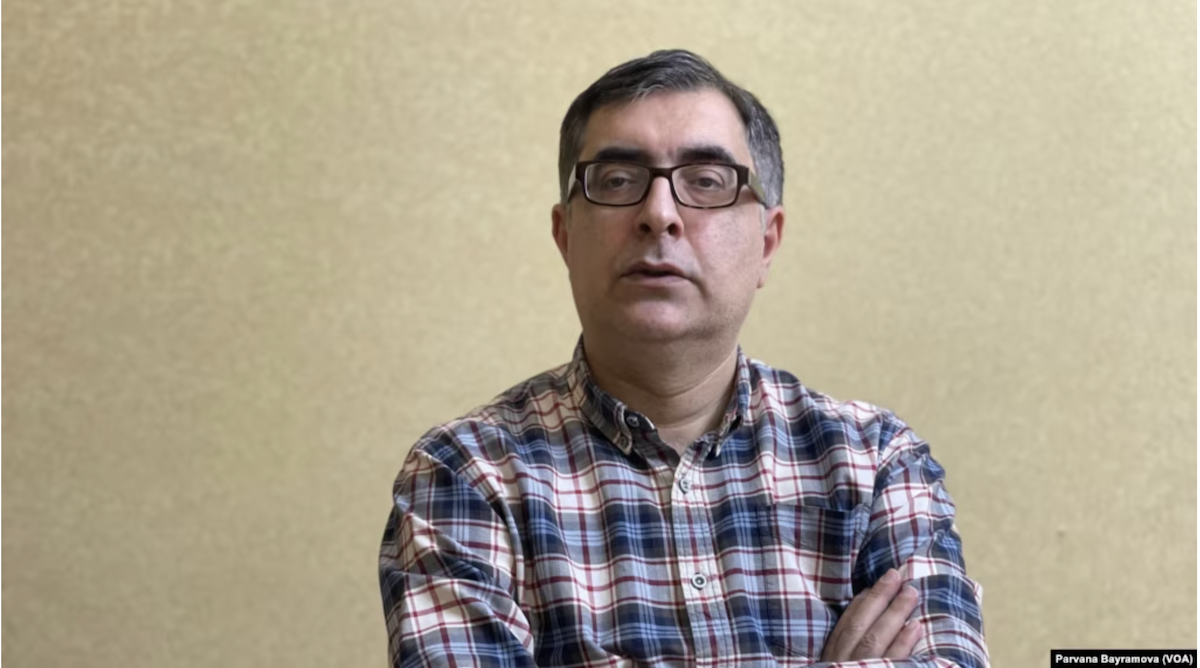
● Anar Mammadli (pictured below), head of the Election Monitoring and Democracy Studies Centre (EMDS), was sentenced to 13 years in prison. Activist Anar Abdulla, who was tried in the same case, was sentenced to 12 years. They were found guilty of smuggling, money laundering, illegal entrepreneurship and other offences. The charge of producing and using forged documents was dropped. In his final statement, Mammadli said he did not admit guilt and called the trial a “political spectacle”. The human rights defender said no genuine investigation had been conducted during the proceedings.
A verdict in the “ToplumTV case” was handed down in July. Journalists and activists were convicted under similar charges and sentenced to between 12 and 15 years in prison. The defendants also consider the charges politically motivated. According to human rights defenders, there are currently 328 political prisoners in Azerbaijan. The authorities deny this, saying those arrested are being prosecuted for specific criminal offences. A number of international human rights organisations, as well as PACE and the European Parliament, have called on Azerbaijan to end political persecution.
● Amnesty International said human rights defender Anar Mammadli was sentenced in Azerbaijan to 13 years in prison for crimes he did not commit. Marie Struthers, Amnesty International’s director for Eastern Europe and Central Asia, said Mammadli’s sentence follows the same pattern as the prosecution of nine defendants in the “ToplumTV case”, who were also given lengthy prison terms. “These sentences demonstrate that journalists and other critics who expose abuses by the authorities and go against the interests of President Ilham Aliyev’s family are subjected to harsh punishment,” Struthers said. Amnesty noted that since 2009, the Azerbaijani authorities have tightened restrictions on critical NGOs and independent media. It called on Azerbaijan’s international partners not to turn a blind eye to the growing repression or put energy and economic cooperation above human rights. Amnesty demanded the immediate and unconditional release of Mammadli and others convicted for peacefully exercising their rights.
● Baku is hosting the fourth UN Climate Week for Europe and Central Asia — BCAW 2026.
● The UN Human Settlements Programme (UN-Habitat) is implementing projects in Baku, Naftalan and Astara to address various water-related risks and the impacts of climate change. UN-Habitat programme manager in Azerbaijan Runzhe Wang said at the forum that a park will be developed in Baku combining a public space with infrastructure designed to collect water and minimise the risk of urban flooding. Wang noted that UN-Habitat has already implemented similar solutions in Amman.
● Saida Safaeva, head of Azerbaijan’s IAIS Centre for Sustainable Development, called for an urgent expansion and acceleration of research into the protection of the Caspian Sea. Referring to the disaster of the dried-up Aral Sea, she said it should serve as a warning when addressing the situation in the Caspian. Safaeva noted that the Aral and Caspian seas are different water systems but are linked by broader water dynamics in Central Asia, including those related to climate change, desertification and ecosystem degradation.
● Simonetta Siligato, director of the UN Office for Project Services (UNOPS) management office, also called for an urgent response to climate challenges facing the Caspian Sea. She said the five Caspian littoral states need to develop a joint approach and respond to changes already affecting the region’s environment, infrastructure, economy and water security. “The Caspian Sea is a single hydrological system, yet for a long time scientific research and data collection were conducted separately by each of these states. If we really want to understand what is happening, we need to work together and plan jointly,” Siligato said. She noted that under the Blue in the Caspian Sea project, implemented by UNOPS with the World Bank and funded by the Global Environment Facility in Azerbaijan, Kazakhstan and Turkmenistan, a shared scientific database is being created for joint planning. “This is no longer only an environmental issue. It affects infrastructure, ports, transport, local economies and livelihoods,” Siligato stressed.
● Russian President Vladimir Putin called Azerbaijani President Ilham Aliyev to discuss trade, economic and humanitarian cooperation. The two presidents agreed to step up bilateral contacts at various levels.
● Trade turnover between Azerbaijan and Uzbekistan has tripled over the past five years, while the overall portfolio of joint projects has exceeded $5 billion, Deputy Prime Minister Shahin Mustafayev said. He said relations between the two countries have reached their highest level in recent years, formalised as a treaty on strategic partnership, alliance and eternal friendship. Mustafayev said President Ilham Aliyev’s August 23–24 visit to Uzbekistan was an important milestone in bilateral relations. Analysis “how Azerbaijan is reshaping balance of power in Central Asia” here
● The British newspaper The Guardian published a critical letter from Gunel Salimova, an adviser at the Azerbaijani Embassy. The letter expressed outrage over The Guardian’s one-sided review of The Black Garden, a documentary directed by an Armenian filmmaker. “The film presents a chauvinistic position and does not reflect the existing reality. Coverage of the former conflict should take into account the tragedies experienced by the Azerbaijani people, the humanitarian and social consequences of the occupation, as well as the continuing mine threat,” the letter said. Salimova stressed that the former conflict was caused by Armenia’s occupation of Azerbaijani territories and that Azerbaijan restored its territorial integrity in 2020, backed by four UN Security Council resolutions. She noted that significant progress has been made towards lasting peace between Azerbaijan and Armenia, with recent meetings between the two countries’ leaders focusing on concrete results and plans for normalising relations. “Azerbaijan advocates focusing not on disagreements stemming from the former conflict, but on the positive results achieved towards peace, cooperation and mutual trust in the region,” the letter said.
● Valuable manuscript specimens by prominent Azerbaijani literary and scientific figures, including Nizami Ganjavi, Khagani Shirvani, Mahmud Shabustari, Nasir al-Din al-Tusi, Sam Mirza, Saib Tabrizi and others, have been discovered in the archives of the Hungarian Academy of Sciences. The works were found during research conducted by Rafael Huseynov, director of the National Museum of Azerbaijani Literature, during a visit to Budapest. One of the discoveries is a manuscript containing both a literary text and miniatures by artists of the Safavid era.
● Strong winds in Baku brought down 15 trees and broke branches on another 20. The risk of further incidents remains.
-
Monday, September 7, Georgia. Irakli Kobakhidze called Russia “the state that has occupied 20% of Georgia’s territory” but again spoke of “artificially fuelling Russophobia” in the country
● The Interior Ministry continued questioning people who made public statements in connection with the death of Lazare Jorbenadze. The investigation began after a public letter by imprisoned former Prime Minister Irakli Gharibashvili, in which he questioned the circumstances of Jorbenadze’s death. Shortly before his suicide, Jorbenadze had criticised current Prime Minister Irakli Kobakhidze. Gharibashvili and several opposition figures have been questioned. Khatiya Dekanoidze and Irma Inashvili said they had no specific information about the case and that investigators should question those mentioned in Gharibashvili’s letter — Prime Minister Irakli Kobakhidze and former Deputy Prime Minister Mamuka Mdinaradze.
● Transparency International Georgia has applied to the European Court of Human Rights on behalf of activist Saba Skhitaridze, who was arrested during pro-European protests in Tbilisi. The organisation says his right to a fair trial was violated and that the criminal prosecution was politically motivated. It claims Georgian courts relied on unreliable police testimony and evidence obtained in violation of procedural rules. Skhitaridze will file a separate complaint over possible ill-treatment during his arrest and at the police station.
● Well-known animal rights activist and businessman Tamaz Elizbarashvili, arrested on charges of threatening violence, denied any wrongdoing at a court hearing over the weekend. According to his account, seven people approached him at a restaurant in Tbilisi, identified themselves as employees of the pro-government Imedi TV channel and demanded an apology for his social media posts criticising Russia and supporting Ukraine. The prosecution alleges that Elizbarashvili threatened them with death and bodily harm and later returned to the restaurant armed. Elizbarashvili said he returned to resolve the dispute and was not carrying a weapon.
● Prime Minister Irakli Kobakhidze described Russia at a press conference as “the state that has occupied 20% of Georgia’s territory, which is a crime against the Georgian state and people.”
● Kobakhidze said Tbilisi should do everything possible to accelerate efforts to restore trust with the populations of occupied Abkhazia and the Tskhinvali region (South Ossetia). “The state has a clear policy, including legislation called ‘A Step Towards a Better Future’. It provides for specific measures, including healthcare for people living in these territories. Similar steps have been taken to supply Abkhazia with fuel. All this is aimed at restoring trust,” Kobakhidze said. He added that certain “foreign agents” were campaigning against this policy.
● Kobakhidze also repeated claims that “domestic deep-state agents are artificially fuelling Russophobia in Georgia” in order to drag the country into a conflict, open a “second front” and impose sanctions on Russia, which he said would damage the Georgian economy. He again claimed that Georgia had become a target of European bureaucrats and Western leaders because the Georgian authorities refused to comply with these demands, saying they were “unequivocally controlled by the deep state”. “A new stage of the assault on Georgia and its sovereignty has now begun, developing simultaneously on several fronts,” Kobakhidze said.
● Imprisoned former President Mikheil Saakashvili published a letter accusing fellow imprisoned opposition politician Nika Melia of insulting him when he sees him from his cell. Saakashvili also wrote that there had been no water at the facility for three days.
● A foreign national wanted by Interpol under a Red Notice was detained in Batumi. According to the Interior Ministry, he was wanted by Greek law enforcement over allegations of fraudulently obtaining a large sum of money. Extradition proceedings are underway.
● The traditional “Saturday march” was held in Tbilisi, with participants walking from Avlabari Square past government buildings to Parliament. The main message of the September 5 march was “Georgia against Ivanishvili”. The “Saturday march” has now been held in Tbilisi for 38 consecutive weeks. Demonstrators are demanding the release of political prisoners detained during the protests and new parliamentary elections.
Photo: Russian activist Denis Kulanin, who took part in the pro-European protests, has left Georgia after a court ruled that he would not be deported to Russia. He was given seven days to leave the country. Kulanin was arrested in March 2025 on charges of damaging a police vehicle and sentenced to two years in prison. He was pardoned by President Mikheil Kavelashvili along with eight other imprisoned activists. However, for several days after the pardon, Kulanin remained at risk of being deported to Russia and imprisoned there.
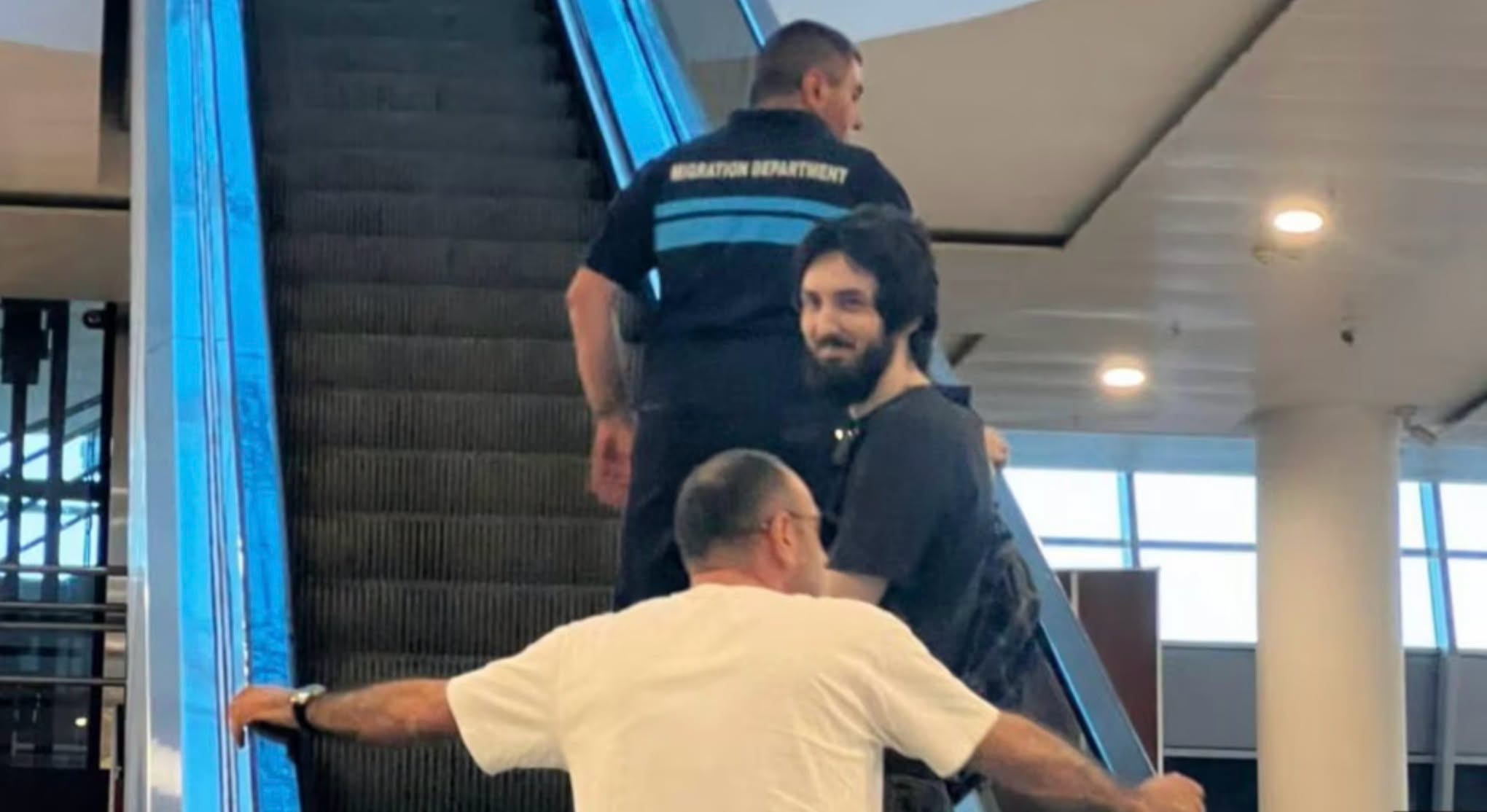
-
Monday, September 7, Azerbaijan. “Lack of evidence, attempt to undermine peace process” — Azerbaijan ombudsman rejects claims of persecution of Armenian prisoners in prison in Azerbaijan
● An operational meeting on military development was held over the weekend with the participation of President Ilham Aliyev. The president and First Lady Mehriban Aliyeva were briefed on the tactical and technical characteristics of the SALVO (SİDV) and KAYRA (KİDV) naval drones developed by Azerbaijani companies operating under the Defence Ministry. Practical tests of the drones were also conducted.
● An investigation has been launched into a tractor hitting a mine in the Aghdam district, which was recaptured from Armenian forces following the 2020 Second Karabakh War. The tractor driver was injured. Azerbaijan’s Mine Action Agency (ANAMA), Interior Ministry and Prosecutor General’s Office again urged the public to follow safety rules, avoid touching suspicious objects and stay away from unfamiliar areas.
● Ombudsman Sabina Aliyeva called statements by Armenian human rights lawyer Siranush Sahakyan “groundless and biased”. Sahakyan accused Azerbaijan of ethnic and religious discrimination against Armenians held in Azerbaijani prisons. The detainees are former military and political leaders of the unrecognised Nagorno-Karabakh Republic, convicted of war crimes against Azerbaijan. “Sahakyan unlawfully claimed, without providing any supporting evidence, that they are being tortured, their Christian religious symbols are being destroyed, the use of the Bible is prohibited and prisoners are being forced to read the Quran,” the ombudsman said. She added that her office had repeatedly monitored the conditions of people of Armenian origin held in Azerbaijan and held confidential meetings with them, finding that their rights and freedoms were protected in line with international standards, without discrimination. Aliyeva described Sahakyan’s statements as an attempt to undermine ongoing peace talks between Azerbaijan and Armenia.
● Farid Shafiyev, head of Azerbaijan’s Centre of Analysis of International Relations and Multiculturalism, sent a letter of protest to the British newspaper The Guardian, expressing outrage over what he called the publication’s one-sided review of The Black Garden, a documentary directed by an Armenian filmmaker. “The review repeats a false political narrative. Azerbaijan, whose territories were under Armenian occupation for almost three decades, is effectively portrayed as the aggressor, while the Armenian side is presented exclusively as the victim,” Shafiyev wrote. He noted that the review did not mention that “around 700,000 Azerbaijanis were forcibly displaced from their homes in Karabakh and surrounding areas over almost three decades, while entire cities and villages were systematically destroyed and looted.” He also said the review failed to mention four UN Security Council resolutions calling for the withdrawal of Armenian forces from Azerbaijani territory and reaffirming Azerbaijan’s territorial integrity. “The film was produced at the initiative and with the financial support of circles opposing the normalisation of Armenian-Azerbaijani relations. […] This is particularly concerning at a time when Armenian Prime Minister Nikol Pashinyan is pursuing a fundamentally different political course and has made peace with Azerbaijan a key priority of his political agenda,” the letter said.
● Azerbaijani musicians have joined the Pan-Caucasian Youth Orchestra, which presented its programme at the Tsinandali Festival of Classical Music in Georgia’s Kakheti region. The orchestra was established in 2019 and is led by renowned violinist Lisa Batiashvili and maestro Gianandrea Noseda. Young musicians from neighbouring countries are selected annually through a competitive process. In 2026, the orchestra includes young musicians from Azerbaijan, Armenia, Kazakhstan, Georgia, Moldova, Türkiye, Turkmenistan, Ukraine and Uzbekistan. During the festival, which runs from September 3 to 13, the orchestra will give four concerts.
● Severe weather is expected in Azerbaijan from Monday, with heavy rain and hail forecast in several regions and possible snow in high-altitude areas. The Emergency Situations Ministry urged residents to follow safety precautions, including staying away from areas at risk of landslides and flooding, lightweight structures and temporary buildings, and avoiding standing near electricity poles and tall trees during strong winds. The ministry also advised against using mobile phones outdoors during lightning and thunderstorms, among other precautions.
● An agricultural business festival and the third Raspberry Festival were held in Goygol over the weekend. Hundreds of local and foreign companies took part, including suppliers of innovative equipment for farmers. The festivals aim to promote agricultural products grown in the Ganja-Dashkasan economic region.
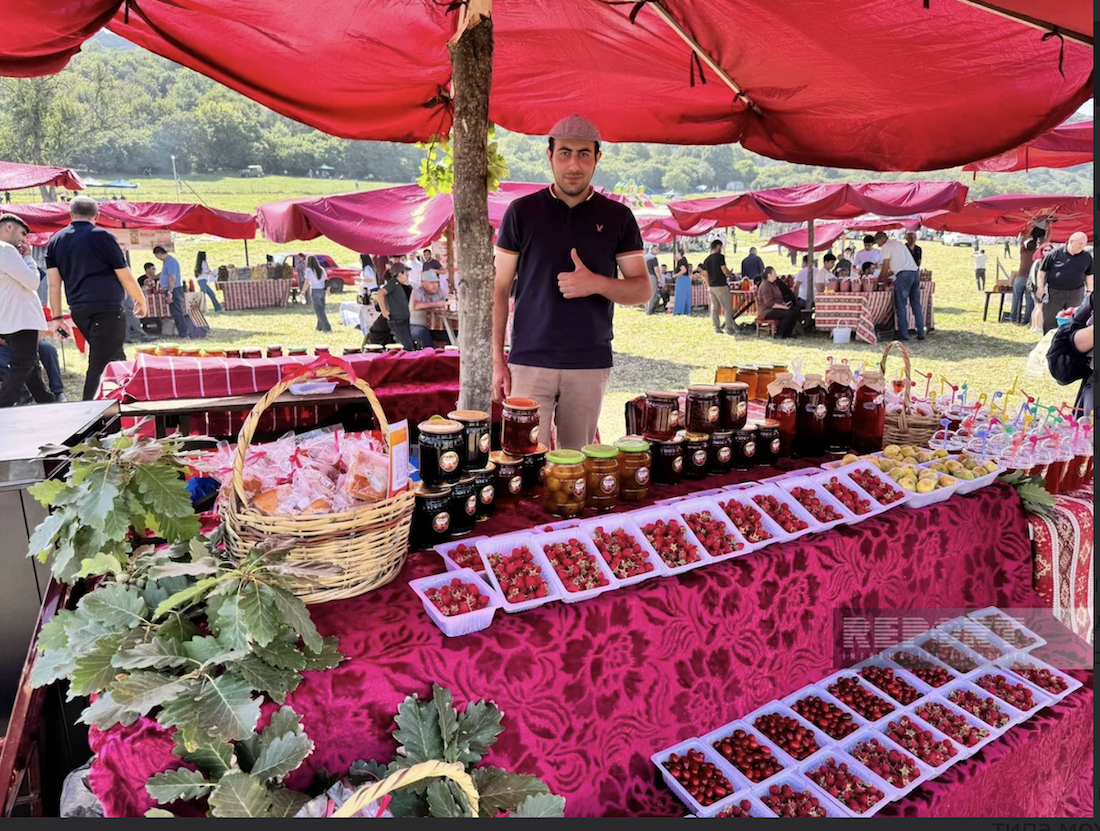
-
Monday, September 7, Armenia. Prime Minister Nikol Pashinyan’s visit to Russia could take place soon
● “Armenia still has a long way to go to prepare for EU membership. This process involves not only legislative changes but also a change in mindset and society’s attitude towards European values,” Armenian President Vahagn Khachaturyan said at a press conference in Prague, summing up his official visit to the Czech Republic. He said Armenia believes meeting EU membership criteria will require long-term and consistent efforts.
● Russian President Vladimir Putin’s spokesperson Dmitry Peskov said Armenian Prime Minister Nikol Pashinyan’s visit to Russia could take place soon, but no exact dates have been set.
● Foreign Minister Ararat Mirzoyan will pay a working visit to Riga on September 6–7. He is scheduled to meet Latvian Foreign Minister Baiba Braže, followed by joint statements to the press. Other high-level meetings and discussions are also planned. The agenda includes bilateral Armenian-Latvian relations, including further development of trade and economic ties, as well as deeper Armenia-EU partnership.
● Russian Deputy Prime Minister Alexei Overchuk said he sees no signs of Armenia successfully shifting to other markets instead of Russia. “Some limited assistance has been provided to them, but it is nothing compared with the large and familiar market that Russia represents for them. And we have also grown accustomed to these products,” Overchuk said.
● Labour and Social Affairs Minister Arsen Torosyan attended an event at the Ukrainian Embassy marking the 35th anniversary of Ukraine’s independence as an honorary guest. Torosyan said Armenia attaches great importance to the consistent expansion of bilateral relations with Ukraine based on friendship. He said increased high-level visits and contacts in recent months had given fresh impetus to relations between the two countries.
● A presentation was held in Yerevan of a book by former Security Council Secretary Armen Grigoryan, titled “Take a Step — Reject Serzh”. The title refers to former President Serzh Sargsyan, who was replaced in 2018 by the current ruling Civil Contract party following the “Velvet Revolution”. Prime Minister Nikol Pashinyan spoke at the presentation, saying that eight years after the revolution he still sees it not as a completed event, but as an opportunity to set new challenges for society every day. Pashinyan admitted that during his years in power he had experienced moments of deep disappointment and regretted his decision to lead the government in 2018. “There were days when I cursed the day I became prime minister,” he said.
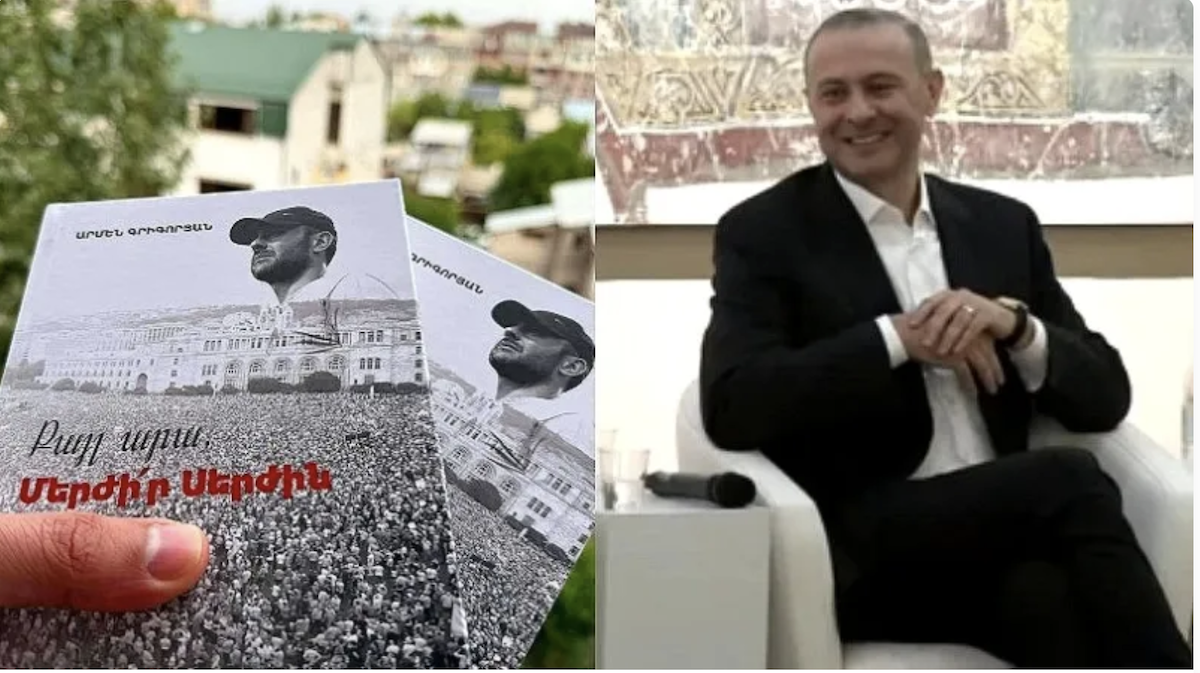
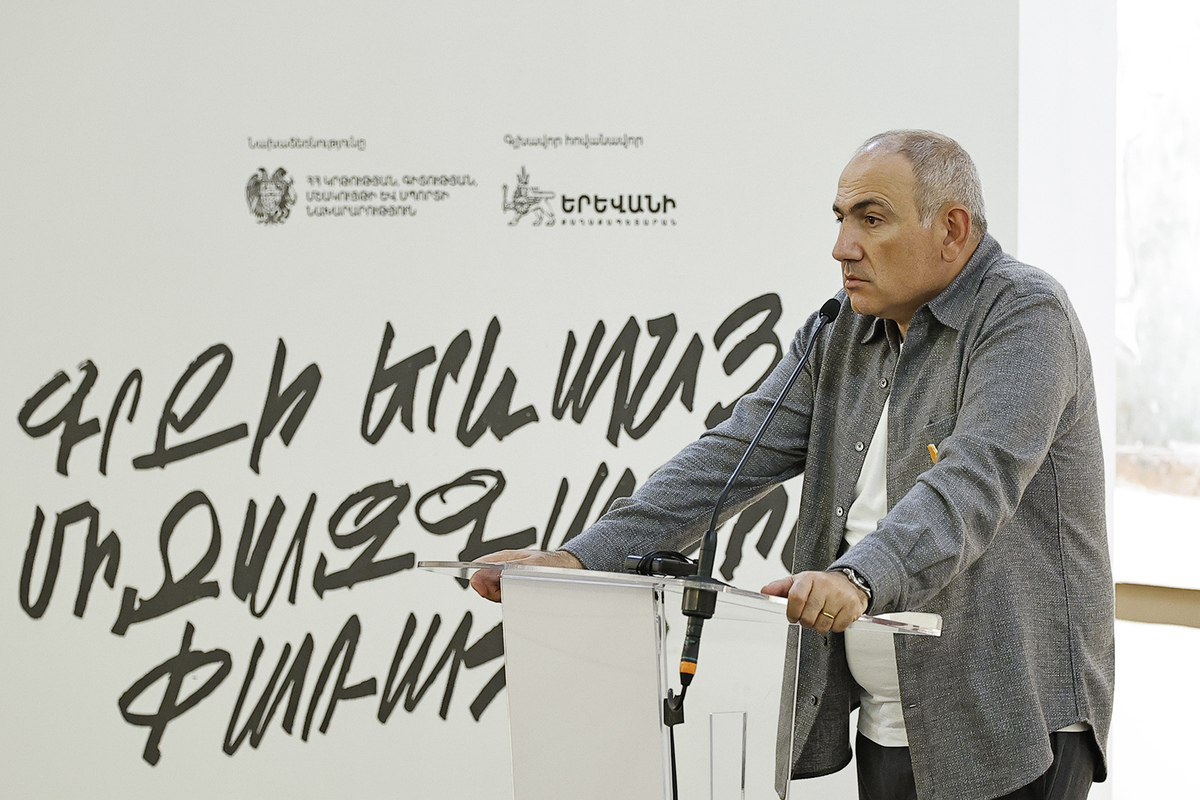
-
Top stories in Azerbaijan, Armenia, and Georgia from 31 August-4 September, 2026