

Top stories in Azerbaijan, Armenia, and Georgia from 14-18 September, 2026
 Live
Live




-
Friday, September 18, Armenia. Russian Security Council Secretary: “Armenia is carrying out a corporate takeover of companies in which Russia has invested billions.”
-
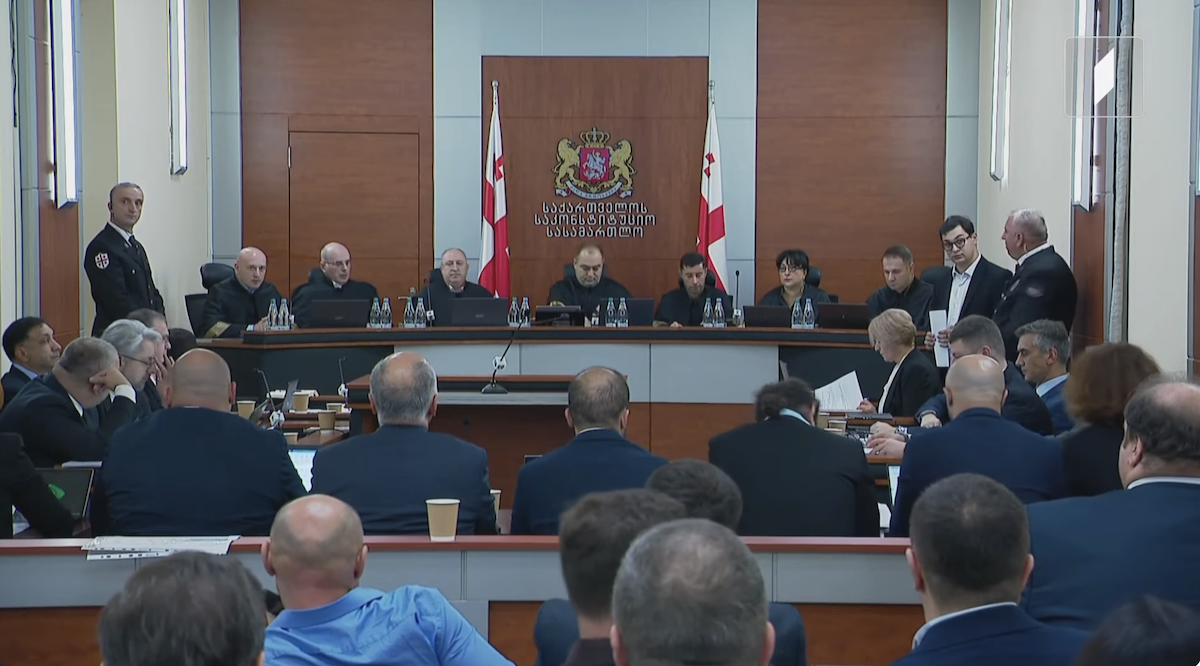
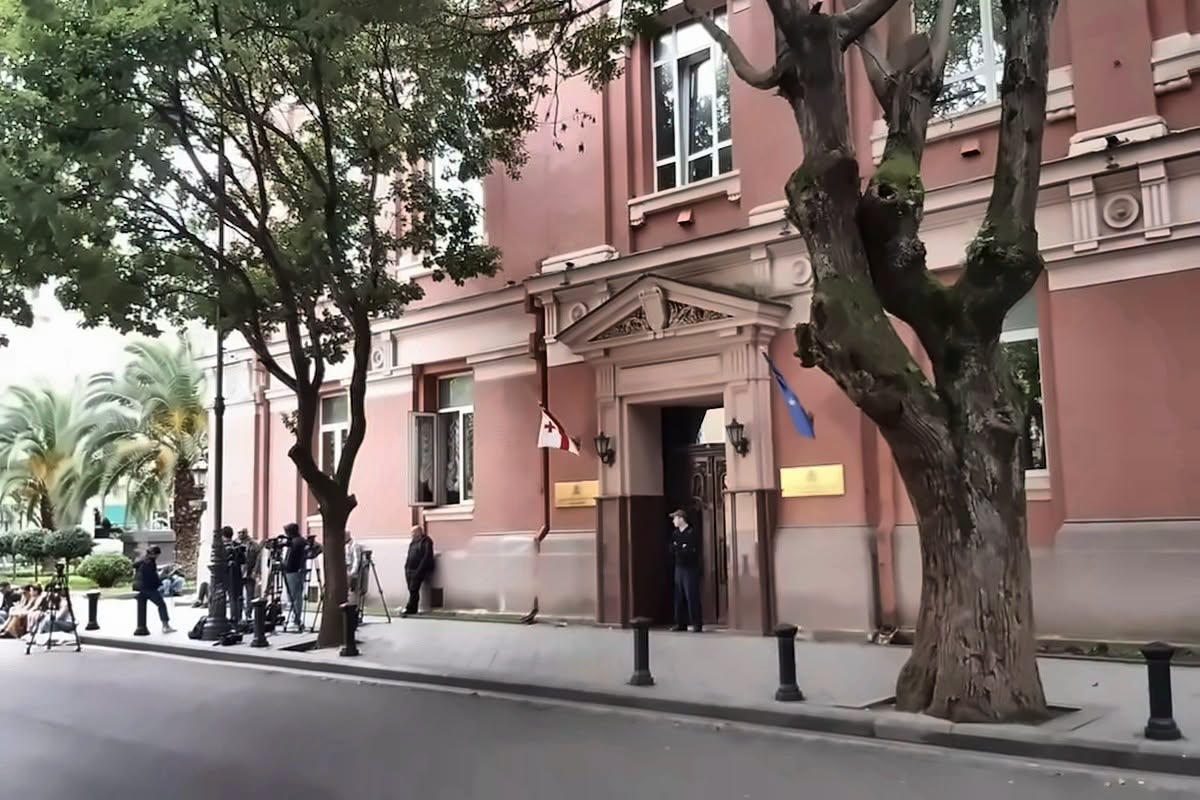
Friday, September 18, Georgia. The government is closing the state agency responsible for managing grants
-
Friday, September 18, Azerbaijan. Ilham Aliyev spoke of “subversive activities by media outlets based far beyond the country and funded by well-known centres”
-
Thursday, September 17, Armenia. Nikol Pashinyan opposes maintaining institutions of the former unrecognised Nagorno-Karabakh Republic in Armenia
-
Thursday, September 17, Georgia. Former State Security Service chief Grigol Liluashvili has been sentenced to 13 years in prison
-
Thursday, September 17, Azerbaijan. A new solar power plant, Gobustan, has been inaugurated
-
Wednesday, September 16, Azerbaijan. Ilham Aliyev’s key statements: criticism of the European Parliament, assessment of the conflict with Armenia, call for unity in the Islamic world
-
Wednesday, September 16, Armenia. The European Parliament has approved trade liberalisation between the EU and Armenia
-
Wednesday, September 16, Georgia. Gakharia – For Georgia added to government’s Constitutional Court case seeking opposition ban
-
Tuesday, September 15, Armenia. Armenia outraged by statements from Azerbaijani presidential aide Hikmet Hajiyev
-
Tuesday, September 15, Azerbaijan. Baku criticises Armenia’s reaction to diplomats’ visit to Karabakh, says Yerevan is “not sincere in the peace and normalisation process”
-
Tuesday, September 15, Georgia. Annual income threshold for property tax more than doubles
-
Monday, September 14, Georgia. ZION festival organisers impose restrictions on Russian citizens, requiring them to formally recognise Georgia’s territorial integrity and Russia’s occupation
-
Monday, September 14, Armenia. Armenia may raise rent for Russian military base if Russia raises gas prices
-
Monday, September 14, Azerbaijan. Eight-year suspended sentence handed to Maharram Goyushoglu in the ‘NGO case’
-
Top stories in Azerbaijan, Armenia, and Georgia from 7-11 September, 2026

-
Friday, September 18, Armenia. Russian Security Council Secretary: “Armenia is carrying out a corporate takeover of companies in which Russia has invested billions.”
● Prime Minister Nikol Pashinyan urged people “not to build apocalyptic scenarios about Armenia’s future”, particularly over a possible increase in the price of gas imported from Russia. “The country will continue to develop steadily. If it becomes necessary to regulate any price, we will regulate it. Constantly following the logic of ‘mourning to death’ is not our method or our style of work,” Pashinyan said.
● Nikol Pashinyan said Armenia should not be “frightened by the possibility of being expelled from the CSTO” — the Russia-led military alliance. “If they want to expel us, let them; if they don’t, let them not,” Pashinyan said.
● Speaking in parliament, the prime minister also addressed the possible withdrawal of Russia’s 102nd military base from Armenia. He again stressed that the Armenian authorities had never raised the issue for discussion. “Russia has now put it on the agenda, and we are simply formulating our response to this discussion,” Nikol Pashinyan said.
● The prime minister answered a question about a possible referendum on the village of Tigranashen (Azerbaijani name: Kyarki). The settlement is one of the contentious issues in Armenia amid the ongoing border delimitation process with Azerbaijan. “The delimitation process should show whether there is a need for a referendum or not. At this point, there is no agreement on any details. The Constitution says that changing Armenia’s territory requires a referendum. But suppose the border somehow shifts for some reason, because of a pipeline or some infrastructure, by one metre. We are literally talking about one metre; I am not using an allegory. Would a referendum be needed for that? Of course not, because there has been no change in territory. But if it turns out that there is a change in territory, then there will be a referendum. There is the issue of enclaves, and we need to understand how to resolve it,” Pashinyan said.
● “The implementation of the regional transit project ‘Trump Route’, TRIPP, will benefit all countries involved, both in the region and beyond. This includes Iran and the US,” Prime Minister Nikol Pashinyan said.
● Iranian Ambassador Khalil Shirgholami outlined two conditions under which the TRIPP project would be acceptable to Tehran. First, Armenia’s territorial integrity must not be threatened, “whether it is TRIPP or a project under any other name”. Second, “the presence of Americans and American companies near the Armenian-Iranian border, near Iran’s border, must not create any threat to Iran”. “If this is ensured, Iran sees no reason to intervene. At the moment, we are simply observing whether these two conditions will be ensured in the long term,” Shirgholami said.
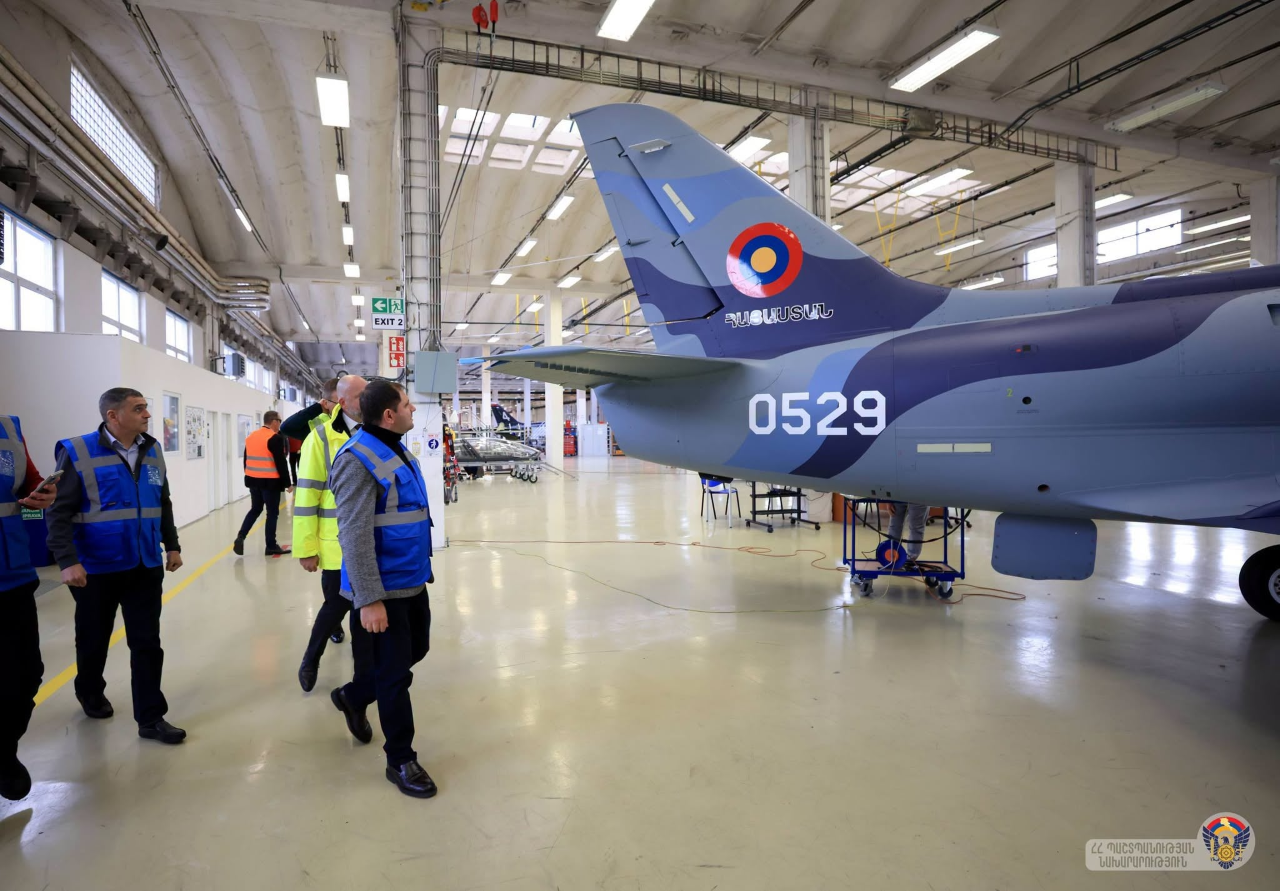
● The US will continue cooperation with Armenia under all existing programmes, said US Deputy Assistant Secretary of Defense Andrew Loomis, who is visiting Yerevan. During his meeting with Armenian First Deputy Defence Minister Edward Asryan, the importance of cooperation in peacekeeping, professional NCO training and military education was stressed. Loomis said the US is ready to discuss cooperation in new areas as well.
● The prime minister held a meeting on the implementation of the TRIPP project. “In particular, the legal and contractual package of TRIPP Development Company (TDC) and upcoming tasks were discussed,” according to a government statement. A day earlier, Armenia’s Constitutional Court ruled that the strategic partnership agreement between Armenia and the US on the project does not contradict the country’s Constitution. The agreement will now be submitted to parliament for ratification.
● Russian Security Council Secretary Sergei Shoigu launched another attack on Armenia. “Yerevan is carrying out a corporate raid on companies in which Russia has invested billions,” Shoigu said. He claimed that Russia saved Armenia from economic and energy collapse in the 1990s and that during Armenia’s 10 years of membership in the Russia-led EAEU, the Armenian economy grew almost threefold. “However, Armenia has now taken a course towards breaking ties with Russia and strengthening cooperation with the West. This unfriendly policy and blatant double standards are also evident in its treatment of Russian businesses operating in Armenia,” Shoigu said.
● The house arrest of Russian billionaire Samvel Karapetyan, leader of the pro-Russian opposition party Strong Armenia, has been extended by another two months. Karapetyan faces five criminal charges: tax evasion, embezzlement, money laundering, illegal activities through a legal entity, and public calls to seize power and violently overthrow the constitutional order. He denies the charges. Commenting on the anti-corruption court’s decision, Samvel Karapetyan said Nikol Pashinyan was responsible for the injustice. “He must leave so that we can create a normal judicial and legal system,” Karapetyan said.
● A group of Armenian public figures from Georgia’s Javakheti region are demanding an apology from Prime Minister Nikol Pashinyan. They object to his statement: “The stronger the Armenian diaspora, the weaker Armenia.” They were also angered by Pashinyan’s remarks that the diaspora had mainly helped Armenia by providing “torn and old clothes”. “We consider such statements insulting and unfair towards the Armenian diaspora, including Javakhk Armenians, who have always lived through and continue to live through all the processes taking place in Armenia,” their statement said.
● The Central Election Commission’s electronic system was subjected to an unprecedented cyberattack during the vote count for the 7 June parliamentary elections. CEC Chairman Vahegh Hovakimyan said this in parliament while presenting the commission’s activity report. According to him, the internet across the country was under a massive attack at the time. “However, the system for receiving data from polling stations and the overall vote-counting system did not stop working for a single minute,” Hovakimyan said.
● A group of Karabakh Armenians held a protest outside the National Assembly. They are demanding meetings with parliamentary faction leaders, parliamentary hearings and clear decisions on their concerns. These include granting them forcibly displaced persons status, addressing social issues and providing housing. “Azerbaijan considers the Gandzasar monastery complex in Karabakh Albanian. Tomorrow they will call our property there Albanian as well, because we have no status. If we return to our homes, we must have the ability to assert our rights as owners,” said Anastas Israelyan, head of the NGO Reviving Artsakh.
● A bill that would substantially increase officials’ salaries has been approved. Salaries for local government employees will increase two- to threefold, while ministers’ salaries will double. The president’s salary will rise to 2.6 million drams (around $7,000), deputy prime ministers’ to 2.1 million drams (around $5,700), and the ombudsman’s and prosecutor general’s to 1.8 million drams (around $5,000). Salaries for the parliament speaker, Constitutional Court chair and MPs will also increase significantly. Prime Minister Nikol Pashinyan, whose salary will rise by almost 80%, said officials’ pay would depend on the effectiveness of their work. Pashinyan also said Armenia had long had an atmosphere in which it was considered shameful to study. “The ruling elite benefited from having a large number of uneducated citizens, so they could be more easily controlled through criminal subculture. Studying, especially among boys, was considered shameful. That is why boys in Armenia are now losing their positions in all spheres,” Pashinyan said.
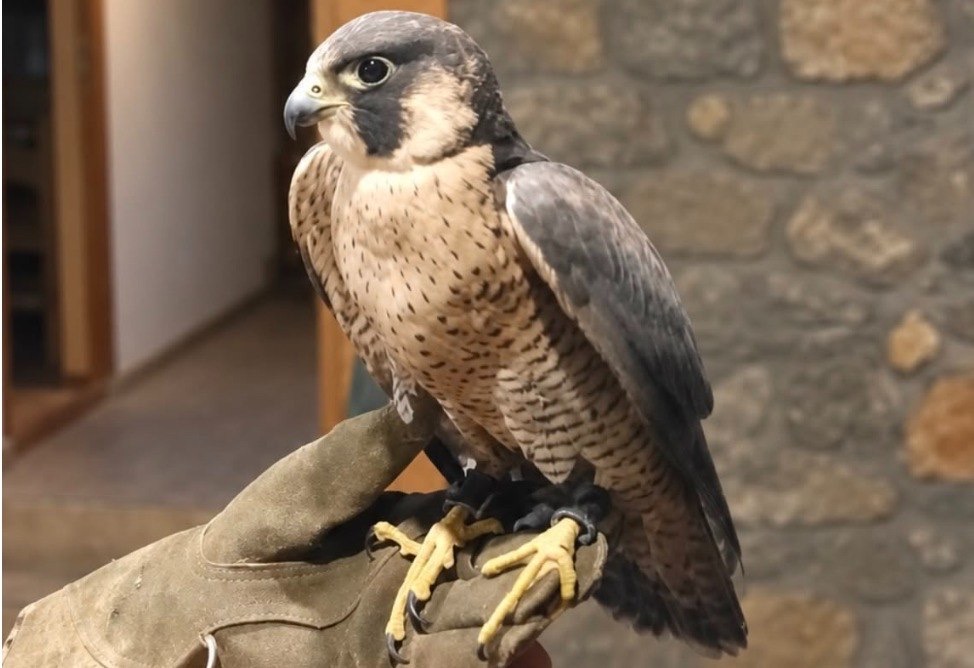
● A peregrine falcon was found in the yard of a house in the village of Malishka. The bird is listed in Armenia’s Red Book and on the International Red List as a rare and vulnerable species. It was found exhausted and was taken the same day to the Yerevan Zoo rehabilitation centre, where it is receiving care.
-
Friday, September 18, Georgia. The government is closing the state agency responsible for managing grants
● The government is closing the state agency responsible for managing grants by the end of the year. Prime Minister Irakli Kobakhidze said the decision was based on his view that “NGOs are an artificial phenomenon created for foreign political interference” and that NGOs did not exist a century ago. The agency was established in April 2025 after the government tightened legislation on foreign funding and grants. Tamar Oniani, chair of the Georgian Young Lawyers’ Association (GYLA), called Kobakhidze’s statement historically false and said the government is targeting human rights organisations that have the potential to protect citizens’ rights.
● The ruling Georgian Dream party is seeking a ban on the parliamentary opposition party Gakharia For Georgia. Irakli Kobakhidze said the reason is that “the party does not recognise the legitimacy of the government and the constitutional order”. The ruling party has therefore decided to include it, along with several other opposition parties, in a relevant case to be filed with the Constitutional Court this week. According to Kobakhidze, the maximum time for reviewing the case is nine months. Asked whether the list of parties that could be banned might be expanded in the future, he said he considers the current list exhaustive at this stage, but cannot rule anything out in advance.
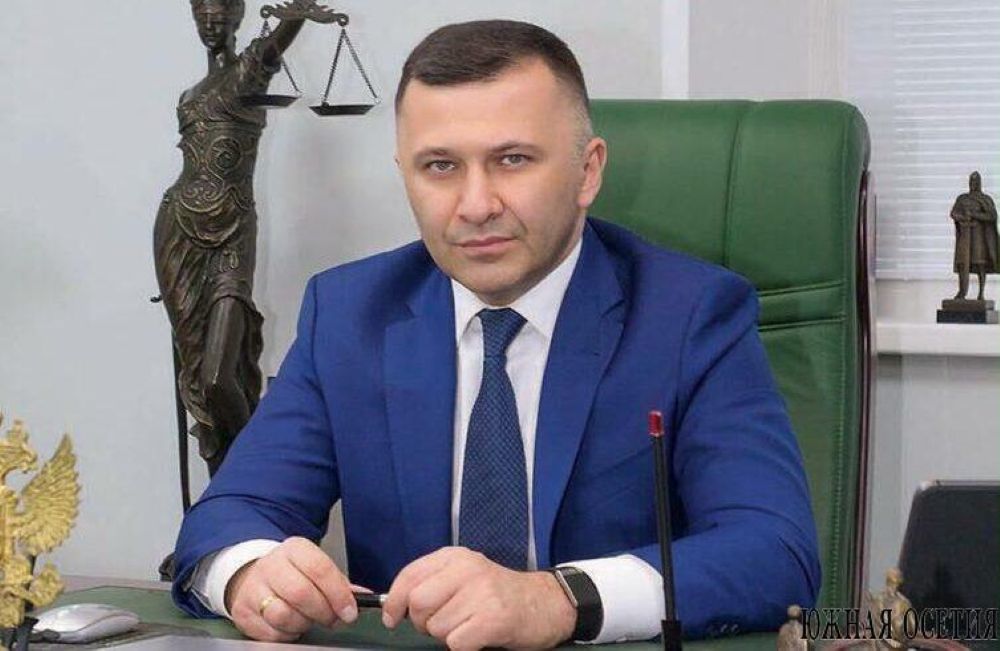
● The Socialists, Democrats and Greens group of the Parliamentary Assembly of the Council of Europe says Russia has stepped up efforts towards the de facto annexation of the Tskhinvali region (South Ossetia). The group says this violates Georgia’s sovereignty and territorial integrity and is part of a broader Russian strategy. The statement also refers to Georgia’s Abkhazia, Ukraine’s Crimea and Donbas regions, and Moldova’s Transnistria. The group says security in Europe requires respect for the sovereignty and territorial integrity of states.
● The OSCE Permanent Council discussed the 18th anniversary of the 2008 Russia-Georgia war. Georgian Deputy Foreign Minister Lasha Darsalia said Russia continues to occupy Georgian territories, has failed to comply with the 12 August 2008 ceasefire agreement and is blocking access to international mechanisms in Abkhazia and the Tskhinvali region. Darsalia also referred to the agreement signed on 9 May 2026 between Russia and the de facto authorities in Tskhinvali, which Tbilisi says contributes to the region’s de facto annexation. Representatives of the European Union, the US, Canada and Turkey made statements in support of Georgia at the meeting.
● Georgia has introduced restrictions on flights by Iranian airlines under US sanctions. Prime Minister Irakli Kobakhidze stressed that Georgia is not imposing any separate sanctions on Iran, but is acting in line with the international sanctions regime. The US has sanctioned 27 Iranian airlines, some of which also operated flights between Georgia and Iran. Georgia’s Civil Aviation Agency had previously said it would comply with the international sanctions regime.
● Georgia and Serbia are continuing negotiations on a free trade agreement. Foreign Minister Maka Botchorishvili met with Serbian Foreign Ministry Secretary Damjan Jović, who is in Georgia for bilateral political consultations. During the meeting, the ministers reaffirmed their mutual support for each other’s sovereignty and territorial integrity.
● Economy Minister Mariam Kvrivishvili met with newly appointed US Chargé d’Affaires Courtney Austrian. They discussed bilateral cooperation in trade, energy and transport. The talks focused on the Middle Corridor, the Anaklia deep-sea port, the modernisation of Georgia’s railways, the East-West Highway, construction of a new airport in Tbilisi and continuation of the Black Sea submarine electricity cable project.
● Special electricity meters are expected to be installed in Mestia, Svaneti, by the end of autumn as part of efforts to combat illegal cryptocurrency mining. According to David Narmania, chairman of the Georgian National Energy and Water Supply Regulatory Commission, electricity will remain free for households within a certain limit, as provided under support measures for mountainous regions. Consumption above that limit will be charged at the standard tariff used elsewhere in Georgia. In 2025, Mestia municipality consumed a huge amount of electricity — around 133 million kWh — while the annual damage to the energy system is estimated at 20–25 million lari (around $10 million). Raids against illegal mining continue in Svaneti, with hundreds of specialised devices reportedly seized.
● Sheikh Nasser Al Nuwaiys, Secretary-General of the UN World Tourism Organization, is making his first official visit to Georgia. He met with Foreign Minister Maka Botchorishvili. According to the Foreign Ministry, future joint projects were discussed.
● Two cases of rabies have been detected in cows in Dmanisi municipality. According to the owners, there were no visible bite marks on the animals. The infectious diseases centre will declare a quarantine in the area; all animals will be vaccinated and disinfected, and their movement will be restricted.
● A man has been arrested in Tbilisi for allegedly pawning plaster models of phones while presenting them as real smartphones. According to the Interior Ministry, the suspect and an accomplice pawned six such “smartphones” at various pawnshops. One person has been detained, while the other is wanted. An investigation is under way into fraud and document forgery.
-
Friday, September 18, Azerbaijan. Ilham Aliyev spoke of “subversive activities by media outlets based far beyond the country and funded by well-known centres”
● The interior ministries of Turkey, Georgia and Azerbaijan will launch a trilateral mechanism to jointly combat crime in the coming days, Turkey’s Interior Minister Mustafa Çiftçi told journalists. He said the initiative was discussed during his recent visit to Georgia.
● “The Turkic world is our family, and we have no other family,” Ilham Aliyev said at a meeting. He noted that Azerbaijan has already signed alliance agreements and declarations with Turkey, Kazakhstan, Kyrgyzstan and Uzbekistan, and joint investment funds have been established. Azerbaijan’s neighbours to both the north and south are countries at war. In this context, a joint approach to regional security is of paramount importance.
● President Ilham Aliyev: “We all recognise the supremacy of international law. However, it is also true that international law is violated in many cases, and the principle of ‘might makes right’ prevails. Azerbaijan would not have had to reclaim its territories by force if the UN had functioned properly. “It is very difficult to fight this alone. Therefore, the atmosphere within our organisation and the position of member states on the fundamental recognition of international law as the highest principle worldwide are very important.”
● Ilham Aliyev: “Relations between Azerbaijan and Turkey hold a special place; there are no similar relations anywhere in the world. Turkey and Azerbaijan, as a single space, are today a very important factor both globally and in the region. […] The Shusha Declaration, signed by the presidents of the two countries in 2021, was the crowning achievement of our relations.”
● President Ilham Aliyev also spoke about “ideological threats” at a meeting in Baku with heads of security agencies from member states of the Organisation of Turkic States. “These include subversive activities carried out by media outlets located far beyond our countries but for some reason receiving funding from well-known centres. They undermine the state system in our countries and impose foreign narratives and values. We in Azerbaijan are actively fighting this and have achieved major successes,” the president said.
● Presidential aide Hikmet Hajiyev, speaking about the Baku-Yerevan peace process at the Arab Media Forum in Dubai: “Achieving peace with Armenia is a difficult struggle. Official Baku warns that revanchist forces in Armenia and the Armenian diaspora remain strong and are trying to undermine the historic peace process between former rivals. […] Azerbaijan continues to face disinformation campaigns despite efforts to achieve peace. One source of such disinformation is the European Parliament. Its resolutions and decisions undermine the peace agenda in the South Caucasus. The European Parliament is not part of the solution, but part of the problem. We are in the process of building regional peace, but the European Parliament is promoting a completely different agenda.”
● The Supreme Court has rejected convicted activist Samir Ashurov’s request for early release. Ashurov was arrested 20 days after being deported from Germany to Azerbaijan. In December 2023, he was charged with attacking a local resident and causing serious injuries and was sentenced to 6.5 years in prison. Ashurov categorically denies committing any crimes, says the charges against him were fabricated, and links his arrest to his active participation in protests against the Azerbaijani authorities while he was in Germany.
Human rights defenders have drawn attention to at least five similar arrests of activists deported from European countries. Baku officially rejects allegations of unjustified persecution of citizens for their critical views.
● Azerbaijan and Uzbekistan have signed a Roadmap for expanding energy cooperation for 2026–2028. It includes developing the Central Asia-Azerbaijan green energy corridor, as well as cooperation in oil and gas, energy efficiency and investment.
● New investment opportunities were discussed at a Baku meeting between SOCAR President Rovshan Najaf and Uzbekistan’s Minister of Investment, Industry and Trade Laziz Kudratov and Minister of Energy Sherzod Khodjaev. The meeting also covered plans to build new SOCAR-branded petrol stations in Uzbekistan.
● Foreign Minister Jeyhun Bayramov met with TRACECA Intergovernmental Commission Secretary General Jasurbek Choriev. The international transport programme involves 14 countries from the European Union, Eastern Europe, the Caucasus and Central Asia. They discussed prospects for expanding cooperation between Azerbaijan and TRACECA, including expanding the capacity of the Baku International Sea Trade Port and improving rail and road links. The importance of further increasing freight volumes along the Middle Corridor was also highlighted, including stronger coordination among participating countries.
● The foreign ministries of Azerbaijan and Estonia held their second round of consular consultations, with representatives of the interior ministry, the Ministry of Science and Education and the migration service also taking part.
● Azerbaijan’s State Security Service chief Ali Naghiyev once again stressed the inadmissibility of involving citizens in military operations as mercenaries at a conference of the security services of Turkic states in Kazakhstan. Among the risks to countries’ internal security stemming from instability in the region, he cited the smuggling of weapons and explosives from conflict zones.
● A group of Milli Majlis MPs is travelling to Russia to observe the State Duma elections, which will take place on Sunday.
● The special quarantine regime has been extended once again, this time until 2 January 2027, with the stated aim of “preventing the spread of coronavirus infection within the country and its possible consequences”. The regime was due to expire on 1 October. Under the restrictions, Azerbaijan’s land borders remain closed to movement. The only exception was the resumption in May of passenger rail service on the Baku-Tbilisi-Baku route. Some opposition figures link the continued closure of land borders despite the end of the pandemic to the authorities’ political and economic interests, as well as security considerations.
● Two luxury tourist complexes — Meysari Grand Hotel & SPA and Pirqulu Park — have opened in the popular resort town of Shamakhi. They include hotels, restaurants, cafés, conference halls, large congress facilities, entertainment centres, an amphitheatre and a helipad. President Ilham Aliyev and First Lady Mehriban Aliyeva attended the opening.
● Azerbaijan is celebrating National Music Day today. The initiative is linked to Azerbaijani classical composer Uzeyir Hajibeyli, whose birthday was 18 September 1885. The development of opera not only in Azerbaijan but in the East as a whole is associated with his opera “Leyli and Majnun”, which was first staged 118 years ago. The first operetta in the East was also created by Hajibeyli: the three-act comedy “Husband and Wife”, first performed in 1910. Since 2009, Azerbaijan has hosted an international music festival dedicated to Hajibeyli.
-
Thursday, September 17, Armenia. Nikol Pashinyan opposes maintaining institutions of the former unrecognised Nagorno-Karabakh Republic in Armenia
● Prime Minister Nikol Pashinyan: “The settlement of Kyarki (Tigranashen) was not part of the 29,743 sq km territory that constituted Armenia during the Soviet period. If we now take a different position, it would mean saying that Armenia’s territory is not 29,743 sq km but, say, 29,753 sq km.” The settlement is one of the most contentious issues in Armenia amid the ongoing border delimitation process with Azerbaijan.
● “We plan to create a tourist centre in Tigranashen that will breathe new life into the village,” said opposition MP Anush Mirzoyan of the pro-Russian Strong Armenia bloc.
● Nikol Pashinyan: “When someone is interested in the origin of a manuscript or a monastery complex mentioned in a manuscript, they should turn to the manuscript itself and to primary sources. Armenia has already responded through the most competent institution on this matter — the Matenadaran — and established the Armenian origin of the Gandzasar monastery complex in Karabakh.” The prime minister was commenting on the controversy surrounding a visit to Karabakh by a group of foreign diplomats, during which Azerbaijani presidential aide Hikmet Hajiyev presented Armenian cultural heritage as Albanian.
“I consider discussion of this issue pointless. I also consider it pointless to set ourselves the goal of proving this to Azerbaijan. It is a pointless and impossible task. It has changed nothing for us and will change nothing. But we must clearly distinguish between the issues. We have said and continue to say that the peace that has been established is valuable to both Armenia and Azerbaijan. What we saw from the Azerbaijani official is unacceptable and incomprehensible. At the same time, I want to emphasise that we must continue to treat peace with care.”
● Security Council Secretary Alen Simonyan also commented on Hikmet Hajiyev’s statements. “I spoke with him about this. We are not discussing who is right and who is wrong. There is their point of view and there is ours. The purpose of my work, first and foremost, is to prevent these points of view from clashing. Could I say something that would make everyone exclaim, ‘Wow, what a great statement’? But what happens next? We need to do everything possible to ensure that such incidents do not suddenly interfere with the peace process,” Simonyan said.
● Nikol Pashinyan: “At present, Armenia-EU relations are at their highest point. The visa liberalisation process is underway, and the European Parliament has decided to introduce preferential customs treatment for Armenian goods. As long as the people give us this mandate, we will continue to move this process forward.”
● The Constitutional Court has ruled that the Armenia-US Strategic Partnership Charter related to the TRIPP project (Trump Route) is consistent with the Constitution. The full decision will be published within three days and sent to the National Assembly for ratification.
● Nikol Pashinyan pledged to oppose the continued existence in Armenia of institutions of the former unrecognised Nagorno-Karabakh Republic. “There cannot be two states and two governments in Armenia. These structures must come under the administration of Armenia. As prime minister, I will use the strongest measures to prevent the existence of a ‘state within a state’,” Pashinyan said in parliament.
● Opposition MP Arega Ovsepyan questioned the prime minister about housing and employment problems faced by Karabakh refugees. She said several families had been forced to settle in the NKR representative office in Yerevan. Pashinyan responded that this was doing the people of Karabakh a disservice. “Do you think there are no other people in Armenia without housing? Why did they settle in the representative office? Let them come to your home. So, is your logic that anyone who has trouble paying rent can settle wherever they want? Then don’t complain if they come to you,” Pashinyan said.
● The prime minister called on citizens who believe that former President Robert Kocharyan and his family legally acquired their millions of dollars to take to the streets and stage a revolution. “Our position is that everything belonging to the Kocharyan family should be returned to state ownership, even their shoes,” Nikol Pashinyan said. He also claimed that Kocharyan and his associates’ “liberation [of Karabakh] consisted of looting”. “It would be better for the court to decide his case, otherwise the people may come and take what is owed to them themselves. That would be the worst-case scenario for him,” Pashinyan said.
● Russian Foreign Minister Sergey Lavrov said the leaders of Russia and Armenia had agreed during their recent brief meeting in Bishkek to hold a “special separate bilateral meeting” soon. According to Lavrov, they will “frankly discuss issues related to Yerevan’s aspiration to join the EU and everything that follows from this”. He stressed that “Moscow in no way intends to prevent Yerevan from choosing its partners and development path, but neither does it want to finance Armenia’s preparations for EU membership through the enormous benefits the country receives from the Russian-led Eurasian Economic Union.”
● “Armenia is ready to discuss with Russia the issue of maintaining the Russian 102nd military base in Gyumri,” Prime Minister Nikol Pashinyan said. He stressed that Armenia had never raised the issue of withdrawing the base from the country. The subject was previously raised by Russian President Vladimir Putin. “If Russia itself decides to withdraw the base, Armenia will not object, since its presence in Armenia is not vital,” Pashinyan said.
● Security Council Secretary Alen Simonyan was asked what the government would do if Russia raised the price of the gas it supplies, as Moscow has threatened to do. “In all economic matters, Armenia will continue to choose alternatives and maintain balances,” Simonyan said. Asked where the gas would come from, he replied: “From all possible countries.”
“If Russia gives us gas, we will buy gas from Russia. If Azerbaijan or Iran supplies it, we will buy from them. If Türkiye has the ability to supply gas from somewhere, we will buy from Türkiye as well. Does anyone say we need to leave one and jump into the pocket of another? People also say Russian gas is cheap. But the price of gas is measured not only in dollars. You can see that it is being used as a political currency. And where was it cheaper to bring petrol from, and where are our filling stations getting petrol from now? From Azerbaijan. And there is no petrol in Russia at the moment. So what is better? Our country still has closed borders on two sides, and we have created the possibility of buying petroleum products from a neighbouring country and meeting our needs,” Simonyan said.
● “I think the text of the new Constitution will be published by the end of the year,” Justice Minister Srbuhi Galyan told journalists. “The text has been completed and is being discussed by various government agencies. It has not yet been approved by the Constitutional Reform Council; meetings will soon be held to allow council members to familiarise themselves with it,” Galyan said.
● A kindergarten in the village of Kakhtsrashen was evacuated after five snakes were spotted there.
-
Thursday, September 17, Georgia. Former State Security Service chief Grigol Liluashvili has been sentenced to 13 years in prison
● Former State Security Service chief Grigol Liluashvili has been sentenced to 13 years in prison. The Tbilisi City Court found him guilty on all four charges of accepting particularly large bribes. Liluashvili pleaded not guilty. According to the prosecution, the case concerns large payments allegedly received in exchange for protection of a fraudulent call centre, lobbying for a wind farm project, assistance with gasification tenders and a kickback scheme involving purchases for kindergartens. Former Deputy Economy Minister Romeo Mikautadze was among those who testified against Liluashvili. More here.
● Parliament has approved Tamaz Borashvili as the new head of the State Security Service. The head of the service is elected by law for a six-year term. However, four heads have been replaced in the past year and a half. The latest, Geka Geladze, resigned on 14 September and was appointed deputy interior minister. The new head, Tamaz Borashvili, has worked in the security service system for more than 20 years.
● A US federal court has recognised an arbitration award against Georgia over the termination of a contract to build the Namakhvani hydropower plant. The ruling by the US District Court for the District of Columbia concerns a payment of approximately $350 million to Turkish company ENKA Renewables. With accrued interest, the amount exceeds $400 million.
Georgia lost its arbitration case against ENKA in 2024 and is seeking to appeal the decision before the Paris Court of Appeal. ENKA Renewables asked the US court to enforce the award. The Namakhvani hydropower project in Georgia was worth $800 million and was cancelled in 2021.
● According to Transparency International Georgia, 41% of donations to the Georgian Dream party in January–August 2026 came from the Adjara region. The party received 5.812 million lari (around $2.23 million) during this period, of which 2.403 million lari (around $921,000) came from Adjara. According to Transparency International Georgia, 55 of the 63 donors are linked to one or more companies. These companies received 870 million lari (around $333.6 million) through public procurement. Companies linked to them were granted permits to build around 3 million square metres, mainly in Batumi and Kobuleti. Transparency International says this points to a “service-for-service” model.
● Russian Foreign Ministry spokesperson Maria Zakharova urged Georgian citizens to visit Russia and learn the “truth” about the country first-hand. She praised the abolition of the visa regime for Georgian citizens and the restoration of direct flights. Zakharova accused the West of “provoking” the Georgian-Ossetian conflict and “inciting Georgian politicians with Western grants”. According to her, these politicians pursue “Western, not Georgian, policies”. She also said Western propaganda fuels “Russophobic sentiments” in Georgia.
● Convicted former President Mikheil Saakashvili says Georgia’s growing dependence on Russian tourists is the result of Georgian Dream policies. He said that during his presidency, including after the 2008 war, entry by Russian tourists was allowed under limited and strictly controlled conditions. According to Saakashvili, Russian tourists accounted for less than 20% of total tourist arrivals in 2012. He claims Georgian Dream halted a number of projects aimed at Western tourists, making the country more dependent on Russia not only in tourism but also in trade, logistics and energy.
● Singapore-based Changi Airports International plans to bid to operate the new international airport in Vaziani, near Tbilisi. Company CEO Eugene Gunn and BluFive Capital head Hazem Ben-Gassem met with Prime Minister Irakli Kobakhidze and Economy Minister Mariam Kvrivishvili over the project.
● Sixteen Georgian Dream MPs supported an initiative by MPs from the opposition For Georgia faction to lift restrictions on peaceful assemblies and restore legislation to its pre-2024 form. The bill was nevertheless rejected. The ruling party attributed its MPs’ votes in favour to a technical malfunction and MPs’ inattention. Parliamentary Majority Leader Irakli Kirtskhalia said he was not even in the chamber during the vote, yet his vote was recorded in the system. Georgian Dream MP Irakli Zarkua said some MPs “may have pressed the button out of habit” while talking on the phone.
● Givinostat, a drug used to treat Duchenne muscular dystrophy, has arrived in Georgia, with treatment for children expected to begin in October. According to parents who held months of continuous street protests demanding that the government purchase the drug, doctors are currently being trained to administer it. The medication is reportedly available to patients aged six and over who can walk independently and do not use wheelchairs.
● Tbilisi Mayor Kakha Kaladze said reconstruction of Rustaveli Avenue will be completed by the end of November. The section between Chovelidze and Elbakidze streets has already reopened to cars and public transport. Work, including reconstruction of underground utilities, is continuing.
● Giorgi Zakareishvili has been appointed Georgia’s new ambassador to Azerbaijan. According to the Foreign Ministry, Zakareishvili had served as Georgia’s ambassador to Ukraine and permanent representative to GUAM since 2021. He previously worked at the Georgian Interests Section of the Swiss Embassy in Moscow and held various positions at the Foreign Ministry.
● According to updated Forbes figures, Georgian businessman Mikheil Lomtadze’s fortune is estimated at $6 billion, while Georgian Dream founder Bidzina Ivanishvili’s is estimated at $2.7 billion. Lomtadze’s wealth increased by $100 million, although he fell from 597th to 694th in the global ranking. Ivanishvili’s fortune was unchanged from the previous year, while his ranking dropped from 1,362nd to 1,560th.

-
Thursday, September 17, Azerbaijan. A new solar power plant, Gobustan, has been inaugurated
● A new solar power plant, Gobustan, has been inaugurated. It is expected to generate around 200 million kWh of electricity annually, saving 45 million cubic metres of natural gas a year and reducing carbon dioxide emissions by 97,000 tonnes. President Ilham Aliyev attended the opening ceremony.
According to official data, with Gobustan coming online, renewable sources now account for around 21.5% of Azerbaijan’s total energy production.
● Azerbaijan, Türkiye, Kazakhstan and Uzbekistan have established the Union of Professional Accounting and Auditing Regulatory Bodies of the Turkic States. The agreement was signed in Baku.
● Presidential aide Hikmet Hajiyev presented Azerbaijan’s historical heritage at the Arab Media Forum in Dubai. During a panel discussion, he spoke about the ancient Kingdom of Caucasian Albania, including its rich Christian heritage, traces of which can be seen particularly in Karabakh. Hajiyev wrote on X that he also spoke about the extensive destruction, desecration and distortion of Azerbaijan’s religious and cultural heritage during the occupation of parts of Azerbaijani territory by Armenian forces. The panel also featured Georgia’s foreign minister and the UAE’s minister of economy and tourism. The discussion was moderated by Euronews Director General.
● An international conference of leading national think tanks from the Organisation of Turkic States was held in Baku.
● An Azerbaijani delegation led by State Security Service chief Ali Naghiyev took part in a meeting with the heads of security services from Central Asian countries in Kazakhstan. The talks focused on ensuring regional security amid modern threats.
● Foreign Minister Jeyhun Bayramov met a delegation from the Pan-African Parliament in Baku. They discussed the dynamic development of relations between Azerbaijan and African countries in recent years.
● Azerbaijan’s state oil company SOCAR has completed the acquisition of a 10% stake in the Baleine offshore oil and gas development project in Côte d’Ivoire. Following the deal, the project stakes are: Eni – 37.25%, Vitol – 30%, Petroci – 22.75% and SOCAR – 10%. SOCAR said the deal is significant because it marks the company’s entry into Africa’s oil and gas exploration and production market. Baleine is considered one of the largest oil and gas discoveries in West Africa in recent years. Production began in 2023. According to SOCAR, Baleine is Africa’s first offshore oil and gas project with net-zero emissions.
● The European Union plans to attract up to €12 billion in investment to develop the Middle Corridor, which is intended to directly connect the South Caucasus and Central Asia with the European market, European Commission President Ursula von der Leyen said. She identified diversification of routes and a sharp reduction in cargo transit times by 2030 as the main goals.
The Middle Corridor runs through Central Asia, the Caspian Sea and the South Caucasus. For the EU, developing this infrastructure is also linked to expanding economic ties with Central Asian and South Caucasus countries.
● Giorgi Zakareishvili has been appointed Georgia’s new ambassador to Azerbaijan.
● Since the beginning of the year, direct Dutch investment in Azerbaijan’s economy has increased 3.04-fold, accounting for 1.6% of total foreign direct investment in the country. Azerbaijan has also invested in the Dutch economy, accounting for 0.2% of its total overseas investment.
● The Finance Ministry has submitted the country’s consolidated state budget for 2027 to the Cabinet of Ministers. It will exceed 50 billion manats (around $29.5 billion). The budget deficit is expected to be 3.2% lower than this year.
● The Azerbaijani government will spend 438.7 million manats (around $260 million) on environmental protection in 2027, 5.5% more than in 2026.
● State budget spending on agriculture will increase by 12.5% next year compared with this year.
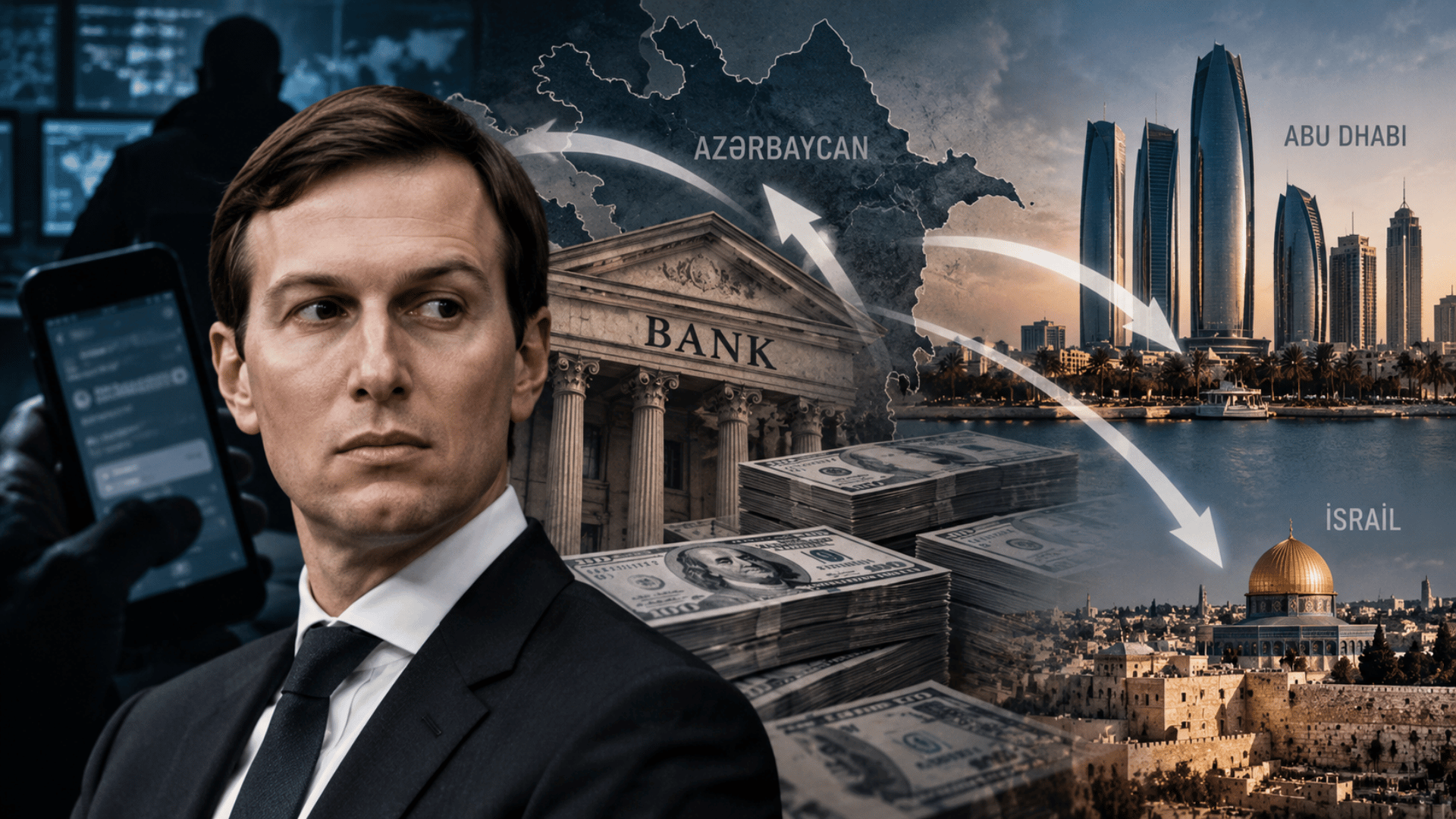
● Since the beginning of the year, remittances from the UAE to Azerbaijan have increased by more than 25%. In the opposite direction — from Azerbaijan to the UAE — remittances have fallen by 24.4%.
-
Wednesday, September 16, Azerbaijan. Ilham Aliyev’s key statements: criticism of the European Parliament, assessment of the conflict with Armenia, call for unity in the Islamic world
● President Ilham Aliyev made several major statements at a meeting with participants of international conferences on the Islamic world being held in Baku.
On the more than 30-year conflict with Armenia:
• “Separatist leaders and those who killed children are sitting in prisons in Azerbaijan. This is justice being served.”
• “All our cities and villages in Karabakh and Eastern Zangezur were wiped off the face of the earth. Ethnic cleansing was carried out against our people. Around one million Azerbaijanis were driven from their ancestral lands as a result of the Armenian state’s policy of ethnic cleansing.”
• “The negotiations that continued for 30 years produced no results because Armenia did not want to voluntarily withdraw from Azerbaijani territories, while the states supporting it sought to prolong the settlement.”
• “Azerbaijan liberated the territories through military action, put an end to separatism, and restored its rights and national dignity.”
• “Despite all the suffering, torture and acts of genocide, we did not take similar actions against Armenia and the Armenian people. During the Second Karabakh War in 2020, we targeted only military formations. Unlike Armenia, we never waged war against unarmed civilians.”
• “During 30 years of occupation, Armenia built nothing in Karabakh except villas and mansions for its leaders.”
• “Over the past 4–5 years, Azerbaijan has completely transformed the face of the liberated territories, covering around 15,000 sq km. More than 90,000 people already live there, in cities and villages.”
• “For 30 years, the Azerbaijani people lived in suffering, while today they live as a victorious people and a victorious state.”
On the Armenia-Azerbaijan peace process:
• “I am confident that the peace will be long-lasting. But we will never forget the atrocities committed against our people. We are vigilant and, at the same time, strengthening our military capabilities.”
• “Everyone can see that the world has completely changed and the factor of force has come to the fore. We were not the ones who introduced the principle that ‘might makes right’. But we have to take existing realities into account.”
• “The only guarantee of our sovereignty and territorial integrity is determination, military strength, the unity of our people, faith and national values.”
Strong criticism of some European institutions:
• “The European Parliament is a nest of corrupt people.”
• “A paid information campaign against Azerbaijan is continuing in the West, while manifestations of Islamophobia persist in European institutions.”
• “An undeclared war is being waged against our religion and the Islamic world, and Islamophobia is only a small part of it.”
On Islamic solidarity:
• “When the Turkic world, the Caucasus and the Islamic world stand together, no one will be able to break us. No one will be able to treat us unfairly.”
• “Azerbaijan has always sought, and will continue to seek, to strengthen Islamic solidarity through practical steps. Next year, the summit of the Organisation of Islamic Cooperation will be held in Baku.”
• “In all organisations, Azerbaijan acts as a country focused on unity, reconciliation and cooperation.”
• “We will do everything possible to unite the Muslim world as one family.”
On the Sheikh Zayed International Peace Award being given to the presidents of Azerbaijan and Armenia:
• “This award has become another step towards peace with Armenia. Taking this step less than two years after the bloody clashes and 30 years of occupation requires enormous courage and foresight, and once again demonstrates Azerbaijan’s peaceful agenda. There were different paths we could have chosen, and the choice was Azerbaijan’s — because Azerbaijan won the war. Armenia was completely defeated, signed an act of surrender, and, of course, we could have dictated any agenda. Azerbaijan chose a peaceful agenda.”
• “If we had not stopped the war, it would have continued forever, and the normal development of our country would have been impossible. Virtually the entire international community supported the initialling of the peace agreement between Armenia and Azerbaijan. This award has further strengthened it.”
● President Ilham Aliyev received Turkish Foreign Minister Hakan Fidan, who was on a working visit to Baku. They discussed further cooperation in energy and transport, including new routes to international markets for renewable energy.
● Hakan Fidan held a joint briefing with his Azerbaijani counterpart Jeyhun Bayramov. He said, among other things:
• The Russia-Ukraine war was among the topics discussed.
• Turkey has stepped up contacts with the parties to the Russia-Ukraine conflict in recent days and warned them over attacks on cargo vessels in the Black Sea.
• The US, Turkey and other countries continue efforts aimed at ending the war.
• “The war must be stopped. I think both sides are already psychologically exhausted. At such a time, countries facilitating a settlement step up their efforts and contacts.”
Bilateral partnership
• Relations between Turkey and Azerbaijan continue on the basis of the principle of “One nation, two states”.
• The number of joint projects is increasing every day.
• The effective operation of the Baku-Tbilisi-Kars railway is very important.
• Construction of the Kars–Dilucu railway is expected to be completed by the end of 2029.
• Turkey is closely following the process of normalising relations between Azerbaijan and Armenia and continues to support Azerbaijan.
● Azerbaijani Foreign Minister Jeyhun Bayramov said at the joint briefing with Hakan Fidan:
• Relations between Azerbaijan and Turkey, thanks to the shared vision of their leaders and regular contacts, have reached a level unparalleled anywhere in the world.
• Azerbaijan and Turkey are concerned about developments in the Middle East and are discussing joint steps.
• Cooperation between the two countries is important within the UN and its structures, the Organisation of Turkic States, the Organisation of Islamic Cooperation, D8, the OSCE and other international forums.
• The upcoming summit of the Organisation of Turkic States, which will be held in Turkey this year, was discussed. “This organisation is a family grouping that brings together brotherly countries.”
• Trade turnover between Azerbaijan and Turkey exceeded $3.2 billion in the first eight months of 2026.
• Projects are being implemented with a time horizon of decades and significant potential for the European market. These include a project to transmit renewable energy generated in Azerbaijan across the Black Sea with Turkey’s participation, as well as construction of a new energy cable linking Azerbaijan’s Nakhchivan with Turkey.
● “Azerbaijan is a reliable and trusted partner of the United States in the South Caucasus,” presidential aide Hikmet Hajiyev said in an interview with Newsmax. He stressed that President Donald Trump’s efforts to achieve peace between Baku and Yerevan had changed the strategic landscape of the South Caucasus and opened a new era in Azerbaijan-US relations. “He brought peace to the South Caucasus region. President Trump’s leadership enabled him to use his political weight in this process and bring Armenia and Azerbaijan to a final peace, achieving a result that international diplomacy had failed to achieve for decades,” Hajiyev said.
● Azerbaijani and Armenian Foreign Ministers Jeyhun Bayramov and Ararat Mirzoyan plan to meet in New York on the sidelines of the 81st session of the UN General Assembly. Mirzoyan said this in response to a question from Radio Free Europe/Radio Liberty, without specifying the time or agenda of a possible meeting.
● Economy Minister Mikayil Jabbarov presented Azerbaijan’s investment potential at a business forum in Switzerland. He highlighted the favourable business and investment environment, the country’s strategic geographic location, transport and logistics potential, its growing role in the Middle Corridor, free economic and industrial zones, and green energy potential.
● The potential use of Czech technologies and equipment at the Baku Shipyard was discussed at a meeting between the shipyard’s management and representatives of leading Czech companies, including TOS VARNSDORF, Wikov Group, ŽĎAS, LANEX, ACO Marine and ANAJ Czech.
● Defence Minister Zakir Hasanov is on a working visit to China, where he is participating in the 13th Beijing Xiangshan Forum. He met with Chinese Defence Minister Dong Jun to discuss prospects for developing military cooperation.
● Presidential aide Hikmet Hajiyev met UAE presidential adviser Anwar Gargash in Abu Dhabi. They discussed strengthening bilateral relations and recent developments in the region.
● The wave of arrests of district heads continued with the dismissal of Ayaz Askerov, head of the Yardimli district. The presidential decree did not give a reason for the decision. However, local media report that in April, the Anti-Corruption Directorate under the Prosecutor General’s Office carried out an operation at the district administration and detained two officials. No specific charges have yet been reported.
Several district heads have been arrested in recent years. They have faced charges including embezzlement, abuse of office and other offences. Some have completely denied the allegations, while others have rejected them in part.
● Italy was the largest buyer of Azerbaijani oil in January–August, accounting for 57.71% of all supplies. It was followed by the Czech Republic with 7.22% and Romania with 6.32%.
-
Wednesday, September 16, Armenia. The European Parliament has approved trade liberalisation between the EU and Armenia
● The European Parliament has approved trade liberalisation between the EU and Armenia. A total of 583 MEPs voted in favour of temporary Autonomous Trade Measures (duty-free trade) for Armenian-made products. Forty-nine voted against and 39 abstained. The initiative was put to a vote by the European Commission. The stated aim was to support Armenian farmers after Russia — for decades the main market for Armenian producers — closed its market to almost all Armenian products. This followed Armenia’s leadership announcing a course towards European integration.
● Armenia’s ambassador to Belgium and permanent representative to the EU, Tigran Balayan, wrote on X: “True to its principles and unwavering in its position, the temple of European democracy — the European Parliament — has approved the European Commission’s proposal to liberalise trade for #MadeInArmenia products. Another significant step in developing the Armenia-EU partnership.”
● Russian Foreign Ministry spokesperson Maria Zakharova said: “The presence of the Russian military base in Armenia is regulated by bilateral agreements. For its part, Moscow intends to comply with them. We expect the Armenian authorities to take the same approach.” She added that she sees “no tangible alternative for Armenia to the Russian military base stationed in Gyumri”, calling it “one of the pillars of the security architecture of both Armenia and the South Caucasus as a whole.”
● Zakharova also said that “Moscow is ready to discuss prospects for expanding military cooperation as part of the review of bilateral ties proposed by Prime Minister Nikol Pashinyan.”
● “As far as I know, no Armenian institution has received any message from Russia about an intention to withdraw its military base from the country,” said National Assembly Deputy Speaker Vahagn Aleksanyan. “If they want to withdraw the military base, we can understand that and discuss it,” he told journalists.
● “Why does Russia periodically raise the issue of the base in Armenia? Perhaps they have some concerns,” ruling Civil Contract MP Nazeli Baghdasaryan told journalists. She did not rule out the possibility that the issue is being amplified in Armenia by the opposition, which largely has a pro-Russian reputation. “The issue of the Russian base is regulated by agreements. At this point, the ball is in Russia’s court. If public statements are being made, we need to watch what actions follow,” Baghdasaryan said.
● Zakharova devoted considerable time to Armenia during her briefing and also referred to curses. “Those who persecute the canonical church will be cursed. Pass that on,” she said in response to a question about the conflict between the Armenian authorities and the leadership of the Armenian Apostolic Church. Zakharova said that there is “a real campaign of persecution [against the church] in Armenia, with all the tools involved.” More on Nikol Pashinyan’s programme for church reform here.
● Georgian Prime Minister Irakli Kobakhidze said that “Armenia has not yet healed the pain of the Armenian Genocide, because the struggle for its recognition continues at the international level.” He made the statement during a televised discussion, responding to conflict analyst Paata Zakareishvili.
● Armenian Foreign Minister Ararat Mirzoyan was asked why his ministry had not responded to remarks by Azerbaijani presidential aide Hikmet Hajiyev about allegedly falsified ancient Armenian books at the Gandzasar monastery complex in Karabakh and claims that it belongs to Albanian rather than Armenian culture. “There are more specialised institutions dealing with this issue. We heard them and are very satisfied with the position and conduct of the Matenadaran. We involved the Matenadaran, as you may have noticed — EU Special Representative Magdalena Grono visited. So you are entitled to consider this a sufficient, appropriate and proportionate response,” Mirzoyan said. He also noted that “such behaviour by the Azerbaijani side does not contribute to strengthening peace.” More on the angry reaction in Armenia to Hikmet Hajiyev’s statements here.
● Former Karabakh cultural heritage ombudsman Hovik Avanesyan has filed complaints with diplomatic missions accredited in Armenia over visits by foreign representatives to Karabakh. “Such visits cannot be regarded solely as private, tourist or cultural activities. They take place in territory from which the indigenous Armenian population was forcibly deported in September 2023, while Armenian historical and cultural heritage is being deliberately destroyed, altered, appropriated and stripped of its Armenian identity,” Avanesyan said.
● Opposition MP Aghvan Vardanyan called on the parliamentary speaker to establish a delegation to visit Baku, meet Armenian prisoners in Azerbaijani jails, and assess their conditions of detention and state of health.
● From January to August, Azerbaijan exported $17.60276 million worth of goods to Armenia, according to Azerbaijan’s State Customs Committee. This accounted for 0.08% of the country’s total exports.
● Armenia is experiencing a boom in supply, with prices rising across all asset classes, including a 20% increase in property prices, Central Bank Chairman Martin Galstyan told journalists. He said the risks behind the Central Bank’s decision to raise the refinancing rate by 0.25 percentage points were linked specifically to this. He noted that the increase is driven both by domestic supply and by a new wave of arrivals from abroad.
● Armenia’s defence minister is attending the Xiangshan Forum on security in Beijing.
● Mercury levels above the permissible limit were detected in water in the village of Tsav after a resident reported the issue, but there were no casualties, Health Minister Anahit Avanesyan said. “We did not wait for citizens to contact us; a mobile medical team immediately went to the site. No one among the residents has the relevant symptoms. The community is being supplied with drinking and household water until the tests and water purification are completed,” the minister said.
● Economic activity in Armenia slowed to 6.5% in July from 7.4% in June, according to a World Bank report. “Construction and services remain the main drivers of growth, increasing by 26.5% and 17%, respectively. In July, the number of apartment transactions in Yerevan almost doubled, while prices in the city centre rose by 12.7%, driven by a new influx of Russians and members of the Armenian diaspora. Business registrations also increased by 29% in July, driven by a 45.7% increase in company registrations.”
● Tensions rose in parliament after Civil Contract MP Arman Yeghoyan said there was a need to “eradicate Dashnaktsutyun from Armenian political thought down to its roots”. “Kristine Vardanyan [an MP from Dashnaktsutyun] should be the last Dashnak in parliament. This is a fundamental precondition for the sustainable existence and independence of Armenia,” Yeghoyan said. Kristine Vardanyan called Yeghoyan’s speech passionate and said she would like to give him some valerian. She also said that “the more Armenia’s authorities fight against Dashnaktsutyun, the stronger this political force will become.”
● The Constitutional Court will consider the legality of new regulations stripping Armenian citizens of voting rights if they have been absent from the republic for at least one year over the past two years. The office of the pro-Russian opposition Armenia bloc said the hearing is scheduled for 22 December, with the National Assembly named as the respondent.
● Around 1.467 million tourists have arrived in Armenia since the beginning of the year. Russia accounts for the largest share, at 40% of the total, followed by Georgia at 14% and Iran at 8%.
● The production and sale of counterfeit alcoholic beverages has been uncovered. A total of 7,504 bottles of counterfeit alcohol were found in a garage. A preliminary investigation is underway.
-
Wednesday, September 16, Georgia. Gakharia – For Georgia added to government’s Constitutional Court case seeking opposition ban
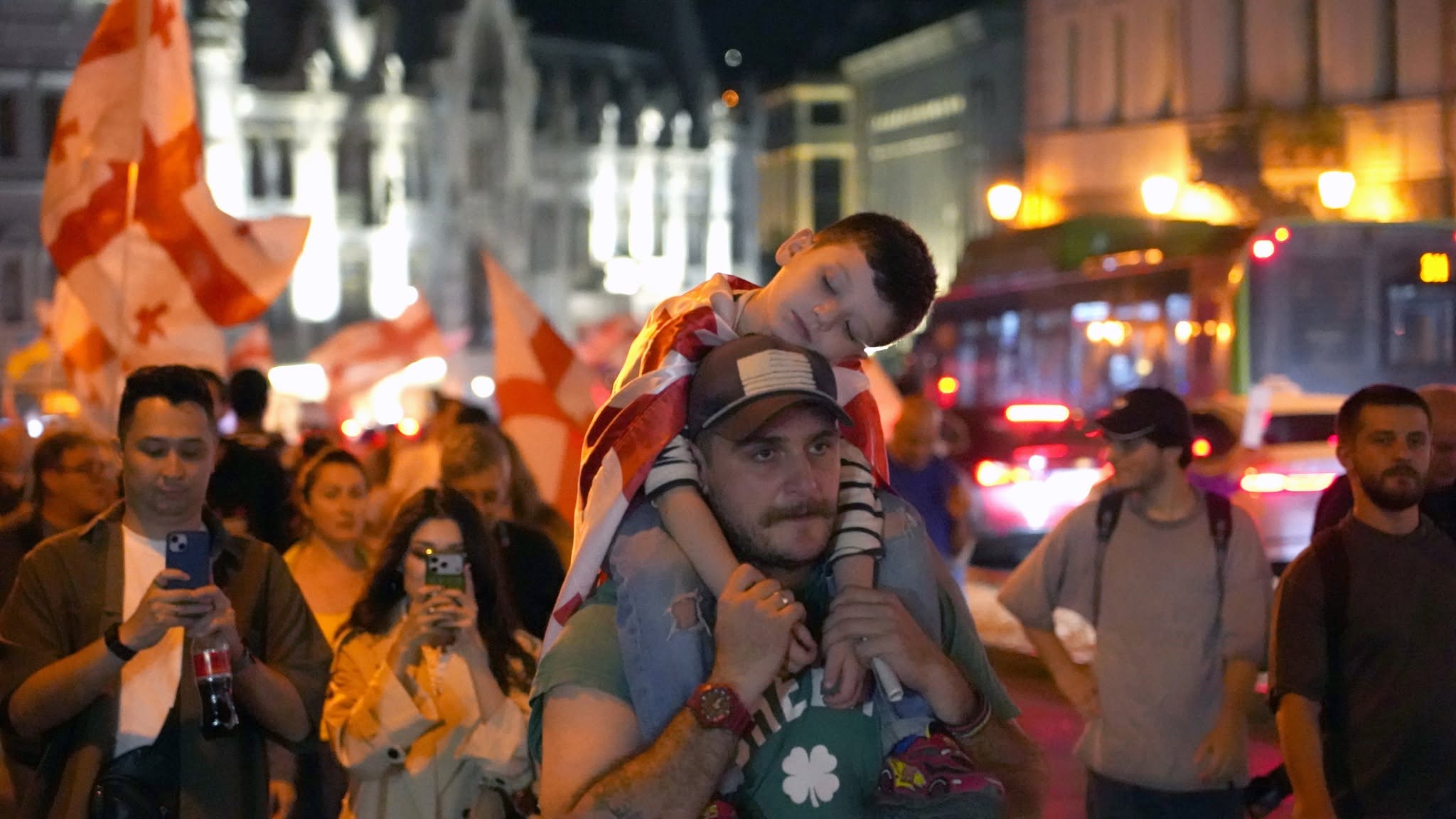
● The ruling Georgian Dream party has added the opposition Gakharia – For Georgia party to its case before the Constitutional Court seeking a ban on opposition parties. Majority leader Irakli Kirtskhalia said a new lawsuit would be filed this week. Exiled politician Giorgi Gakharia described the move as an attempt to suppress political opposition and establish authoritarian rule in the country. For Georgia is the only opposition party represented in parliament. More here.
● An initiative submitted to parliament by the Gakharia – For Georgia faction to restore the rules on assemblies and demonstrations that were in force before 2024 was supported by 16 MPs from Georgian Dream and People’s Power. Before the vote, Parliament Speaker Shalva Papuashvili reminded MPs that the bill had been submitted by the opposition. Nevertheless, the bill, which sought to repeal the tougher restrictions, was backed by, among others, Majority Leader Irakli Kirtskhalia, Tea Tsulukiani, Nikoloz Samkharadze and Aluda Gudushauri. The bill failed, with 28 MPs voting against and 16 in favour.
● Maia Bitadze has been appointed culture minister. She previously chaired the parliamentary Committee on Environmental Protection and Natural Resources. Bitadze has also served as deputy environment minister and deputy mayor of Tbilisi. The culture minister’s post had been vacant since 28 July, when Tinatin Rukhadze resigned, citing health reasons.
● A verdict is due today in the case of former State Security Service chief Grigol Liluashvili. He is charged with accepting a particularly large bribe and faces 11 to 15 years in prison. Liluashvili was arrested on 23 December last year.
● The Trump Tower Tbilisi project was presented as part of the Downtown Tbilisi complex. The project is expected to involve $2 billion in investment and development of around 600,000 square metres. Its centrepiece will be the 280-metre, 62-storey Trump Tower. Prime Minister Irakli Kobakhidze said the tower is due to be completed in 2031, with the entire district scheduled for completion in 2033. The project involves the Trump Organization and architecture firm Gensler. More here.
● Detained animal rights activist and businessman Tamaz Elizbarashvili has been prohibited from communicating with the outside world under an investigative decision. According to his lawyer, Elizbarashvili has been banned from all meetings, correspondence and phone calls. The investigator cited possible influence on witnesses, the risk of evidence being obtained and obstruction of justice, the lawyer said. The prosecution accuses Elizbarashvili of threatening his opponent with death and physical violence during a dispute at a restaurant in Tbilisi. Elizbarashvili denies the charges.
● The ALDE group in the Parliamentary Assembly of the Council of Europe has called for the immediate release of Georgian opposition politician Elene Khoshtaria. Group chair Julian Bulai cited an Amnesty International assessment that the 18-month prison sentence handed to Khoshtaria was politically motivated. The Tbilisi City Court found her guilty of damaging an election poster belonging to Tbilisi Mayor and Georgian Dream leader Kakha Kaladze and sentenced her to 18 months in prison. Members of her Droa party held a rally in Tbilisi in support of Khoshtaria and other prisoners.
● European Commission President Ursula von der Leyen said that during talks with the Syrian leadership, the EU intends to raise the issue of Syria withdrawing its recognition of the independence of Georgia’s Russian-occupied territories — Abkhazia and the Tskhinvali region (South Ossetia). She made the statement in a letter responding to an appeal from Georgia’s Coalition for Change. More here.
● The 2026–2027 school year has begun in Georgia’s public schools. A total of 37,733 first-graders are enrolled in public schools. Students in grades 1, 5, 7, 9 and 10 will use new textbooks, while first-graders have been introduced to school uniforms. The grading system has also changed: classwork, homework and final assessments will carry equal weight. If a student receives an annual grade below 5.0, the school must offer a remedial programme before the autumn examination.
-
Tuesday, September 15, Armenia. Armenia outraged by statements from Azerbaijani presidential aide Hikmet Hajiyev
● The Mother See of Holy Etchmiadzin has condemned remarks by Azerbaijani presidential aide Hikmet Hajiyev during his visit to the Gandzasar and Dadivank monastery complexes in Karabakh and surrounding areas. The Armenian Church said his remarks denied the Armenian identity of the complexes and presented them as supposedly Albanian, while also condemning what it called Hajiyev’s ironic attitude towards Armenian spiritual and cultural heritage. “Lasting peace in the region requires respect for people’s faith, historical memory and fundamental rights,” the Church said.
Context: Hajiyev accompanied foreign diplomats accredited in Azerbaijan on a tour of Karabakh and surrounding areas. At Gandzasar, he showed them Armenian books he described as ancient, opening them to blank pages and speaking of Armenia’s “false claims” to the Christian monument. Read more here
● Ara Khzmalyan, director of Yerevan’s Matenadaran Museum-Institute of Ancient Manuscripts, responded to Hajiyev’s remarks. “There are no blank pages in our manuscripts,” he said. According to Khzmalyan, no original manuscripts have ever been taken to Gandzasar because the monastery lacks the necessary security and preservation conditions. “Only copies of the manuscripts were displayed at Gandzasar. The original of each is kept at Matenadaran. Matenadaran is ready to show them to any diplomat or ambassador who has even one percent doubt about their authenticity,” he said.
● Armenian members of the Armenia-Azerbaijan civil initiative Bridge of Peace expressed concern over Hajiyev’s remarks and the reaction of foreign diplomats, who smiled during the incident. “These events deepen mistrust and create additional space for those who argue that dialogue is meaningless and attempts to achieve peace are futile,” they said. “Building peace requires difficult and sincere dialogue, attention to each other’s concerns and conscious efforts to avoid actions that can reopen wounds or fuel hostility.”
Azerbaijani members of the initiative also issued a statement, expressing “deep disappointment” over what they called the hostile reaction and unacceptable tone of public discourse in Armenia towards the diplomatic corps’ visit to Azerbaijan’s Karabakh and Eastern Zangazur regions.
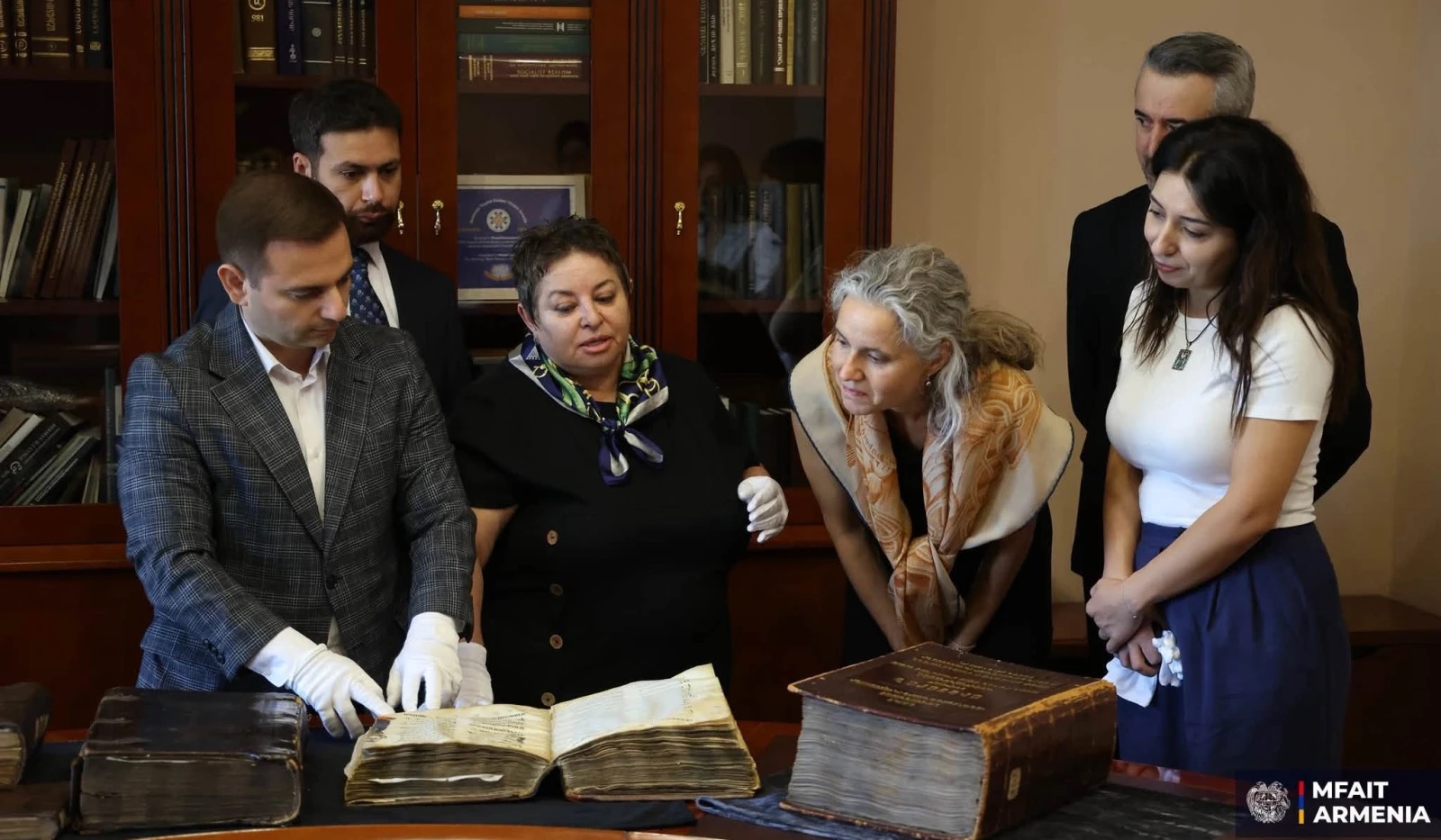
● EU Special Representative for the South Caucasus and the crisis in Georgia Magdalena Grono, who also joined the diplomats’ trip with Hajiyev, commented on the incident. On 14 September, after travelling from Azerbaijan to Armenia, she visited Matenadaran accompanied by Deputy Foreign Minister Vahan Kostanyan (pictured). “I certainly do not dispute the Armenian presence and rich heritage in the past in the regions of Karabakh that were previously affected by conflict. I visited the Kalbajar and Aghdara districts and had the opportunity to see this for myself for the first time. I was also pleased to revisit Matenadaran in Yerevan today. I saw the true beauty and depth of this heritage and was deeply impressed. This heritage must be preserved and valued, avoiding unjustified politicisation and speculation. Preserving and supporting cultural heritage is not only an important part of peace processes, but also a fundamental value for the European Union. […] I think that for full reconciliation, at some point we will also need to start a dialogue on these issues,” Grono said.
● Armenia’s ambassador to Belarus, Razmik Khumaryan, has been in Yerevan for more than two years, since June 2024. He was recalled for consultations after the Belarusian president’s remarks about the 2020 44-day war with Azerbaijan. Alexander Lukashenko’s comments suggested that Belarus knew about preparations for the war and supported Azerbaijan, despite Belarus and Armenia being members of the Russia-led Collective Security Treaty Organisation (CSTO). “Consultations will continue until Yerevan receives an explanation or an apology from the Belarusian leadership,” Parliament Speaker Ruben Rubinyan said in response to a question from Edgar Ghazaryan, an opposition MP from the pro-Russian Strong Armenia faction.
● Ruben Rubinyan commented on continuing pressure from Moscow and threats to exclude Armenia from the Russia-led Eurasian Economic Union (EAEU), following Armenia’s declared course towards European integration. “It is impossible to exclude Armenia from the EAEU because there is no such mechanism,” the speaker said in parliament.
● Narek Karapetyan, leader of the opposition pro-Russian Strong Armenia bloc, said in parliament that he sees no alternative for Armenia to membership in the Russia-led CSTO. “If you see an alternative, present it,” he said. Civil Contract MP Arpi Davoyan replied that “Armenia’s relations with the CSTO have long been clear; it is the opposition that is in the fog.”
Context: Armenia froze its participation in the CSTO after its allies failed to meet their obligations to protect Armenia’s sovereign territory following the Azerbaijani military incursion in September 2022. In response to Armenia’s request for assistance, the CSTO said the border had not been demarcated. “Yerevan’s interest in the organisation is exhausted, and I will be glad if Armenia is expelled from it,” Prime Minister Nikol Pashinyan said recently. He has also said that Armenian opposition forces are seeking the deployment of CSTO peacekeepers in the country, but “this will not happen”. More on Armenia’s relations with the CSTO here
● Turkey exported goods worth $1.336 million to Armenia in the first eight months of this year, according to the Turkish Exporters Assembly. Turkey has for the first time published separate official export figures for Armenia as part of its report on neighbouring countries.
● The US Kansas National Guard and Armenia’s Defence Ministry held another joint training exercise for sergeants from the Phoenix platoon. The annual training has been held for around 15 years and is a key element of bilateral military cooperation, the US Embassy said on Facebook.
● Prime Minister Nikol Pashinyan received a delegation led by Anton Hofreiter, chairman of the German Bundestag’s Committee on European Affairs. The meeting highlighted the importance of further developing Armenia-Germany relations, including close inter-parliamentary cooperation.
● Defence Minister Suren Papikyan met newly appointed French Ambassador Florent Escudier. They highlighted the high level of bilateral defence cooperation and discussed prospects for further development.
● Interior Minister Arpine Sargsyan is on a working visit to Georgia. She met Prime Minister Irakli Kobakhidze. The two sides highlighted a crime-fighting agreement signed by the interior ministries as a basis for expanding cooperation. They also stressed the importance of joint programmes to combat drug trafficking, illegal migration and other crimes.
● Security Council Secretary Alen Simonyan met representatives of the EU Strategic Review and Fact-Finding Mission, which operates within the European External Action Service’s Directorate for Peace, Partnerships and Crisis Management. They discussed the EU mission’s work in Armenia and other issues.
● The government has proposed updating the official oath taken by government members to reflect the concept of “Real Armenia”. During parliamentary discussions, Justice Minister Srbuhi Galyan said the new oath would more clearly reflect values aimed at strengthening statehood, protecting public and state interests, and ensuring the country’s development and longevity.
● Narek Karapetyan, head of the Strong Armenia faction, asked whether the new oath retained the words “homeland”, “people” and “nation”, which appeared in the previous version. The justice minister replied that the new text uses the concept of “Republic of Armenia”, which encompasses homeland, nation and people.
● Armenia and Iran have signed a protocol on a simplified customs corridor.
● Parliament approved at first reading amendments to the law on Armenia’s administrative-territorial division and related legislation. The changes envisage two new enlarged municipalities: Vanadzor and Pambak in Lori province, comprising 22 settlements, and Ararat and Vedi in Ararat province, comprising 32. Opposition MPs raised concerns that local consultations had been insufficient.
● The wife of Rubén Vardanyan, the former state minister of the unrecognised Nagorno-Karabakh Republic who is imprisoned in Azerbaijan, has donated the “War and Peace” painting collection to the city of Gyumri. It consists of 20 large-format works and is part of the “100 Paintings” collection of works by prominent Armenian and Russian socialist-realist artists, selected from the private collections of businessmen and philanthropists Ruben Vardanyan, Vladimir Avetisyan and Vladimir Nekrasov.
-
Tuesday, September 15, Azerbaijan. Baku criticises Armenia’s reaction to diplomats’ visit to Karabakh, says Yerevan is “not sincere in the peace and normalisation process”
● “Today marks 108 years since the liberation of Baku from occupation by Armenian-Dashnak forces,” Azerbaijan’s Foreign Ministry said in a post on X. “The liberation of Baku by the Caucasian Islamic Army, which included the Azerbaijani Corps, was an important turning point in Azerbaijan’s struggle for statehood,” it said.
● The Western Azerbaijan Community strongly condemned Armenia’s reaction to the recent visit by diplomats accredited in Azerbaijan to Karabakh and Eastern Zangazur, which Azerbaijan says were liberated from Armenian occupation during the 2020 Second Karabakh War. “This is disrespect for the country’s sovereignty and territorial integrity,” the community said.
Context: The group of foreign diplomats was accompanied by presidential aide Hikmet Hajiyev. His actions at the Gandzasar monastery complex sparked outrage in Armenia. Hajiyev showed diplomats Armenian books, which he described as supposedly ancient. He opened them to blank pages and spoke of Armenia’s false claims to the Christian monument. Armenian historians said that only replicas of ancient manuscripts had ever been kept at Gandzasar because the site lacks adequate security and preservation conditions, while the originals are held at the Matenadaran in Yerevan.
“The Western Azerbaijan Community views Armenia’s approach as an attempt to interfere in Azerbaijan’s internal affairs and a step aimed at fuelling irredentism. It also shows that Armenia is not sincere in the peace and normalisation process. Armenian society should first focus on ending the denial, falsification and destruction of the rich cultural and historical heritage created by the Azerbaijani people in Armenia. This would be a practical step towards establishing lasting peace between the two countries and societies,” the statement said.
● Azerbaijani participants in the Armenia-Azerbaijan civil initiative Bridge of Peace also expressed “deep disappointment” at what they called the hostile reaction from the media and the unacceptable tone of public discourse in Armenia over the diplomatic corps’ 11–12 September 2026 visit to Azerbaijan’s Karabakh and Eastern Zangazur regions. “Verbal attacks against ambassadors and countries for taking part in a visit to the sovereign territory of Azerbaijan are concerning and contradict Armenia’s recognition of Azerbaijan’s territorial integrity. The two countries are in a post-conflict period and face the difficult task of overcoming decades of confrontation. […] The peace process must not be subjected to pressure from revanchist forces, as this would seriously jeopardise further progress towards peace. We call on Armenian society to act responsibly and not fall for provocations by those pursuing malicious aims both in Armenia and beyond,” they said.
Armenian participants in the initiative also expressed concern, citing Hajiyev’s statements and the reaction of foreign diplomats, who were seen laughing. “These events deepen mistrust and create additional space for those who claim that dialogue is meaningless and efforts to achieve peace are futile. Building peace requires difficult and sincere dialogue, attention to each other’s concerns and conscious efforts to avoid actions that could reopen wounds or intensify hostility,” they said.
● The US Embassy said Chargé d’Affaires Amy Carlon visited Khankendi and Shusha during a 11–12 September trip organised by Azerbaijan’s Foreign Ministry. Together with other heads of diplomatic missions, she visited cultural heritage sites and learned about economic development in the Karabakh region. “Peace and cooperation between Baku and Yerevan open new opportunities for Azerbaijan and the South Caucasus in regional connectivity, trade, investment and prosperity,” the embassy said.
● International rating agency Moody’s said the “most significant positive geopolitical development” in Eastern Europe, Central Asia and the South Caucasus was the ongoing normalisation of relations between Armenia and Azerbaijan. Stronger normalisation would improve connectivity and create new opportunities for trade and transport links across the Caucasus. However, risks to implementing the peace agreements remain, and the durability of recent progress is yet to be assessed.
● The criminal trial in the Meydan TV case, in which several journalists have been arrested, continued. Ulviya Ali, a former Voice of America journalist, told the court that “the mass arrests of independent journalists in Azerbaijan are a conscious and deliberate step by the president.” “I accuse Ilham Aliyev and his loyal servants of violating human rights, undermining the rule of law and imprisoning innocent people on fabricated charges. Unlike their actions, my accusations are neither baseless nor fabricated,” she said. Ali again said she had been arrested in May 2025 on fabricated charges and described alleged violations during her arrest and a search of her home. She said €6,700 allegedly found in her apartment had been planted and then seized by police officers themselves. According to Ali, no lawyer was present during the search, while the number of police officers involved was three times higher than the figure recorded in the official report. She said she was subjected to violence and threatened with sexual violence during her detention in an attempt to force her to disclose passwords to her phone and computer. She added that despite serious health problems that developed during the 16 months since her arrest, she has been unable to receive adequate medical care.
● Six documents on major joint economic projects between Azerbaijan and the UAE were signed in Baku during a meeting between President Ilham Aliyev and UAE National Security Adviser Sheikh Tahnoon bin Zayed Al Nahyan.
• Renewable energy projects
• Strategic investment cooperation
• Exploration of deposits in Nakhchivan
• Development of a major data centre
• Cooperation within the Southern Gas Corridor
• Financial close of the Neftçala solar power plant project
● Turkish Foreign Minister Hakan Fidan arrives in Azerbaijan today for a two-day visit. He is due to meet his Azerbaijani counterpart Jeyhun Bayramov and other officials. Talks will cover efforts to increase bilateral trade to $15 billion, as well as energy and transport projects. Consultations will also be held on the 13th summit of the Organization of Turkic States, which Türkiye will host soon, and COP31.
● President Ilham Aliyev attended the opening of the first stage of SABAH.city, an innovation campus at Baku’s High-Tech Park. The complex consists of four interconnected buildings and includes 13 educational and research laboratories, a co-working space, five restaurants, a market, event halls and outdoor sports facilities, including basketball and football courts and two padel courts. It also has outdoor leisure areas, pedestrian and cycling paths, and the ASAN AI Hub artificial intelligence centre. Once fully operational, the campus is expected to attract around 3,000 visitors a day.
● President Ilham Aliyev ordered his $500,000 Sheikh Zayed Award to be transferred to the Karabakh Revival Fund. The award was presented to him today by Muslim Council of Elders Secretary-General Mohamed Abdelsalam. The Sheikh Zayed Award was jointly given in February to Aliyev and Armenian Prime Minister Nikol Pashinyan in recognition of their efforts to advance peace and cooperation between Armenia and Azerbaijan and promote regional stability. Pashinyan previously said his $500,000 prize would go to Armenia’s state budget.
● The criminal case against Ramiz Mehdiyev, the former head of the presidential administration who is in custody, has been sent to court. He is charged with treason and attempting to seize power. Mehdiyev’s former aide Eldar Amirov is also charged in the case. Criminal proceedings against Mehdiyev, once known as Azerbaijan’s “grey cardinal”, began in October 2025. Neither Mehdiyev nor his aide has publicly commented on the charges. In February, the State Security Service issued a statement naming former First Deputy Prime Minister Abbas Abbasov, Popular Front Party chairman Ali Karimli, who is also in custody, party member Mamed Ibrahim, also detained, and several others. The SSS said they had been working with foreign intelligence services to seize state power by force and change Azerbaijan’s constitutional order. Karimli and Ibrahim deny the allegations, calling the case fabricated and politically motivated.
● The National Cybersecurity Agency has identified TikTok accounts impersonating payment systems. Links posted by the accounts lead to websites offering discounts on Azercell, Bakcell and Nar internet and call packages. The sites do not provide actual payment services and request users’ bank card details.
● An international conference dedicated to Azerbaijani scholar Seyid Yahya Bakuvi was held in Baku for the first time as part of a meeting of the Council of Heads of Muslim Religious Administrations of the Organization of Turkic States. Around 200 religious figures from nearly 40 countries and 18 international organisations took part. Discussions focused on Bakuvi’s contribution to philosophical thought and Sufism in the Islamic world, and the relevance of his ideas today. A film on Bakuvi’s legacy and moderate Islamic values will be produced following the conference.
● The State Security Service arrested bloggers Magsad Bagirov and Kyamran Bilalov on charges of inciting religious hatred and hostility in society.
● The school year began in Azerbaijan today, which is also marked as Knowledge Day. Some 2.2 million pupils returned to school, including more than 130,000 first-graders. This year, 75,000 students were admitted to higher education institutions at all levels. By order of the Ministry of Science and Education, the first lesson in all schools is dedicated to the theme “Year of Urban Planning and Architecture”.
● Train intervals on the Baku Metro have been shortened from today following technical optimisation.
-
Tuesday, September 15, Georgia. Annual income threshold for property tax more than doubles
● Gela Geladze has resigned as head of the State Security Service. He is the fourth head of the agency since April 2025. Geladze said the decision followed “consultations with the political team” and that he would continue working in another government agency, without specifying which one. He headed the SSS for less than five months. In April 2025, Grigol Liluashvili resigned and is now in prison on bribery charges. He was succeeded by Anri Okhanashvili, who headed the SSS for just over four months before becoming an adviser to the prime minister. Geladze’s predecessor was Mamuka Mdinaradze, who led the agency for about nine months before unexpectedly leaving both the post and politics altogether. More here.
● Prime Minister Irakli Kobakhidze commented on media and social media reports about possible misuse of funds allocated for the funeral of Catholicos-Patriarch Ilia II. Of the 3 million lari (about $1.16 million) allocated for the funeral, 722,000 lari (about $280,000) was spent. The funds were allocated while former Culture Minister Tea Tsulukiani was in office. Kobakhidze said these are preliminary figures and more information will be provided.
● Foreign Minister Maka Botchorishvili met Sweden’s new ambassador to Georgia, David Emtestam. They discussed bilateral Georgia-Sweden relations and Georgia’s relations with the European Union.
● The annual income threshold for property tax will rise from the current 40,000 lari (about $15,500) to 100,000 lari (about $39,000). According to parliamentary majority leader Irakli Kirkitadze, the change will exempt around 81,000 citizens from paying property tax. The bill is expected to be adopted through an expedited procedure.
● Luka Ekhvaia will head the administration of President Mikheil Kavelashvili. Ekhvaia previously served as his international affairs adviser. He replaces Ketevan Kvinikadze, whose reason for leaving has not been disclosed. Ekhvaia is known for political videos and his blog under the name FucosKankara. In his public statements, he supports revising Georgia’s traditional Euro-Atlantic course in favour of a so-called multi-vector foreign policy, including closer ties with Russia, China and Iran.
● Georgia expects to receive the WHO’s highest, “gold” level of international recognition for eliminating hepatitis C. Parliamentary Health Committee chairman Zaza Lominadze said more than 80,000 people have been fully cured of hepatitis C under the programme. According to him, around 10,000 people diagnosed with the disease are not yet receiving treatment. Lominadze called on primary healthcare doctors to enrol them in the state programme. The WHO has not yet officially granted Georgia this status.
● A high-level conference of the International Consumer Protection and Enforcement Network (ICPEN) has opened in Tbilisi, bringing together around 100 delegates from 55 countries. Georgia’s Competition and Consumer Agency is ICPEN’s lead agency for 2026–2027. The three-day conference focuses on “Building trust in the digital age”.
● Tbilisi’s Dezerter Bazaar has been temporarily closed after a sewer system accident. Large-scale repairs are underway following damage to ageing underground sewerage and drainage networks. The market administration says alternative trading spaces nearby will be offered to vendors. No reopening date has been announced.
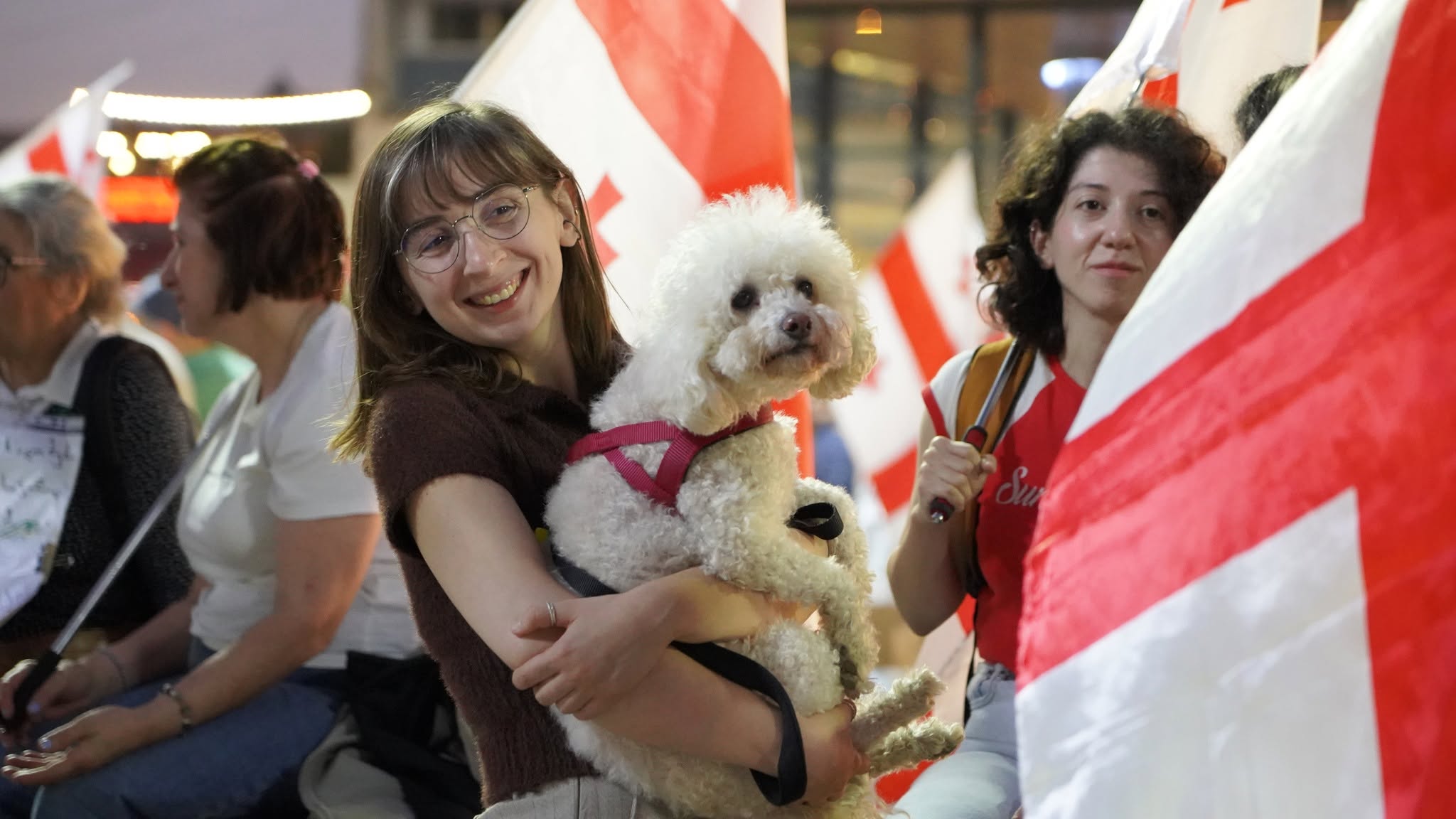
-
Monday, September 14, Georgia. ZION festival organisers impose restrictions on Russian citizens, requiring them to formally recognise Georgia’s territorial integrity and Russia’s occupation
● A court has remanded Giorgi Baramidze, one of the leaders of the opposition United National Movement, in custody pending investigation on sabotage charges over his remarks about the war in Abkhazia in the early 1990s. Speaking about prisoner exchanges at the time, Baramidze said the Georgian side had no prisoners because Georgian fighters “shot them”. He later apologised and said he had been misunderstood. The prosecution says investigations have found no evidence that Georgian soldiers executed prisoners and described Baramidze’s statement as “baseless and fabricated”. According to the prosecution, his remarks damaged the reputation of the self-defence forces and threatened the process of reconciliation and rebuilding trust. If convicted, Baramidze faces up to four years in prison. Read more about then case here
● Today, Parliament’s Legal Affairs Committee will consider a bill to restore rules on assemblies and demonstrations that were in force before 2024. The bill was initiated by the opposition Gakharia for Georgia faction. Under the proposal:
- • Administrative functions related to assemblies would be transferred from the Interior Ministry to city halls.
- • No prior notification would be required for gatherings on pavements if they do not obstruct traffic.
- • The Interior Ministry would no longer have the power to require organisers to use an alternative location, time or route.
The faction said rules introduced in recent years disproportionately restrict freedom of assembly and give law enforcement excessive powers.
● A rally was held in Krtsanisi Forest Park against the new “Eagle Hills” residential development. Residents, activists and opposition parties are demanding that the contract with the investor be terminated and the planned construction suspended. Former President Salome Zourabichvili also joined the protest. She said Krtsanisi Forest Park is an important green space for Tbilisi and that large-scale construction there would harm the city. She also criticised the project’s lack of transparency, saying the public has insufficient information about the contract, investment and construction plans.
● Tbilisi held its weekly “Saturday March” as part of nearly two years of continuous pro-European protests. “The injustice prevailing in the country is the fault of ruling party honorary chairman and oligarch Bidzina Ivanishvili,” participants said.
Here is the podcast “Protests in Georgia: video and photos”
● During the demolition of the “Jugs” structure in Tbilisi’s Rike Park, its steel framework is being sold for scrap, TV Pirveli reported. According to the channel, around 2,000 tonnes of steel have been removed by companies dealing in recycled construction materials at $720 per tonne. A source told the channel that the material is being taken directly from Rike Park, while the aluminium and specialised façade glass have already been sold. On 25 June, Tbilisi City Hall authorised Rike Dom to demolish the complex. The company bought the property from the state for 10 million lari (around $4 million), while construction cost around 70 million lari (around $70 million). Italian architect Massimiliano Fuksas, who designed the complex, called its destruction “madness”.
● Organisers of Georgia’s ZION festival have come under criticism over rules introduced for Russian citizens. The ticketing platform tkt.ge initially said Russian citizens would not be allowed to attend the festival. The announcement was deleted on 11 September following a heated debate on social media. The organisers later said Russian citizens would be allowed to attend after completing and signing a special online form acknowledging Georgia’s territorial integrity and condemning Russia’s occupation of Georgian territory. They said the requirement was not related to nationality or ethnicity, but was a political response to Russia’s aggression against Georgia.
● Revenue Service head Mikheil Maglakelidze and Finance Ministry Investigation Service head Levan Kharabadze resigned at the same time. According to official information, Maglakelidze resigned at his own request, while no reason was given for Kharabadze’s resignation. New heads of both agencies are expected to be appointed today.
● Neurologist Maia Kokhtashvili, accused of issuing a fake prescription, was released from custody pending trial after posting bail of 50,000 lari (around $19,000). The money was raised through a social media campaign. The court banned Kokhtashvili from leaving Georgia and ordered her to report to the relevant authorities every two weeks. The prosecution accuses her of issuing a fake prescription for the purchase of a psychotropic substance. If convicted, she faces three to six years in prison.
● Education researcher and one of the leaders of the Freedom Square movement Simon Janashia has criticised the process of preparing textbooks for the new school year. New textbooks have been announced for first, seventh and ninth grades, but with classes starting on 15 September, teachers have still not seen the new books. According to Janashia, only the first parts of the textbooks had been published online as of 12 September. Janashia also criticised the abolition of the right to choose alternative textbooks, as well as the process of selecting authors. In his assessment, the system is returning to a model in which schools have no choice, with political loyalty influencing textbook selection instead of professional criteria.
● Georgia will submit a national report to the World Health Organization seeking confirmation that hepatitis B and C have been eliminated in the country. According to the Health Ministry, 88.5% of patients have been diagnosed with chronic hepatitis C, 87.1% of them have started treatment, and the cure rate is 99%. Hepatitis B prevalence among children is 0.03%; birth-dose vaccination coverage is 95.5%, while three-dose coverage is 90.5%. Georgia aims to receive the WHO’s highest, gold-level international recognition in both areas. The final decision has not yet been made, as the country must first complete the international validation process.
● In the first half of the year, deaths in Georgia exceeded births by 4,715. Preliminary official data show that 17,509 children were born and 22,224 people died between January and June. Natural population growth was positive only in Tbilisi (+424) and Adjara (+330). The largest natural decrease was recorded in Imereti, where deaths exceeded births by 1,626, followed by Samegrelo-Zemo Svaneti (-1,134) and Kakheti (-791).
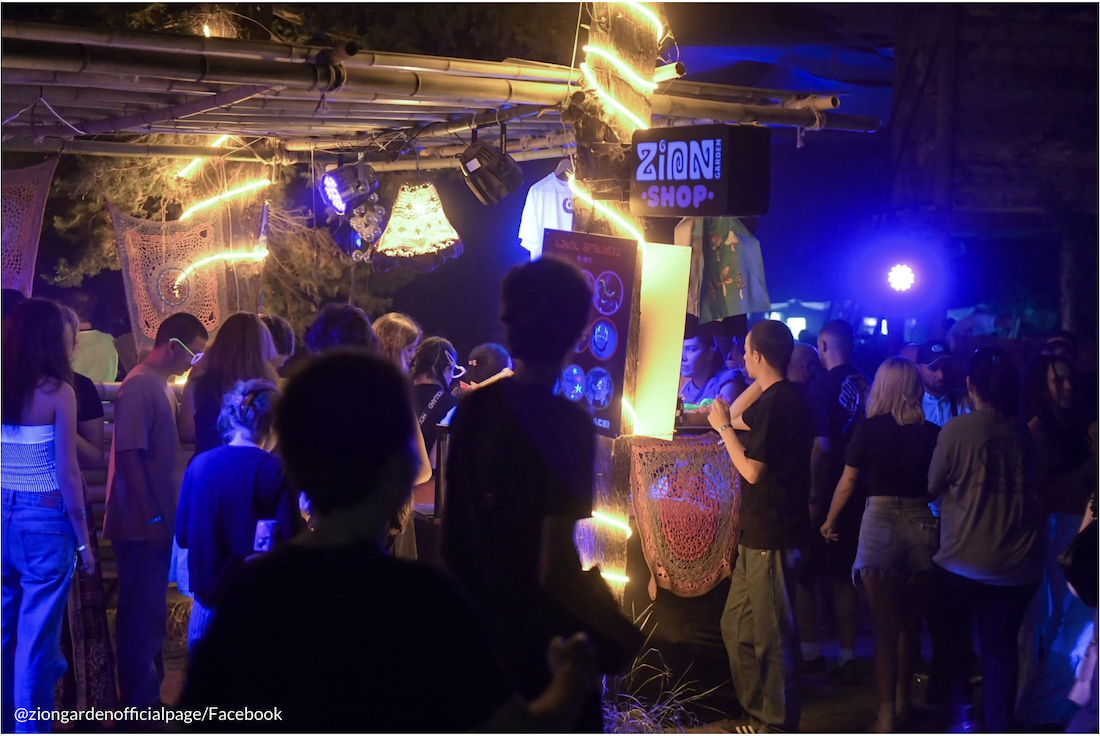
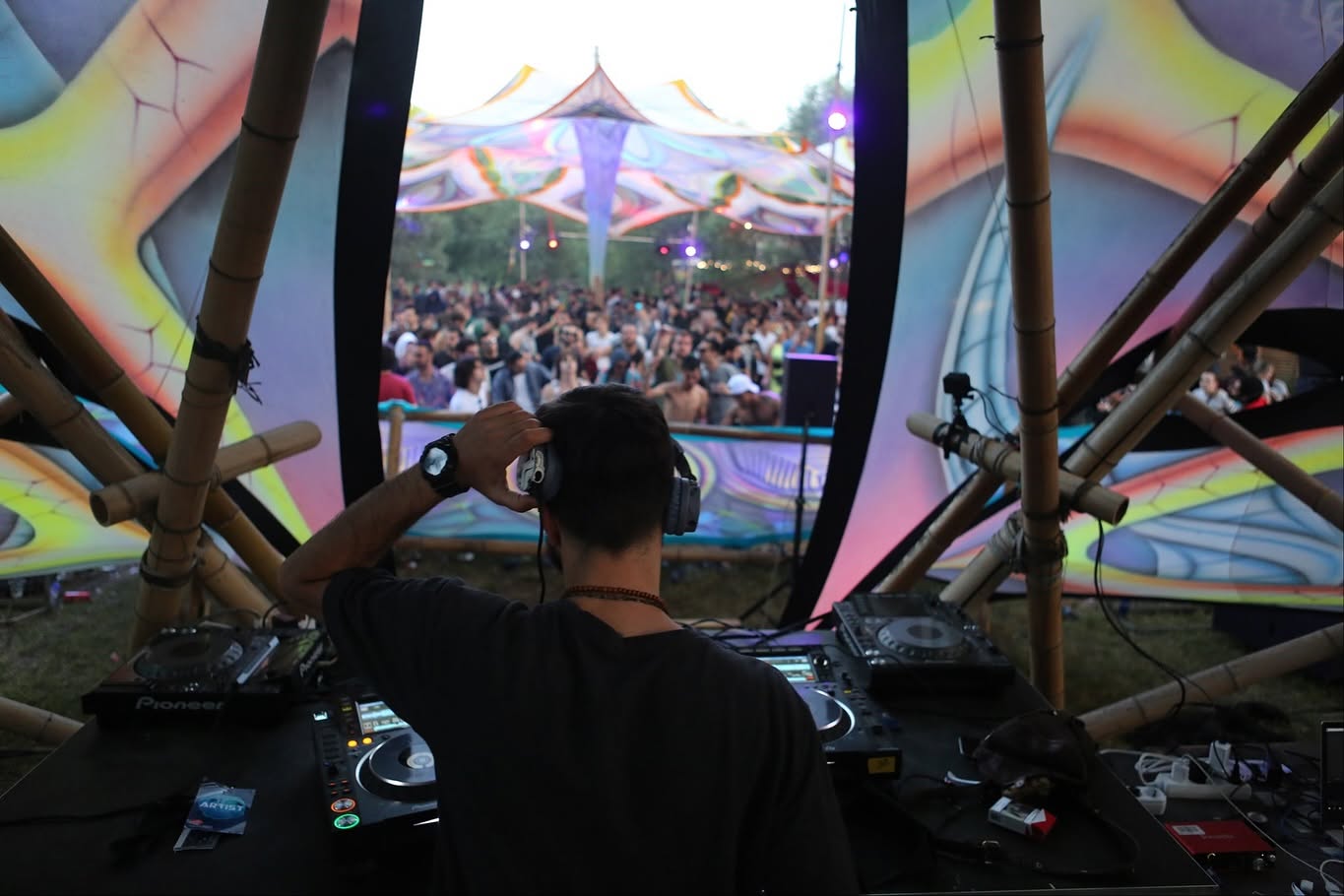
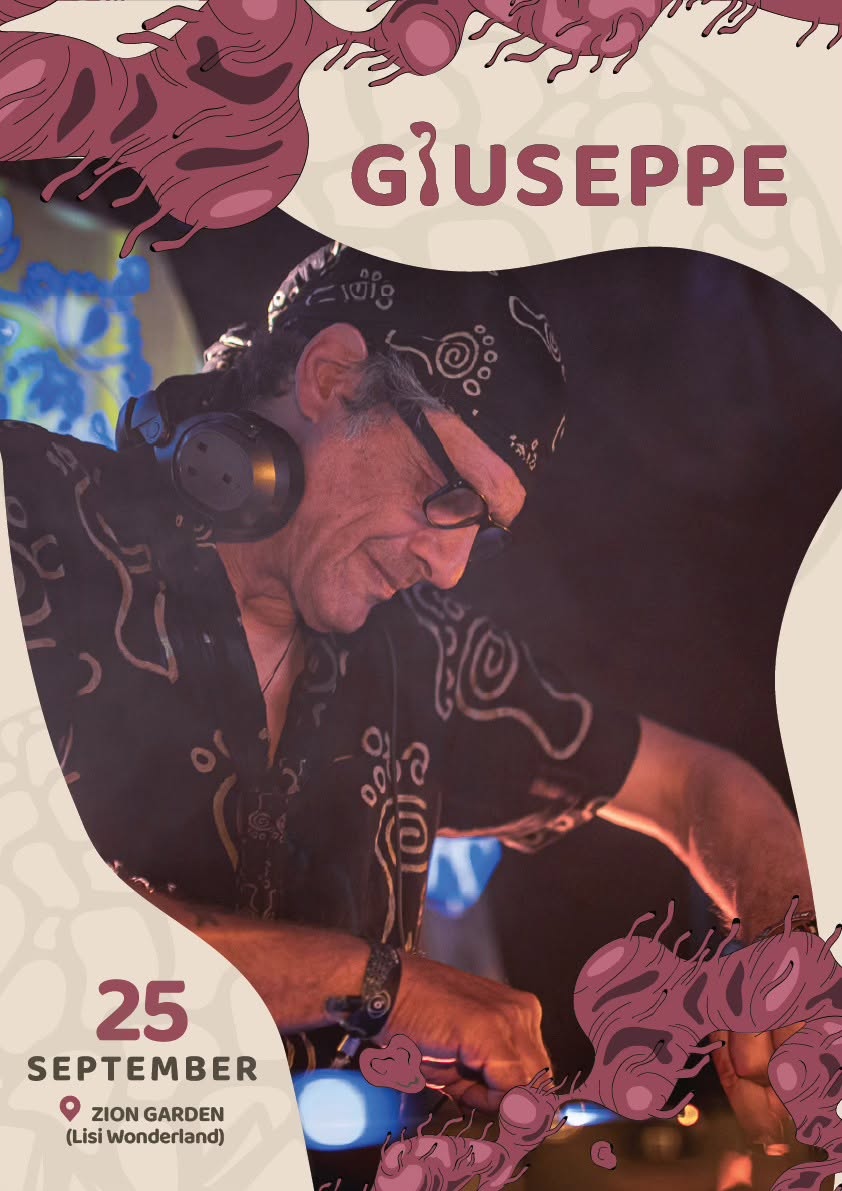
-
Monday, September 14, Armenia. Armenia may raise rent for Russian military base if Russia raises gas prices
● “Armenia could increase the rent charged for the Russian military base if Russia raises the price of the gas it supplies to Armenia,” said Vilen Gabrielyan, chairman of the parliamentary Defence and Security Committee and a member of the ruling Civil Contract party. He was commenting on the prime minister’s remarks that if the price of Russian gas rises, Armenia could also raise prices “for certain things”.
● Russia will suspend gas supplies to Armenia from tomorrow, 15 to 25 September. The suspension is reportedly due to scheduled maintenance and repair work on the North Caucasus–Transcaucasus main gas pipeline in Russia. Armenian authorities said uninterrupted gas supplies would be maintained during the period using domestic reserves and additional natural gas supplies from Iran.
● The heads of Armenia’s and Iran’s customs services met in Julfa, Iran, and signed a memorandum of understanding on a customs “green corridor”. They also discussed electronic document exchange, facilitating truck traffic and coordinating customs controls. Hakopyan and Asgari visited the Iran-Armenia border terminal.
● The first international multi-stage cycling race, Tour of Armenia, ended in Yerevan on Sunday after passing through several regions of the country. Italian cyclist Simone Raccani won the overall classification. Denmark’s Kevin Biehl came second, while another Italian, Luca Covili, finished third. Armenia’s best result came from Kirill Miller, who placed 38th overall.
Tour of Armenia consisted of four stages covering around 587 km in total, with a cumulative elevation gain of about 5,300 metres. The final stage took place in Yerevan. Athletes and teams from Japan, Italy, Kazakhstan, the UK, Thailand, Poland, Portugal, Czechia, Germany and other countries took part alongside Armenia.
● Nikol Pashinyan attended the closing award ceremony for the Tour of Armenia. “This tournament was broadcast by dozens of international television companies. It will undoubtedly raise Armenia’s profile and generate even greater interest in the country, which is already receiving very large tourist flows,” Pashinyan said.
● Armenian citizen Arpine Misakyan spent around three months in a US immigration detention centre after hitting her husband in the face during an argument at a hotel buffet, WKRN.com reports. She was not subsequently charged with domestic violence after agreeing to voluntary deportation to Armenia. The argument was captured on the hotel’s CCTV cameras.
● Armenian swimmer Hovhannes Gabrielyan set a record by swimming between the farthest shores of Lake Sevan. He covered more than 74 km in 34 hours.
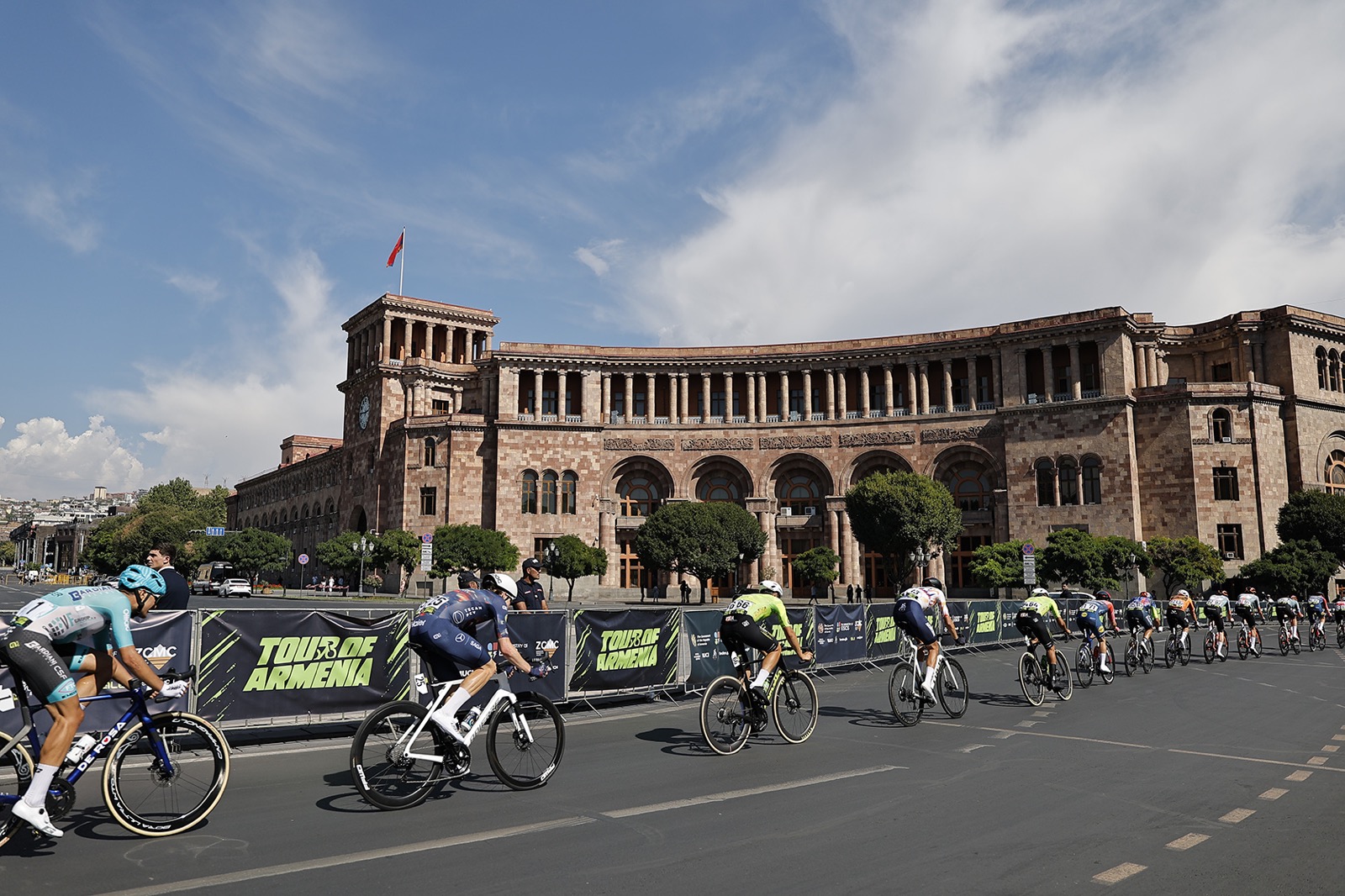

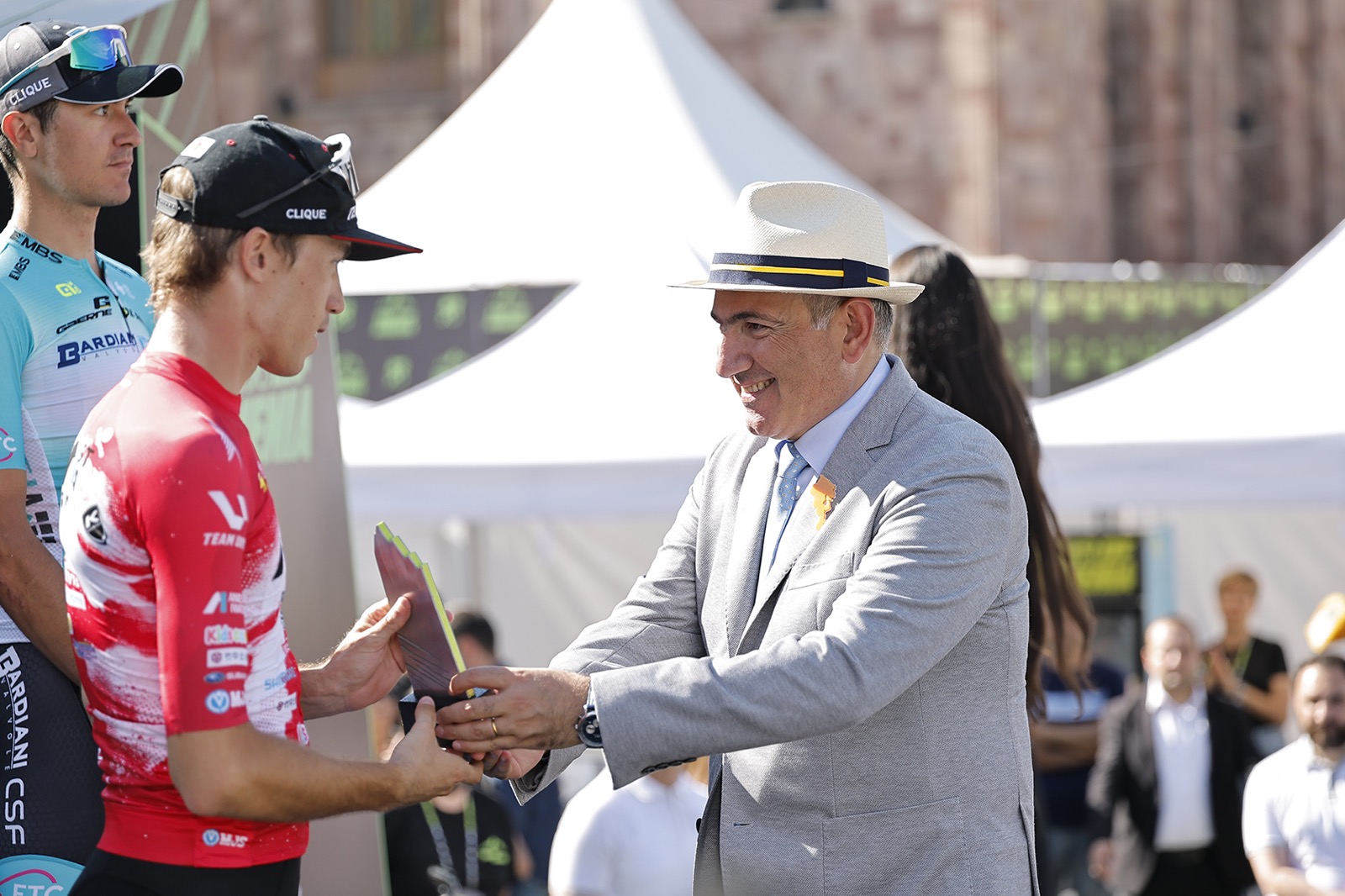
-
Monday, September 14, Azerbaijan. Eight-year suspended sentence handed to Maharram Goyushoglu in the ‘NGO case’
● Two UN climate events wrapped up in Baku over the weekend: the UNFCCC Climate Week and Baku Climate Action Week. Around 2,700 representatives from more than 140 countries reportedly took part.
● Representatives of Azerbaijan, Brazil, Türkiye and Australia held talks in Baku as the countries chairing the UN’s annual COP climate conferences — COP29, COP30, COP31 and COP32.
● Diplomats and military attachés accredited to Azerbaijan made a two-day visit to Karabakh and Eastern Zangazur, territories Azerbaijan says were liberated from Armenian occupation following the Second Karabakh War. The delegation visited the Gandzasar and Khudavang monastery complexes in Aghdara and Kalbajar districts. They were briefed on the sites’ history and architectural features, as well as what Azerbaijani authorities describe as cases of falsification of monuments. The group also visited the Istisu mineral water bottling plant and attended a honey festival in Kalbajar. The Foreign Ministry said this was the 22nd visit by foreign diplomats to the territories.
● “The US expects reciprocal visits by representatives of the Azerbaijani and Armenian embassies to continue as part of efforts to establish lasting peace in the South Caucasus,” US Chargé d’Affaires in Azerbaijan Amy Carlon told journalists. She said such exchanges are part of the process. Carlon said she visited Yerevan a couple of weeks ago, after which US Chargé d’Affaires in Armenia David Allen came to Baku. She again stressed that regional connectivity, including the Trump Route (TRIPP), is a key area of discussion. She also highlighted economic investment, data centre development, defence and security cooperation.
● Another civil society representative has been sentenced in the so-called NGO criminal case. Maharram Goyushoglu, chairman of the Gazakh Regional Development Resources public association, received an eight-year suspended sentence. Like other activists in the case, Goyushoglu was charged with abuse of office, forgery of official documents and money laundering. Investigators allege that he failed to register funds received from USAID and the German Marshall Fund as grants with the Justice Ministry, instead processing them through service contracts. Goyushoglu, 53, is a second-group disabled person. He told the court that he categorically did not consider it a crime to formalise project work through a service contract.
● Fazil Gasimov, an economist and doctoral student at Istanbul University who was sentenced to nine years in prison for allegedly circulating counterfeit money, has appealed to European Commission President Ursula von der Leyen and US Vice President JD Vance for help securing his release and safety. His family said Gasimov categorically denies the charges and says he is being politically persecuted in Azerbaijan. In his letter to Vance, he recalled that on 9 February he and four other political prisoners had sent him a letter on behalf of the initiative group of the Committee for the Protection of Political Prisoners.
● Seymur Hazi, deputy chairman of the opposition Azerbaijan Popular Front Party, has been barred from leaving the country. His wife said Hazi was planning to travel to Georgia but was told at the airport that he was prohibited from leaving the country. “We do not know the reason. But there is a name for such actions: pressure on our family,” Nigar Hazi said. Her father, prominent opposition politician Tofig Yagublu, is in prison. He was sentenced to nine years for alleged large-scale fraud and considers the charges politically motivated.
Up to 20 members of the Azerbaijan Popular Front Party are currently detained on various charges, including party chairman Ali Karimli. The party also considers the charges against them politically motivated.
📸 PHOTO: Baku hosted the country’s first international beach polo tournament, Sea Breeze-2026, over the weekend. In the final, Baku’s Elit Polo Club beat Switzerland’s St. Moritz 6–4. Britain’s Red Star won bronze after defeating Russia’s Moscow Polo Club 9–5.
-
Top stories in Azerbaijan, Armenia, and Georgia from 7-11 September, 2026