Top stories in Azerbaijan, Armenia, and Georgia from 26-30 January, 2026
 Live
Live




-
Friday, January 30, Armenia. The authorities intend to deepen cooperation with the EU in the areas of institutional reforms, the rule of law, and security
-
Friday, January 30, Georgia. Twenty-three OSCE member states have launched an investigation into Georgia over mass human rights violations
-
Friday, January 30, Azerbaijan. Foreign Ministry: "Azerbaijan will not allow its airspace or territory to be used for military operations against Iran"
-
Thursday, January 29, Georgia. The grants law is being tightened, with criminal liability for receiving any foreign funding without government approval
-
Thursday, January 29, Azerbaijan. Azerbaijan has once again sent electrical equipment to Ukraine
-
Thursday, January 29, Armenia. Foreign Minister: ‘A peace agreement between Armenia and Azerbaijan will be signed in the coming months"
-
Wednesday, 28 January, Azerbaijan. A planned terrorist attack against the Israeli embassy in Baku has been thwarted
-
Wednesday, 28 January, Armenia. Nikol Pashinyan: “In recent years, such a quantity and quality of modern weapons and military equipment has been acquired as had never existed before”
-
Wednesday, 28 January, Georgia
-
Tuesday, 27 January, Armenia. PACE called on the Azerbaijani authorities to “end repressive prosecutions” and release all political prisoners, including 23 ethnic Armenians
-
Tuesday, 27 January, Georgia. Speakers at a UN Human Rights Council session call for the release of political prisoners in Georgia and the repeal of repressive laws
-
Tuesday, 27 January, Azerbaijan. Visit of Israel’s foreign minister to Baku and then to Astana
-
Monday, 26 January, Georgia. State security probes businesses amid Georgian Dream price campaign
-
Monday, 26 January, Azerbaijan. Israel’s foreign minister has arrived on a visit to Azerbaijan and will then travel to Kazakhstan
-
Monday, 26 January, Armenia. Grenade explosion in Goris leaves two dead after inheritance dispute
-
Top stories in Azerbaijan, Armenia, and Georgia from 19-23 January, 2026

-
Friday, January 30, Armenia. The authorities intend to deepen cooperation with the EU in the areas of institutional reforms, the rule of law, and security
● The EU Council has approved a decision to provide Armenia with a second tranche of assistance under the European Peace Facility, Armenian Foreign Ministry spokesperson Ani Badalyan said. The sides had reached political consensus on the issue in December. The European Peace Facility is used by the EU to finance support for the defence capacities of partner countries.
● Armenian Foreign Minister Ararat Mirzoyan spoke on January 29 at a hearing of the European Parliament’s Foreign Affairs Committee in Brussels, where he presented the government’s democratic reform agenda. “The choice is between sovereign democracy and an authoritarian path of subjugation — and we have already made our choice,” Mirzoyan said. He stressed that Armenia intends to deepen cooperation with the EU in institutional reforms, the rule of law and security.
● Former Armenian President Robert Kocharyan said that the so-called Trump Route for International Peace and Prosperity (TRIPP) is an Armenian-American project serving the interests of Azerbaijan and Turkey. Prime Minister Nikol Pashinyan responded that he considers Kocharyan’s views on regional and international affairs to be “hopelessly outdated.” Read more here
● A regular meeting of the organising committee of the 17th Conference of the Parties to the UN Convention on Biological Diversity (COP17) was held in Yerevan. Participants discussed organisational and logistical issues related to preparations for the conference, which is set to take place in the Armenian capital.
● Armenia’s Prosecutor General’s Office said Germany has handed over an Armenian citizen who had been on an international wanted list. No further details were disclosed.
● Music by composer Tigran Mansuryan will be played at Yerevan metro stations to mark his birthday, the metro’s press service said.
● The Armenian government has moved the working day of May 4 to April 18 in connection with the 8th European Political Community Summit in Yerevan. The decision was taken in view of the expected arrival of around 50 high-level delegations, including heads of state and leaders of international organisations. The European Political Community Summit brings together EU member states and partner countries to discuss security, economic and regional cooperation issues.
-
Friday, January 30, Georgia. Twenty-three OSCE member states have launched an investigation into Georgia over mass human rights violations
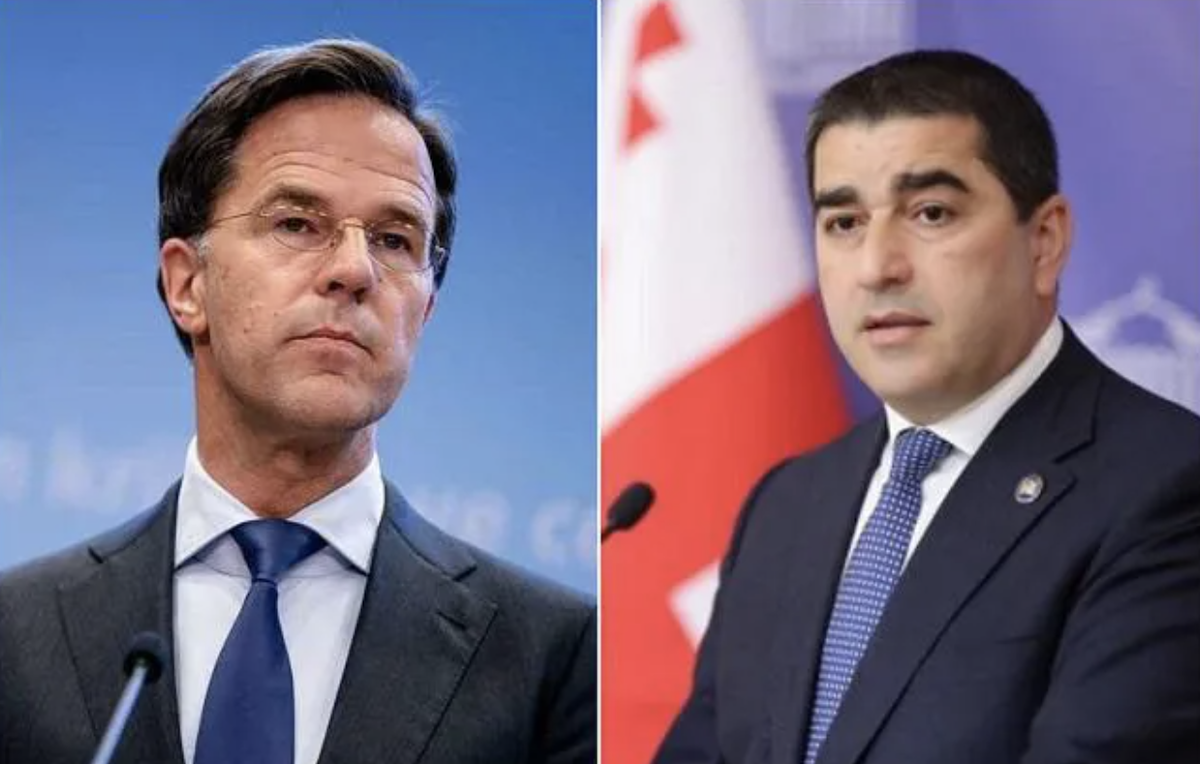
● Georgian Dream parliamentary speaker Shalva Papuashvili said that once amendments to the grants law are adopted, all existing and future grants “must be submitted for approval to the Georgian people and their representative — the Georgian government.” “This applies to Georgian NGOs, organisations registered abroad, as well as branches of foreign donors and foundations operating in Georgia. If someone does not like this, let a representative of that donor organisation, a foundation, or that country’s ambassador come out and say that they do not need the Georgian people’s consent for this money and that they want to spend money on politics in Georgia without the Georgian people’s consent. Let them say it openly, if they dare,” Papuashvili said on the pro-government Imedi television channel.
On January 28, Georgian Dream announced plans to tighten the grants law, introduce new legal definitions and establish criminal liability for violations — including prison terms of up to six years. Read more here
● 23 OSCE participating states on January 29 activated the so-called Moscow Mechanism with regard to Georgia — a tool used when there are concerns about a serious deterioration in the human rights situation. The decision предусматривает the deployment of an independent expert fact-finding mission to assess Georgia’s compliance with its OSCE commitments, with particular attention to political and civil processes that began in spring 2024. Experts note that the Moscow Mechanism has been used extremely rarely — only 15–16 times since its creation in 1991 — and only in particularly serious cases. Tato Kelbakiani, head of the NGO Prevention for Progress, said: “Refusal by the authorities to cooperate with the mission would amount to indirect acknowledgment that systemic problems exist.” Read more here
● A protest under the slogan “Protect Education” was held in Tbilisi, with hundreds taking part in a march against plans to merge Ivane Javakhishvili Tbilisi State University (TSU) and Georgian Technical University (GTU). Education Minister Givi Mikanadze announced the planned merger of the country’s two oldest and largest universities, saying it would “create the preconditions for Tbilisi State University to become a leading center of academic and scientific development in the region and significantly improve its international rankings.” Critics describe the initiative as part of a controversial education reform that, in their view, is aimed not at modernising the system but at increasing state control over universities and curbing their autonomy.
● Georgia’s Defence Ministry said that if former defence minister Juansher Burchuladze is found guilty, it will seek compensation of nearly 7 million lari (about $2.6 million). Burchuladze is accused of abuse of office and laundering illicit income. He faces between nine and 12 years in prison.
● Georgia’s State Security Service said 21 people have been detained in seven corruption cases. Most of the episodes involve the production of fake medical certificates to evade mandatory military service. Those implicated include doctors, medical staff, municipal employees and representatives of private companies.
● “At the 130th meeting of the Incident Prevention and Response Mechanism (IPRM) in the Georgian–Ossetian conflict zone, the Georgian side once again demanded that those responsible be held accountable in the case of 58-year-old Tamaz Ginturi, who was killed by Russian military personnel in November 2023 near the village of Kirbali. Representatives of the de facto authorities of the Tskhinvali region once again demanded the dismantling of what they called an “illegal” Georgian police post in the village of Chorchana. South Ossetian delegation head Yegor Kochiev said: “There has been no breakthrough yet, but there is some hope that we will be able to persuade the Georgian side and that this post will be dismantled.”
Georgian authorities say the post was set up in 2019 by decision of then interior minister Giorgi Gakharia (later prime minister and now leader of one of the main opposition parties) without coordination with other agencies and allegedly led to the loss of control over part of the territory.
● Giorgi Gakharia, who has been arrested in absentia in the Chorchana checkpoint case and has been in Germany for several months, commented on the demands from the Ossetian side: “At today’s IPRM meeting, the Tskhinvali occupation authorities once again expressed hope that the Chorchana checkpoint — established under my leadership to prevent further occupation — will be dismantled by the Georgian Dream government. The checkpoint, located on Georgian territory, protected our land from illegal seizure and the Georgian population living in adjacent areas from creeping occupation. The charges brought against me over the Chorchana case constitute an act of political persecution and a direct attack on Georgia’s territorial integrity and sovereignty, clearly coordinated with Russia and the occupation regime.”
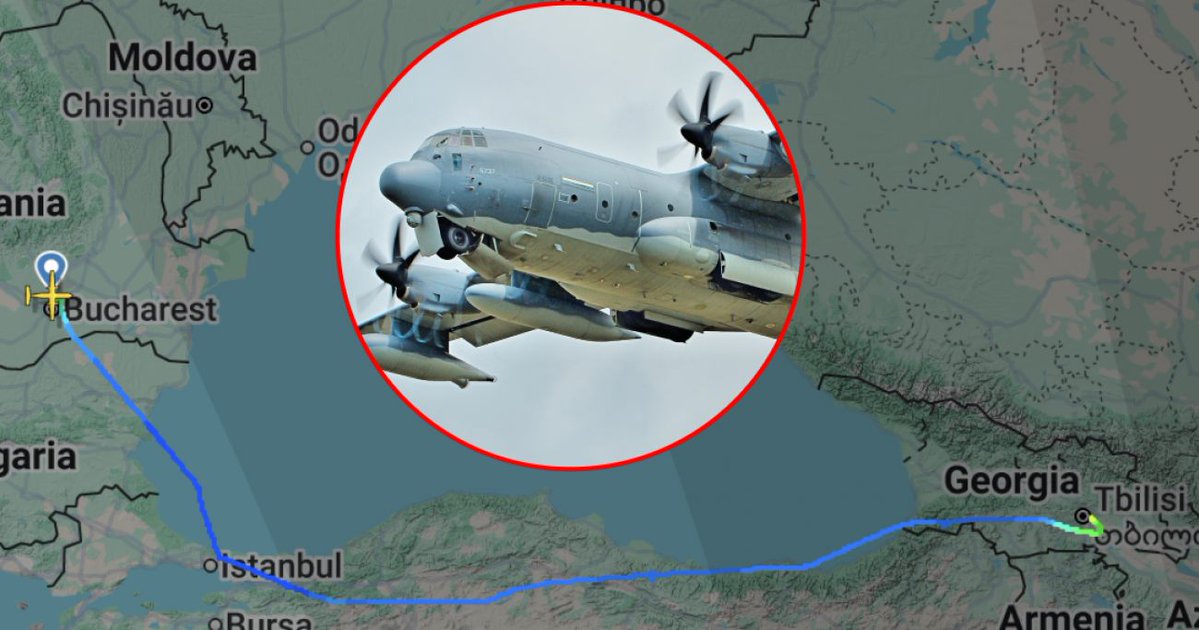
● On the evening of January 28, a U.S. Air Force MC-130J military aircraft landed at Tbilisi airport. According to FlightRadar24, the aircraft departed from the UK–U.S. air base at Mildenhall, made a 90-minute stop at the U.S. Air Force base in Ramstein, Germany, then flew to Romania and onward to Georgia. The MC-130J serves as a military transport aircraft and an aerial tanker capable of refuelling other aircraft in flight.
-
Friday, January 30, Azerbaijan. Foreign Ministry: "Azerbaijan will not allow its airspace or territory to be used for military operations against Iran"
● Azerbaijan will not allow its airspace or territory to be used for military operations against Iran or any other country. This was reportedly stated by Foreign Minister Jeyhun Bayramov during a phone call with his Iranian counterpart Abbas Araghchi.
● Azerbaijan is the second-largest recipient of Indian foreign direct investment in the Eurasian region, despite having only one Indian investor in the country—ONGC Videsh. The company holds stakes in two key assets of the Azeri–Chirag–Gunashli oil and gas cluster and in the Baku–Tbilisi–Ceyhan pipeline. From 2016 to the end of the first half of 2025, India’s direct investment in Azerbaijan’s economy increased from $480 million to $1.26 billion, according to a report by the Eurasian Development Bank.
● The same report names the leading Arab investors in the Eurasian region: the UAE (up 68%, $16.1 billion), Saudi Arabia (up 18%, $4.2 billion), Qatar (up 10%, $2.4 billion), and Oman (up 5%, $1.1 billion). “Nearly 96% of Gulf investments are directed to Central Asia. Smaller amounts go to Azerbaijan ($606 million), Armenia ($174 million), Georgia ($157 million), Kyrgyzstan ($75 million), and other countries,” the report says.
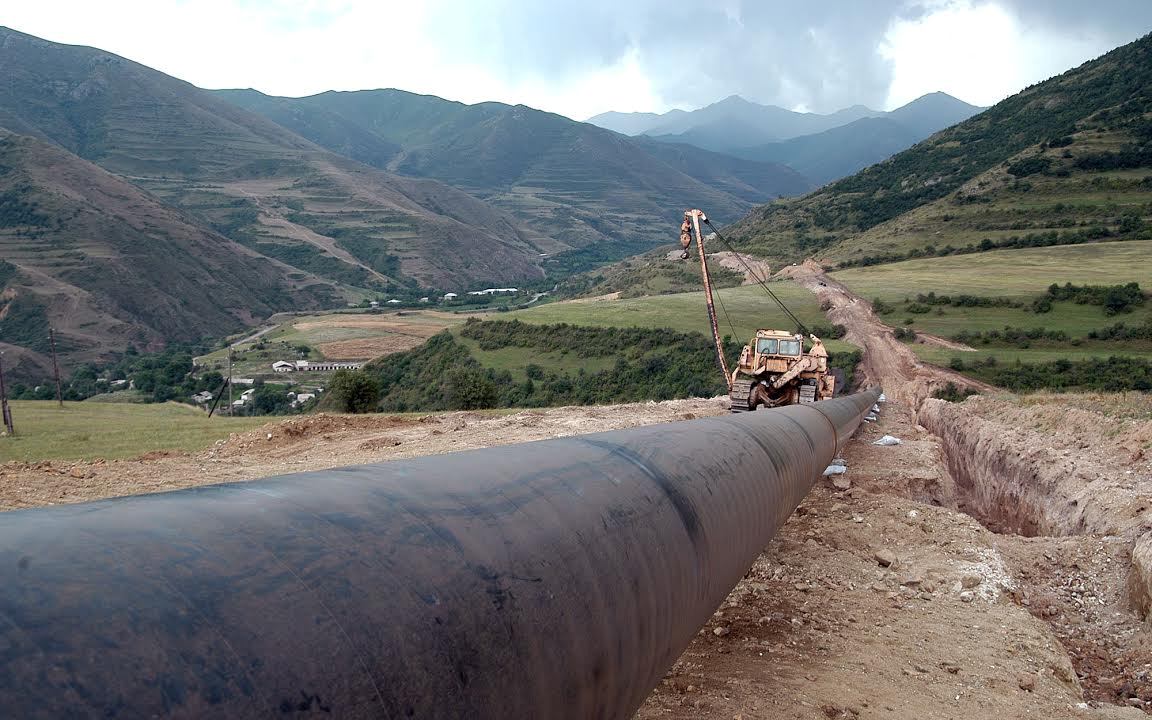
● Azerbaijani gas supplied to Greece via the Southern Gas Corridor, as well as LNG delivered to Greek terminals from around the world, will be transported to Southeast Europe and Ukraine via a new route called the ‘Vertical Gas Corridor.’ The corridor is expected to enable gas supplies from Greece to underground storage facilities in Bulgaria, Romania, Moldova, Slovakia, Hungary, and Ukraine. The initiative will be discussed in late February in Washington at a meeting of energy ministers from these countries. This was announced by Greek Minister of Environment and Energy Stavros Papastavrou and US Deputy Assistant Secretary of Energy Joshua Volz at the Athens Energy Summit.
Volz stressed that the project brings together countries that have not historically cooperated, which is the main challenge. “Designing and laying pipelines through mountains is the easy part. The hardest part is persuading partners to commit. This is not a charitable project. All participants must see a clear economic benefit,” he said.
● Agreements have been signed in Tbilisi to fully launch a joint venture for the Baku–Tbilisi–Kars railway line between BTKI Railways (a joint venture of subsidiaries of Azerbaijan Railways CJSC and Marabda–Kartsakhi Railway LLC) and Georgian Railway. According to a press release, one agreement covers the use of railway infrastructure along the Marabda–Akhalkalaki route in Georgia, while another предусматривает the construction of a terminal at the Akhalkalaki station. The Baku–Tbilisi–Kars railway is described as an important segment of the Middle Corridor, and the new agreements are expected to increase freight volumes.
● US Chargé d’Affaires Amy Carlon visited Azerbaijan’s northern region of Krasnaya Sloboda, where she met with the Mountain Jewish community and visited their museum and the historic “Six Domes” synagogue. “The United States recognizes Azerbaijan’s respect for the community and the country’s commitment to religious diversity,” the US Embassy said in a statement.
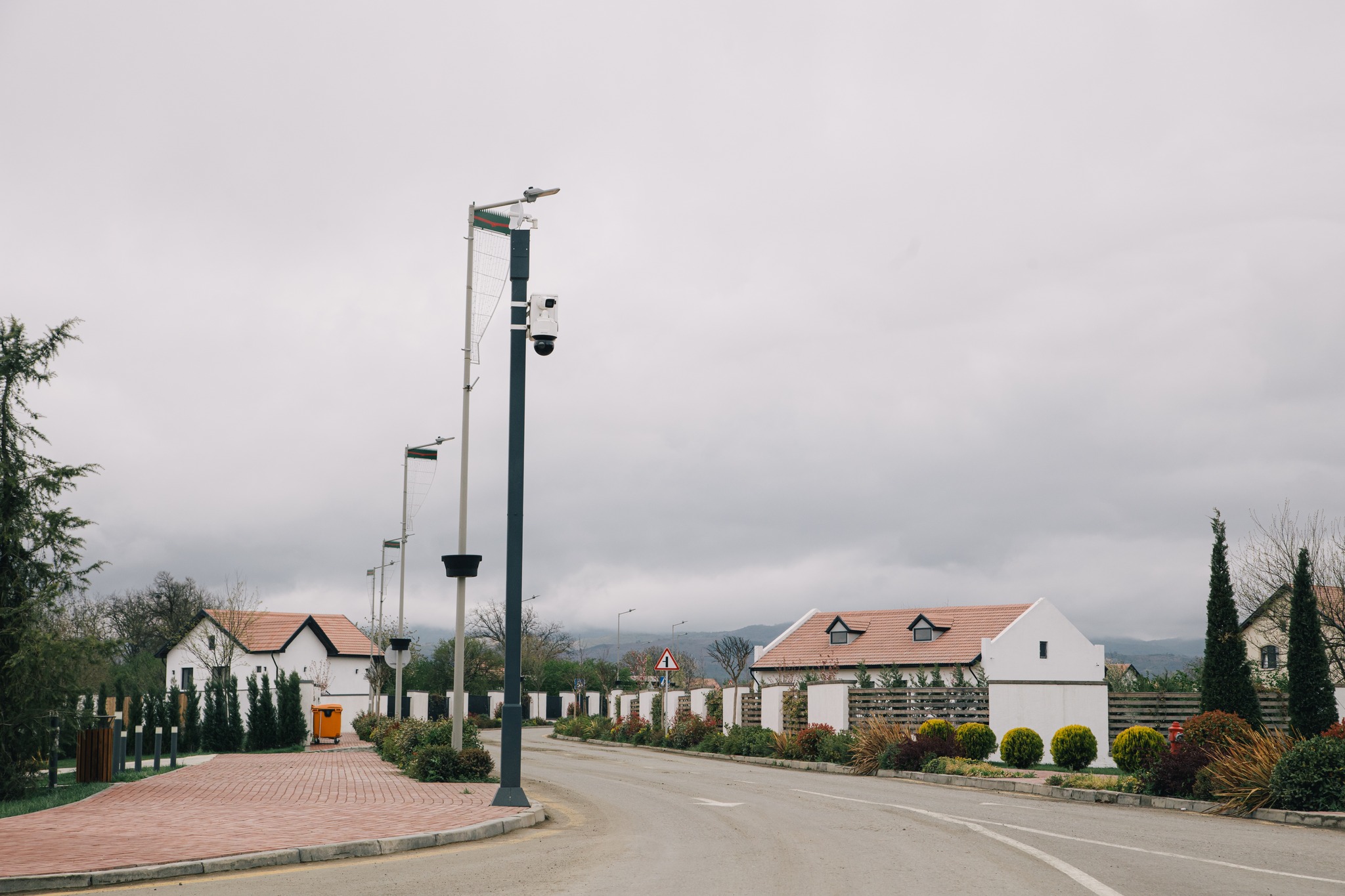
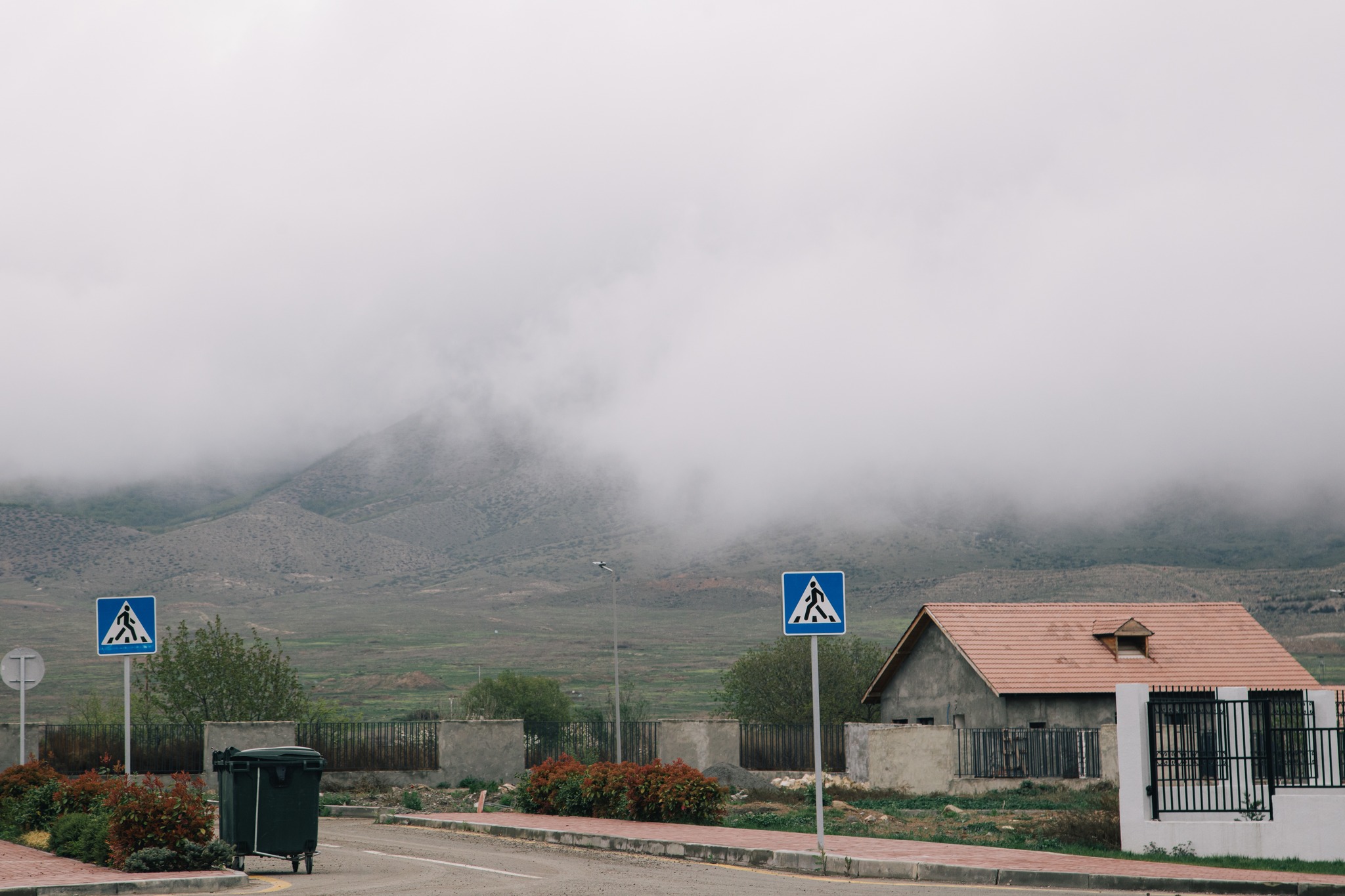
PHOTO: Khojaly, a city in Karabakh, was liberated from occupation by Armenian forces during the Second Karabakh War in 2020. Photo: JAMnews
-
Thursday, January 29, Georgia. The grants law is being tightened, with criminal liability for receiving any foreign funding without government approval
● Georgian Dream is tightening the grants law and introducing criminal liability for receiving any foreign funding without government approval. The ruling Georgian Dream party has announced sweeping amendments to the Law on Grants and the Criminal Code. According to Georgian Dream parliamentary faction leader Irakli Kirchkhalia, violations of rules governing the receipt and use of grants would be punishable by fines, 300–500 hours of compulsory community service, or up to six years in prison.
The government is also broadening the legal definition of a grant. Under the proposed changes, any funds — including money, goods or services — provided with the purpose or potential to influence state bodies, public institutions or public opinion, or to shape, pursue or alter the country’s domestic or foreign policy, would be classified as a grant. Receiving such support would require prior government approval. Read more here
● Criminal liability introduced for “external lobbying”. Providing money, securities, property or other benefits to a foreign citizen or company in exchange for activity on political issues related to Georgia would become a criminal offence, punishable by a fine, community service or imprisonment. The same liability would apply to leaders of political parties if their party receives foreign funding.
● “There is terror in Georgia,” Georgia’s fifth president, Salome Zurabishvili, condemned the initiative, calling it a sign of escalating repression. “A new repressive law bans those having worked for foreign funded NGO from party membership! A ruthless step by the ruling party to supress free political life and drag Georgia towards the Russian model,” she wrote on X.
● Georgian Dream parliament speaker Shalva Papuashvili said Tbilisi “neither officially nor unofficially needs any lobbying services” in the United States. He was responding to an article by The Hill which claimed that the head of a Texas-based oil company, Steve Nicandros, has been lobbying in Washington against the so-called MEGOBARI Act — legislation that would introduce sanctions against Georgian authorities. “We have nothing to do with this,” Papuashvili said.
He added that “the Georgian people do not need protection,” and said Georgia’s contribution to strategic partnership with the United States is the best guarantee of bilateral relations. Papuashvili noted that Georgia was the largest non-NATO contributor to the NATO-led mission in Afghanistan and suffered the highest per-capita losses among participating countries. He also criticised what he called “anti-Georgian rhetoric” by some U.S. politicians and urged it to stop in order to reset relations.
● U.S. congressional staff delegation to visit Georgia. Papuashvili said the visitors will not be members of Congress but congressional staffers and advisers. The trip is largely introductory, he said, and will involve fewer political meetings. The U.S. embassy in Tbilisi, however, said the delegation will meet both government officials and opposition leaders.
● Ukrainian President Volodymyr Zelenskiy has awarded Georgian military medic Keti Leshkashvili the Order of Courage. Leshkashvili has served in Ukraine’s International Legion (Bravo group) since September 2022 and is deployed on the front line. She was also awarded Ukraine’s Golden Cross in November 2023.
-
Thursday, January 29, Azerbaijan. Azerbaijan has once again sent electrical equipment to Ukraine
● European Commission Director-General for Neighbourhood and Enlargement Policy Gert Jan Koopman said he was satisfied with his visit to Baku, writing on X that he met with presidential advisers Hikmet Hajiyev and Elchin Amirbayov. Discussions focused on peace efforts, transport connectivity and Azerbaijan-EU partnership. Koopman said the EU supports Azerbaijan’s demining efforts, socio-economic development, and further steps to expand transport links along the Middle Corridor.
● In a separate X post, Koopman said preparations have begun for a feasibility study on a railway project in Azerbaijan’s Nakhchivan autonomous region, calling it “key to regional connectivity.” He said he discussed the issue with the ministers of economy, digital development and transport, energy, and a deputy foreign minister.
● Azerbaijan’s Energy Ministry said talks with Koopman covered expanding cooperation with European companies in renewable energy generation and transmission, including routes via the Black Sea, Nakhchivan and Georgia. Particular attention was given to the “Caspian–Black Sea–Europe Green Energy Corridor” project and prospects for its inclusion in long-term European grid development plans.
● Foreign Minister Jeyhun Bayramov is continuing his visit to China. Azerbaijani media report that he and his Chinese counterpart Wang Yi held expanded-format talks on deepening the comprehensive strategic partnership between the two countries.
● State oil company SOCAR and China’s CITIC Construction Co., Ltd. discussed the possibility of establishing joint ventures to implement projects in energy and petrochemical infrastructure.
● Energy Minister Parviz Shahbazov and WPC Energy President Pedro Miró discussed regional energy projects and prospects for cooperation in Baku. Miró highlighted Azerbaijan’s key role in the energy corridor linking Asia and Europe, according to an official statement.
● Azerbaijan has once again sent electrical equipment to Ukraine. The shipment was made on the order of President Ilham Aliyev in response to an official request from Kyiv. Earlier, on Jan. 20, Baku delivered transformers, generators and cables worth $1 million. Total Azerbaijani humanitarian assistance to Ukraine has now reached $17.6 million.
The deliveries come amid heavy Russian strikes on Ukraine’s energy infrastructure and unusually cold weather. Ukrainian authorities estimate the country’s power system is currently covering only about 60% of domestic demand.
● Jailed Azerbaijani opposition leader Ali Kerimli appealed to U.S. Vice President J.D. Vance, expressing hope that Vance will raise human rights, democratic institutions and political freedoms with President Ilham Aliyev during his planned visit to Azerbaijan next month.
“The visit will take place at a time when political repression in Azerbaijan has intensified. 340 civic and political activists have been arrested for their views,” Kerimli wrote on Facebook.
He added that the visit could also help strengthen peace between Azerbaijan and Armenia and accelerate the U.S.-backed TRIPP (“Trump Route”) regional transit project, which aims to link mainland Azerbaijan with its Nakhchivan exclave via Armenia.
On Jan. 24, U.S. President Donald Trump said Vice President Vance would visit Azerbaijan and Armenia in February to support peace efforts and promote development of the TRIPP route.
Kerimli faces charges of attempting to seize power by force and violently overthrow the constitutional order, which he denies.
● Azerbaijan has approved an “Agreement on Cooperation between the Ministries of Internal Affairs of Azerbaijan and Georgia.” The document was signed in Tbilisi in November last year.
● Azerbaijan has proposed launching a process to establish a visa-free regime for citizens of Bosnia and Herzegovina. Ambassador to Bosnia and Herzegovina Vilayat Guliyev told Sarajevo Times that although Bosnia and Herzegovina appointed an ambassador to Azerbaijan two years ago, its embassy in Baku has not yet opened. He said he hopes the mission will begin operating in the near future.
● Football club Qarabag lost 0–6 to Liverpool in the eighth round of the UEFA Champions League league phase at Anfield. Despite the defeat, Qarabag advanced to the playoffs thanks to 10 points collected in the group stage. The club finished 22nd overall, a record result in its Champions League history.
● Azerbaijani authorities plan to prepare a working design for a tram network in Baku during 2026.
● President Ilham Aliyev signed a decree on celebrating the 900th anniversary of the birth of prominent Azerbaijani poet Khagani Shirvani.
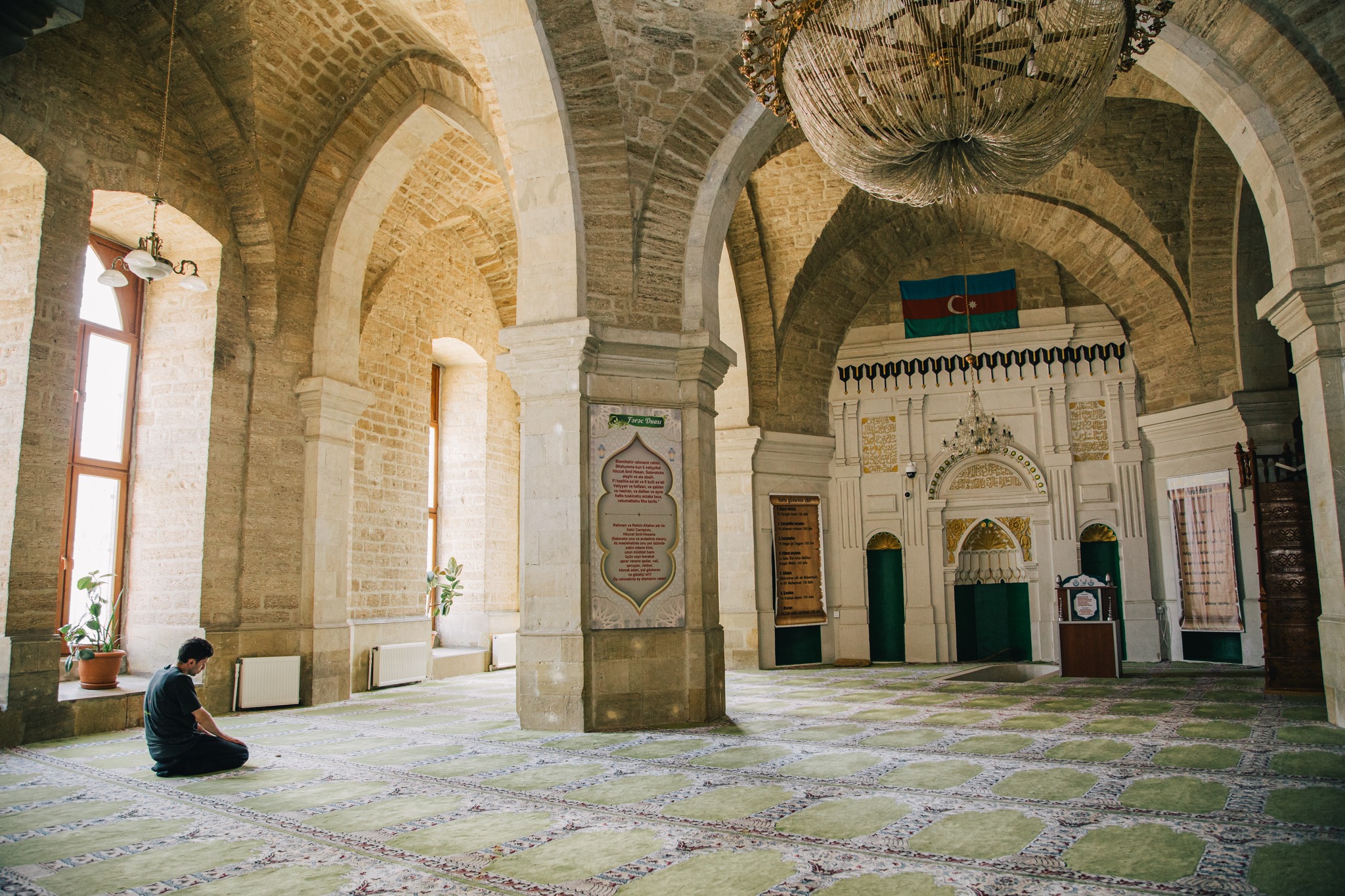
PHOTO: A mosque in Baku’s Sabunchi district, late 19th century. Photo JAMnews
-
Thursday, January 29, Armenia. Foreign Minister: ‘A peace agreement between Armenia and Azerbaijan will be signed in the coming months"
● Armenia marked the 34th anniversary of the establishment of its national army. On Jan. 28, 1992, the government adopted a decree “On the Ministry of Defense of the Republic of Armenia,” formally creating the country’s armed forces. Throughout the day, citizens, veterans and politicians visited the Yerablur military pantheon in Yerevan.
● To mark the anniversary, Prime Minister Nikol Pashinyan visited the Ministry of Defense and attended a ceremonial session. “A sergeant corps system is being introduced today, which will be of decisive importance for the combat effectiveness of our armed forces. This is a substantive reform that has been thoroughly discussed and carefully designed,” Pashinyan said.
● In 2018, the Defense Ministry’s construction spending stood at about 17.7 billion drams (around $44 million). By 2025, it has reached 57.7 billion drams (about $145 million), Defense Minister Suren Papikyan said. “This is a serious change that cannot but have an impact on strengthening the defense of our borders,” he noted.
● All 27 European Union member states, including Hungary, have approved providing Armenia with 20 million euros in assistance from the European Peace Facility, sources at Radio Free Europe/Radio Liberty in Brussels said. Last year, Hungary blocked Armenia’s application, arguing that Azerbaijan should receive comparable assistance. After diplomatic consultations, Budapest dropped its objections. This is the second time Armenia has received support from the European Peace Facility.
● Armenian Foreign Minister Ararat Mirzoyan said he hopes a peace agreement between Armenia and Azerbaijan will be signed in the coming months. He made the statement on Jan. 28 while addressing the Parliamentary Assembly of the Council of Europe.
● Speaking at PACE, Mirzoyan also said the Armenian people will once again have to demonstrate that their will is the sole source of power in the country. According to him, “enemies of freedom” are investing millions of dollars in propaganda and illegal interference schemes, command virtually unlimited media resources, and seek to undermine Armenia’s sovereign choice and push the country back into endless conflicts with its neighbors. “Our society has developed immunity to lies, and the determination to defend the hard-won freedoms is stronger than any shadow operations,” the minister said.
● Opposition MP Artur Khachatryan of the Armenia faction sharply criticized Mirzoyan’s speech, calling it “a disgrace.” Khachatryan said the minister’s interpretation effectively absolves Azerbaijan of responsibility for the displacement of Armenians from Karabakh, the pogroms in Sumgait and Baku, the blockade of Armenia and wars against it. “It turns out that it is not Azerbaijan’s actions that are to blame, but some abstract ‘enemies of freedom,’” the lawmaker said.
● A monument to Artsakh Hero Robert Abajyan was unveiled at Yerevan’s School No. 147. At the ceremony, school principal Margarita Hovhannisyan said Abajyan “placed the homeland above his own life.” “Today is Army Day, and this date was chosen deliberately. May every soldier feel the love of the homeland. Glory to the Armenian Army,” she said.
-
Wednesday, 28 January, Azerbaijan. A planned terrorist attack against the Israeli embassy in Baku has been thwarted
● A planned terrorist attack against the Israeli embassy in Baku has been thwarted. Security services reported the arrest of three Azerbaijani citizens suspected of preparing the attack and having links to the ISIS branch “Wilayat Khorasan.” The State Security Service said they were detained during a special operation. The SSS statement did not specify which country’s embassy was targeted, but Israeli sources say the intended target was Israel’s embassy in Azerbaijan. According to those reports, the attack was being planned in the context of a visit to Baku by Israeli Foreign Minister Gideon Saar, who was accompanied by a large business delegation.
● After a long hiatus, the activities of the Azerbaijan–UK inter-parliamentary relations working group have resumed. According to MP Fariz Ismailzade, head of the working group, the meeting took place in London. On the UK side, participants included not only members of parliament but also representatives of analytical and research centers based in London, including the Royal United Services Institute (RUSI) and the International Institute for Strategic Studies (IISS).
● Baku and Yerevan have reached an agreement on supplies of liquefied natural gas and bitumen to Armenia via Azerbaijani territory, Armenian Economy Minister Gevorg Papoyan reported on social media. In October last year, Azerbaijan lifted restrictions on the transit of goods to Armenia that had been in place during the period of Armenian occupation of Azerbaijani territories. Since then, direct and transit rail transportation has resumed along this route. The first shipment of Azerbaijani oil products was delivered to Armenia in December 2025, followed by the second and third shipments on January 9 and 11, respectively.
● The MEDIA Development Agency has reported another wave of disinformation allegedly spread by the Russian propaganda outlet Tsargrad TV. Among the materials cited is a deepfake video featuring Presidential Assistant Hikmet Hajiyev. The agency stated that these manipulative publications aim to undermine the strategic alliance between Azerbaijan and Turkey, and called on journalists in both countries not to disseminate unverified information, urging the public to rely on official sources and not trust fake publications.
● Azerbaijani actor Ahmed Ahmedov, known for his critical statements about the authorities, has died after spending several days in a police detention facility in Baku, Meydan TV reports. Earlier, he recorded a video in which he portrayed national leader Heydar Aliyev harshly criticizing his son, current President Ilham Aliyev. According to Meydan TV, the video also contained claims that the country had been “divided” among relatives of First Lady Mehriban Aliyeva and unnamed “Jews.” Human rights defenders say Ahmedov was detained after publishing the video, subjected to physical violence while in police custody, and shortly before his death was transferred to a psychiatric hospital, where he died. His death was reported by political émigré and YouTube blogger Tural Sadigly (Azad Söz) and Popular Front Party spokesperson Natig Adilov, who said the immediate cause of death was medical intervention. The Interior Ministry and the management of Psychiatric Hospital No. 1 in Mashtaga have not commented on the allegations.
Meydan TV also recalls that in 2024, the wife of imprisoned opposition figure Agil Gumbatov stated that he had been unjustifiably transferred to a psychiatric ward in a prison hospital and administered psychotropic drugs. In 2023, activist Ziyafat Abbasova of the Azerbaijan Party of Democracy and Prosperity was forcibly placed in a psychiatric clinic, with her mobile phone confiscated. Party members said she had criticized the authorities and had previously been threatened with forced treatment.
● The European Court of Human Rights has ordered the Azerbaijani government to pay investigative journalist Khadija Ismayil €12,000 in compensation for material damage and €4,000 for legal costs. The court reviewed two applications jointly and ruled that her right to a fair trial had been violated. Ismayil was sentenced to 7.5 years in prison on December 5, 2014, on charges of tax evasion and illegal entrepreneurship. In May 2016, the Supreme Court replaced the sentence with a 3.5-year suspended term and released her; it was later reduced to 2 years and 3 months. Ismayil has consistently denied the charges, saying she was unjustly arrested.
● Amnesty International has appealed to President Ilham Aliyev to immediately release 12 journalists arrested in the “Meydan TV case,” calling their detention retaliation for their journalistic work. Amnesty says at least three urgently need medical care: Shemshad Aga has stomach problems, Aynur Elgunes requires physiotherapy after major surgery, and Ulviya Ali must regularly take medication for a chronic illness.
The organization also highlights cases of pressure and abuse, alleging that Aysel Umudova was sexually harassed during arrest, Hayala Agayeva faced psychological pressure, and Nurlan Libre was physically abused. The smuggling and other serious criminal charges against the journalists are described as fabricated and false. “Their only ‘crime’ is that they are independent journalists who criticize the government,” Amnesty said.
In total, those arrested in the Meydan TV case face charges under seven articles of the criminal code. The journalists deny guilt and say their arrests are politically motivated. Read more here
● Foreign Minister Jeyhun Bayramov has departed on an official visit to China.
● The Cabinet of Ministers has discussed the critical environmental condition of Baku Bay and a list of necessary measures. Details are included in a document titled “Comprehensive Action Plan for 2025–2030 on the Elimination and Isolation of аварийных and unusable hydraulic structures of various purposes in the Caspian Sea, including abandoned and emergency wells, trestles, piers, platforms, as well as the lifting of sunken and partially sunken vessels and other rehabilitation works.”
Prime Minister Aliyev noted that many deteriorating oil and gas facilities in Azerbaijan’s sector of the Caspian Sea date back to the Soviet era, and that prolonged anthropogenic impact has significantly worsened pollution in Baku Bay. Following discussions, specific instructions were issued to relevant state bodies.● A special action plan will be developed to clean up Baku Bay (Seaside Boulevard). It will include removing exposed metal structures revealed by receding sea levels, preventing wastewater discharge into the bay, cleaning oil spills and waste from the water surface, and rehabilitating nearby oil-contaminated land.
● President Ilham Aliyev attended the opening of a new mirror glass manufacturing plant, Azermirror, in Sumgayit’s industrial park. Economy Minister Mikayil Jabbarov presented data on the country’s industrial zones:
– 104 enterprises are currently operating
– More than 7 billion manats (about $3.5 billion) have been invested
– Over 11,000 permanent jobs have been created
– A further 1.74 billion manats (about $3.5 billion) in investment is planned
– Products are exported to 70 countries worldwideThe creation of industrial parks is part of a program to diversify the economy and accelerate development of the non-oil sector.
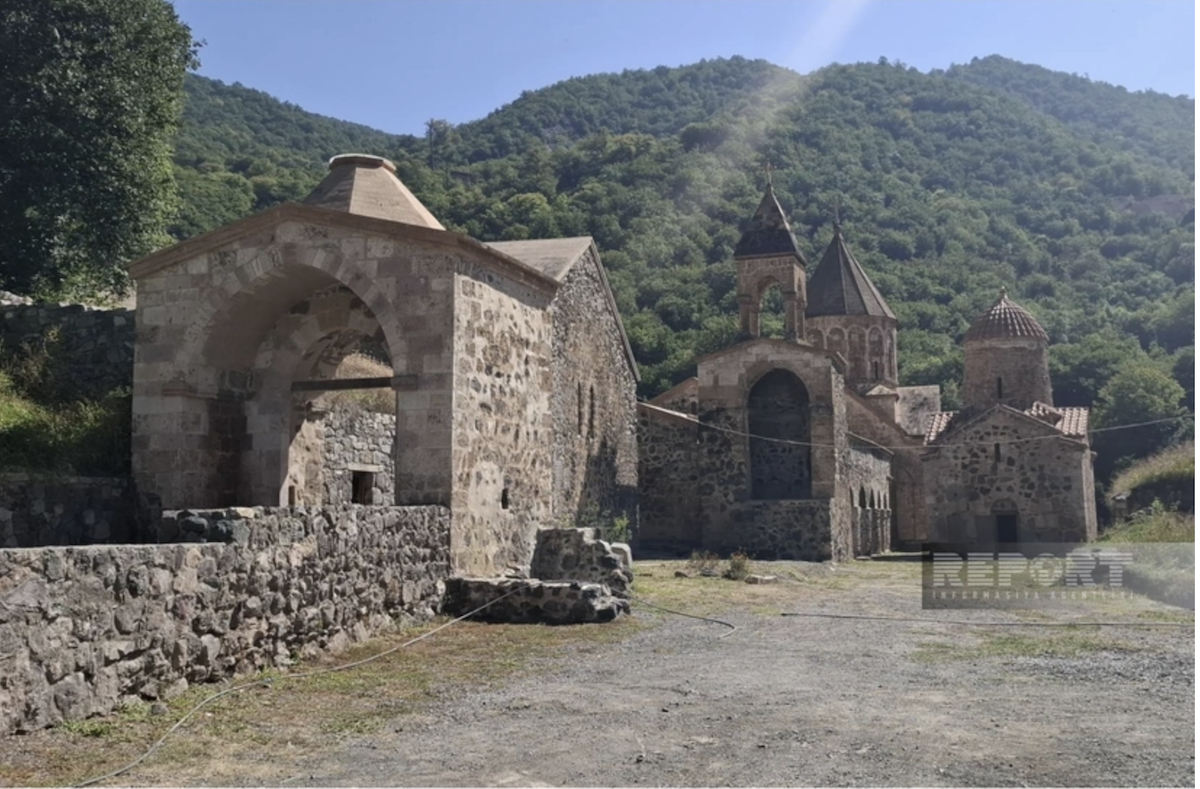
● Research into the historical heritage of Caucasian Albania will be conducted in Kalbajar (pictured), a territory liberated from Armenian control following the 2020 Second Karabakh War, according to Isa Habibbeyli, president of the National Academy of Sciences.
-
Wednesday, 28 January, Armenia. Nikol Pashinyan: “In recent years, such a quantity and quality of modern weapons and military equipment has been acquired as had never existed before”
● Armenia is marking the 34th anniversary of the establishment of its national army. On Jan. 28, 1992, the government adopted a decree “On the Ministry of Defense of the Republic of Armenia,” formally declaring the creation of the Armenian National Army.
● In a message marking Army Day, Prime Minister Nikol Pashinyan said Armenia has in recent years acquired “a huge amount of modern weapons and military equipment of a quality and with parameters that our army has never had before.” Pashinyan added that in the past all international partners had politely refused to sell weapons for two main reasons:
-they were not sure the arms “would not be deployed outside the internationally recognized territory of the Republic of Armenia”;
-they were not sure that the weapons’ secret parameters “would not become accessible to the CSTO,” whose membership also hindered such deals.
● Armenia and Azerbaijan have reached an agreement on the rail transportation of liquefied gas and bitumen through Azerbaijani territory. “Now our businesspeople can also take advantage of this opportunity,” Economy Minister Gevorg Papoyan wrote.
● Armenia has for the first time marked a Day of Remembrance for Those Who Died for the Motherland.
● Armenian Foreign Minister Ararat Mirzoyan met in Strasbourg with PACE President Petra Bayr. He called the visit symbolic as it coincides with the 25th anniversary of Armenia’s membership in the Council of Europe and stressed: “Armenia is a democracy, and this is already an irreversible process, because despite various challenges, we continue to pursue an ambitious agenda of democratic reforms.”
● Catholicos of All Armenians Karekin II has defrocked Bishop Gevorg Saroyan. The decision cites that Saroyan challenged the patriarchal decree removing him from office, obstructed the normal functioning of the Masis Diocese, and “violated his vow of obedience by committing canonical deviations and unlawful actions.”
● At a plenary session of the PACE winter session, Armenian MP Armen Gevorgyan addressed Council of Europe Secretary General Alain Berset: “Today I would like to ask you about the Armenian prisoners being held in Baku. Are you holding talks with the Azerbaijani authorities about their release as part of your efforts to return the Azerbaijani delegation to PACE?”
● A PACE resolution titled “Progress in the Assembly’s Monitoring Procedure” was adopted in Strasbourg. According to Bright Armenia party leader Edmon Marukyan, the section on Armenia expresses concern “about information on programs of violent seizure of power by several clergymen,” while the section on Azerbaijan calls for the release of all Armenians held there. Marukyan said: “It turns out that PACE does not know about the existence of political prisoners in Armenia… PACE does not condemn the Armenian authorities for the ongoing judicial and legal absurdity. This is a failure and a disgrace for the opposition part of Armenia’s delegation.”
● Ten people were hospitalized after a major accident on the Talin–Bazmaberd highway, with several in serious condition.
-
Wednesday, 28 January, Georgia
● Georgian Dream–backed President Mikheil Kavelashvili has pardoned 59 people: 57 convicted prisoners and two whose criminal records were cleared. The presidential press service said the decision was based on “the principles of humanism and state interests.”
● The Tbilisi Court of Appeal held a hearing in the case of poet Zviad Ratiani, who was sentenced on Oct. 9 by a lower court to two years in prison for slapping a police officer, an act classified as resisting police. Both the defense and prosecutors have appealed the ruling.
Defense lawyers are seeking Ratiani’s acquittal, arguing that police were not carrying out any operation at the time and therefore could not have been obstructed. Prosecutors, in turn, want the charge reclassified as assault on a police officer and say the original sentence is too lenient.Ratiani was detained on June 23, 2025, during a protest outside parliament. The next hearing is scheduled for Feb. 2.
● Regional broadcaster Trialeti TV and Radio accused the authorities of long-running political and financial pressure aimed at silencing the outlet. The company says central and local officials are blocking journalists’ access to information and obstructing its operations.
Trialeti says tax authorities have repeatedly frozen its bank accounts after critical coverage — most recently on Jan. 9 — while requests for debt restructuring or tax relief have gone unanswered, even though such measures are granted to other businesses.
● In the village of Zemo Karabulakhi in the Kvemo Kartli region, a man has killed his wife. Police have detained the suspect. Local media report the killing followed a domestic dispute and the woman died of stab wounds.
● Former Deputy Health Minister Ilia Gudushauri has been detained. Investigators say he canceled a tender for the purchase of ambulances and changed its conditions to favor a specific company, causing millions of lari in losses to the state.
● Under Georgia’s national education reform concept, schools will introduce organized tutoring in the 11th grade to allow students to systematically prepare for national exams.
● Moldovan President Maia Sandu commented on developments in Georgia, saying it was painful to see that “Russia pulled Georgia back into its orbit by weaponising the fear of war, signalling that a wrong electoral choice would come at the cost of peace”.
-
Tuesday, 27 January, Armenia. PACE called on the Azerbaijani authorities to “end repressive prosecutions” and release all political prisoners, including 23 ethnic Armenians
● The Parliamentary Assembly of the Council of Europe (PACE) has called on the Azerbaijani authorities to “end repressive prosecutions” and immediately release all those detained on political charges, including 23 Armenian prisoners. The call is contained in a PACE resolution titled “Progress of the Assembly’s Monitoring Procedure,” which assesses Azerbaijan’s compliance with its obligations to the Council of Europe.
● Ruben Rubinyan, Deputy Speaker of Armenia’s National Assembly, has been elected a Vice-President of PACE.
● Armenia is ready to take relations with India to a new level. Foreign Minister Ararat Mirzoyan said Yerevan intends to advance new ambitious initiatives with New Delhi across all areas of cooperation. He made the statement on X.
● Ararat Mirzoyan met with Moldova’s foreign minister. The sides exchanged views on strengthening democratic institutions and on mechanisms to counter hybrid threats, including disinformation.
● Forty-five cases of pressure on journalists were recorded in 2025, including disrespectful treatment, threats, insults and obstruction of professional activities, according to the annual report of the Committee to Protect Freedom of Expression. In 33 cases, the source of the violations was state bodies or officials. According to the report, inappropriate conduct toward journalists was shown, among others, by Parliament Speaker Alen Simonyan, Yerevan Mayor Tigran Avinyan, Gyumri Mayor Vardan Ghukasyan and others.
● Armenia has introduced climate budget tagging for the first time. Environment Minister Hambardzum Matevosyan said climate-related expenditures accounted for 3.4% of the state budget in 2025. He described the figure as high and significant, noting that comparisons with previous years are not yet possible due to a lack of earlier data.
● Prime Minister Nikol Pashinyan visited the Ministry of Defense, where the ministry’s 2025 performance report was reviewed, along with upcoming programs, priorities and key development areas for the defense sector.
● Some 1,700 surveillance cameras have been installed in 42 kindergartens in Yerevan, enabling monitoring in 706 main functional zones, the city administration said at an operational meeting.
● The interior minister said drug seizures in 2025 increased by 80% compared with the previous year.
-
Tuesday, 27 January, Georgia. Speakers at a UN Human Rights Council session call for the release of political prisoners in Georgia and the repeal of repressive laws
● France urged Tbilisi to release all individuals detained on political grounds and to guarantee their right to a fair trial. At the 51st session of the UN Human Rights Council in Geneva, during the review of Georgia’s national report under the Universal Periodic Review (UPR), France’s Deputy Permanent Representative to the UN Office in Geneva, Claire Thuaudet, said that Georgia must respect freedom of expression, freedom of peaceful assembly and association, ensure a legal environment that guarantees political pluralism and free and fair elections, and safeguard media freedom and pluralism. She also stressed that Georgia must combat all forms of violence and discrimination, including discrimination based on gender and sexual orientation, and guarantee the protection of the fundamental rights of LGBTI+ people.
● UN Special Rapporteur on human rights defenders Mary Lawlor said space for human rights in Georgia has shrunk sharply. Speaking at the UPR review of Georgia, Lawlor called on the Georgian authorities to repeal the law on registration of “foreign agents,” the latest amendments to the grants law, and the law “On Family Values and the Protection of Minors.” She also demanded a review of the work of the Anti-Corruption Bureau, judicial oversight of decisions to freeze NGO bank accounts, and an end to smear campaigns against human rights defenders, lawyers and organisations, including those driven by senior officials and pro-government media.
● Berlin is deeply concerned about the rapid deterioration of human rights in Georgia. Speaking at the UPR session, Marie Rambach, adviser to Germany’s Permanent Mission to the UN Office in Geneva, urged Georgia to investigate cases of excessive use of force against demonstrators, ensure justice, compensation and rehabilitation for victims, and repeal the law “On Transparency of Foreign Influence,” the “Foreign Agents Registration Act,” and amendments to the grants law. Germany also recommended revisiting recent changes to legislation on assemblies, broadcasting, and freedom of speech and expression.
● Ukraine says it is “seriously concerned about systemic human rights violations in Russian-occupied territories of Georgia”, as well as about recent legislative changes in Georgia that “risk shrinking civic space.” Addressing the UPR, Ukraine’s Permanent Representative to the UN Office in Geneva, Yevhen Tsymbaliuk, urged the Georgian authorities to repeal the laws on “foreign influence” and “foreign agents,” release all political prisoners, and bring national legislation into line with international standards.
● Moscow, meanwhile, says it is satisfied with the actions of the ruling Georgian Dream party. Russian representative Ruslan Stroganov said Moscow positively assesses steps taken by the Georgian authorities to strengthen the legal foundations for the protection of human rights. At the same time, he noted that additional efforts are still needed in the penitentiary system and recommended that Georgia take measures to address prison overcrowding and improve detention conditions.
● Former deputy governor of Russia’s Khabarovsk region Mikhail Timofeyev has been detained in Georgia at Moscow’s request. According to TV Rain (Dozhd), despite the fact that Interpol has cancelled its arrest warrant for him, Russia may seek his extradition. Lawyers say the detainee’s health is at risk.
● A dead State Security Service employee was found in a car near the agency’s headquarters. The man was identified as Simon Tsakadze. According to the service, the preliminary cause of death is suicide.
● Tbilisi Mayor Kakha Kaladze said Georgia is in a “waiting mode for a reset” in relations with the United States and criticised the Biden administration’s policy toward the country. He added that there are still no signs that Donald Trump has defeated the “deep state.”
● Zelenskyy has appointed a new ambassador of Ukraine to Georgia. Ukrainian media report that Mykhailo Brodovych has worked in Ukraine’s diplomatic service since 1996 and served as ambassador to Slovenia from 2015 to 2022.
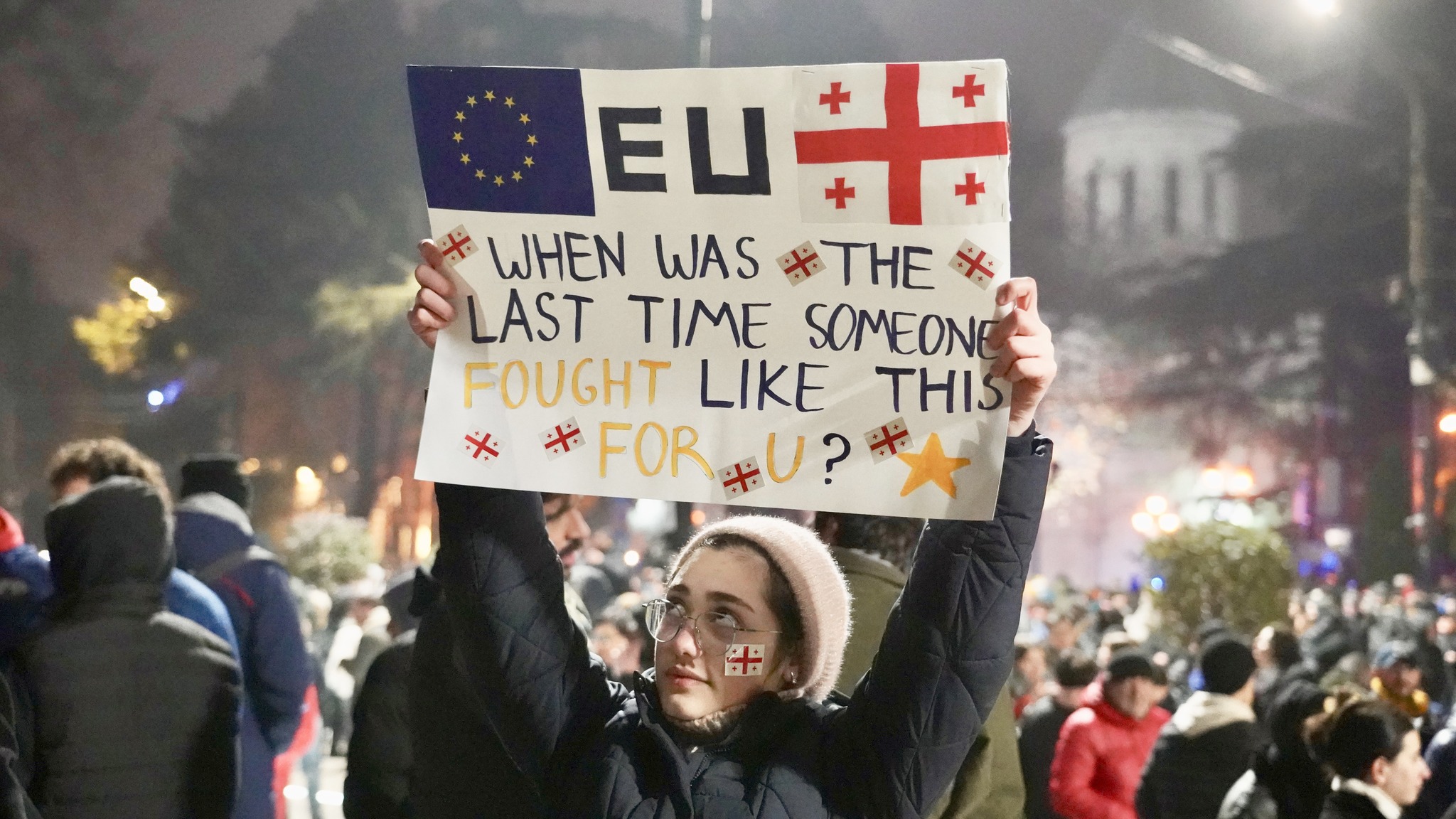
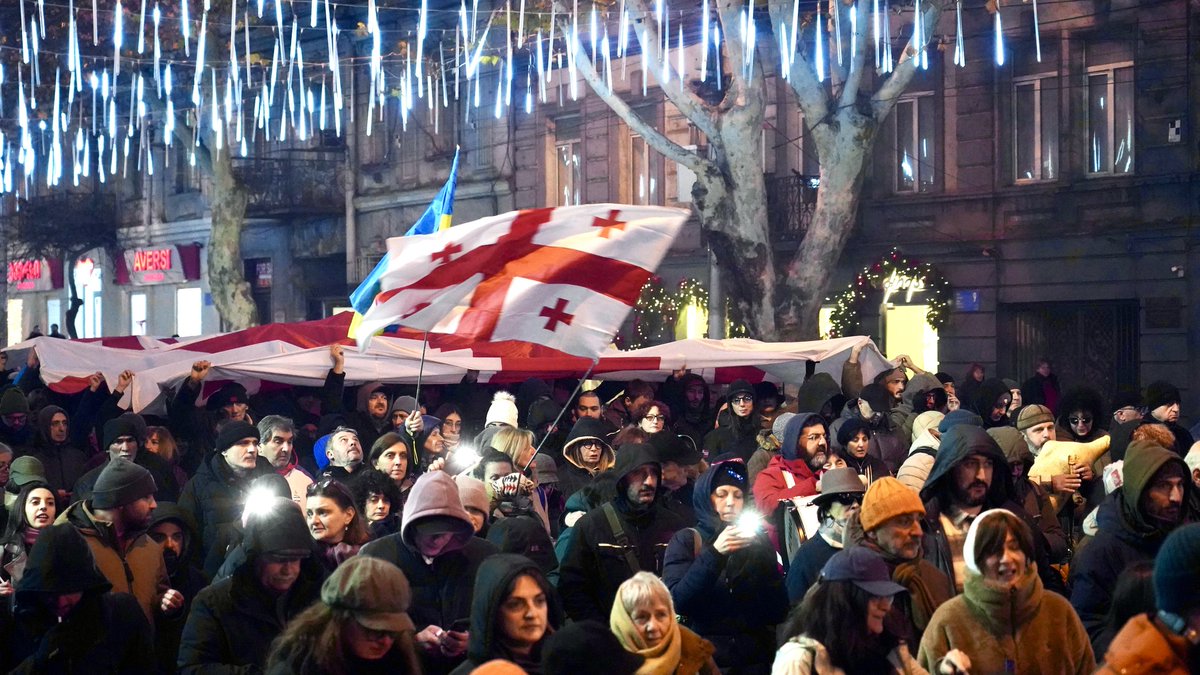
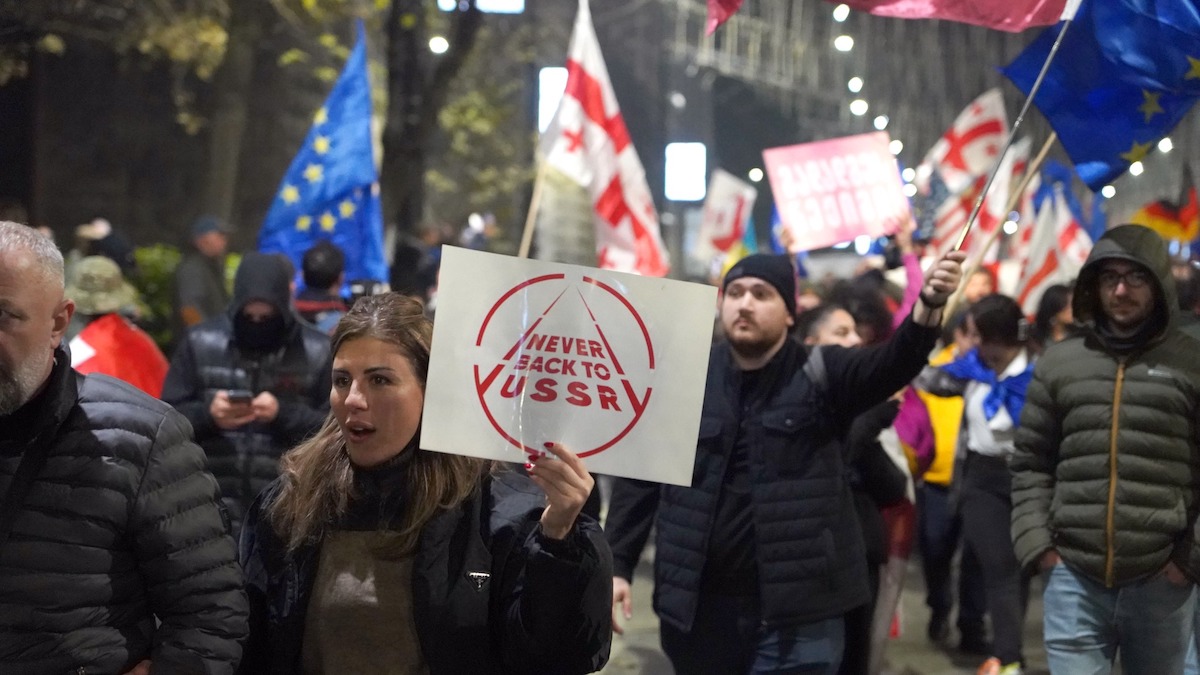
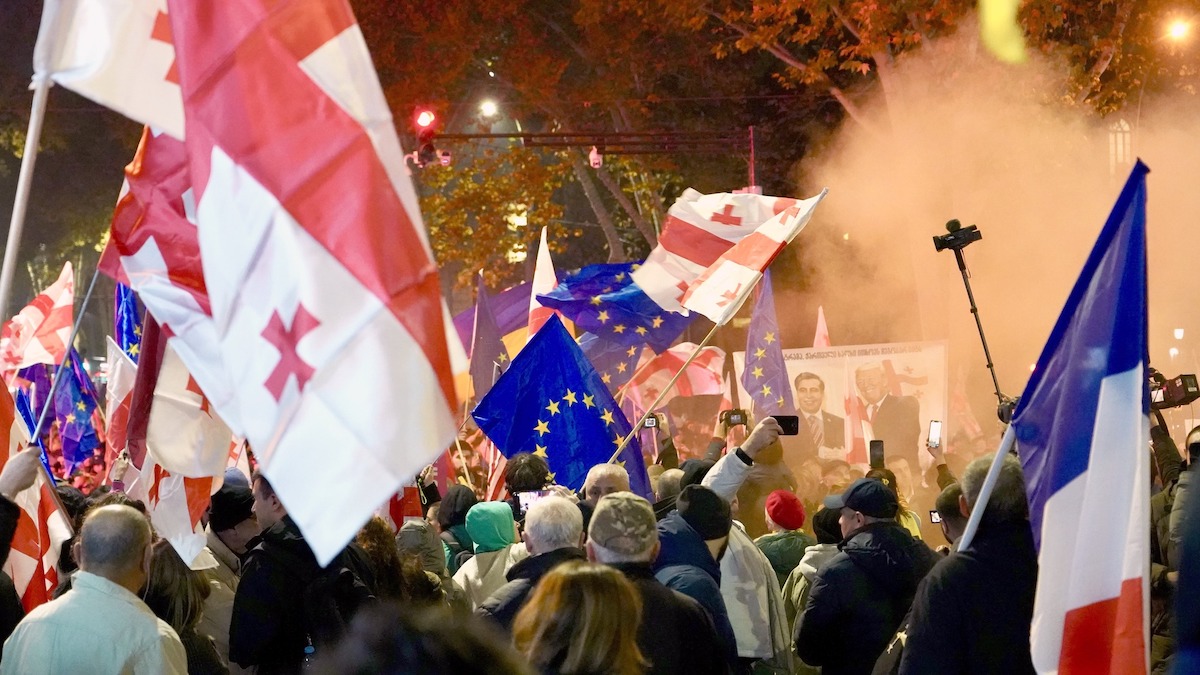
● British parliamentarian James MacCleary shared footage from a pro-European protest in Tbilisi on X and wrote that “Georgia’s fight against Putin backed authoritarianism” must not be forgotten. “Britain must stand by the people of Georgia in their fight for freedom”, he said.
-
Tuesday, 27 January, Azerbaijan. Visit of Israel’s foreign minister to Baku and then to Astana
● Today marks three years since the terrorist attack on the Azerbaijani Embassy in Tehran. On January 27, 2023, at 8:30 a.m. Baku time, an Iranian citizen, Yasin Hosseinzadeh, armed with a Kalashnikov rifle, broke through a security checkpoint at the embassy. During efforts to stop the attack, the head of the embassy’s security service, Orkhan Askerov, was killed, while security officers Vasif Taghiyev and Mahir Imanov were wounded.
Azerbaijan evacuated embassy staff and their family members from Tehran, and the embassy’s operations were suspended. The embassy resumed work in July 2024 at a new location. The trial of Yasin Hosseinzadeh lasted two years; he was sentenced to death and executed in May 2025. Read more here.
● President Ilham Aliyev received Israeli Foreign Minister Gideon Sa’ar, who is on an official visit to Baku. The minister is accompanied by representatives of major businesses and business circles. It was noted during the meeting that the Azerbaijani–Israeli business forum being held as part of the visit will contribute to the development of economic and trade relations between the two countries.
Last week, on January 21, President Aliyev met with Israeli President Isaac Herzog at the World Economic Forum in Davos.
● Finance Minister Sahil Babayev and SOCAR President Rovshan Najaf held meetings in Baku with Charles Cormier, the World Bank’s Director for Infrastructure in Europe and Central Asia. According to the Finance Ministry, the World Bank’s Employment Support project and additional financing initiatives are helping expand job opportunities for the unemployed and support sustainable resettlement in liberated territories. The sides also discussed World Bank–financed projects including Expansion of the Baku International Sea Trade Port, Competitive and Resilient Agriculture and Irrigation Services, and Livable Baku. Specific project details were not disclosed. It was also emphasized that SOCAR is an active participant in the World Bank’s Zero Routine Flaring by 2030 initiative. The World Bank representative was informed that SOCAR’s Carbamide plant has been included in the World Economic Forum’s Global Lighthouse Network, the press release said.
Over more than 30 years of cooperation, the World Bank has provided Azerbaijan with approximately $5.2 billion in funding across 54 projects.
● From December 22, when the amnesty law came into force, through January 26, amnesty was applied to 12,336 people, according to the Ministry of Justice. Of these, 4,977 were released from prison. In total, the amnesty is expected to affect around 18,000 people.
-
Monday, 26 January, Georgia. State security probes businesses amid Georgian Dream price campaign
● The Helsinki Commission will hold a briefing on January 28 on the current situation in Georgia titled “Escalating Suppression of Dissent by the Georgian Dream Party.” According to the commission’s website, “Since October 2024, the ruling Georgian Dream party has plunged Georgia into the most severe human rights crisis since independence. They have adopted more than 20 new laws expanding state power to suppress dissent and stripping the judiciary of its independence.”
● Prime Minister Irakli Kobakhidze of Georgian Dream has continued to speak about measures to reduce food prices. He said that business freedom is one of the party’s key achievements since coming to power in 2012. “It is clear that businesses aim to maximize profits, but there is also social responsibility, and together with them we want to ensure lower prices,” Kobakhidze said.
● Kobakhidze also stated that “several Georgian producers reached an agreement regarding a specific product and simultaneously raised its price by 25%.” He said the State Security Service has launched an investigation to determine whether a cartel agreement took place. The same may apply to online marketplaces and distribution networks, he added.
● David Matikashvili, head of parliament’s procedural committee, announced the imminent creation of a temporary investigative commission on food price regulation. The commission will summon specific individuals directly involved in price-setting, he said.
● Against the backdrop of Georgian Dream’s campaign against high prices and visits by State Security Service officers to distribution and retail companies, the popular supermarket chain Nikora announced it is hiring a law enforcement liaison officer. Former National Bank president Roman Gotsiridze compared the situation to Soviet-era repression of business. “Under accusations of sabotage and spying for a foreign state (today called the ‘deep state’), the Soviet industrial elite was destroyed. One thing should be noted: the harsher the punishment, the more the public applauds,” Gotsiridze wrote.
● Opposition politician Givi Targamadze will be released from prison today after serving seven months, his lawyer said. He was arrested in June 2025 and sentenced for refusing to cooperate with a temporary parliamentary commission investigating the previous government (during Mikheil Saakashvili’s presidency, starting in 2004). A court also banned Targamadze from holding public office for two years. Several other opposition figures were also convicted on similar charges.
● The volume of gas transported through the South Caucasus Pipeline (Baku–Tbilisi–Erzurum) in 2025 nearly doubled compared to 2020, reaching 22.933 billion cubic meters, according to Georgia’s Oil and Gas Corporation. The pipeline delivers gas from Azerbaijan’s Shah Deniz field to Turkey and onward to Europe. Georgia is also crossed by the North–South gas pipeline supplying Russian gas to Armenia. In 2024, deliveries totaled 2.229 billion cubic meters, slightly less than in 2023. The Georgian section of the pipeline is 234 kilometers long, with a design capacity of 12 billion cubic meters per year.
● Georgian Dream has appointed a new diplomatic representative to Russia. Aleksandre Tsuladze will head Georgia’s interests section at the Swiss Embassy in Moscow. From October 2024 to June 2025, Tsuladze served as minister of education. Previously, he was a deputy minister and, until 2023, a Supreme Court judge.
● Russian politician Mikhail Timofeyev has been detained in Georgia and may be extradited to Russia. The 60-year-old is an aide and political ally of former Khabarovsk governor Sergei Furgal, whose 22-year sentence sparked mass protests in 2020–2021. In 2023, Russian authorities arrested Timofeyev in absentia in connection with a 2004 murder case; pro-government media label him a “criminal authority.” Timofeyev arrived in Georgia in March 2024 and applied for asylum, citing political persecution, but Georgia denied his request. He faces no charges in Georgia; his detention is solely linked to a possible extradition.
● A scandal is unfolding within the Georgian Orthodox Church after altar servers accused a clergyman of sexual harassment, according to Pirveli TV. The Georgian Patriarchate’s public relations service said a written complaint is required, after which appropriate review procedures will begin.
-
Monday, 26 January, Azerbaijan. Israel’s foreign minister has arrived on a visit to Azerbaijan and will then travel to Kazakhstan
● Israeli Foreign Minister Gideon Sa’ar has arrived in Azerbaijan on a diplomatic visit and will later travel to Kazakhstan. He is accompanied by a large delegation of more than 40 Israeli business leaders and government officials from various sectors. At Sa’ar’s initiative, business forums will be held in Baku and Astana alongside official meetings. The visit to Astana is reportedly linked to Kazakhstan’s possible accession to the Abraham Accords, the landmark agreements normalizing relations between Israel and several Arab states — the UAE, Bahrain, Sudan, and Morocco. In Astana, Sa’ar will also take part in an event marking International Holocaust Remembrance Day.
● Azerbaijan participated as a special guest in the third annual forum of parliamentary legal affairs committees of Romania, Moldova, Ukraine, and Albania, held in Romania. The forum focused on “The Rule of Law as the Foundation of European Integration and the Protection of Fundamental Rights.” Participants included lawmakers, senior prosecutors, Supreme Court officials, diplomats, lawyers, and public figures.
● A photo exhibition on Azerbaijani architecture was organized for forum participants in connection with Azerbaijan’s declared Year of Urban Development and Architecture. The exhibition showcased urban development projects, particularly in the Karabakh region, and highlighted Azerbaijan’s landmine problem resulting from more than 30 years of Armenian occupation. Romanian Senator Cristian-Augustin Niculescu-Țâgârlaș, a member of the Romania–Azerbaijan parliamentary friendship group, spoke at the opening, sharing impressions from his visit to Karabakh last summer and emphasizing Azerbaijan’s leading role in regional logistics and transport projects.
● The volume of gas transported via the South Caucasus Pipeline (Baku–Tbilisi–Erzurum) in 2025 nearly doubled compared to 2020, reaching 22.933 billion cubic meters, according to Georgia’s Oil and Gas Corporation. The pipeline carries gas from Azerbaijan’s Shah Deniz field to Turkey and onward to Europe.
● The American-Azerbaijani Youth and Sports Association has launched a multi-stage professional fighting tournament titled The Gauntlet in New York. The tournament features MMA and kickboxing bouts and includes both professional fighters and amateurs. It follows a knockout format, with eight athletes competing in each weight class. The association’s founder, U.S.-based world and European champion Elgun Khanoglanly, said the tournament aims to help Azerbaijani athletes gain exposure in the United States.

-
Monday, 26 January, Armenia. Grenade explosion in Goris leaves two dead after inheritance dispute
● Archbishop Mikael Ajapahyan, who has been arrested on charges of calling for a coup, was denied Holy Communion, Yerkir.am reports. Ajapahyan recently underwent surgery and is currently hospitalized. The incident occurred during a Divine Liturgy conducted by a cleric of the medical center.
● Two people were killed in the city of Goris following a domestic dispute. A grenade exploded in the hand of 45-year-old Varuzhan Yolian, killing both him and 38-year-old Armen Yolian. A 30-year-old Goris resident who was present at the scene was injured and hospitalized. Local media report that Armen Yolian was the driver of the mayor of Goris and had been in a long-running inheritance dispute with his relative over their grandfather’s mansion. The case had reached court, but no ruling had yet been issued.
● A scandal has erupted between the Armenian and Ukrainian national teams at the European Futsal Championship, being held in Latvia, Lithuania, and Slovenia. Following a group-stage match on January 22, both sides exchanged accusations. The Ukrainian Football Association filed a complaint with UEFA’s disciplinary bodies against Armenian player Denis Nevedrov and the entire Armenian team, accusing them of unsportsmanlike conduct. According to local media, the complaint was prompted by an offensive remark allegedly made by Nevedrov, who also holds Russian citizenship.
Armenia, however, submitted a letter to UEFA disputing the claim, stating that Nevedrov said different words and alleging that similar remarks had been repeatedly made by Ukrainian players during the match. The Armenian side also accused Ukrainian players of provocations, obscene language, and gestures. As a result, the traditional pre-match handshake between the teams did not take place — a rare occurrence at tournaments of this level.● Armenia’s economy minister said that in 2025, Armenian exports to the European Union increased by 9.2% compared to 2024.
-
Top stories in Azerbaijan, Armenia, and Georgia from 19-23 January, 2026