Top stories in Azerbaijan, Armenia, and Georgia from 16-20 February, 2026
 Live
Live




-
Friday, February 20, Armenia. Donald Trump and JD Vance thank Nikol Pashinyan and Ilham Aliyev at the Peace Council summit
-
Friday, February 20, Georgia. The question of opposition consolidation remains open
-
Friday, February 20, Azerbaijan. Donald Trump thanks Ilham Aliyev and Nikol Pashinyan for the peace process at the Peace Council summit
-
Thursday, February 19, Armenia. A new head has been appointed to the European Union monitoring mission overseeing the Armenia–Azerbaijan border
-
Thursday, February 19, Azerbaijan. A C6 conference on developing partnership between Azerbaijan and Central Asia is taking place in Baku
-
Wednesday, February 18, Azerbaijan. Russian State Duma MP accused Azerbaijan and Central Asian countries of promoting “Russophobia”
-
Wednesday, February 18, Armenia. Protests in support of the Catholicos under investigation and the arrested archbishop
-
Wednesday, February 18, Georgia. Amendments to the Law on Grants have passed a second reading, with experts calling them harshly repressive
-
Wednesday, February 18, Georgia. Former economy minister and former head of the state oil and gas corporation questioned by the State Security Service
-
Tuesday, February 17, Georgia. The ombudsman criticizes the planned amendments to the laws “On Grants” and “On Political Associations
-
Tuesday, February 17, Azerbaijan. In December–January, Azerbaijan exported goods to Armenia worth $2.4036 million
-
Tuesday, February 17, Armenia. Public Services Regulatory Commission: “The possibility that the Electric Networks of Armenia company could be transferred to Turkish companies is not even being discussed”
-
Monday, February 16, Armenia. The Prosecutor’s Office has opened a criminal case against Garegin II, the Catholicos of All Armenians
-
Monday, February 16, Azerbaijan. Ilham Aliyev: “A peace agreement with Armenia will be signed the day after Armenia’s constitution is amended”
-
Monday, February 16, Georgia. A protest took place at Ilia State University against a new education system reform
-
Top stories in Azerbaijan, Armenia, and Georgia from 9-13 February, 2026

-
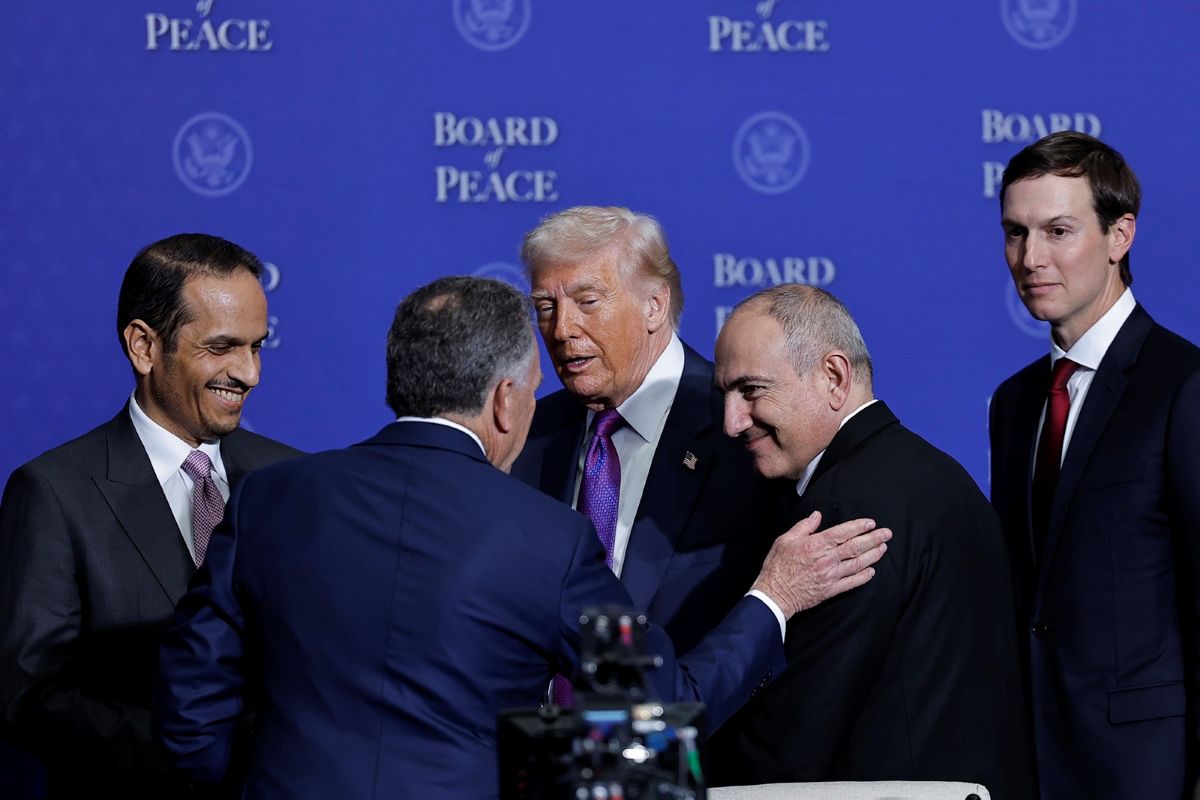
Friday, February 20, Armenia. Donald Trump and JD Vance thank Nikol Pashinyan and Ilham Aliyev at the Peace Council summit
● Prime Minister Nikol Pashinyan participated in the inaugural meeting of the Peace Council, an intergovernmental body established at the initiative of the U.S. president. During the session, a peace plan for resolving the conflict in Gaza, along with the next proposed steps, was presented. Armenia signed the Council’s charter, joining without the obligation to pay a membership fee.
● At the meeting, Donald Trump once again addressed Armenian-Azerbaijani relations, saying that the leaders of Armenia and Azerbaijan had become “good friends.”
“After 30 years of fighting, you realized that nothing is more important than peace. You did something very serious — you and your new friend. We settled this conflict in about 24 hours. I think they became friends. For 32 years they were killing each other. In the Oval Office, it was very uncomfortable for them to stand next to one another. I asked, can you move a little closer? An hour later, they were standing side by side. We made a deal. They signed, and we made peace between two very important countries — and I will never forget it,” Trump said, urging Pashinyan and Aliyev to shake hands.
● “What you have accomplished is truly incredible. We thank all the leaders gathered here today — those contributing to the future and to peace. We appreciate your partnership. In particular, I would like to thank the President of Azerbaijan and the Prime Minister of Armenia, whom I met last week, for making this possible and for demonstrating what genuine leadership can achieve. When you lay down weapons, stop the killing and destruction, and invest in your people and prosperity, it produces results. Thank you both for what you have done. You have shown real leadership,” U.S. Vice President J.D. Vance said at the session.
● On the sidelines of the meeting, Prime Minister Pashinyan held a brief conversation with U.S. President Donald Trump. Published footage also indicates that he had an informal exchange with the President of Azerbaijan.
● Foreign Minister Ararat Mirzoyan, who is in Washington as part of the Armenian delegation, met with his counterparts — foreign ministers from other participating countries.
● “After August 8, 2025 [the Washington summit involving the leaders of the United States, Armenia, and Azerbaijan], new opportunities emerged to connect Central Asia with Europe via Armenia. Greece is a crucial link in this chain. We must now work to further strengthen cooperation between Greece and Armenia, and across the South Caucasus as a whole, in this direction. Not only Greece, but many other EU member states are showing significant interest in investing in Armenia,” Deputy Foreign Minister Vahan Kostanyan said in Athens. He is part of a delegation currently on a state visit to Greece.
● According to NEWS.am, French President Emmanuel Macron is expected to pay a two-day visit to Armenia on May 4. He would take part in the European Political Community summit in Yerevan. The report has neither been officially confirmed nor denied.
● “The Swedish government continues to support Armenia’s democratic development and welcomes its efforts to deepen cooperation with the European Union,” said Swedish Foreign Minister Maria Malmer Stenergard.
● EU Commissioner for Enlargement Marta Kos will visit Armenia on March 19–20, according to a statement from the EU Delegation to Armenia.
● “I don’t know what others are doing, but the opposition should have one task — not to undermine each other. If this continues, we shouldn’t expect anything good. We will announce our plans and what we intend to do,” former President Serzh Sargsyan said, commenting on the pre-election situation in Armenia. Parliamentary elections are scheduled for June 7.
-
Friday, February 20, Georgia. The question of opposition consolidation remains open
● In Tbilisi, in the Ortachala district, an employee of the Interior Ministry’s Migration Department was found dead in his own car. According to the ministry, the investigation has been launched under Article 115 of Georgia’s Criminal Code — “incitement to suicide.” The Prosecutor’s Office is handling the case. No additional official details have been disclosed.
● A court has ordered pre-trial detention for journalist Eliso Kiladze. Former Georgian Prosecutor General Otar Partskhaladze (under U.S. and U.K. sanctions “for his cooperation with Russia’s FSB”), as well as businessmen David and Giorgi Mikadze, Irakli Sekhniashvili, and Mikheil Chokheli, have been arrested in absentia. All are believed to be hiding abroad.
According to investigators, the case concerns alleged fraud amounting to at least $9.5 million and the subsequent laundering of those funds.
● Two foreign nationals have been detained in Kutaisi. According to Georgia’s State Security Service, they attempted to purchase and smuggle uranium and cesium-137 out of the country for around $3 million. The suspects face up to 10 years in prison.
The State Security Service also reports that over the past couple of days, 29 people have been detained in connection with 13 separate criminal cases.
● Prime Minister Irakli Kobakhidze of Georgian Dream stated that the government is reviewing retail markups and does not rule out legislative changes. The creation of alternative retail chains is also being considered. According to Kobakhidze, the goal is long-term price stabilization.
● In January 2026, Georgia’s foreign trade turnover decreased by 23.6%, totaling $1.6 billion, according to Geostat. Exports increased by 19% to $480.4 million, while imports fell by 33.7% to $1.13 billion.
The trade balance remains negative at minus $649.1 million.
● The coalition “Lelo – Strong Georgia” stated the need to offer society an “alternative choice” within the opposition spectrum and expressed readiness for “coordination on issues related to national interests.”
Amid ongoing political confrontation, the question of opposition consolidation remains open.
● The party “People’s Power,” known as a satellite of the ruling Georgian Dream, criticized the authorities’ initiative to ban the import of cars older than six years. According to MP Dmitri Khundadze, such a measure would not improve the environmental situation and would create additional difficulties for the regions.

-
Friday, February 20, Azerbaijan. Donald Trump thanks Ilham Aliyev and Nikol Pashinyan for the peace process at the Peace Council summit
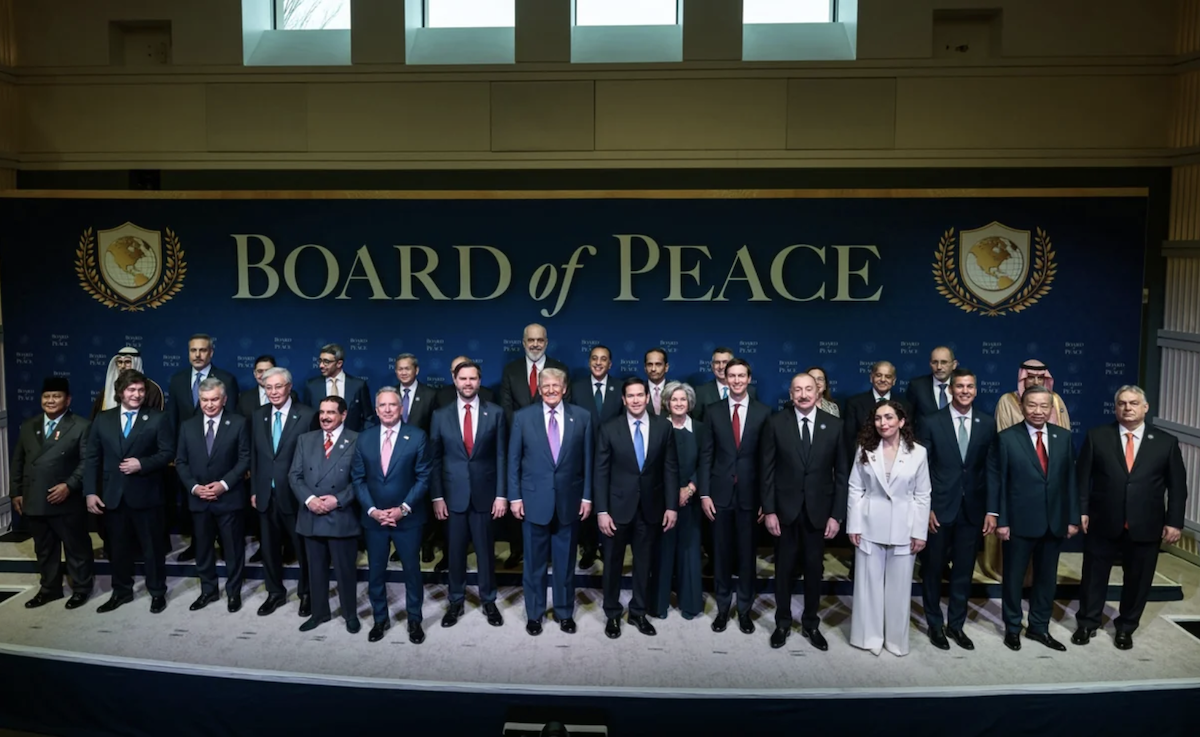
● President Ilham Aliyev took part in the first meeting of the Peace Council in Washington at the invitation of Donald Trump.
● Trump devoted much of his opening remarks to the peace process between Azerbaijan and Armenia, which he said was achieved with his direct mediation. He stressed that war costs “hundreds of times more than peace,” thanked Aliyev, and praised both him and Armenian Prime Minister Nikol Pashinyan for reaching an agreement after decades of conflict. Trump described how the two leaders initially kept their distance but, within an hour, were sitting side by side, shaking hands, and signing a deal. He called it a historic achievement and said both leaders should be proud.
● U.S. Vice President JD Vance thanked Aliyev and Pashinyan for their efforts toward peace in the South Caucasus, saying their leadership showed what could be achieved when countries invest in people and prosperity instead of war.
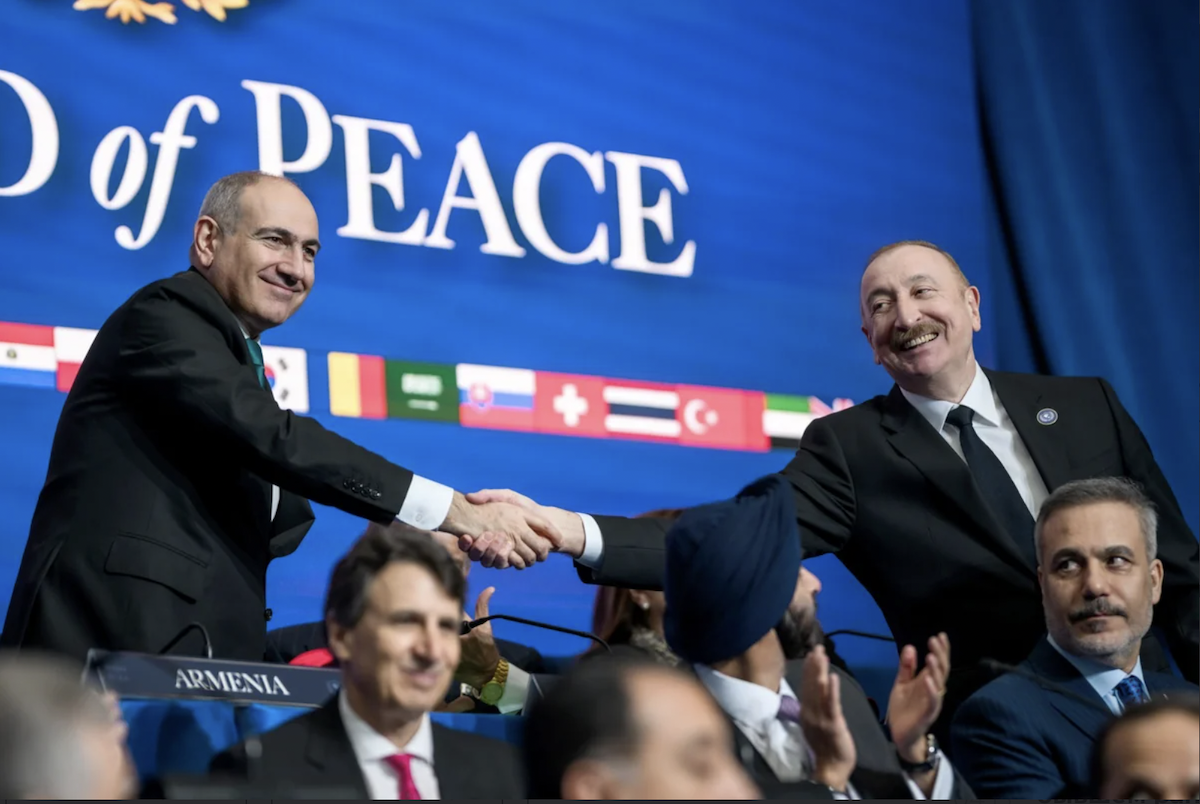
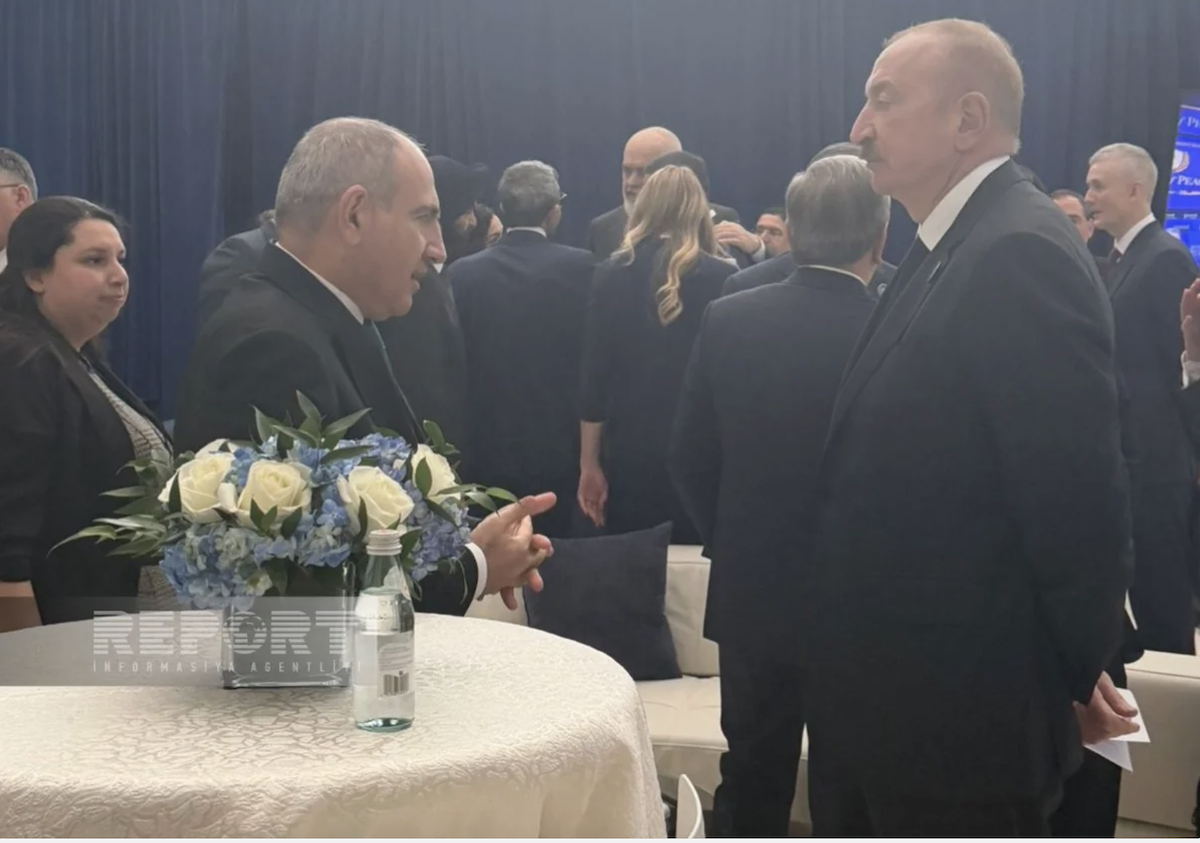
● Aliyev and Pashinyan briefly spoke on the sidelines of the meeting; discussions reportedly focused on the progress of the bilateral peace process.
● Presidential aide Hikmet Hajiyev said Azerbaijan is not expected to participate in a $7 billion Gaza financial project mentioned at the meeting. He noted that Azerbaijan supports the Peace Council’s goals as a founding member and may consider future investment initiatives related to Gaza within that framework. Trump had earlier said Azerbaijan and several other countries jointly contributed more than $7 billion to the council’s Gaza budget.
● Hajiyev also posted a photo on social media showing Aliyev and Pashinyan shaking hands at the meeting, calling the image highly symbolic, especially with the word “PEACE” visible in large letters behind them.
● During the Azerbaijani leadership’s participation in the event, a group of radical individuals attempted provocative actions, shouting insults, using obscene language, and trying to enter a secured area. Azerbaijani presidential security staff and Washington police quickly intervened and brought the situation under control; no serious incidents were reported, according to Azerbaijani media.
● Hajiyev also commented on a 20-year prison sentence handed down by a Baku military court to Ruben Vardanyan, a former “state minister” of the now-defunct unrecognized Nagorno-Karabakh entity. He called the verdict both a restoration of justice and a symbolic, logical end to a nearly 30-year conflict that caused immense suffering. He said Azerbaijan had implemented a “unique military-political conflict resolution model,” adding that international justice mechanisms had failed to materialize, prompting Azerbaijan to conduct open trials within its own legal system. He argued that acquitting those accused of war crimes would legitimize their actions and undermine accountability, saying lasting peace and ethnic reconciliation are impossible without justice.
● Journalists arrested in the Meydan TV case issued a protest statement over an aggressive prison search in cells holding journalists Aytaj Tapdig, Aysel Umudova, and Khayala Agayeva. They said male staff were improperly involved, which is not allowed during searches of women’s detention areas. When two detainees protested alleged insults, they said their arms were twisted and their necks pressed before they were removed from the cell. Journalists were reportedly held in a corridor with hands tied behind their backs and heads lowered. They also said authorities threatened to repeat such searches weekly, potentially exposing them to ongoing psychological and physical pressure before court hearings. The journalists demand criminal accountability and dismissal of those responsible.
Twelve journalists are currently under arrest in the Meydan TV case. If convicted, they face up to 12 years in prison on financial crime charges related to alleged foreign funding, including currency smuggling, money laundering, and tax evasion. All deny the accusations and say they are being persecuted for critical reporting.
● In January, Azerbaijan reduced car imports from Georgia by 54% compared with the same period in 2025. Azerbaijan ranked third among destinations for Georgian car exports, after Kyrgyzstan and Kazakhstan.
-
Thursday, February 19, Armenia. A new head has been appointed to the European Union monitoring mission overseeing the Armenia–Azerbaijan border
● Satu Koivu has been appointed the new head of the EU’s civilian monitoring mission overseeing the Armenia–Azerbaijan border. She will take up her duties on February 20, 2026. Koivu is a senior Finnish police officer with 35 years of national and international experience and has held leadership posts in UN and EU missions in the Palestinian territories, Rwanda, Namibia, and Cyprus. Most recently, she served at Finland’s National Police Board. The European Council said the mission is a key part of EU efforts to support peace and stability in the South Caucasus, tasked with monitoring and reporting on the situation on the Armenian side of the border and contributing to security there.
● Marie Struthers, director for Eastern Europe and Central Asia at Amnesty International, called the sentence handed down in Baku to former Nagorno-Karabakh “state minister” Ruben Vardanyan a “mockery of justice.” She said trying Vardanyan and others — including civilians — in a military court raises serious fair-trial concerns, and that proceedings were closed and based on fabricated evidence.
● A delegation led by Armenia’s president is on an official visit to Greece. Economy Minister Gevorg Papoyan said Greece is an important partner with strong potential for expanding cooperation across economic sectors.
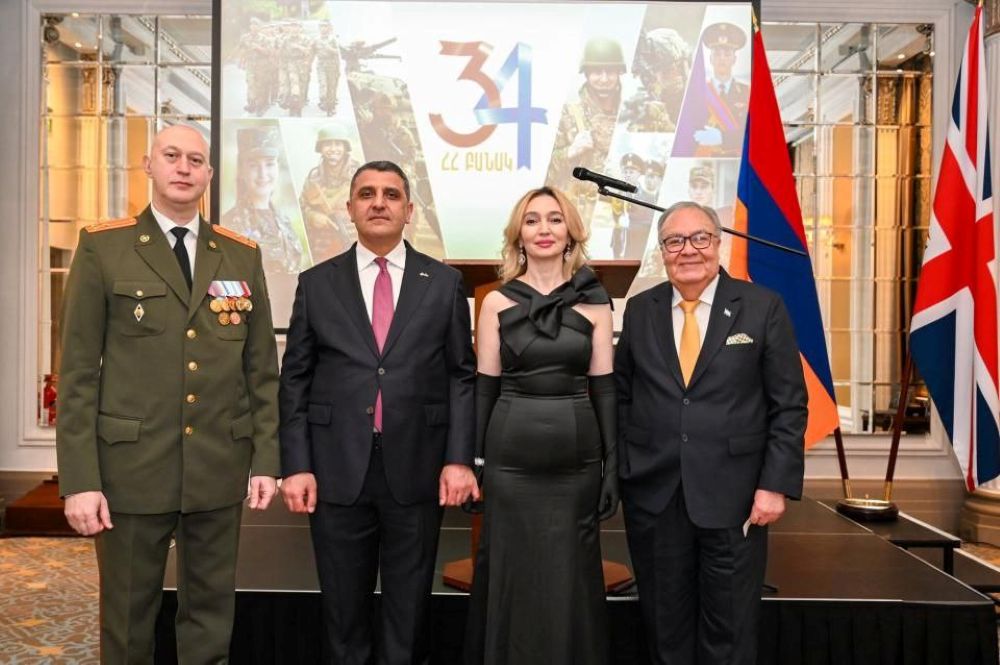
● A reception marking the 34th anniversary of the Armenian Army and the official opening of Armenia’s Defense Department at its embassy in the UK was held at London’s Royal Air Force Club. Ambassador Varuzhan Nersesyan called it a historic event and the first such reception in Britain. During the event, Colonel Karen Muradyan was officially appointed Armenia’s military attaché to the UK.
● Armenia’s Migration and Citizenship Service says 2,489,031 people are eligible to vote in the June 2026 parliamentary elections. Of them, 843,278 are registered in Yerevan and 1,645,753 in the regions.
● A shooting in a Yerevan district left a 45-year-old man dead and seven people hospitalized. One underwent surgery and six are in intensive care. The incident occurred in a residential courtyard during the day, frightening residents. A criminal case has been opened on charges including murder, attempted murder, hooliganism, and illegal firearms trafficking.
● Online taxi drivers in Yerevan have begun collecting signatures and plan to submit demands to the government, saying they pay taxes but are not recognized as registered workers and therefore will not receive pensions. About 120,000 online taxi drivers are registered in Armenia.
● Former defense minister Davit Tonoyan criticized Prime Minister Nikol Pashinyan’s remarks about arms procurement, asking rhetorically: “Have we left the CSTO that we are buying weapons from other countries?”
● More than 107,000 foreign citizens hold residence permits in Georgia, including over 5,000 Armenians (about 4.8%).
● Armenia national football team captain Tigran Barseghyan has announced his retirement from international duty, saying it was a great honor and responsibility to represent the national team.
Photo from the reception at the Royal Air Force Club in London marking the 34th anniversary of the Armenian Army.
-
Thursday, February 19, Azerbaijan. A C6 conference on developing partnership between Azerbaijan and Central Asia is taking place in Baku
● The holy month of Ramadan, regarded as a time of mercy and compassion, has begun in Azerbaijan.
● President Ilham Aliyev is in the United States at the invitation of President Donald Trump and will take part in the first meeting of the Peace Council (on Gaza) in Washington.
● An international conference titled “C6: One Region, One Future” is being held in Baku. It focuses on strengthening strategic dialogue between Azerbaijan and Central Asian countries (Turkmenistan, Uzbekistan, Kazakhstan). One key topic is overcoming logistical constraints of Central Asian states through Azerbaijan’s infrastructure, particularly by providing access to the sea. The development of Central Asia–Azerbaijan–Turkey routes is seen as an alternative to northern and southern corridors and as a way to strengthen regional energy security and economic cooperation.
In November 2025, Azerbaijan joined the consultative meeting format of Central Asian countries as a full participant, upgrading regional cooperation from C5 to C6. Read more here
● Amnesty International called the verdicts handed down by a Baku military court to former “state minister” of the former unrecognized “Nagorno-Karabakh Republic” Ruben Vardanyan and other former military-political leaders a “mockery of justice.” Marie Struthers, Amnesty’s Eastern Europe and Central Asia director, said the trial was largely closed, charges relied on fabricated evidence, and hearings were conducted in a language Armenians do not understand, with inadequate translation. She also said Amnesty requested information from Azerbaijani authorities but received no response. The organization stated Azerbaijan must ensure all defendants are tried fully in line with international law and fair-trial standards.
On February 17, Vardanyan was sentenced to 20 years in prison on charges including war crimes, terrorism, and financing terrorism. Earlier, 16 other former leaders of the former “NKR” were also sentenced — four to life imprisonment and the rest to terms of 15–20 years.
● The organization “Western Azerbaijan Community” protested Amnesty’s statement, saying it had repeatedly asked the group to help restore the rights of Azerbaijanis deported from Armenia but received only “abstract responses.” It accused Amnesty of siding with “occupiers and perpetrators of ethnic cleansing and the Khojaly genocide” and of approaching human-rights issues through a political lens.
● Families of detained journalists from Meydan TV say prison officials searched the cells and conducted body searches of three detainees – Aytaj Tapdig, Aysel Umudova, and Khayala Agayeva – and allegedly mistreated them. A day earlier, journalists in the case were told they faced additional administrative charges for allegedly disrupting a court hearing by making noise and knocking on the glass enclosure in the courtroom. They are accused of financial crimes linked to alleged funding from Western donors, including currency smuggling, money laundering, and tax evasion. All deny the charges and say they are being persecuted for critical reporting on the authorities.
● Journalists arrested in the Meydan TV case have appealed to the diplomatic corps in Azerbaijan to attend and monitor their trial. “Our basic right to defense is being violated due to the absence of independent media in the courtroom and the lack of public visual coverage of the proceedings,” the statement says, as published by the Azerbaijani service of Radio Free Europe/Radio Liberty.
Since November 2023, more than 30 journalists and civil activists in Azerbaijan have been arrested on smuggling charges. Many are staff of MeydanTV, AbzasMedia, and Toplum TV. Seven journalists in the AbzasMedia case have been sentenced to prison terms ranging from 7 years 6 months to 9 years. Trials in the MeydanTV and ToplumTV cases are ongoing. The journalists deny all charges, saying they are being punished for exposing government corruption and reporting on official abuses.
Authorities say no one has been arrested for professional activity and that the journalists are being prosecuted solely for alleged legal violations.
● Historian Altay Goyushov, who lives abroad, has been sentenced in absentia to six years in prison for publicly calling for the overthrow of the government. Known for frequent criticism of Azerbaijani authorities, he previously worked at Baku State University and the Institute for Political Studies and was a member of the opposition Musavat and REAL Movement parties. He is currently a research fellow at Sciences Po in Paris.
Similar in-absentia sentences have previously been handed down to several other journalists and bloggers living abroad who criticize the Azerbaijani government.
-
Wednesday, February 18, Azerbaijan. Russian State Duma MP accused Azerbaijan and Central Asian countries of promoting “Russophobia”
● A military court in Baku has sentenced former “state minister” of the former unrecognised “Nagorno-Karabakh Republic,” Ruben Vardanyan, to 20 years in prison. He was convicted of war crimes, terrorism, financing terrorism, and other serious offenses. The trial lasted more than a year; the charges covered more than 40 episodes and were presented in 422 volumes of case materials. Prosecutors had demanded a life sentence. Vardanyan has repeatedly said he considers the proceedings a farce, while human rights groups in Armenia say the case and verdict are political rather than legal.
● The European Court of Human Rights upheld an appeal by detained former investigator and human rights defender Rufat Safarov over his 2016 arrest on bribery charges. Safarov argued he had been convicted on false accusations and was not given the opportunity to challenge them. The court awarded him €4,000 in damages and €1,000 for legal costs. He had been released in 2019 in that case, but was arrested again in December 2024 on fraud and intentional bodily harm charges. He faces up to 10 years in prison, denies the accusations, and calls the case politically motivated. He was detained shortly before a planned trip to the United States, where he was due to receive a State Department award on International Human Rights Day.
● Resource-rich Nakhchivan may soon benefit from a large infrastructure project known as the “Trump Route” (TRIPP), according to the U.S. publication The National Interest. In addition to a road linking Azerbaijan with its exclave through Armenia, the route would create direct access to Europe via Turkey. The article says TRIPP is part of a broader shift by both Azerbaijan and Armenia toward the West and away from Russia and Iran. It would also form another hub in the global “Middle Corridor” trade route linking China with Western markets while bypassing heavily sanctioned Russia and Iran.
● SOCAR Turkiye Enerji, a subsidiary of Azerbaijan’s state oil company SOCAR, has completed a deal with Gama Enerji to acquire the Gama Enerji İç Anadolu power plant in Turkey. The transaction is valued at $225 million and is expected to further deepen strategic energy cooperation between Azerbaijan and Turkey.
● Italy has become the largest importer of Azerbaijani oil, accounting for 69.91% of total oil exports. In January, exports were 9.5% higher than in the same month last year.
● Another round of political consultations between the foreign ministries of Azerbaijan and Georgia took place in Baku at the level of deputy ministers.
● Russian State Duma MP Andrey Lugovoy accused Azerbaijan and Central Asian countries of promoting “Russophobia,” claiming such narratives appear in school history textbooks. By this he referred to references to Russian imperial colonial policy, the famine caused by forced collectivization in the USSR, Stalin-era repression, and deportations of peoples in textbooks in Azerbaijan, Kazakhstan, Kyrgyzstan, and Tajikistan.
● Azerbaijan plans to introduce fines for smoking e-cigarettes in public places. A draft amendment has already been submitted to parliament, setting the penalty at 30 manats (about $18).
-
Wednesday, February 18, Armenia. Protests in support of the Catholicos under investigation and the arrested archbishop
● Former state minister of the unrecognised Nagorno-Karabakh Republic, Ruben Vardanyan, has been sentenced in Baku to 20 years in prison. Azerbaijani media say he will serve 10 years in a regular prison and 10 in a high-security facility. He was convicted of waging aggressive war, financing terrorism, deportation, and other serious crimes. His defense says the charges are politically motivated and the trial violated international legal standards. Read more here
● Catholicos Garegin II will join a major Armenian Church synod in Vienna online via Zoom because he faces charges of obstructing a court ruling and cannot leave Armenia. According to Religion Media Centre, the synod was moved abroad amid fears bishops could face detention. Earlier, Prime Minister Nikol Pashinyan said that he and 10 bishops on the Church Reform Council intend to do everything possible to ensure that the Catholicos of All Armenians, Garegin II, steps down. Read more here
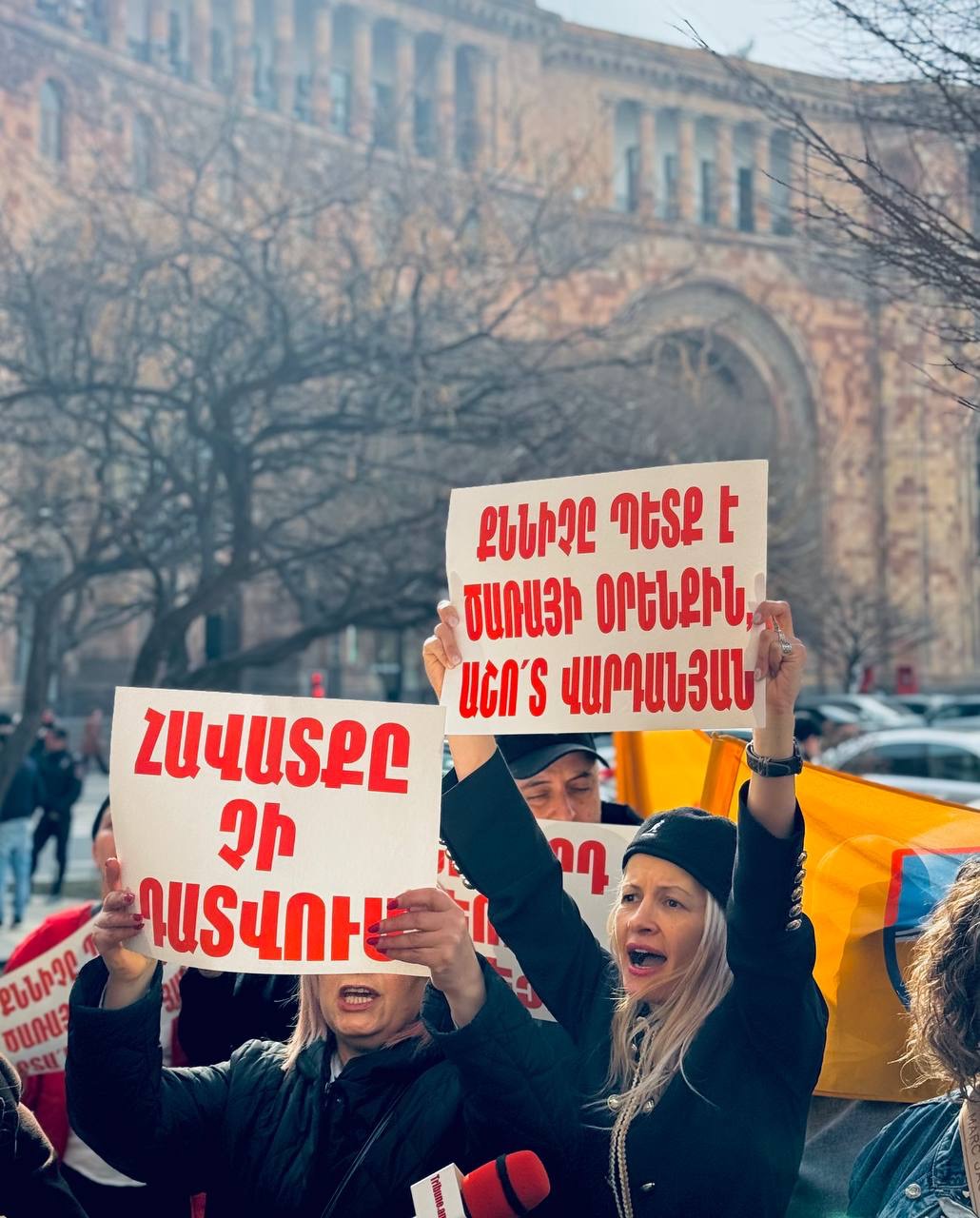
● Protests in support of Garegin II were held in Yerevan outside the prosecutor’s office and government buildings, with demonstrators chanting “Hands off the Church.” (pictured)
● “France and India are two great democracies, two military and technological powers, and long-standing friends of Armenia,” wrote France’s ambassador to Armenia, Olivier Decottignies, on social media, commenting on the three-day visit to India by French President Emmanuel Macron. The ambassador also cited an FPA report saying the talks would focus on cooperation in artificial intelligence and a potential multibillion-dollar deal to purchase Dassault Rafale jets.
● Opposition leader Edmon Marukyan of the Bright Armenia party has demanded that authorities refute statements by Ilham Aliyev. “Aliyev said there is a mutual understanding between Armenia and Azerbaijan on amendments to Armenia’s constitution. Armenian officials insist the reform is a domestic process. Either refute Aliyev’s statement or honestly admit you are not sovereign,” Marukyan said. Much of Armenia’s opposition is widely seen as pro-Russian.
Work on constitutional amendments is ongoing in Armenia, with the justice minister saying a draft will be presented for public discussion in March. Azerbaijani officials have repeatedly said Armenia should remove references to its 1990 Declaration of Independence, which mentions the intention to unify Nagorno-Karabakh with the Armenian SSR — something Baku calls a legal claim against Azerbaijan’s territorial integrity.
● Further deepening cooperation between Armenia and the European Union is of key importance, Prime Minister Nikol Pashinyan said during a meeting with a delegation led by Gert Jan Koopman, director at the European Commission for enlargement and neighborhood policy. The sides discussed ongoing Armenia–EU cooperation programs and future initiatives aimed at expanding economic opportunities, improving the investment climate, and strengthening regional stability.
● In Gyumri, supporters welcomed Shirak Diocese head Mikael Ajapahyan with applause, chants of “Holy Father,” and religious songs after his discharge from hospital. In October he was sentenced to two years in prison for calls to overthrow the government, but an appeals court later changed the measure to house arrest and a travel ban. He had been treated at the Izmirlian Medical Center, where he underwent a second surgery.
The criminal case stemmed from an interview in which he said he knew three ways to change power — elections, a coup, and a popular uprising – and spoke openly about the need for a military coup, claiming he had discussed the issue with former presidents Serzh Sargsyan and Robert Kocharyan.
-
Wednesday, February 18, Georgia. Amendments to the Law on Grants have passed a second reading, with experts calling them harshly repressive
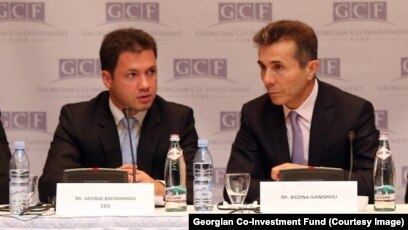
● Giorgi Bachiashvili, former executive director of an investment fund owned by oligarch Bidzina Ivanishvili, has been released from prison. Prosecutors said he “fully admitted guilt, cooperated with the investigation, and compensated damages.” The deal includes a suspended sentence and a fine.
● Former deputy prime minister Levan Davitashvili, who was questioned by the State Security Service in a gas-supply case, has left the country on a “planned visit” and is expected to return soon, the agency said.
● Amendments to the Law on Grants have passed a second reading. Penalties under the criminal code article on “extremism against the constitutional order” are being tightened, along with sanctions for “political activity” by business entities.
● Georgian Foreign Minister Maka Bochorishvili: “The European Union, for the sake of its own economic security, very much needs the development of the Trans-Caspian International Transport Route (the Middle Corridor) with Georgia’s participation, as Georgia is a very important component. But in its relations with Georgia, Brussels is once again choosing the language of pressure rather than dialogue. This is a strategic mistake being made by the bureaucracy sitting in Brussels.”
EU institutions, as well as leaders of European countries, have been sharply criticizing Georgia over democratic backsliding and the adoption of a series of laws they say are repressive toward civil society and the media.
● Besarion Zhvania, son of former prime minister Zurab Zhvania, has been placed in pre-trial detention in absentia in a case over organizing the killing of young programmer Niko Kvaratskhelia. Prosecutors have put him on a wanted list. Other defendants attended hearings remotely from prison, where they are serving sentences in another case.
● Fifteen people were detained during clashes outside Tbilisi City Court, where hearings were underway in the murder case of businessman Levan Jangveladze. Supporters of the victim and the accused — including the Mikadze brothers — confronted each other before police intervened.
Jangveladze, brother of a so-called “crime boss,” was killed in central Tbilisi on March 14, 2025. One person has already been sentenced to life in prison, while investigations continue into three others. Former chief prosecutor Otar Partskhaladze is also wanted in the case and is believed to be in Russia.
● Detained journalist Eliso Kiladze denies involvement in an organized fraud and money-laundering case linked to call centers. Nine other people are charged with extorting about $9.5 million in cryptocurrency from foreign citizens between 2020 and 2023 and face 9–12 years in prison.
● A report by the Council of Europe Committee for the Prevention of Torture describes possible cases of ill-treatment of detainees during protests and urges authorities to ensure only “absolutely necessary and proportionate force” is used.
● Scholars at Ilia State University are criticizing government quota decisions affecting state universities, saying they threaten the doctoral program in social and cultural anthropology.
● Winter Olympic silver medalists Luka Berulava and Anastasia Metelkina have had their state bonuses increased from 250,000 to 500,000 lari (about $188,000) each in recognition of their “historic achievement.”
📷 The photo shows Giorgi Bachiashvili and Bidzina Ivanishvili before the court case, when the businessman was still part of the oligarch’s inner circle.
-
Wednesday, February 18, Georgia. Former economy minister and former head of the state oil and gas corporation questioned by the State Security Service
● “We are closely monitoring developments in Georgia and working with international partners. The United Kingdom has imposed sanctions on senior officials of the Georgian Ministry of Internal Affairs responsible for violent attacks on protesters, on judges who abused their positions, and on high-ranking officials involved in serious human rights violations. I cannot comment on potential future sanctions, as doing so could undermine their effectiveness,” said UK Minister of State Stephen Doughty in response to a question from Member of Parliament Ian Duncan Smith.
● Former economy minister and deputy prime minister Levan Davitashvili and former CEO of the state oil and gas corporation Giorgi Chikovani were questioned by the State Security Service. The Georgian edition of Radio Free Europe/Radio Liberty reports that the investigation concerns an agreement with “one of the largest oil companies.” The specific company has not been disclosed, and it is also unclear what legal status Davitashvili and Chikovani hold in the investigation.
● The SSS addressed inaccuracies in an interview Davitashvili gave after questioning to the pro-government channel Imedi: “Davitashvili was questioned in connection with a specific criminal case, not in a meeting to discuss economic matters (as he claimed). He was asked about risks related to Georgia’s gas supply and the potential impact on Georgia of the agreement under investigation. At no point was there any discussion of EU gas supply risks (as Davitashvili mentioned in his interview – JAMnews). If false information or speculation is presented again, we are prepared to release the interrogation record (with the consent of the questioned individual),” the SSS said.
● Bloomberg reports that, according to its sources, [“country”,”Italy”,”country”] and Hungary Georgian port of Kulevivi port in the 20th sanctions package against Russia. Read more here
● Besarion Zhvania, son of former prime minister Zurab Zhvania (in office 2004–2005), and the Kakulia brothers have been charged with organizing the contract killing of young programmer Niko Kvaratskhelia. Read more here
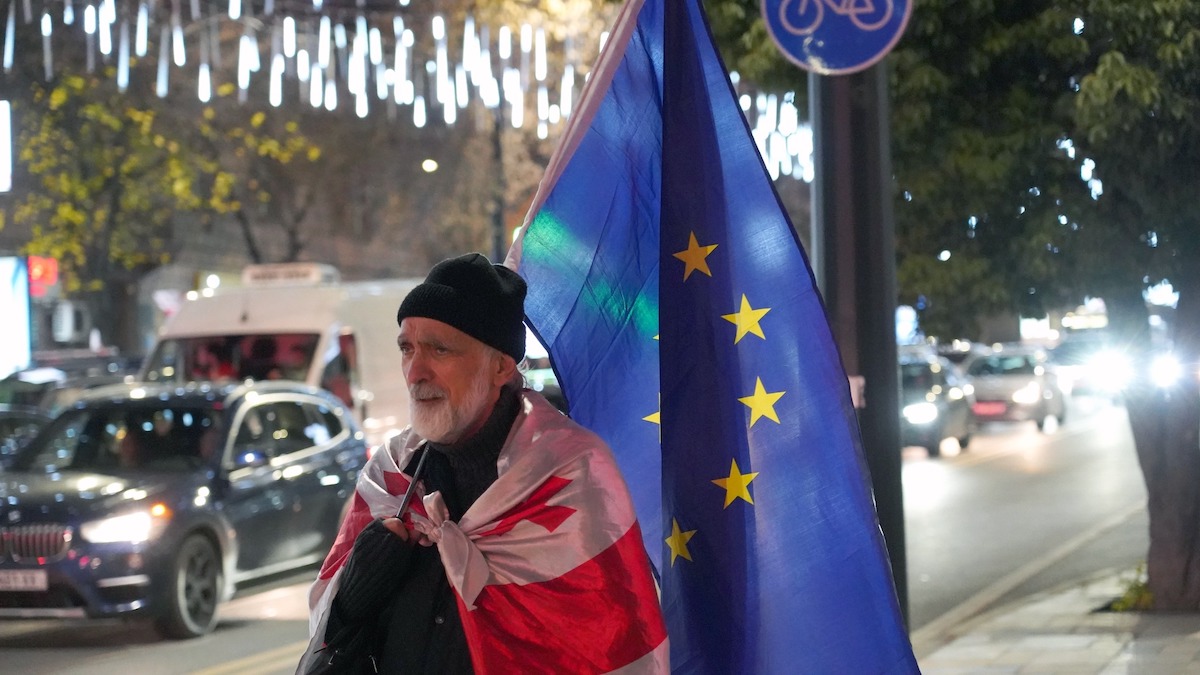
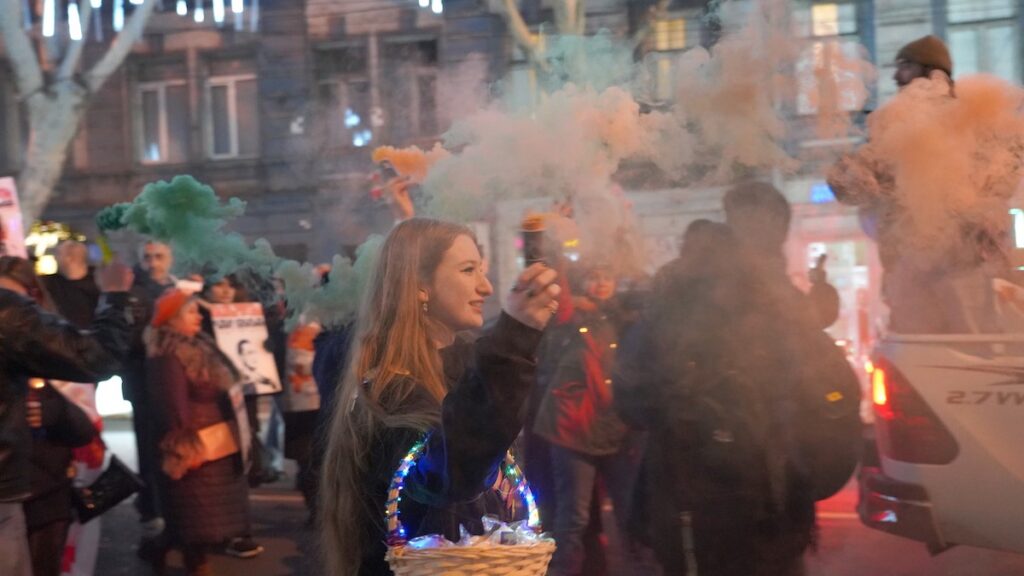
● Public Defender Levan Ioseliani met with Patricia Grzebik, the OSCE-appointed rapporteur for the investigation triggered under the “Moscow Mechanism.” This mechanism is used when serious human rights deterioration is suspected in a country. Its activation for Georgia in January was supported by 24 OSCE member states, allowing an independent expert mission to assess the country’s compliance with its obligations. According to the press service, Ioseliani described measures taken to protect the rights of detained participants in the pro-European protests that have been ongoing in Georgia since 2024.
● In Ozurgeti in western Georgia, 55-year-old Zviad Jincharadze died in his car when it exploded immediately after he entered it. Authorities have not yet disclosed the cause of the explosion.
● Yandex Eats, the delivery service operated by Yandex, is leaving the Georgian market, announced Chief Operating Officer Giorgi Cholaria on LinkedIn.
-
Tuesday, February 17, Georgia. The ombudsman criticizes the planned amendments to the laws “On Grants” and “On Political Associations
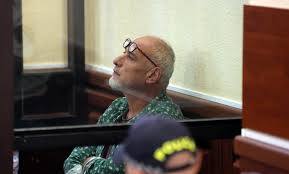
● The Court of Appeals has upheld the sentence of well-known poet and translator Zviad Ratiani (pictured) — two years in prison. Ratiani is an active participant in the pro-European protests that have continued almost uninterrupted for nearly a year and a half. He was detained during one of the demonstrations and is accused of assaulting a police officer.
● A rally in memory of Alexei Navalny could not be held in Tbilisi. Russian opposition activists living in Georgia told local media the event had been planned in the city center near a bust of Pushkin, but police did not grant permission.
● A new “prime minister” has been appointed in the Tskhinvali region (so-called South Ossetia). The post was given to Dzhambolat Tadtaev. The opposition is protesting his appointment, linking him to the region’s socio-economic crisis. Georgia considers the Tskhinvali region its territory occupied by Russia, a position supported by most countries worldwide.
● Personal remittances to Georgia have increased. In January, inflows totaled $282.6 million — 16.6% higher than a year earlier. The top sources were Italy (18.8%), the United States (18.4%), and Russia (11.8%). Transfers from Russia grew by 31.6% year-on-year.
● The Public Defender has criticized planned amendments to the laws “On Grants” and “On Political Associations.” In the ombudsman’s assessment, the proposed changes may contradict the Constitution and international standards on freedom of expression. If necessary, the ombudsman intends to appeal to the Constitutional Court.
● Sanctions for “political activity” by entrepreneurs are being tightened. Under a new initiative by the ruling party Georgian Dream, political activity by a legal entity-entrepreneur would be punishable by a fine of 20,000 lari (about $7,500) for a first offense, and criminal liability for repeat violations.
● The ruling party has submitted to parliament a proposal introducing up to three years in prison for publicly refusing to recognize the legitimacy of constitutional bodies or calling on others to do so. The government says the changes are aimed at combating extremism; critics argue the law would significantly restrict freedom of speech.
● The case against former defense minister Bacho Akhalaia has been moved to closed proceedings. He was detained in a criminal case over an alleged attempt to storm the presidential palace in October last year. His defense says the process was closed “so the public cannot learn the truth.” Akhalaia is charged with organizing and leading group violence and faces up to nine years in prison. He was not physically present at the scene, but prosecutors claim he directed the attempted seizure remotely via mobile communications. He denies the charges, saying he was in contact with several arrested individuals only because they were friends, and no coup plans were discussed. More than 60 people have been arrested in total in the “October 4 case.”
● Russia is ready to expand cooperation with Tbilisi and is urging Georgian authorities to consider the potential economic benefits of restoring diplomatic relations, said Russian Deputy Foreign Minister Mikhail Galuzin. Read more here
● The Georgian Young Lawyers’ Association announced it is launching legal proceedings on behalf of citizens affected by chemical substances used in water cannons during the dispersal of protests in Tbilisi in November–December 2024. The organization has appealed to the Prosecutor General’s Office to conduct an effective independent investigation and hold those responsible accountable. Read more here
● Up to 4,000 illegal migrants are expected to be deported from the country this year, Interior Minister Gela Geladze said. He noted that more than 1,300 illegal migrants were deported in 2025. Earlier it was announced that from March 1, 2026, employment of foreigners will be significantly restricted by law.
● Georgian figure skaters Anastasiia Metelkina and Luka Berulava, competing in pairs, won silver at the Winter Olympics in Italy, bringing Georgia its first-ever Winter Games medal. Japan’s Riku Miura and Ryuichi Kihara took gold with a world-record free program, while Germany’s Minerva Fabienne Hase and Nikita Volodin won bronze. Metelkina is 20 and Berulava 23; they are also European champions (2026) and medalists from previous championships.
-
Tuesday, February 17, Azerbaijan. In December–January, Azerbaijan exported goods to Armenia worth $2.4036 million
● In December–January, Azerbaijan exported goods to Armenia worth $2.4036 million, accounting for 0.1% of Azerbaijan’s total exports. There were no exports from Armenia to Azerbaijan. According to the customs committee:
• On December 18, 2025, 1,220 tons of AI-95 gasoline were shipped from Azerbaijan to Armenia.
• On January 9, 2026, 1,742 tons of AI-95 gasoline and 956 tons of diesel fuel were delivered.
• On January 11, an additional 979 tons of AI-92 gasoline were supplied.
● Mutual visits by representatives of Armenian and Azerbaijani civil society will continue on a regular basis, said Artur Hovhannisyan, secretary of the ruling Civil Contract parliamentary faction, in Yerevan. On February 13–14, the third meeting of Armenian and Azerbaijani civil society representatives took place within the “Bridge of Peace” initiative. It was held in Armenia; the first two were previously held in Yerevan and Baku. Read more here
● Azerbaijan expects Italy and Slovenia to join the Caspian–Black Sea–Europe green corridor project, which предусматривает laying an underwater electricity cable across the Black Sea. This was stated by Azerbaijan’s ambassador to Italy, Rashad Aslanov, at the conference “From the Caucasus to the Mediterranean” in Rome. The large-scale infrastructure project will directly connect Georgia and Romania and link the energy systems of the South Caucasus and Southeastern Europe. The underwater cable will exceed 1,155 km in length, including 40 km on land. A memorandum of understanding was signed in July 2023 by Georgia, Hungary, Romania, and Azerbaijan. Construction is planned to be completed by 2032.
● Ambassador Rashad Aslanov also highlighted the high level of Azerbaijan–Italy partnership:
• Azerbaijan is Italy’s number one oil supplier and the second-largest supplier of natural gas. About 17% of Italy’s gas demand is covered by Azerbaijani supplies.
• Since January this year, Italy has become not only a recipient but also a transit country, with Azerbaijani gas now delivered through Italy to Germany and Austria.
• Azerbaijani investments in Italy total about €2.5 billion.
• One of the most recent major investments was in 2025, when the State Oil Fund of Azerbaijan invested €34.5 million in Italo – Nuovo Trasporto Viaggiatori S.p.A., Italy’s leading high-speed rail operator.
• In the renewable energy sector, the same fund acquired about 50% of Enfinity Global Inc., which builds solar power plants across Italy.
• Italy is Azerbaijan’s main trading partner, accounting for 65% of its trade turnover, including 45% in the energy sector.
● “Italy is a hub for access to Europe and the Mediterranean region, while Azerbaijan is a gateway not only to Central Asia but to Asia as a whole,” said Manuela Traldi, president of the Italy–Azerbaijan Chamber of Commerce, speaking at the Rome conference.
● In 2025, a total of 32.5372 million tons of cargo were transported through international transport corridors passing via Azerbaijan, including the East–West, Europe–Caucasus–Asia, North–South, North-West, and South-West routes.
● The project to build a gas-fired power plant in Serbia with Azerbaijani capital support is an important part of Belgrade’s strategy to ensure energy security and diversify energy sources, Serbian News reports. An agreement to build the plant near the city of Niš, with a capacity of 350 MW of electricity and 150 MW of heat, was signed during President Ilham Aliyev’s recent visit to Serbia.
● Czech Prime Minister Andrej Babiš plans to visit Baku at the end of April, the Czech embassy in Azerbaijan reported.
● A representative office of the Caucasus Muslims Board will be established in the Vatican, said its chairman Allahshukur Pashazade.
● Regular consular consultations between the foreign ministries of Azerbaijan and Georgia were held in Baku. The delegations were led by Emil Safarov, head of Azerbaijan’s consular department, and Giorgi Tabatadze, director of Georgia’s Department of International Law and Diaspora. Ambassadors of both countries, as well as representatives of the prosecutor’s office, justice ministry, and migration service, participated. Discussions focused on protecting citizens’ rights and providing consular assistance, according to the press release.
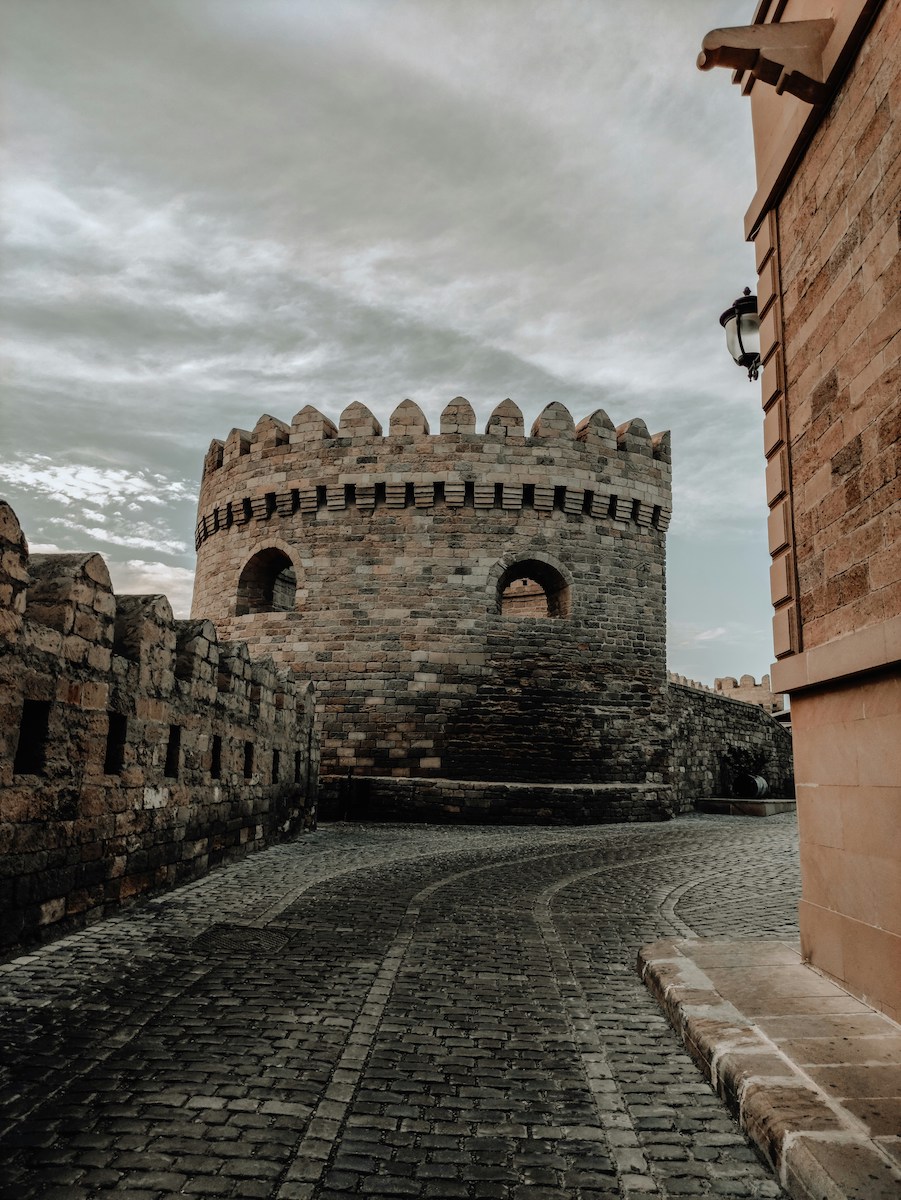
Icherisheher, the “Old City” in Baku. Photo: Azar Kazzimli.
-
Tuesday, February 17, Armenia. Public Services Regulatory Commission: “The possibility that the Electric Networks of Armenia company could be transferred to Turkish companies is not even being discussed”
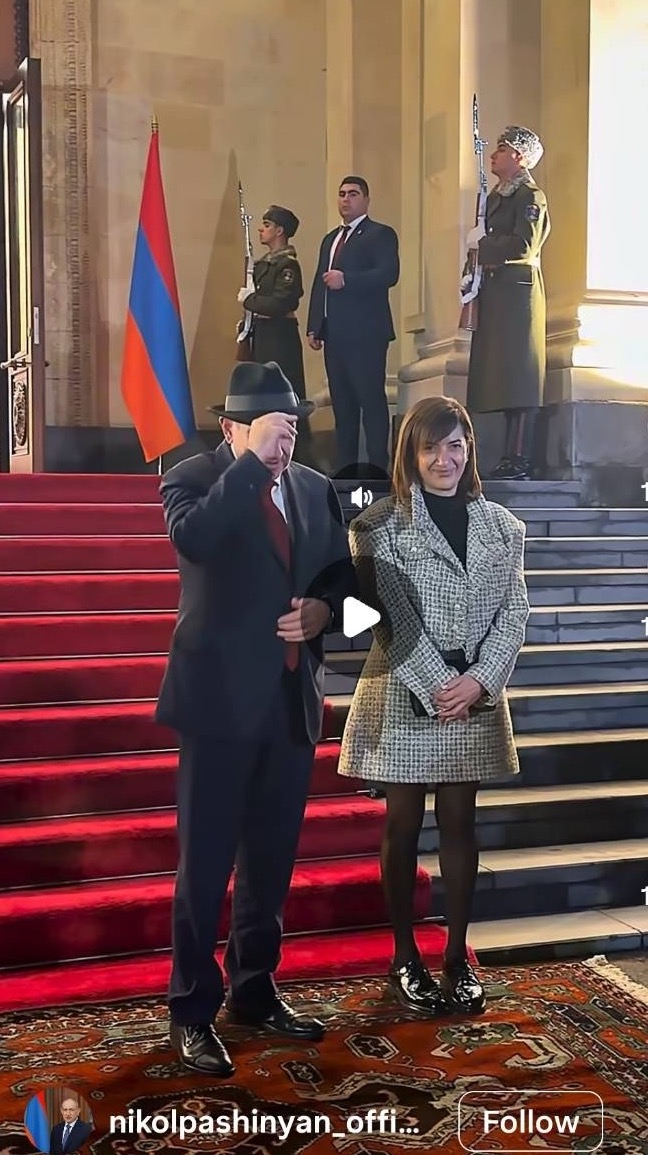
● The wife of the prime minister, Anna Hakobyan, posted on Facebook that “her civil marriage with Armenia’s Prime Minister Nikol Pashinyan has ended.” She asked everyone to “show restraint and respect when discussing this topic.”
● Armenian companies have received licenses to export military products. “This is a new tool to provide financial support to our companies,” said Minister of High-Tech Industry Mkhitar Hayrapetyan.
● In January, Azerbaijan exported goods worth $2.4036 million to Armenia, according to Azerbaijan’s customs committee.
● The head of the Public Services Regulatory Commission, Mesrop Mesropyan, denied reports that the company “Electric Networks of Armenia” could be transferred to Turkish firms. “This has not even been discussed theoretically,” he said.
● No amnesty has been declared in Armenia for seven years, said opposition MP Garnik Danielyan from the Armenia bloc. According to him, 26 deaths have already been recorded in penitentiary institutions since the start of this year. “If we come to power, we will declare an amnesty,” he said. Armenia’s opposition largely has a pro-Russian reputation.
● The powers of Constitutional Court judge Hrayr Tovmasyan have been terminated following a final guilty verdict. In September 2024, a lower court found him guilty on two counts of abuse of office during his time as justice minister but exempted him from criminal liability due to the statute of limitations. Appeals by the prosecutor, the defendant, and his defense were rejected, and the verdict has now entered into legal force. Within a month, the president must nominate a replacement to parliament.
● “Armenia continues daily work to secure the return of Armenians held in Baku,” said Artur Hovhannisyan, secretary of the ruling Civil Contract faction, commenting on statements by Azerbaijani President Ilham Aliyev that he does not intend to return Armenians convicted by courts in Baku. He acknowledged that “the timing and format of returns may not satisfy many.”
● The European Court of Human Rights has agreed to examine a complaint by former defense minister David Tonoyan alleging violations of his rights to liberty and personal security. The court has requested the Armenian government’s position. Tonoyan and arms supplier director David Galstyan were detained in September 2021 on suspicion of large-scale embezzlement; Tonoyan was later released on bail of 15 million drams (about $40,000). Read more here
-
Monday, February 16, Armenia. The Prosecutor’s Office has opened a criminal case against Garegin II, the Catholicos of All Armenians
● Speaker of the National Assembly Alen Simonyan, in an interview with the TV channel Dozhd, ruled out the possibility of detaining or deporting people persecuted in Russia for political reasons. “Zero people have been deported from Armenia. If a person does not violate our laws, no criminal case is opened. There were cases when people were detained, but after clarification they were released,” he said.
● In the same interview, asked whether the Russian military base in Gyumri serves Armenia’s interests, Simonyan said: “We do not consider it appropriate to discuss this now. We asked Russian border guards to leave the airport and several locations on the Armenian-Azerbaijani border. But look at the map and Armenia’s challenges. I’m not saying the base is a 100% guarantee, but in our region, making sharp moves now would be wrong.”
● The ruling Civil Contract party finished a three-day vote to form its candidate list for the June 7 parliamentary elections. About 1,100 delegates selected 50 names from a pool of 280. Final ranking will be set at an early-April congress. As of late Feb. 15, Prime Minister Nikol Pashinyan was leading.
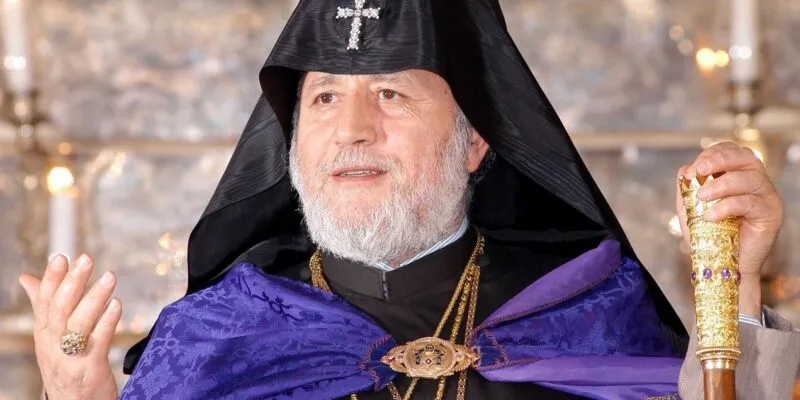
● The Prosecutor’s Office has opened a criminal case against Garegin II, the Catholicos of All Armenians, on charges of obstructing the enforcement of a court decision related to Arman Saroyan. The Catholicos has been banned from leaving the country. The context is as follows. Arman Saroyan is one of ten bishops who supported Nikol Pashinyan in his initiative to “start a process of renewing the Church.” In December, Garegin II removed Saroyan from his post as head of the Masisatsotn Diocese. The bishop filed a lawsuit. On January 16, the court prohibited the Church from interfering with him in carrying out his duties until a final ruling. However, on January 27, the Catholicos defrocked the bishop.
The Catholicos’s lawyer stated that the “ban on Garegin II leaving Armenia is an attempt to disrupt a gathering of bishops that is to take place in Austria,” calling it a “historically shameful act by the authorities.”
In early January, Prime Minister Nikol Pashinyan and ten bishops signed a joint statement announcing the start of a church reform process and the creation of a coordinating council. The ultimate goal is to remove Garegin II from the throne and elect a new Catholicos of All Armenians. The main accusations against Garegin II are political interference (he has a pro-Russian reputation) and violation of celibacy (he was found to have a wife and children). Read more here
● The opposition sharply condemned the opening of a criminal case against the Catholicos of All Armenians. The New Force party, led by former Yerevan mayor Hayk Marutyan, called the situation “illegal and immoral.” “All this has nothing to do with faith, and even less with the rule of law, but serves the interests of Nikol Pashinyan and his team and is driven solely by the need to strengthen their power,” the statement said. Most of Armenia’s opposition is widely regarded as having a pro-Russian reputation.
● Pashinyan said that after the elections “former presidents will be finally removed from politics.” Allies of ex-president Robert Kocharyan fired back, saying after June 7 Armenia “will not have a leader the whole nation is ashamed of.”
● Georgia’s Foreign Minister Maka Bochorishvili commented on a statement by the Embassy of Estonia in Georgia saying that Ambassador Marge Mardisalu‑Kahar is ending her tenure in Tbilisi and moving to a new post in Armenia. “Foreign ministries can transfer ambassadors from one position to another at their own discretion. I don’t see anything unusual in this unless the Estonian side itself attaches special significance to it,” Bochorishvili said on the sidelines of the Munich Security Conference.
Embassies of various Western countries, including Estonia, have sharply criticized the Georgian authorities over democratic backsliding. Representatives of the ruling Georgian Dream party, in turn, have regularly made harsh and at times insulting statements about European ambassadors.
● “If Russia is able to invest in ensuring that cargo passes through Armenia, and we receive political and economic benefits as well as security guarantees from this, then there will be no problem. But we will never sacrifice our interests for the sake of another country, even if it is a strategic partner,” Economy Minister Gevorg Papoyan told journalists. He was commenting on repeated statements from Moscow about its desire to participate in implementing the regional transit route known as the “Trump Route” (TRIPP). The road would run from Azerbaijan to its exclave of Nakhchivan through Armenian territory. An agreement on this project was reached at a summit of the Armenian and Azerbaijani leaders in Washington last August, with the participation of Donald Trump.
● Armen Grigoryan, Secretary of Armenia’s Security Council, responded to a statement by Ilham Aliyev about the impossibility of granting amnesty to former military-political leaders of the former unrecognized Nagorno-Karabakh Republic, who were recently sentenced in Baku to long prison terms, several of them to life imprisonment. “We continue working on their release and are pursuing this in all possible formats,” Grigoryan said.
● The U.S. Embassy in Armenia issued a warning: “Visa screening does not stop after a visa is granted. We continuously monitor visa holders to ensure they comply with U.S. laws and immigration rules. Violations may lead to visa revocation and deportation,” the statement said.
● The Armenian Weightlifting Championships have concluded. On the final day, winners were determined in the 94 kg, 110 kg, and +110 kg categories. Varazdat Lalayan won the +110 kg category with a total of 440 kg, while Garik Karapetyan took first place in the 110 kg category with 380 kg.
-
Monday, February 16, Azerbaijan. Ilham Aliyev: “A peace agreement with Armenia will be signed the day after Armenia’s constitution is amended”
● During an official visit to Serbia by Ilham Aliyev, a joint press conference was held with Serbian President Aleksandar Vučić.
Key messages:
The presidents of Azerbaijan and Serbia will pay reciprocal visits in 2026.
Vučić said Serbian companies will take part in an investment forum in Azerbaijan in September.
Azerbaijan confirmed participation in EXPO 2027 in Belgrade.
Compared to 2012, trade turnover in services between the two countries has increased 16-fold.
Aliyev stated that Azerbaijan is ready to make major investments in Serbia’s economy.
Serbia’s gas company and Azerbaijan’s state oil and gas company SOCAR signed a cooperation agreement. One project involves building a 500-megawatt gas power plant near Belgrade, planned to open by 2029.
A decision was made to increase exports of Azerbaijani gas to Serbia, where it will be converted into electricity.
Tourism between the two countries is growing, and a direct Belgrade–Baku flight operated by Air Serbia will launch on May 3.
● During the visit, the first meeting of the bilateral Strategic Partnership Council was held in Belgrade with the participation of both presidents.
● As part of the Munich Security Conference, President Ilham Aliyev took part in a panel discussion titled “Open Corridor Policy: Deepening Trans-Caspian Cooperation.” Also participating were European Commission enlargement commissioner Marta Kos and former Chinese state counselor Wang Huiyao. Key statements included:
Ilham Aliyev:
Azerbaijan is actively involved in developing the Middle Corridor and investing in physical infrastructure, including seaports, railways, highways, and cargo aviation.
Last year, a record number of TU shipments — over 100,000 — passed through Azerbaijan. In a few years, this figure could rise to 200,000–300,000, with a target of 500,000 TU.
Azerbaijan is working closely with Central Asian partners to lay an underwater fiber-optic cable across the Caspian Sea, expected to become operational this year.
After achieving peace with Armenia, new opportunities have opened. A corridor running from Azerbaijan through Armenia to Europe has strong cargo potential. Azerbaijan is currently investing in railway construction on its territory.
The very fact that a peace agreement was initialed at the White House in the presence of the United States, and that a joint declaration was signed by Armenia’s prime minister and Aliyev, with Donald Trump as witness, is enough to say peace has already been achieved.
Since last August there have been no problems on the border with Armenia.
All restrictions on cargo transit to Armenia through Azerbaijan have been lifted.
Azerbaijan has also begun supplying petroleum products to Armenia, effectively launching mutual trade.
A formal peace agreement will be signed the day after Armenia amends its constitution to remove territorial claims against Azerbaijan.
“I hope we will sign a peace agreement with Armenia this year.”
Speaking about the region, he said it is impossible to forget Central Asian neighbors across the Caspian, as cargo transport from China to Europe depends on them. The geography is: China, Central Asia, the Caspian, Azerbaijan, Georgia, Armenia, Turkey, Europe. Azerbaijan is already actively cooperating with Central Asian countries.
Marta Kos:
“The peace process between Armenia and Azerbaijan opens new opportunities, and what once seemed impossible now inspires confidence. We thank President Aliyev for supporting EU plans.”
The EU has specific projects on its agenda for Azerbaijan, Armenia, and Turkey. The TRIPP project is considered a priority, but others are also being reviewed, including a new rail outlet from Nakhchivan toward Turkey.
● Presidents Ilham Aliyev and Volodymyr Zelenskyy met on the sidelines of the Munich conference. They discussed further energy cooperation.
● Ilham Aliyev said Russia is striking not only Ukraine’s energy infrastructure but also Azerbaijan’s embassy: “Our embassy in Ukraine was hit three times. After the first strike, we thought it might be accidental. Then we provided Russia with the coordinates of our diplomatic facilities — the consular section, cultural center, and embassy. Despite this, two more strikes followed. This is a targeted attack on Azerbaijan’s diplomatic missions,” he said, calling Russia’s actions “an unfriendly step.”
Russia’s Foreign Ministry said it was “completely perplexed,” stating that when planning strikes, the locations of diplomatic missions are carefully taken into account.
● Azerbaijani Foreign Minister Jeyhun Bayramov met with German Foreign Minister Johann Wadephul on the sidelines of the Munich Security Conference.
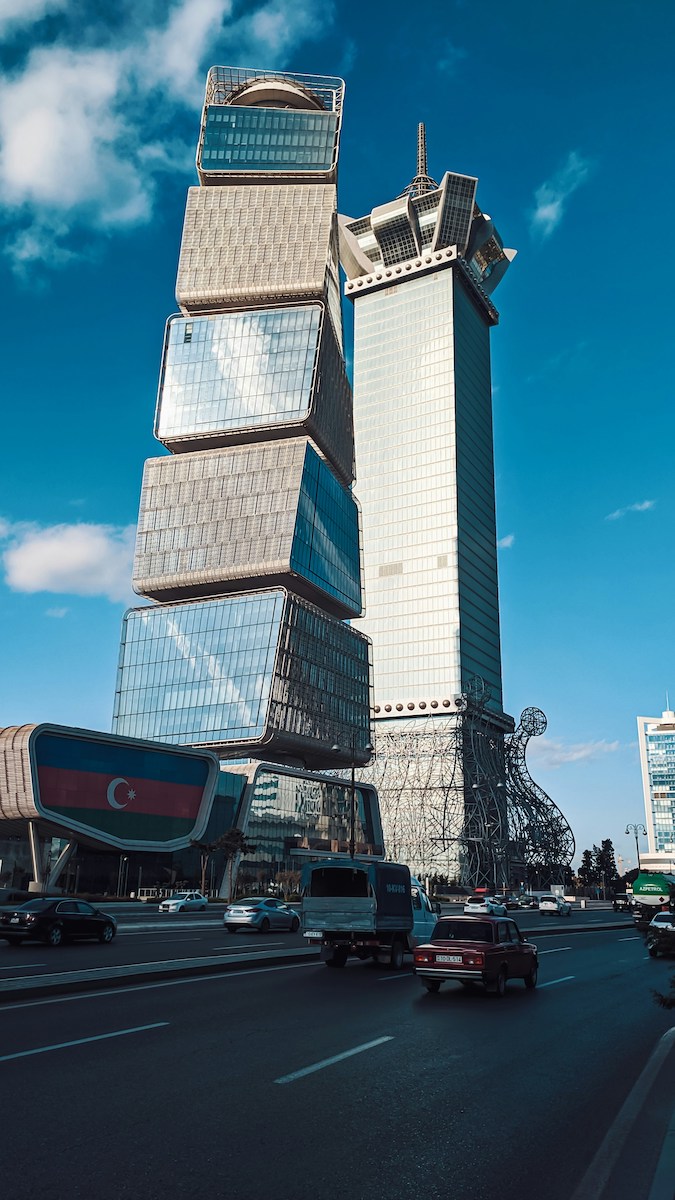
Photo İltun Huseynli
-
Monday, February 16, Georgia. A protest took place at Ilia State University against a new education system reform
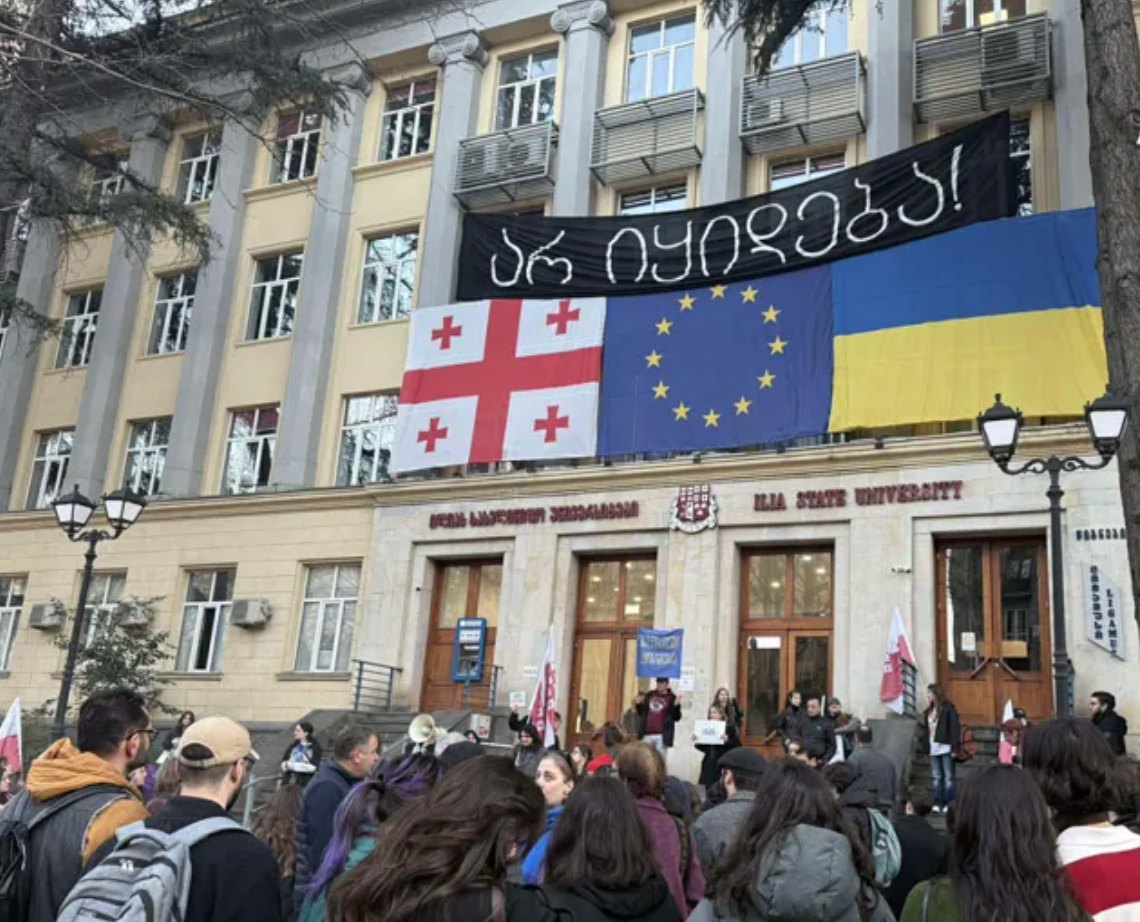
● A protest took place at Ilia State University against a new education system reform. Students, faculty, and the university administration are demanding the process be suspended. Rector Nino Doborjginidze says the reform has cut the number of university programs by 92%.
● At the Imam Ali Mosque in Marneuli, in Georgia’s Kvemo Kartli region, Imam Haji Hajiyev delivered a sermon calling the U.S. the “largest terrorist” in the region and expressing solidarity with Ali Khamenei and leaders of Hamas. Posters depicting Khamenei were displayed inside the mosque during the sermon. Read more here
● Georgia’s foreign minister from Georgian Dream met with Feridun Sinirlioğlu, Secretary General of the OSCE, on the sidelines of the Munich Security Conference. “The main focus was on the situation in Georgia’s regions occupied by Russia. The minister stressed the importance of the Geneva International Discussions format and the OSCE’s involvement in the conflict resolution process,” the press release said.
The statement did not mention the OSCE’s announced launch of a probe into alleged human rights violations in Georgia under the so-called “Moscow Mechanism.”
● Today, the Parliament of Georgia controlled by Georgian Dream will consider a package of legislative acts and amendments to seven laws concerning grants, political activity, and activism. The documents introduce new restrictions and bans related to political activities and grants.
● The Interior Ministry reported the arrest in Tbilisi of a Georgian citizen, S.Ch. (born 1994), on charges of indecent acts involving minors. He allegedly sent explicit messages via social media to two girls under 14 and solicited related materials.
● A National Georgian Wine Day has been established and will be celebrated annually on May 8. The goal is to promote the history and traditions of Georgian winemaking.
-
Top stories in Azerbaijan, Armenia, and Georgia from 9-13 February, 2026