Inside The Oligarch’s Design, documentary about Vardanyan






Azerbaijani documentary about Vardanyan
It is reported that the investigative documentary The Oligarch’s Design, focusing on Russian-Armenian businessman Ruben Vardanyan, who is currently in detention in Azerbaijan, is part of a series produced by the TV channel AnewZ. The channel is funded by the government of Azerbaijan.
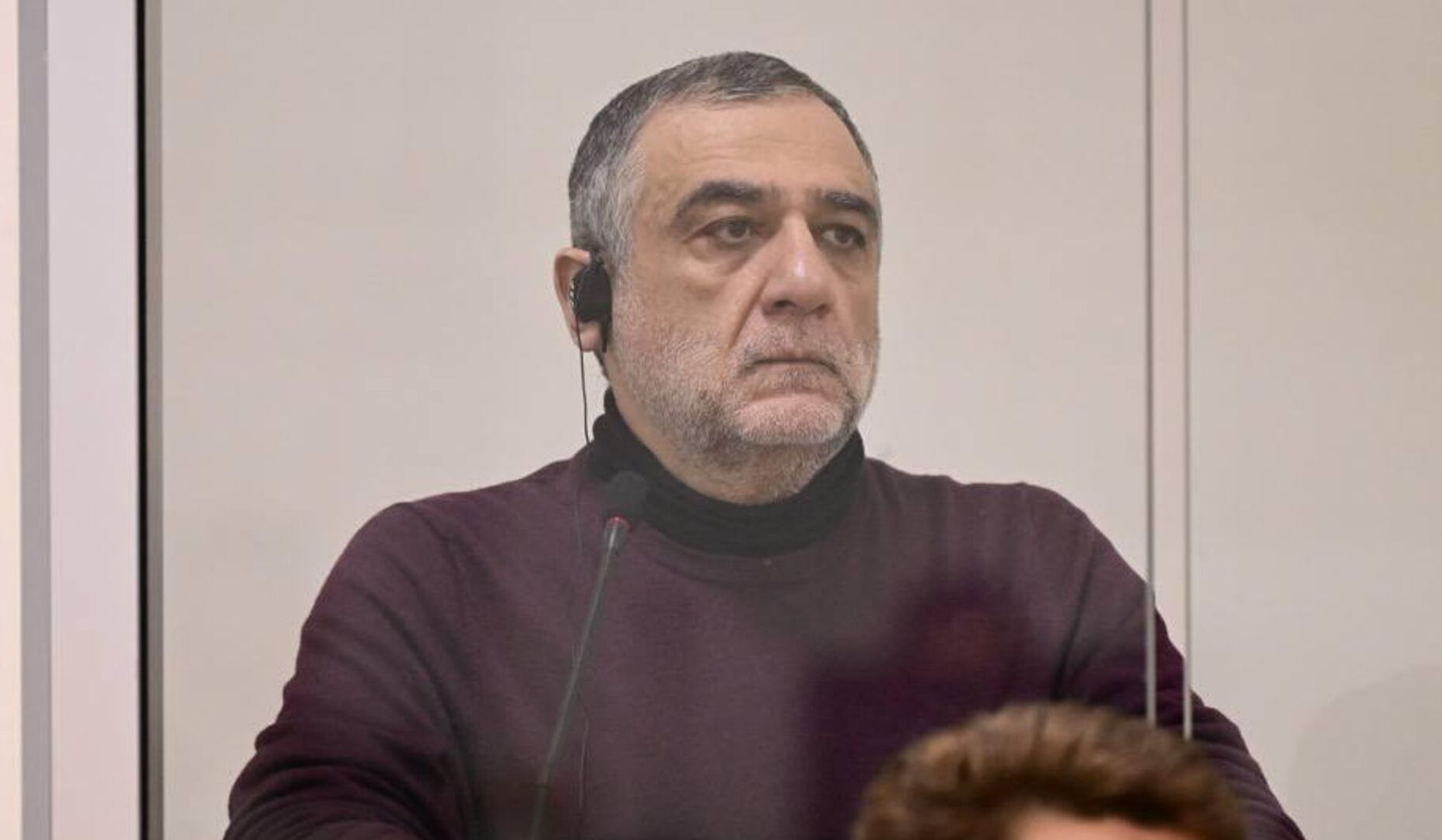
In 2022, Ruben Vardanyan renounced his Russian citizenship and travelled to Karabakh, where he took up the post of state minister in the now-defunct self-proclaimed Nagorno-Karabakh Republic.
In 2023, following Azerbaijan’s military operations there, he was detained by Azerbaijani border guards while attempting to leave Karabakh. He is currently on trial in Azerbaijan.
The filmmakers say the documentary aims to show how financial resources, political influence and deliberately constructed narratives can shape the course of conflicts and influence public opinion.
The film’s premiere, held at the Nizami Cinema Center, was attended by Azerbaijani MPs, heads of television channels and other media organisations, as well as prominent public and political figures.
The documentary traces Ruben Vardanyan’s life path, from the start of his career in Moscow as an influential figure within the financial elite to his later involvement in processes linked to the Karabakh conflict.
The creative team stresses that the film is based exclusively on verified sources and investigative materials.
“The aim of the film is not to justify any side, but to show, on the basis of facts, how decisions are made, thereby contributing to transparency and public accountability,” the filmmakers say.
- ‘Hearings turned into sham’: Ruben Vardanyan drops lawyer
- US embassy staff ‘where possible’ attend trials of Armenians in Baku
- ‘Last hope for Armenian prisoners is dying’: Red Cross office in Baku set to shut down
Key participants in film
According to Rufat Gamzayev, executive director of the TV channel AnewZ, work on the project began in January 2025, with production taking around 10 to 11 months. Filming took place in eight countries, including Azerbaijan, Armenia, Ukraine, the United States and Israel. The documentary was produced by a creative team of around 100 people.
The film features contributions from experts and witnesses from different countries. During filming in Azerbaijan, Armenia and Ukraine, interviews were given by members of parliament, legal specialists, regional analysts and journalists, who shared their perspectives on the issues examined in the documentary.
The film also includes interviews with representatives of the Aurora Humanitarian Initiative, one of whose co-founders is Ruben Vardanyan. The documentary examines the activities of the platform, which for many years attracted internationally known figures, and assesses its role in shaping the narratives presented.
Gamzayev says that the filmmakers reviewed numerous documents and facts from open sources, and drew on interviews and analytical commentary from specialists involved in international investigations or with in-depth knowledge of the subject matter.
The film also includes an interview with an ethnic Armenian living in Khankendi, who directly witnessed events in Karabakh and gives a detailed account of the processes he observed.
Key themes explored in film
The documentary The Oligarch’s Design examines various aspects of both the business career and political activities of Ruben Vardanyan. It focuses on an analysis of his trajectory from a career in Russia to his role in Karabakh, as well as his connections within international financial networks.
Role in Russian and international financial networks
The film traces Ruben Vardanyan’s career from the 1990s, presenting him as one of the leading investment bankers in the post-Soviet space. He was the founder and managing partner of Troika Dialog, one of Russia’s largest private investment groups. Through the bank, Vardanyan took part in a number of large-scale privatisation projects involving members of Russia’s elite and contributed to the consolidation of control over strategic industrial assets, including the car manufacturers AvtoVAZ and KAMAZ.
He was also an инициator and one of the first senior figures behind the Moscow School of Management Skolkovo. In 2006, President Vladimir Putin personally took part in the school’s foundation-laying ceremony. Drawing on close links with senior figures, Vardanyan went on to develop joint business projects with Rostec chief Sergey Chemezov, served on the board of KAMAZ, and received dividends amounting to millions of US dollars.
In 2013, Vardanyan sold his stake in AvtoVAZ for $180 million. A year earlier, in 2012, the sale of Troika Dialog to the state-owned Sberbank reportedly brought him a fortune estimated at around $1 billion.
With substantial financial resources at his disposal, he later stepped back from active business, focusing instead on philanthropic projects and public initiatives. As a co-founder of international platforms such as the Aurora Humanitarian Initiative, Vardanyan helped cultivate an image as a philanthropist.
The Troyka Laundromat financial scheme
The film devotes particular attention to one of the largest financial scandals linked to Ruben Vardanyan — the so-called Troyka Laundromat scheme. It refers to a multi-layered money-laundering network allegedly operated through the investment bank Troika Dialog, which was headed by Vardanyan.
Investigations found that between 2006 and 2013 the system, involving at least 75 offshore companies, was used to secretly move around $4.8bn out of Russia through fictitious contracts.
According to leaked documents cited in the investigations, the funds ultimately reached influential figures from the inner circle of President Vladimir Putin. One of the beneficiaries named was Putin’s associate, cellist Sergey Roldugin.
The Organized Crime and Corruption Reporting Project (OCCRP) exposed the scheme, describing it as the “Troyka Laundromat”, and said that Troika Dialog, under Vardanyan’s leadership, stood at the centre of a global flow of illicit funds totalling $8.8bn.
Vardanyan has denied any involvement in illegal schemes. However, international investigative materials uncovered a document bearing his signature authorising a large “loan” to one of the offshore companies, casting doubt on claims that the bank’s leadership was unaware of such operations.
The OCCRP report also said that some of Vardanyan’s personal expenses, including credit card debts and his children’s tuition fees, were paid using funds from companies linked to the Laundromat network.
The Troyka Laundromat case attracted significant international attention. In 2019, 22 members of the European Parliament called on the President of the European Commission to add Ruben Vardanyan and other figures associated with Troika Dialog to sanctions lists.
Public influence and the use of philanthropy
The film also examines how Ruben Vardanyan, beyond business and formal politics, is portrayed as having used tools of public influence, often described as soft power. One example cited is the Aurora Humanitarian Initiative, which he co-founded.
According to the film, Vardanyan used the platform over many years to carry out humanitarian projects involving internationally known figures. Analysing the foundation’s activities, the filmmakers suggest that such initiatives may have concealed political and financial motivations.
Citing an investigation by anti-corruption activist Alexei Navalny, the documentary says that half of the $500m budget of the Moscow School of Management Skolkovo, presented as a charitable project, was financed through a loan from the state-owned Sberbank, the terms of which were not made public.
Referring to these and similar examples, the film argues that a number of initiatives associated with Vardanyan and presented as philanthropic were underpinned by opaque economic interests.
Predictions and speculations
The filmmakers stress that they deliberately avoided making specific predictions about the future fate of Ruben Vardanyan. They say the documentary focuses on presenting facts, leaving interpretation to the audience.
At the same time, The Oligarch’s Design raises a number of questions about what may lie ahead for Vardanyan. The central one is whether Kremlin patronage could ultimately protect him, or whether Moscow will leave him without support.
Azerbaijani officials and a number of political observers have previously argued that Vardanyan’s arrival in Karabakh in 2022 was part of a special plan devised in Moscow. President Ilham Aliyev described him as “Vardanyan sent by Moscow, who filled his pockets with money stolen from the Russian people”.
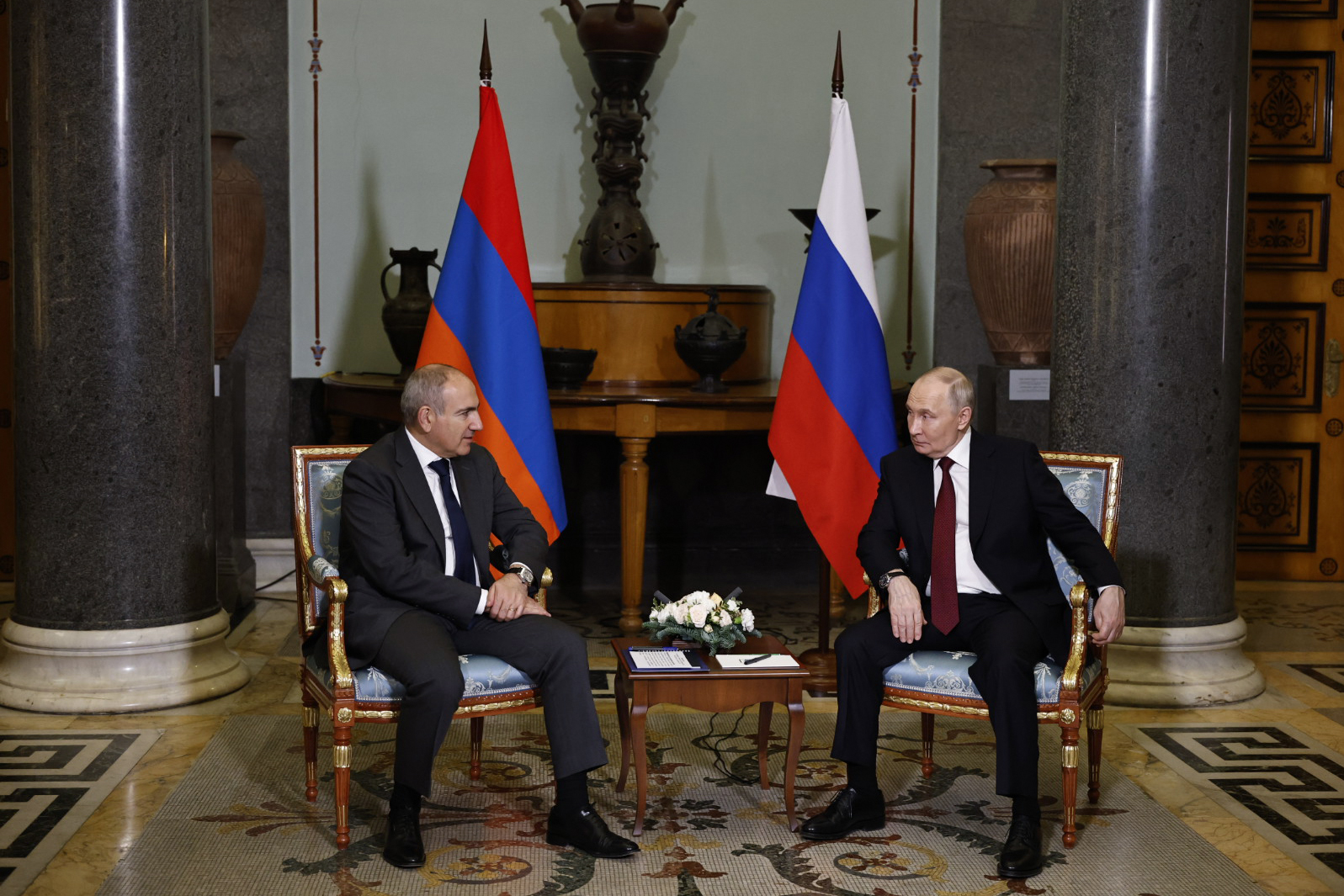
Subsequent developments, however, appear to point to a different picture. Following Vardanyan’s arrest, neither the Russian government nor President Vladimir Putin took any visible steps to defend him. The Kremlin largely avoided raising the issue publicly, and no serious efforts to secure his release were observed.
Political analysts cited in the film suggest that Moscow’s restrained position reflects the view that Vardanyan no longer holds strategic value for the Kremlin. By renouncing his Russian citizenship in 2022 and entering what is described as a risky political venture in Karabakh, he chose an unconventional path.
The film says that the outcome of this “third path” has been the loss of his freedom. The ongoing trial in Baku is presented as further indicating that Vardanyan is likely to face a lengthy prison sentence.
The key remaining question, the documentary suggests, is whether the Kremlin will take any steps to intervene on his behalf. Many local experts assess the likelihood of such a move as extremely low. The analytical outlet The Bell notes that a long prison term for Vardanyan already appears inevitable, while the question of whether Putin will take action to secure his release “remains open”.
Overall, the film offers no definitive answers. Instead, by juxtaposing different viewpoints, it seeks to provide a broad perspective and encourage viewers to draw their own conclusions.