Geostat: Georgia’s foreign trade turnover down 23.6% in January 2026 compared with last year






Georgia’s foreign trade turnover
According to Geostat, Georgia’s foreign trade turnover in January 2026 totalled $1.609bn, down 23.6% compared with the same period last year. Exports reached $480.4m, an increase of 19% year on year, while imports fell by 33.7% to $1.129bn. As a result, the country’s foreign trade balance remained negative, at $649.1m.
The ten largest trading partners accounted for 67.9% of Georgia’s total foreign trade turnover. The country’s biggest partners were Turkey ($247.1m), China ($223.3m), and Russia ($195.4m). Notably, the United States is no longer among Georgia’s top three trading partners.
The ten leading export destinations accounted for 74.5% of total exports. The top three were China ($66.1m), Turkey ($52.1m), and Kyrgyzstan ($49.9m).
CIS countries accounted for 46.7% of exports, European Union member states for 16.1%, and other countries for 37.2%.
The leading export goods were passenger cars ($100.7m, or 21% of total exports), oil and petroleum products ($58.7m, or 12.2%), and precious metal ores ($51.0m, or 10.6%).
The ten largest partners accounted for 71.4% of imports, including Turkey ($195m), China ($157.3m), and Russia ($156.8m).
The European Union accounted for 23.4% of imports, CIS countries for 23.3%, and other countries for 53.3%. Passenger cars made up the largest share of imports at $150.0m (13.3%), followed by oil and petroleum products at $96.7m (8.6%) and petroleum gas at $79.1m (7%).

Expert comment
Commenting on the new Geostat data, economist Roman Gotsiridze said the country had become embroiled in a major scandal.

Roman Gotsiridze said: “It is now clearer why the EU included the Kulevi port on its sanctions list.
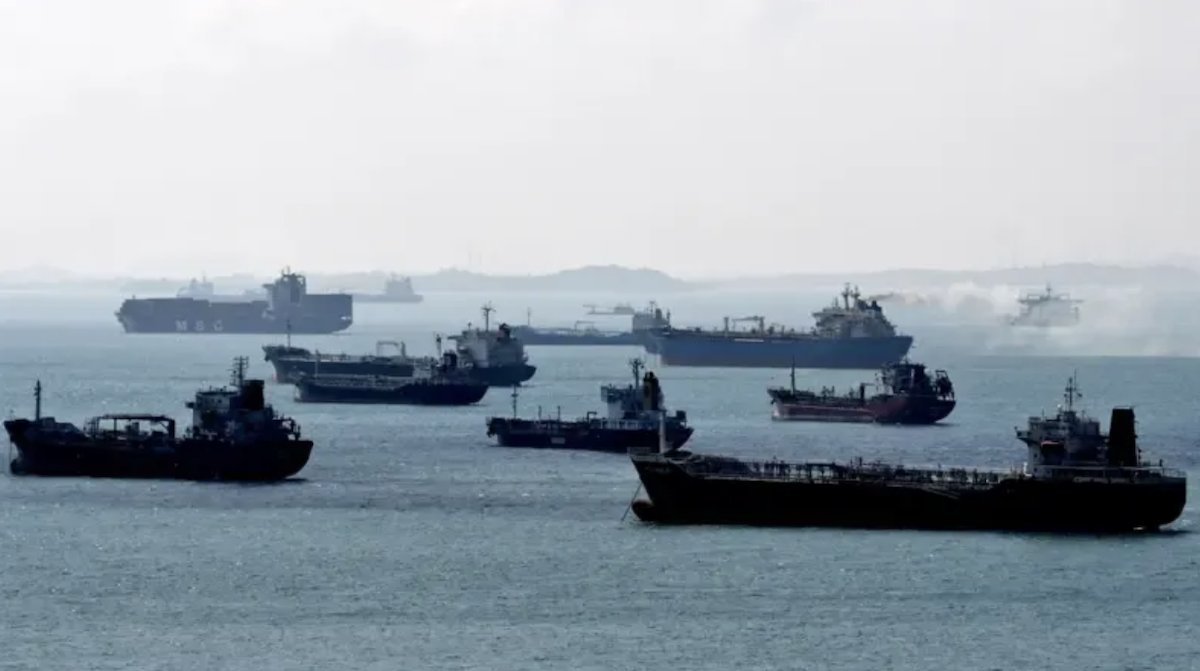
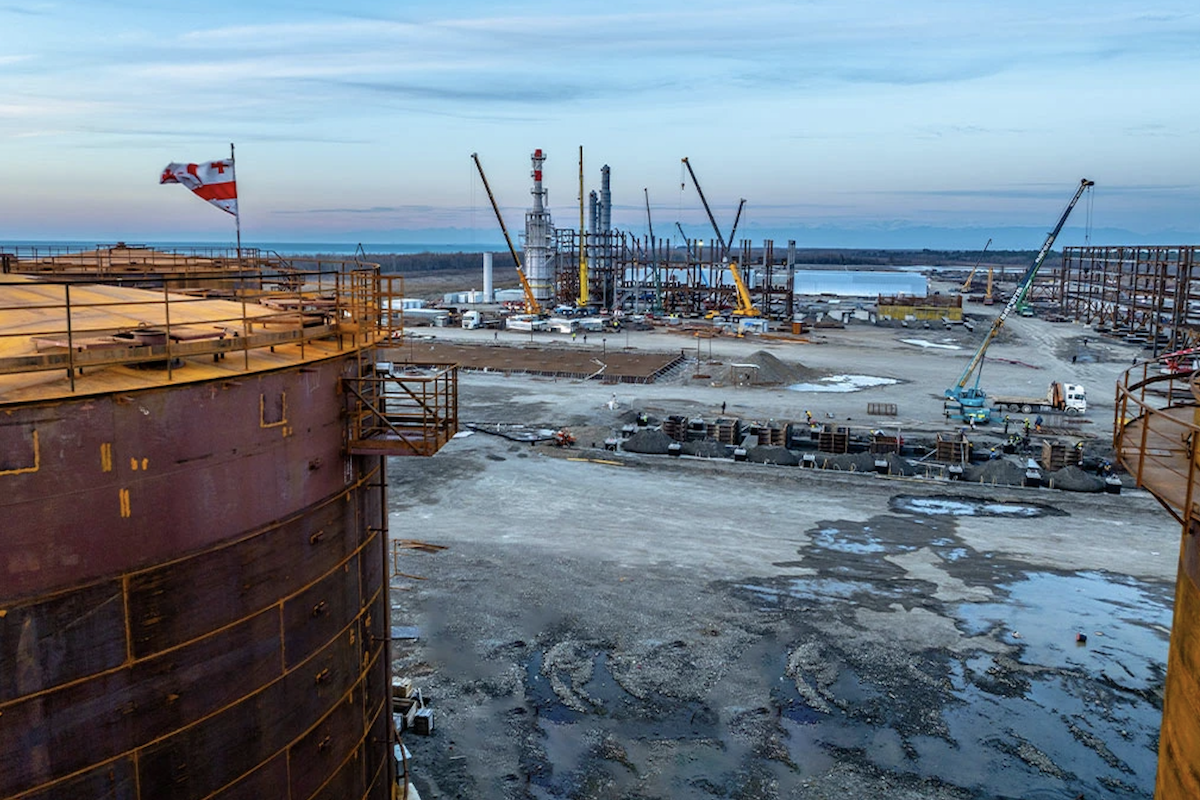
Georgia has become embroiled in a major scandal. The National Statistics Office has published foreign trade data for 2026, and it tells a striking story: a country with no operating oil refinery — while the plant under construction in Kulevi has not yet been commissioned — exported $56m worth of refined petroleum products in January. Not crude oil, but finished products such as diesel fuel or petrol. A scandal that began in November–December last year is continuing.
Last year, Georgia exported — not re-exported — 151,700 tonnes of refined fuel worth $79.5m. The operation mainly took place in November and December. This coincided with the import in October of 105 tonnes of Russian crude oil, as classified by customs, to the Kulevi refinery, which is still under construction.
The problem is that the refinery has not yet been put into operation. So what could have happened? Several explanations are possible:
— Instead of crude oil, as stated in the documents, Russian diesel fuel or petrol may have been imported and then exported as Georgian products. That would amount to falsification of customs documents and a criminal offence. It would also constitute sanctions evasion, as Russian petroleum products were sold to an EU country, Malta.
— Another possibility is that semi-processed diesel fuel was imported — although customs recorded it as crude oil — and a small amount of other substances was added, effectively “adjusting” its quality through additives. This would not be oil refining but rather a form of logistical cosmetic processing. Even with such manipulation, the export would still constitute a violation of sanctions.”

Roman Gotsiridze said: “It is now clearer why the EU included the Kulevi port on its sanctions list.
Georgia has become embroiled in a major scandal. The National Statistics Office has published foreign trade data for 2026, and it tells a striking story: a country with no operating oil refinery — while the plant under construction in Kulevi has not yet been commissioned — exported $56m worth of refined petroleum products in January. Not crude oil, but finished products such as diesel fuel or petrol. A scandal that began in November–December last year is continuing.
Last year, Georgia exported — not re-exported — 151,700 tonnes of refined fuel worth $79.5m. The operation mainly took place in November and December. This coincided with the import in October of 105 tonnes of Russian crude oil, as classified by customs, to the Kulevi refinery, which is still under construction.
The problem is that the refinery has not yet been put into operation. So what could have happened? Several explanations are possible:
— Instead of crude oil, as stated in the documents, Russian diesel fuel or petrol may have been imported and then exported as Georgian products. That would amount to falsification of customs documents and a criminal offence. It would also constitute sanctions evasion, as Russian petroleum products were sold to an EU country, Malta.
— Another possibility is that semi-processed diesel fuel was imported — although customs recorded it as crude oil — and a small amount of other substances was added, effectively “adjusting” its quality through additives. This would not be oil refining but rather a form of logistical cosmetic processing. Even with such manipulation, the export would still constitute a violation of sanctions.”
Georgia’s foreign trade turnover