Georgian young lawyers’ association wins European court case over 'Gavrilov night'






ECHR on “Gavrilov night” in Georgia
The Georgian Young Lawyers’ Association has won a case at the European Court of Human Rights over the dispersal of a protest in Tbilisi on 20–21 June 2019. The unrest was triggered after Russian MP Sergei Gavrilov took the speaker’s chair in the Georgian parliament and addressed delegates of the Interparliamentary Assembly on Orthodoxy in Russian.
The Grand Chamber of the European Court of Human Rights ruled that during the events of 20–21 June 2019 — widely referred to as “Gavrilov night” — the rights of 26 citizens were violated under articles of the European Convention concerning the prohibition of torture, freedom of expression, and freedom of assembly and demonstration.
The court ordered the Georgian state to pay a total of €646,000 to the 26 victims. The judges unanimously found that the article prohibiting torture had been violated in respect of all 26 applicants.
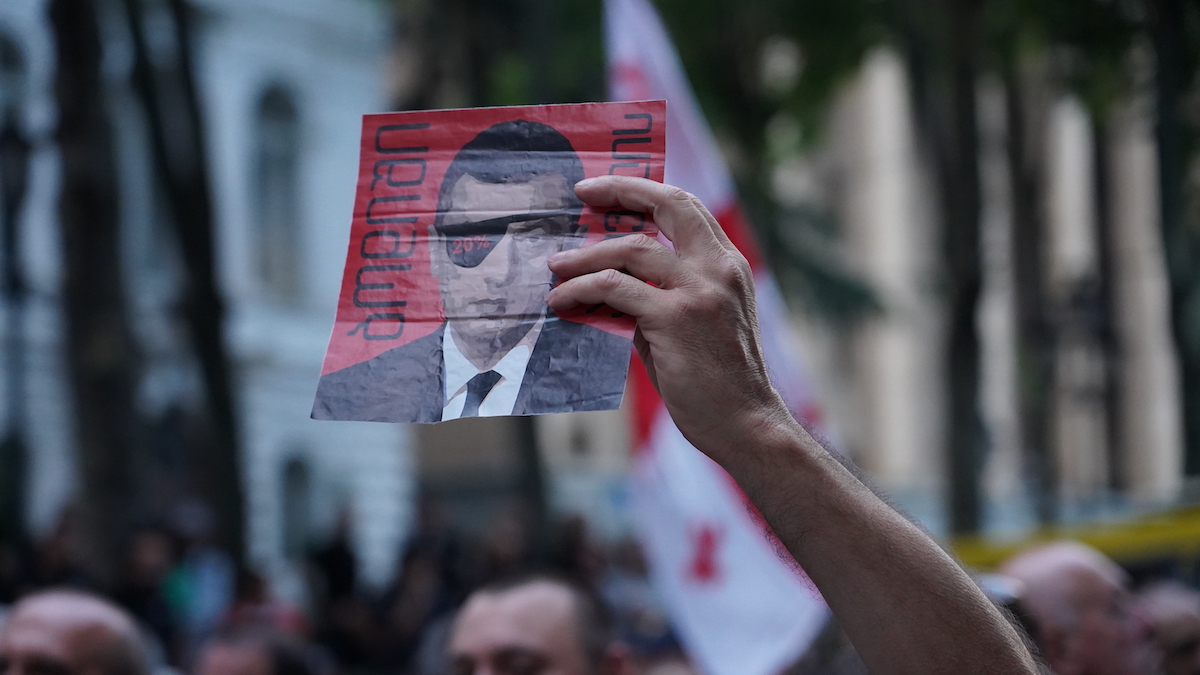
Georgia’s ruling party Georgian Dream’s Ministry of Justice accepted the court’s decision and placed responsibility on the then–Minister of Internal Affairs Giorgi Gakharia, now the leader of the opposition party For Georgia, who sharply criticizes the ruling party.
However, in 2019 the ruling party fully supported his actions. Moreover, immediately after the events of the “Gavrilov’s Night,” he was promoted to the post of prime minister.
In November 2025, Georgian Dream itself reopened the investigation into the case and charged Gakharia with abuse of power and intentional infliction of serious bodily harm. Investigators claim that it was Gakharia who ordered the simultaneous use of various special means without prior warning.
Giorgi Gakharia currently lives outside Georgia.
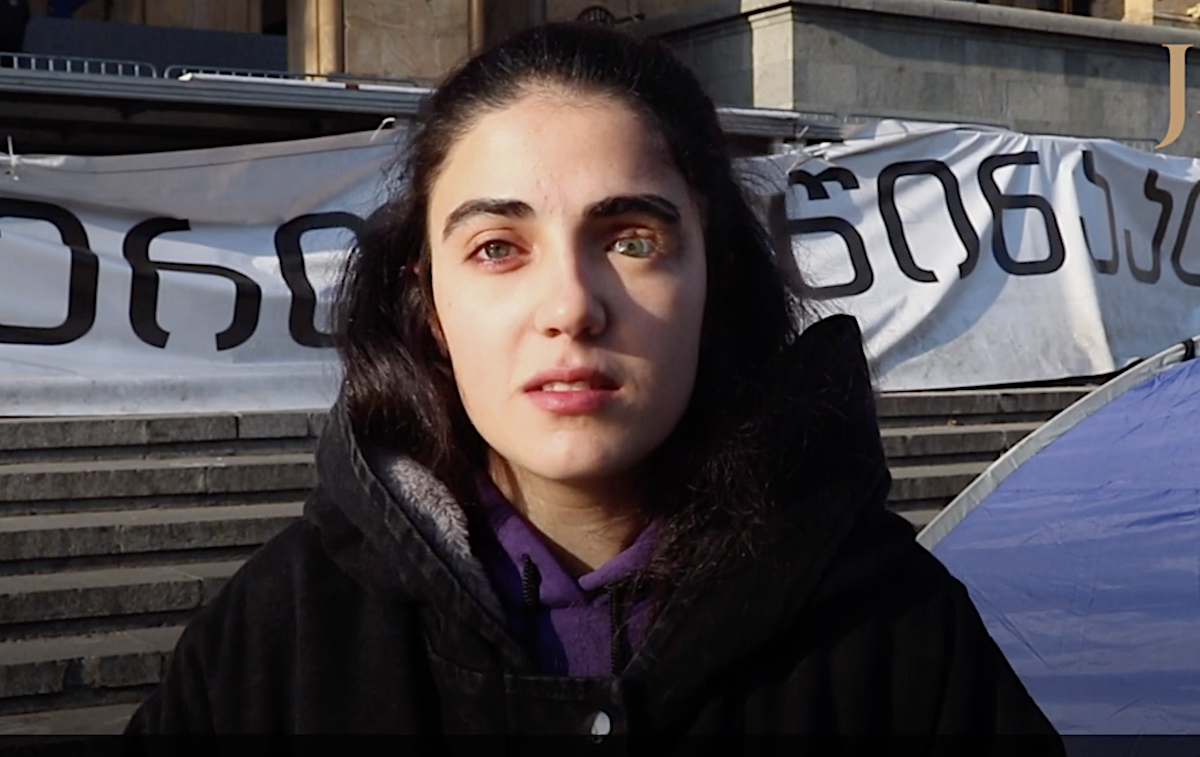
The story of 19-year-old Mako Gomuri, who lost an eye after police used rubber bullets to disperse protesters, has become a symbol of the disproportionate use of force by law enforcement.
ECHR ruling
The Grand Chamber of the ECHR unanimously ruled that the procedural limb of the article prohibiting torture had been violated in respect of all 26 citizens who brought the case. This part of the Convention requires states to carry out an effective, independent and timely investigation whenever there is reasonable suspicion that a person has been subjected to torture or to inhuman or degrading treatment.
In addition:
● The Grand Chamber rejected the Georgian government’s argument that domestic remedies had been exhausted.
● The court unanimously found a violation of the procedural aspect of Article 3 of the European Convention (prohibition of inhuman or degrading treatment/lack of an effective investigation) in respect of all applicants.
● The Grand Chamber unanimously found a violation of Article 10 (freedom of expression).
● The court unanimously found a violation of Article 11 (freedom of assembly and association).
● The court unanimously found that the Georgian government had not violated Article 38 of the Convention (obligation to provide all necessary facilities for the examination of the case).
● The court also found violations of Article 10 (freedom of expression) in connection with the unjustified and disproportionate use of force by police against journalists.
● Under Article 11 (freedom of assembly and association), the court also found unjustified and disproportionate use of force against 11 applicants during the dispersal of the demonstration.
Statement from the Georgian Dream–led justice ministry
“Today’s ruling by the Grand Chamber of the ECHR once again confirms the state’s lawful right to use special means when there is an attack on law-enforcement officers or state institutions. The ruling also notes that the escalation and the attack on parliament during the 20 June demonstration were incited by opposition politicians.
According to the European Court’s judgment, the use of force and special means by the state should have been directed at those demonstrators whose actions were violent. Consequently, because the then leadership of the Interior Ministry failed to ensure compliance with this standard and the use of proportionate force against protesters, the court found violations of Articles 3 (prohibition of inhuman or degrading treatment/lack of an effective investigation), 10 (freedom of expression) and 11 (freedom of assembly) of the European Convention.
The Grand Chamber also noted that the Georgian government had fully cooperated with the Strasbourg court, providing all the necessary information and materials. For this reason, the applicants’ claim of a violation of this part of the Convention was not upheld.
The Georgian government has taken into account the shortcomings in the investigation highlighted in the Chamber’s ruling of 7 May 2024 and launched an inquiry into how the Interior Ministry planned and carried out the operation, with the aim of assessing its compliance with the standards set by the European Court.
As a result of this inquiry, on 12 November 2025 the Georgian Prosecutor’s Office opened a criminal case against former interior minister Giorgi Gakharia. The investigation is ongoing,” the statement said.
More on “Gavrilov night”
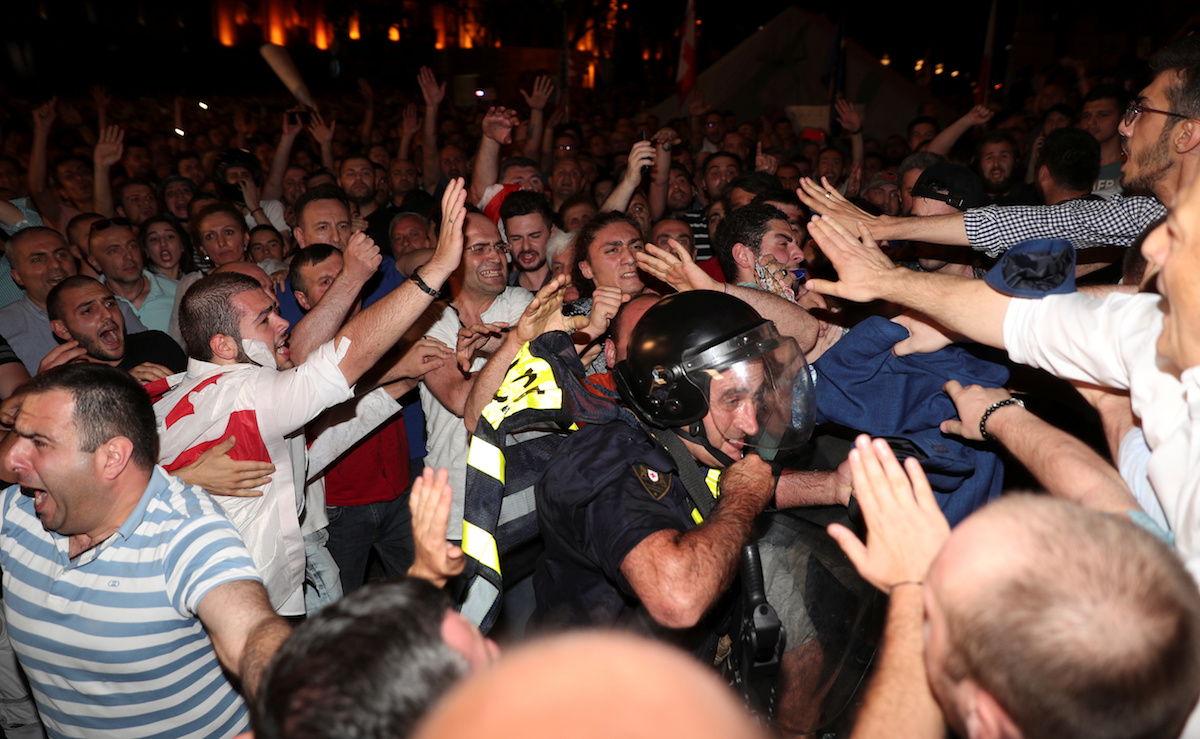
On 20–21 June 2019, authorities violently dispersed a protest outside the Georgian parliament that had been triggered by the appearance of Russian MP Sergei Gavrilov in the parliamentary chamber. Police used water cannons and rubber bullets to break up the demonstration.
More than 200 people were injured. Two of them — 19-year-old Mako Gomuri and 26-year-old Giorgi Sulashvili — lost an eye after being hit by rubber bullets fired by police.
The Prosecutor’s Office recognised Gomuri and Sulashvili as victims only five months after the events of that night.
At the time, officials claimed the protest was an attempted coup and said police moved in after some opposition politicians urged demonstrators to storm the parliament building.
Giorgi Gakharia, who served as interior minister during the events, is now in exile and faces criminal charges in connection with “Gavrilov night”.
According to Prosecutor General Giorgi Gvarakadze, “the case concerns the organization of acts that intentionally caused serious bodily harm to more than two people during the protest in front of the parliament building, as well as the abuse of official powers by a state political figure.”
The offence carries a maximum sentence of up to 13 years in prison.
ECHR on “Gavrilov night” in Georgia